Apartment Solar Panel Installation

Apartment solar panel installation is becoming increasingly popular as more people look for practical ways to reduce electricity bills and embrace renewable energy. Until recently, solar power was mainly associated with detached homes that had large, south-facing roofs. Today, advances in solar technology have made it possible for many apartment owners and tenants to benefit from clean energy through balcony solar panels, compact rooftop systems, and community solar projects.
As electricity prices continue to rise across many parts of the world, apartment residents are searching for affordable ways to generate their own power. Modern solar panels are more efficient than ever, while compact battery storage systems and smart energy management technology make it easier to use more of the electricity you generate.
Although apartment solar panel installation presents different challenges compared to installing solar panels on a house, many of these obstacles can be overcome with careful planning and the right equipment. Whether you own your apartment or rent it, there may be an option that allows you to enjoy lower energy bills while reducing your carbon footprint.
This guide explains everything you need to know about apartment solar panel installation, including the different types of systems available, installation costs, permissions, battery storage, expected savings, and how to choose the best solar solution for your property.
Why Apartment Solar Panel Installation Is Growing in Popularity
The global transition towards renewable energy is no longer limited to homeowners with large properties. Millions of people now live in apartments, condominiums, and shared residential developments where access to clean energy has traditionally been more difficult.
Fortunately, manufacturers have responded by developing solar products specifically designed for smaller properties. Lightweight solar panels, plug-in balcony systems, compact inverters, and slim battery storage units now make apartment solar panel installation a realistic option for many households.
Several factors are driving this growth:
- Higher electricity prices.
- Improved solar panel efficiency.
- Smaller and more affordable battery storage.
- Government renewable energy incentives in many countries.
- Growing environmental awareness.
- Better plug-and-play solar technology.
Apartment residents no longer have to miss out on the benefits of solar energy simply because they do not own a detached home.
Learn more about renewable energy systems in our Home Energy Systems guide.
Can You Install Solar Panels on an Apartment?
Yes, although the answer depends on several important factors.
If you own your apartment, you may have more flexibility, particularly if your building allows individual rooftop installations or balcony-mounted solar panels. However, many apartment buildings have shared roofs that are managed collectively, meaning approval may be required before any equipment can be installed.
If you rent your apartment, permanent rooftop installations are less common, but portable solar panels and balcony solar systems are often suitable alternatives where permitted.
Before beginning an apartment solar panel installation, consider:
- Building ownership.
- Management company rules.
- Local planning regulations.
- Available sunlight.
- Roof or balcony access.
- Electrical connection requirements.
Obtaining approval before purchasing equipment can prevent unnecessary expense and delays.
Different Types of Apartment Solar Panel Installation
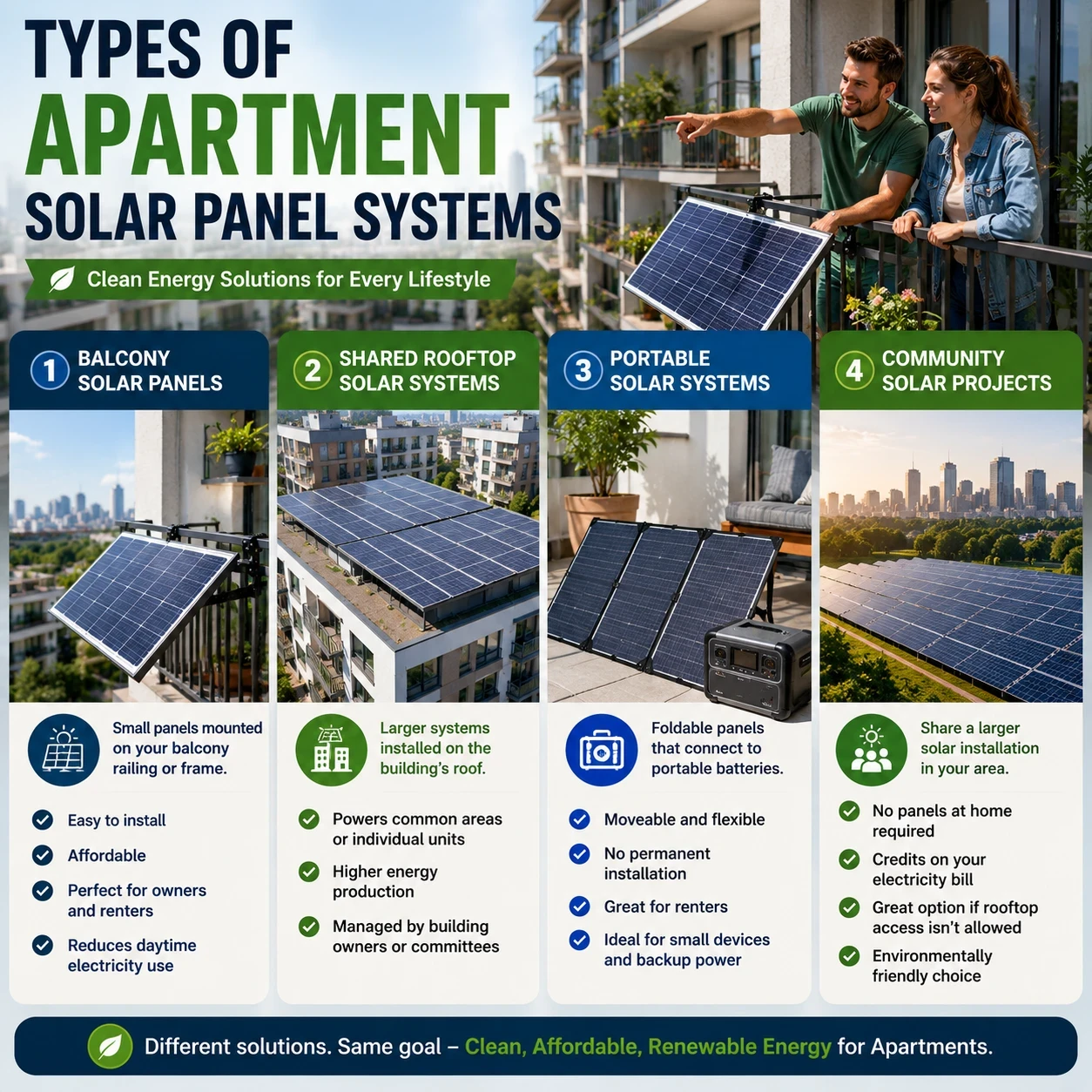
1. Balcony Solar Panels
Balcony solar systems have become one of the fastest-growing sectors of residential renewable energy. These compact systems usually consist of one or two high-efficiency solar panels securely mounted to a balcony railing or frame.
Many countries now allow plug-in balcony solar systems that connect directly to a suitable household electrical circuit using certified equipment. These systems can generate electricity throughout daylight hours and immediately reduce the amount of electricity purchased from the grid.
Balcony systems are ideal for:
- Apartment owners.
- Apartment tenants.
- Small terraces.
- City apartments.
- High-rise buildings with good sunlight exposure.
2. Shared Rooftop Solar Systems
Some apartment developments install a communal rooftop solar array that supplies electricity to shared building facilities such as lifts, lighting, ventilation, and heating systems.
Newer apartment developments may also distribute electricity between individual apartments using advanced energy management systems.
3. Portable Solar Systems
Portable folding solar panels provide flexibility for renters or residents who cannot permanently install equipment.
These systems are commonly used to:
- Charge portable batteries.
- Power laptops.
- Operate small appliances.
- Provide emergency backup electricity.
4. Community Solar Projects
Community solar allows apartment residents to purchase or lease a share of a larger solar installation located elsewhere.
Rather than placing panels on your own building, the electricity generated is credited against your utility bill. This approach is becoming increasingly popular where rooftop access is limited.
How Apartment Solar Panel Installation Works
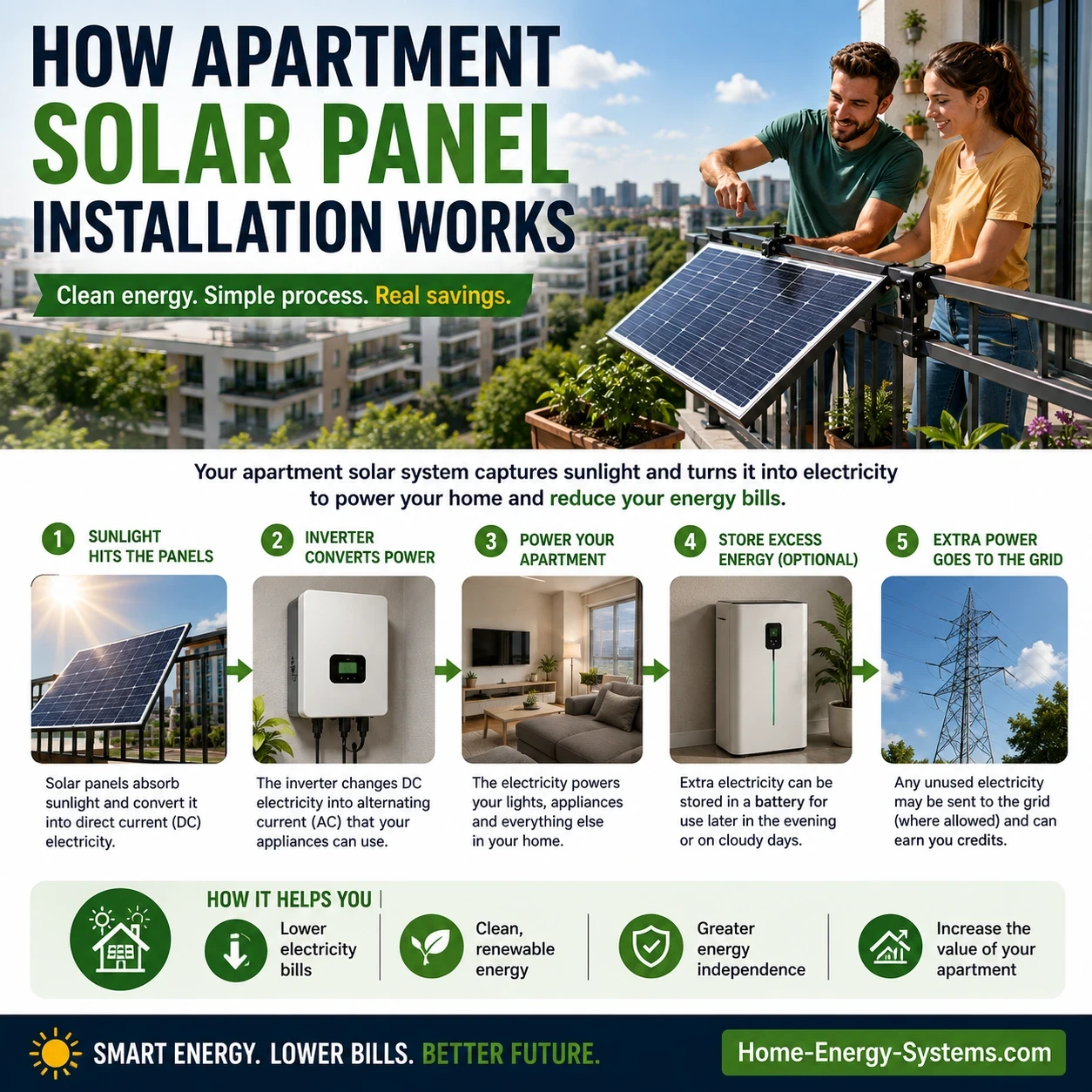
The process is very similar to a traditional residential solar installation.
Solar panels convert sunlight into direct current (DC) electricity. An inverter then converts this electricity into alternating current (AC), which powers your household appliances.
Depending on your installation, any unused electricity may:
- Power other appliances immediately.
- Charge a home battery.
- Be exported to the electricity grid where permitted.
- Reduce electricity imported from your utility supplier.
Adding a battery storage system can significantly increase the amount of solar energy you use yourself, particularly during the evening.
You can learn more by reading our guide to Home Battery Storage Systems.
Benefits of Apartment Solar Panel Installation
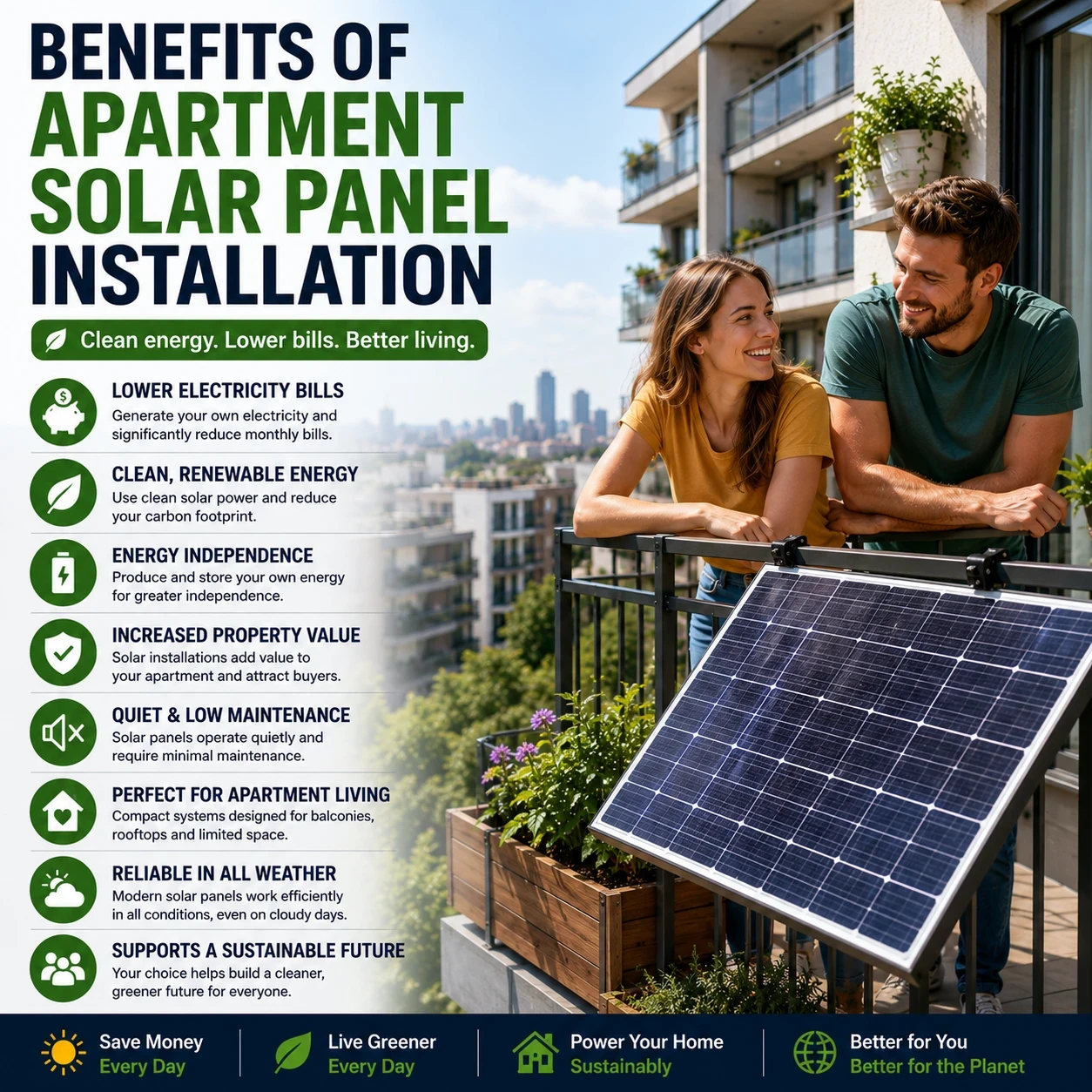
Even relatively small solar installations can deliver significant long-term benefits.
- Lower monthly electricity bills.
- Reduced dependence on rising energy prices.
- Cleaner renewable electricity.
- Lower household carbon emissions.
- Minimal maintenance requirements.
- Quiet operation.
- Potential increase in apartment value.
- Greater energy independence.
When combined with modern battery storage and energy-efficient appliances, apartment solar systems can dramatically reduce overall electricity consumption.
You may also find our guide to Energy Efficiency Home Upgrades helpful when planning additional ways to reduce household energy costs.
Apartment Solar System Comparison
| System Type | Best For | Advantages | Limitations |
|---|---|---|---|
| Balcony Solar Panels | Owners & Renters | Affordable, compact, easy installation | Limited panel capacity |
| Shared Rooftop Solar | Apartment Complexes | Higher electricity production | Requires building approval |
| Portable Solar Panels | Renters | Moveable and flexible | Lower electricity output |
| Community Solar | Urban Residents | No home installation required | Availability varies by location |

Choosing the Best Solar Panels for an Apartment
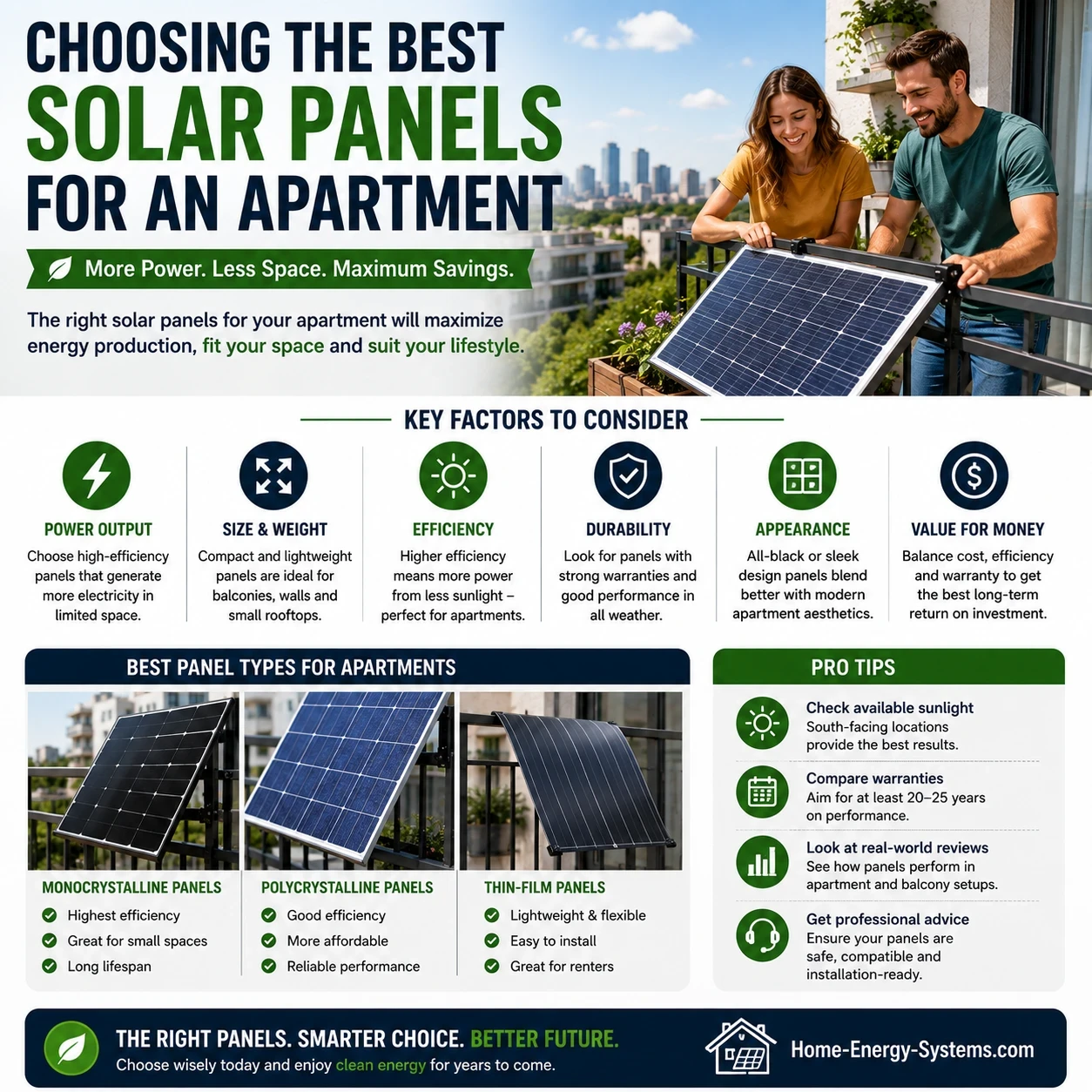
Selecting the right solar panels is one of the most important decisions when planning an apartment solar panel installation. Because apartments usually have less available space than detached homes, every panel needs to generate as much electricity as possible.
Modern solar panels have improved significantly over the last decade, offering higher efficiency, better durability, and longer warranties. Investing in quality equipment can provide reliable performance for 25 years or more.
Monocrystalline Solar Panels
Monocrystalline panels are widely regarded as the best choice for apartment installations. They offer the highest efficiency, making them ideal where roof or balcony space is limited.
Advantages:
- Highest efficiency.
- Excellent performance in limited space.
- Long lifespan.
- Modern appearance.
Polycrystalline Solar Panels
Polycrystalline panels are generally more affordable but require slightly more installation space to generate the same amount of electricity.
Advantages:
- Lower purchase price.
- Reliable performance.
- Good long-term durability.
Thin-Film Solar Panels
Thin-film technology is lightweight and flexible, making it suitable for certain specialist installations. However, it generally produces less electricity per square metre than crystalline panels.
If your apartment has limited installation space, high-efficiency monocrystalline panels usually provide the best return on investment.
For more information, read our complete guide to Best Solar Panels 2026.
Choosing the Right Solar Inverter
Solar panels generate direct current (DC) electricity, but household appliances use alternating current (AC). The inverter converts the electricity into a usable form, making it one of the most important components of any apartment solar panel installation.
Several inverter options are available.
Microinverters
Each solar panel has its own inverter. This allows every panel to operate independently, making them particularly effective where some panels may experience occasional shading.
String Inverters
A string inverter connects several panels together and is often the most economical option for larger systems.
Hybrid Inverters
Hybrid inverters combine solar generation with battery storage, allowing unused electricity to be stored for use later in the day.
Many apartment owners planning future battery storage choose hybrid systems from the beginning.
You can learn more in our guide to Solar Inverters.
Should You Add Battery Storage?
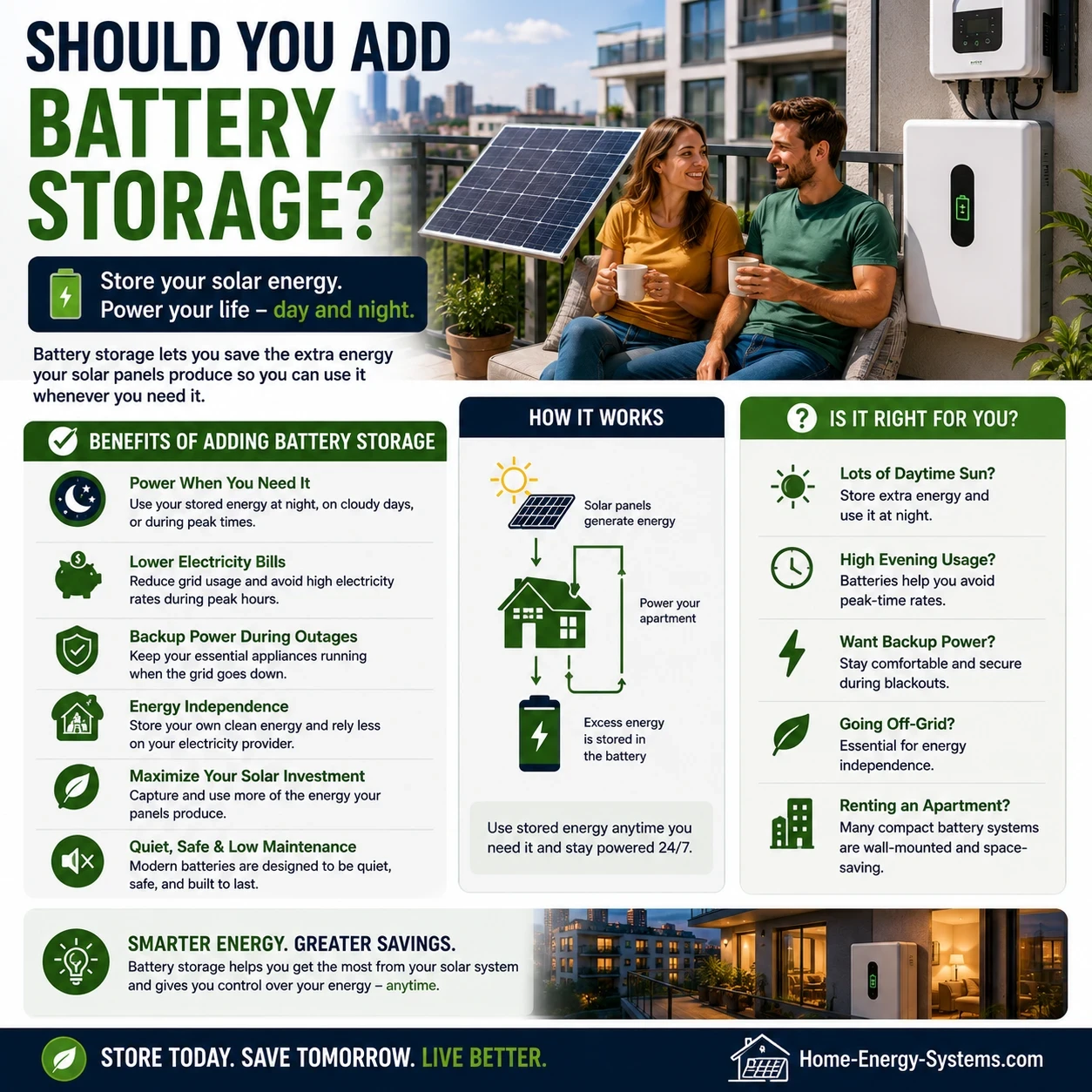
Battery storage is becoming one of the most valuable additions to apartment solar systems.
Without a battery, any electricity generated while you are away from home may be exported to the grid where regulations allow. A battery stores surplus electricity so it can be used during the evening when household demand is often highest.
Benefits include:
- Greater energy independence.
- Lower evening electricity bills.
- Reduced reliance on the electricity grid.
- Emergency backup with compatible systems.
- Better use of your solar energy.
Compact lithium-ion batteries are now available in sizes suitable for apartments and utility cupboards.
Read our detailed guide to Home Battery Storage Systems.
How Much Does Apartment Solar Panel Installation Cost?
The cost of apartment solar panel installation depends on several factors, including the size of the system, panel quality, battery storage, labour costs, and local regulations.
Typical costs vary according to:
- Number of solar panels.
- Panel efficiency.
- Type of inverter.
- Battery storage capacity.
- Mounting equipment.
- Installation complexity.
Although the initial investment may appear significant, many apartment owners recover much of the cost through lower electricity bills over the life of the system.
Can Renters Install Solar Panels?
Yes. Many renters successfully use balcony-mounted or portable solar systems where permitted by their landlord or building management company.
Portable systems offer several advantages:
- Easy installation.
- No permanent structural changes.
- Can move with you.
- Ideal for temporary accommodation.
Always obtain written permission before installing any permanent equipment on a rented property.
Planning Permission and Building Regulations
Regulations differ between countries, regions, and apartment developments.
Before purchasing equipment, check:
- Building management rules.
- Planning regulations.
- Electrical safety requirements.
- Insurance conditions.
- Grid connection requirements.
A professional installer can usually advise on the local regulations that apply to your property.
How Much Electricity Can Apartment Solar Panels Produce?
The amount of electricity generated depends on:
- Panel efficiency.
- Number of panels.
- Hours of sunshine.
- Roof or balcony direction.
- Shading from nearby buildings or trees.
- Weather conditions.
Even a modest balcony solar system can offset a significant proportion of daytime electricity use, particularly when combined with energy-efficient appliances.
To maximise savings, consider combining your solar installation with our recommendations in Home Solar Systems.
Common Mistakes to Avoid
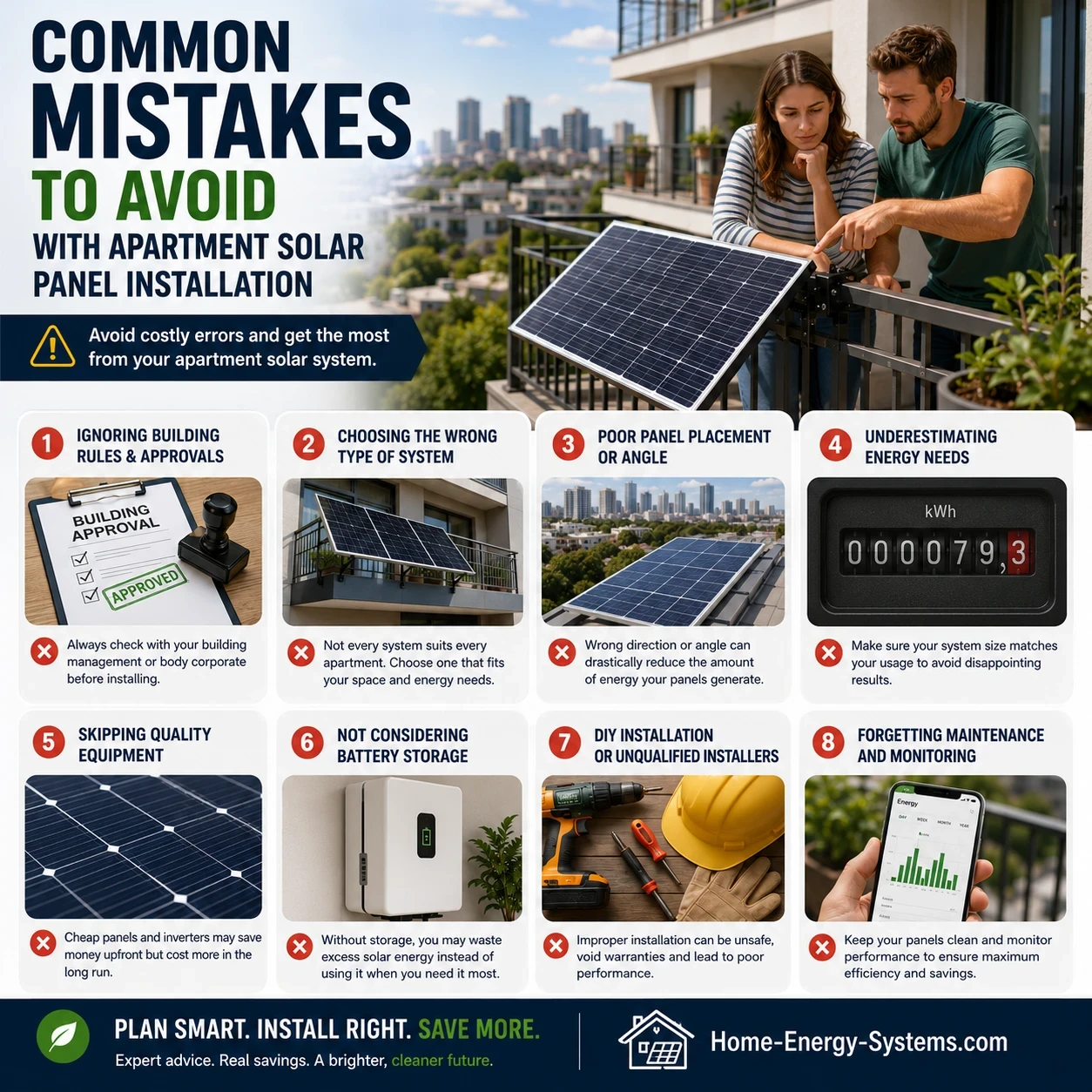
Planning ahead can help you avoid costly errors and improve long-term performance.
- Buying equipment based only on price.
- Ignoring shading issues.
- Choosing an undersized inverter.
- Not considering future battery storage.
- Failing to obtain building approval.
- Installing poor-quality mounting brackets.
- Skipping professional advice.
Taking the time to design the right system usually results in better energy production, lower maintenance, and greater long-term savings.
Continue to Part 3: We’ll cover maintenance, future apartment solar technology, return on investment, frequently asked questions, the conclusion, and authoritative external resources.
Maintaining Your Apartment Solar Panel System
One of the biggest advantages of apartment solar panel installation is that modern systems require very little maintenance. High-quality solar panels are designed to withstand years of exposure to rain, wind, snow, and sunlight while continuing to produce electricity efficiently.
Although maintenance is minimal, a few simple checks can help keep your system performing at its best.
Keep the Solar Panels Clean
Dust, leaves, bird droppings, and other debris can reduce the amount of sunlight reaching the solar cells. In many areas, rainfall naturally cleans the panels, but occasional inspection is worthwhile, particularly if your balcony or roof is exposed to heavy pollution or nearby trees.
Monitor System Performance
Most modern inverters include smartphone apps that allow you to monitor electricity production in real time. If you notice a significant drop in performance, it may indicate shading, dirt, or an electrical issue that should be investigated.
Inspect Mounting Equipment
If your apartment uses balcony-mounted solar panels, periodically inspect the brackets and fixings to ensure everything remains secure. Strong winds and changing weather conditions can place additional stress on mounting hardware over time.
Schedule Professional Inspections
A professional inspection every few years can help identify worn cables, damaged connectors, or inverter issues before they become expensive repairs.
How Long Do Apartment Solar Panels Last?
Modern solar panels are built for long-term performance. Most manufacturers provide performance warranties of 25 years or more, although many systems continue generating electricity well beyond that period.
Typical component lifespans include:
- Solar panels: 25–30+ years.
- Solar inverter: 10–15 years.
- Lithium battery storage: 10–20 years depending on usage.
- Mounting systems: 25 years or more.
Choosing high-quality components often results in lower maintenance costs and greater long-term savings.
The Future of Apartment Solar Panel Installation
The future of apartment solar panel installation looks extremely promising as renewable energy technology continues to evolve.
Manufacturers are developing lighter, more efficient solar panels that produce more electricity from smaller areas, making them ideal for apartments where installation space is limited.
Several exciting developments are expected over the coming years:
- Higher-efficiency solar cells.
- Transparent solar glass for balconies and windows.
- AI-powered energy management systems.
- Smarter battery storage technology.
- Vehicle-to-home charging integration.
- More affordable plug-and-play balcony solar kits.
- Improved recycling of solar panels and batteries.
As technology advances, apartment residents will have even more opportunities to reduce electricity bills while lowering their environmental impact.
Discover the latest innovations in our guide to Solar Energy Technology.
Is Apartment Solar Panel Installation Worth It?
For many apartment owners and tenants, the answer is yes.
Although every property is different, apartment solar systems can significantly reduce electricity bills, improve energy independence, and increase the use of clean renewable energy.
The greatest savings are often achieved when solar panels are combined with:
- Energy-efficient appliances.
- LED lighting.
- Smart heating controls.
- Battery storage.
- Careful energy management.
Even relatively small systems can make a noticeable contribution to reducing household energy costs over many years.
Frequently Asked Questions
Can I install solar panels on my apartment balcony?
In many cases, yes. However, you should always check with your landlord, building management company, or homeowners’ association before installing balcony-mounted solar panels.
Do apartment solar panels work during winter?
Yes. Solar panels continue generating electricity whenever daylight is available, although output is generally lower during shorter winter days.
Can renters install solar panels?
Many renters use portable or balcony-mounted solar systems where permitted. Portable systems are particularly useful because they can usually move with you if you relocate.
Is battery storage necessary?
No, but battery storage allows you to store unused electricity generated during the day for use during the evening, helping maximise your solar investment.
How long will my apartment solar system last?
Quality solar panels typically last more than 25 years with minimal maintenance, making them an excellent long-term investment.
Conclusion
Apartment solar panel installation is transforming the way apartment owners and tenants access renewable energy. Thanks to modern balcony solar systems, compact battery storage, and highly efficient solar panels, living in an apartment no longer prevents you from benefiting from clean electricity.
Whether you choose a balcony solar system, a shared rooftop installation, or a community solar project, investing in renewable energy can help lower electricity bills while reducing your dependence on traditional power sources.
As technology continues to improve and governments encourage cleaner energy solutions, apartment solar installations are expected to become increasingly common across cities worldwide.
By carefully selecting quality equipment, understanding local regulations, and seeking professional advice where necessary, you can enjoy the long-term financial and environmental benefits of solar energy for many years to come.
Related Articles
- Home Energy Systems
- Best Solar Panels 2026
- Home Solar Systems
- Solar Inverters
- Home Battery Storage Systems
- Solar Energy Technology
- Energy Efficiency Home Upgrades