Home Battery Storage Systems
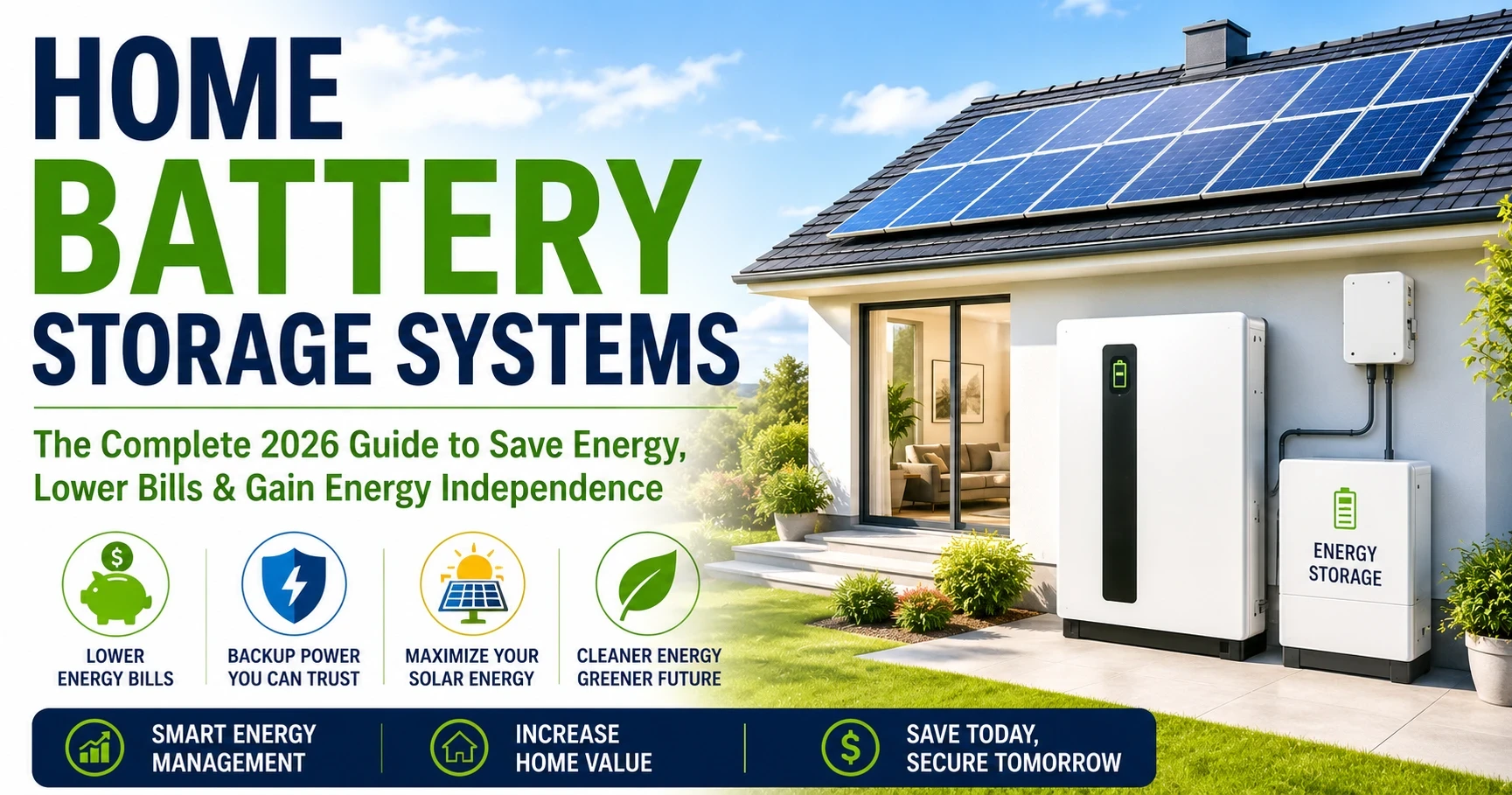
Home battery storage systems help homeowners store electricity for later use, reduce dependence on the grid and make better use of solar energy. They can also provide backup electricity during a power cut when the system has been designed for emergency operation.
Instead of purchasing expensive electricity during peak-rate periods, you can use energy stored earlier from solar panels or a cheaper overnight tariff. This gives you greater control over your household energy use and may help lower your electricity bills.
This complete 2026 guide explains how home battery storage systems work, how much battery capacity a home may need, typical costs, backup power capability, installation considerations and the important features to compare before choosing a system.
▶ Watch the Video Guide
Home Battery Storage
For a broader introduction to renewable and energy-saving technology, read our guide to home energy systems. You can also compare the best home energy systems in 2026 before planning a complete upgrade.
What Are Home Battery Storage Systems?
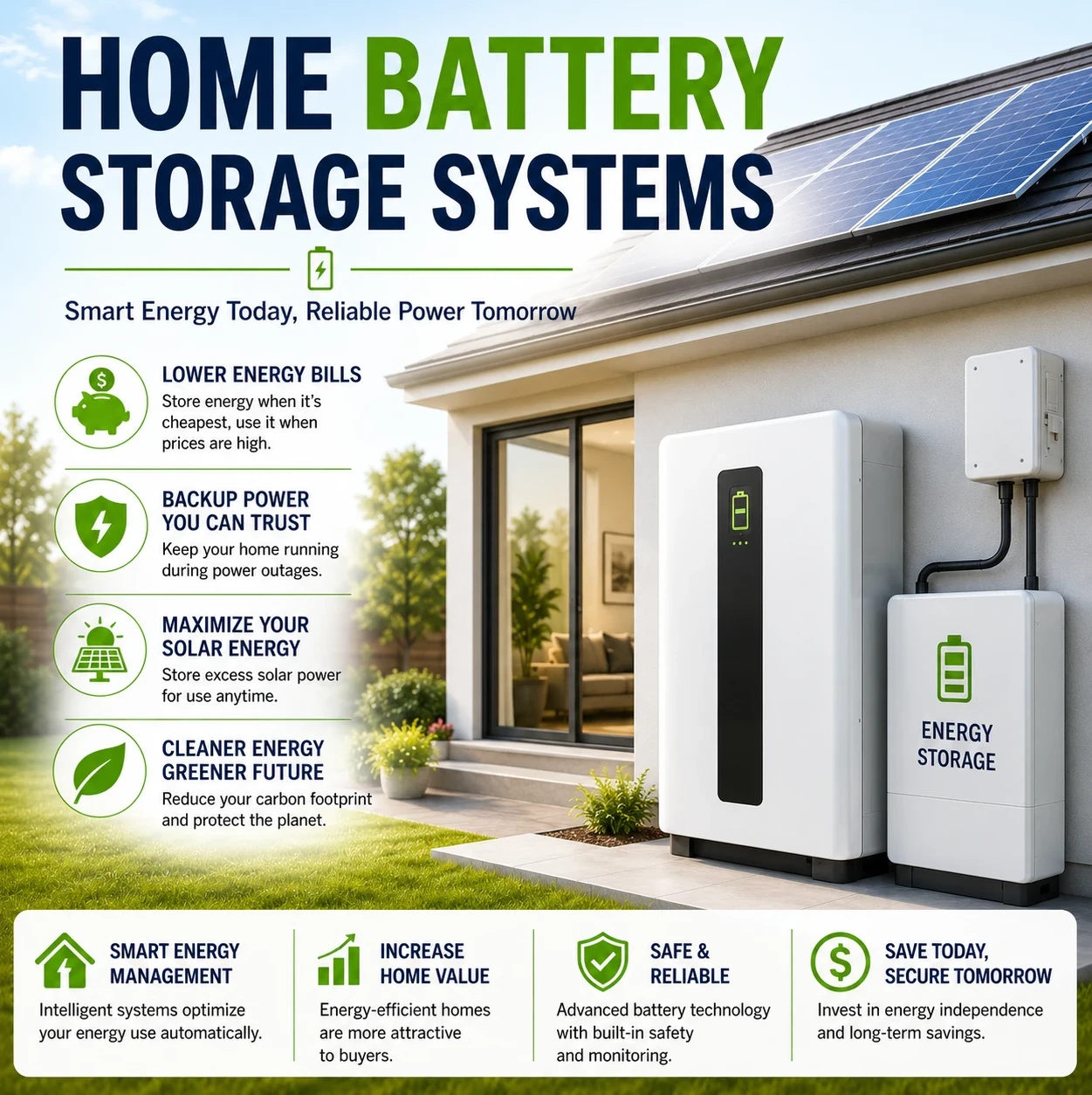
Home battery storage systems are rechargeable batteries that hold electricity until your household needs it. They are commonly installed alongside solar panels, although they can also be charged using electricity from the grid.
During sunny periods, solar panels may generate more electricity than the home is using. Without a battery, this surplus energy is normally exported to the grid. A battery stores part of that electricity so it can be used later in the evening or during periods of higher demand.
A grid-charged battery works in a similar way. It can charge when electricity prices are lower and discharge when prices rise. This may be useful for households with time-of-use or off-peak tariffs.
Most systems operate automatically. Once the settings have been configured, the battery decides when to charge, when to hold energy and when to supply electricity to the home.
Main Components of a Home Battery System
- Rechargeable battery cells
- A battery management system
- An inverter
- Energy monitoring software
- Safety and temperature controls
- A mobile app or online dashboard
These components work together to store electricity safely, protect the battery and manage the flow of energy throughout the home.
How Do Home Battery Storage Systems Work?
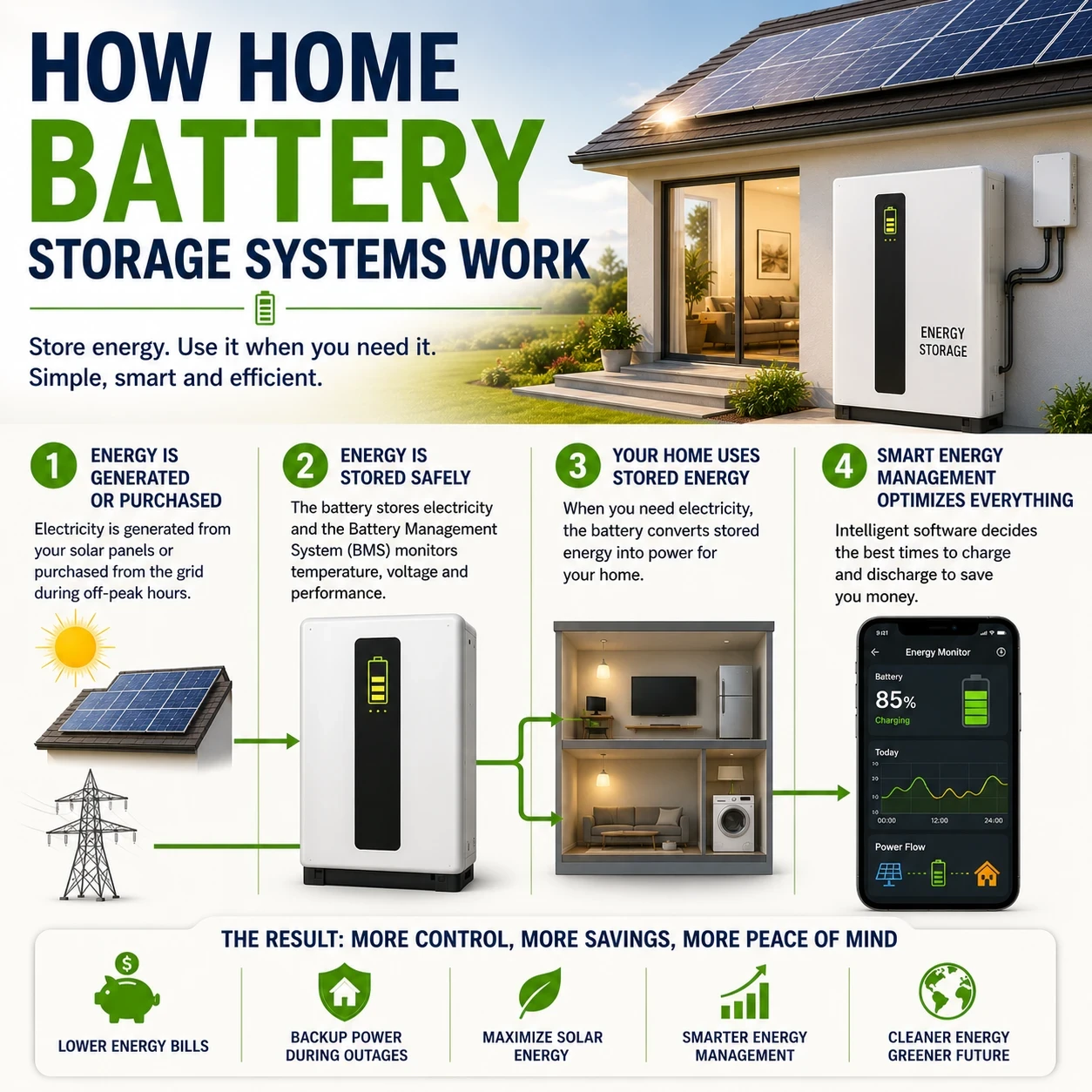
The technology inside a home battery is advanced, but the process is relatively straightforward. Electricity is collected, stored and converted back into usable household power when it is needed.
1. Electricity Enters the System
The battery can receive electricity from:
- Solar panels during daylight hours
- The electricity grid during cheaper tariff periods
- Another compatible renewable energy source
The system first supplies the electricity being used in the home. Any suitable surplus can then be directed into the battery.
2. Electricity Is Stored
Inside the battery, electrical energy is converted into chemical energy. A battery management system monitors the charging process and helps protect the cells from overheating, overcharging and excessive discharge.
The system may continuously monitor:
- Battery temperature
- Voltage
- Charging speed
- Remaining capacity
- Overall battery health
3. Stored Energy Is Supplied to the Home
When solar production falls or household electricity demand rises, the battery releases its stored energy. The inverter converts that energy into alternating current electricity that household appliances can use.
This may happen when:
- The sun goes down
- Solar production drops
- Electricity prices increase
- Household demand becomes higher than solar output
- A power cut occurs and backup operation is available
4. Smart Software Manages the Process
Modern home battery storage systems can use smart software to improve charging and discharging decisions. Depending on the model, the system may analyse household consumption, electricity prices, weather forecasts and expected solar generation.
Some systems can also charge before a forecast storm, preserve a minimum backup reserve or avoid drawing electricity from the grid during expensive peak-rate periods.
Why Home Battery Storage Systems Are Becoming Popular
Home batteries were once considered a specialist product. However, increased solar adoption, changing electricity tariffs and concerns about energy security have made them more attractive to ordinary homeowners.
Rising Electricity Costs
A battery can reduce the amount of expensive peak-rate electricity purchased from the grid. The potential saving depends on local tariffs, battery capacity, household consumption and how the system is operated.
Growth in Solar Panel Installations
A solar battery can increase the amount of renewable electricity used directly in the home. Instead of exporting most surplus production, homeowners can keep part of it for later.
Greater Energy Independence
Battery storage does not necessarily make a home fully independent from the grid. However, it can reduce reliance on grid electricity and provide greater control over how and when energy is used.
Expansion of Smart Home Technology
Many batteries can work alongside electric vehicle chargers, heat pumps, smart meters and home energy management systems. This allows different technologies to operate as part of one coordinated energy system.
Who Should Consider a Home Battery?
Home battery storage systems may be particularly useful for households that:
- Already have solar panels
- Plan to install solar panels
- Use a large amount of electricity in the evening
- Have access to cheaper overnight electricity
- Experience regular power cuts
- Own or plan to buy an electric vehicle
- Use a heat pump
- Want to reduce reliance on the electricity grid
A battery will not provide the same value for every household. Before buying one, compare your daily electricity use with your solar production, tariff structure and likely battery capacity.
Benefits of Home Battery Storage Systems
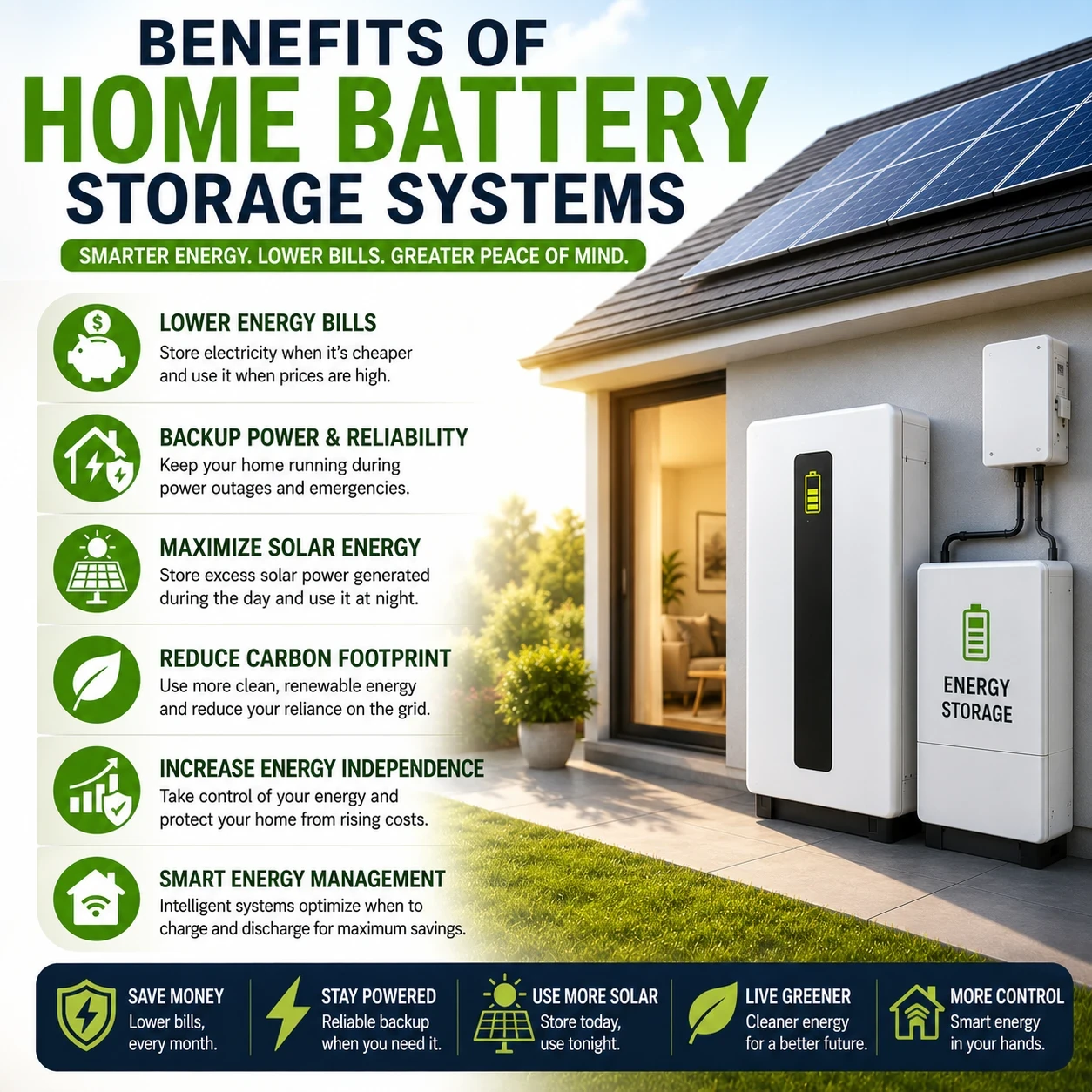
A home battery can offer financial, practical and environmental benefits. The results depend on the system design and the way electricity is used in the property.
Lower Electricity Bills
Stored electricity can be used when grid prices are higher. This may reduce the amount of electricity purchased during peak hours.
Homes with solar panels can also use more of the electricity they generate rather than exporting it and purchasing electricity back later at a higher rate.
Better Use of Solar Energy
Solar panels often generate the most electricity around the middle of the day, while household demand may be higher in the evening. Battery storage helps bridge this gap by moving surplus daytime energy into the evening.
Backup Electricity During Power Cuts
Compatible systems can provide emergency electricity when the grid fails. Depending on the system size and installation, this may support:
- Lighting
- Refrigerators and freezers
- Internet equipment
- Home security systems
- Mobile device charging
- Selected medical equipment
Not every battery automatically works during a power cut. Backup operation may require additional equipment, a separate emergency circuit or a compatible gateway.
For a wider look at keeping a home powered during an outage, see our Best Home Backup Power Systems 2026 guide.
Greater Control Over Energy Use
Battery monitoring apps allow homeowners to see how much electricity is being generated, stored, imported and consumed. This information can make it easier to identify waste and adjust household routines.
Reduced Grid Dependence
Using more locally generated renewable electricity can lower dependence on grid power. However, most grid-connected homes will still require electricity from the grid at certain times.
Different Types of Home Battery Storage Systems
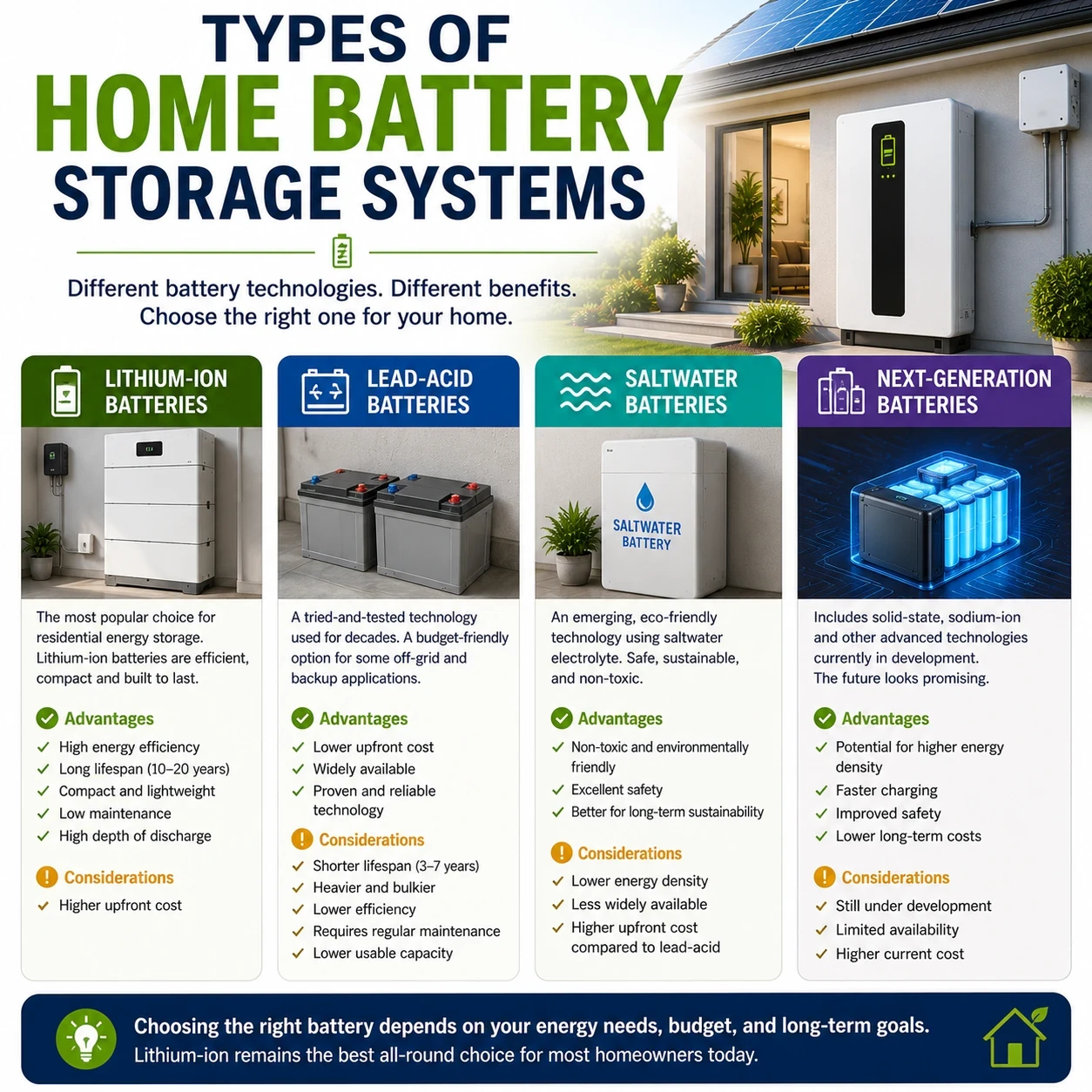
Several battery technologies can be used for residential energy storage. Each type has different advantages, limitations and costs.
Lithium-Ion Batteries
Lithium-ion technology is widely used in modern home battery storage systems because it combines high efficiency with compact dimensions and a relatively long service life.
Typical advantages include:
- High energy efficiency
- Compact design
- Low maintenance requirements
- Fast charging
- High usable capacity
- Long operating life
Lithium iron phosphate batteries are a common form of lithium-ion technology used in residential systems. They are valued for thermal stability, safety and long cycle life.
Lead-Acid Batteries
Lead-acid batteries have been used for many years in off-grid and backup applications. Their purchase price may be lower, but they are usually heavier, less efficient and shorter-lived than modern lithium alternatives.
Possible disadvantages include:
- Lower usable capacity
- Shorter cycle life
- Larger physical size
- Greater weight
- More maintenance
- Slower charging
Saltwater Batteries
Saltwater batteries use materials that may be less hazardous than those found in some conventional battery technologies. They can offer a good safety profile, although availability is limited and their energy density may be lower.
Sodium-Ion and Solid-State Batteries
Sodium-ion and solid-state technologies are being developed as possible alternatives to conventional lithium-ion batteries. They may eventually offer improvements in material availability, safety, performance or manufacturing cost.
However, homeowners should compare products that are commercially available and supported by an established warranty rather than making a purchase based on future technology claims.
How Much Battery Capacity Does a Home Need?
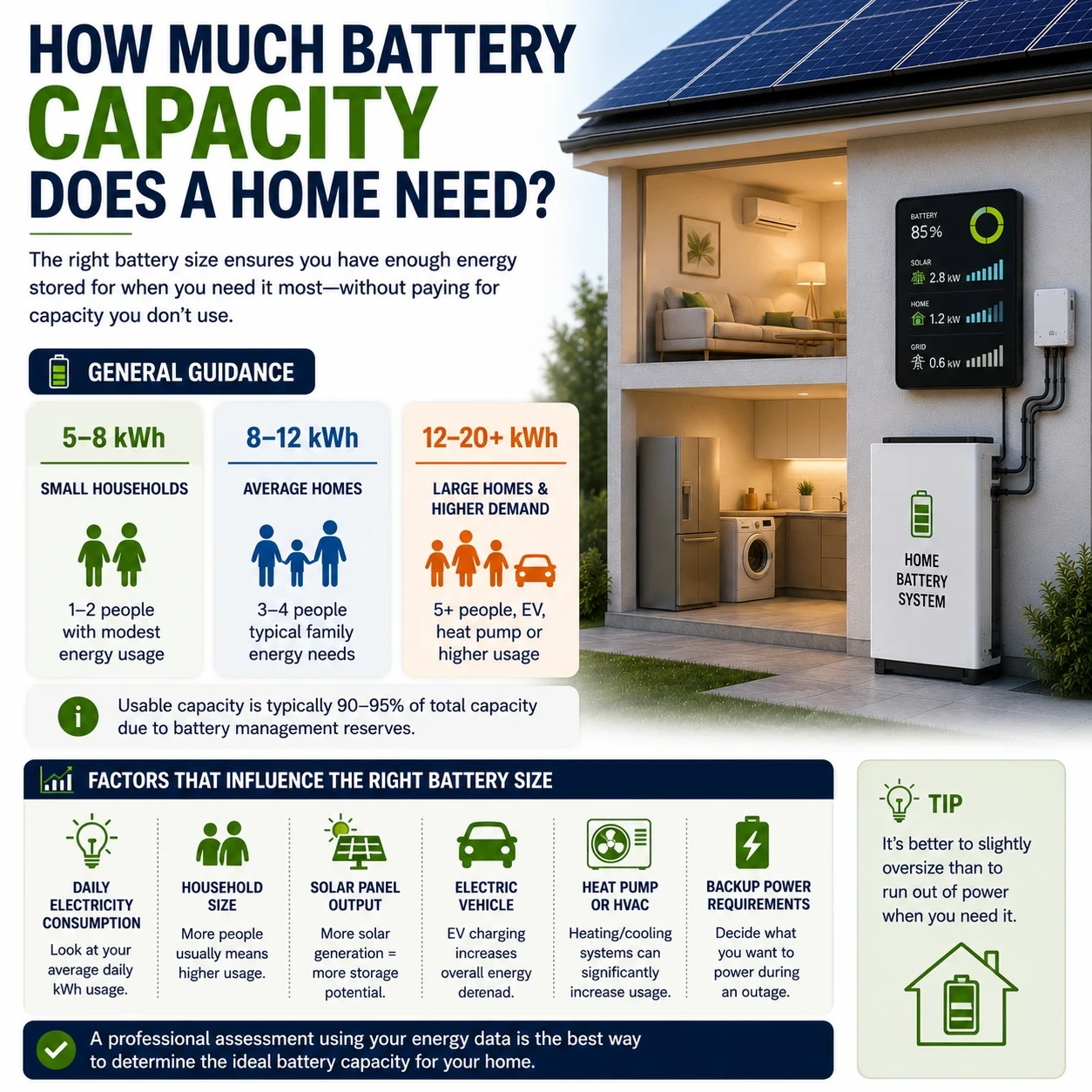
Battery capacity is measured in kilowatt-hours. It indicates the amount of electricity the battery can hold, although the full stated capacity may not always be available for everyday use.
As a broad guide:
- 5–8 kWh: Smaller households with modest electricity use
- 8–12 kWh: Average family homes
- 12–20 kWh or more: Larger homes, electric vehicles or high electricity demand
These figures are only general examples. The appropriate capacity depends on:
- Average daily electricity consumption
- Evening and overnight electricity use
- Solar panel output
- Available roof space
- Electric vehicle charging
- Heat pump consumption
- Backup power requirements
- The electricity tariff
An oversized battery may increase the purchase price without delivering proportional savings. A battery that is too small may fill quickly and provide insufficient energy during the evening.
Usable Capacity Versus Total Capacity
Total capacity is the complete amount of energy held by the battery. Usable capacity is the portion that can normally be discharged.
Manufacturers may retain a small reserve to protect battery health. For this reason, compare usable capacity rather than relying only on the larger headline figure.
Can a Home Battery Work Without Solar Panels?
Yes. Home battery storage systems can operate without solar panels by charging from the electricity grid.
This may be useful when an electricity supplier offers cheaper overnight or off-peak rates. The battery can charge during the lower-cost period and supply electricity when the tariff becomes more expensive.
The financial benefit depends on the difference between the charging and peak rates, as well as energy losses during charging and discharging.
Combining a battery with solar panels generally creates more opportunities to reduce grid consumption, but solar generation is not essential for battery operation.
Choosing the Right Home Battery System
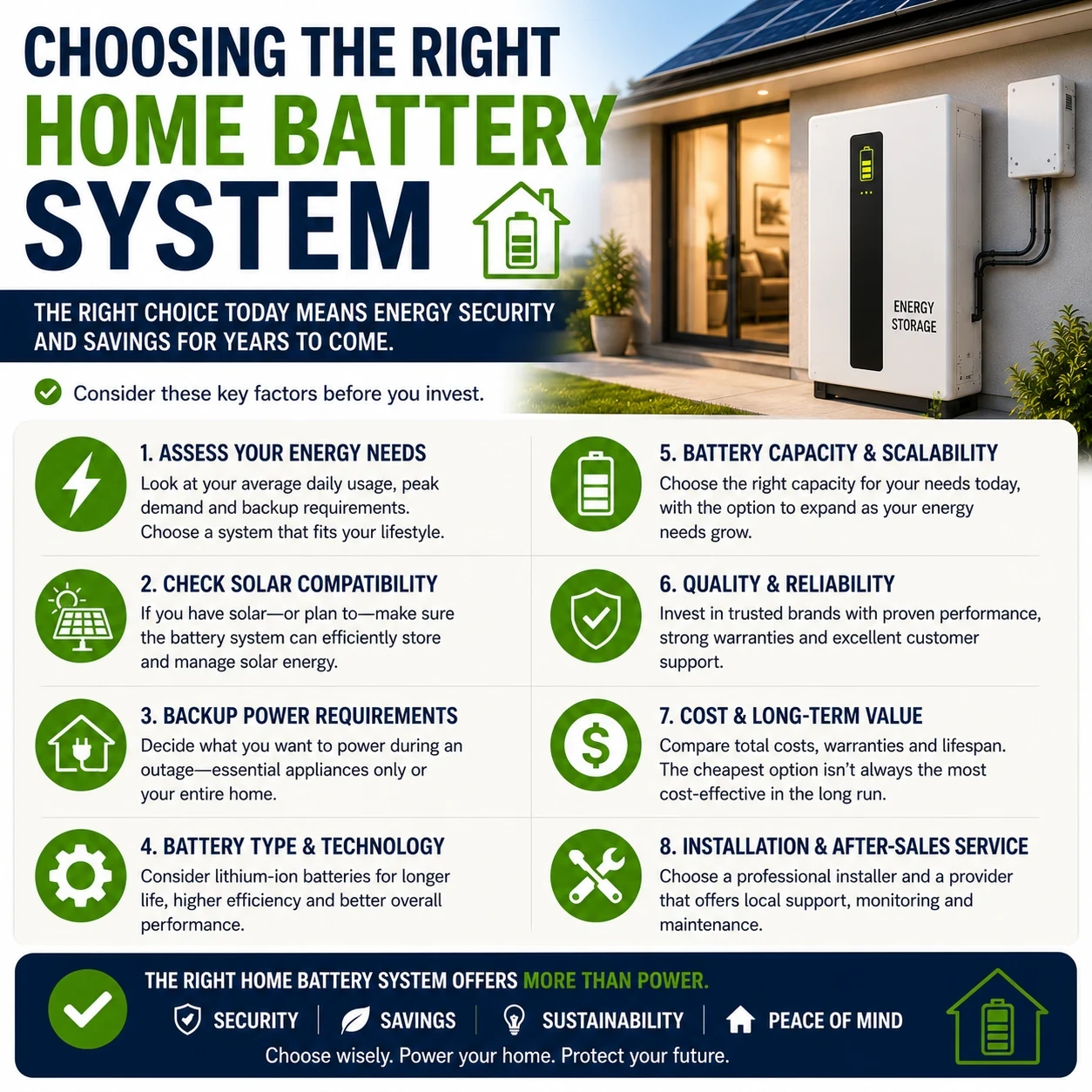
The best home battery storage system is not necessarily the model with the largest capacity or lowest price. It should match the property’s electricity use, solar output, budget and future plans.
Battery Capacity
Compare the usable battery capacity with your typical evening and overnight consumption. Your installer should examine recent electricity bills or smart meter data before recommending a size.
Power Output
Capacity measures how much energy the battery stores. Power output measures how quickly it can supply that energy.
A large battery with a low power output may not run several high-demand appliances at the same time. Check both continuous and peak output ratings.
Round-Trip Efficiency
Some energy is lost when electricity enters and leaves a battery. Round-trip efficiency shows how much stored electricity can be recovered for use.
A higher figure generally means less electricity is lost during the storage process.
Battery Chemistry
Battery chemistry affects safety, efficiency, lifespan, operating temperature and size. Ask the installer which chemistry is used and why it is suitable for the proposed installation location.
Warranty Protection
Battery warranties may be based on years, energy throughput, charging cycles or a combination of these limits.
Check:
- Warranty duration
- Guaranteed remaining capacity
- Maximum energy throughput
- Maximum number of cycles
- Parts and labour coverage
- Installer support
Expandability
A modular system allows extra battery capacity to be added later. This can be useful if you plan to install more solar panels, purchase an electric vehicle or replace a conventional heating system with a heat pump.
Backup Power Capability
Do not assume that every battery will power the home during a blackout. Ask whether the system includes:
- Automatic changeover
- Essential-load backup
- Whole-home backup
- Black-start capability
- Solar charging during an outage
Installation Location
The proposed location must meet the manufacturer’s requirements and applicable electrical and fire-safety rules. Consider ventilation, temperature, weather protection, access and distance from living areas.
Monitoring and Smart Control
Modern battery systems often include an app or online dashboard that shows solar generation, battery charge level, household electricity use and electricity imported from or exported to the grid.
More advanced systems may allow charging schedules, minimum backup reserves and time-of-use settings to be adjusted so the battery can respond to changing electricity tariffs and household requirements.
Home Battery vs Portable Power Station
Although both products store electricity, they are designed for very different purposes. Home battery storage systems provide permanent energy storage for your home, while portable power stations are designed for mobility and temporary backup power.
Some homeowners choose to own both. A permanently installed home battery provides everyday energy savings and backup power, while a portable power station is useful for camping, road trips, garden use and charging essential devices during emergencies.
A portable power station may be suitable for charging phones, running small appliances or providing temporary emergency electricity. A permanently installed home battery is designed for larger-scale household energy management.
Home Backup Power Systems Installation Guide
Installing a permanent home battery is different from setting up a portable power station. A home battery may need to connect with your electrical panel, solar inverter, monitoring equipment and, where backup power is required, dedicated equipment that safely separates the home from the electricity grid during an outage.
This home backup power systems installation guide explains the main stages homeowners should understand before choosing a battery and installer. The exact requirements vary according to the battery system, property, local electrical regulations and whether solar panels are already installed.
Permanent battery systems connected to household wiring should normally be designed and installed by a suitably qualified electrical professional. Homeowners should understand the process, but electrical wiring, protection equipment and grid isolation are not areas for guesswork.
1. Decide What You Want the Battery to Do
The first decision is whether the battery is mainly intended to reduce electricity bills, store excess solar energy, provide backup electricity during power cuts or perform all three jobs.
This matters because a battery designed primarily for tariff savings may require a different configuration from a system expected to keep important household circuits operating when the grid fails.
If emergency electricity is one of your main priorities, our Best Home Backup Power Systems 2026 guide explains the main backup options available.
2. Identify Your Essential Electrical Loads
Trying to power an entire house during a blackout can dramatically increase battery capacity, inverter output and installation cost. For many households, backing up selected essential circuits is more practical.
Essential loads may include:
- Refrigerator and freezer
- Internet router
- Essential lighting
- Heating or boiler controls
- Security equipment
- Phone and laptop charging
- Selected medical or communications equipment where required
Large loads such as electric showers, cookers, immersion heaters, heat pumps and EV chargers require considerably more power and should be discussed with the installer when the system is being sized.
3. Calculate Battery Capacity and Power Output
Battery capacity and power output are not the same thing.
Battery capacity, normally measured in kilowatt-hours (kWh), indicates approximately how much electricity can be stored.
Power output, normally measured in kilowatts (kW), indicates how much electrical equipment the battery can operate at the same time.
A backup system therefore needs enough stored energy for the required runtime and sufficient inverter output to operate the appliances you intend to use.
4. Choose a Suitable Installation Location
The battery location should comply with the manufacturer’s installation requirements and applicable electrical and fire-safety regulations.
An installer may consider factors such as temperature, ventilation, weather protection, access for maintenance, cable routes and the distance between the battery, inverter and electrical equipment.
Some systems can be installed outdoors when appropriately rated, while others require a protected indoor location. Never assume that a garage, attic, utility room or external wall is suitable without checking the manufacturer’s requirements.
5. Plan the Inverter and Electrical Connection
The inverter is one of the most important parts of a battery storage system because it manages the conversion of electricity between the battery and the home’s AC electrical system.
If solar panels are already installed, the installer should establish whether the existing inverter can work with the proposed battery or whether additional equipment is required.
Homes planning solar panels and battery storage at the same time may be able to use a compatible hybrid inverter, depending on the system design.
6. Add Backup Equipment if Required
One of the most important points to understand is that not every home battery automatically supplies electricity during a power cut.
When the grid fails, grid-connected equipment must operate safely and prevent electricity from being fed back onto the electricity network. A battery designed for backup may therefore require compatible switching, gateway or isolation equipment.
The installation may be configured for selected essential circuits or, with suitably designed equipment and sufficient battery capacity, a larger proportion of the home.
Ask the installer specifically what will continue working during an outage before agreeing to the system.
7. Integrate Solar Panels Where Appropriate
Combining solar panels with battery storage can allow surplus daytime electricity to charge the battery instead of being exported immediately to the grid.
Some correctly designed systems can also use solar generation to recharge the battery during an extended outage. This can be particularly valuable because battery capacity is finite and eventually needs to be replenished.
However, solar panels do not automatically continue charging every battery during a blackout. Backup operation depends on the inverter, battery, isolation equipment and overall system design.
8. Commission and Test the System
Installation is not complete simply because the battery switches on.
The installer should commission the system, confirm that monitoring works correctly and explain its main operating settings. Where backup functionality has been installed, the backup arrangement should also be tested appropriately.
Before the installer leaves, make sure you understand how to check:
- Battery charge level
- Household electricity consumption
- Solar generation where installed
- Grid import and export
- Backup reserve settings
- Charging schedules
- System warnings or notifications
Questions to Ask Before Installation
Before accepting a quotation, ask the installer exactly what is included. Confirm the usable battery capacity, inverter output, backup capability, expected installation location, warranty protection and whether additional electrical work may be required.
Also ask whether the system can be expanded later. Future electricity requirements may increase if you add more solar panels, purchase an electric vehicle or install a heat pump.
A well-designed home battery system should be based on your actual electricity consumption and what you want the battery to achieve rather than simply installing the largest battery available.
How Much Do Home Battery Storage Systems Cost?
The total cost depends on battery capacity, inverter requirements, backup equipment, electrical work and installation complexity.
As a broad guide, residential systems may fall into the following ranges:
- Smaller systems: approximately £3,000–£5,000
- Medium systems: approximately £5,000–£8,000
- Larger systems: approximately £8,000–£15,000 or more
These figures are general estimates rather than quotations. Prices vary by country, installer, manufacturer, battery capacity and whether the system is installed with new solar panels.
Additional costs may include:
- A new or hybrid inverter
- Backup gateway equipment
- Electrical panel upgrades
- Monitoring hardware
- Installation labour
- Planning or certification costs
What Affects the Payback Period?
The time required to recover the cost of a battery depends on:
- The purchase and installation price
- Electricity tariffs
- Solar generation
- Household consumption
- Export payments
- Battery efficiency
- Battery degradation
- Available grants or incentives
A reputable installer should provide a realistic savings estimate based on your actual electricity data rather than using a generic payback claim.
Are Home Battery Storage Systems Worth It?
Home battery storage systems can be worthwhile when they are correctly sized and used with a suitable tariff or solar panel system. However, the financial case differs from one household to another.
A battery may offer better value when you:
- Already own solar panels
- Export a large amount of unused solar electricity
- Use significant electricity in the evening
- Have access to a cheap off-peak tariff
- Want backup electricity
- Plan to remain in the property for several years
- Expect household electricity demand to increase
It may offer less financial value when electricity consumption is very low, the tariff difference is small or the system is much larger than the household needs.
The decision should consider more than payback alone. Some homeowners also value energy security, reduced grid dependence and the ability to use more renewable electricity.
Common Mistakes When Buying a Home Battery
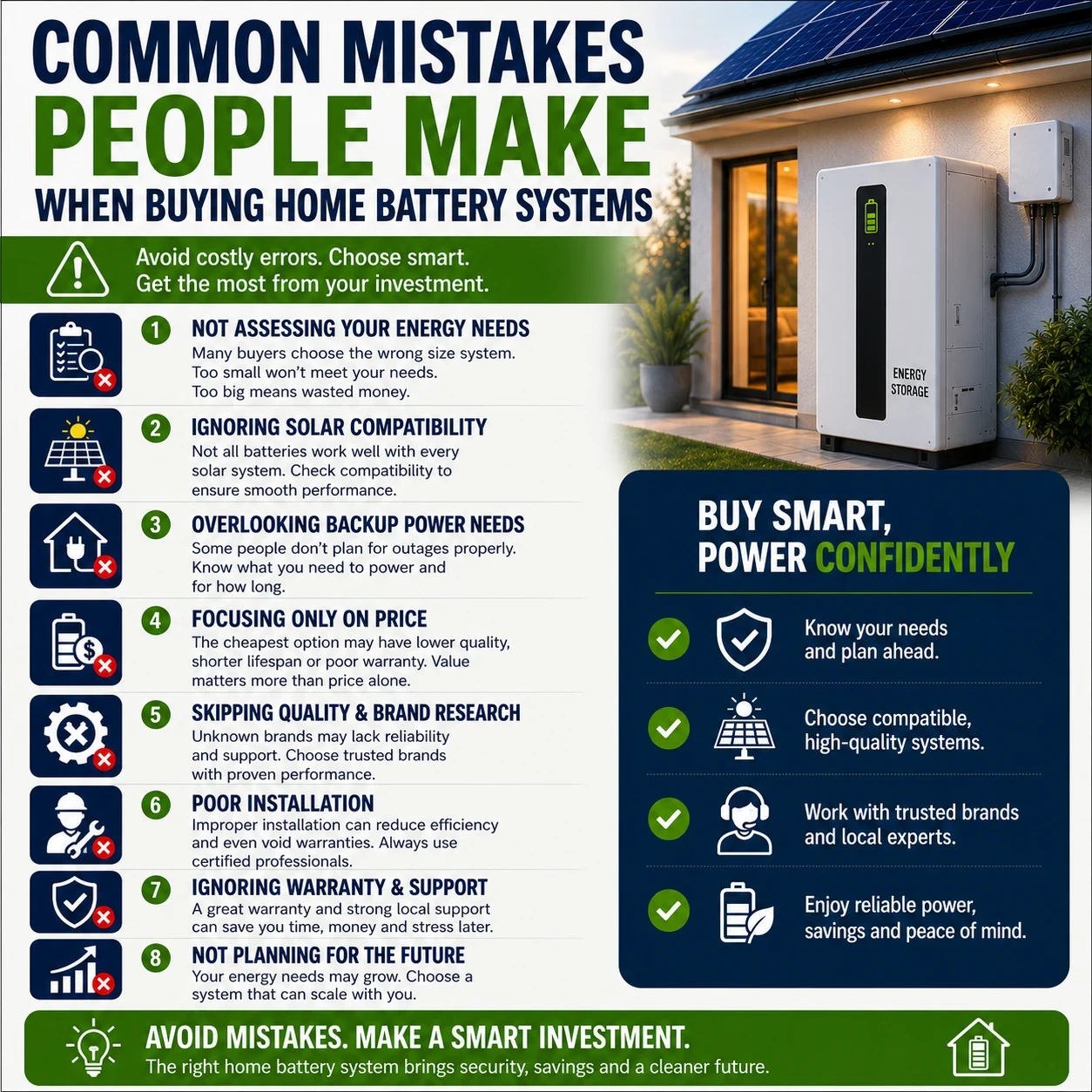
Choosing a Battery Based Only on Price
A low purchase price may be attractive, but it should be considered alongside efficiency, usable capacity, safety certification, warranty protection and installer support.
Buying the Wrong Capacity
An oversized battery may rarely become fully charged, while an undersized battery may be empty before the most expensive part of the day.
Battery size should be based on actual household consumption rather than guesswork.
Confusing Capacity With Power Output
A battery may store a large amount of electricity but still have insufficient output to run several appliances simultaneously. Compare both figures.
Ignoring Warranty Conditions
A ten-year warranty may still include limits on charging cycles, energy throughput or remaining capacity. Read the complete warranty rather than relying on the headline duration.
Assuming Every Battery Works During a Power Cut
Grid-connected battery systems may shut down during an outage unless backup equipment has been included. Confirm this feature before installation.
Failing to Plan for Future Energy Needs
Electric vehicle charging, heat pumps and additional solar panels can substantially change household electricity consumption. A modular battery may provide more flexibility.
Using an Inexperienced Installer
Battery storage involves high-voltage electrical equipment. Poor installation can reduce performance, invalidate the warranty and create safety risks.
Choose a qualified installer with experience in the proposed battery system and knowledge of local installation requirements.
Frequently Asked Questions
How long do home battery storage systems last?
Many modern residential batteries are designed to operate for approximately 10 to 20 years. Actual lifespan depends on battery chemistry, operating temperature, charging cycles, depth of discharge and general use.
Can I install a battery without solar panels?
Yes. A battery can charge from the electricity grid during cheaper tariff periods and supply stored energy when electricity is more expensive.
How are home backup battery systems installed?
Permanent home backup battery systems are normally connected to the property’s electrical system by a suitably qualified professional. Installation can include the battery, inverter, monitoring equipment and, where blackout protection is required, compatible switching or gateway equipment. The exact design depends on the property, battery system, electrical installation and whether solar panels are included.
Can a battery power an entire house?
Some systems can support an entire home, while others are designed to power only essential circuits. The result depends on battery capacity, inverter power output, household demand and the backup equipment installed.
Will a home battery automatically work during a power outage?
No. A battery can store electricity without necessarily providing backup power when the grid fails. Backup operation requires a compatible system design and may require additional isolation, switching or gateway equipment. Always confirm exactly which household circuits will remain powered before purchasing the system.
How efficient are home batteries?
Many modern lithium-ion systems have a round-trip efficiency of approximately 90% or more. The exact figure varies by model, inverter and installation.
Do home batteries require maintenance?
Modern batteries generally require little routine maintenance. However, the system should remain accessible for inspection, software updates and professional servicing when required.
Can extra battery capacity be added later?
Some modular systems allow additional battery units to be installed. Expansion may be limited by the inverter, battery model, installation design or manufacturer’s compatibility rules.
Will a home battery increase property value?
A battery may make a property more attractive to buyers who value lower energy use and renewable technology. However, any effect on property value will depend on the system, its remaining warranty and the local housing market.
Can a home battery charge an electric vehicle?
A battery can contribute electricity towards electric vehicle charging. However, vehicle batteries are large, so one charging session may use most or all of the stored household energy.
Final Thoughts on Home Battery Storage Systems
Home battery storage systems can help homeowners store solar electricity, avoid expensive peak-rate energy and maintain backup power during an outage when the system has been designed for that purpose.
The best results come from choosing a battery that matches household consumption, solar generation and future energy plans. Capacity, power output, efficiency, warranty protection, installation requirements and backup capability should all be compared carefully.
Before committing to a system, review recent electricity bills, examine smart meter data and obtain detailed quotations from qualified installers. A properly designed battery system can become an important part of a more efficient, resilient and flexible home energy setup.
Continue Your Research
🔋 Best Home Energy Systems 2026
⚡ Best Home Backup Power Systems 2026
🎥 Battery Storage & Backup Power Video Guides
External Resource
For independent information about residential energy efficiency and renewable energy technology, visit the U.S. Department of Energy Energy Saver.