Best Home Backup Power Systems 2026
Compare home backup batteries, calculate how long they could run essential appliances and discover which type of system makes sense for your home, rural property or extended power outage.
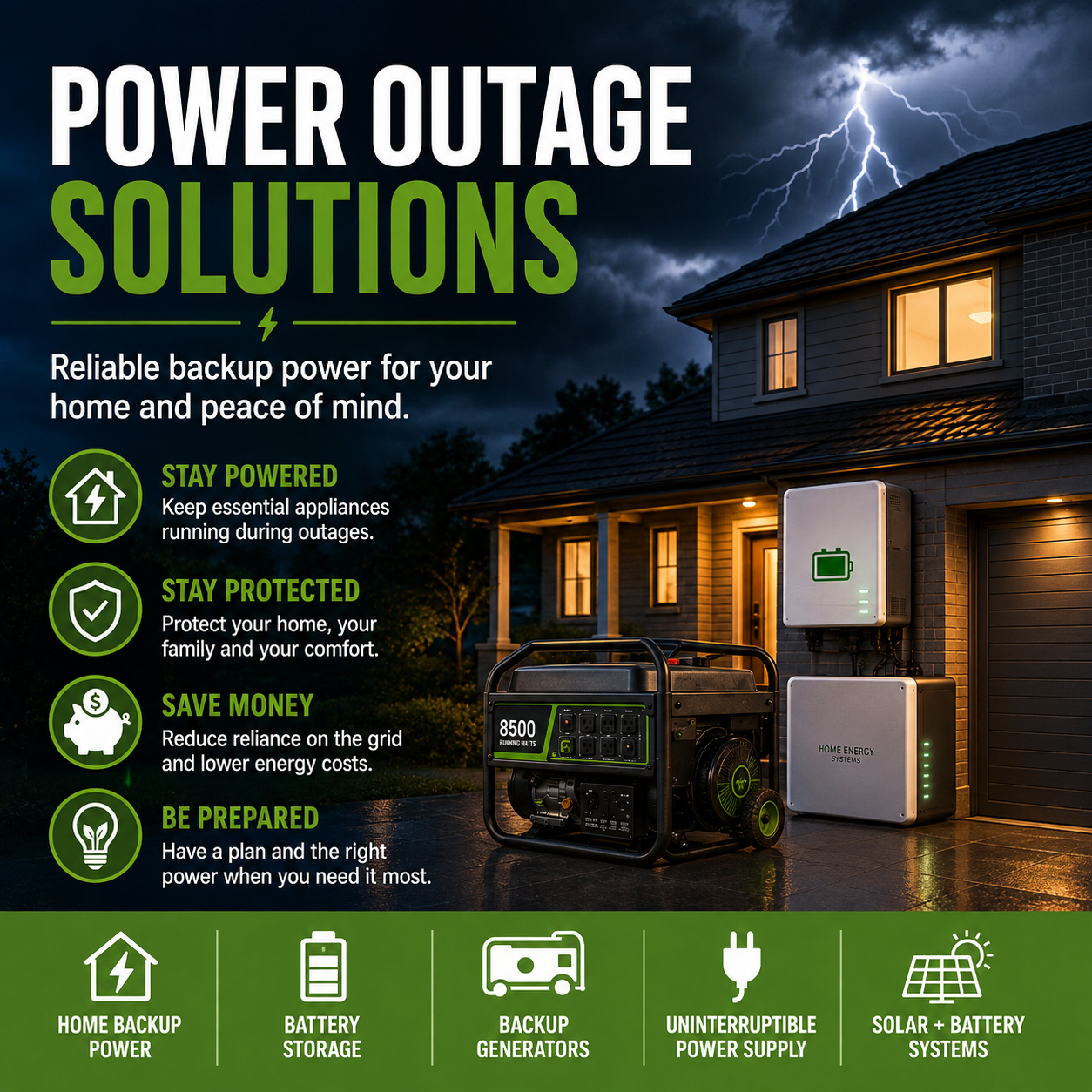
Quick answer: The best home backup power system is the one that can safely run your essential appliances for the required time. For a few lights, a router and a refrigerator, a portable battery may be sufficient. Larger households, rural water pumps and longer outages may require expandable storage, solar charging or professionally installed backup circuits.
Choosing the best home backup power systems 2026 involves more than comparing battery sizes and manufacturer claims.
A system that can supply a refrigerator and internet router overnight may be completely unsuitable for a property with a deep-well pump, electric heating and several high-power appliances.
Likewise, a large inverter does not guarantee a long runtime. A battery may be capable of delivering several thousand watts but run out of stored energy surprisingly quickly.
This guide explains how to compare battery capacity, inverter output, usable runtime, expansion options and regional compatibility. It also examines five backup products with different strengths and limitations.
Affiliate disclosure: Home-Energy-Systems.COM may earn a commission when readers purchase through selected affiliate links. This does not increase the price paid. Affiliate relationships do not determine whether a product is suitable for a particular household.
Product comparisons are based on published specifications and practical use cases, not claims of independent laboratory testing.
Which Home Backup Power System Do You Actually Need?
The first step is to decide what must remain powered. Our How to Prepare for a Power Outage guide explains how to identify essential loads and prepare a household emergency plan.
For a broader comparison of generators, UPS equipment and battery technologies, see Power Outage Solutions 2026.
What Is a Home Backup Power System?
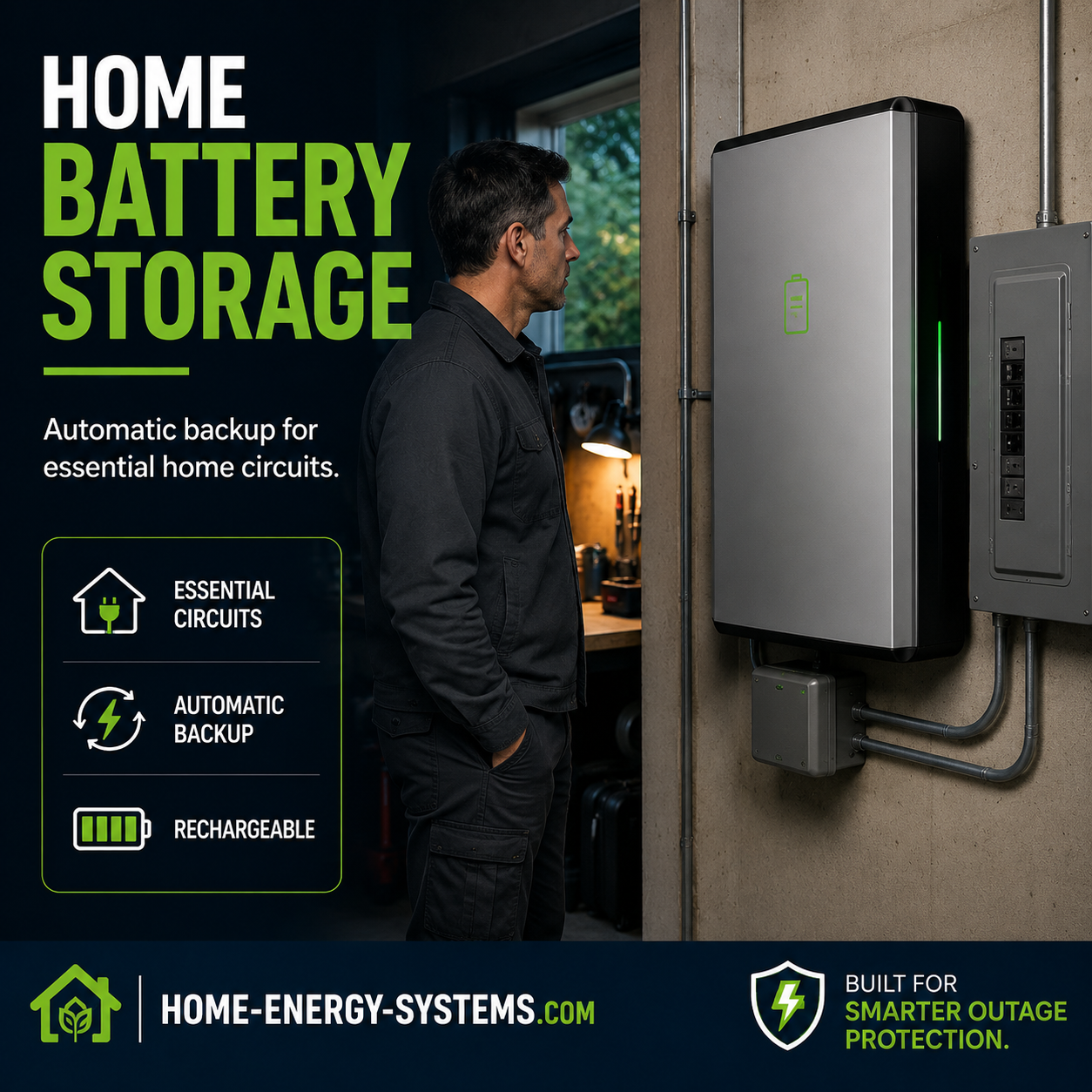
A home backup power system provides electricity when the normal grid supply fails.
Battery systems store electricity in advance. Generators produce electricity using fuel. Some installations combine batteries, solar panels and generators to increase resilience during extended outages.
The most common options include:
- Portable battery power stations
- Expandable battery systems
- Solar-compatible backup batteries
- Permanently installed home storage
- UPS systems for computers and networking
- Petrol, diesel or other suitable generators
- Hybrid backup installations
For permanently installed storage, read our Home Battery Storage Systems guide.
Five Home Backup Power Systems Compared
The following products represent different approaches to backup power. They are not identical systems and should not be judged solely by nominal battery capacity.
Regional electrical compatibility is particularly important. Some products listed here are North American configurations, while others have European versions. Confirm voltage, frequency, outlet type and approved integration equipment before buying.
EcoFlow DELTA Pro Ultra
The EcoFlow DELTA Pro Ultra is designed for households that want a larger modular backup system rather than a conventional small power station.
The substantial base battery makes it an interesting option for longer essential-load operation. Compatible expansion batteries can increase stored energy further.
- Large starting battery capacity
- Modular expansion
- Solar-charging capability
- Suitable for planning larger backup configurations
Anker SOLIX F3800 Plus
The Anker SOLIX F3800 Plus combines expandable LFP storage with high inverter output in its North American configuration.
Its relatively high inverter output may appeal to buyers needing to operate appliances with substantial electrical demand, provided the system and outlets are compatible.
- High continuous output rating
- Expandable battery capacity
- Solar-charging options
- Compatible home-backup accessories
Jackery Explorer 5000 Plus
The Jackery Explorer 5000 Plus offers a substantial starting battery and expansion options for households considering higher-capacity backup.
The larger base capacity can support longer operation at modest loads than smaller battery packs, although actual runtime depends on efficiency and the connected equipment.
- 5kWh-class base capacity
- Modular expansion
- Solar compatibility
- Options for larger backup configurations
Nature’s Generator Powerhouse Gen 2
Nature’s Generator is unusual in this comparison because its Powerhouse Gen 2 supports both solar and wind charging and uses AGM sealed lead-acid batteries.
For some rural or off-grid properties, the ability to combine compatible wind and solar charging may be valuable.
- Solar and wind charging options
- Expandable storage
- High inverter output
- Interesting option for suitable rural properties
The referenced configuration is North American. Check electrical compatibility before considering use in other countries.
Interested in small-scale wind? See our Best Home Wind Turbines 2026 guide.
View Nature’s GeneratorBLUETTI Apex 300
The BLUETTI Apex 300 offers a smaller starting battery than several other systems in this comparison but combines it with substantial inverter output and modular expansion.
Its combination of output and expandability may suit households wanting to start with a smaller battery and add storage later.
However, a 2.76kWh battery is not equivalent to a 6kWh battery simply because both systems can power substantial appliances.
- Smaller initial battery capacity
- Strong inverter output
- Compatible expansion batteries
- Solar-charging support
- Options for building a larger backup configuration
Affiliate link to BLUETTI US. Confirm the Apex 300 model, availability and current product specifications on the destination website.
Home Backup Power Systems: Quick Comparison
| System | Base battery | Chemistry | Potential use |
|---|---|---|---|
| EcoFlow DELTA Pro Ultra | 6,144Wh | LFP | Large modular backup |
| Anker SOLIX F3800 Plus | 3,840Wh | LFP | High-output expandable backup |
| Jackery Explorer 5000 Plus | 5,040Wh | LFP | Larger starting battery |
| Nature’s Generator Powerhouse Gen 2 | 4,800Wh nominal | AGM | Solar and wind applications |
| BLUETTI Apex 300 | 2,764.8Wh | LFP | Expandable starting point |
These are nominal base capacities, not guaranteed usable AC energy. Product features and regional specifications may vary.
How Long Will a Home Backup Battery Actually Last?
This is one of the most useful questions to answer before buying a backup system.
Battery capacity is measured in watt-hours (Wh) or kilowatt-hours (kWh). Electrical demand is measured in watts (W).
For a simplified estimate, divide the energy available to the appliances by their average power consumption.
For the following LFP examples, we use an illustrative 85% of nominal capacity delivered as AC energy. This is a planning assumption that allows for conversion losses and other practical limitations, not a measured efficiency figure for any specific product.
Illustrative LFP Battery Runtime Comparison
| Battery | 100W average | 300W average | 600W average |
|---|---|---|---|
| EcoFlow 6,144Wh | 52.2 hours | 17.4 hours | 8.7 hours |
| Anker 3,840Wh | 32.6 hours | 10.9 hours | 5.4 hours |
| Jackery 5,040Wh | 42.8 hours | 14.3 hours | 7.1 hours |
| BLUETTI 2,764.8Wh | 23.5 hours | 7.8 hours | 3.9 hours |
Important: These are calculated illustrations, not tested runtimes or manufacturer guarantees. Real performance varies with battery condition, operating temperature, inverter self-consumption, depth-of-discharge limits, power factor and load behaviour. Low loads can be disproportionately affected by inverter standby consumption.
Nature’s Generator is excluded from this LFP runtime table because its AGM battery has different discharge characteristics and usable-capacity considerations.
Worked Example: A 300W Average Load
Imagine your essential appliances average 300W while operating.
Over 12 hours, they would require approximately 3.6kWh of AC electricity.
Under the 85% planning assumption, the nominal LFP battery capacity needed would be approximately:
That suggests a battery of around 4.3kWh or larger as a starting point for this example, before adding any extra reserve or accounting for unusually high surge demands.
But the crucial detail is that 300W must represent the average demand over the entire period, not merely the rating printed on one appliance.
Three Realistic Home Backup Power Scenarios
Scenario 1: Refrigerator, Router and Essential Lighting
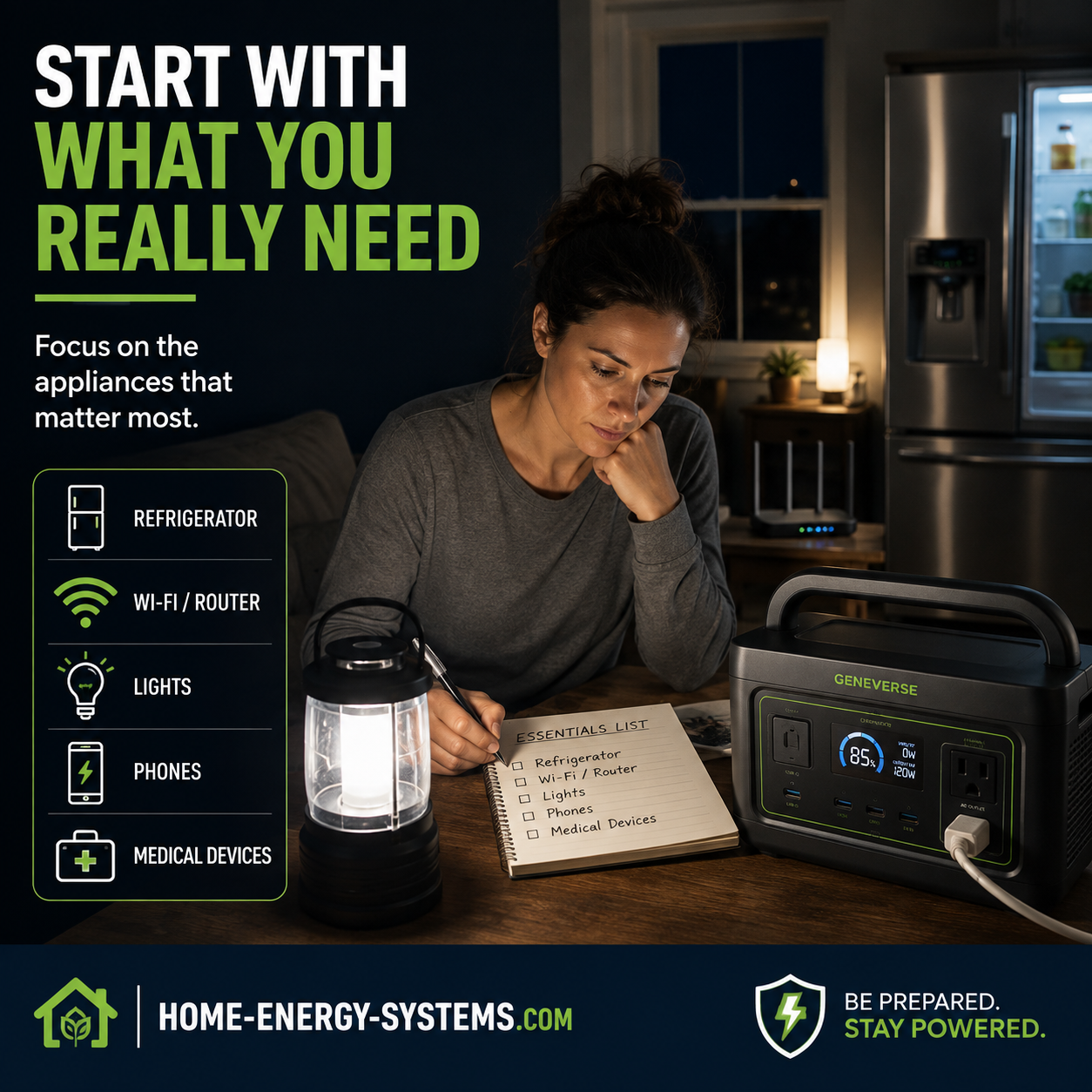
Consider a household wanting to maintain:
- A refrigerator
- An internet router
- Several LED lights
- Occasional phone charging
Suppose these appliances collectively consume an average of 100W over a 24-hour period, including refrigerator cycling.
Their daily energy requirement would be:
Using the 85% planning assumption, approximately 2.82kWh of nominal LFP storage would be required to deliver 2.4kWh of AC energy.
A battery with slightly less capacity may provide useful backup but could fall short of a full day in this scenario.
Actual refrigerator consumption and compressor starting surge must be checked. An appliance energy meter can help establish real-world usage.
Scenario 2: Rural Property With a Water Pump
Rural homes can have electrical requirements that are easy to overlook.
Examples include:
- Well or borehole pumps
- Pressure-boosting pumps
- Water treatment equipment
- Heating circulation pumps
- Refrigeration and communications
A water pump might operate for only a short period each day, but its motor may draw substantially more power during startup than during normal running.
For example, a 750W pump running for a total of one hour consumes approximately 750Wh, excluding starting losses and associated equipment.
That energy requirement may be manageable, but the inverter must also tolerate the motor’s starting demand.
Rural backup warning: Never size a pump backup system using battery capacity alone. Check motor startup requirements, inverter surge capability, voltage, frequency and whether the pump manufacturer approves the proposed supply arrangement.
For rural properties, a larger expandable system or properly installed hybrid backup solution may be more appropriate than a small portable battery.
Scenario 3: A Prolonged Outage Lasting Two Days
Imagine essential household loads averaging 200W over 48 hours.
At an assumed 85% delivered AC fraction, this would require approximately 11.3kWh of nominal LFP capacity before additional reserve.
That is considerably more storage than most single portable power stations provide.
Possible solutions include:
- Compatible expansion batteries
- Reducing nonessential electricity consumption
- Solar charging when sufficient sunlight is available
- A suitably installed generator
- A professionally designed hybrid system
Solar can help replenish stored energy, but it cannot guarantee adequate charging during poor weather or at night.
How to Size a Home Backup Power System
Before choosing a brand, work through the following steps.
- List essential appliances. Identify what genuinely needs to remain powered during an outage.
- Measure energy use. Use appliance labels, reliable consumption data or a suitable energy meter.
- Estimate average demand. Account for cycling appliances such as refrigerators rather than assuming continuous full-rated power.
- Choose backup duration. Decide whether you need six hours, overnight operation, 24 hours or several days.
- Calculate battery capacity. Allow for conversion losses, usable capacity and a sensible reserve.
- Check inverter output. Confirm both continuous power and motor-starting surge capability.
- Check recharging options. Consider mains charging, compatible solar or other approved charging sources.
- Confirm regional suitability. Check voltage, frequency, warranty support and installation requirements.
Remember: Battery capacity determines how much energy is available. Inverter output determines how much electrical power can be supplied at one time. Both must be sufficient.
For example, a 5kWh battery paired with an inverter rated for 2kW cannot continuously supply a 3kW load simply because the battery contains enough stored energy.
Likewise, a 6kW inverter connected to a small battery does not guarantee many hours of operation at high output.
Portable Power Station vs Permanently Installed Battery
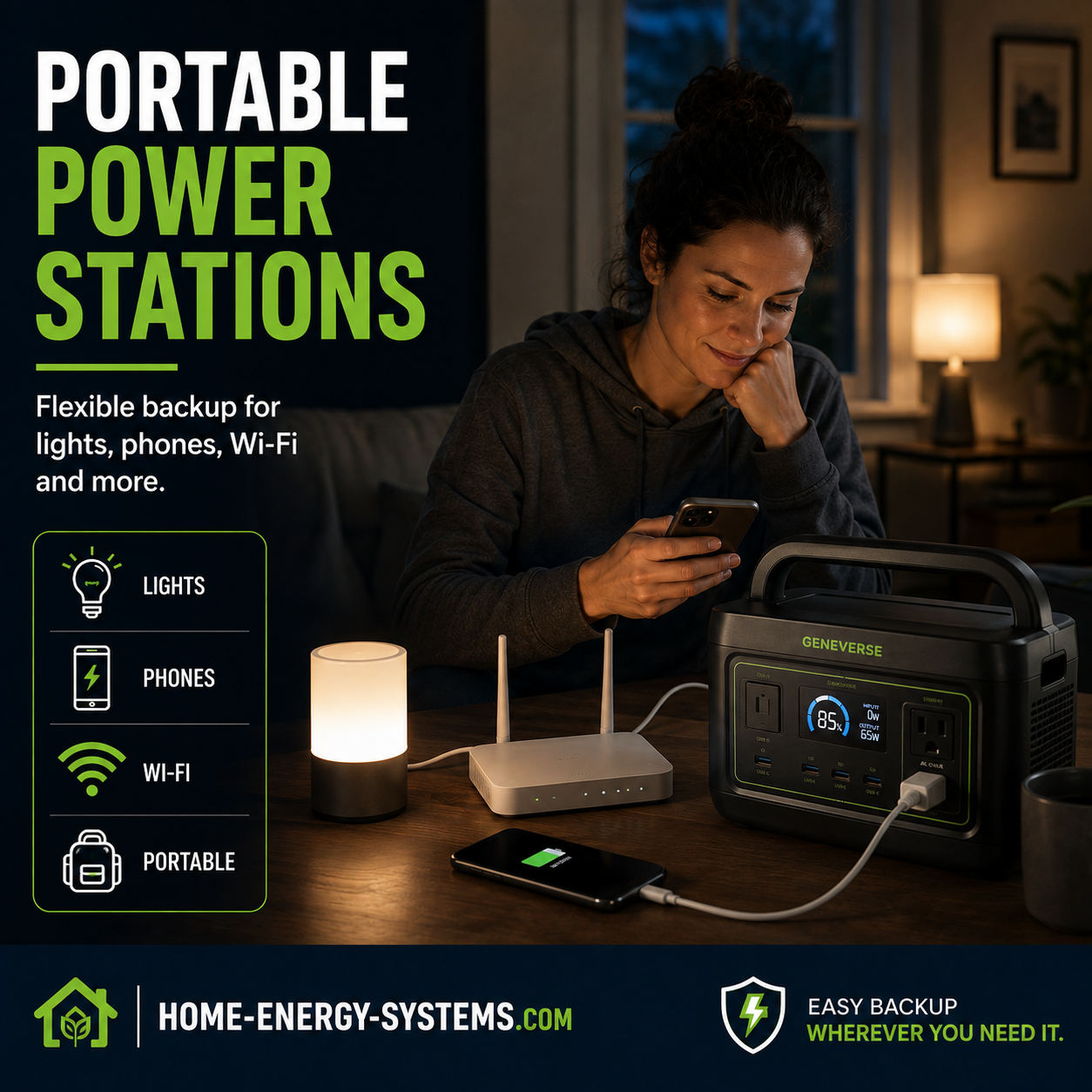
Portable Power Stations
- Generally simpler to deploy
- Appliances connect directly to outlets
- Useful for selected essential loads
- Some models support expansion
- Limited by outlet ratings and battery capacity
Installed Home Batteries
- Can supply selected household circuits
- May provide automatic backup switching
- Can integrate with compatible solar equipment
- Require more installation planning
- Normally require qualified electrical work
Portable equipment should never be connected to household wiring using improvised leads or unsafe backfeeding arrangements.
Supplying home circuits requires suitable isolation, transfer equipment and professional installation in accordance with local regulations.
Home Battery Backup vs Fuel Generator
Battery Backup
- Quiet during normal operation
- No combustion exhaust while discharging
- Stores electricity for later use
- Can recharge from compatible solar
- Runtime limited by stored and replenished energy
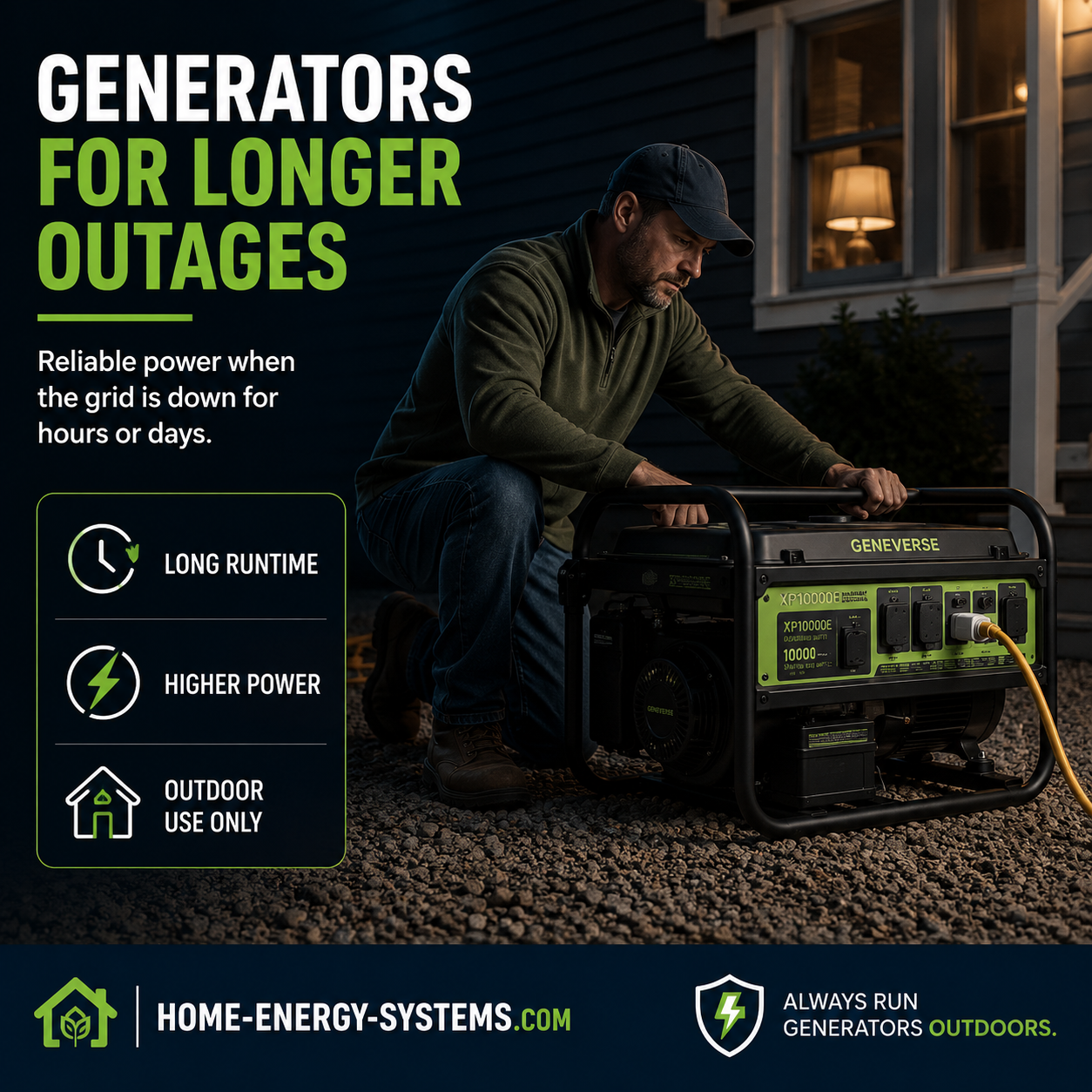
Fuel Generator
- Can operate while suitable fuel is available
- Useful for extended outages
- Available in different power ratings
- Requires fuel and maintenance
- Must be operated safely outdoors
Battery backup is often attractive for quiet essential-load operation. Generators can be useful when outages last longer than available battery capacity.
Generator safety: Never operate a fuel generator indoors, in a garage or near openings where exhaust could enter occupied buildings. Carbon monoxide can be fatal. Generator connections to household circuits require approved transfer and isolation equipment.
A combined battery and generator installation can be useful, but charging compatibility and safe electrical integration must be confirmed.
Can Solar Panels Recharge a Home Backup Battery During a Blackout?
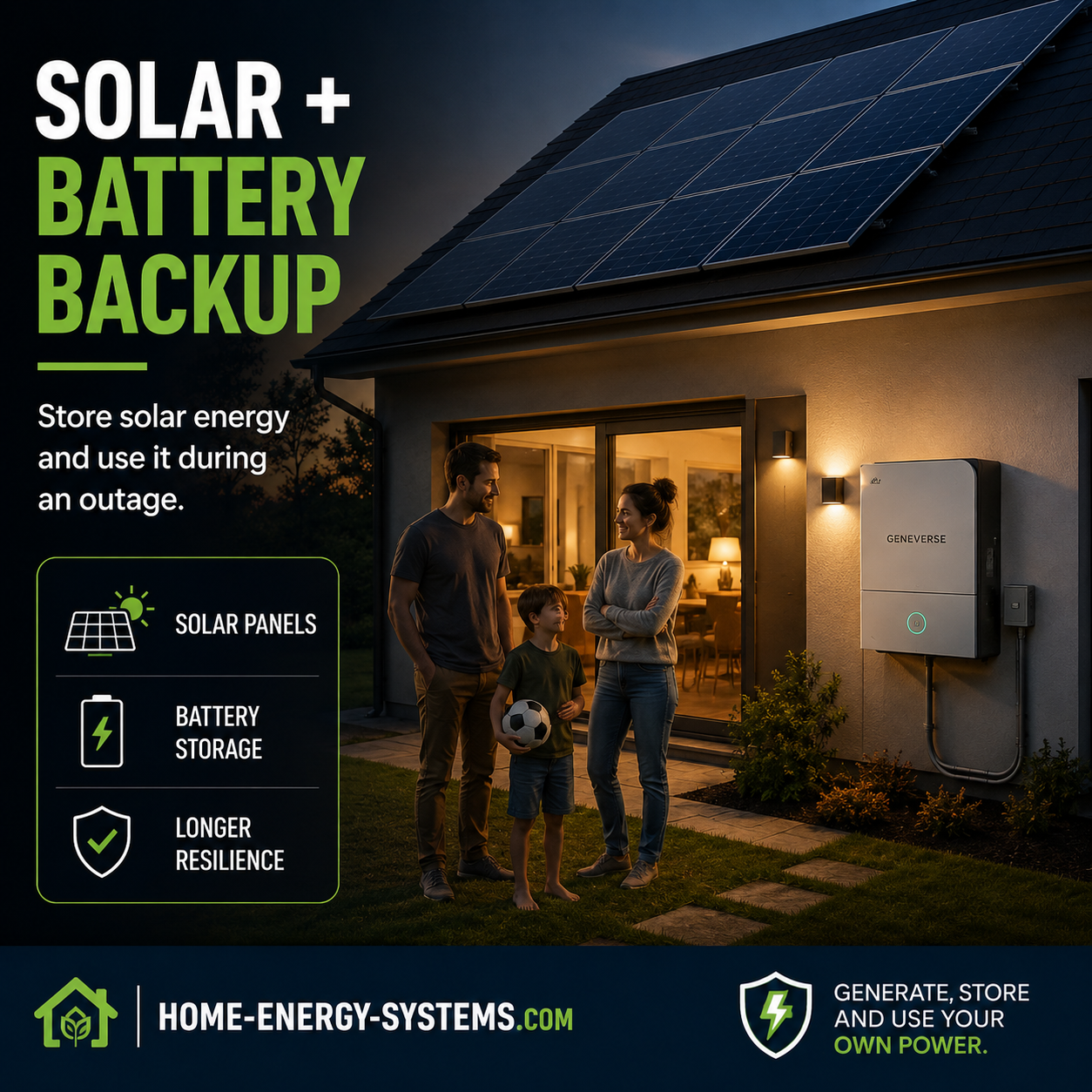
Yes, provided the system supports the required solar-charging arrangement during an outage.
Solar panels can replenish some of the electricity consumed from a backup battery, but charging output depends on:
- Solar array size
- Sunlight and weather
- Panel orientation and shading
- Permitted PV input voltage and current
- Maximum charging power
- Battery charging limits
- Household energy consumption
A conventional grid-connected solar installation does not necessarily keep supplying electricity when the grid fails. Backup operation requires suitable inverter and isolation arrangements.
For more information, see Solar Backup Power for Homes.
Our Best Solar Energy Solutions guide also covers different household solar configurations.
What to Check Before Buying Home Backup Power
1. Battery Chemistry
LFP batteries are common in modern backup systems. AGM batteries have different discharge, weight and cycle-life characteristics. Compare the technology rather than assuming all batteries are equivalent.
2. Usable Battery Capacity
Nominal battery capacity is not necessarily the amount of AC electricity available to appliances. Look for manufacturer data on usable energy and conversion efficiency.
3. Continuous and Surge Output
Confirm the inverter can support combined loads and motor startup demands. Pay particular attention to pumps, refrigerators and other compressor-driven appliances.
4. Expandability
Check which additional batteries are compatible and the maximum supported system capacity. Expansion accessories may add significantly to the final cost.
5. Solar Compatibility
Check permitted PV voltage, current and charging power. Never assume that any solar panel can connect to any power station.
6. Backup Switching
Some systems power appliances directly through outlets. Others can supply household circuits with approved switching and integration equipment.
7. Regional Electrical Compatibility
North American and European electrical systems differ. Check voltage, frequency, plugs, split-phase requirements and local installation regulations.
8. Warranty and Support
Compare warranty conditions, available service centres, battery expansion availability and manufacturer support in your country.
9. Total Installed Cost
Do not compare only the price of the base battery. Include expansion modules, solar panels, mounting, transfer equipment and professional installation where required.
10. Independent Evidence
Where possible, look for credible long-term owner experience, measured performance and clearly documented technical limitations rather than relying only on promotional claims.
How We Compare Home Backup Power Systems
Home-Energy-Systems.COM compares backup products using published specifications and the needs of different types of households.
We consider:
- Nominal and usable battery capacity
- Continuous and surge output
- Battery chemistry
- Expansion options
- Solar charging
- Regional electrical compatibility
- Home integration requirements
- Warranty and support
- Likely suitability for different outage scenarios
We do not claim to have independently laboratory-tested the systems listed here. Runtime examples are calculations using clearly stated assumptions, not measurements of individual products.
Manufacturer specifications can change, so buyers should confirm current details before purchasing.
Best Home Backup Power Systems 2026: FAQs
What Is the Best Home Backup Power System for a House?
The best option depends on essential loads, required runtime and whether individual appliances or household circuits need backup. A portable LFP battery may be suitable for modest loads, while larger installations may need expandable storage and approved transfer equipment.
How Much Battery Backup Do I Need for 24 Hours?
A household averaging 100W of essential demand uses approximately 2.4kWh in 24 hours. At an illustrative 85% delivered AC fraction, that would require around 2.82kWh of nominal LFP storage before additional reserve.
Can a 5kWh Battery Run a House Overnight?
It may support selected essential loads overnight, but it will not necessarily operate an entire household. Runtime depends on actual consumption, usable battery energy and inverter performance.
Can a Home Battery Power a Water Pump?
Potentially, provided the inverter supports the pump’s running power and startup surge, and the electrical configuration is compatible. Pump specifications should be checked before buying.
Can Solar Panels Keep a Backup Battery Charged?
Compatible solar panels can replenish battery energy during an outage, but output depends on sunlight, weather, system limits and household consumption.
Is a Home Battery Better Than a Generator?
Batteries are quiet and provide stored electricity without combustion exhaust during discharge. Generators can continue producing power while suitable fuel remains available. Some properties benefit from a correctly designed combination.
Does Every Home Battery Work During a Power Cut?
No. Some grid-connected batteries and solar inverters require additional backup hardware and approved isolation equipment to supply household circuits during an outage.
Can I Add More Batteries Later?
Many modular systems support expansion, but compatible battery models, maximum capacity and installation requirements vary. Confirm the limits before purchasing.
Choose Backup Power With Confidence
Calculate your essential electricity needs first. Then compare battery capacity, inverter output, charging options and regional compatibility before choosing equipment.
Plan Your Backup Power Where to Buy Energy ProductsFinal Thoughts: Which Home Backup System Is Worth Buying?
The best home backup power systems 2026 provide more choice than traditional generators alone, but there is no single product that suits every household.
A smaller modular battery may work well for essential appliances. A larger expandable system can provide additional stored energy, while professionally integrated equipment can support selected household circuits.
For rural homes, motor startup demands and water-pumping requirements can be just as important as battery capacity. For longer outages, compatible solar charging or generator backup may deserve consideration.
The most important purchasing decision is not which brand has the largest advertised battery. It is whether the complete system can safely deliver the required power for the required duration.
Use the runtime examples in this guide as a starting point, confirm current manufacturer specifications and allow an appropriate reserve before purchasing.
Home-Energy-Systems.COM will continue updating this guide as home backup technology develops.