Top Rated UPS for Home Office 2026: Best Battery Backup Systems
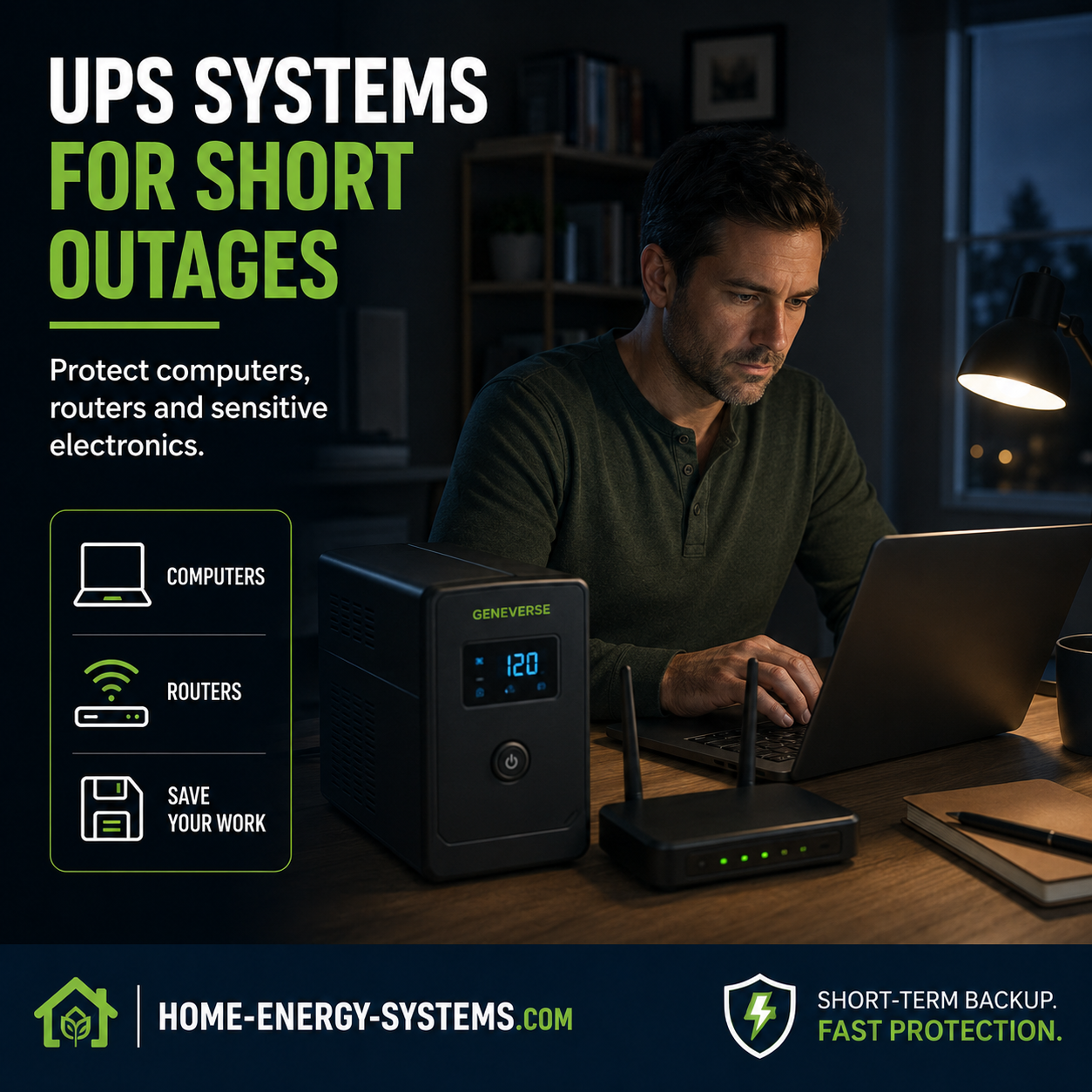
Looking for a top rated UPS for home office use in 2026? A sudden power cut might last only a few seconds, but that can be long enough to shut down your computer, interrupt an important video call, disconnect your internet connection or cause you to lose work you haven’t saved.
That’s where a UPS (Uninterruptible Power Supply) can make a big difference.
The best UPS for a home office doesn’t necessarily need a huge battery. For most people, the goal is to keep essential equipment running through short power interruptions or provide enough time to save work and shut a computer down safely.
However, choosing the right UPS means looking beyond the VA number printed on the box. Wattage, runtime, waveform, replacement battery costs and the equipment you intend to protect all matter.
In this guide, we’ll compare some of the top rated UPS options for home office use and explain how to choose the right capacity for computers, monitors, Wi-Fi equipment and other essential electronics.
▶ Watch the Video Guide
How to Choose the Best UPS for Your Home Office
Top Rated UPS for Home Office: Quick Comparison
There isn’t one UPS that’s best for every home office. A powerful desktop workstation may need considerably more capacity than a laptop-based office where the priority is keeping the router, monitor and network equipment operating.
These four UPS options are worth comparing:
CyberPower CP1500PFCLCD
Capacity: 1500VA / 1000W
Waveform: Sine wave
Best for: Powerful desktop home offices
APC Back-UPS Pro BR1500MS2
Capacity: 1500VA / 900W
Waveform: Pure sine wave
Best for: Premium desktop protection
CyberPower CP1000PFCLCD
Capacity: 1000VA / 600W
Waveform: Sine wave
Best for: Smaller and medium home offices
Eaton 5S 1500 Series
Capacity: 1500VA / 900W
Waveform: Check regional model
Best for: Office and networking equipment
Our Top UPS Picks for a Home Office
1. CyberPower CP1500PFCLCD — Best Overall for a Powerful Home Office
The CyberPower CP1500PFCLCD is a strong choice for a desktop-based home office where several pieces of equipment need protection.
It provides 1500VA / 1000W capacity, line-interactive operation and sine-wave battery output.
That gives it useful wattage headroom for many desktop computers, monitors, routers and networking setups, although actual suitability always depends on your equipment load.
It’s particularly worth considering for modern computers with active-PFC power supplies where sine-wave output is desirable.
Best for: Desktop PCs, workstations, multiple monitors and higher-demand home-office setups.
2. APC Back-UPS Pro BR1500MS2 — Best Premium APC Option
The APC Back-UPS Pro BR1500MS2 is another substantial home-office UPS, offering 1500VA / 900W capacity.
It combines sine-wave battery output with automatic voltage regulation, an LCD status display and a user-replaceable battery.
The replaceable battery is particularly useful because the battery is normally the part of a UPS that wears out first. Being able to replace it may extend the useful life of the complete system.
Best for: Professional home offices, desktop computers and users who prefer an established UPS brand with replaceable batteries.
3. CyberPower CP1000PFCLCD — Best for a Smaller Home Office
Not every home office needs a 1500VA UPS.
The CyberPower CP1000PFCLCD provides 1000VA / 600W capacity with line-interactive operation and sine-wave battery output.
It can be a sensible choice for a conventional desktop computer, monitor and networking equipment when the combined electrical load remains comfortably within its watt rating.
Buying the correct capacity rather than automatically choosing the largest UPS can also reduce unnecessary cost.
Best for: Everyday home offices, moderate desktop systems and lighter equipment loads.
4. Eaton 5S 1500 Series — Strong Office and Networking Choice
The Eaton 5S 1500 series includes models rated at approximately 1500VA / 900W, with versions available for different electrical markets.
Eaton uses line-interactive technology in the 5S range and offers battery-management and monitoring features designed for office and computer equipment.
Because Eaton sells different 120V and 230V versions, check the exact model number, outlets and electrical specification for your country before ordering.
Best for: Home-office electronics, networking equipment and users looking for an alternative to APC or CyberPower.
Which Top Rated UPS Is Best for Your Home Office?
For a higher-powered desktop office, the CyberPower CP1500PFCLCD stands out because of its 1000W maximum output and sine-wave design.
The APC BR1500MS2 is another strong 1500VA choice, particularly if battery replacement and APC’s established backup-power range appeal to you.
For a less demanding office, the CyberPower CP1000PFCLCD may provide enough capacity without paying for a larger unit you don’t need.
The Eaton 5S range is also worth comparing, particularly for general office and networking equipment.
Whichever model you choose, don’t make the decision from the VA number alone. Compare the UPS’s maximum watt output with the actual power consumption of the equipment you intend to protect.
Best UPS for Home Office: Quick Answer
For a typical home office containing a desktop computer, one or two monitors, a router and other small electronics, a UPS in approximately the 900VA to 1500VA range will often provide a useful starting point.
But VA alone doesn’t tell you whether a UPS is suitable.
The more important figure is the UPS’s maximum watt output compared with the actual power consumption of your equipment.
Ideally, your normal equipment load should sit comfortably below the UPS’s maximum watt rating. Leaving additional capacity gives the UPS some headroom and can also provide better runtime during a power cut.
What Is a UPS?
A UPS, or Uninterruptible Power Supply, is essentially a battery backup system positioned between your electrical supply and important electronic equipment.
When mains electricity is available, the UPS supplies power to your equipment while keeping its internal battery charged.
If the electricity supply fails, the UPS switches to battery power and keeps the connected equipment operating.
This transition can happen quickly enough that computers, monitors and networking equipment continue operating without shutting down.
Many UPS systems also provide protection against other electrical problems such as voltage fluctuations and power surges.
Why Use a UPS in a Home Office?
Working from home means electricity and internet connectivity have become essential for millions of households.
A UPS can protect against several frustrating problems:
- Computer shutdowns during short power cuts
- Lost or corrupted unsaved work
- Interrupted video meetings
- Router and modem shutdowns
- Unexpected desktop computer restarts
- Voltage fluctuations
- Power surges affecting sensitive electronics
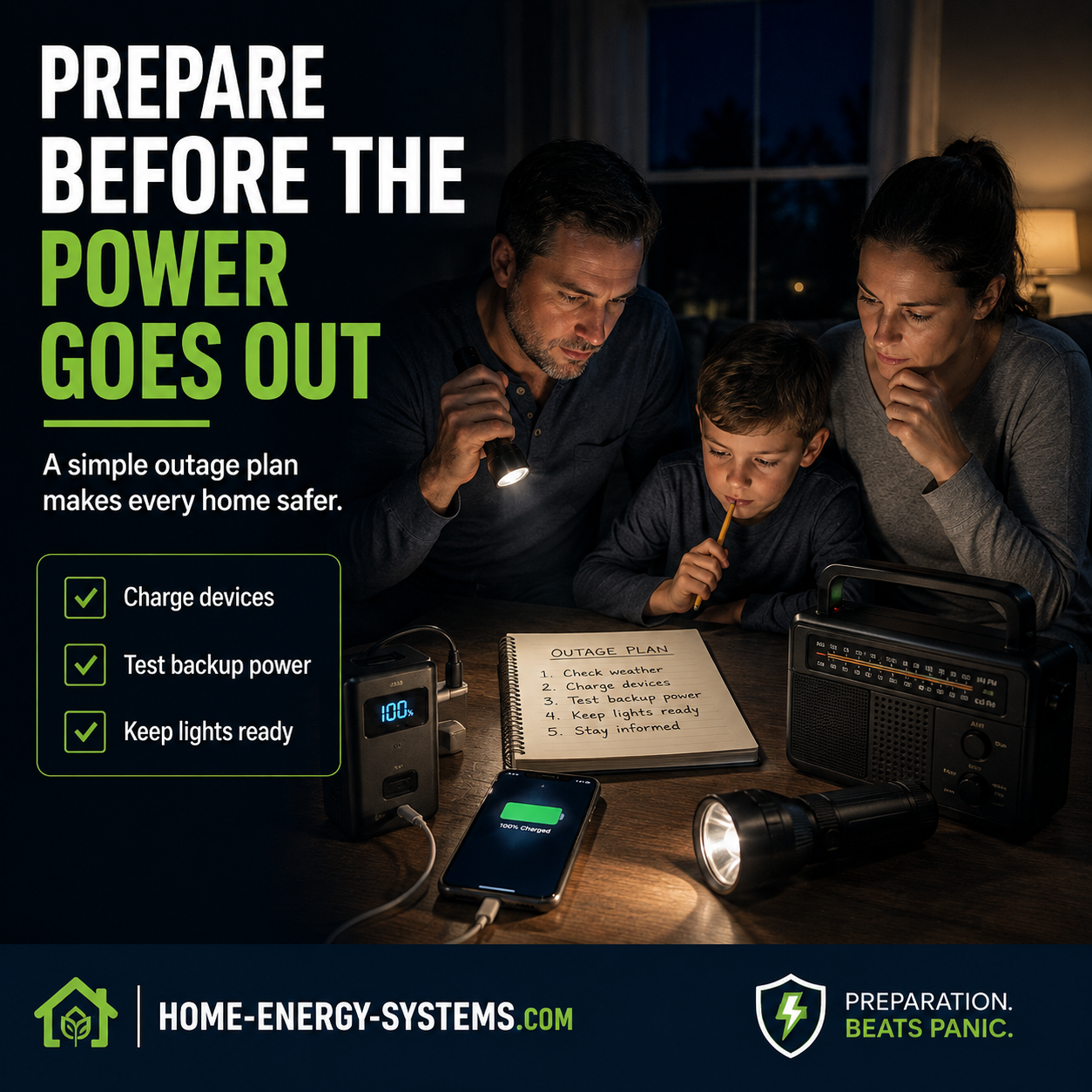
Even if power cuts are uncommon where you live, a UPS can provide valuable protection when one eventually happens.
How Big a UPS Do You Need for a Home Office?
This is probably the most important question when choosing a UPS.
Start by identifying the equipment that genuinely needs battery backup.
A typical home office might include:
- Desktop computer
- One or two monitors
- Wi-Fi router
- Broadband modem or fibre equipment
- Network storage device
- Small network switch
You normally don’t need to put printers, heaters, kettles or other high-power appliances on the battery-backed outlets.
Example Home Office Power Load
Example power use: 200–400W
Example power use: 25–60W
Example power use: 25–60W
Example power use: 10–30W
These figures are examples only. Actual electricity consumption varies considerably depending on the equipment.
A plug-in energy monitor can provide a much better indication of how much power your particular office setup actually consumes.
VA vs Watts: What’s the Difference?
UPS specifications commonly display two ratings:
- VA (volt-amps)
- Watts (W)
They aren’t interchangeable.
Watts represent the real power available to operate your equipment, while VA represents apparent power.
For that reason, two UPS units advertised as 1500VA can potentially have different maximum watt outputs.
When comparing UPS systems, always check both the VA rating and the maximum watt rating.
How Much UPS Headroom Should You Allow?
A UPS shouldn’t ideally spend its life operating at its maximum rated output.
Leaving some spare capacity provides room for temporary increases in computer power consumption and additional equipment later.
For example, if your essential home-office equipment normally consumes around 400 watts, buying a UPS rated for exactly 400 watts would leave virtually no margin.
A higher-capacity unit would normally be the more sensible choice.
Remember that increased load also reduces battery runtime.
How Long Will a UPS Run a Home Office?
This depends on two main factors:
- The battery capacity of the UPS
- The amount of power being drawn by your equipment
UPS runtime isn’t fixed.
A UPS might operate a router for a long time but run a powerful desktop computer and multiple monitors for only a fraction of that period.
Fortunately, most home-office users don’t need hours of battery backup.
Even 5–15 minutes of useful runtime can be enough to ride through a brief outage or safely save your work and shut the computer down.
If you regularly experience longer outages, a conventional UPS may not be the best standalone solution.
For a broader comparison of batteries, portable power stations and larger emergency electricity systems, see our Best Home Backup Power Systems 2026 guide.
Best UPS for a Desktop Computer
Desktop computers are one of the main reasons people buy home-office UPS systems.
A sudden loss of electricity can instantly shut down the computer, potentially causing lost work or data corruption.
When choosing a UPS for a desktop PC, consider:
- The computer’s real-world power consumption
- Maximum UPS watt output
- Monitor power consumption
- Pure sine wave capability
- Automatic shutdown software
- USB communication
- Replaceable batteries
High-performance gaming PCs and workstations can consume substantially more electricity than ordinary office computers, so they may require a considerably larger UPS.
Best UPS for a Laptop Home Office
Laptop users have an advantage: the laptop already contains its own battery.
That means the UPS doesn’t necessarily need to power the laptop continuously during an outage.
Instead, you could prioritise:
- External monitor
- Wi-Fi router
- Modem or fibre terminal
- Network equipment
- External storage
Keeping the internet connection operating can sometimes be more useful than powering the laptop charger.
Best UPS for Wi-Fi Router and Modem
One of the most useful home-office UPS applications is also one of the simplest: keeping your internet equipment running.
Routers and modems generally consume relatively little electricity compared with desktop computers.
As a result, a modest battery backup can potentially keep networking equipment operating considerably longer than it could support a complete desktop computer setup.
If your internet provider’s local infrastructure also loses power, keeping your router operating won’t necessarily keep your internet connection alive.
However, where the external network remains operational, a UPS can prevent your local router and modem from restarting every time there is a brief interruption.
Pure Sine Wave vs Simulated Sine Wave UPS
Another specification you’ll encounter when shopping for a UPS is the inverter waveform.
The two common options are:
- Simulated or stepped sine wave
- Pure sine wave
Less expensive UPS systems frequently use a simulated waveform when operating from the battery.
For basic electronics this may be perfectly adequate.
However, modern desktop computers — particularly systems using active power factor correction (active PFC) power supplies — can benefit from a UPS designed to provide a clean sine-wave output.
If you’re protecting an expensive workstation, gaming PC or business-critical computer, a pure sine wave UPS is worth serious consideration.
UPS Battery Lifespan: How Long Do Batteries Last?
The battery is one of the most important parts of any UPS — and it won’t last forever.
Traditional UPS systems commonly use sealed lead-acid batteries, often referred to as VRLA batteries.
Under normal conditions, these batteries commonly require replacement after approximately 3–5 years. You can read more in Eaton’s UPS battery guidance.
Battery lifespan can be shortened by:
- High temperatures
- Frequent power outages
- Repeated deep discharges
- Heavy UPS loads
- Age
- Poor ventilation
A UPS can therefore still appear to work perfectly after several years while providing far less runtime than it did when new.
Why Temperature Matters to UPS Batteries
Heat is particularly unfriendly to lead-acid batteries.
A UPS should therefore have adequate airflow and shouldn’t be hidden beside radiators, heaters or other equipment producing substantial heat.
A cool, dry and well-ventilated location can help maximise battery service life.
Should You Buy a UPS With a Replaceable Battery?
This is one of the most important features to look for when comparing the top rated UPS for home office use.
The battery is a consumable component. The rest of a good UPS may remain perfectly serviceable when the original battery eventually reaches the end of its useful life.
Before buying, check:
- Whether the battery is user replaceable
- The replacement battery model
- Current replacement cost
- Whether replacement batteries are readily available
- How difficult replacement is
Lead-Acid vs Lithium UPS Batteries
Most affordable home-office UPS systems traditionally use sealed lead-acid batteries.
However, lithium-ion and lithium iron phosphate battery technologies are increasingly appearing in backup-power products.
Lead-Acid UPS Batteries
- Lower initial purchase cost
- Widely available
- Proven technology
- Replacement batteries are often easy to source
The disadvantages are additional weight and a battery that commonly needs replacing after several years.
Lithium UPS Batteries
- Potentially longer battery life
- More charge and discharge cycles
- Lower weight for comparable usable storage
- Less frequent battery replacement
The main drawback remains the higher initial purchase price.
UPS vs Portable Power Station for a Home Office
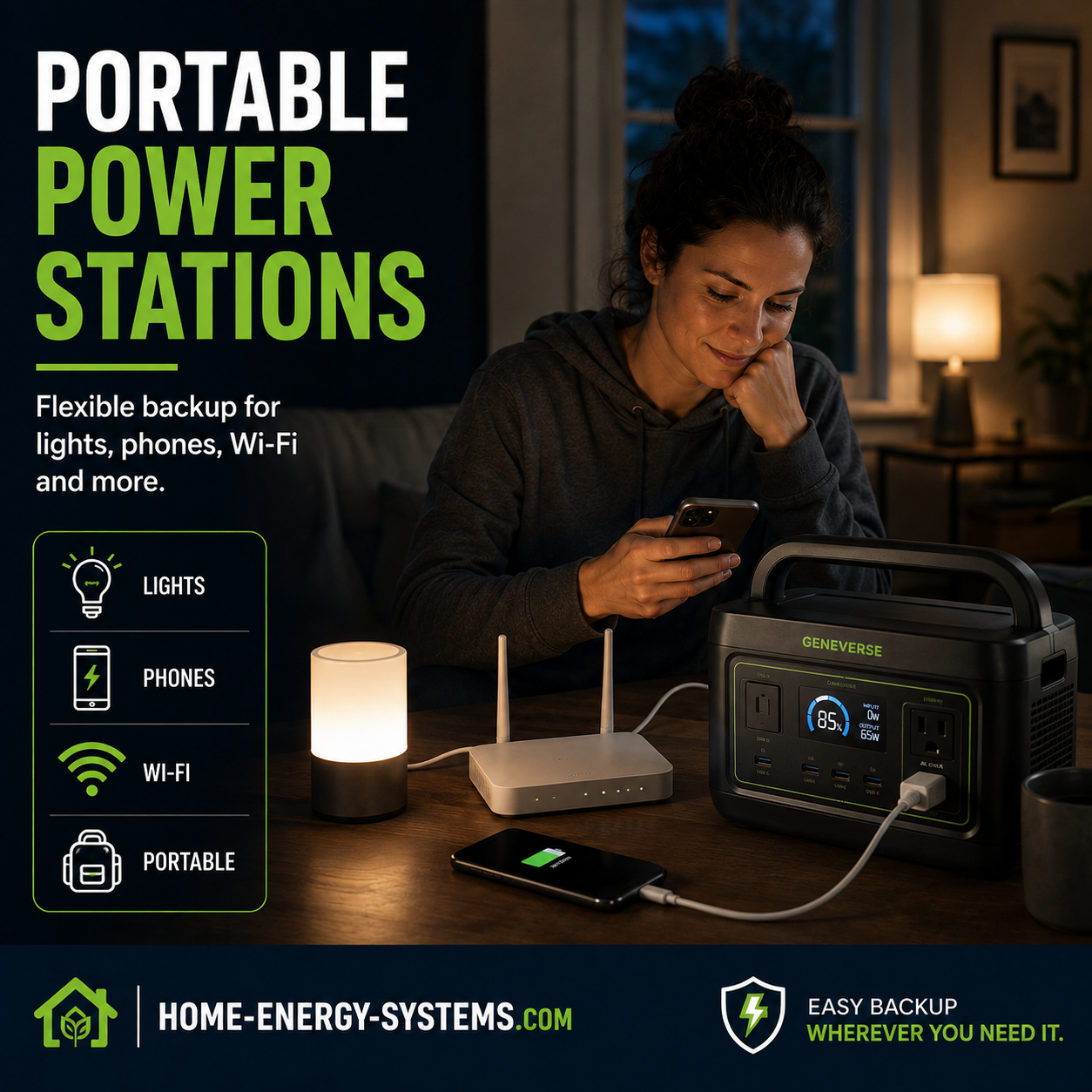
Portable power stations have become another popular option for backup electricity.
But they aren’t automatically replacements for a UPS.
A traditional UPS is specifically designed to protect equipment from interruptions and switch rapidly to battery operation.
A portable power station is primarily designed to provide stored electricity for longer periods.
Some modern power stations include UPS or EPS-style functionality, but the transfer time and operating characteristics vary between models.
If uninterrupted operation of a desktop computer is essential, verify the manufacturer’s transfer-time specifications rather than assuming every portable power station behaves like a dedicated UPS.
For longer outages, however, a suitable power station can offer substantially greater battery capacity.
UPS Battery Backup vs Generator
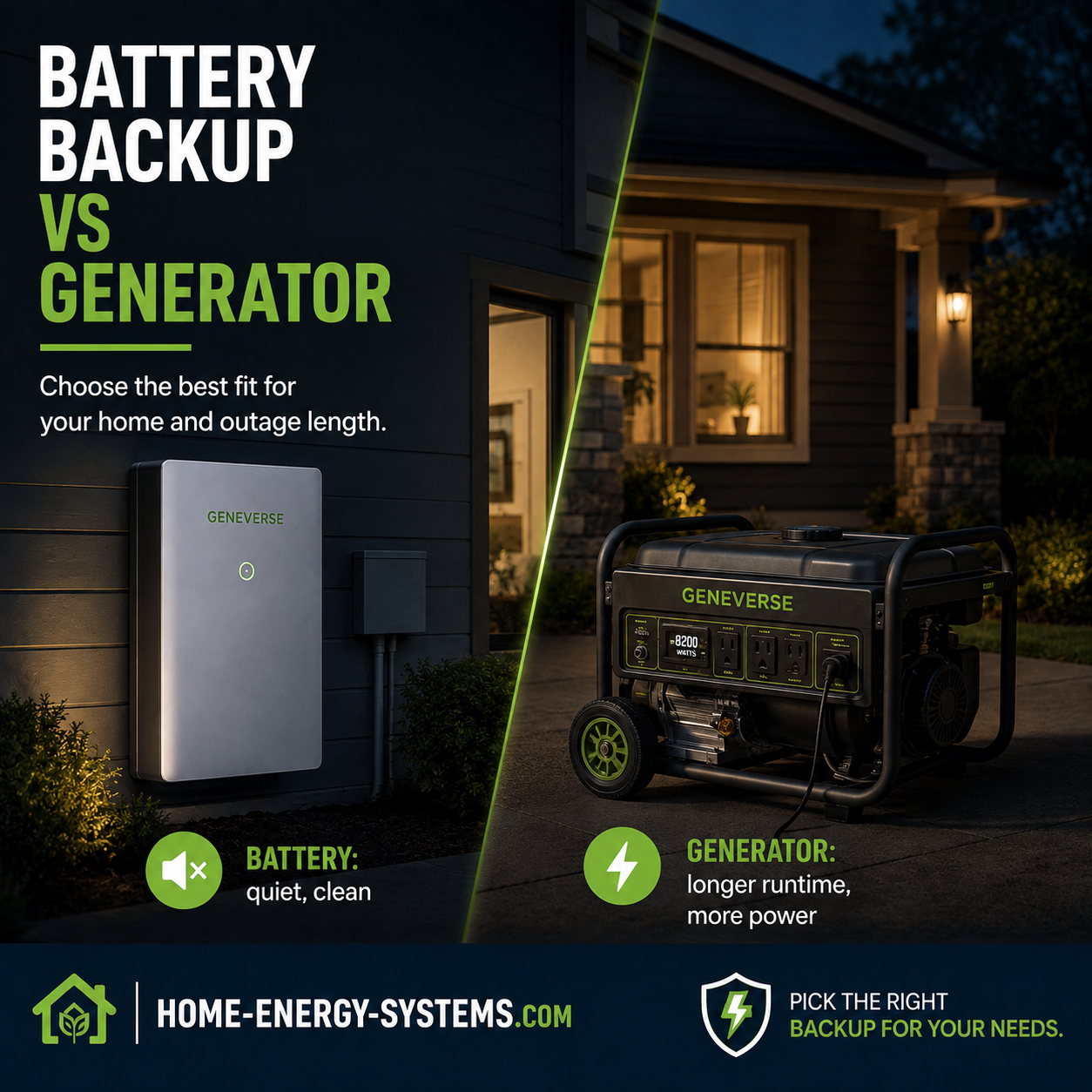
A UPS and a generator solve different problems.
A UPS is excellent for keeping computers and networking equipment alive instantly when the electricity disappears. Its main job is to bridge short interruptions and give you time to continue working briefly or shut equipment down safely.
A generator is designed for much longer outages and can potentially power considerably larger electrical loads.
For a home office, the two approaches can even complement each other. A UPS can protect the computer during the first seconds or minutes of an outage while a larger backup system takes over for longer periods.
When a UPS Is Not Enough
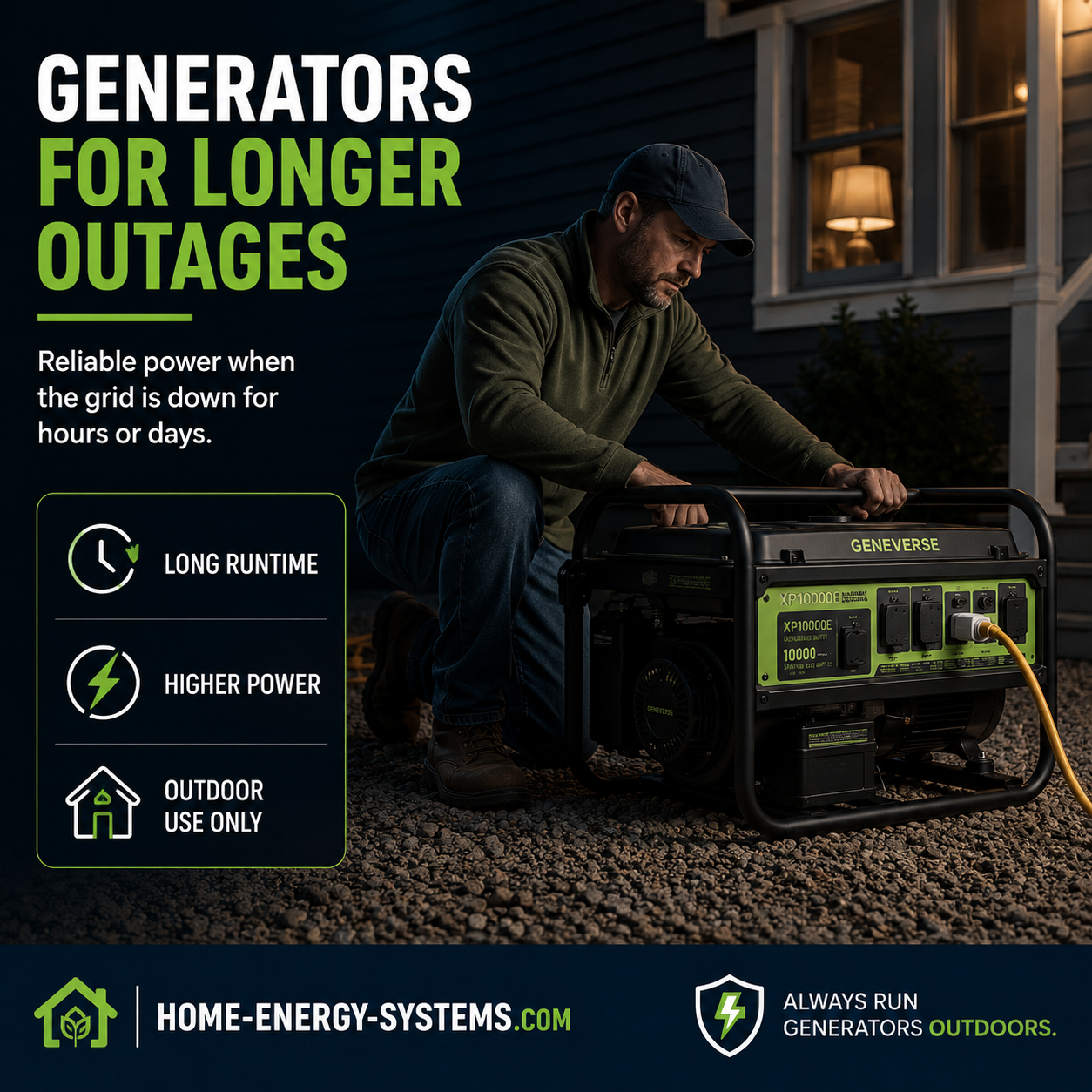
If your area regularly experiences outages lasting several hours, buying an enormous conventional UPS may not be the most practical solution.
Longer-duration backup can instead come from a portable power station, home battery system or generator, depending on your electrical needs and local regulations.
Our Best Home Backup Power Systems 2026 guide looks at these larger options in more detail.
Automatic Computer Shutdown Is Worth Having
USB communication between the UPS and computer is another feature worth looking for.
Compatible UPS software can monitor the battery and automatically shut the computer down safely if an outage lasts longer than expected.
This is particularly useful if you’re away from the desk when the electricity fails.
The UPS doesn’t then need enough battery capacity to operate the computer for hours — it simply needs enough time to allow a controlled shutdown.
What Should You NOT Plug Into a Home Office UPS?
A small home-office UPS is intended primarily for computers and other relatively low-power electronics.
Avoid connecting high-power equipment unless the UPS manufacturer specifically says the system is designed for it.
- Electric heaters
- Kettles
- Laser printers
- Air conditioners
- Large motors
- High-powered kitchen appliances
Should You Buy a Cheap UPS Online?
Low-cost UPS systems can look attractive, particularly when their specifications appear similar to established brands.
However, a UPS contains a battery, charger, inverter and mains-voltage electronics, so price shouldn’t be the only consideration.
Before buying an unfamiliar UPS brand, investigate:
- Relevant electrical safety certification
- Warranty support
- Replacement battery availability
- Manufacturer reputation
- Technical support
- Independent user experiences
- Whether specifications clearly state both VA and watt ratings
Common Home Office UPS Buying Mistakes
1. Looking Only at VA
Always check the UPS’s maximum watt output as well.
2. Buying Exactly Enough Capacity
Leave some headroom instead of operating the UPS close to its maximum load.
3. Ignoring Replacement Battery Cost
Find out what a replacement battery costs before purchasing the UPS.
4. Trying to Power Everything
Prioritise the computer, essential monitor and network equipment.
5. Expecting Hours of Runtime
A conventional UPS is usually designed to bridge short interruptions and provide safe shutdown time.
6. Forgetting About Heat
Keeping the UPS somewhere hot can shorten battery life.
7. Assuming Every Power Station Is a UPS
Check transfer times and manufacturer specifications first.
How to Choose the Best UPS for Your Home Office
- List the equipment that genuinely needs backup power.
- Measure or estimate its combined wattage.
- Choose a UPS with comfortable additional watt capacity.
- Decide how much runtime you actually need.
- Consider pure sine wave output for higher-end computers.
- Look for USB communication and automatic shutdown.
- Check whether the battery is replaceable.
- Check the replacement battery price before buying.
- Consider lithium technology if long battery life is a priority.
- Buy from a manufacturer or retailer offering reliable warranty support.
Top Rated UPS for Home Office: Our Final Recommendation
For most people, the best UPS for a home office isn’t necessarily the largest or most expensive model.
It’s the UPS that comfortably supports the equipment you actually need to protect.
For a higher-powered desktop office, the CyberPower CP1500PFCLCD is one of the strongest options in this comparison because it combines a 1500VA rating with up to 1000W output and sine-wave battery power.
The APC Back-UPS Pro BR1500MS2 is another attractive 1500VA choice, while the smaller CyberPower CP1000PFCLCD may make more sense for a less demanding office.
But don’t buy from the model name alone. Start by measuring your real power consumption and choose a UPS with adequate wattage headroom.
If you’re mainly working from a laptop, consider prioritising your router and networking equipment because your laptop already has its own built-in battery backup.
Frequently Asked Questions
What is the top rated UPS for home office use?
There isn’t one model that’s best for every office. For powerful desktop systems, a 1500VA UPS with strong real-watt output and sine-wave battery power can be a good choice. Smaller offices may be better served by a 1000VA-class UPS.
What size UPS is best for a home office?
A typical computer, monitor and router setup may suit a UPS somewhere around the 900VA–1500VA class, but the UPS’s maximum watt rating and your actual equipment consumption are more important than VA alone.
Is a 1500VA UPS enough for a PC?
Often, yes, but it depends on the UPS’s watt rating and the computer’s actual power consumption.
How long will a UPS run a computer?
Runtime depends on battery capacity and electrical load. A heavily loaded UPS may provide only several minutes, while the same UPS powering only networking equipment could operate considerably longer.
How long does a UPS battery last?
Traditional sealed lead-acid UPS batteries commonly last around three to five years, although heat, repeated discharging and operating conditions can significantly affect lifespan.
Should I leave my UPS plugged in all the time?
A UPS is normally designed to remain connected to mains electricity so its battery stays charged and the system is ready when an outage occurs.
Is a pure sine wave UPS worth it?
It can be, particularly for modern desktop computers, expensive workstations and equipment using active-PFC power supplies.
Can a UPS keep my Wi-Fi working during a power cut?
Yes, provided your router, modem or fibre equipment remains powered and your internet provider’s external network is still operating.
Is lithium better than lead-acid for a UPS?
Lithium batteries generally offer longer service life and more charge cycles, but lithium UPS systems usually cost more initially.
Continue Exploring Home Energy Systems
- Best Home Backup Power Systems 2026
- Home Battery Storage Systems – Complete 2026 Guide
- Off-Grid Solar Systems – Complete Guide
- Best Home Energy Systems 2026
- Backup Power & UPS Video Guides
Important: Power consumption, UPS runtime, electrical specifications and battery lifespan vary significantly between products, countries and operating conditions. Always check the UPS manufacturer’s regional specifications and confirm that the model is suitable for the equipment you intend to connect.