How to Choose a Portable Power Station for Home Backup
Learning how to choose a portable power station becomes much easier when you stop comparing brand names first and start with one simple question: what do you actually need to keep running when the electricity goes out?
A small battery may comfortably handle phones, Wi-Fi, laptops and lighting. Add refrigeration, a freezer, medical equipment or several household appliances and your requirements can increase very quickly.
This portable power station buying guide explains the specifications that matter, how much capacity you may need and how to avoid paying for a system that is either too small or unnecessarily large.
1. Start With the Appliances You Actually Need
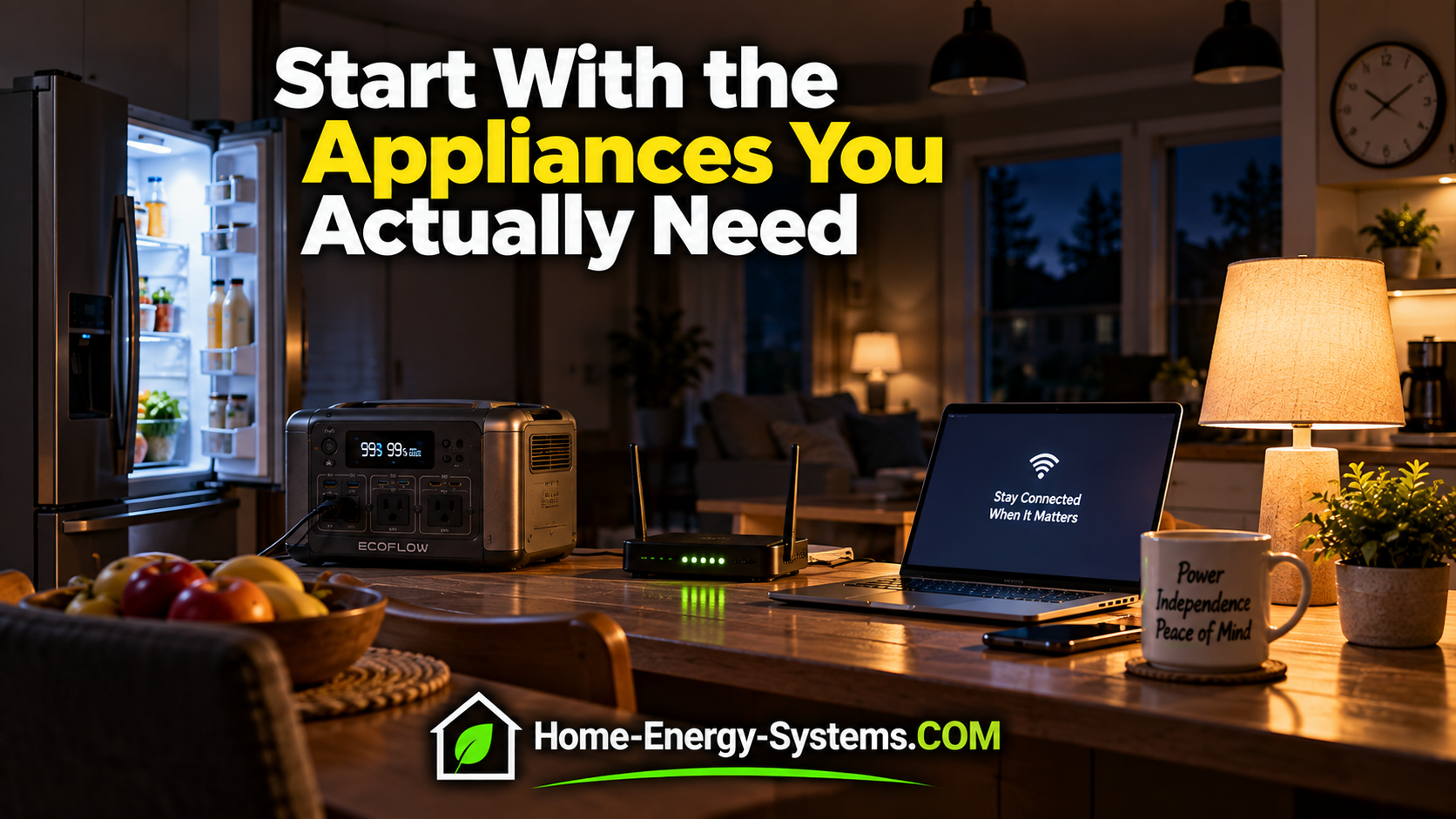
The biggest mistake when choosing backup power is starting with the battery rather than the appliances.
Make a realistic list of what you want to keep operating during an outage. For many homes that means:
- Refrigerator or freezer
- Wi-Fi router
- Phones and tablets
- Laptops
- LED lighting
- Television
- Selected medical equipment
Try to separate essential loads from appliances that would simply be nice to have.
An electric shower, large electric heater, cooker or powerful air conditioner can consume considerably more electricity than a refrigerator and some electronics combined.
If your intention is to operate large parts of the house for long periods, you may need to move beyond portable power altogether. See our Best Home Backup Power Systems 2026 guide for larger alternatives.
2. How to Choose a Portable Power Station: Assess Your Backup Needs
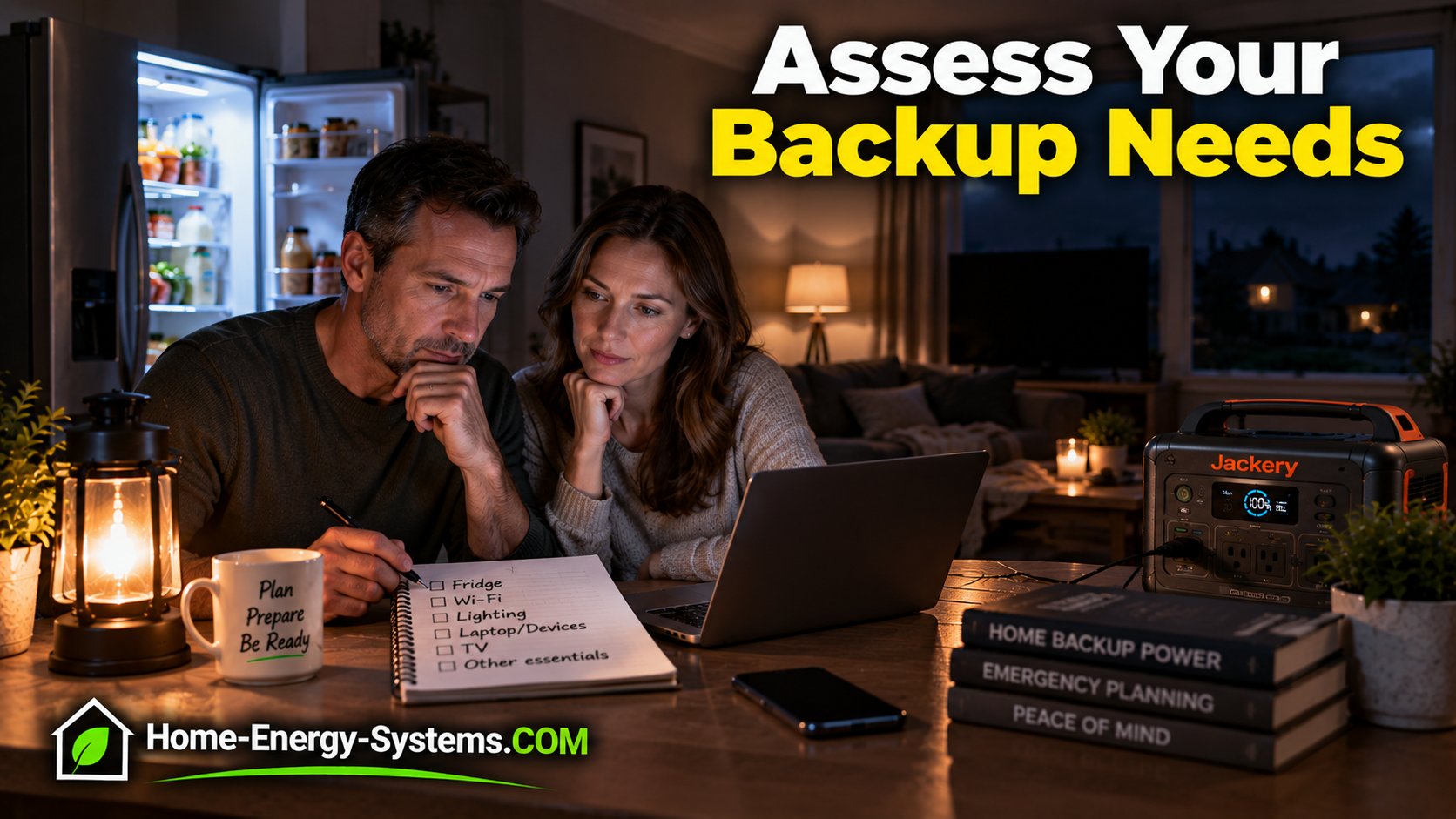
Once you know what you want to power, think about how long you want those appliances to operate.
Preparing for a two-hour blackout is very different from preparing for an outage lasting overnight or several days.
Consider three questions:
- Which appliances are essential?
- How much power do they consume?
- How many hours do you want them to operate?
This is where battery capacity becomes important.
Capacity is normally expressed in watt-hours or Wh. A 2,000Wh battery theoretically stores approximately twice as much energy as a 1,000Wh battery.
Watts tell you how much power an appliance needs.
Watt-hours tell you approximately how much energy the battery can store.
3. Understand the Key Specifications
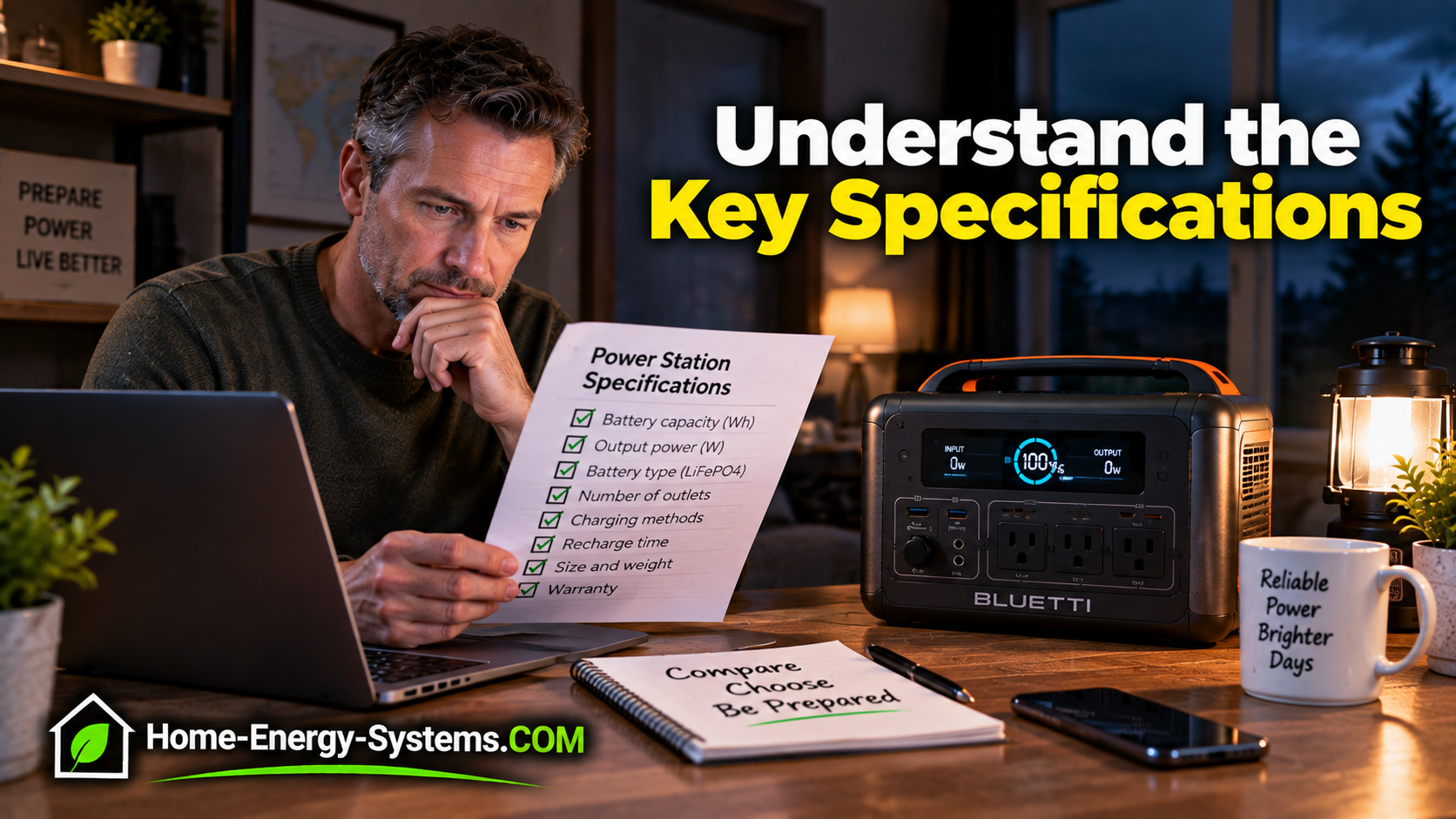
Portable battery specifications can look intimidating, but only a handful of numbers usually determine whether a system is suitable for your home.
Battery capacity
Capacity is measured in watt-hours. More watt-hours generally means more runtime, but also usually means more weight and a higher purchase price.
Continuous AC output
This tells you how much power the inverter can continuously supply.
A 3,000Wh battery is no use for a 2,500W appliance if its inverter can only provide 1,500W.
Surge output
Some appliances briefly require considerably more electricity when starting.
Refrigerators, freezers, pumps and power tools are common examples. Always check that the system can handle both normal running demand and startup surge.
Battery chemistry
Many modern systems use LiFePO4 or LFP batteries. These are popular for home backup because of their long cycle life and good thermal stability.
Solar input
If you want to recharge during a prolonged blackout, check the maximum solar input and the manufacturer’s supported voltage range.
Recharge time
Fast charging can be useful when grid electricity returns temporarily during an extended outage.
4. Compare Your Backup Options
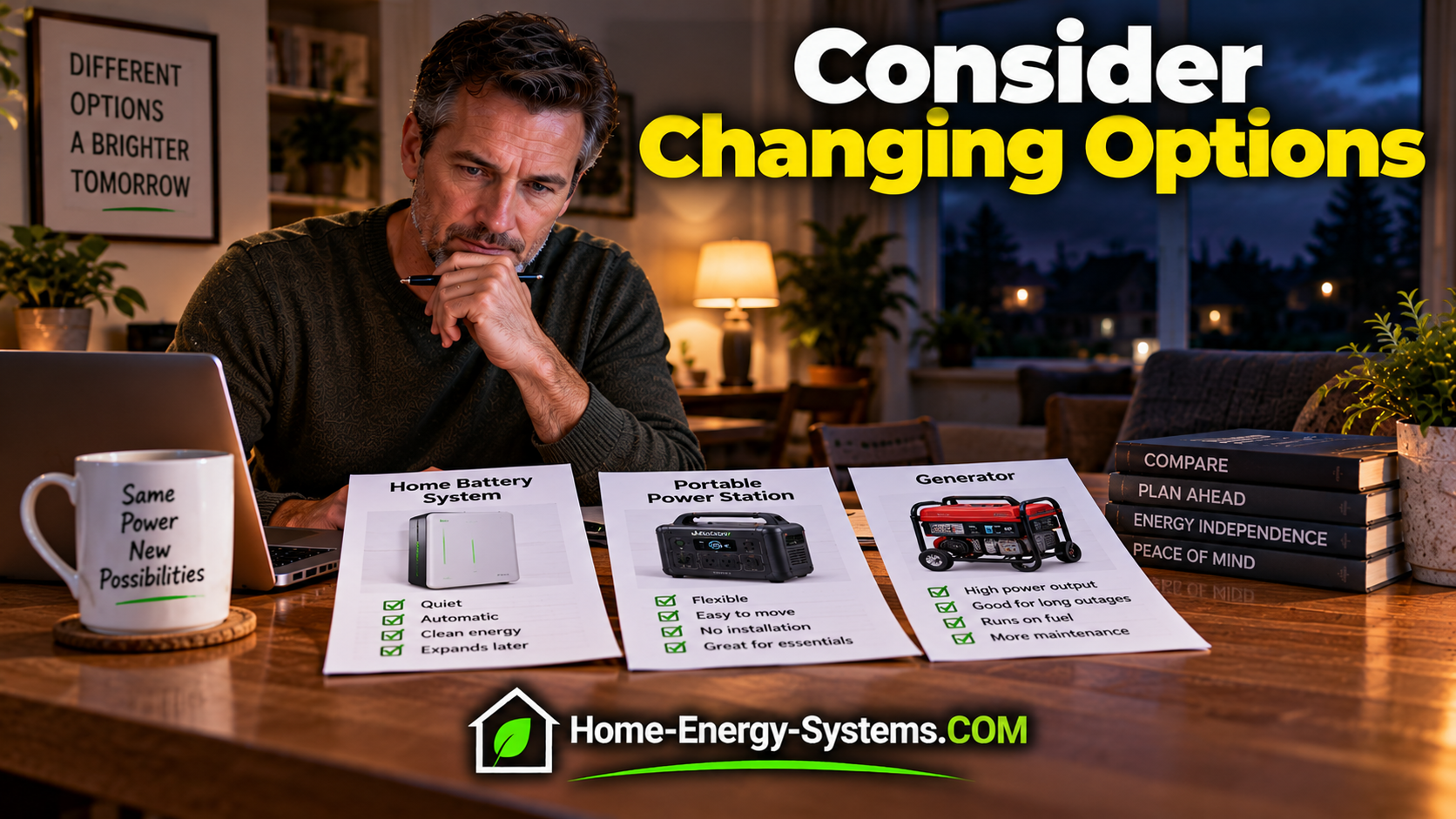
A portable power station is not the only way to provide emergency electricity.
Before buying, compare it with the other main options.
| Option | Main Advantage | Main Limitation |
|---|---|---|
| Portable Power Station | Flexible, quiet and easy to move | Limited stored energy |
| Home Battery | Larger capacity and automatic home integration | Higher installation cost |
| Fuel Generator | Can run for long periods when fuel is available | Noise, fuel and exhaust fumes |
A portable battery is especially attractive when you want emergency electricity without permanently modifying the house.
If you are considering permanent storage, see our guide to Home Battery Storage Systems.
5. Think About Portability and Expandability
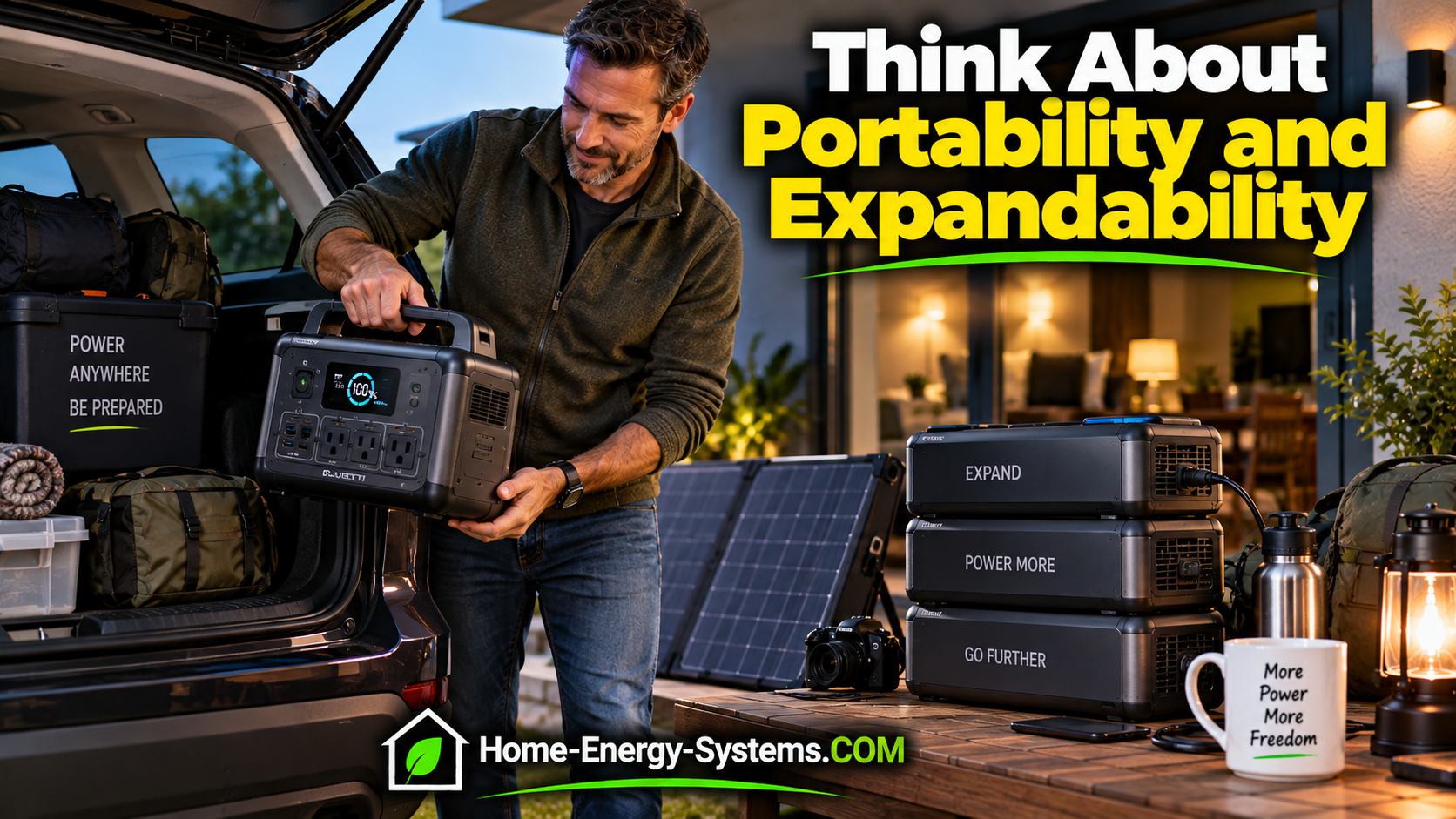
There is an unavoidable trade-off between battery capacity and portability.
A small 1kWh system may be easy to lift and carry around the house. Once capacity moves toward 3kWh and beyond, weight can become substantial.
Look at:
- Total weight
- Carry handles
- Built-in wheels
- Physical dimensions
- Whether expansion batteries can be added later
Expandability can be especially valuable.
You may be able to buy a reasonably sized base unit today and add additional battery modules later rather than paying for maximum capacity from the beginning.
6. Check Safety and Reliability
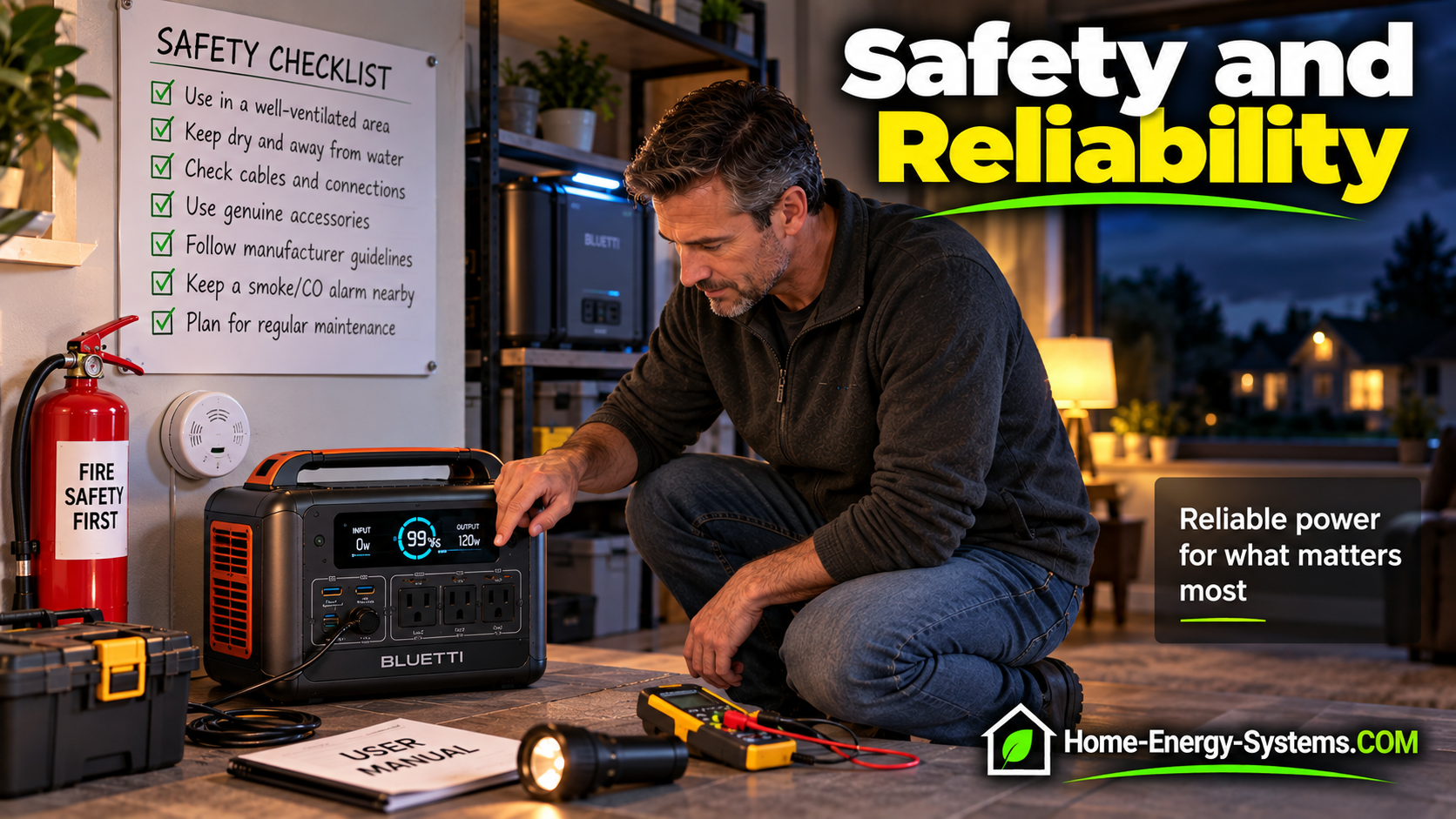
A home backup battery stores a substantial amount of electrical energy, so safety should never be treated as an afterthought.
Look for a reputable manufacturer with a proper battery management system, temperature protection, overload protection and clear operating instructions.
Keep the unit dry, make sure ventilation openings remain unobstructed and use charging cables and accessories that meet the manufacturer’s specifications.
For independent advice on preparing safely for electricity outages, read the Ready.gov power outage guidance.
Also look carefully at the warranty and the manufacturer’s stated battery cycle life.
7. Match Your Budget to Your Goals
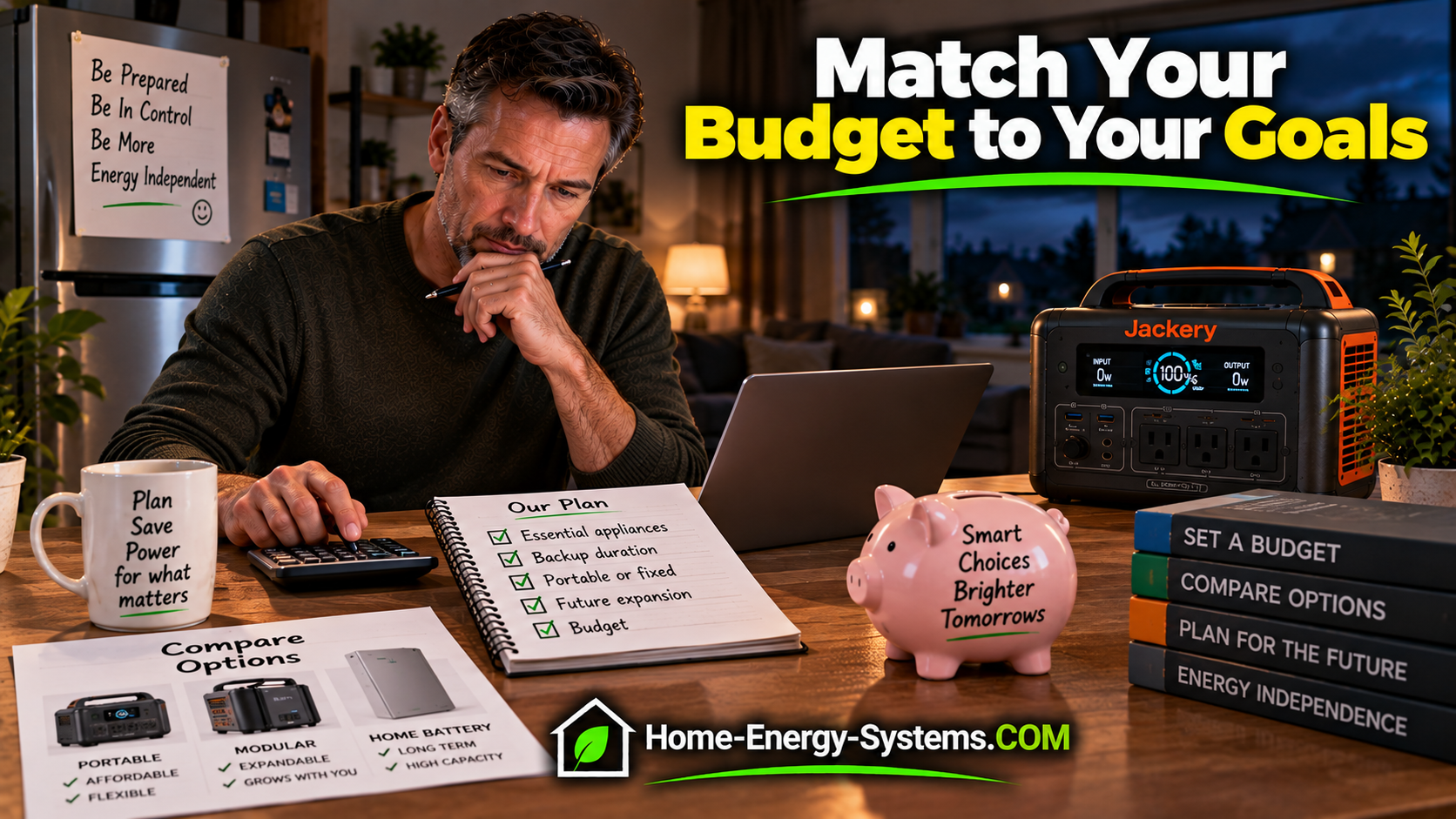
The biggest system is not automatically the best value.
If your main objective is keeping the router, phones, lights and laptops operating, buying a huge 3kWh or 4kWh battery could be unnecessary.
On the other hand, buying too small can be equally frustrating if the battery cannot run your refrigerator for the length of outage you are preparing for.
Think in terms of three broad levels:
| Capacity | Typical Role | Suitable For |
|---|---|---|
| Around 500Wh–1,000Wh | Basic emergency backup | Phones, laptops, Wi-Fi and lighting |
| Around 1,000Wh–2,500Wh | Serious essential backup | Refrigeration plus electronics and lighting |
| 3,000Wh+ | Extended household backup | Several appliances and longer outages |
Remember to calculate the complete cost. Solar panels, expansion batteries, extra cables and accessories may all increase the final price.
What About Solar Charging?
Solar charging is one of the biggest advantages of modern battery backup.
During a prolonged outage, compatible solar panels can replenish stored energy without relying on the electricity grid.
The amount of solar electricity actually produced depends on weather, panel orientation, shading, panel capacity and the power station’s maximum solar input.
Before connecting any solar panel, make sure its voltage and current remain within the manufacturer’s specified input range.
Our Where to Buy Solar Energy Products guide covers additional solar equipment and suppliers.
Do You Need UPS or EPS Backup?
Some models can remain permanently connected between the electricity supply and selected equipment.
If grid power disappears, the battery automatically takes over.
This can be useful for Wi-Fi routers, desktop computers, security equipment and certain medical devices.
If uninterrupted operation is important, check the manufacturer’s stated transfer time rather than assuming every system works like a traditional UPS.
Portable Power Station Buying Checklist
When deciding how to choose a portable power station, use this checklist to make sure the system matches your home’s real backup requirements.
- Essential loads: Decide what must stay powered.
- Runtime: Decide how long you need backup.
- Battery capacity: Choose enough watt-hours.
- AC output: Make sure the inverter can handle your appliances.
- Surge output: Allow for motors and compressors starting.
- Battery chemistry: Consider long-life LFP technology.
- Solar charging: Check input limits and compatibility.
- Ports: Make sure you have enough AC, USB and DC connections.
- Expandability: Consider whether you might need more capacity later.
- Weight: Make sure you can actually move it if portability matters.
How to Choose a Portable Power Station for Home Backup: Our Recommendation
The best way to understand how to choose a portable power station is to start with your home rather than with a particular brand.
List your essential appliances, estimate their electricity use and decide how long you want them to operate.
Then choose enough battery capacity and inverter output to comfortably meet that demand, with some spare capacity for unexpected needs.
For many households, the middle ground is likely to make the most sense: enough capacity to keep refrigeration, communications and essential electronics working without buying an enormous system that rarely gets used.
Once you know the size you need, see our detailed comparison of the Best Portable Power Stations 2026 for our current product picks.
Frequently Asked Questions
How big a portable power station do I need for home backup?
That depends on your appliances and desired runtime. Around 1,000Wh can cover basic electronics, while approximately 1,500Wh to 2,500Wh offers considerably more flexibility for refrigeration and other household essentials.
What is more important: watts or watt-hours?
Both matter. Watts tell you whether the inverter can power your appliance, while watt-hours help determine approximately how long the stored battery energy may last.
Can a portable power station run a refrigerator?
Many can, provided the inverter can handle both the refrigerator’s normal running power and its compressor startup surge.
Can portable power stations recharge from solar panels?
Most modern models can. The solar panel voltage, current and total wattage must remain within the manufacturer’s specified input limits.
Is a bigger battery always better?
No. Bigger batteries generally cost more and weigh more. The goal is to buy enough capacity for your realistic backup requirements with a sensible reserve.
Prepare Before You Need the Power
The best time to work out your backup requirements is before the electricity goes off.
Choose the appliances that genuinely matter, understand their electricity demand and then buy the system that fits those requirements rather than simply chasing the largest specification numbers.
Home-Energy-Systems.COM provides independent guides to solar power, batteries, home backup and practical ways to make your home more energy resilient.