Best Portable Power Stations 2026: Top Picks for Home Backup
The best portable power stations in 2026 are no longer just oversized battery packs for camping. The latest models can keep refrigerators, Wi-Fi, lights, laptops and other essential equipment running during a power outage, while larger systems are beginning to blur the line between a portable battery and a genuine home backup system.
That creates a new problem for buyers: there are now dozens of models promising huge battery capacities, fast charging and enough power to run almost anything. The numbers can look impressive, but buying the biggest battery is not always the smartest decision.
This guide compares some of the top-rated power stations for home use in 2026 and explains what actually matters when choosing one.
Best Portable Power Stations 2026 at a Glance
| Power Station | Battery Capacity | AC Output | Best For |
|---|---|---|---|
| BLUETTI Elite 200 V2 | 2,073.6Wh | 2,600W | Best overall balance |
| Jackery HomePower 3000 | 3,072Wh | 3,600W | Longer home outages |
| Anker SOLIX F3000 | 3,072Wh | 3,600W | Expandable home backup |
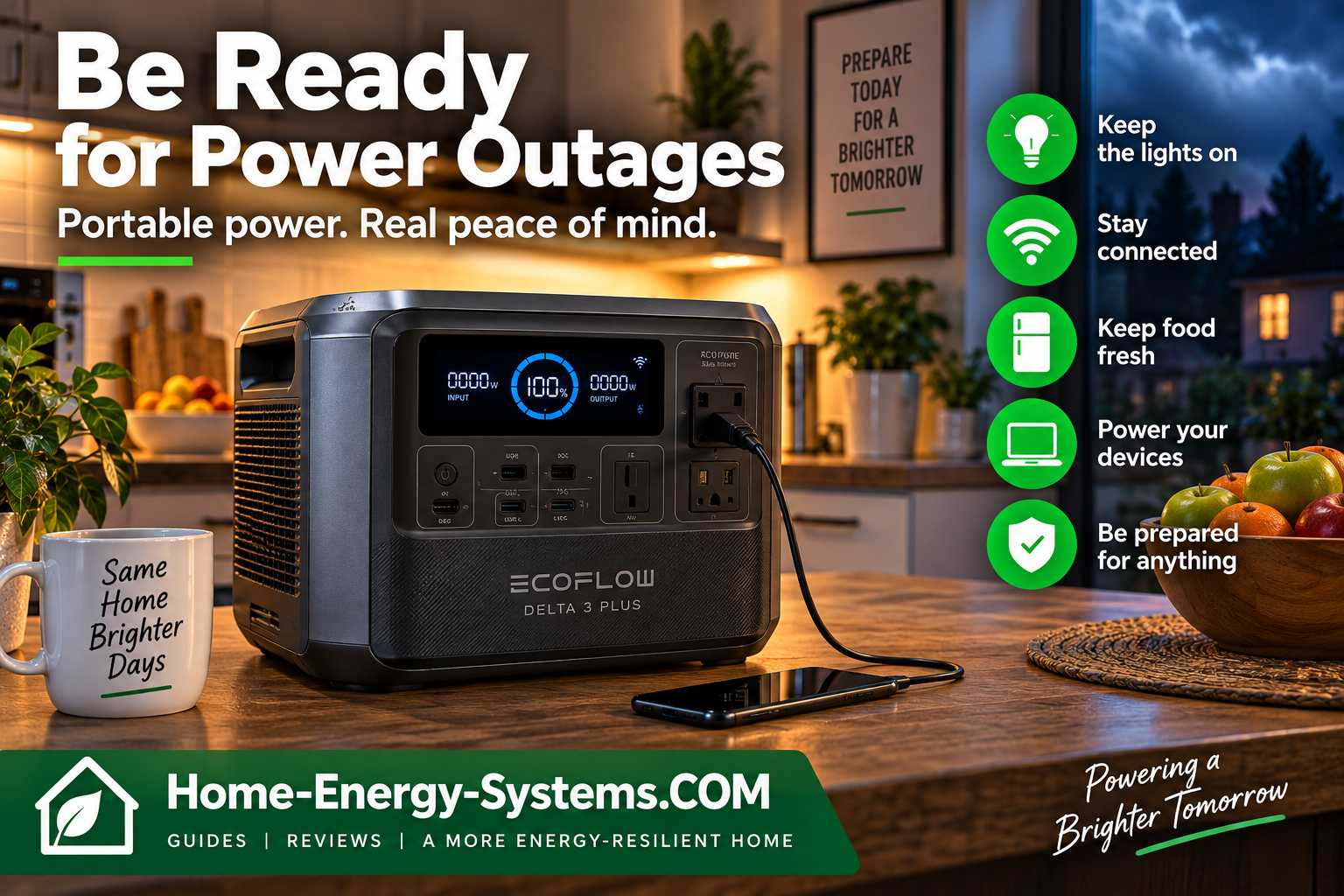
| EcoFlow DELTA 3 Plus | 1,024Wh | 1,800W | Compact emergency backup |
The best portable power stations 2026 cover very different needs, from keeping a few essential devices working during a short blackout to supporting several household appliances during a longer outage.
Someone wanting to keep a refrigerator, router and a few lights operating during a short blackout does not necessarily need the same system as a homeowner preparing for a multi-day outage.
If whole-home backup is your priority, also see our guide to the best home backup power systems for 2026.
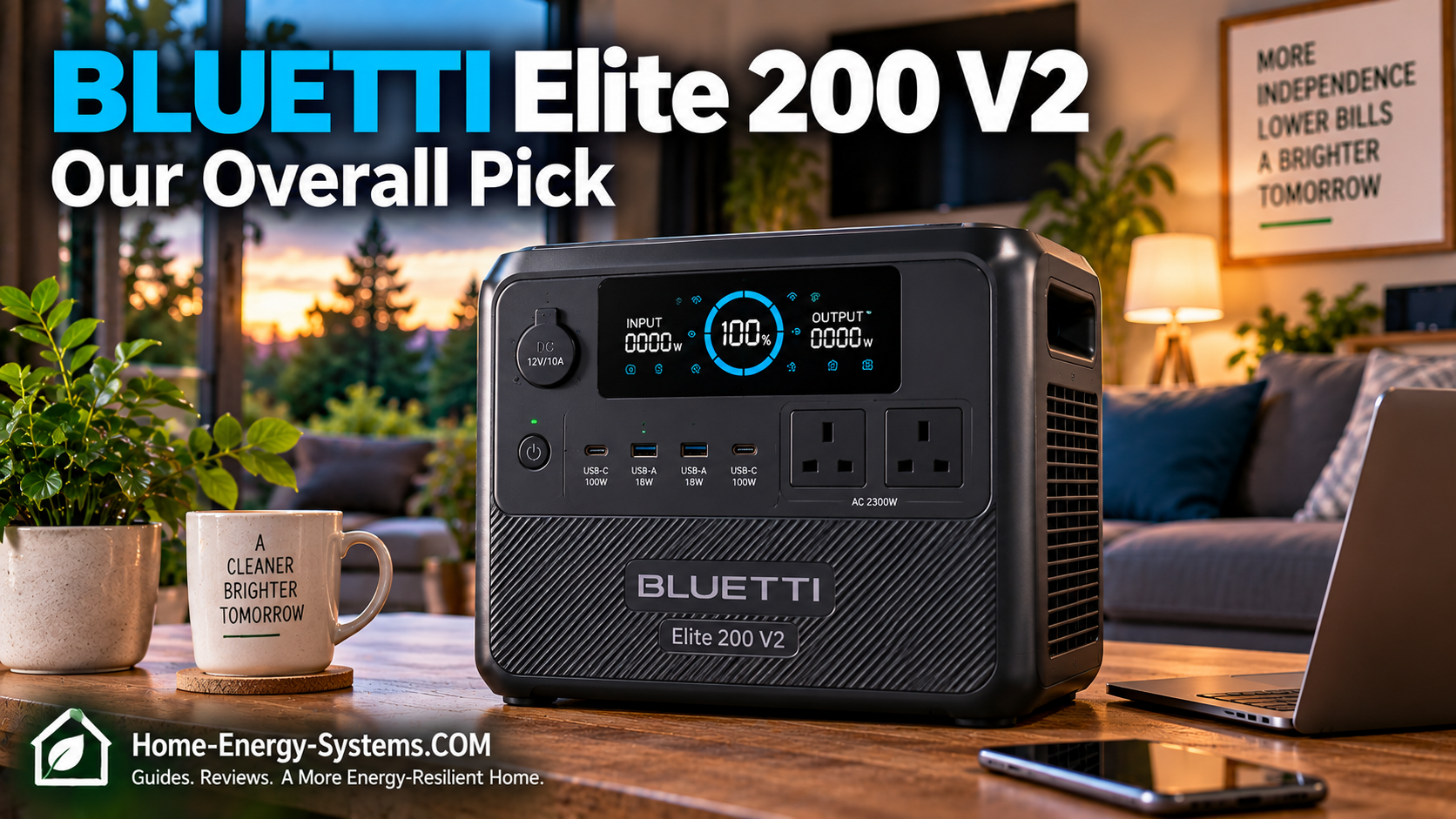
1. BLUETTI Elite 200 V2 — Best Overall Portable Power Station
Why the BLUETTI Elite 200 V2 stands out
The BLUETTI Elite 200 V2 hits what we consider one of the most useful sweet spots in the current battery-backup market.
It provides 2,073.6Wh of battery storage and 2,600W of continuous AC output. That is enough capacity and inverter power to move beyond charging phones and laptops and into meaningful home emergency backup.
It uses LiFePO4 battery chemistry, supports solar charging and can operate as a UPS for suitable equipment. Its 1,000W maximum solar input also gives owners a realistic way of replenishing the battery during a prolonged grid outage when suitable solar panels and conditions are available.
What we like
- 2,073.6Wh battery capacity
- 2,600W continuous AC output
- LiFePO4 battery chemistry
- Up to 1,000W solar input
- UPS capability
- App monitoring and control
- Compact compared with many high-capacity systems
The Elite 200 V2 is particularly attractive for homeowners who want substantial emergency power without moving to a very large wheeled system.
Affiliate link. Availability, specifications and pricing can vary by country.
2. Jackery HomePower 3000 — Best for Longer Power Outages
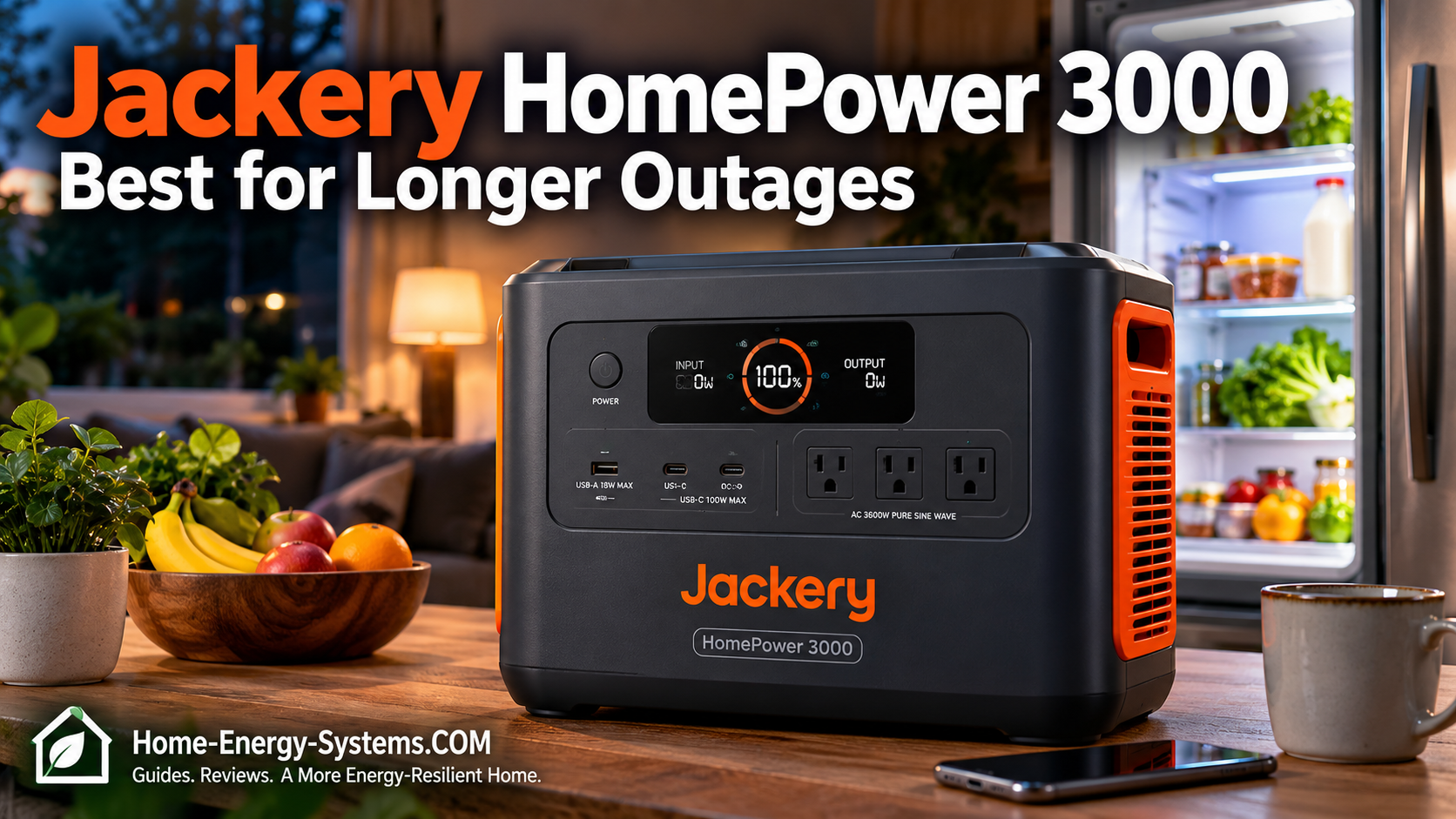
The Jackery HomePower 3000 moves the capacity up to 3,072Wh and delivers 3,600W of continuous output.
That additional capacity is important during a genuine household outage. Instead of thinking in terms of charging individual electronics, a 3kWh system allows you to start thinking about keeping several essential loads operating together.
A refrigerator, Wi-Fi router, lighting, television and charging equipment can potentially be supported, although actual runtime always depends on how much electricity those appliances consume.
Jackery also positions the HomePower 3000 for connection to selected essential household circuits through an appropriate transfer-switch arrangement.
Why consider it?
- 3,072Wh storage capacity
- 3,600W continuous output
- Up to 7,200W surge output
- Designed with home emergency backup in mind
- Large capacity without becoming a permanently installed home battery
For households that regularly experience outages lasting many hours rather than a few minutes, the step from roughly 1kWh to 3kWh can make a major practical difference.
3. Anker SOLIX F3000 — Best Expandable Portable Home Backup System
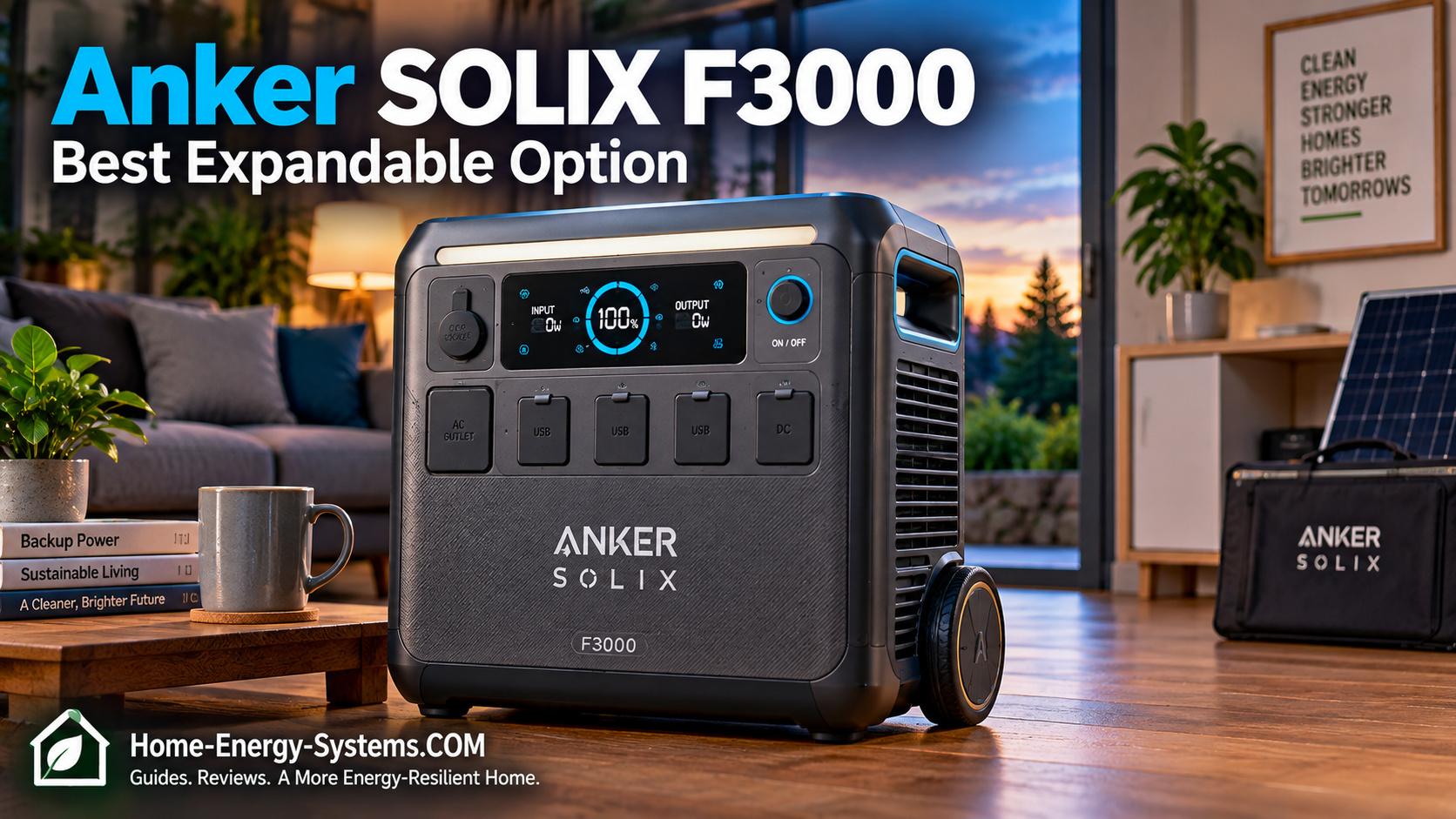
The Anker SOLIX F3000 is another serious home-backup contender with 3,072Wh of capacity and 3,600W output.
Its biggest attraction is expandability. Additional battery storage can be added, allowing the system to grow as your backup requirements increase. Maximum expansion options differ between markets and configurations, so always check the version available in your country.
The F3000 also supports high-rate solar charging, making it particularly interesting for homeowners who want battery backup that can form part of a larger solar-based emergency system.
Key advantages
- 3,072Wh base battery capacity
- 3,600W AC output
- Expandable battery storage
- High-rate solar charging
- Low standby power consumption
- Suitable for substantially heavier loads than small backup units
If your intention is to start with essential backup and expand later, the F3000 is one of the more interesting systems in this comparison.
4. EcoFlow DELTA 3 Plus — Best Compact Home Emergency Power Station
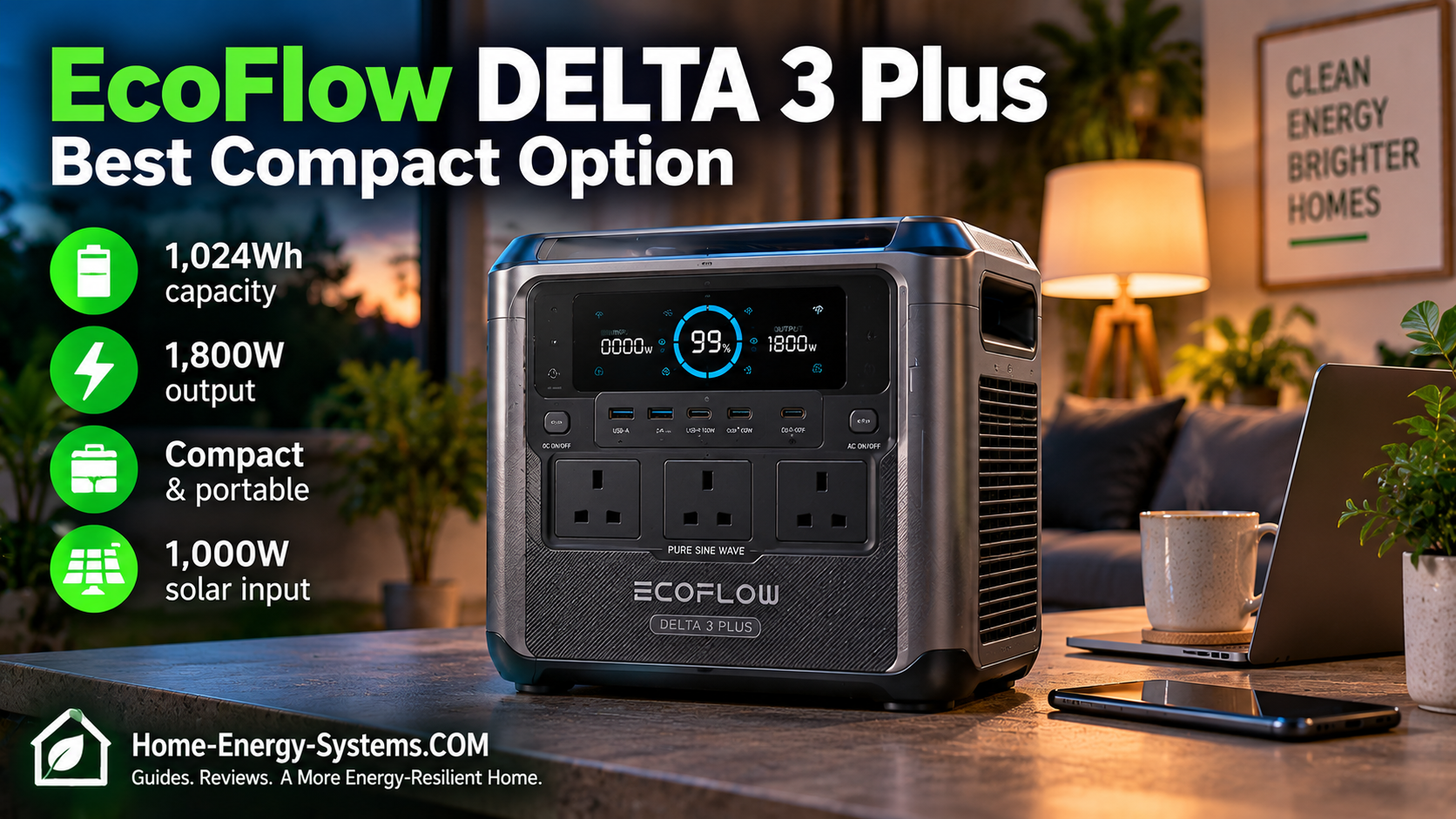
Not everyone needs a 2kWh or 3kWh battery sitting in the house.
The EcoFlow DELTA 3 Plus has a 1,024Wh battery and 1,800W AC output, making it considerably easier to move while still having enough inverter power for many common household appliances.
It also supports expansion batteries and solar charging, giving buyers the option of increasing capacity later rather than buying a much larger system immediately.
Who is it for?
This type of backup unit makes sense if your priority during a blackout is relatively simple:
- Keep the Wi-Fi working
- Keep phones charged
- Power LED lighting
- Run laptops and small electronics
- Provide temporary refrigerator backup
The trade-off is runtime. A 1,024Wh battery will naturally empty much sooner than a 2,000Wh or 3,000Wh system when powering the same load.
How Much Portable Power Station Capacity Do You Need?
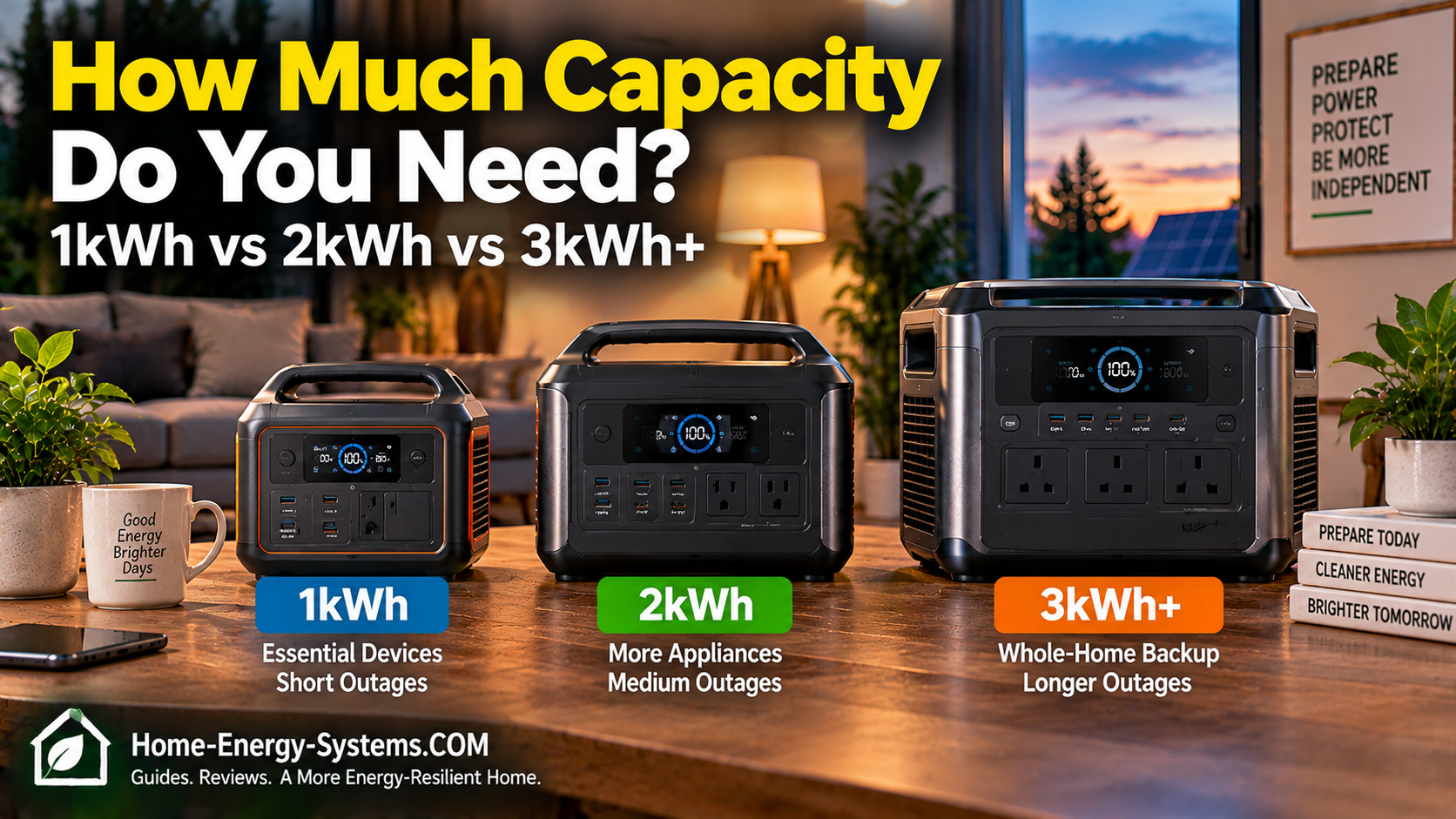
This is more important than the brand name.
Battery capacity is normally measured in watt-hours (Wh). A 2,000Wh battery theoretically stores twice as much energy as a 1,000Wh battery.
In practice, you cannot simply divide the advertised capacity by appliance wattage and assume that is your exact runtime. Energy is lost through the inverter and other electronics.
Estimated runtime = Battery capacity × 0.85 ÷ appliance load.
For example, suppose your essential equipment averages 150 watts and you have a 2,000Wh battery.
2,000 × 0.85 ÷ 150 = approximately 11.3 hours.
That is only an estimate. Refrigerator compressors cycle on and off, appliances have startup surges, environmental temperature affects batteries and different systems vary in efficiency.
1kWh vs 2kWh vs 3kWh Power Stations
| Capacity | Typical Role | Best Suited To |
|---|---|---|
| Around 1kWh | Short-term emergency power | Internet, phones, laptops, lights and limited appliance use |
| Around 2kWh | Serious essential backup | Refrigeration plus communications, lighting and electronics |
| Around 3kWh+ | Extended household backup | Several essential appliances and longer outages |
What Should You Look for When Buying a Portable Power Station?
Battery capacity
Capacity tells you approximately how much energy the battery can store. If emergency home backup is your main reason for buying, this is usually one of the first specifications to consider.
Continuous AC output
Capacity and output are not the same thing.
A large battery may store plenty of electricity, but the inverter must also be capable of supplying enough power to run the appliances connected to it.
Surge power
Some appliances briefly require considerably more power when their motors or compressors start. Refrigerators, pumps and certain power tools are common examples.
This is why surge capability matters when choosing a system for emergency backup.
Battery chemistry
Most of the strongest modern systems now use lithium iron phosphate, commonly written as LiFePO4 or LFP.
LFP batteries are popular because of their long cycle life, thermal stability and suitability for systems expected to be charged and discharged repeatedly.
Solar charging
A backup battery is only useful until its stored energy runs out.
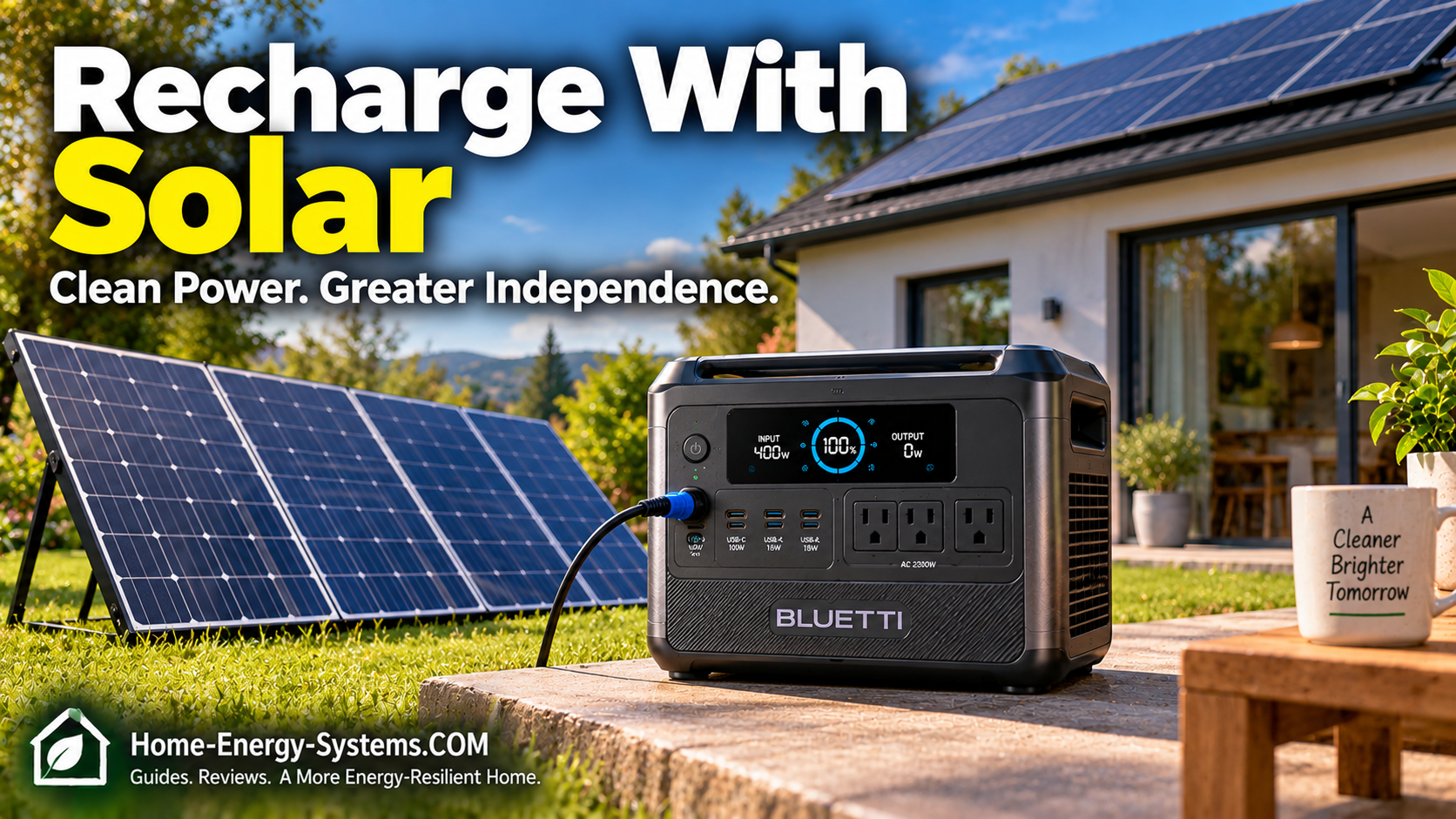
During a prolonged outage, compatible solar panels can provide a way to replenish the battery without grid electricity. The amount of solar power you can realistically harvest depends on panel capacity, weather, orientation and the unit’s solar input limits.
Our Where to Buy Solar Energy Products guide covers additional solar equipment and suppliers.
UPS or EPS function
Some models can remain connected between a wall outlet and selected equipment. If grid power disappears, the unit can switch to battery power.
If you need backup for sensitive or critical equipment, check the manufacturer’s stated transfer time and confirm that the equipment you intend to connect is compatible.
Portable Power Station vs Home Battery
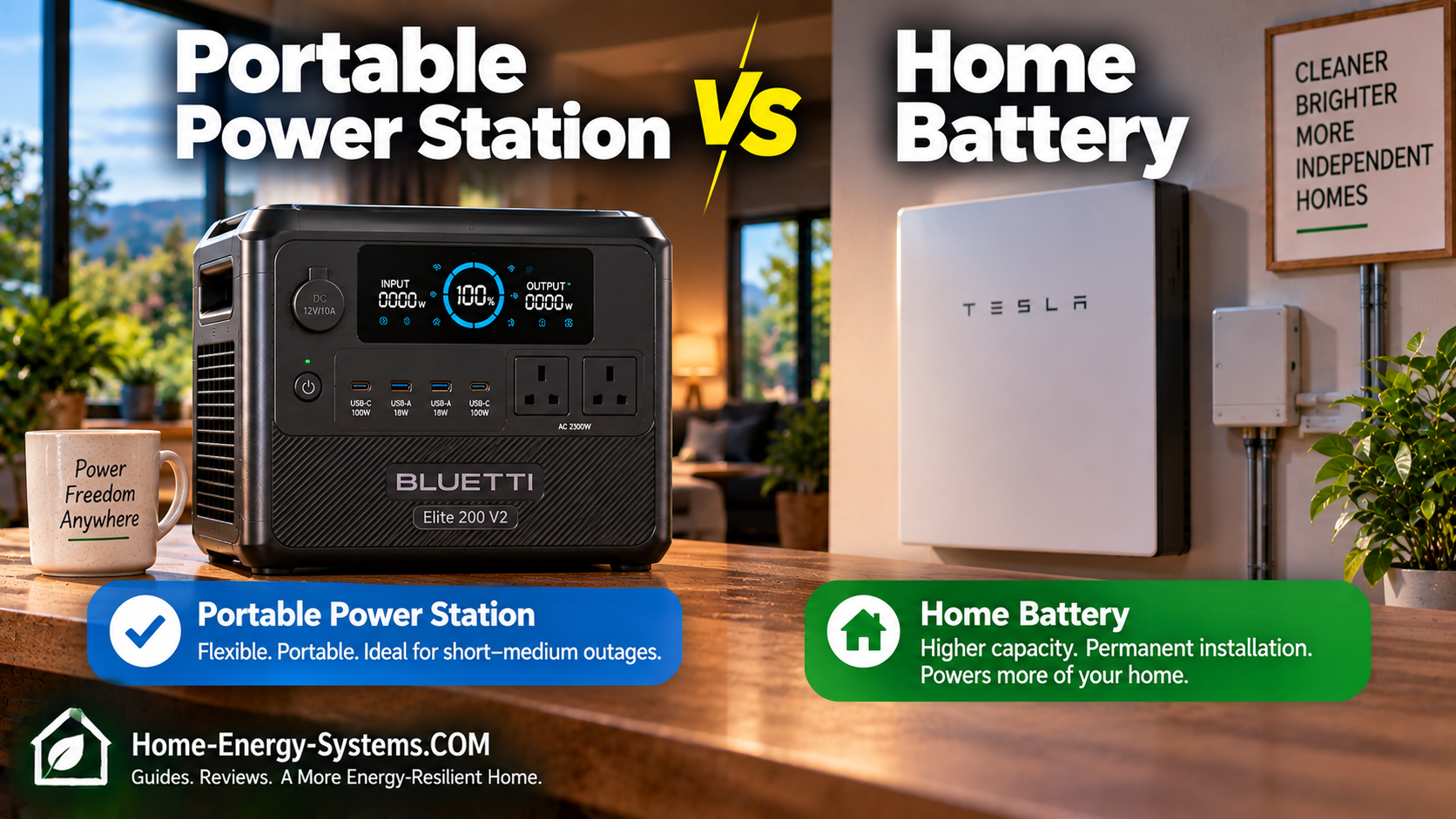
A portable unit and a permanently installed home battery solve similar problems in very different ways.
A portable system is usually cheaper, does not normally require permanent installation and can be moved around the home or taken elsewhere.
A home battery generally offers much larger energy storage, automatic integration with household circuits and better support for whole-home loads.
If you are comparing the two options, read our guide to home battery storage systems.
Portable Power Station vs Generator
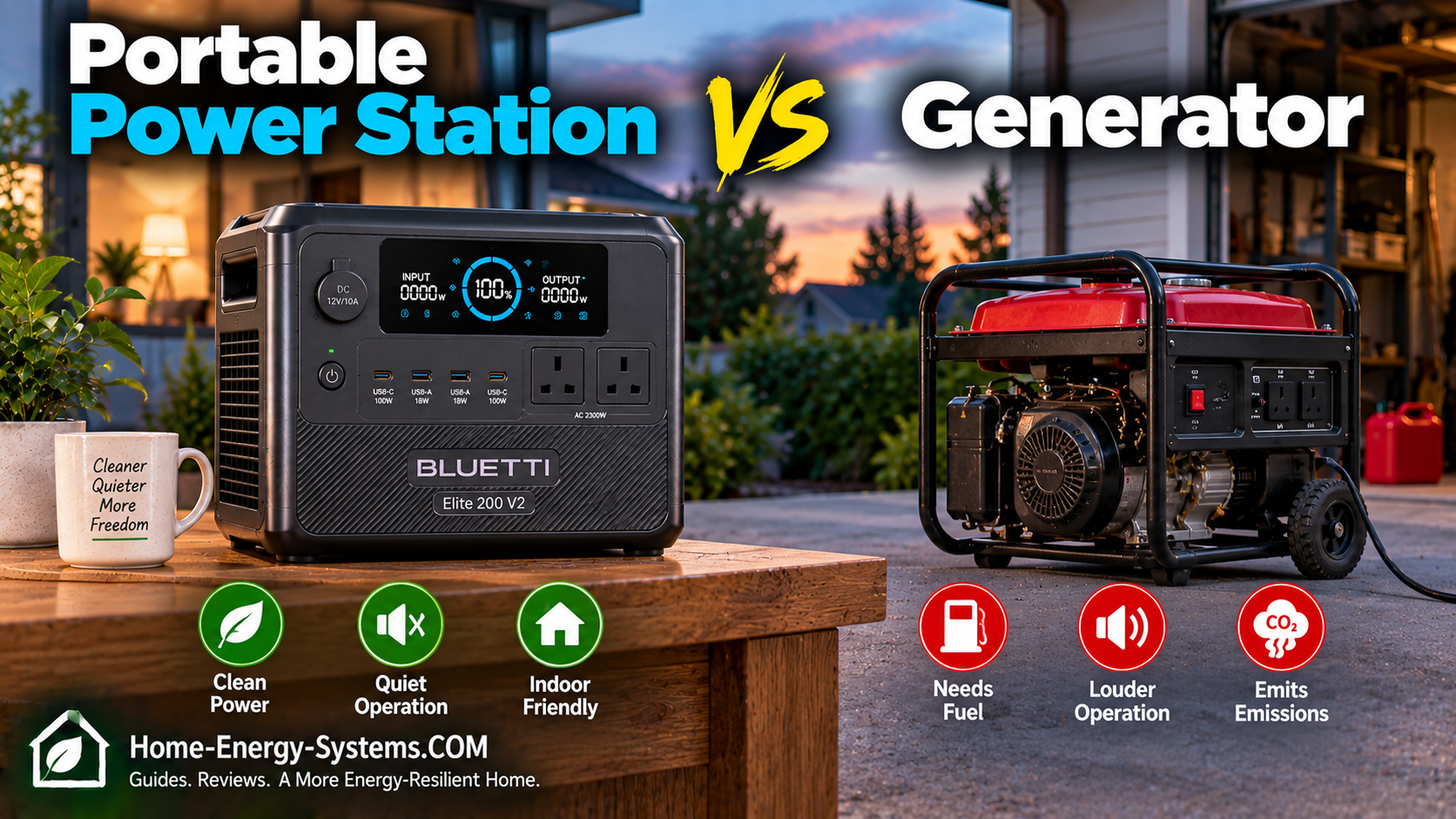
Traditional fuel generators still have one major advantage: as long as fuel remains available, they can continue generating electricity.
Battery stations have different advantages. They are quiet, produce no exhaust fumes at the point of use and can operate indoors when used according to the manufacturer’s instructions.
Fuel generators are very different. They produce carbon monoxide and must never be operated indoors or close to doors, windows or other building openings. See the Ready.gov power-outage safety guidance for additional generator safety advice.
Battery systems can also be recharged from compatible solar panels.
For many households, the choice is therefore not simply battery or generator. A battery system can cover shorter outages quietly while a larger backup solution may make sense for prolonged emergencies.