Solar Backup Power for Homes: Complete 2026 Guide
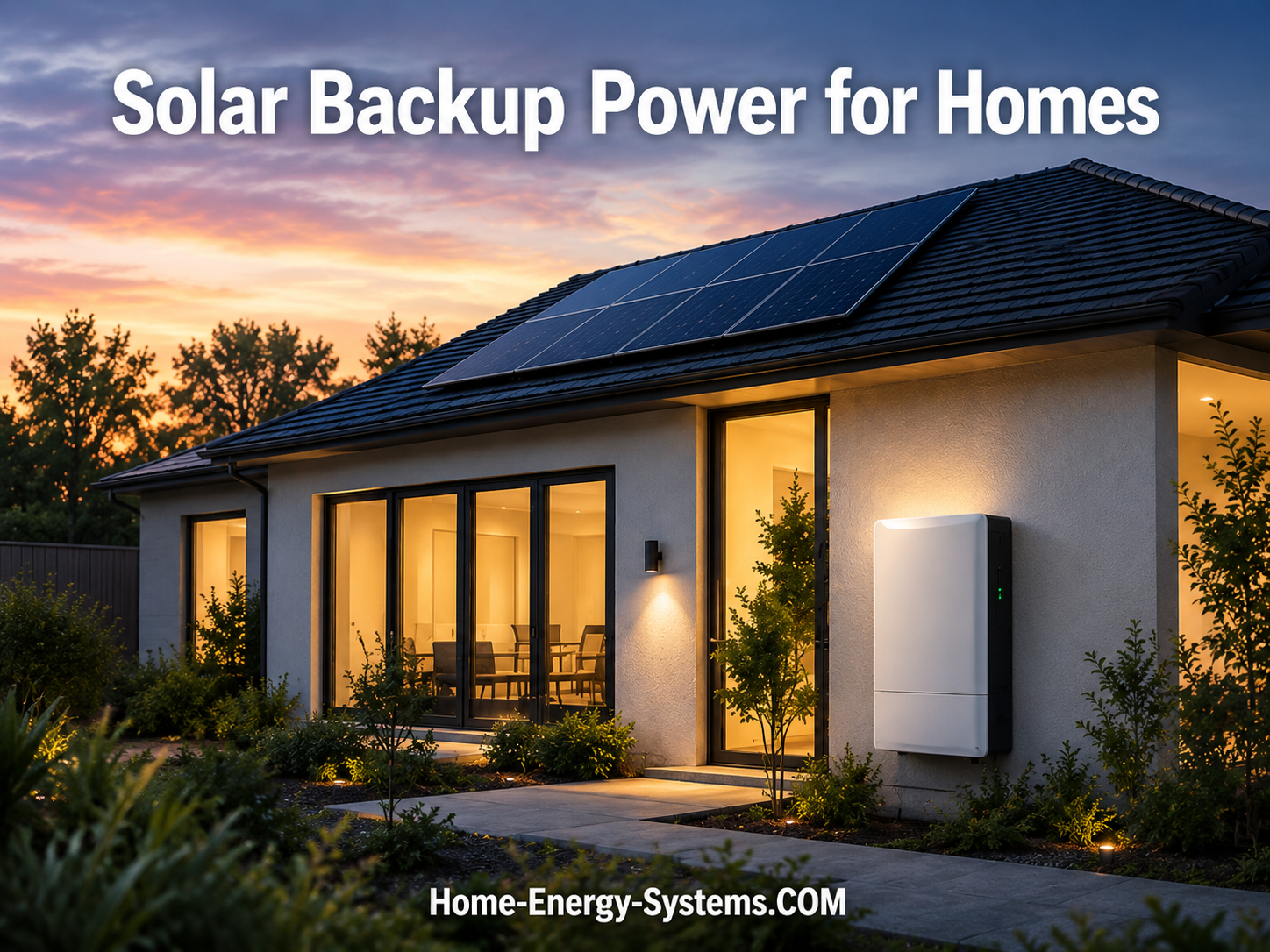
Solar backup power for homes is becoming one of the most practical ways to keep essential appliances running during a power outage while also making better use of energy generated by rooftop solar panels. A properly designed system can store electricity during the day and automatically supply selected household circuits when the grid fails.
But solar panels alone do not necessarily keep a home powered during an outage. For true backup capability, the system normally needs battery storage, a compatible inverter and equipment that can safely disconnect the property from the electricity grid.
In This Guide
- What is solar backup power?
- How solar backup power works
- Main components of a home solar backup system
- Why solar panels alone may not work during an outage
- How much backup power does your home need?
- Essential-load versus whole-home backup
- Battery options
- Solar backup versus generators
- How to choose the right system
- Where to buy solar backup equipment
- Frequently asked questions
What Is Solar Backup Power for Homes?
Solar backup power combines solar electricity generation with energy storage so electricity can still be available when the normal grid supply disappears.
During normal operation, solar panels generate electricity for the home. Any surplus energy can charge a battery rather than immediately being exported to the grid. Later, the stored electricity can be used during the evening, during periods of expensive electricity or when an outage occurs.
A home backup system is different from a conventional grid-connected solar installation because it includes equipment designed specifically to operate safely while the grid is unavailable.
If you are still comparing the broader options available, see our guide to the best home backup power systems for 2026.
How Does Solar Backup Power Work?
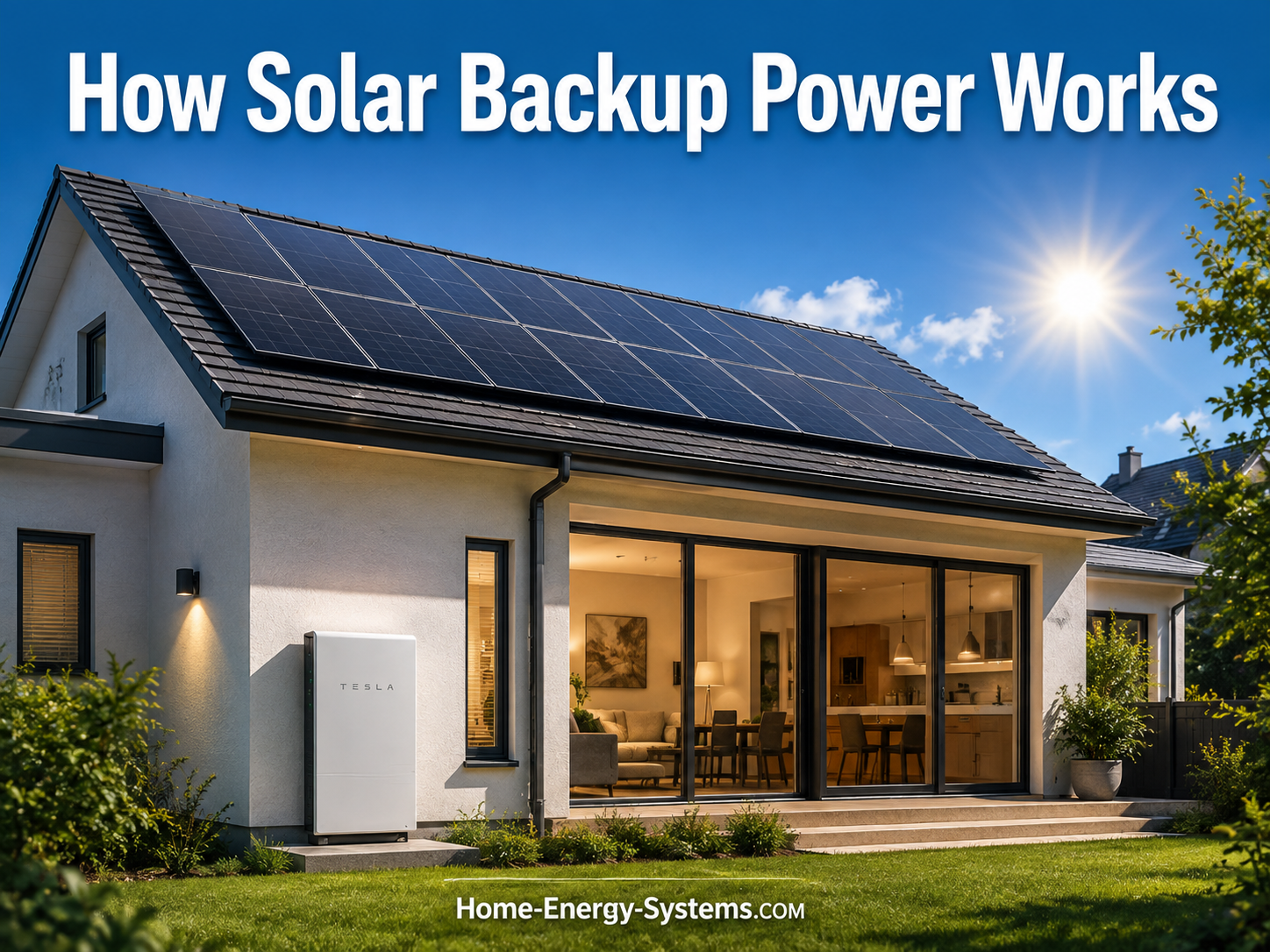
The basic principle is straightforward. Solar panels produce DC electricity whenever sufficient sunlight is available. An inverter converts that electricity into AC power that household appliances can use.
When battery storage is included, electricity can also be directed into the battery for later use.
During an outage, a compatible backup system detects that grid power has failed and isolates the home or selected circuits from the electricity network. Stored battery energy can then supply those circuits safely.
The U.S. Department of Energy provides a useful overview of how solar-plus-storage systems work, including how battery storage can capture solar electricity for use later when it is needed.
Your household uses solar energy first whenever sufficient generation is available.
Energy that is not immediately required can be stored rather than exported.
Stored electricity can be used at night or when electricity demand exceeds current solar generation.
The backup equipment isolates selected home circuits from the utility supply.
Depending on the system design, essential circuits or much of the home may continue operating.
With the correct equipment, daytime solar generation may replenish the battery even while the wider grid remains offline.
Main Components of a Solar Backup Power System
Solar Panels
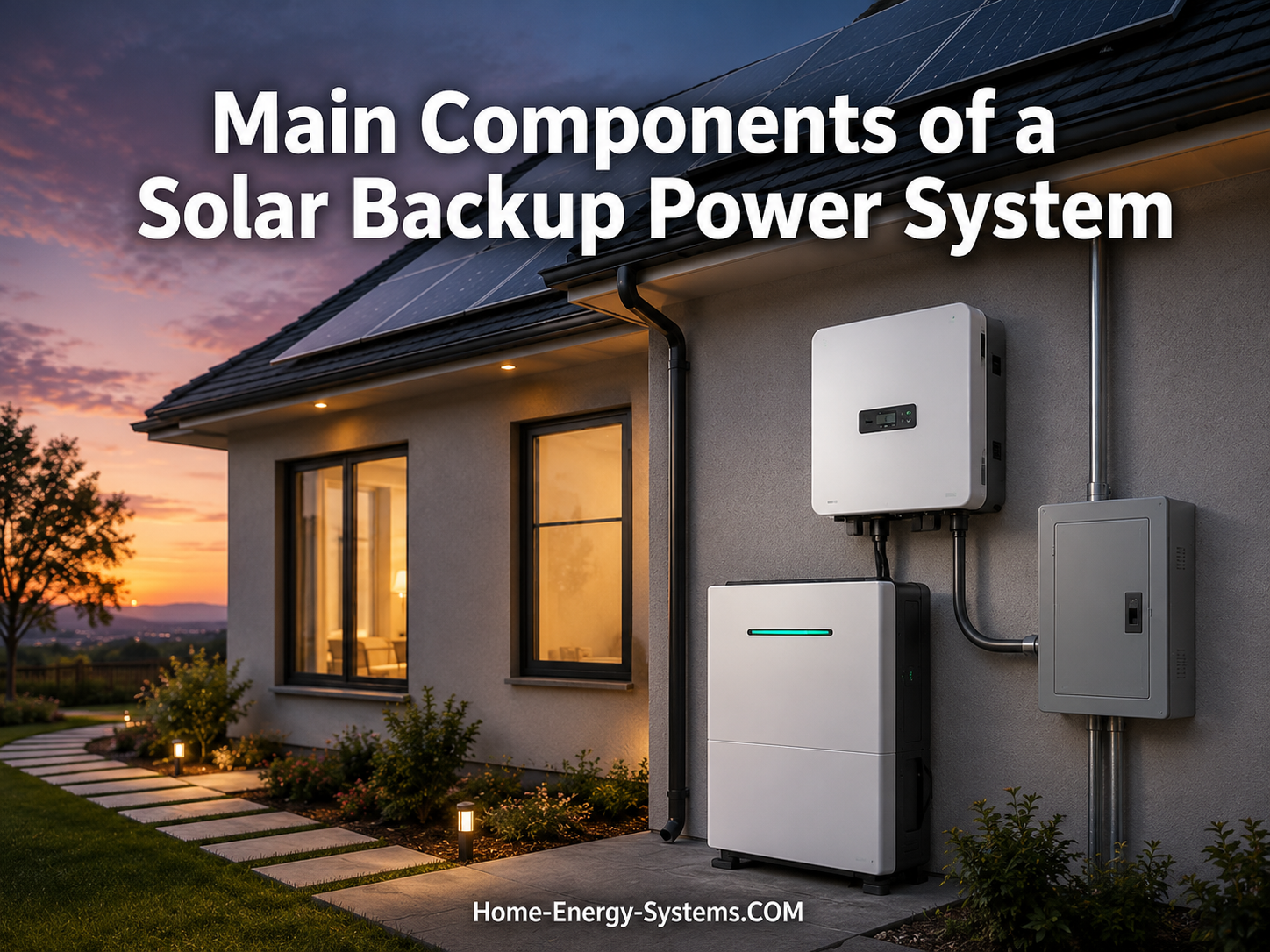
Solar panels capture sunlight and convert it into DC electricity. The size of the array determines how much electricity can potentially be generated during suitable weather.
Read our solar panels for homes guide if you are starting from scratch.
Battery Storage
The battery stores energy for use when solar production is low or grid electricity is unavailable. Battery capacity is generally measured in kilowatt-hours, or kWh.
See our home battery storage guide for a deeper explanation.
Solar or Hybrid Inverter
The inverter converts DC electricity from the solar panels or battery into usable AC electricity. Backup systems normally require an inverter specifically designed to operate when the grid has failed.
Our solar inverter guide explains this part of the system in more detail.
Backup Switching Equipment
A transfer switch, gateway or similar device separates the home’s backup circuits from the electricity network during an outage. This prevents dangerous electricity backfeed into utility lines.
Critical-Load Panel
Some installations supply only selected circuits such as refrigeration, lighting, internet equipment, heating controls and important outlets.
Energy Monitoring
Modern systems often provide an app or monitoring platform showing solar generation, household consumption, battery charge and energy flows in real time.
Will Solar Panels Work During a Power Outage?
This is one of the most misunderstood aspects of residential solar.
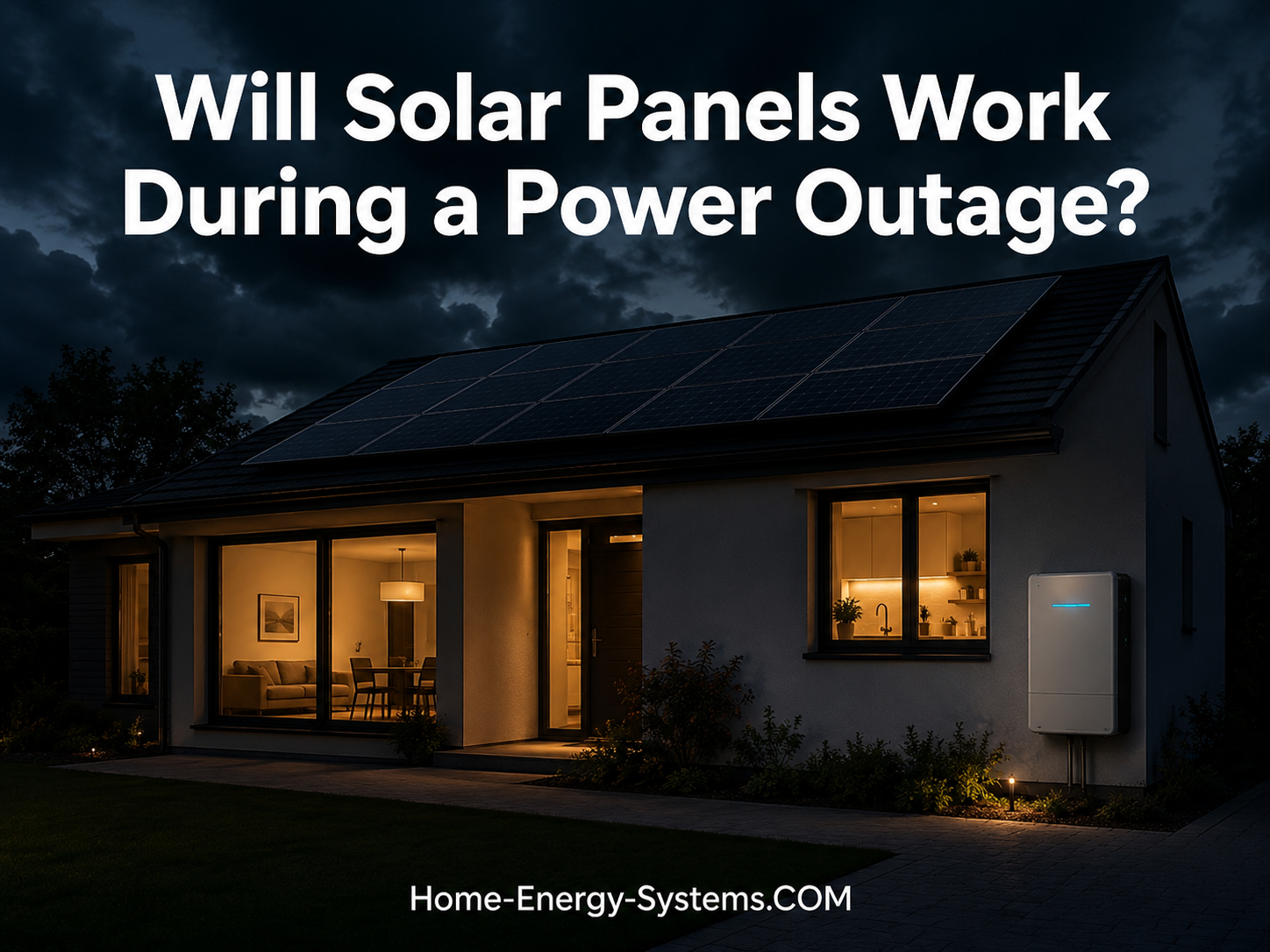
A standard grid-connected solar system will usually shut down when grid electricity fails. This is an important safety feature. Without isolation, electricity produced by rooftop panels could potentially flow back onto utility lines while engineers are repairing them.
To provide power during an outage, the installation must have the ability to safely disconnect from the grid and create its own local electricity supply.
The U.S. Department of Energy guidance on solar resilience also explains why ordinary grid-connected solar systems normally shut down during an outage and how solar combined with storage can improve household resilience.
If you already own rooftop solar without a battery, adding backup capability may be possible, but compatibility depends on the inverter, electrical layout and battery system being considered.
How Much Solar Backup Power Does Your Home Need?
The right size depends less on the physical size of your home and more on what you want to keep operating during an outage.
Start by listing the appliances and circuits that genuinely matter.
Typical Essential Loads
- Refrigerator and freezer
- Internet router
- Lighting
- Phone and laptop charging
- Heating controls
- Security equipment
- Medical equipment where required
- Selected kitchen outlets
Higher-Demand Loads
- Electric ovens
- Electric showers
- Large air-conditioning systems
- Heat pumps
- Electric vehicle chargers
- Electric water heating
- Pool pumps
Every appliance has a power requirement measured in watts or kilowatts. Battery capacity, on the other hand, is usually expressed in kilowatt-hours.
For example, a 100-watt appliance operating continuously for 10 hours would theoretically consume about 1 kWh of electricity.
Real systems also experience conversion losses, changing appliance loads and battery reserve limits, so sizing should include a sensible margin.
Think About Both Power and Energy
- Power output: how many appliances can operate at the same time.
- Battery capacity: how long those appliances can continue running.
A large battery with an undersized inverter may still struggle to start heavy appliances. Likewise, a powerful inverter connected to a small battery may run several appliances but only for a short period.
Essential-Load Backup vs Whole-Home Backup
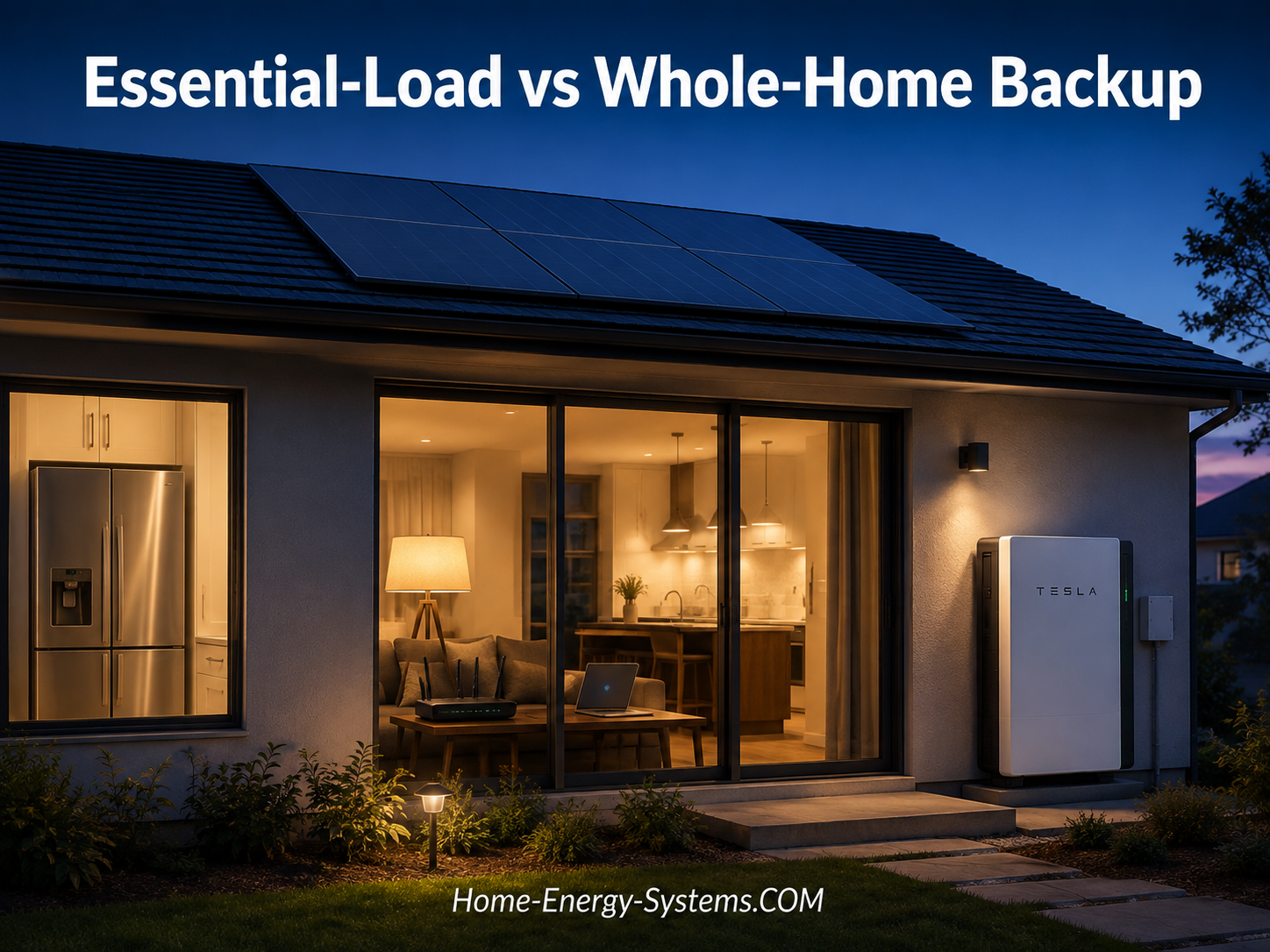
| Feature | Essential Load | Whole Home |
|---|---|---|
| Power | Selected circuits | Most circuits |
| Battery size | Lower | Higher |
| Cost | Lower | Higher |
| Runtime | Usually longer | Depends on demand |
| Best for | Essential appliances | Near-normal use |
For many households, essential-load backup provides the best balance between cost and resilience.
Keeping the refrigerator, lights, Wi-Fi and heating controls operating can make a power outage far easier to manage without requiring enough battery capacity to run every large appliance in the property.
Whole-home backup becomes more attractive where outages are frequent, electricity reliability is poor or occupants depend heavily on electrically powered heating, cooling or medical equipment.
Home Power Backup Battery Options
Battery technology has become central to modern solar backup power for homes.
Lithium iron phosphate, commonly abbreviated to LFP or LiFePO4, has become widely used in home energy storage because of its long cycle life, thermal stability and ability to handle frequent charging and discharging.
Fixed Home Battery Systems
These batteries are permanently installed and integrated with the home’s electrical system. They can offer automatic backup and are particularly suitable for households looking for long-term solar energy storage.
Expandable Battery Systems
Some modern storage systems allow additional battery modules to be added later. This can be useful if electricity consumption increases or you eventually want longer outage protection.
Portable Power Stations
Large portable power stations occupy a useful middle ground between small emergency batteries and permanently installed home storage.
They can power appliances directly and some systems can be expanded with additional batteries or solar panels. However, supplying fixed household wiring requires appropriate approved equipment and professional installation.
Can Solar Backup Run a Heat Pump?
It can, but heat pumps can substantially increase the size of the backup system required.
A small essential-load battery system designed primarily for lights, refrigeration and communications may not have sufficient inverter output or stored energy to operate a large heat pump for an extended period.
Homeowners who want heating or cooling to remain available during a blackout should include the heat pump’s electrical demand when calculating battery and inverter requirements.
If heat pumps are part of your wider home energy plans, see our best heat pump systems guide.
Can Solar Backup Charge an Electric Vehicle?
Technically yes, but EV charging can consume a large amount of stored electricity very quickly.
During an extended outage, most households will get considerably more value from preserving battery energy for refrigeration, communications, lighting and other essential loads.
A large whole-home battery installation with significant solar generation may provide more flexibility, but EV charging should be considered carefully when sizing the system.
You can learn more in our home EV charging guide.
Solar Backup Power vs a Home Generator
Traditional generators remain a valid form of emergency power, particularly where very long outages are common. Solar-and-battery systems, however, offer a very different ownership experience.
| Feature | Solar + Battery | Generator |
|---|---|---|
| Fuel | None in normal use | Required |
| Noise | Very low | Higher |
| Automatic backup | Available | Available |
| Daily usefulness | Yes | Mainly outages |
| Recharge | Solar possible | Fuel required |
| Maintenance | Generally low | Engine servicing |
What Happens During Several Days Without Sun?
During several cloudy days, solar generation may be considerably lower than normal. This is why energy management becomes particularly important during a prolonged outage.
- Delay washing machines and dishwashers.
- Avoid unnecessary electric heating loads.
- Limit EV charging.
- Use natural daylight where practical.
- Turn off unused electronics.
- Prioritise refrigeration, communications and essential equipment.
Our power outage preparation guide covers additional ways to prepare your home.
How to Choose a Solar Backup Power System
The best solar backup power system is not necessarily the one with the biggest battery. It is the system that matches your household’s actual priorities.
Create an essential-load list before comparing batteries or equipment.
Look at appliance wattages and how many hours each appliance may need to operate.
Allow a margin for conversion losses and unexpected energy use.
Make sure the inverter can operate the appliances you expect to use simultaneously.
Do not assume every solar inverter or battery automatically provides backup during a grid failure.
A modular system can make it easier to add battery capacity later.
For extended outages, the ability to recharge batteries from rooftop solar can be extremely valuable.
Electrical equipment connected to household wiring and the utility grid should be installed in accordance with local electrical regulations.
Is Solar Backup Power Worth It?
Solar backup power can be particularly worthwhile for households that already want solar panels or battery storage for everyday energy management.
Unlike a generator that may remain unused for most of the year, a solar battery can potentially work every day by storing excess generation and supplying electricity later.
- Power outages occur regularly in your area.
- You work from home and need reliable electricity.
- You already have rooftop solar.
- You want to increase your use of your own solar electricity.
- You prefer quieter backup power.
- You want a system that can operate without storing fuel.
Where to Buy Solar Backup Power Equipment
Home-Energy-Systems.COM works with several solar and backup-power suppliers in different regions. Availability varies by country, so always check product compatibility, voltage, warranties and installation requirements before ordering.
For a complete regional list, visit our Where to Buy Solar Energy Products guide.
Frequently Asked Questions
Can solar panels power my house during a blackout?
Not necessarily. Most standard grid-connected solar systems shut down during an outage. Backup operation requires compatible equipment that safely isolates the home from the electricity grid.
Do I need a battery for solar backup power?
Battery storage is the most common way to provide dependable solar backup and provides much greater flexibility during an outage.
How big should a home backup battery be?
Battery size should be based on the appliances you want to operate, their power consumption and the number of hours or days of backup you require.
Can solar panels recharge a battery during a blackout?
Yes, if the solar, battery and inverter system is specifically designed to continue charging while operating independently from the grid.
Can a solar battery run an entire house?
Some systems can, but whole-home backup requires sufficient inverter output and battery capacity.
Is solar backup better than a generator?
It depends on the household. Solar batteries are quiet and useful every day, while generators can provide extended backup while fuel remains available.
Can I add a battery to an existing solar system?
Often yes, but compatibility depends on the existing inverter, electrical layout and battery technology.
Final Thoughts
Solar backup power for homes can provide much more than emergency electricity. A well-designed system can use solar energy every day, store electricity for later and provide valuable protection when the grid goes down.
The most important step is deciding exactly what you want the system to achieve. A modest essential-load backup system may be perfect for one household, while another may need substantially more battery capacity for heating, cooling or whole-home operation.
Continue with our Best Home Backup Power Systems 2026 guide to compare the wider range of backup options available.
Affiliate disclosure: Home-Energy-Systems.COM may earn a commission if you purchase through selected links on this page, at no additional cost to you.