Solar Panels: The Complete Homeowner’s Guide
Solar panels are transforming how homeowners generate electricity, reduce energy bills and become less dependent on the electricity grid.
Thanks to improved technology, higher panel efficiency and increasingly competitive installation costs, more households are considering solar as part of a complete home energy system.
Whether you are planning your first installation or upgrading an older system, understanding how solar panels work, how many you may need and what equipment goes with them can help you make a better-informed decision.
This guide covers panel types, efficiency, system sizing, installation, maintenance, battery storage and long-term performance.
What Are Solar Panels?
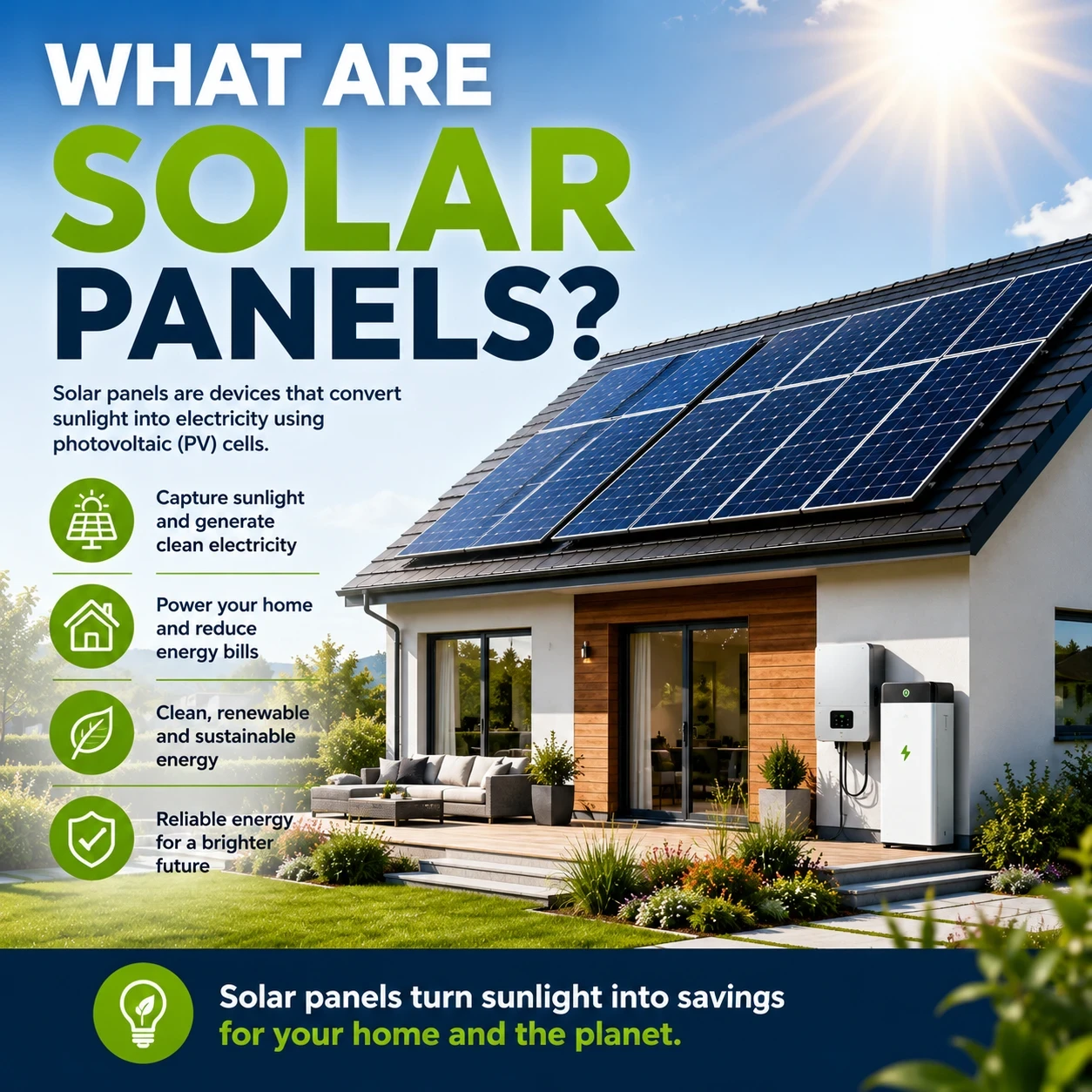
Solar panels convert sunlight into electricity using photovoltaic, or PV, cells. When sunlight reaches these cells, it produces direct-current electricity that can be used as part of a home solar energy system.
Because household electrical systems normally use alternating current, a solar inverter converts the DC electricity produced by the panels into AC electricity suitable for the home.
Depending on the system and local regulations, surplus electricity may be stored in a home battery or exported to the electricity grid.
A typical residential solar system can include:
- Solar panels
- A solar inverter
- Roof mounting equipment
- Electrical protection equipment
- System monitoring
- Optional home battery storage
These components work together to generate and manage renewable electricity for the household.
How Do Solar Panels Work?
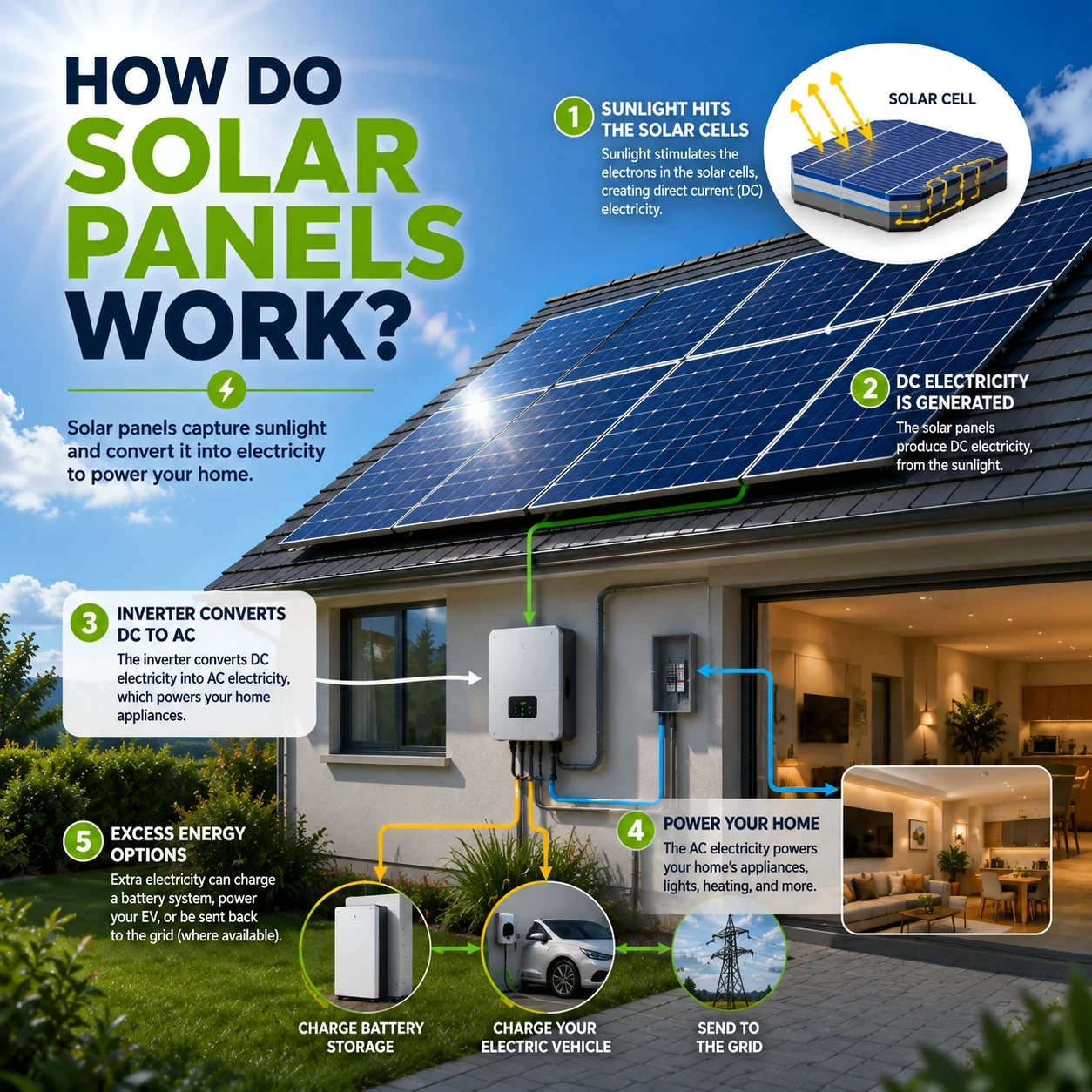
Solar panels contain photovoltaic cells, most commonly made using silicon. When sunlight reaches the cells, the photovoltaic effect generates direct-current electricity.
The electricity then passes to an inverter, which converts DC electricity into the AC electricity used by household appliances.
If your solar system produces more electricity than the home is using at that moment, surplus generation may be used to:
- Charge a compatible home battery.
- Charge an electric vehicle.
- Power flexible household loads.
- Export electricity to the grid where permitted.
This makes system design important. The panels, inverter, household demand and any battery storage should work together rather than being chosen independently.
For a closer look at inverter technology, see our Top Rated Solar Inverters 2026 guide.
Why Are More Homeowners Installing Solar Panels?
Solar panels allow households to generate some of their own electricity instead of purchasing all of it from an energy supplier. The financial benefit varies according to installation cost, electricity prices, solar production, self-consumption and any payment received for exported electricity.
Potential benefits include:
- Lower electricity purchases from the grid.
- Greater control over household energy use.
- Renewable electricity generation at home.
- Long equipment life with relatively low routine maintenance.
- The ability to combine solar with battery storage.
- The ability to use surplus generation for EV charging.
The value of a solar system therefore depends on much more than the panels themselves. Good system sizing and matching generation to household consumption can have a major effect on the overall result.
Types of Solar Panels
Monocrystalline Solar Panels
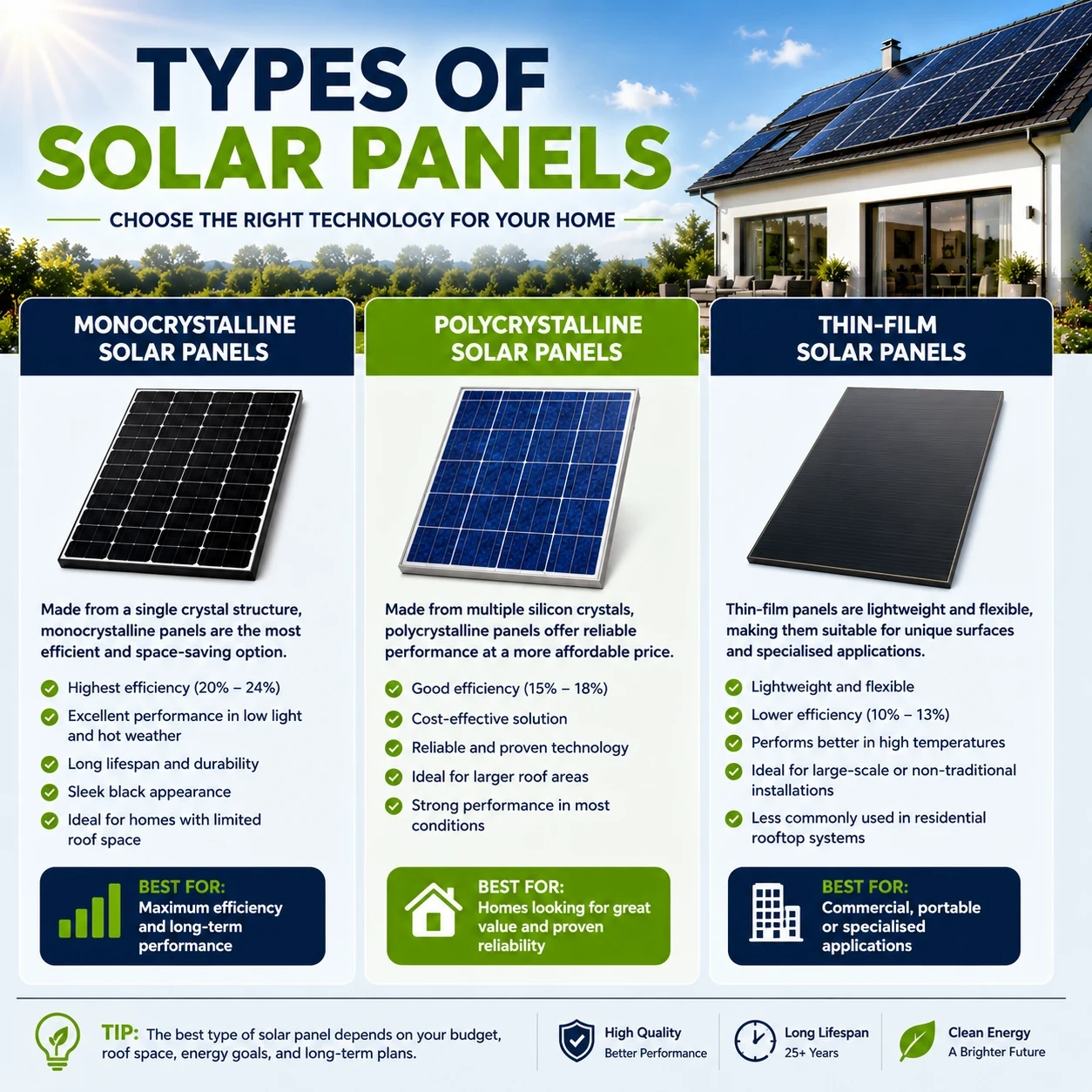
Monocrystalline panels use cells manufactured from single-crystal silicon. They dominate much of today’s residential market because they can provide high efficiency from a relatively small roof area.
Advantages can include:
- High conversion efficiency.
- Good power output from limited roof space.
- Long manufacturer performance warranties on many models.
- A uniform dark appearance that many homeowners prefer.
Polycrystalline Solar Panels
Polycrystalline technology uses multiple silicon crystal fragments. These panels were once extremely common in residential installations but have increasingly been displaced by higher-efficiency monocrystalline products.
Existing polycrystalline systems can still provide reliable generation for many years, but homeowners buying a new system should compare current products rather than assuming an older panel technology will necessarily provide better value simply because its purchase price is lower.
Thin-Film Solar Panels
Thin-film photovoltaic technology can be lightweight and suitable for specialist applications. However, conventional crystalline silicon panels remain more common on residential rooftops because of their combination of efficiency, availability and established installation systems.
If you are comparing specific panels for a new system, our Best Solar Panels 2026 guide looks more closely at current panel technology and what homeowners should compare.
How Efficient Are Modern Solar Panels?
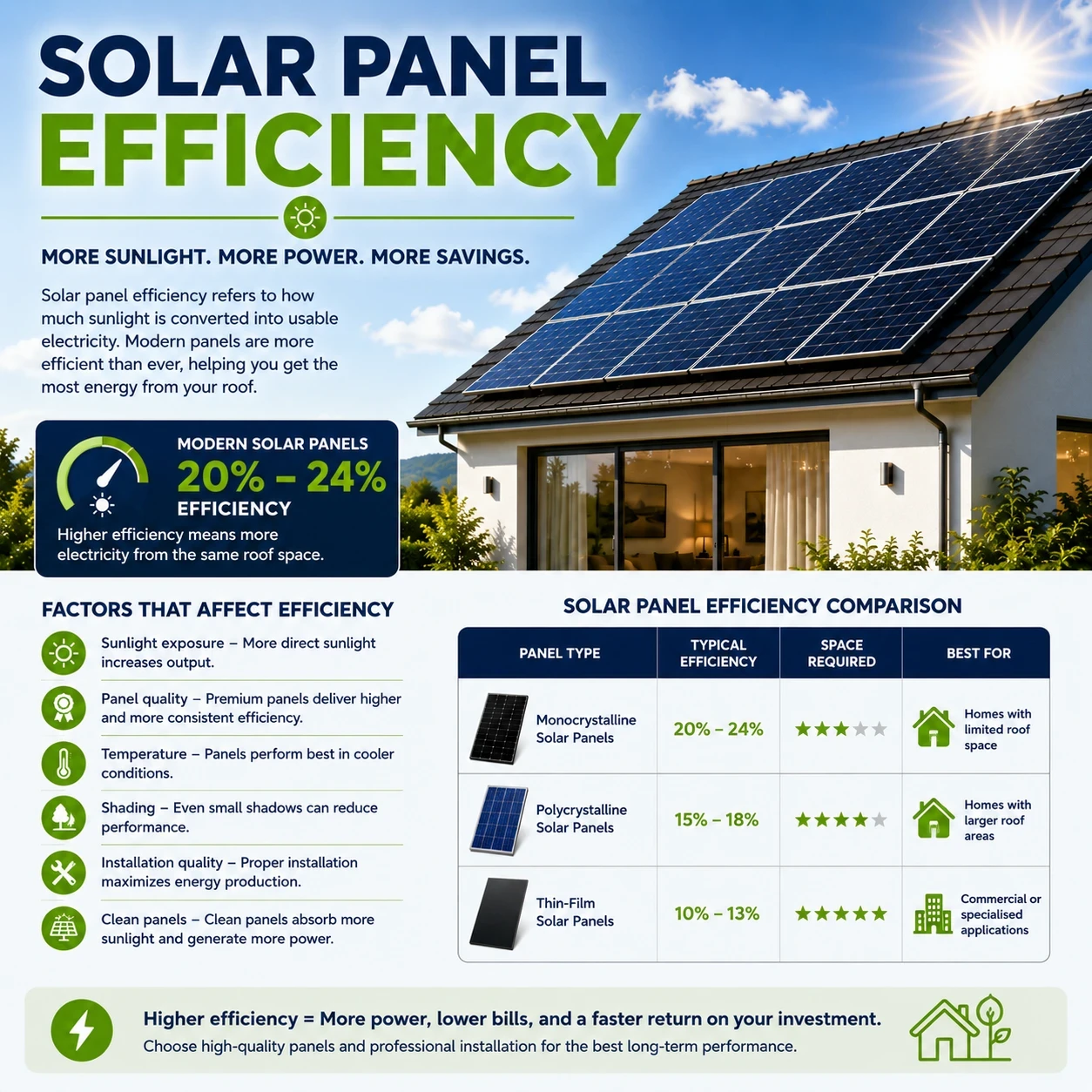
Solar panel efficiency describes how much of the sunlight reaching a panel is converted into electricity. Higher efficiency can be particularly useful where roof space is limited because more generating capacity can be installed within the available area.
Many current premium residential modules have efficiencies above 20%, with some high-performance products reaching the low-to-mid 20% range.
However, efficiency is only one part of real-world performance. Solar output is also influenced by:
- Geographic location.
- Roof direction and pitch.
- Shading.
- Panel temperature.
- System losses.
- Inverter design.
- Panel degradation over time.
In the Northern Hemisphere, south-facing arrays often provide strong annual generation, while north-facing orientation is generally preferred in the Southern Hemisphere. East- and west-facing systems can also perform well and may spread production across more of the day.
Solar panels continue producing electricity under cloudy conditions, although their output is normally lower than under strong direct sunlight.
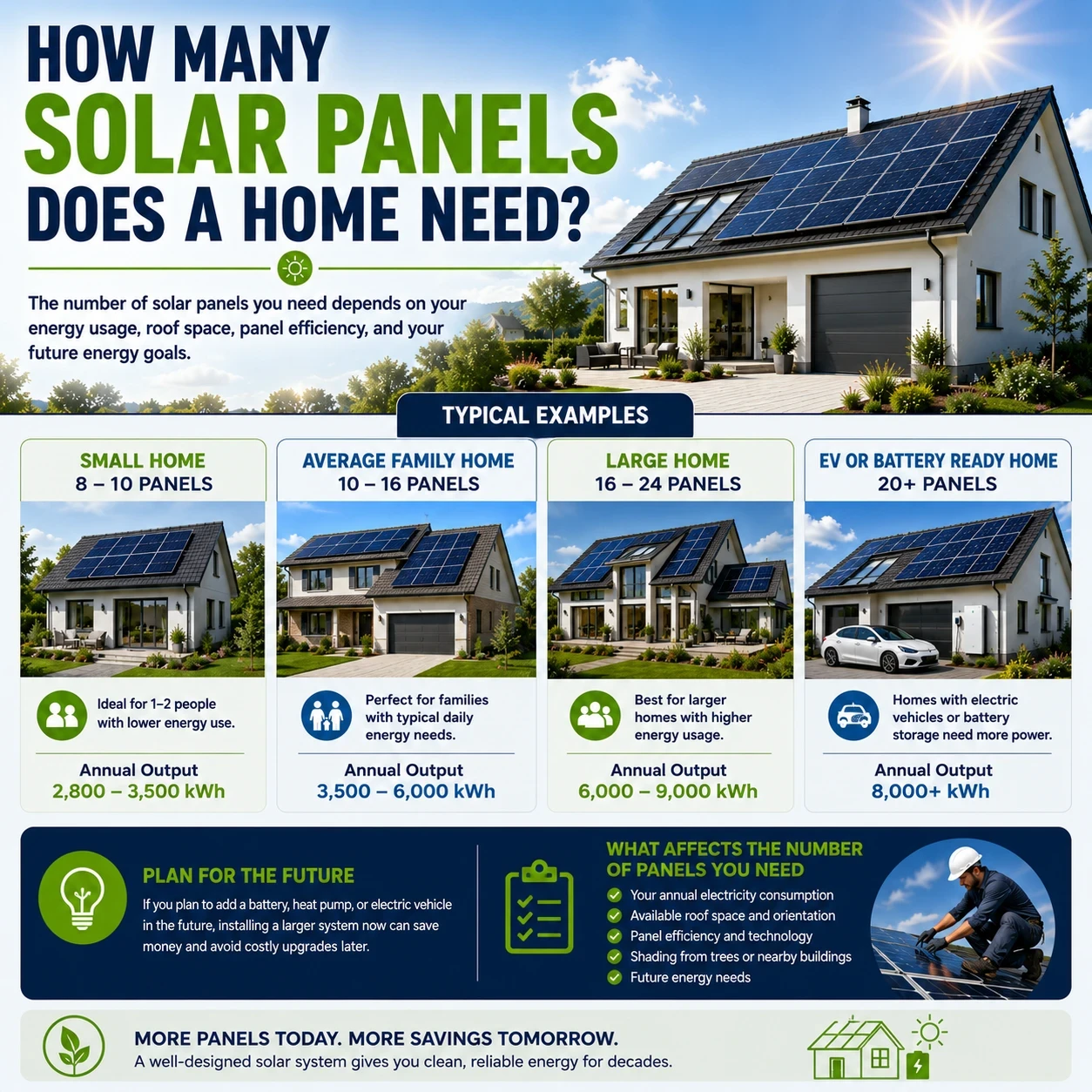
How Many Solar Panels Does a Home Need?
There is no reliable universal number of solar panels for a small, average or large home. Two similar houses can require very different systems because their electricity consumption, roof orientation, shading and local solar resource may be completely different.
The number of panels should be calculated using:
- Annual household electricity consumption.
- Panel wattage.
- Usable roof area.
- Local solar production.
- Roof orientation and shading.
- Expected system losses.
- Local grid-export rules.
- Future electricity demand.
A household planning to add an electric vehicle or heat pump may want to include that additional demand when designing the solar system.
Our Solar Panel Installation Guide 2026 explains the sizing process in more detail, including how to assess roof space and estimate potential solar production.
Solar Panel Installation
A good installation begins with a property and energy assessment. The installer should consider roof condition, orientation, shading, electricity consumption, available electrical capacity and any future plans for battery storage or EV charging.
A typical project can involve:
- Reviewing household electricity consumption.
- Surveying the property and roof.
- Designing and sizing the solar system.
- Checking permits and grid requirements.
- Installing the mounting equipment.
- Installing the solar panels.
- Installing and connecting the inverter.
- Completing electrical protection and grid connections.
- Testing and commissioning the system.
- Activating system monitoring.
The physical rooftop installation of a straightforward residential system may sometimes be completed within a few days, but the complete project can take considerably longer when surveys, permits, grid applications, equipment delivery, inspections or electrical upgrades are required.
Solar Panel Costs
Solar panel installation costs vary significantly between countries and regions. System size, labour rates, roof complexity, equipment quality, taxes, incentives and optional battery storage can all change the final price.
When comparing quotations, look at:
- Solar panel make and model.
- Panel efficiency and power rating.
- Product and performance warranties.
- Inverter make and model.
- Expected annual electricity production.
- Roof mounting system.
- Installation workmanship warranty.
- Monitoring equipment.
- Battery compatibility.
- After-sales support.
The cheapest quotation is not automatically the best value. Solar equipment can remain in service for decades, making equipment quality, installer experience and long-term support important considerations.
Maintaining Solar Panels
One advantage of photovoltaic panels is that they have no moving parts and generally require relatively little routine maintenance.
Homeowners can:
- Monitor electricity production for unexpected changes.
- Visually inspect the array from a safe location.
- Watch for unusual shading from growing vegetation.
- Check for obvious debris or damage.
- Arrange professional inspection if output falls unexpectedly.
Rainfall can remove some dirt from panels, but cleaning requirements vary according to local conditions. Dust, bird droppings, pollen or other deposits can sometimes justify cleaning. Roof safety should always take priority over attempting to clean panels yourself.
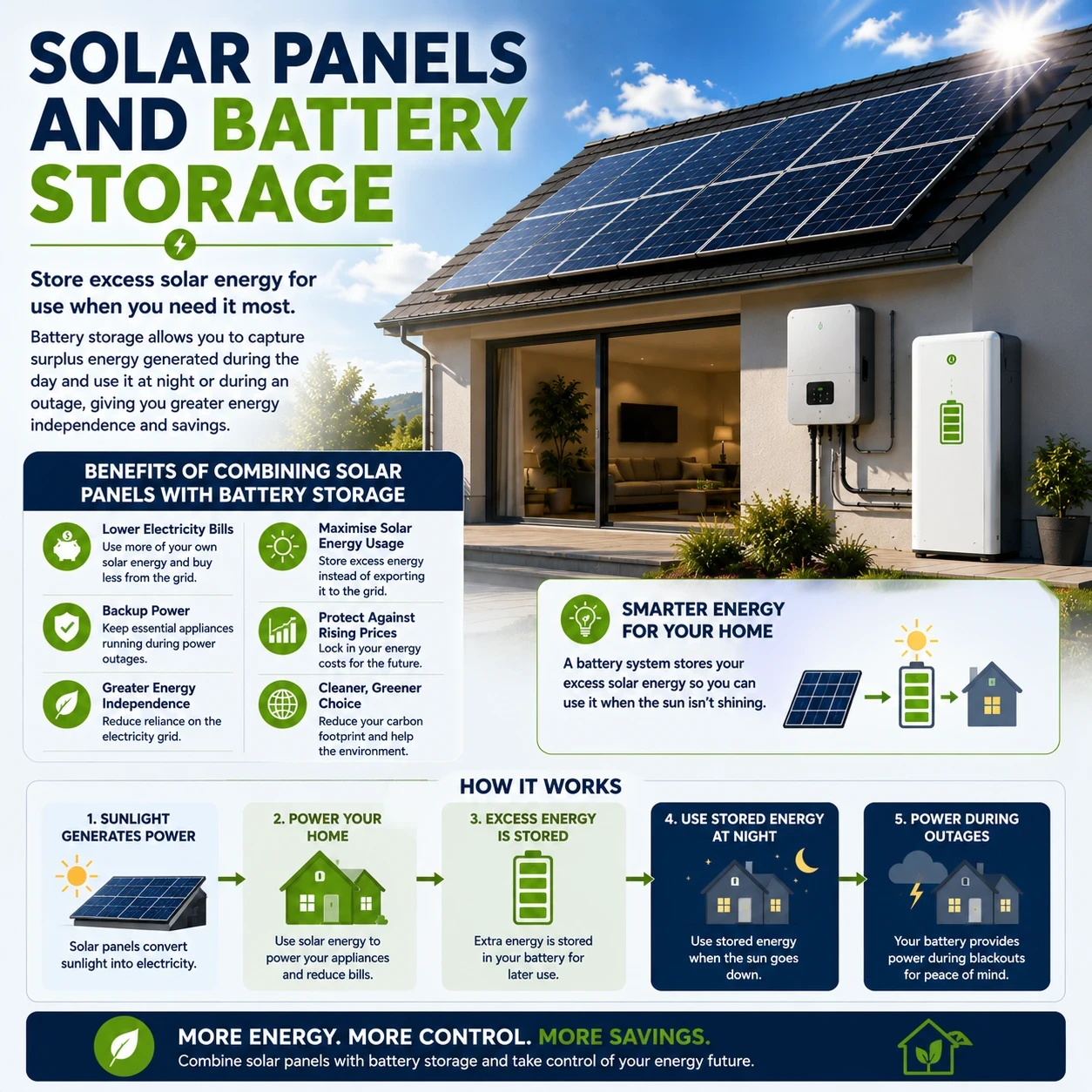
Solar Panels and Home Battery Storage
Solar panels generate electricity when sufficient daylight is available. A home battery can store some surplus generation so that it can be used later rather than immediately exported to the electricity grid.
This can be particularly useful during the evening when solar generation falls but household electricity consumption may remain high.
Potential benefits include:
- Increasing solar self-consumption.
- Reducing electricity purchased from the grid.
- Using stored electricity during higher-priced tariff periods.
- Providing backup power when the battery system and electrical installation are specifically designed for outage operation.
A battery does not automatically provide backup during a power cut. Backup operation depends on the inverter, battery, gateway or changeover equipment and the way essential circuits are configured.
For a complete explanation, read our Home Battery Storage Systems 2026 guide.
You can also explore our Solar Energy Storage Solutions 2026 guide for more on how solar generation and energy storage work together.
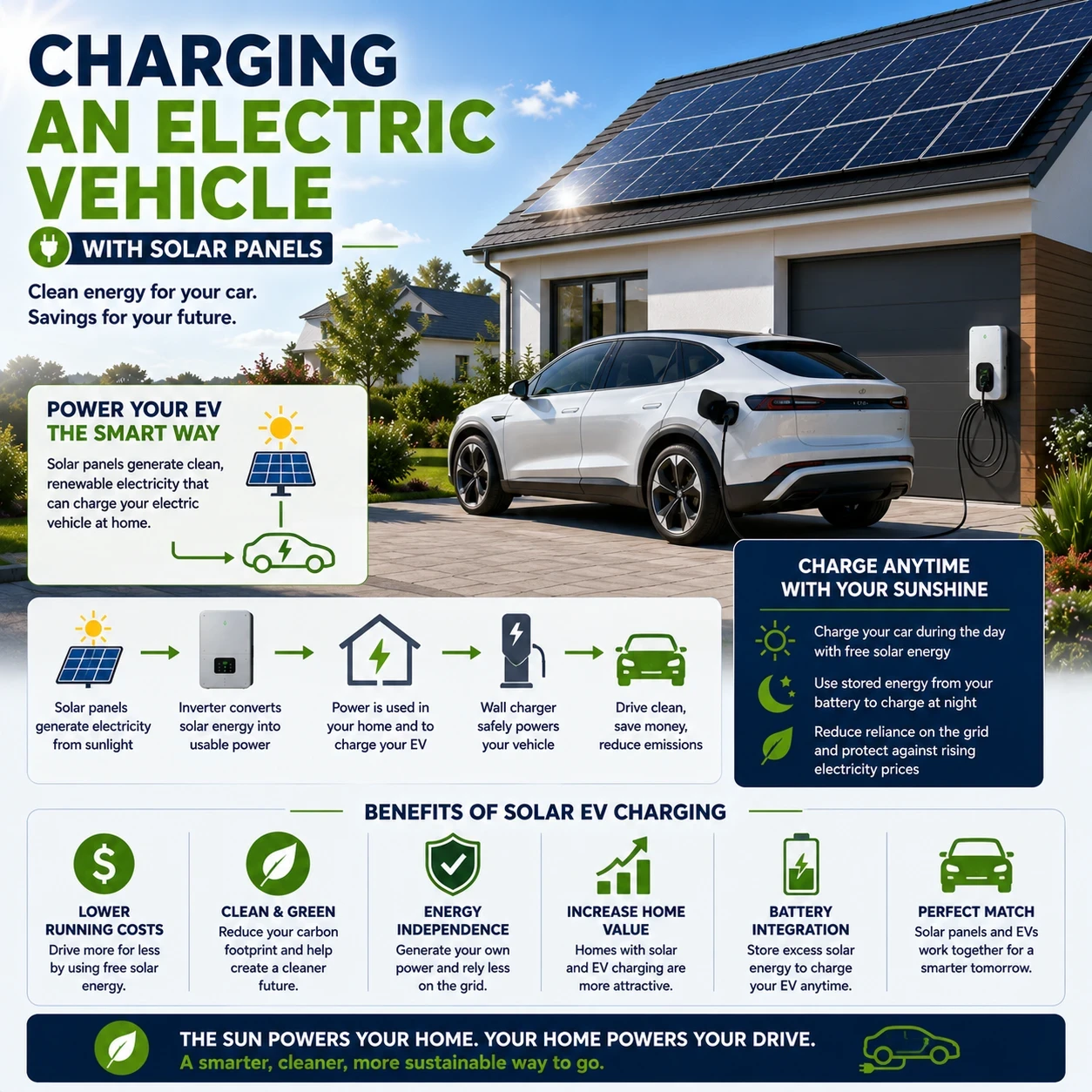
Charging an Electric Vehicle With Solar Panels
Solar electricity can also contribute to charging an electric vehicle at home. The amount of charging supplied directly by solar depends on the size of the PV system, available surplus generation, the vehicle’s energy requirements and when the vehicle is connected.
Smart EV chargers can sometimes adjust charging to make better use of surplus solar generation rather than exporting that electricity to the grid.
Households expecting to buy an EV should consider future vehicle charging when sizing a new solar system.
Common Solar Panel Mistakes to Avoid
Solar is a long-term investment, so good planning can make a substantial difference to system performance and value.
- Choosing solely on the lowest installation price.
- Ignoring roof condition or shading.
- Using unrealistic generation estimates.
- Failing to consider future EV or heat-pump demand.
- Ignoring future battery compatibility.
- Choosing an inverter that does not suit the system.
- Failing to compare equipment and workmanship warranties.
- Not checking installer experience and accreditation where applicable.
- Failing to monitor the system after installation.
Are Solar Panels Worth It?
Solar panels can be financially and practically worthwhile for many households, but the result depends on the individual property rather than solar being automatically worthwhile everywhere.
Important factors include installation price, electricity consumption, local electricity tariffs, available sunlight, roof suitability, self-consumption, export payments, financing costs and available incentives.
A well-designed system can reduce the amount of electricity a household purchases from the grid for many years. The strongest case is generally where the property has suitable solar exposure and a meaningful proportion of the generated electricity can be used within the home.
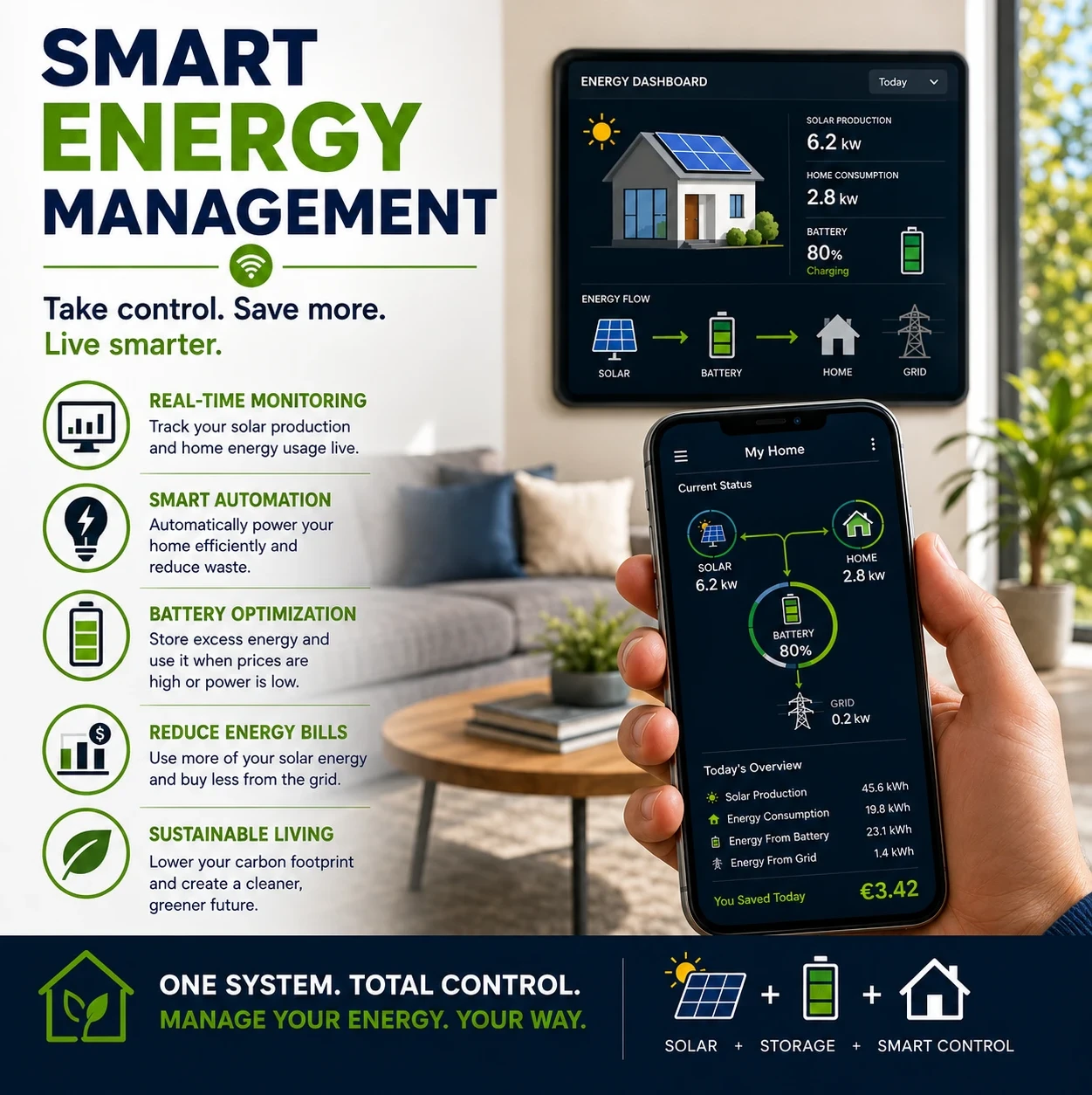
Battery storage, EV charging and smart energy management can change that calculation further, so they should be considered as part of the complete home energy strategy rather than as isolated products.

Frequently Asked Questions About Solar Panels
Do solar panels work on cloudy days?
Yes. Photovoltaic panels can continue generating electricity when the sky is cloudy, although production will generally be lower than under strong direct sunlight.
How long do solar panels last?
Many modern solar panels are sold with long performance warranties, commonly around 25 years or longer. Panels can continue producing electricity beyond the warranty period, although their output normally declines gradually over time.
Do solar panels need much maintenance?
Routine maintenance is generally limited because panels have no moving parts. Monitoring output, checking for obvious damage or shading and arranging professional inspection when necessary are sensible precautions.
Can I add a battery later?
Often, yes. However, the easiest and most cost-effective approach depends on the original inverter and electrical design. If you think you may add storage later, discuss battery compatibility when the solar system is first designed.
Can solar panels charge an electric vehicle?
Yes. Solar electricity can contribute to home EV charging, and compatible smart chargers may help increase the amount of surplus solar generation used by the vehicle.
Will solar panels work during a power outage?
A standard grid-connected solar installation will not necessarily power the home during an outage. Systems normally need compatible backup equipment and an electrical design that can safely isolate the property from the grid.
Conclusion
Solar panels can give homeowners a practical way to generate renewable electricity, reduce grid consumption and build a more flexible home energy system.
The key is to look beyond the panels themselves. Roof suitability, system sizing, inverter choice, battery plans, installation quality and household electricity consumption all influence how well a system performs.
If you are now considering an installation, the logical next step is our Solar Panel Installation Guide 2026 . It takes you from the initial roof and electricity assessment through system sizing, equipment selection and installation planning.
Continue Your Solar Research
External Resource
For further information about global solar photovoltaic technology and deployment, visit the International Energy Agency Solar PV resource .