The best solar panels in 2026 are not simply the panels with the highest efficiency figure. The right choice also depends on available roof space, warranty protection, degradation rate, temperature performance, installer support and the price of the complete installed system.
For this guide we have focused on established manufacturers and current residential panel families that stand out for different reasons. Rather than declaring one panel suitable for every property, we compare where each option may make the most sense.
If you are still learning the basics of photovoltaic technology, start with our complete homeowner’s guide to solar panels. This page is specifically for people who are ready to compare panels before requesting quotations.
Best Solar Panels 2026: Our Quick Picks
These are not ranked solely by maximum wattage. Each stands out for a different type of homeowner or installation.
We look at published module efficiency, usable residential power output, cell technology, temperature behaviour, degradation warranty, product warranty, manufacturer support and suitability for real residential rooftops.
Availability and warranty terms can vary by country, distributor and installer, so always verify the exact datasheet and warranty supplied with your quotation.
Top Solar Panels to Compare in 2026
AIKO Neostar 3P
Technology: N-Type ABC back-contact
Residential output: Up to 500 W in the Neostar 3P54 range
Maximum published efficiency: Up to 25.0%
Performance warranty: 30 years
AIKO’s Neostar family is one of the most interesting choices for homes where every square metre of roof space matters.
The back-contact design moves electrical contacts away from the front surface of the cell, allowing more of the front area to collect sunlight while also creating a clean appearance.
The Neostar 3P54 range published for 2026 reaches up to 500 W and 25.0% module efficiency.
Best suited to: Smaller roofs, premium installations and homeowners prioritising maximum power density.
LONGi Hi-MO X10
Technology: HPBC 2.0 back-contact
Residential versions: Up to around 500 W
Maximum published module efficiency: Up to 24.8%
Power warranty: Up to 30 years on current Hi-MO X10 ranges
LONGi’s Hi-MO X10 combines high module efficiency with back-contact cell technology designed to maximise the active cell area.
LONGi has also focused on temperature performance and partial-shading behaviour, two characteristics that can matter considerably outside laboratory test conditions.
The residential Hi-MO X10 range is particularly interesting where homeowners want high power from a relatively limited roof area.
Best suited to: High-output residential installations, limited roof space and buyers comparing premium high-efficiency modules.
REC Alpha Pure-RX
Technology: Heterojunction
Power: Up to 470 W
Maximum published efficiency: 22.6%
Warranted year-25 power: At least 92%
The REC Alpha Pure-RX is less about chasing one record-breaking number and more about delivering a strong combination of output, warranty protection, temperature behaviour and long-term degradation.
REC states a 0.25% warranted annual degradation rate after the first year, with at least 92% of nameplate output remaining in year 25.
Customers using an eligible REC Certified Solar Professional may also qualify for REC’s enhanced ProTrust warranty package, depending on location and system conditions.
Best suited to: Homeowners looking for a premium, well-balanced panel backed by strong long-term warranty terms.
JinkoSolar Tiger Neo 3.0
Technology: N-Type TOPCon
Residential version: Up to approximately 495 W in the originally launched residential range
Maximum published efficiency: Up to 24.8%
Power warranty: 30-year linear warranty published for Tiger Neo 3.0
JinkoSolar’s Tiger Neo 3.0 represents the latest development of its N-type TOPCon platform.
The residential range combines high efficiency with strong low-light and temperature characteristics, while JinkoSolar’s large manufacturing scale can make the brand widely available through installers in many markets.
Different Tiger Neo 3.0 formats are available, so check the exact model number on any installer quotation rather than comparing the family name alone.
Best suited to: Buyers looking for modern N-type TOPCon technology and a widely distributed international manufacturer.
Qcells Q.TRON BLK M-G2+
Technology: N-Type Q.ANTUM NEO
Power: 420–440 W on the current North American residential range
Maximum published efficiency: 22.5%
Warranty: 25-year product and linear performance warranty on the referenced range
Qcells’ Q.TRON series is aimed squarely at residential rooftops, combining N-type technology with an all-black appearance and established warranty support.
Its maximum efficiency is lower than the headline figures published by some of the newest back-contact panels, but panel efficiency is only one part of the buying decision.
Installer availability, local support and total system price may make Qcells particularly competitive in markets where the brand has an established installer network.
Best suited to: Residential buyers who value an established product line, attractive all-black appearance and long warranty coverage.
The Best Local Installation Package
Panel efficiency: Important
Installer quality: Essential
System design: Essential
After-sales support: Often overlooked
A premium panel installed badly can be a poorer investment than a slightly less efficient panel installed by an experienced company with good support.
The quotation should be assessed as a complete system: panels, inverter, mounting system, electrical protection, monitoring, labour, warranties and expected annual generation.
Best suited to: Everyone. Never choose a panel brand without also evaluating the installer and complete system design.
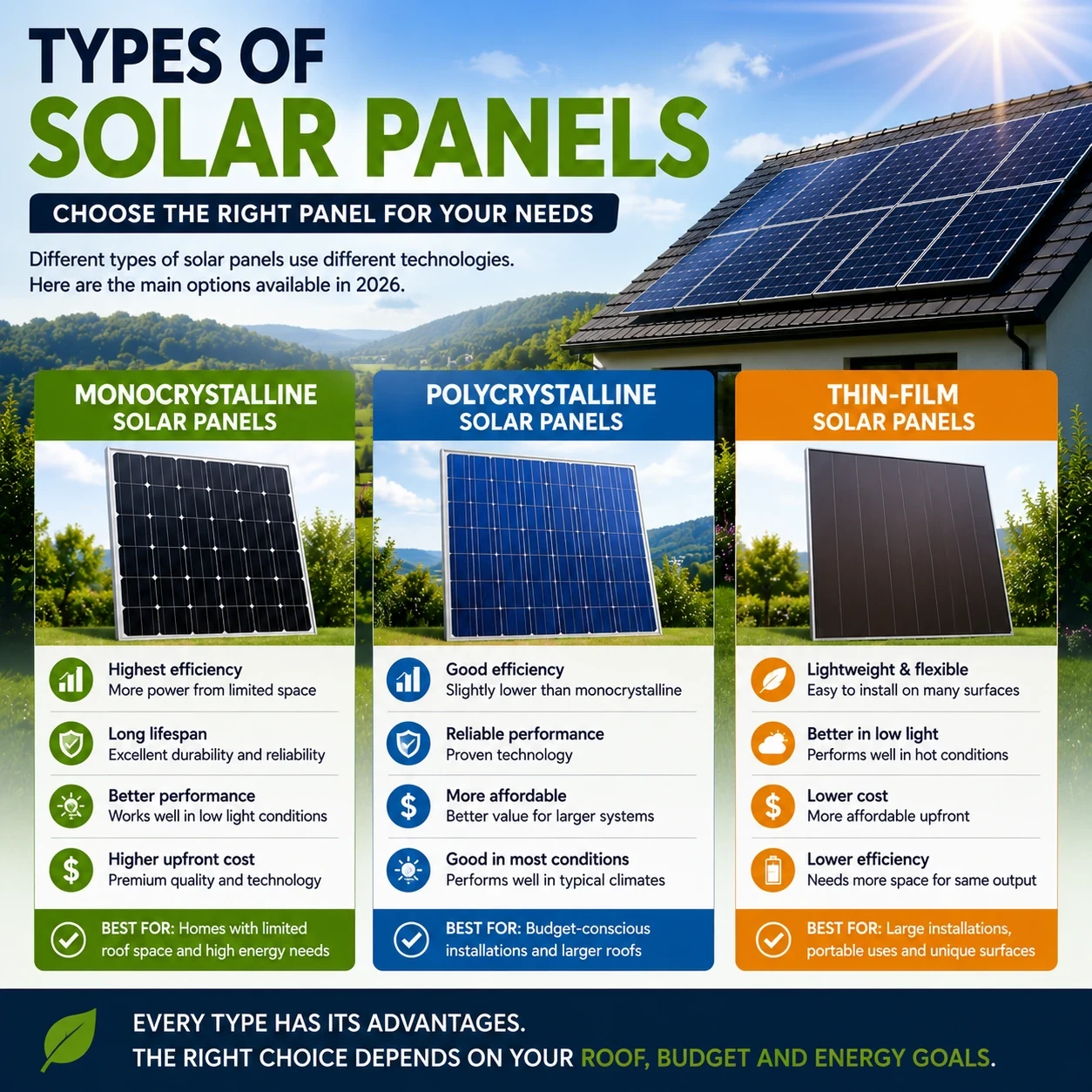
Which Solar Panel Is Best for Your Home?
Solar Panel Efficiency: How Much Does It Matter?
Efficiency tells you how much of the sunlight reaching the panel is converted into electricity under standard test conditions.
A 25% efficient panel can generate more power from the same surface area than a 21% efficient panel. That can be extremely valuable on a small roof.
However, efficiency should not automatically determine your purchase.
A homeowner with plenty of roof space may achieve better overall value using a slightly less efficient panel if the installed price is significantly lower.
Power Output: More Watts Does Not Always Mean a Better Panel
Solar-panel wattage is often used in marketing, but comparing wattage without comparing panel dimensions can be misleading.
A physically larger commercial panel may produce substantially more watts than a compact residential panel simply because it has a greater surface area.
For residential installations, consider:
- Panel dimensions.
- Module efficiency.
- Number of panels that fit on the usable roof.
- Total array capacity.
- Expected annual electricity generation.
Your installer should design the roof layout before promising a particular system size.
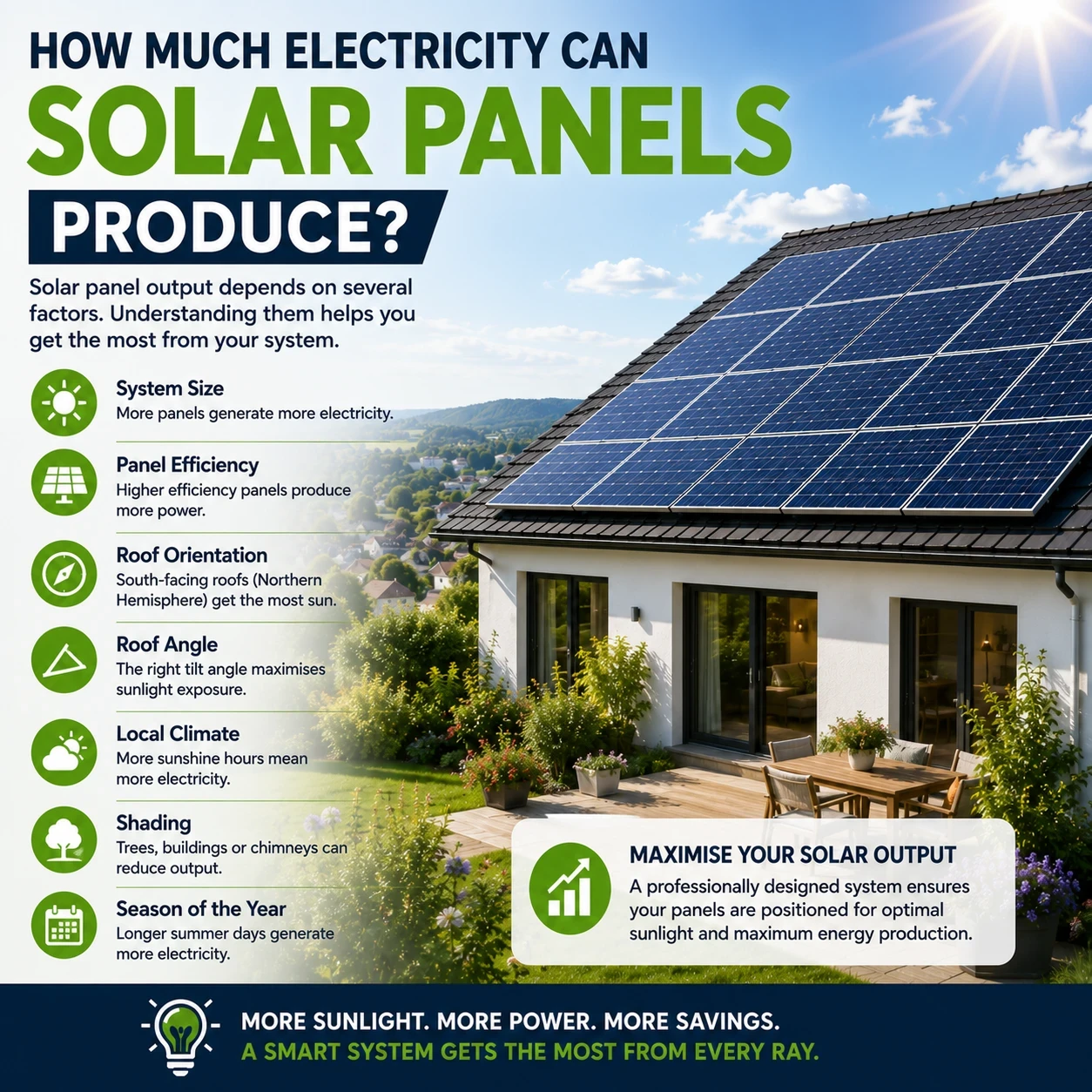
Solar Cell Technology in 2026
Back-Contact Solar Cells
Back-contact designs place electrical contacts behind the cell instead of across the light-facing surface.
This can increase active light-collecting area and allows manufacturers such as AIKO and LONGi to achieve very high module efficiencies.
N-Type TOPCon
TOPCon has become one of the major high-efficiency technologies used by large solar manufacturers.
N-type TOPCon panels can provide strong efficiency, low degradation and good temperature performance while benefiting from increasingly large manufacturing volumes.
Heterojunction Technology
Heterojunction, often abbreviated HJT, combines crystalline silicon with thin layers of amorphous silicon.
REC uses HJT technology in its Alpha Pure-RX range. One of its attractions is strong temperature behaviour, which can help reduce power loss as panel temperature rises.
Temperature Coefficient Matters More Than Many Buyers Realise
Solar panels are tested under controlled laboratory temperatures, but rooftop panels can become considerably hotter during strong sunshine.
The temperature coefficient indicates how much panel output declines as cell temperature rises above the standard test temperature.
A less-negative figure means the panel loses less power as it becomes hotter.
This can be particularly important in warm climates and on roofs with limited airflow.
Solar Panel Degradation and Long-Term Output
Solar panels gradually lose a small amount of output as they age.
When comparing warranties, look beyond the headline number of warranty years and check:
- Guaranteed output after the first year.
- Maximum annual degradation.
- Guaranteed output at the end of the warranty period.
- Whether labour is included.
- Whether registration is required.
- Who actually handles a warranty claim.
A panel with a strong 25- or 30-year performance warranty may still have different product-warranty terms covering manufacturing defects.
Product Warranty vs Performance Warranty
These warranties are not the same.
Product Warranty
This normally covers defects in materials or manufacturing for a specified period.
Performance Warranty
This guarantees that the panel will retain a specified percentage of its original rated output as it ages.
Do You Need the Most Expensive Solar Panel?
Usually not.
The highest-efficiency panel may be worthwhile when:
- Your usable roof area is small.
- Your electricity consumption is high.
- You want maximum capacity from a constrained roof.
- Appearance is particularly important.
- The premium price is relatively small compared with the complete installation cost.
A more moderately priced panel may make more sense when:
- You have plenty of roof space.
- The installer can fit enough panels to reach the required system size.
- The alternative has strong warranty coverage.
- The complete system delivers better cost per unit of expected electricity generation.
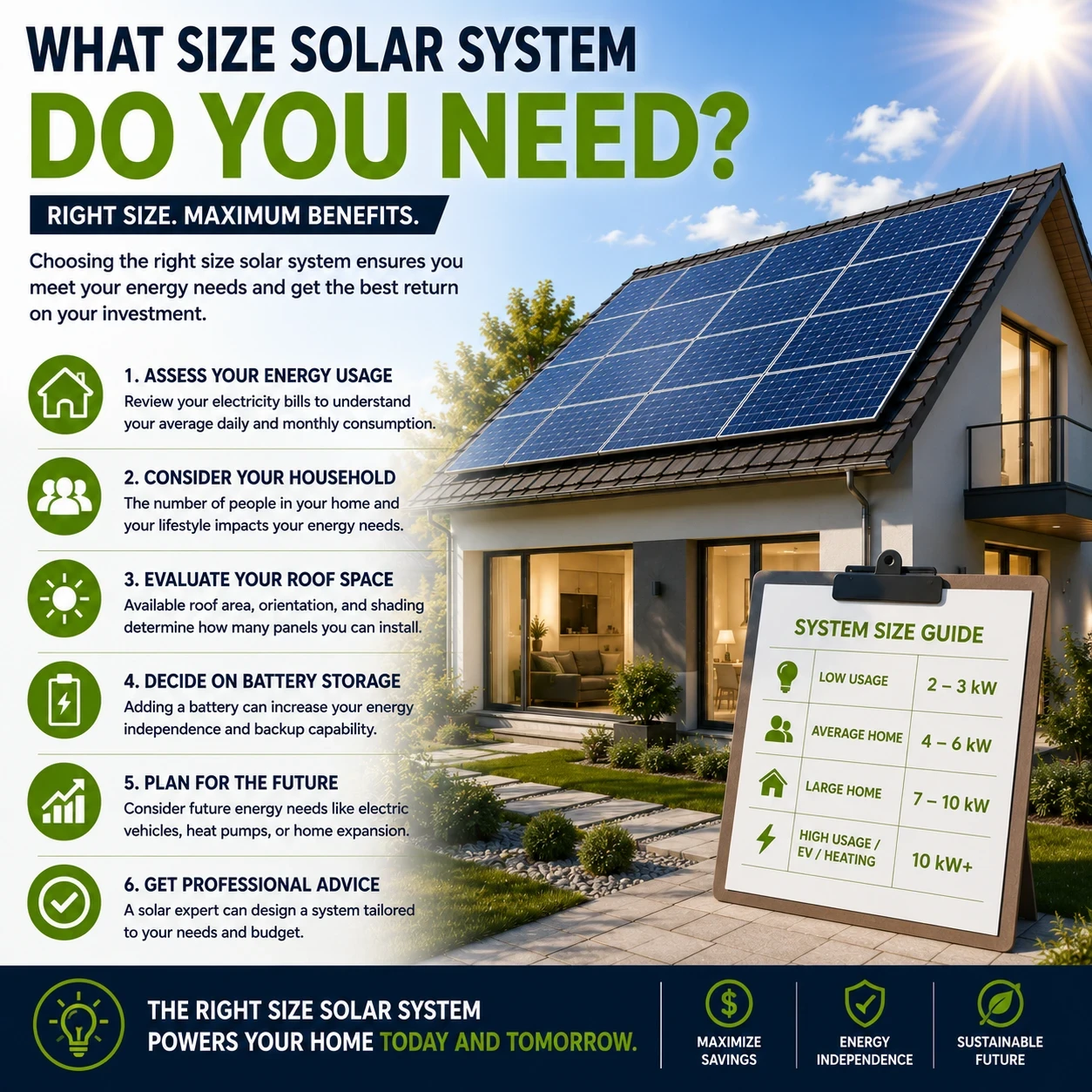
How Many Solar Panels Does Your Home Need?
The answer depends on much more than household size.
A professional design should consider:
- Your annual electricity consumption.
- When during the day you consume electricity.
- Usable roof area.
- Roof orientation and pitch.
- Shading.
- Local solar resource.
- Panel power and efficiency.
- Future electric-vehicle charging.
- Future heat-pump use.
- Whether battery storage will be installed.
Rather than aiming for a particular number of panels, aim for a system designed around your expected electricity consumption and available roof.
Solar Panels and Battery Storage
Choosing a solar panel and choosing a battery are separate decisions.
You do not need battery storage to benefit from solar panels. A home that consumes substantial electricity during daylight hours may use a large proportion of solar production directly.
Battery storage becomes more attractive when you want to store excess daytime electricity for evening use or when properly designed backup power is important.
For battery sizing, chemistry and backup considerations, see our Home Battery Storage Systems guide.
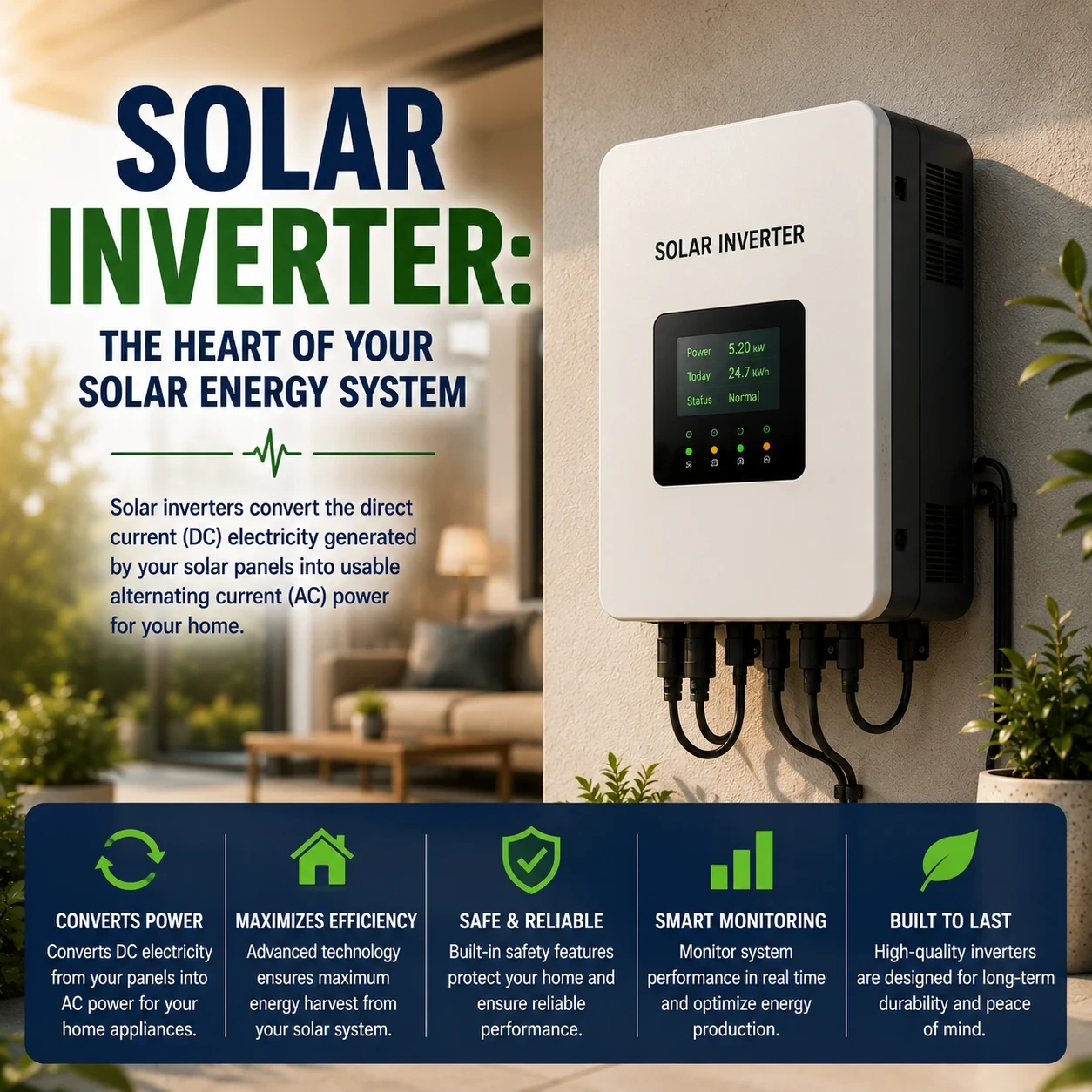
Don’t Forget the Solar Inverter
A premium solar array still depends on a properly selected inverter.
The inverter converts DC electricity from the panels into AC electricity used by the home and may also manage batteries, export limits, system monitoring and backup functions.
Panel and inverter specifications must be electrically compatible.
Learn more in our guide to how solar inverters convert energy.
Questions to Ask Before Accepting a Solar Quote
- What is the exact solar-panel manufacturer and model number?
- What is the panel efficiency?
- What is the product warranty?
- What is the performance warranty?
- What output is guaranteed after 25 or 30 years?
- Who handles warranty claims locally?
- Which inverter is included?
- How much electricity is the system predicted to generate annually?
- How has shading been included in the calculation?
- Can battery storage be added later?
- Can the solar array be expanded later?
- What monitoring system is included?
- What workmanship warranty does the installer provide?
- What is the complete installed price?
Common Mistakes When Comparing Solar Panels
- Choosing a panel solely because it has the highest wattage.
- Ignoring the physical size of the panel.
- Comparing panel efficiency but ignoring total system generation.
- Buying on price without checking warranty support.
- Choosing an excellent panel from a poor installer.
- Assuming a long performance warranty is the same as a long product warranty.
- Ignoring roof shading.
- Failing to consider future EV or heat-pump demand.
- Assuming solar panels automatically provide power during an outage.
- Accepting a quotation that does not specify exact equipment model numbers.
Are Cheap Solar Panels Worth Considering?
A lower-priced panel is not automatically poor quality, just as a premium-priced panel is not automatically the best investment.
Large established manufacturers can sometimes offer very competitive prices because of their production scale.
What matters is whether the panel has:
- Appropriate certification.
- A credible manufacturer.
- Strong warranty terms.
- Local warranty support.
- A proven installer network.
- Suitable specifications for your roof and climate.
The total installed cost and expected lifetime electricity generation are more useful than comparing module purchase prices in isolation.
Which Solar Panel Brand Should You Choose?
There is no single brand that is automatically the correct choice in every country and for every roof.
If roof space is extremely limited, the very high efficiencies published by AIKO and LONGi deserve attention.
If long-term degradation and premium warranty support are major priorities, REC is worth comparing.
If you are considering N-type TOPCon technology, JinkoSolar’s Tiger Neo range is one of the major current options.
Qcells remains relevant for homeowners who have strong local installer and warranty support for the Q.TRON range.
The final choice should be based on the exact model available locally and the complete installed quotation rather than the brand name alone.
Frequently Asked Questions
What are the best solar panels in 2026?
AIKO Neostar 3P, LONGi Hi-MO X10, REC Alpha Pure-RX, JinkoSolar Tiger Neo 3.0 and Qcells Q.TRON are among the current residential panel families worth comparing. Each has different strengths, so the best choice depends on roof size, budget, local availability and warranty support.
Which solar panels have the highest efficiency?
Some current back-contact residential panels have reached approximately 25% module efficiency. AIKO’s Neostar 3P range is one example, with selected 2026 models published at up to 25.0% efficiency.
Is 22% solar-panel efficiency good?
Yes. A residential panel around or above 22% efficiency can already provide strong roof-space utilisation. The extra value of moving to 24–25% depends largely on available roof area and the additional installed cost.
Do higher-wattage panels always generate more electricity?
Not necessarily on a like-for-like roof area. Larger panels naturally have more surface area and may therefore have a higher wattage rating. Compare efficiency, panel dimensions and total array size rather than wattage alone.
How long should solar panels last?
Quality panels are designed for decades of operation, and many modern products include performance warranties lasting 25 or 30 years. The precise product and power warranty should be checked for the exact model.
Do I need a battery with solar panels?
No. Solar panels can work perfectly well without battery storage. A battery allows more generated electricity to be stored for later use and may provide backup power where the system is specifically designed for that purpose.
Will solar panels work during a power outage?
A standard grid-connected solar system normally shuts down during a grid failure for safety. Backup operation requires suitable inverter, battery and isolation equipment.
Should I buy the panel with the longest warranty?
Warranty length is important but should not be considered alone. Check the manufacturer, installer support, degradation guarantee, product warranty conditions, labour coverage and the expected performance of the complete system.
Final Thoughts
The best solar panels in 2026 combine strong efficiency, reliable technology, sensible warranty protection and good long-term energy production.
But the best panel on paper is not necessarily the best solar installation.
A properly designed system using a good-quality panel, compatible inverter, secure mounting equipment and an experienced installer can be a better investment than choosing the most expensive module available.
Start by understanding your electricity usage and usable roof area. Then compare several quotations using exact panel model numbers rather than accepting descriptions such as “premium panels” or “high-efficiency panels”.
That makes it much easier to compare like with like and identify which solar system genuinely offers the strongest long-term value for your home.
Solar Panel Specification Sources
Panel specifications can change as manufacturers introduce new versions. Before purchasing, check the current datasheet for the exact model offered by your installer.
Return to the Home Energy Systems homepage .