Electric Vehicle Charging at Home
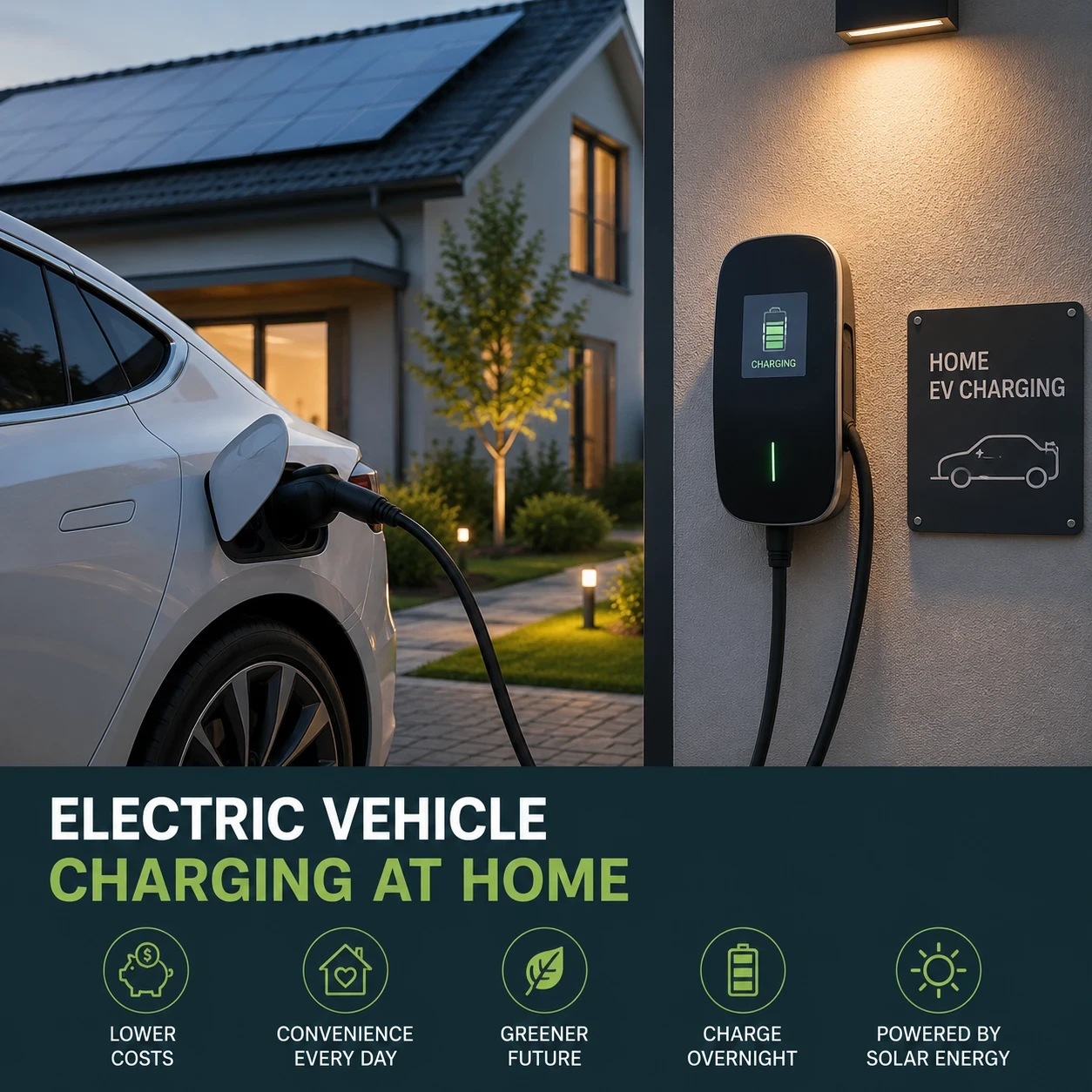
Electric vehicle charging at home is becoming one of the smartest investments homeowners can make as electric vehicles continue to grow in popularity.
Instead of relying on public charging stations, charging your vehicle at home provides convenience, lower running costs, and greater control over your energy usage.
If your home already has solar panels or you are planning to install them, home EV charging can become even more cost-effective by using renewable electricity generated on your own roof.
Many homeowners now see an electric vehicle as an important part of a complete home energy system.
When combined with solar panels and battery storage, an EV can help maximise the use of renewable electricity while reducing dependence on the national grid.
Whether you are buying your first electric vehicle or upgrading your existing charging system, understanding how home charging works will help you make the right decision.
Why Electric Vehicle Charging at Home Makes Sense
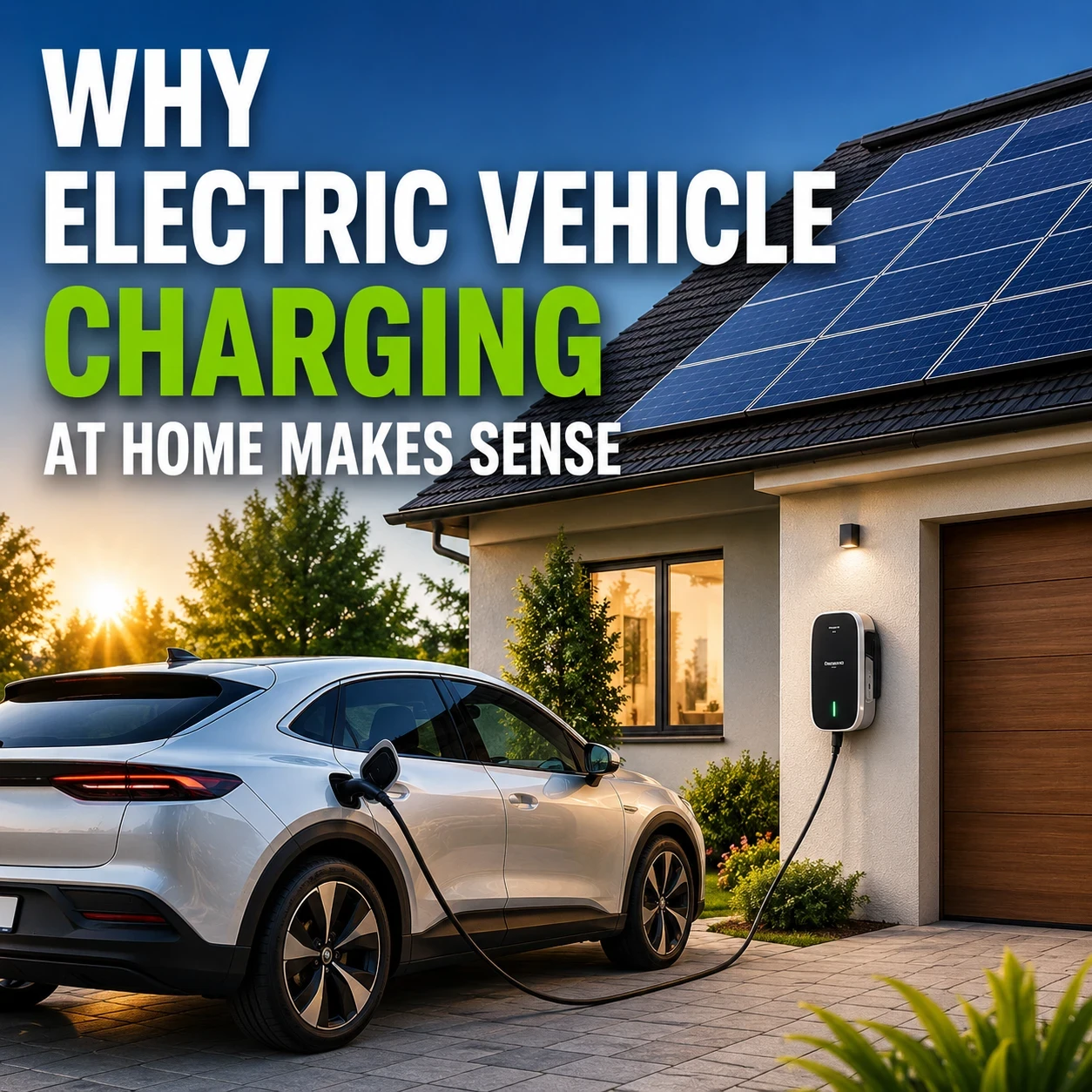
Charging your electric vehicle at home offers several advantages over relying on public charging stations.
- Charge overnight while you sleep
- Lower charging costs
- Greater convenience
- Reduced reliance on public charging networks
- Better use of solar energy
- Increased energy independence
- Potential increase in property value
Instead of searching for an available charging point during your journey, your vehicle can be fully charged and ready to drive each morning.
As public charging demand continues to increase, having your own home charger provides peace of mind while making daily driving far more convenient.
How Home EV Charging Works
Home EV charging is a straightforward process. A dedicated charging unit is connected directly to your home’s electrical supply and communicates safely with your vehicle while charging the battery.
Most homeowners install a wall-mounted Level 2 charger because it provides significantly faster charging than a standard household socket.
Charging speed depends on several factors, including:
- Battery capacity
- Charger output
- Vehicle charging capability
- Home electrical supply
Modern electric vehicles automatically monitor battery temperature and charging speed to maximise battery life while maintaining safe operation.
Many smart chargers also allow homeowners to schedule charging during off-peak electricity hours when electricity prices are lower.
Types of Home EV Chargers
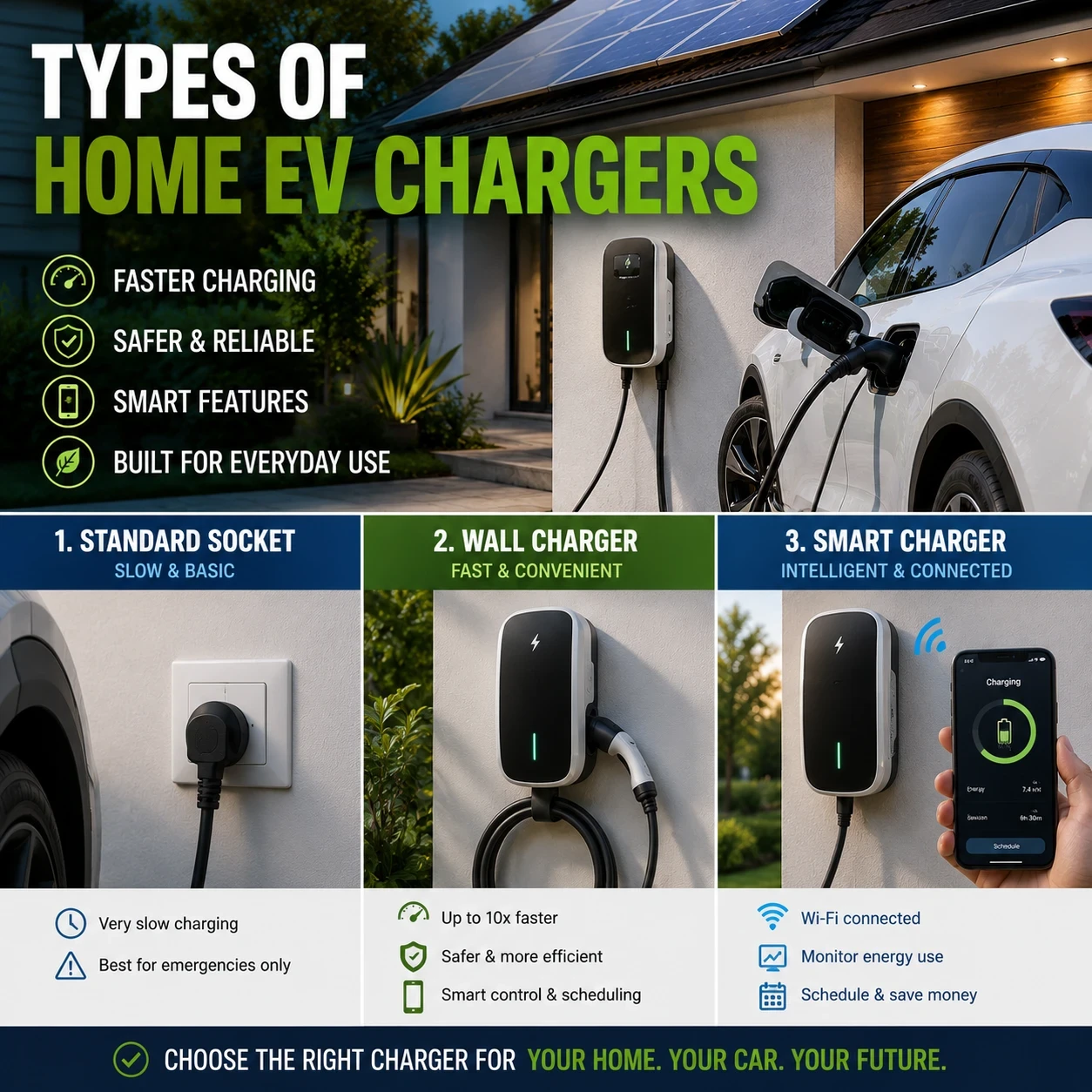
There are several charging options available depending on your needs.
Standard Household Socket
Most electric vehicles can be charged using a normal household socket. However, this method is usually the slowest and is generally recommended only for occasional or emergency use.
Advantages include:
- No additional equipment required
- Convenient for occasional charging
Disadvantages include:
- Very slow charging
- Less efficient
- Not ideal for daily driving
Dedicated Wall Charger
A professionally installed wall charger is the preferred solution for most homeowners.
Benefits include:
- Much faster charging
- Built-in electrical safety protection
- Smart charging controls
- Smartphone connectivity
- Scheduled charging
- Greater reliability
Most homes install either a 7kW or 11kW charger depending on the available electrical supply and vehicle requirements.
These dedicated chargers are designed specifically for daily electric vehicle charging and offer the best balance between speed, efficiency and long-term performance.
Charging with Solar Panels
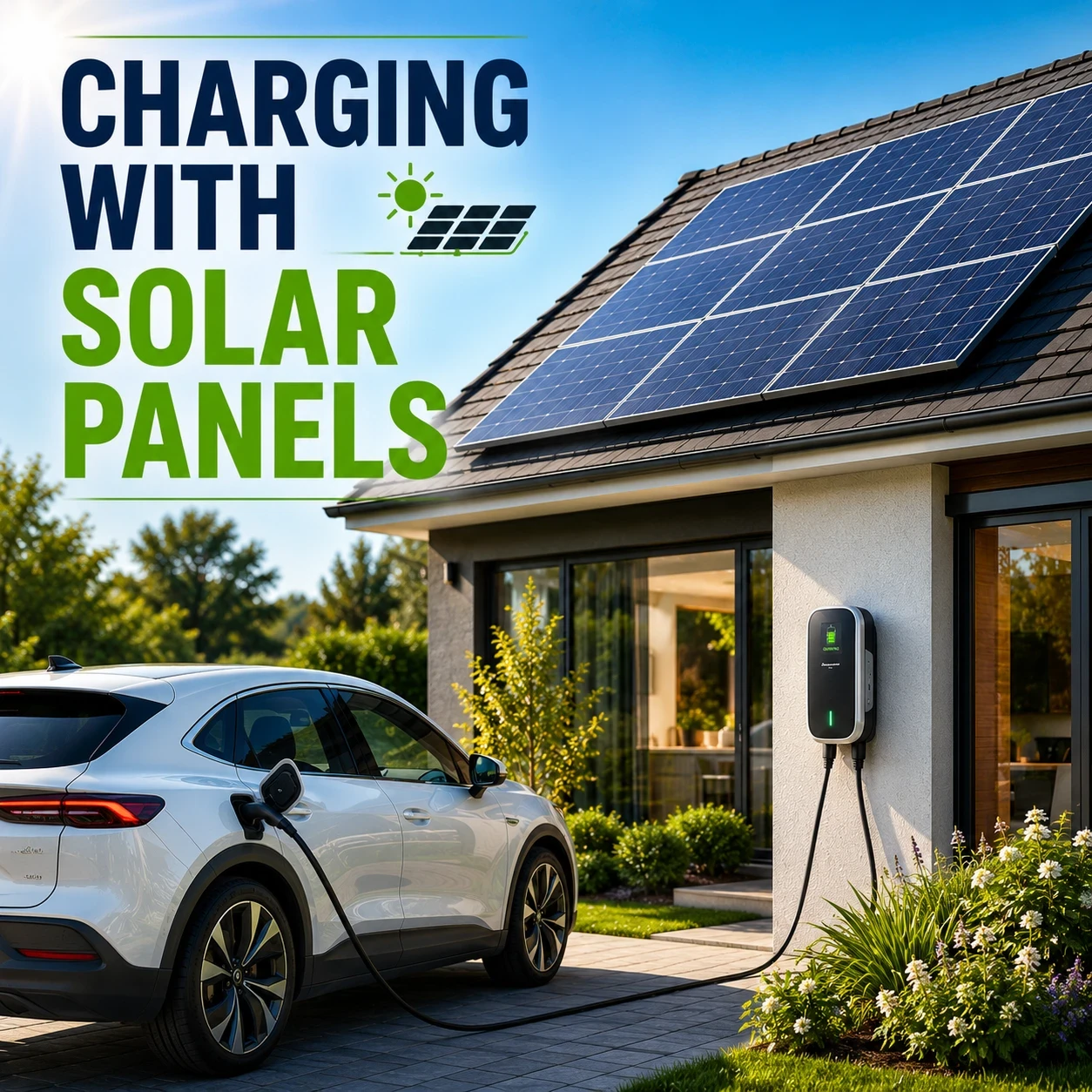
One of the greatest advantages of electric vehicle charging at home is the ability to combine it with solar energy. Instead of purchasing all of your electricity from the grid, your solar panels can generate clean electricity during daylight hours and use that power to charge your electric vehicle.
On sunny days, excess electricity that would normally be exported back to the grid can instead charge your car, helping to reduce your electricity bills while increasing your energy independence.
If you are considering installing solar panels, our guide to Home Solar Systems explains how they work and how to choose the right system for your home.
Benefits of combining solar panels with home EV charging include:
- Lower charging costs
- Reduced reliance on grid electricity
- Lower carbon emissions
- Better return on your solar investment
- Increased energy independence
Many modern EV chargers can even prioritise charging your vehicle using surplus solar energy, making the entire system highly efficient.
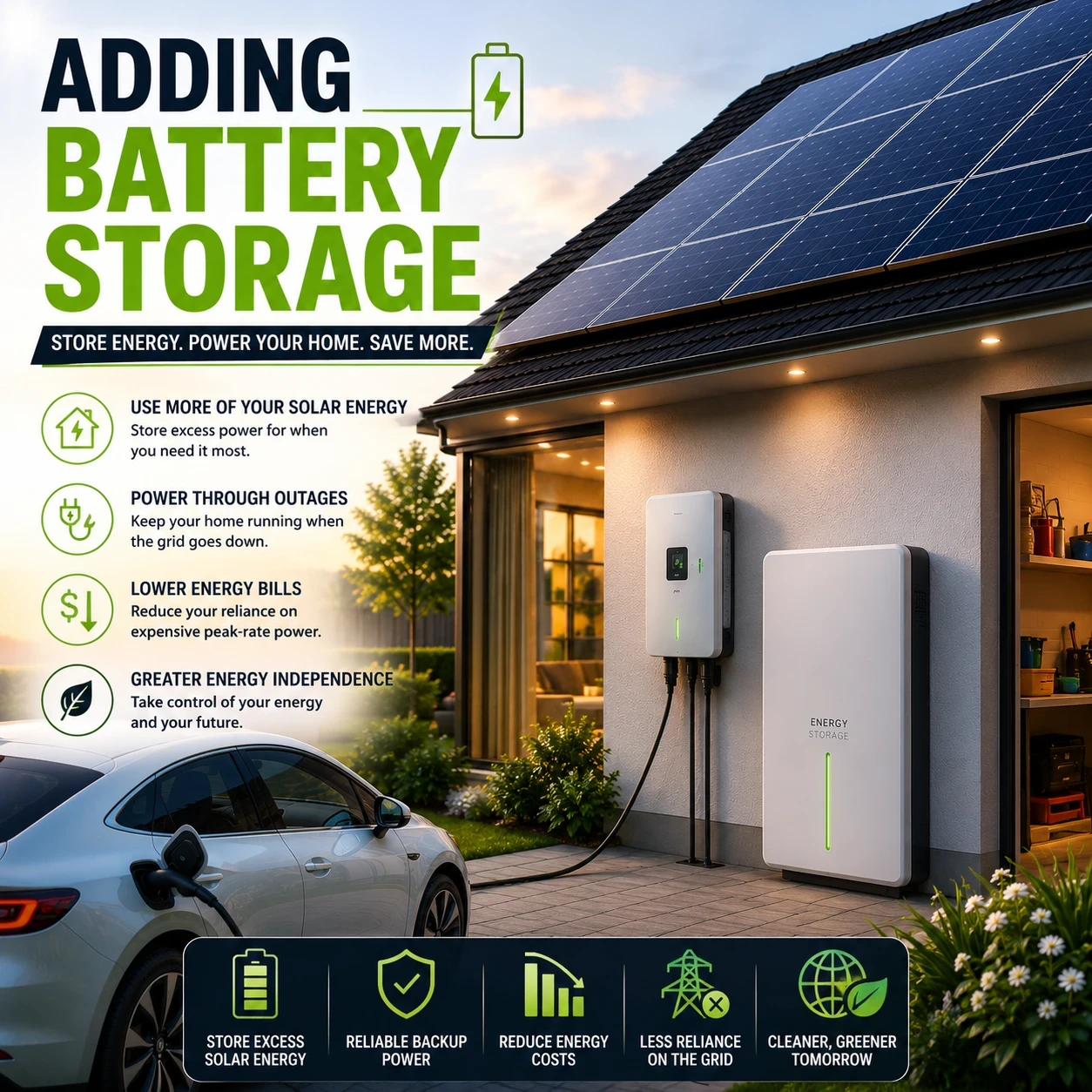
Adding Battery Storage
Many homeowners are now combining three technologies into one complete home energy solution:
- Solar panels
- Home battery storage
- Electric vehicle charging
A home battery stores excess electricity generated during the day so it can be used later in the evening or overnight to charge your electric vehicle.
This allows homeowners to make even better use of renewable energy while reducing electricity purchased from the grid.
Battery storage also provides additional energy security during power outages and helps maximise the value of your solar investment.
If you would like to learn more, read our guide to Home Battery Storage Systems.
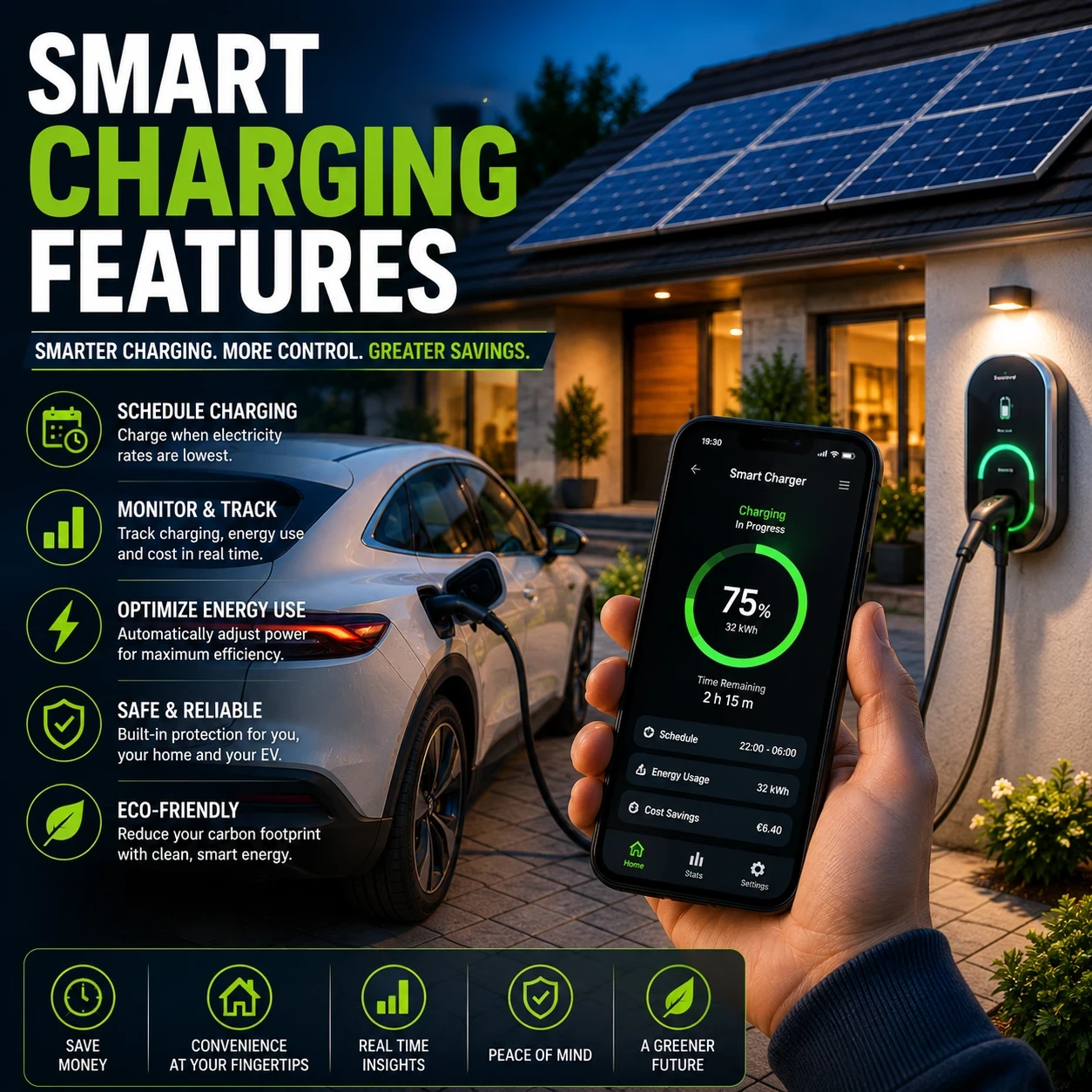
Smart Charging Features
Today’s EV chargers are much more than simple charging points. Modern smart chargers include advanced technology that helps homeowners manage electricity usage more efficiently.
Popular smart charging features include:
- Smartphone app control
- Scheduled charging
- Remote monitoring
- Solar energy integration
- Load balancing
- Energy usage reports
- Automatic software updates
Many electricity suppliers also offer cheaper overnight tariffs. Smart chargers can automatically begin charging when electricity prices are lowest, helping homeowners reduce running costs without any manual intervention.
Some systems can even adjust charging speeds automatically based on the amount of electricity your home is currently using.
How Long Does Charging Take?
Charging times vary depending on your vehicle’s battery size and the power output of your charger.
Charger Type
Typical Charging Time Standard household socket 20–40 hours
7kW wall charger 6–10 hours
11 kW wall charger4–8 hours
Most homeowners simply plug their vehicle in during the evening and wake up to a fully charged battery the following morning.
Modern battery management systems carefully control the charging process to protect battery health and maximise long-term performance.
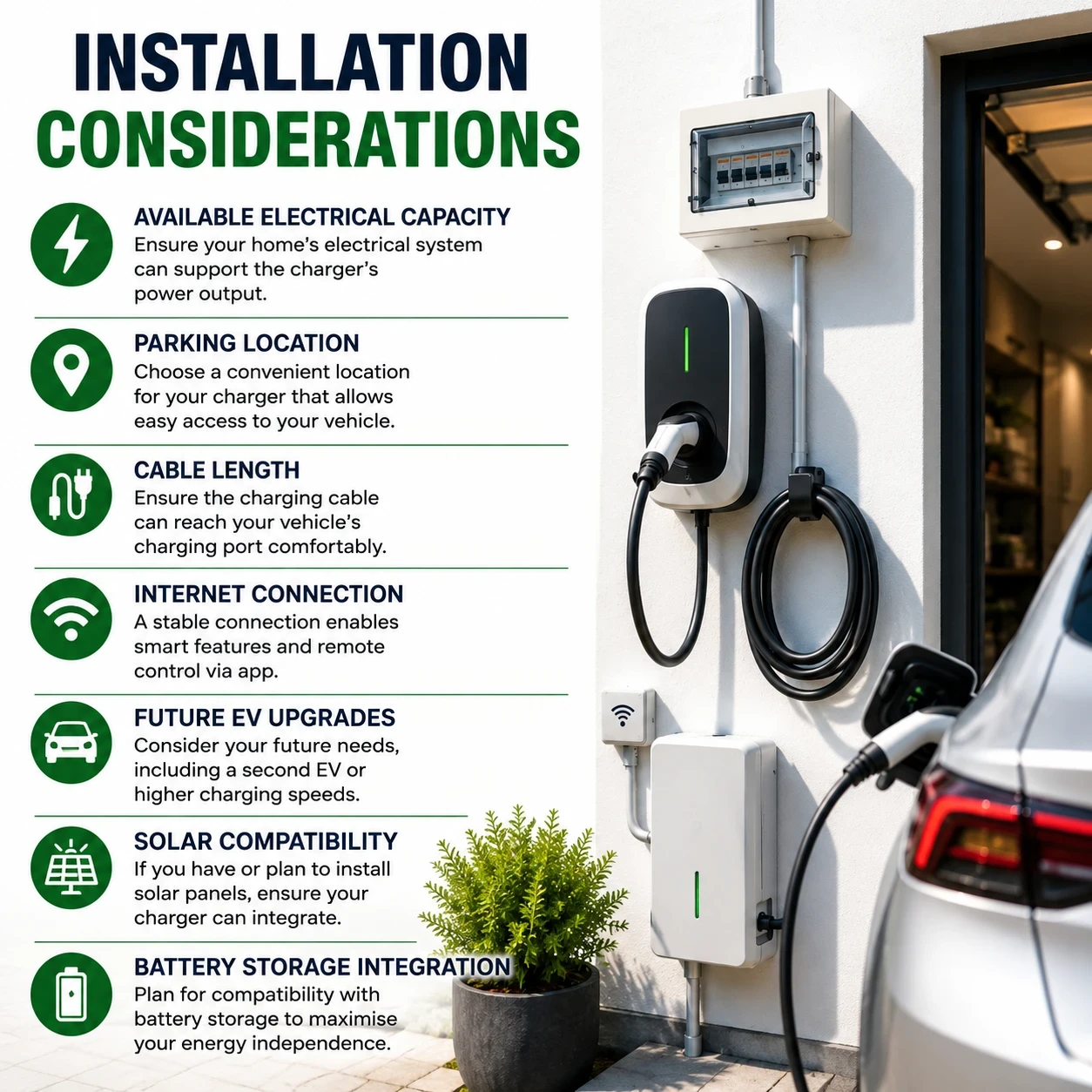
Installation Considerations
Before installing a home EV charger, it is important to consider your property’s electrical system and future energy requirements.
Things to consider include:
- Available electrical capacity
- Parking location
- Cable length
- Internet connection for smart features
- Future electric vehicle upgrades
- Solar panel compatibility
- Battery storage integration
A qualified electrician should always install a dedicated EV charger to ensure it meets local electrical regulations and operates safely.
If you are planning a complete renewable energy system, it often makes sense to install solar panels, battery storage and an EV charger together. This approach can reduce installation costs while ensuring all components work seamlessly together.
How Much Does Home EV Charging Cost?
The cost of charging an electric vehicle at home depends on several factors, including your electricity tariff, charger efficiency and driving habits.
Although installing a dedicated wall charger requires an initial investment, many homeowners recover these costs over time through lower running expenses compared with petrol or diesel vehicles.
Charging overnight using off-peak electricity tariffs can further reduce charging costs. Homeowners with solar panels may save even more by using surplus solar energy to power their vehicle.
When comparing long-term ownership costs, many drivers find that home charging is both more economical and more convenient than relying on public charging stations.
Choosing the Right EV Charger
Selecting the right charger depends on your current needs as well as your future plans.
Before purchasing a charger, ask yourself:
- How far do I drive each week?
- Do I already have solar panels?
- Will I install battery storage later?
- How quickly do I need to recharge?
- Do I want smart charging features?
- Could my household own two electric vehicles in the future?
Planning ahead will help ensure your charging system continues to meet your needs for many years.
For more advice on building an efficient renewable energy setup, visit our Home Energy Systems homepage.
Frequently Asked Questions
Can I charge my electric vehicle every night?
Yes. Modern electric vehicles are designed for regular charging, and their battery management systems automatically protect the battery throughout the charging process.
Is charging at home cheaper than using public chargers?
In many cases, yes. Charging at home—especially during off-peak electricity hours or using solar power—is generally much less expensive than using rapid public charging stations.
Can solar panels fully charge an electric vehicle?
Depending on the size of your solar system, your battery storage, local weather conditions and how much you drive, solar panels can provide a significant percentage—or even all—of your annual charging requirements.
Do I need a dedicated wall charger?
While a standard household socket can be be used occasionally, a dedicated wall charger is much faster, safer and offers additional smart features that improve convenience and efficiency.
Conclusion
Electric vehicle charging at home offers homeowners a practical, convenient and cost-effective way to power their vehicles.
Whether you choose a dedicated wall charger on its own or combine it with solar panels and battery storage, charging at home can reduce running costs, improve energy independence and make daily driving far more convenient.
As renewable energy technologies continue to advance, integrating your EV charger into a complete home energy system is becoming one of the smartest investments homeowners can make.
By planning your charging setup carefully and choosing the right equipment, you can enjoy lower electricity bills, greater convenience and a cleaner, more sustainable future.
For independent research on electric vehicle adoption and charging trends, visit the International Energy Agency (IEA) Global EV Outlook.