How Do I Maintain My Heat Pump?
How do I maintain my heat pump? Combine regular homeowner checks with professional servicing. Clean filters, unrestricted airflow and sensible control settings can improve efficiency, reduce avoidable breakdowns and help protect the system.
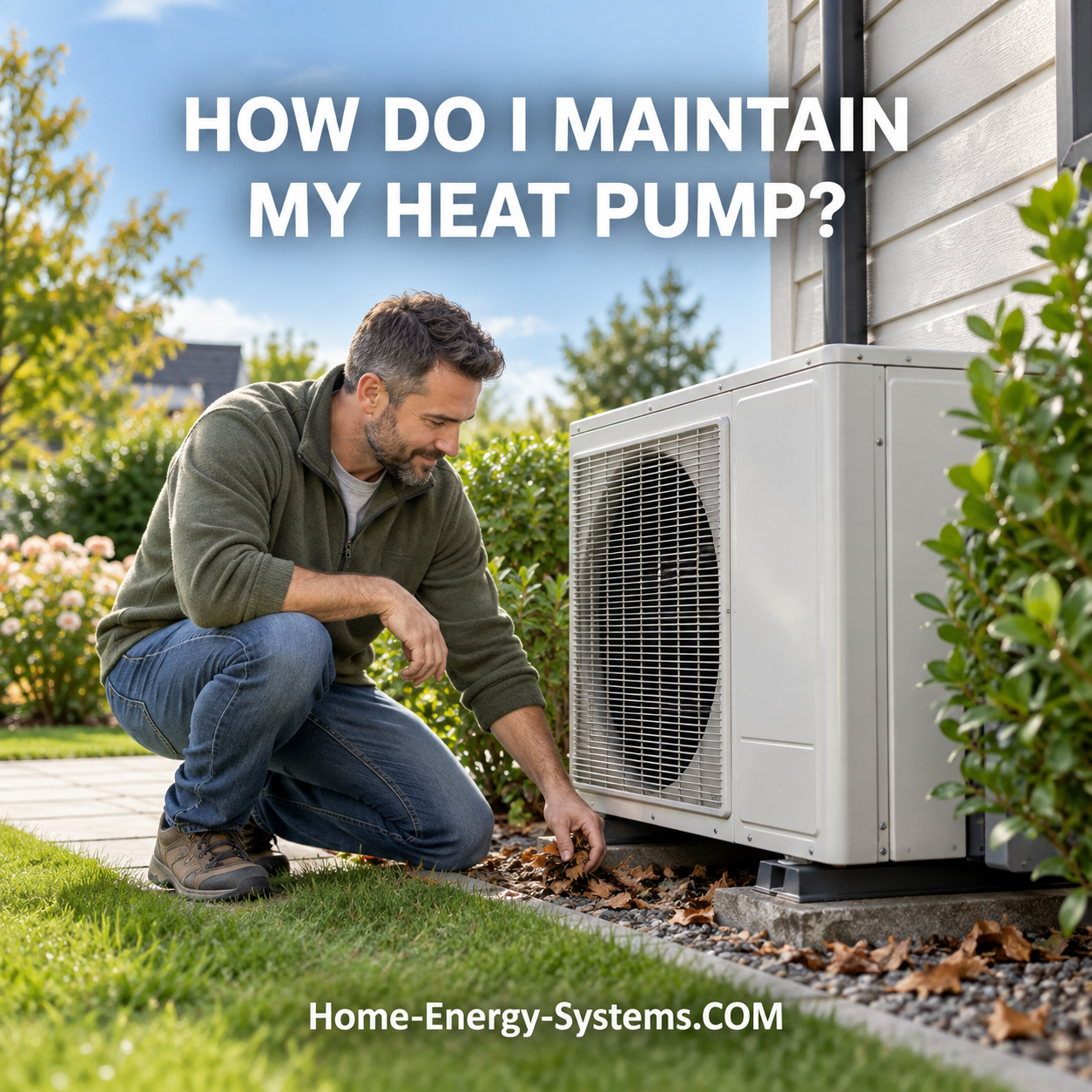
Quick answer: Maintain your heat pump by checking its filters regularly, keeping indoor vents open, clearing leaves and obstructions from the outdoor unit, monitoring energy use and arranging professional servicing according to the manufacturer’s instructions. Never open sealed electrical or refrigerant components yourself.
A heat pump may operate throughout the year because the same equipment can provide winter heating and summer cooling. This workload makes routine maintenance particularly important.
Dirt, restricted airflow and unnoticed faults can force the equipment to operate for longer while delivering less comfort. The good news is that several useful checks can be completed without dismantling the equipment.
If you want to understand how the system works, begin with our Heat Pump Technology Guide 2026. It explains how modern heat pumps transfer heat and why correct design, installation and operation matter.
Why Regular Heat Pump Maintenance Matters
Heat pump maintenance is about more than keeping the equipment looking clean. A heat pump depends on steady airflow and efficient heat transfer. A blocked filter, dirty coil or obstructed outdoor unit makes that process more difficult.
When airflow becomes restricted, the system may run longer, consume more electricity and struggle to maintain the selected temperature. Prolonged strain can contribute to premature wear on fans, motors and compressors.
Regular maintenance can help you:
- maintain comfortable and consistent room temperatures;
- reduce unnecessary electricity consumption;
- identify small problems before they become expensive repairs;
- protect indoor air quality;
- support quieter system operation;
- maintain warranty and servicing records; and
- extend the system’s useful working life.
Maintenance cannot correct poor system design or an unsuitable installation. If your heat pump has struggled since it was installed, the problem may involve sizing, controls, insulation, pipework or airflow. Our heat pump installation guide explains why design and commissioning are so important.
Clean or Replace the Heat Pump Filters
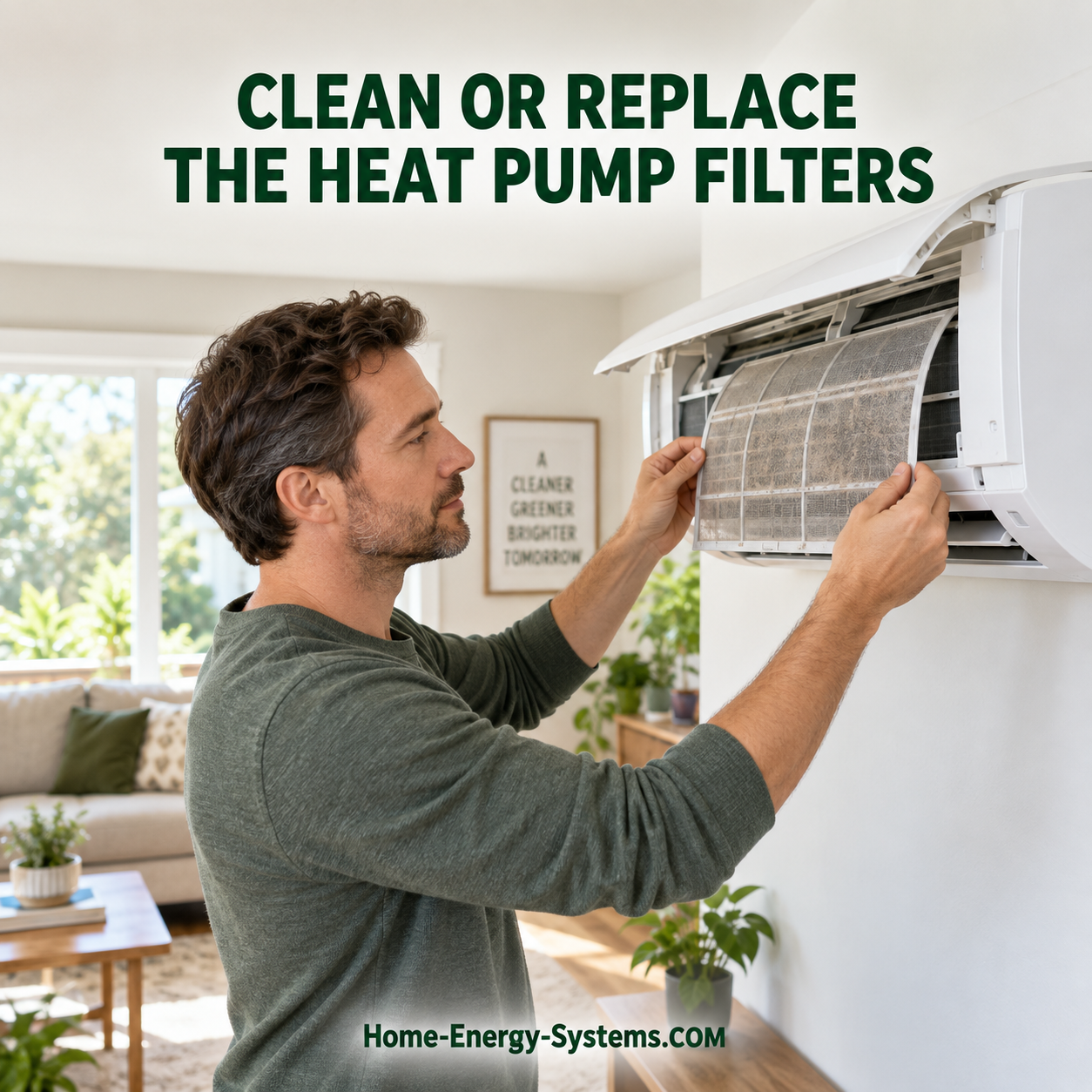
Checking the filters is one of the most important maintenance jobs a homeowner can perform. Filters collect airborne dust and debris before it reaches internal components. As that material builds up, airflow through the system can fall.
The correct cleaning interval depends on the model, household and operating conditions. Homes with pets, smokers, renovation dust or high pollen levels may require more frequent checks.
Always follow the manufacturer’s manual. Some systems use washable filters, while others require replacement filters of a particular type and size.
How to Check a Heat Pump Filter
- Turn the unit off using its normal controls.
- Follow the manual to locate and remove the filter safely.
- Inspect it for dust, hair and visible discolouration.
- Clean a washable filter exactly as instructed or fit the correct replacement.
- Allow a washable filter to dry completely before refitting it.
- Make sure the filter is installed in the correct direction.
- Close the cover securely before restarting the system.
Important: Do not operate the equipment without its filter unless the manufacturer specifically instructs you to do so. Never force a cover open or use a substitute filter that does not fit correctly.
ENERGY STAR recommends inspecting, cleaning or replacing filters regularly because dirty filters can increase energy costs and contribute to equipment damage. Its heating and cooling maintenance checklist also recommends professional pre-season inspections.
Keep the Outdoor Heat Pump Unit Clear
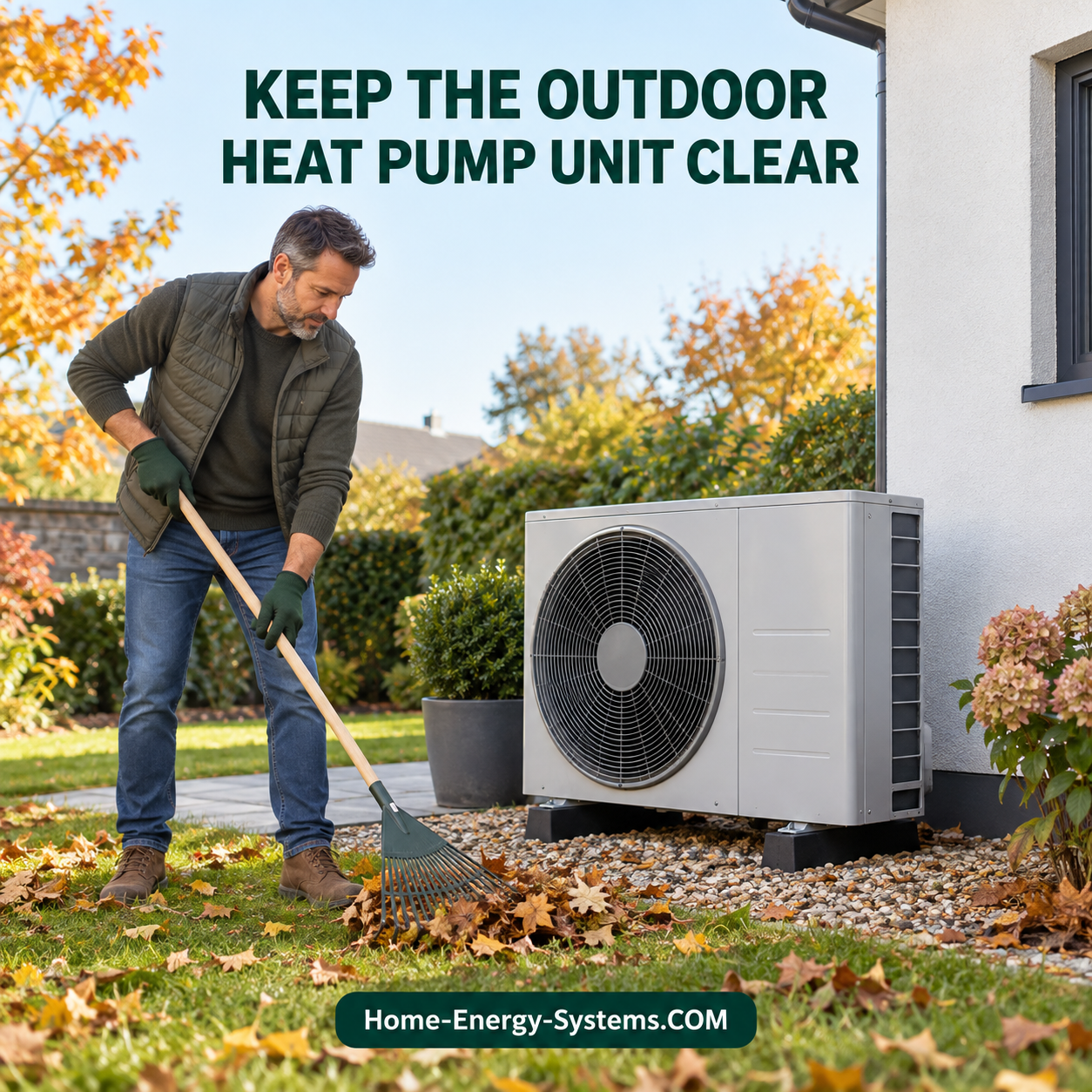
An air-source heat pump must move a large volume of outdoor air across its coil. Leaves, grass clippings, litter, vegetation and stored objects can restrict that airflow.
Inspect the area regularly, particularly after storms, gardening work or heavy leaf fall. Remove loose material without pushing debris farther into the equipment. Keep vegetation trimmed back while following the clearance distances stated in the installation manual.
Winter Maintenance
A light coating of frost can be normal during cold, damp weather. The system should periodically enter a defrost cycle to clear it. Thick ice that continues to build or remains after repeated operating cycles can indicate a drainage, airflow, sensor or defrost problem.
After snow, check that the unit’s air openings remain clear. Do not strike the casing, pour boiling water over the equipment or attack ice with a sharp tool.
Helpful check: Make sure water can drain away from the outdoor unit. Standing water that repeatedly freezes around the base may obstruct drainage or interfere with operation.
If you live in an area with severe winters, see our guide to choosing the best heat pump for cold climates.
Check Indoor Units, Vents and Airflow
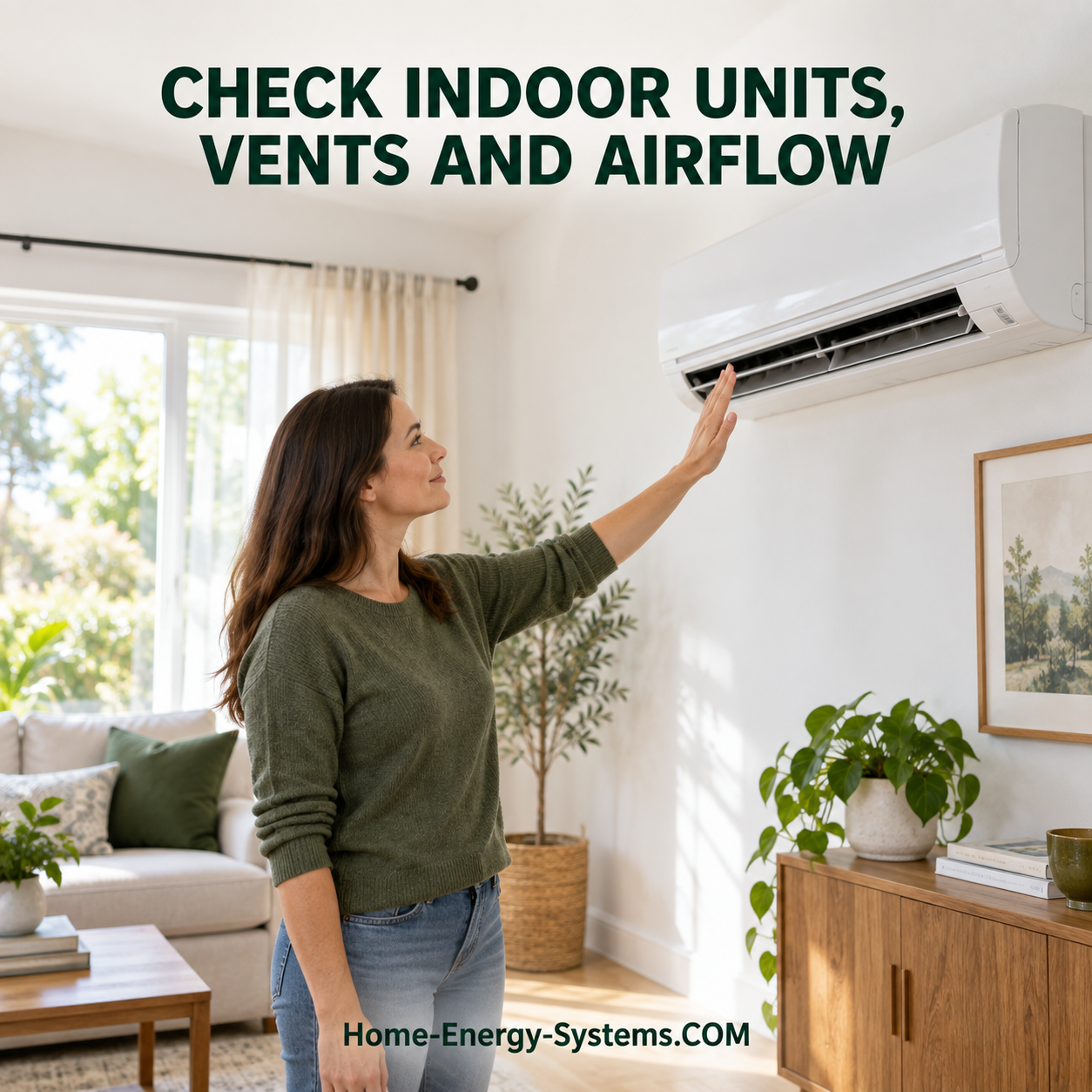
A well-maintained heat pump needs a clear path to distribute heat throughout the home. Furniture, curtains, rugs and stored items can obstruct grilles, indoor units or return-air openings.
Keep visible vents unobstructed and avoid closing large numbers of room vents unless the system was specifically designed for zoned operation. Restricting airflow may create pressure problems and reduce performance.
Ductless Heat Pumps
Gently remove surface dust from the outside of the indoor unit with a soft, dry cloth. Check that the air inlet and outlet are not blocked. Follow the manual before opening any filter cover.
Ducted Heat Pumps
Look for damaged grilles, unusually weak airflow and obvious gaps in accessible duct connections. Significant duct leakage, internal duct cleaning and airflow balancing require professional assessment.
Air-to-Water Heat Pumps
Homeowner maintenance may include checking the pressure displayed by the controls and watching for visible leaks. Do not adjust pressure, bleed components or add water unless the installer or manufacturer has shown you the correct procedure.
If some rooms remain cold while others overheat, the issue may involve water flow, control settings or system commissioning rather than the heat pump itself.
Use Heat Pump Controls Efficiently
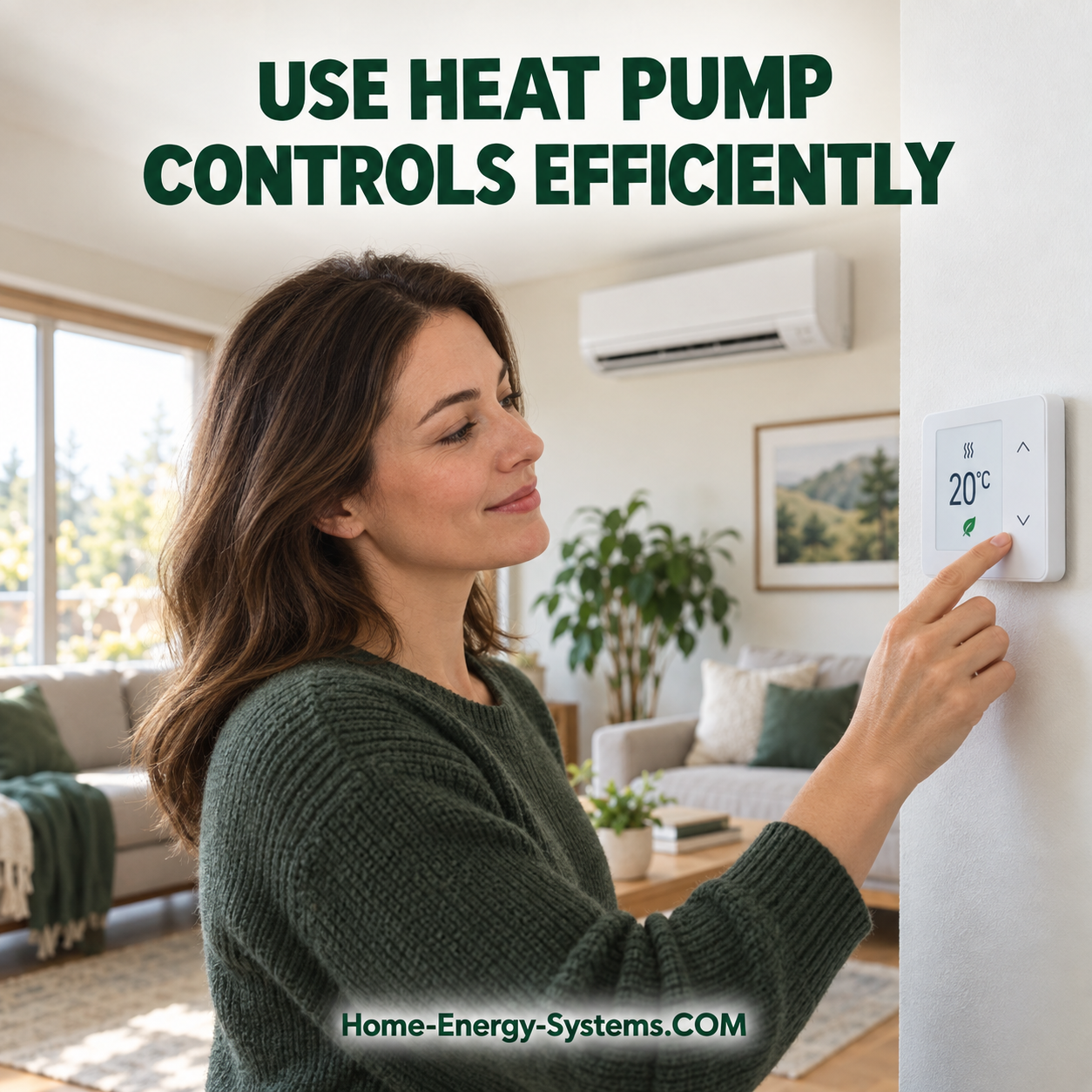
Heat pumps generally work best when maintaining a steady, comfortable temperature. Repeatedly switching the system off and demanding a large temperature increase later can make it work harder, particularly during cold weather.
Avoid changing advanced installer settings unless you understand their purpose. Air-to-water systems may use weather compensation, which automatically adjusts water temperature according to outdoor conditions. Poorly chosen settings can reduce efficiency or comfort.
A practical controls check includes:
- confirming that the system is in the correct heating or cooling mode;
- using a realistic target temperature;
- checking schedules after a power interruption;
- reviewing unexplained error messages;
- avoiding frequent large temperature changes; and
- confirming that backup heat is not running unnecessarily.
For help comparing capacity, controls and system types, read how to choose the best heat pump for your home.
Watch for Heat Pump Warning Signs
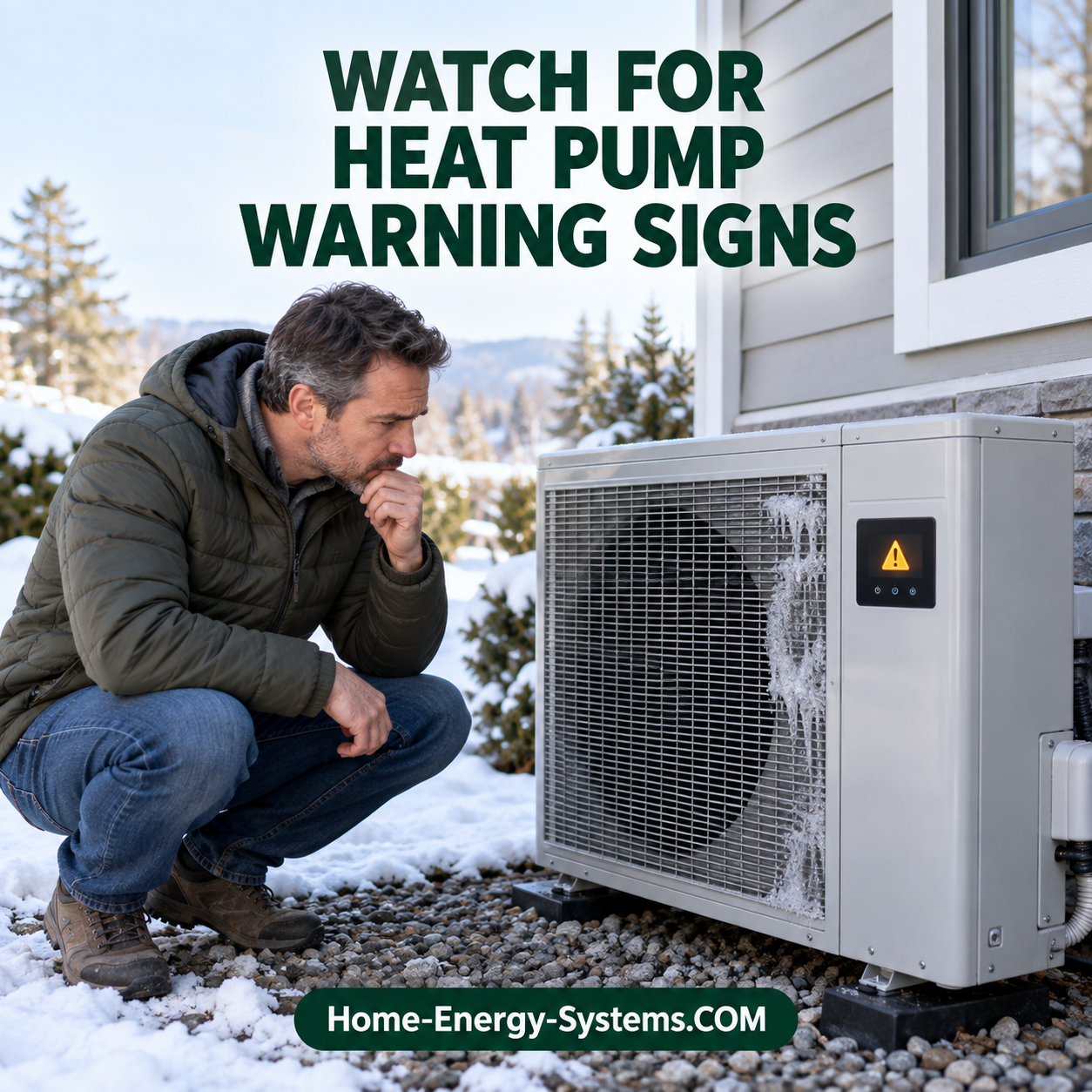
Changes in noise, comfort or electricity use often provide the first indication that something is wrong. Identifying the change early may prevent further damage.
Contact a qualified technician if you notice:
- unusual grinding, rattling, screeching or repeated clicking;
- a sudden or unexplained increase in electricity consumption;
- rooms no longer reaching their normal temperature;
- very weak or inconsistent airflow;
- frequent stopping and restarting;
- persistent ice on the outdoor unit;
- water leaking inside the home;
- burning smells or visible electrical damage;
- error codes that return after a normal restart; or
- the system relying heavily on backup heat.
Stop and seek help: If you smell burning, see smoke, notice damaged wiring or hear severe mechanical noise, switch the system off safely and contact a qualified professional. Do not remove electrical panels or attempt refrigerant repairs.
Some fan-speed changes, clicks during mode changes and temporary defrost sounds may be normal. However, new or increasingly loud noises should not be ignored.
Book Professional Heat Pump Servicing
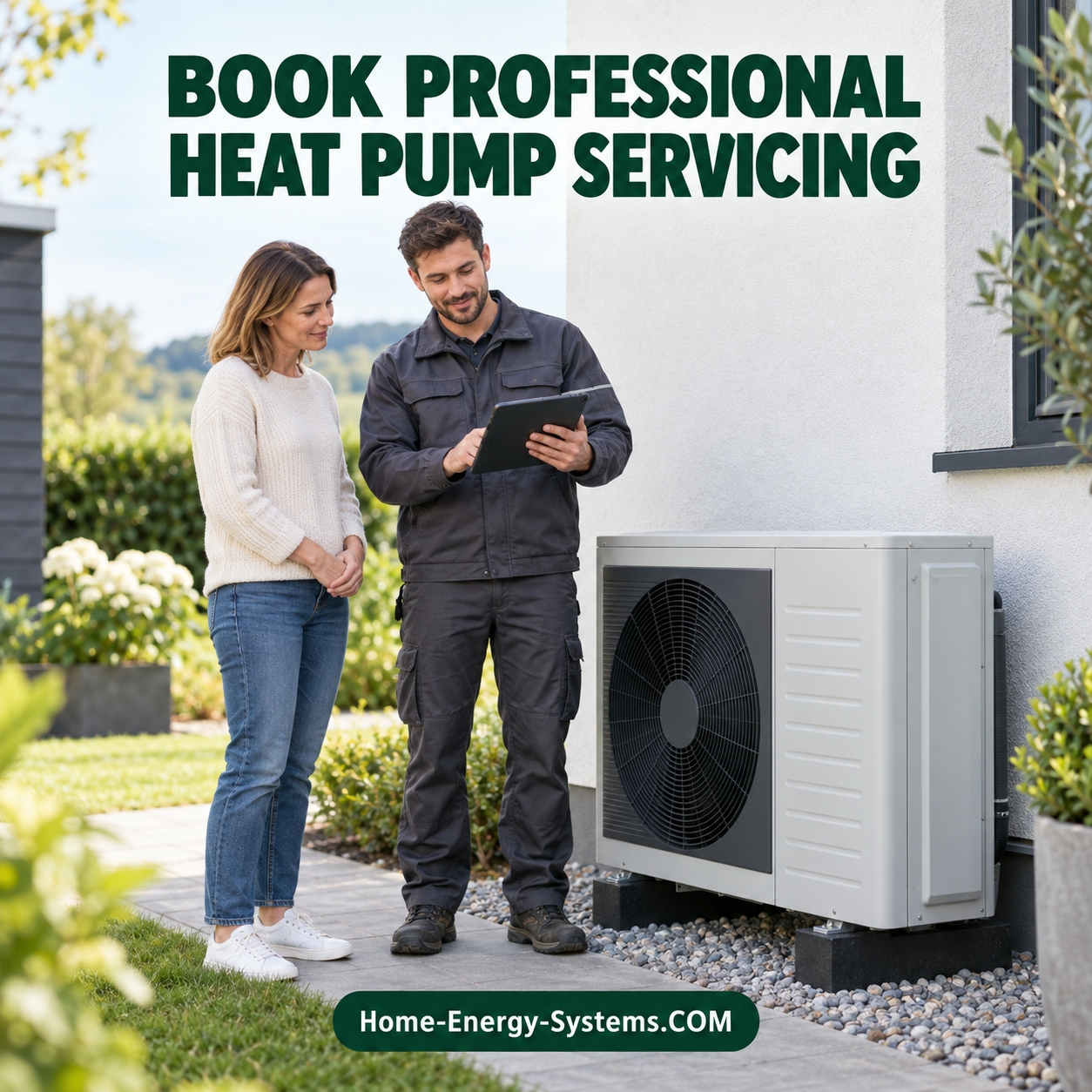
Homeowner checks are valuable, but they do not replace professional maintenance. A qualified technician has the equipment and training required to assess electrical safety, airflow, refrigerant performance and system controls.
The recommended service frequency depends on the model, manufacturer, system type, warranty terms and local requirements. Many systems benefit from an annual inspection, but the maintenance schedule supplied with your equipment should take priority.
A professional service may include:
- checking thermostat and control operation;
- inspecting electrical connections;
- testing voltage and motor current;
- checking condensate drainage;
- examining coils and blower components;
- measuring airflow and temperature performance;
- checking refrigerant performance and signs of leakage;
- testing the defrost cycle;
- examining pipe insulation and mounting points;
- checking water pressure and flow on hydronic systems; and
- reviewing stored error codes.
Only appropriately qualified personnel should work on refrigerant circuits or sealed electrical components. Refrigerant should not require routine topping up. A low charge normally indicates a leak or another fault that must be diagnosed.
Keep copies of service reports and invoices. Clear records can help with warranty claims and allow a technician to identify changes in performance over time.
Heat Pump Maintenance Schedule
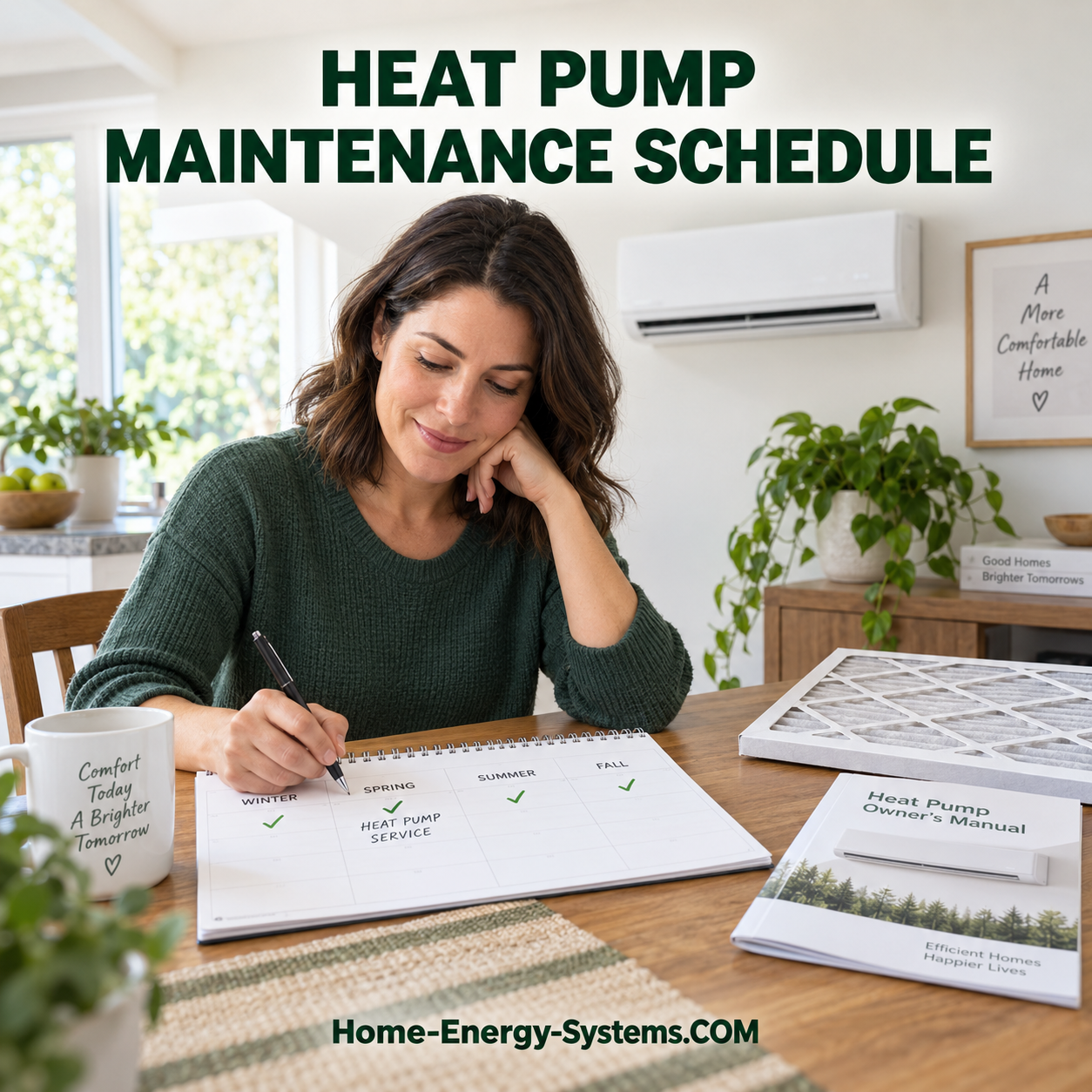
The following schedule provides a practical starting point. Your manufacturer’s manual, installer and warranty requirements should determine the final schedule.
| Maintenance task | Suggested check | Who should do it? |
|---|---|---|
| Inspect filters | Monthly during regular use or as the manual directs | Homeowner |
| Clean or replace filters | When dirty and according to the manufacturer’s instructions | Homeowner |
| Check indoor vents and grilles | Monthly | Homeowner |
| Clear leaves and debris around the outdoor unit | Monthly and after storms or gardening | Homeowner |
| Check for persistent snow or ice | During winter weather | Homeowner |
| Review energy use and performance | Monthly or seasonally | Homeowner |
| Inspect condensate drainage | During professional maintenance | Technician |
| Test electrical and refrigerant performance | According to the service schedule | Qualified technician |
| Complete a full system service | Usually annually or as the manufacturer requires | Qualified technician |
Simple Seasonal Checklist
- Check and clean the filters.
- Clear the outdoor unit and drainage area.
- Open and inspect indoor vents.
- Listen for new or unusual sounds.
- Check for leaks, ice or error codes.
- Review electricity use for unexpected changes.
- Confirm that schedules and temperatures are correct.
- Book professional servicing when due.
Maintenance becomes increasingly important as equipment ages. If repair costs rise or the system can no longer heat efficiently, compare the likely repair cost with the performance of newer equipment. Our guide to the best heat pump systems in 2026 explains the main features now available.
Common Heat Pump Maintenance Mistakes
Anyone asking “How do I maintain my heat pump?” should also understand what not to do. Avoid these common mistakes:
- forgetting the filter until airflow becomes weak;
- blocking indoor vents with furniture or curtains;
- allowing plants or stored items to crowd the outdoor unit;
- using a pressure washer on the outdoor coil;
- chipping ice away with sharp tools;
- continuing to operate a system with burning smells or severe noise;
- changing installer settings without recording the original values;
- assuming refrigerant must be added every year; and
- using unqualified workers for electrical or refrigerant repairs.
It is also a mistake to expect servicing to solve every efficiency problem. Insulation, draught proofing, radiator sizing, duct condition and the original heat-loss calculation all influence performance. Maintenance protects a good installation, but it cannot completely compensate for a poorly designed system.
How Much Does Heat Pump Maintenance Cost?
Servicing prices vary by country, system type, accessibility and the work included. Air-to-water and ground-source systems may require different checks from a straightforward ductless air-to-air unit.
Before booking, ask the contractor exactly what the service covers. The lowest advertised price may include little more than a visual inspection, while a thorough visit may include electrical testing, performance measurements, drainage checks and a written report.
Request a clear quotation and confirm whether replacement filters, cleaning, travel charges and repairs are included. A maintenance agreement may be worthwhile if it provides scheduled reminders, priority breakdown support or warranty-compliant inspections.
How Do I Maintain My Heat Pump? Frequently Asked Questions
How Often Should I Maintain My Heat Pump?
Inspect filters, airflow and the outdoor unit regularly. Professional servicing is often completed annually, although the correct interval is the one stated by the manufacturer, installer and warranty provider.
Can I Service a Heat Pump Myself?
You can usually check filters, remove nearby debris, keep vents open and monitor performance. Electrical testing, refrigerant work and sealed-component repairs should be completed by a qualified technician.
How Often Should Heat Pump Filters Be Cleaned?
Check them regularly and clean or replace them whenever they are visibly dirty or according to the manufacturer’s schedule. Homes with pets, smoke or high pollen may need more frequent attention.
Does a Heat Pump Need an Annual Service?
Many manufacturers recommend regular professional servicing, commonly once a year. Check the equipment manual and warranty because requirements vary between systems.
Should Refrigerant Be Topped Up Every Year?
No. Refrigerant circulates within a sealed system and should not be consumed during normal operation. A low charge may indicate a leak or another fault.
Is Ice on an Outdoor Heat Pump Normal?
A light coating of frost can occur during cold, damp conditions, and the defrost cycle should clear it. Persistent or heavy ice that obstructs the coil requires professional inspection.
Can Maintenance Reduce Heat Pump Electricity Use?
Yes. Clean filters, unrestricted airflow, suitable controls and correctly operating components help prevent wasted electricity caused by restrictions or developing faults.
How Long Should a Maintained Heat Pump Last?
Working life depends on equipment quality, installation, climate, operating hours and maintenance history. Regular care can reduce avoidable wear, but it cannot guarantee a particular lifespan.
Final Thoughts
The answer to “How do I maintain my heat pump?” is to combine simple homeowner checks with scheduled professional servicing. Keep the filters clean, protect airflow, clear the outdoor unit, use the controls sensibly and respond quickly when performance changes.
A few minutes of regular attention can help protect comfort, efficiency and equipment life. Keep the manufacturer’s manual nearby, record completed maintenance and never attempt work involving sealed electrical or refrigerant components unless you are properly qualified.
Learn More About Home Heating
Explore more independent heat pump, solar energy and home power guides at Home-Energy-Systems.COM.