2026 Technology Guide
Future of Heat Pump Technology 2026: What’s Coming Next
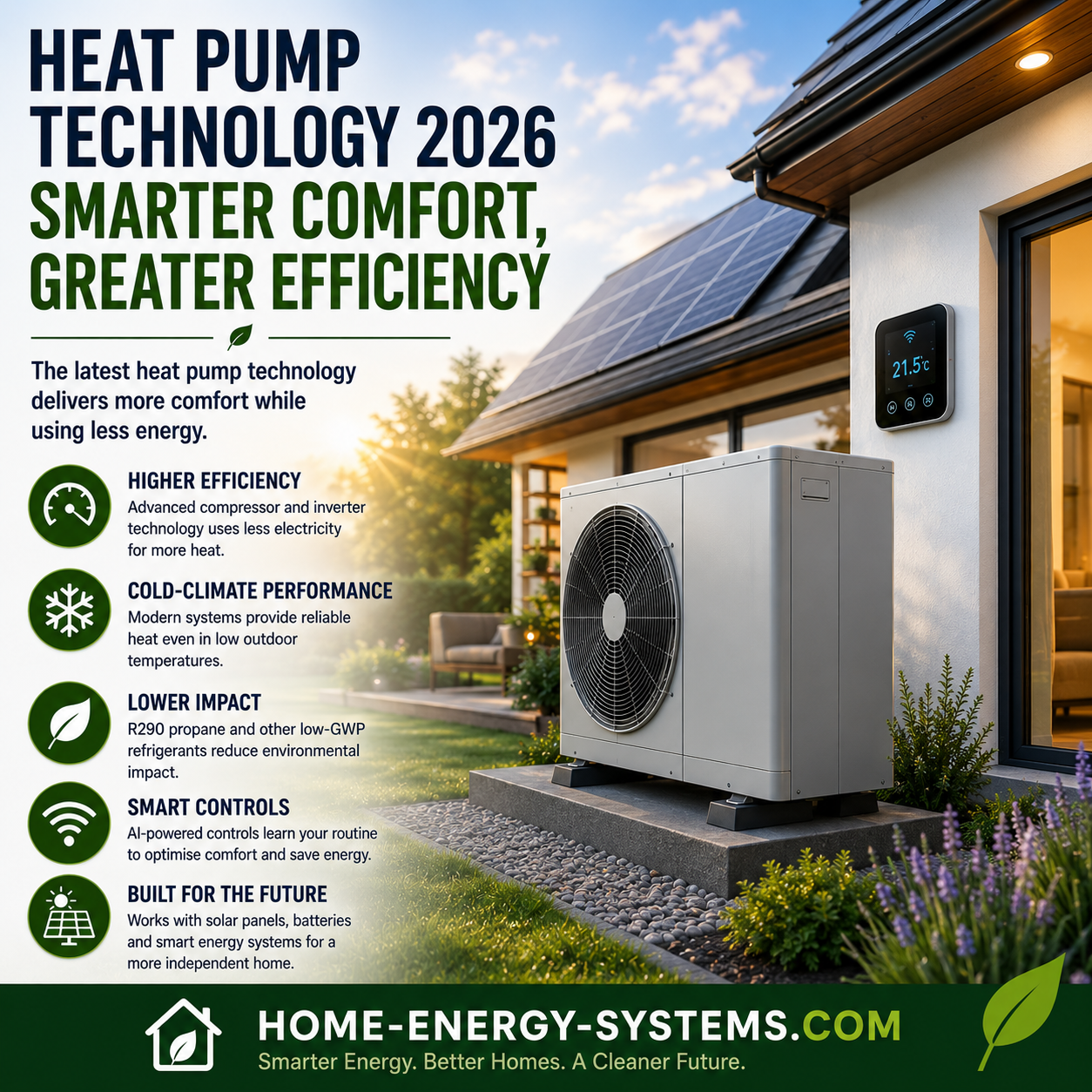
The future of heat pump technology is moving beyond conventional home heating. Smarter controls, improved cold-climate performance, lower-impact refrigerants, solar integration, battery storage and thermal energy storage are changing how heat pumps fit into the modern home.
The future of heat pump technology is about much more than improving the efficiency of one heating appliance.
Heat pumps are becoming smarter, more adaptable and increasingly connected to the wider home-energy system. Modern systems can already work alongside solar panels, home battery storage, thermal storage, smart electricity tariffs and intelligent energy-management controls.
Cold-weather performance is also improving. New refrigerants are reducing environmental impact, while variable-speed compressors allow heat pumps to adjust their output much more precisely to the heating or cooling actually required.
A heat pump does not normally create heat by burning fuel. Instead, it uses electricity to move thermal energy from one place to another. In heating mode, it extracts useful heat from outside air, the ground or water and transfers that heat into the building.
Many modern systems can reverse that process during warmer weather and provide cooling as well.
The International Energy Agency identifies digitalisation, product optimisation, system integration and the transition toward lower-global-warming-potential refrigerants as important areas of heat pump development.
Some of the technologies shaping the future are already available in 2026. Others are likely to become increasingly important as we move towards 2030.
If you are primarily interested in comparing systems currently available rather than exploring where the technology is heading, see our Best Heat Pump Systems guide.
Watch: The Future of Heat Pump Technology
See the technologies that could shape home heating between 2026 and 2030.
Future of Heat Pump Technology at a Glance
What This Guide Covers
- What Is Heat Pump Technology?
- How Heat Pump Technology Is Changing in 2026
- Better Heat Pumps for Cold Climates
- R290 and Lower-Impact Refrigerants
- Variable-Speed and Inverter Technology
- Smart Heat Pumps and AI Controls
- Solar Panels, Batteries and Heat Pumps
- Heat Pumps and Thermal Energy Storage
- High-Temperature Heat Pumps
- Predictive Maintenance and Remote Diagnostics
- Air Source Heat Pumps
- Ground Source Heat Pumps
- Heat Pump Water Heaters
- How Efficient Are Modern Heat Pumps?
- Heat Pump Costs and Running Costs
- What to Look for When Buying
- What Could Heat Pumps Look Like by 2030?
- Should You Wait for Future Heat Pump Technology?
What Is Heat Pump Technology?
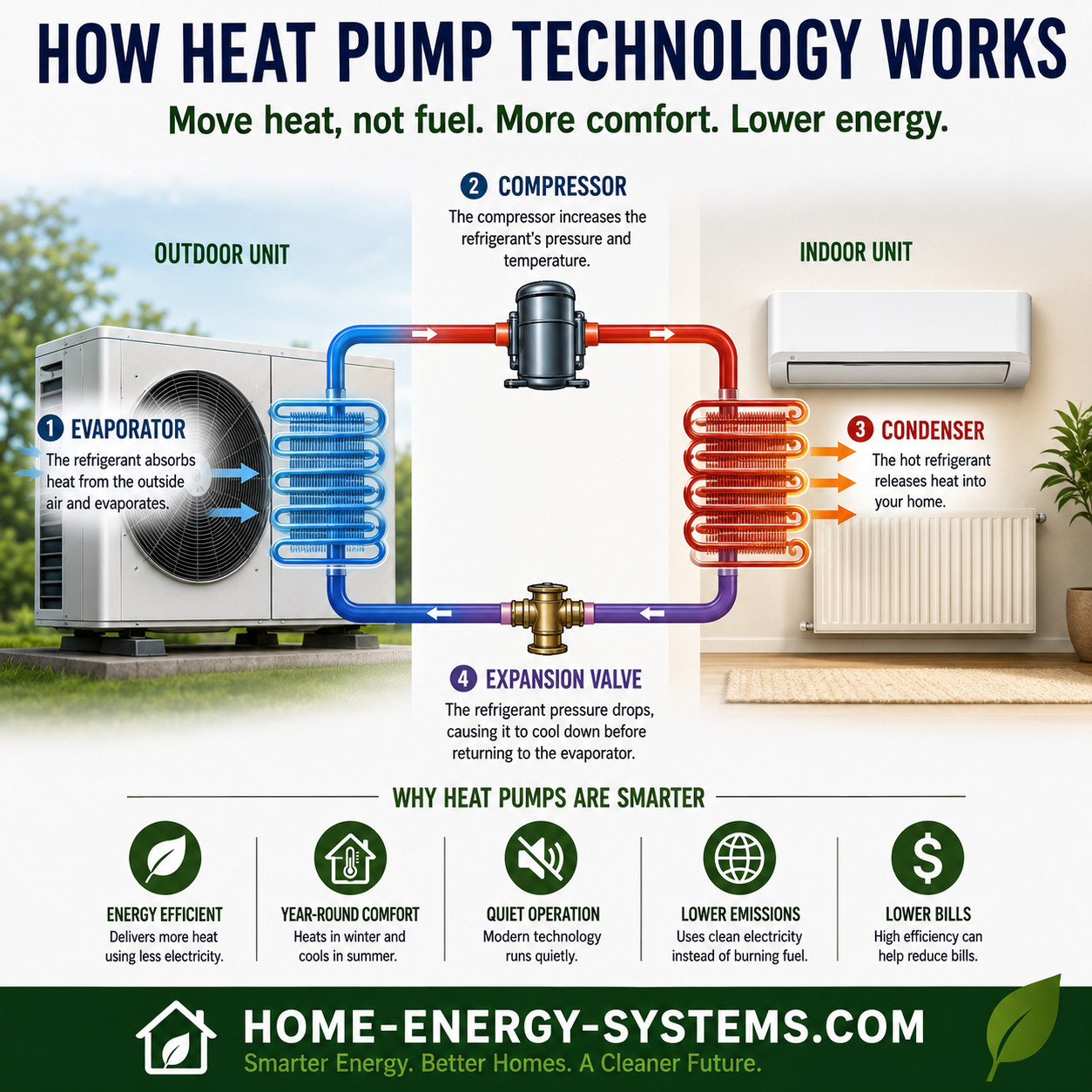
Heat pump technology uses the refrigeration cycle to transfer thermal energy rather than producing all of its heat directly from electricity or by burning fuel.
A typical air-source heat pump contains several important components:
- An outdoor heat exchanger
- An indoor heat exchanger
- A compressor
- An expansion device
- Refrigerant circulating through the system
- Fans or water pumps
- Sensors and electronic controls
In heating mode, the refrigerant absorbs heat from an outside source. The compressor raises its pressure and temperature, allowing that heat to be transferred into the building.
Even cold outside air contains thermal energy. The challenge is extracting that energy efficiently as temperatures fall, which is one reason modern compressors, refrigerants and control systems have become so important.
Because a heat pump transfers heat instead of converting electricity directly into resistance heat, it can deliver considerably more usable heat energy than the electrical energy consumed by the compressor and other components.
How Heat Pump Technology Is Changing in 2026
Heat pumps themselves are not new. The major story in 2026 is how quickly the technology surrounding them is improving.
The future of heat pump technology is increasingly being shaped by improvements in compressors, refrigerants, sensors, digital controls and the ability to connect heating with other energy technologies around the home.
According to the International Energy Agency, advances in digitalisation, system integration and product optimisation are widening the applications for heat pumps and improving their performance.
The most important developments include:
- Variable-speed and inverter-driven compressors
- Improved operation at low outdoor temperatures
- Low-global-warming-potential refrigerants
- Connected thermostats and intelligent controls
- Better integration with renewable electricity
- Heat pump and thermal-storage combinations
- Higher-temperature systems for selected retrofit applications
- More advanced monitoring and diagnostics
- Greater compatibility with smart electricity tariffs
These improvements mean the heat pump increasingly becomes part of a wider home-energy system rather than simply being a replacement for a boiler or air conditioner.
1. Better Heat Pumps for Cold Climates
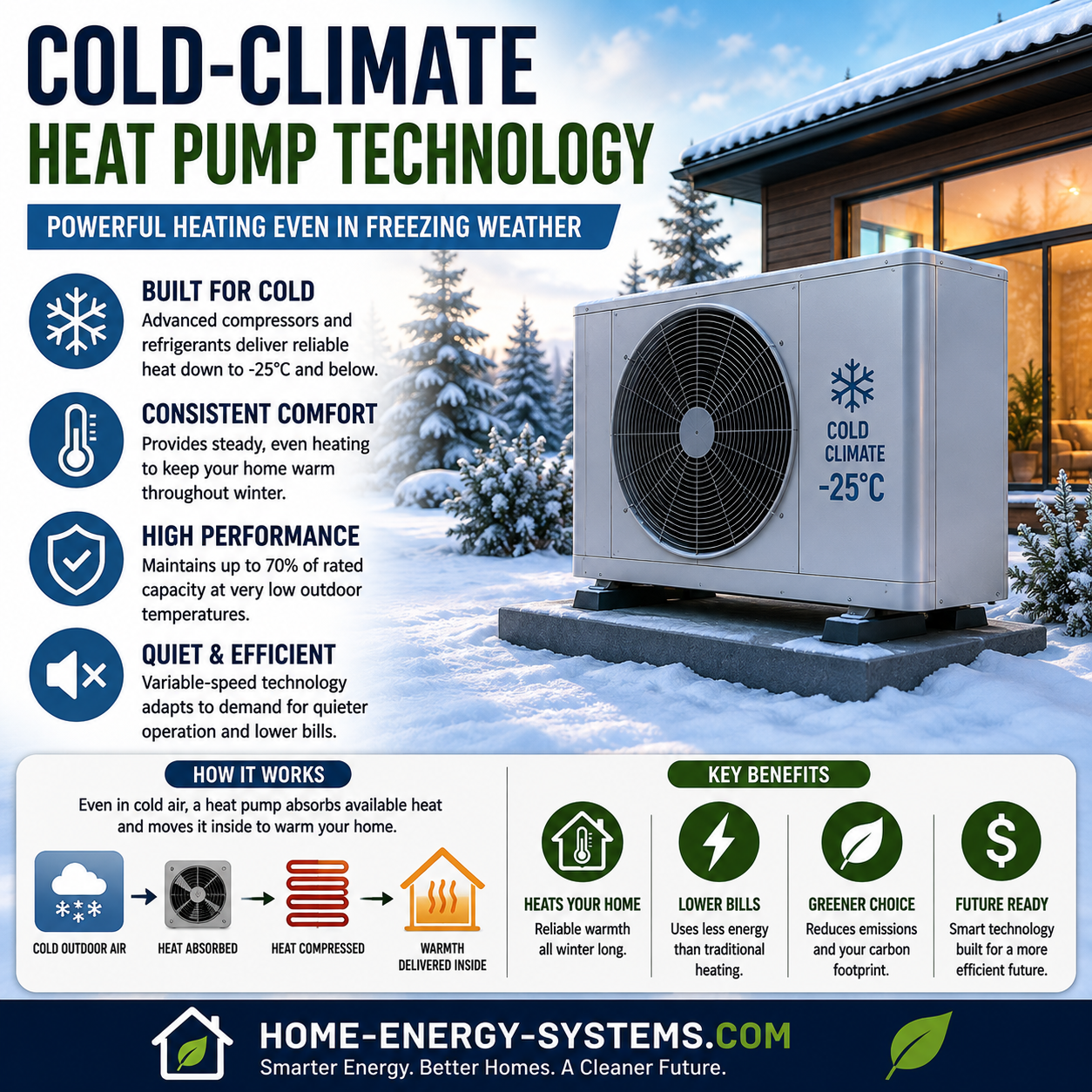
One of the biggest changes in modern heat pump technology is improved cold-weather performance.
Older air-source systems often lost considerable capacity as outdoor temperatures dropped. Modern cold-climate models use improved compressors, refrigerants, heat exchangers and control strategies to continue extracting useful heat at much lower temperatures.
This is important because cold-weather performance has traditionally been one of the main concerns homeowners have about switching from a boiler to an air-source heat pump.
Extremely cold locations may still require backup heating, a hybrid arrangement or particularly careful system design.
As cold-climate technology improves, however, heat pumps are likely to become practical in a wider range of regions than many homeowners previously assumed.
2. R290 and Lower-Impact Refrigerants
One of the biggest changes happening inside heat pumps is something homeowners rarely see: the refrigerant.
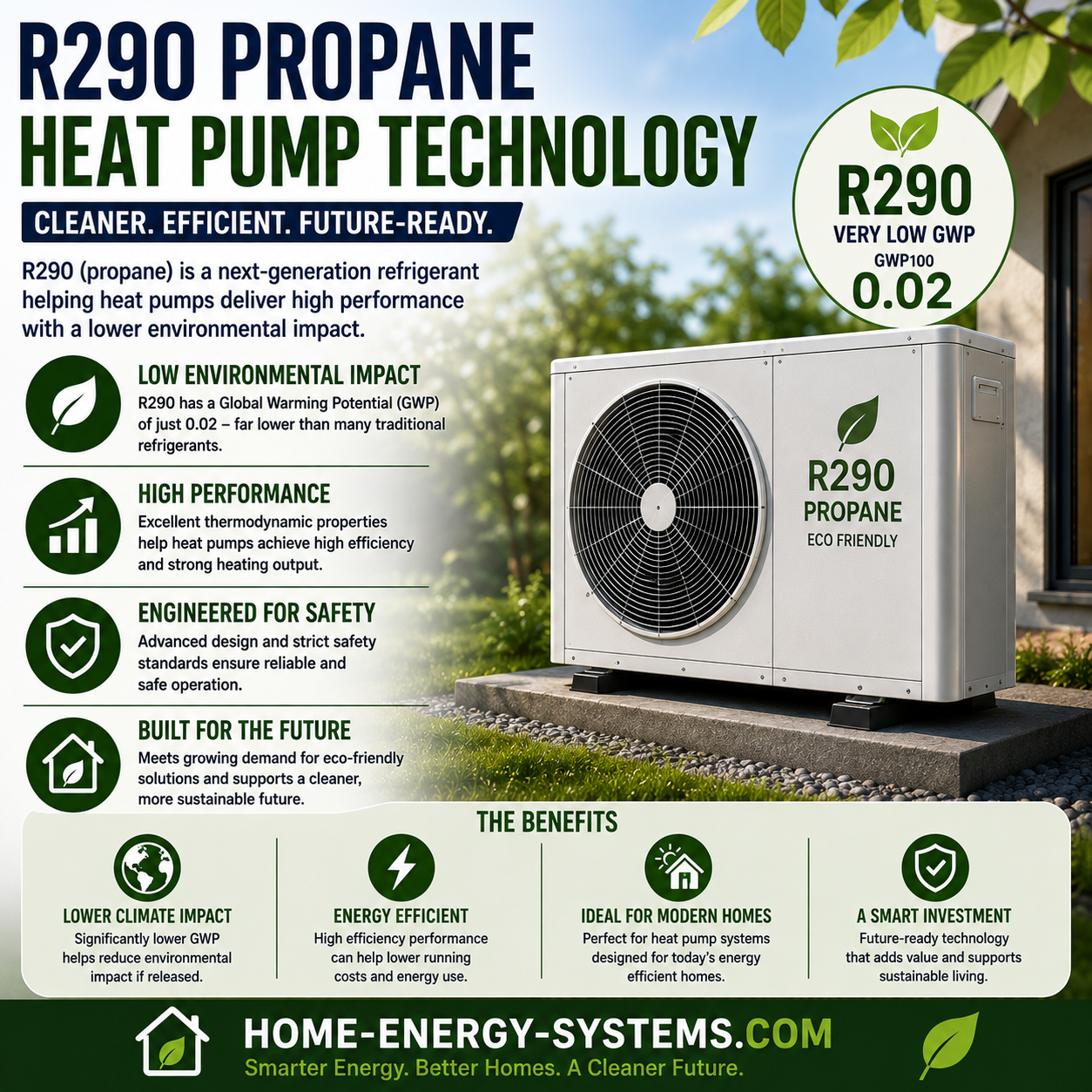
R290 is refrigerant-grade propane. It has strong thermodynamic properties and a very low global warming potential compared with many fluorinated refrigerants historically used in heating and cooling equipment.
This is helping drive interest in R290 heat pumps, particularly in Europe, as manufacturers move toward refrigerants with a lower environmental impact.
R290 has a much lower climate impact than many conventional HFC refrigerants if released.
Its thermodynamic properties make it suitable for efficient heat-pump applications.
Propane is flammable, so equipment must be specifically engineered, installed and serviced according to applicable safety rules.
R290 should therefore not be viewed as simply swapping one refrigerant for another. The entire heat pump must be designed for its safe use.
The transition towards lower-impact refrigerants is likely to be one of the defining developments in heat pump technology during the remainder of this decade.
3. Variable-Speed and Inverter Heat Pumps
Traditional heating and cooling equipment often works by repeatedly switching between fully on and fully off.
Variable-speed heat pumps operate differently.
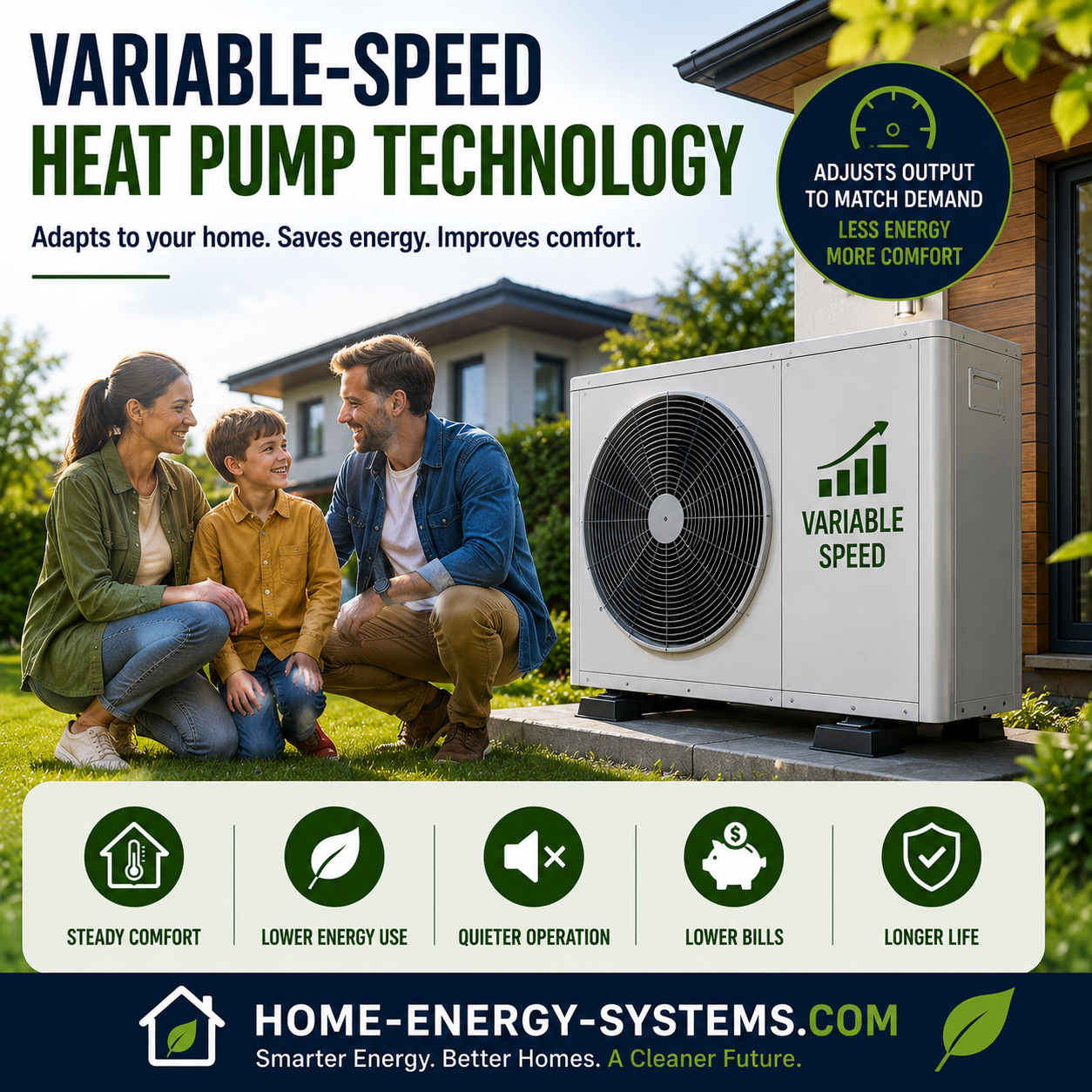
An inverter-driven compressor can change its speed to better match the amount of heating or cooling the building actually requires.
This allows the heat pump to spend more time operating steadily at a lower output instead of repeatedly starting and stopping at maximum capacity.
Potential advantages include:
- More stable indoor temperatures
- Less frequent starting and stopping
- Lower electrical consumption under part-load conditions
- Quieter operation at lower compressor speeds
- Better comfort
- Improved low-temperature control
This ability to continuously adapt is one of the most significant differences between many modern heat pumps and older fixed-speed systems.
Variable-speed technology is likely to become increasingly important as heat pumps are connected to smarter home-energy controls.
4. Smart Heat Pumps and AI Controls
The heat pump of the future will increasingly do more than switch on when the house becomes cold.
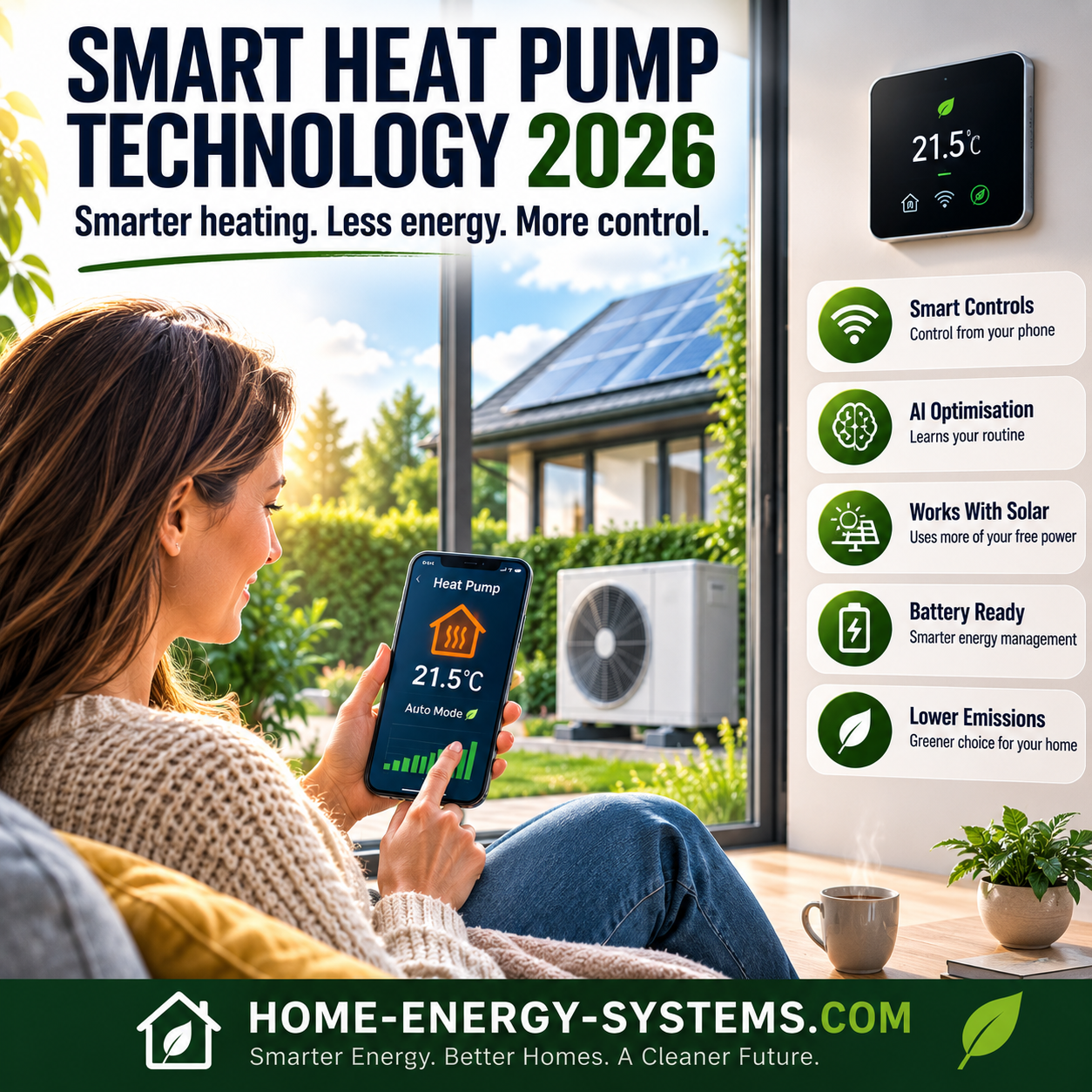
Smart controls are becoming increasingly important as homes combine heating, solar generation, battery storage and variable electricity tariffs.
A connected heat pump may use information from:
- Indoor temperature sensors
- Outdoor temperature sensors
- Weather forecasts
- Occupancy information
- Energy meters
- Electricity tariffs
- Solar generation
- Battery state of charge
Depending on the system, this can allow homeowners to:
- Control temperatures from a smartphone
- Create heating schedules
- Monitor electricity consumption
- Automatically adjust heating output
- Use weather-compensation settings
- Identify unusual performance or faults
- Coordinate heating with lower-cost electricity periods
The term AI heat pump is increasingly used in marketing, but homeowners should look beyond the label.
The important question is what the control system actually does.
Useful automation should improve comfort or efficiency through measurable functions such as adaptive scheduling, occupancy detection, predictive control, weather forecasting or tariff optimisation.
5. Heat Pumps With Solar Panels and Battery Storage
This is where the future of heat pump technology becomes particularly relevant to the wider home-energy system.
Instead of thinking of solar panels and heating as completely separate technologies, smart energy management can increasingly connect them.
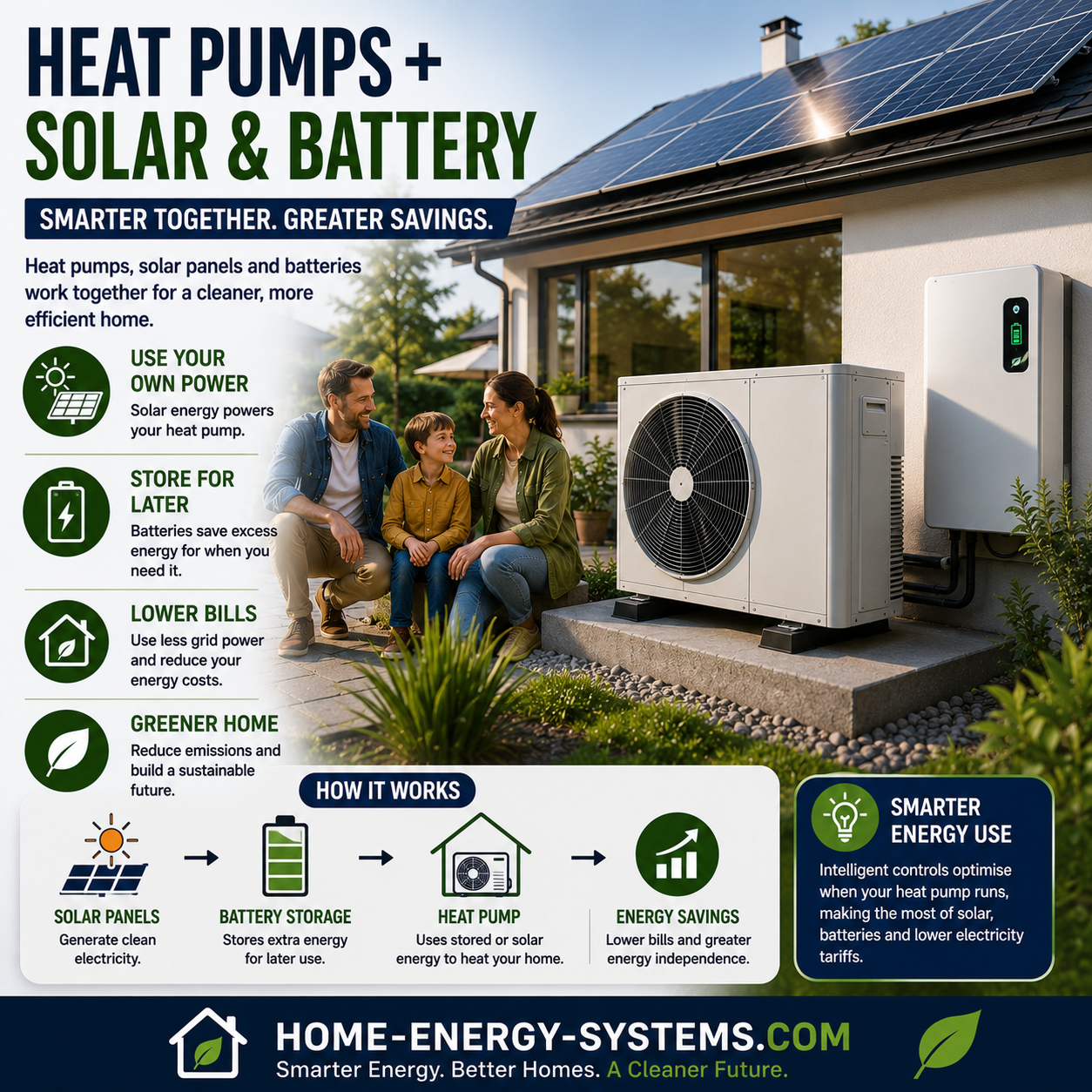
A solar PV system can generate electricity that contributes toward operating a heat pump. If generation exceeds immediate household demand, compatible battery storage can store some of that electricity for later use.
The heat pump, solar panels and battery therefore do not have to operate as isolated technologies.
Smart energy controls can potentially coordinate:
- Solar generation
- Heat-pump demand
- Battery charging
- Battery discharging
- Hot-water heating
- Thermal storage
- Grid import and export
- Time-of-use electricity prices
During periods of strong solar generation, surplus electricity could potentially be directed towards heating the home or producing hot water instead of immediately exporting all excess power to the grid.
Battery storage adds another option by shifting some solar electricity into later periods.
For more detail on storing electricity, read our Home Battery Storage Systems 2026 guide.
You can also explore how panels, inverters and batteries work together in our Best Solar Energy Solutions guide.
6. Heat Pumps and Thermal Energy Storage
Electricity batteries are not the only way to store energy.
Heat itself can also be stored.
A heat pump can potentially operate when electricity is cheaper or renewable generation is plentiful and store some of that energy as heat for use later.
A conventional hot-water cylinder is one familiar example of thermal storage, but more advanced technologies can store considerably larger quantities of heat.
This creates an interesting opportunity for future home-energy systems.
Instead of using electricity precisely when the home requires heat, the heat pump may increasingly be able to operate at the most advantageous time and store thermal energy until it is needed.
Potential benefits include:
- Moving electricity demand away from expensive peak periods
- Using more surplus solar electricity
- Taking advantage of time-of-use tariffs
- Reducing strain on electricity grids during peak demand
- Increasing the flexibility of renewable-powered homes
Heat pumps and thermal storage could therefore become increasingly important as electricity systems rely more heavily on variable renewable generation.
Our Thermal Energy Storage 2026 guide explores this technology in more detail.
7. High-Temperature Heat Pumps for Older Homes
Older homes can present a challenge because their radiators were often designed around higher-temperature boiler systems.
Traditional heat pumps normally operate most efficiently at lower heating-water temperatures. This makes them particularly well suited to underfloor heating and correctly sized low-temperature radiators.
High-temperature heat pumps are helping to close that gap.
Improved compressors and refrigerants allow some modern systems to provide hotter water, potentially making heat-pump technology more practical for certain existing buildings with conventional radiators.
That does not remove the importance of insulation or system design.
As heating-water temperature rises, heat-pump efficiency can fall. The objective should therefore still be to operate the heating system at the lowest temperature that can comfortably heat the property.
Before replacing a boiler, a good installer should examine heat loss, radiator sizes, insulation, pipework and required flow temperatures rather than assuming the existing system can remain unchanged.
8. Predictive Maintenance and Remote Diagnostics
Future improvements are not limited to heating efficiency.
Connected heat pumps can increasingly monitor their own operation and provide installers or homeowners with information about how the system is performing.
Sensors may be able to identify unusual compressor behaviour, changes in energy consumption, abnormal temperatures or declining performance before a serious fault develops.
Remote diagnostics may also allow installers or service technicians to examine some operating information without immediately visiting the property.
This could gradually change heat-pump servicing from a largely reactive process into a more preventative one.
Potential advantages include:
- Earlier detection of developing faults
- Reduced risk of unexpected breakdowns
- Better performance monitoring
- Remote troubleshooting
- More targeted service visits
- Improved long-term energy efficiency
As homes become increasingly connected, predictive maintenance could become an important but less visible part of future heat pump technology.
Air Source Heat Pumps
Air source heat pumps extract thermal energy from the outside air and are among the most widely used heat pump technologies for buildings.
They are available in several configurations, including air-to-air and air-to-water systems.
Air-to-Air Heat Pumps
An air-to-air system transfers heat directly into indoor air. Many ducted and ductless systems can provide both heating and air conditioning.
Air-to-Water Heat Pumps
An air-to-water heat pump transfers heat into water that can supply radiators, underfloor heating or a suitable hot-water system.
Air-source technology is attractive because installation generally requires less ground work than geothermal systems. However, performance still depends on climate, system design, flow temperatures and the energy efficiency of the building.
Ground Source Heat Pumps
Ground source heat pumps collect energy from the ground through buried pipework or boreholes.
Ground temperatures are normally more stable than outside-air temperatures, which can help a correctly designed ground-source system maintain consistent performance through changing seasons.
The trade-off is installation complexity. Horizontal ground loops require suitable land, while vertical boreholes involve specialist drilling.
Ground-source systems can therefore involve considerably more installation work than air-source heat pumps, but they remain an important technology for suitable homes, commercial buildings and larger properties.
Heat Pump Water Heaters
Heat pump technology is not limited to space heating.
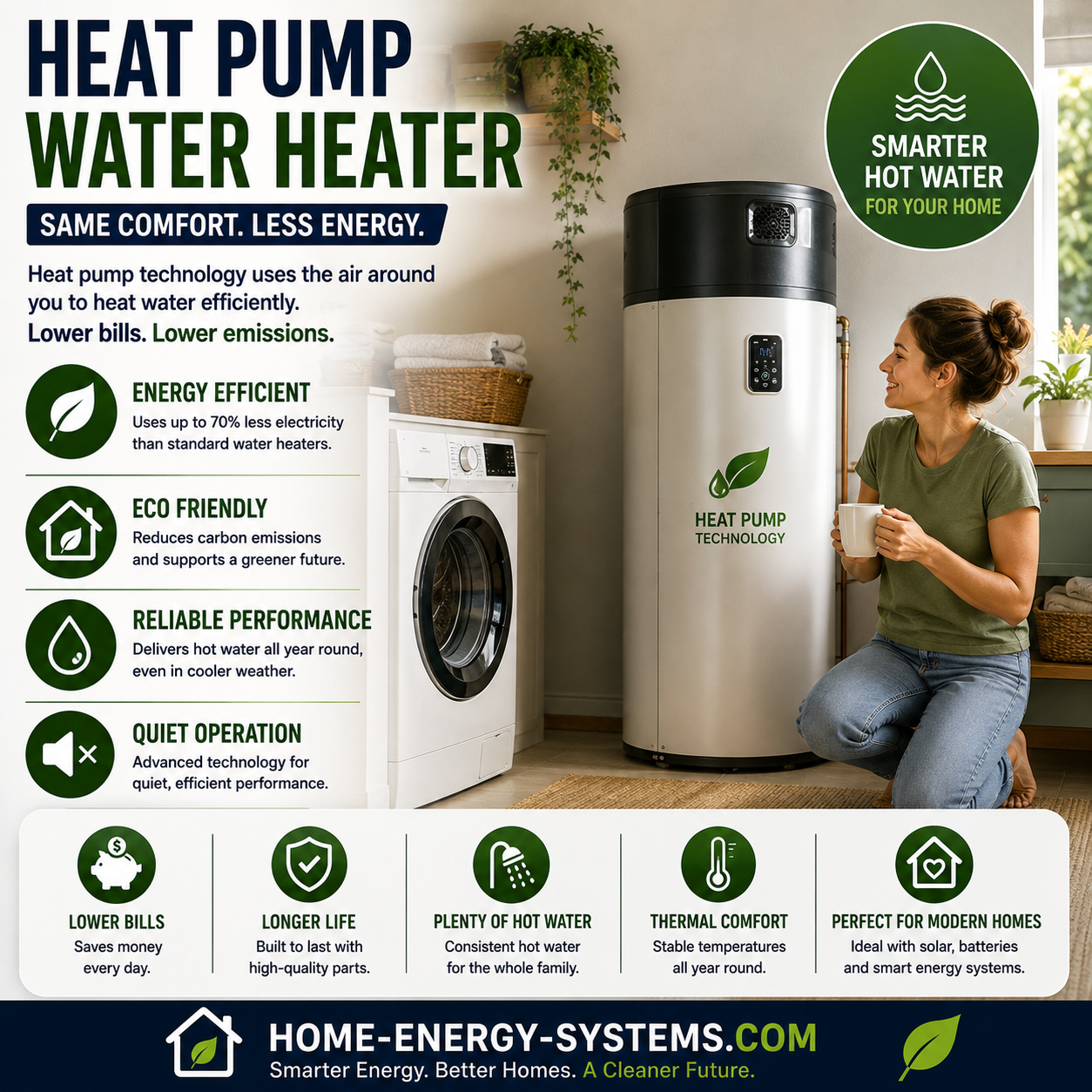
A heat pump water heater uses the same basic principle to move heat into stored domestic hot water.
Instead of heating the water entirely with an electric resistance element, the heat pump extracts heat from the surrounding air and transfers it into the water cylinder.
Different designs are available depending on the country and application, including integrated units and systems connected to an external heat pump.
Heat-pump water heating is another area where smart controls and thermal storage could become increasingly useful.
A future system could potentially heat water when solar generation is high or electricity is inexpensive, storing that energy for showers and other hot-water demand later in the day.
How Efficient Are Modern Heat Pumps?
Heat pump efficiency is often described using the coefficient of performance, or COP.
A COP of 3 means the system is delivering approximately three units of heat for each unit of electrical energy consumed at the specified test condition.
However, COP is not a fixed number.
Real-world efficiency changes according to:
- Outdoor temperature
- Required indoor temperature
- Heating-water flow temperature
- Building insulation
- Heat emitter size
- System sizing
- Hot-water demand
- Defrost operation
- Control settings
- Installation quality
For this reason, seasonal performance is usually more useful than selecting a heat pump based on one impressive laboratory COP figure.
A highly efficient heat pump installed in the wrong property, incorrectly sized or operated at unnecessarily high temperatures can perform far below its potential.
The future of heat pump technology will undoubtedly bring further efficiency improvements, but correct system design will remain just as important.
Heat Pump Costs and Running Costs in 2026
There is no useful single worldwide price for a heat-pump installation.
Costs vary enormously between countries and according to the type of system, size of property, electrical work, ground works, radiators, hot-water equipment and insulation upgrades required.
The International Energy Agency identifies high upfront cost as one of the major barriers to wider heat-pump adoption. Equipment can cost considerably more than conventional heating alternatives in some markets, and installation can add significantly to the total investment.
Running cost is also highly location dependent.
The main factors include:
- Electricity price
- Alternative fuel price
- Seasonal heat-pump efficiency
- Climate
- Heating demand
- Property insulation
- Electricity tariff structure
- Solar generation
- How the heating controls are configured
A heat pump therefore should not be promoted with a guaranteed percentage saving.
The correct comparison is the expected annual cost of heating the individual property with the proposed heat pump versus the heating system it will replace.
Which Heat Pump Technology Suits Which Property?
Air Source
Best for: Many residential properties
Main advantage: Relatively straightforward installation
Check: Cold-weather output and noise requirements
Ground Source
Best for: Properties with suitable land or borehole access
Main advantage: Stable ground temperatures
Check: Installation and ground-work costs
Cold Climate
Best for: Regions with prolonged freezing temperatures
Main advantage: Improved low-temperature performance
Check: Capacity at local design temperature
High Temperature
Best for: Selected retrofit properties
Main advantage: Higher heating-water temperatures
Check: Efficiency at required flow temperature
What to Look for When Buying a Heat Pump in 2026
The newest technology is useful only if the heat pump is properly matched to the building.
1. Correct Heat-Loss Calculation
The installer should calculate how much heat the property actually loses under local winter design conditions.
2. Low-Temperature Capacity
For cold regions, look beyond the headline rated capacity and examine performance at lower outdoor temperatures.
3. Seasonal Efficiency
Seasonal performance gives a better indication of likely annual efficiency than a single COP measurement.
4. Variable-Speed Technology
An inverter-driven compressor can adjust its output as heating demand changes.
5. Refrigerant
Check which refrigerant the heat pump uses, its environmental characteristics and whether future regulations could affect servicing or availability.
6. Maximum Flow Temperature
This matters particularly when the heat pump will supply existing radiators.
7. Noise
Check both sound power and installation location rather than relying only on marketing descriptions such as “ultra quiet.”
8. Smart Controls
Look at what the controls actually provide. Weather compensation, scheduling, remote monitoring, tariff optimisation and integration with other energy equipment can all be useful.
9. Solar and Battery Compatibility
If you already have or plan to install solar panels, consider how the technologies can work together.
10. Installer Experience
System design and commissioning are just as important as the logo on the heat pump.
When you are ready to compare the main types of system, continue to our Best Heat Pump Systems guide.
What Could Heat Pumps Look Like by 2030?
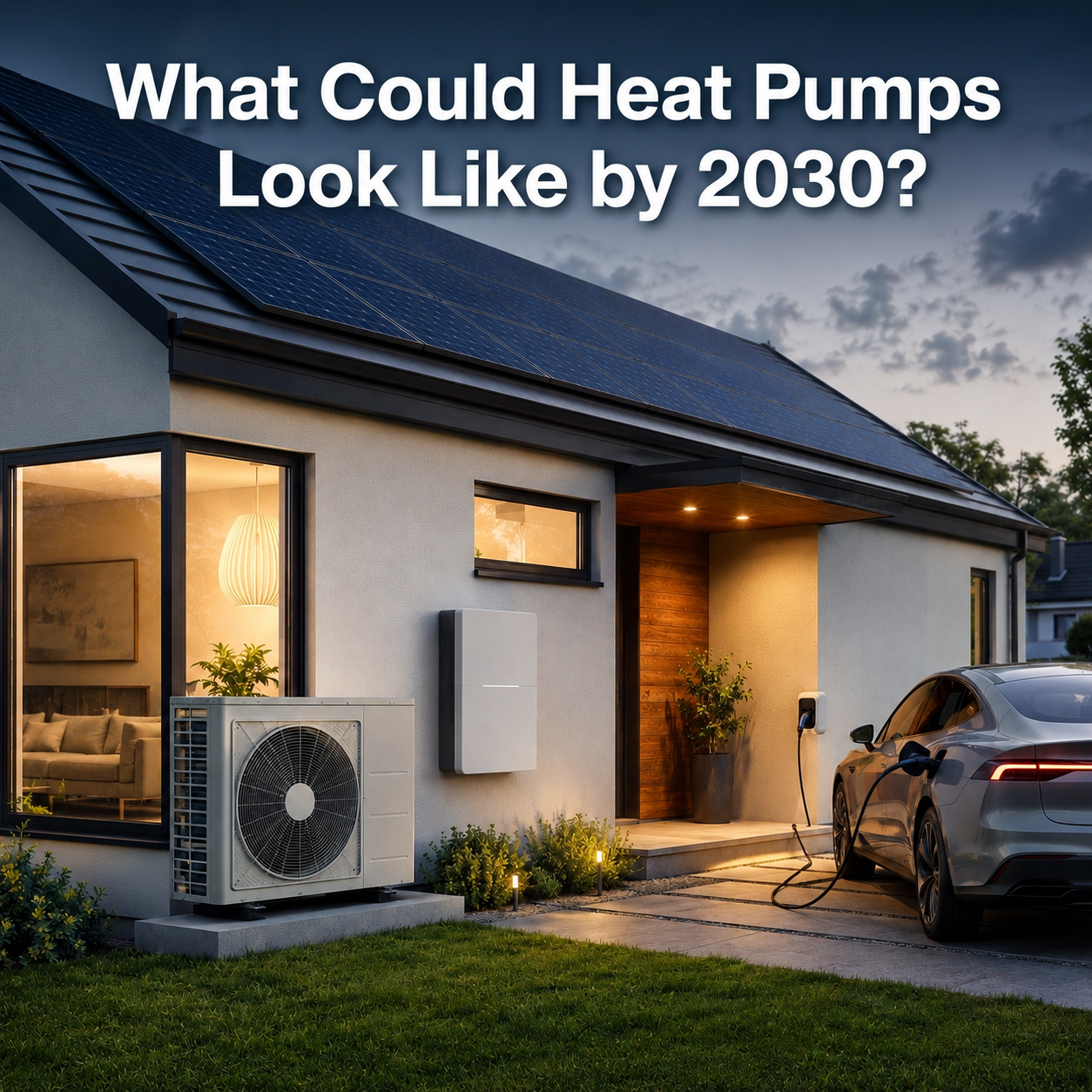
The biggest transformation may not be a completely revolutionary new type of heat pump.
Instead, the heat pump is likely to become increasingly integrated into the complete home-energy system.
A future home could automatically coordinate:
- Heat-pump heating and cooling
- Solar electricity generation
- Home battery storage
- Domestic hot water
- Thermal energy storage
- EV charging
- Weather forecasts
- Time-of-use electricity tariffs
- Grid electricity demand
Rather than every piece of equipment operating independently, one energy-management system could decide where electricity is most useful at a particular time.
Imagine a home where the solar panels are generating strongly in the early afternoon.
The energy-management system could decide to charge the home battery, increase the temperature of the hot-water store and allow the heat pump to preheat the building slightly before electricity prices rise later in the evening.
During a more expensive electricity period, the home could then reduce grid demand by drawing from stored electricity and stored heat.
Not every property will need this level of automation, and different products will offer very different capabilities.
But it demonstrates why the future of heat pump technology is about much more than improving the heat pump itself.
It is about making heating an intelligent part of a smarter, more flexible and increasingly energy-efficient home.
Should You Wait for Future Heat Pump Technology?
Probably not simply because newer technology will inevitably appear.
Heat pumps available today already include many technologies that would have been considered advanced only a few years ago, including variable-speed compressors, sophisticated controls, cold-climate models and lower-GWP refrigerants.
If your existing heating system needs replacing, the more important question is whether a heat pump suits your property and whether the proposed system has been correctly designed.
Before buying, consider:
- The home’s calculated heat loss
- Local winter temperatures
- Insulation
- Radiator or underfloor-heating requirements
- Required heating-water temperature
- Electricity prices
- Available grants or incentives
- Installation quality
- Refrigerant
- Noise
- Solar and battery compatibility
Choosing the right heat pump for the building remains more important than simply choosing the newest model.
Is a Heat Pump Right for Your Home?
A heat pump may be particularly worth investigating if you are replacing an ageing heating system, improving insulation, renovating a property, installing solar panels or looking for one system that can provide both heating and cooling.
However, the decision should be based on the property rather than the popularity of the technology.
Insulation, heat loss, climate, electricity prices, installation cost, available space and the existing heating system should all be considered before choosing equipment.
Future of Heat Pump Technology FAQs
What is the future of heat pump technology?
Heat pumps are becoming smarter, more efficient and more closely integrated with solar panels, battery storage, thermal storage and smart electricity tariffs. Cold-climate performance, lower-impact refrigerants and intelligent controls are also continuing to improve.
What is new in heat pump technology in 2026?
Important developments include variable-speed compressors, improved cold-weather operation, lower-GWP refrigerants such as R290, smarter controls, better monitoring and greater integration with solar panels, batteries and thermal storage.
Will heat pumps get better in the future?
Yes. Improvements are likely to continue in areas such as cold-weather performance, refrigerants, controls, diagnostics, noise reduction and integration with other home-energy technologies. Correct installation and system design will still remain essential.
Do heat pumps work in freezing weather?
Yes. Modern cold-climate heat pumps are specifically designed for low outdoor temperatures. Performance still varies by model, so compare heating capacity and efficiency at the temperatures experienced in your area.
What is an R290 heat pump?
An R290 heat pump uses refrigerant-grade propane. R290 has a very low global warming potential, but because propane is flammable the heat pump must be specifically designed, installed and serviced for its safe use.
Can a heat pump work with solar panels?
Yes. Solar PV electricity can contribute toward operating a heat pump. The amount supplied directly by solar depends on when the heat pump runs, solar generation and other household electricity demand.
Can you run a heat pump from a home battery?
Potentially, yes, but both battery capacity and inverter power output must be large enough for the heat pump and other loads. Heating can consume substantial energy during cold weather, so correct system sizing is essential.
Will AI control future heat pumps?
AI and predictive controls are likely to play a growing role, particularly in systems that respond to weather forecasts, household energy demand and variable electricity tariffs. Homeowners should focus on useful functions rather than the AI label itself.
Are heat pumps cheaper to run than gas or oil heating?
Not automatically. Running costs depend on heat-pump efficiency, electricity prices, alternative fuel prices, climate, insulation and system design. A property-specific annual cost comparison is more useful than a general percentage-saving claim.
Do heat pumps provide air conditioning?
Many reversible heat pumps can provide both heating and cooling. Whether cooling is available depends on the system type, indoor equipment and installation design.
Continue Building Your Home Energy System
Independent Technical Resources
For readers who want to explore heat pump technology, efficiency and performance standards in greater depth:
Final Thoughts on the Future of Heat Pump Technology
The future of heat pump technology looks increasingly connected.
Better cold-climate performance, variable-speed compressors, R290 and other lower-impact refrigerants, smarter controls, solar integration, battery storage and thermal energy storage are steadily changing what a heat pump can do.
The heat pump is becoming less of a standalone heating appliance and more of a central component of the modern home-energy system.
For homeowners, that could mean better comfort, greater control over energy use and more opportunities to consume electricity when it is cheapest or when renewable electricity is available.
The best technology, however, will still be the technology that has been properly designed and correctly installed for the building in which it operates.
Home-Energy-Systems.COM will continue following the technologies making homes smarter, more efficient and increasingly energy independent.