Best Heat Pump Systems
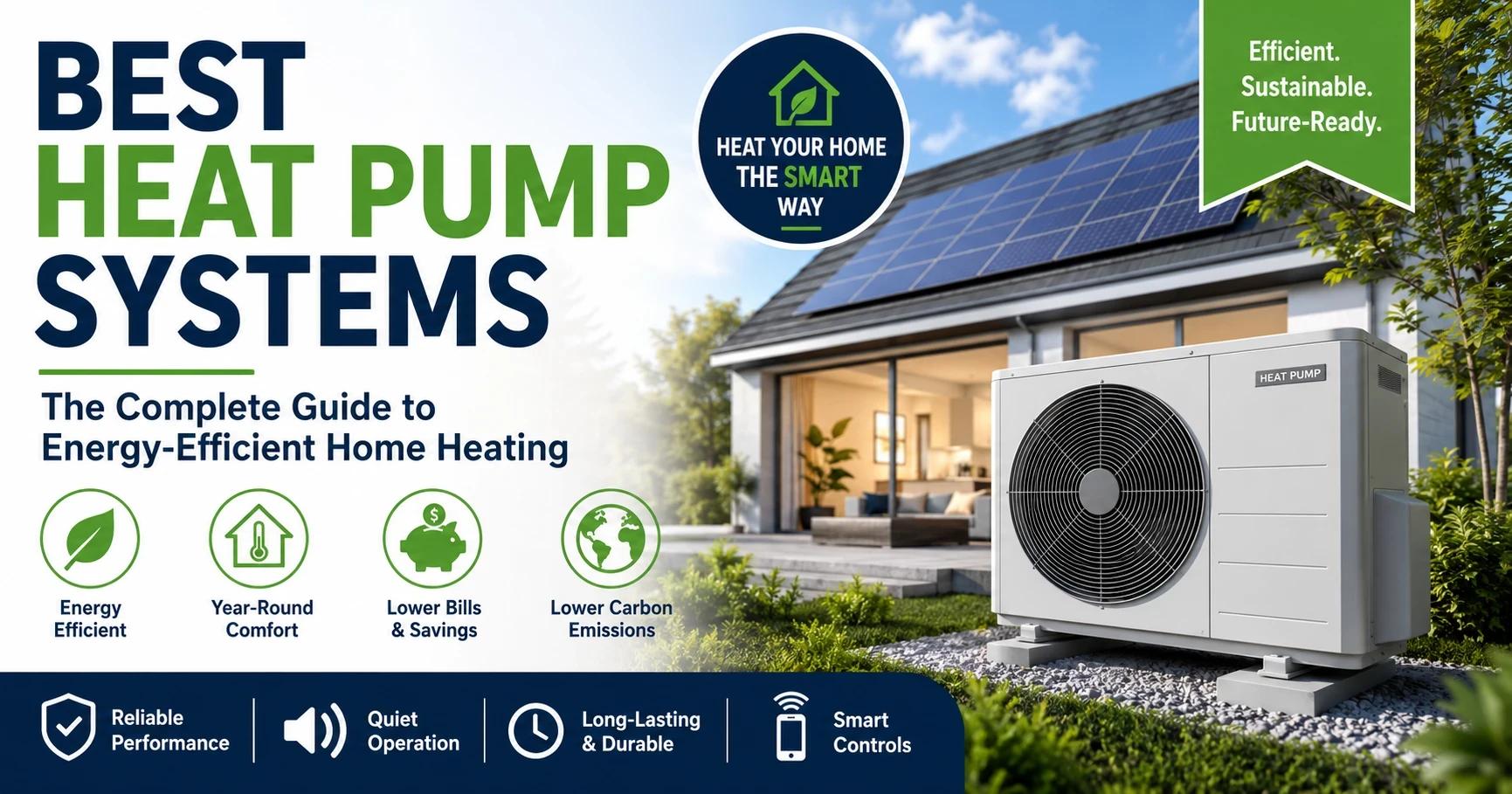
Choosing the best heat pump systems is one of the smartest investments homeowners can make to reduce energy bills, improve home comfort, and lower carbon emissions. Modern heat pump systems provide efficient heating in winter, cooling during summer, and hot water throughout the year while using significantly less electricity than traditional heating systems.
As electricity prices continue to rise, more homeowners are replacing oil, gas, and electric heating with the best heat pump systems available today.
Combined with solar panels and home battery storage, a heat pump can become the heart of a modern renewable energy home.
In this guide, we’ll explain how heat pumps work, compare the different types available, discuss the advantages and disadvantages of each system, and help you choose the best heat pump systems for your property.
What Is a Heat Pump?
A heat pump doesn’t generate heat by burning fuel. Instead, it transfers heat from one location to another using electricity and a refrigeration cycle.
During winter, it extracts heat from the outside air or the ground and transfers it inside your home. During warmer months, many systems reverse the process to provide highly efficient air conditioning.
This ability to both heat and cool a home makes modern heat pump systems one of the most versatile and energy-efficient heating technologies available today.
Why Heat Pumps Are Becoming So Popular
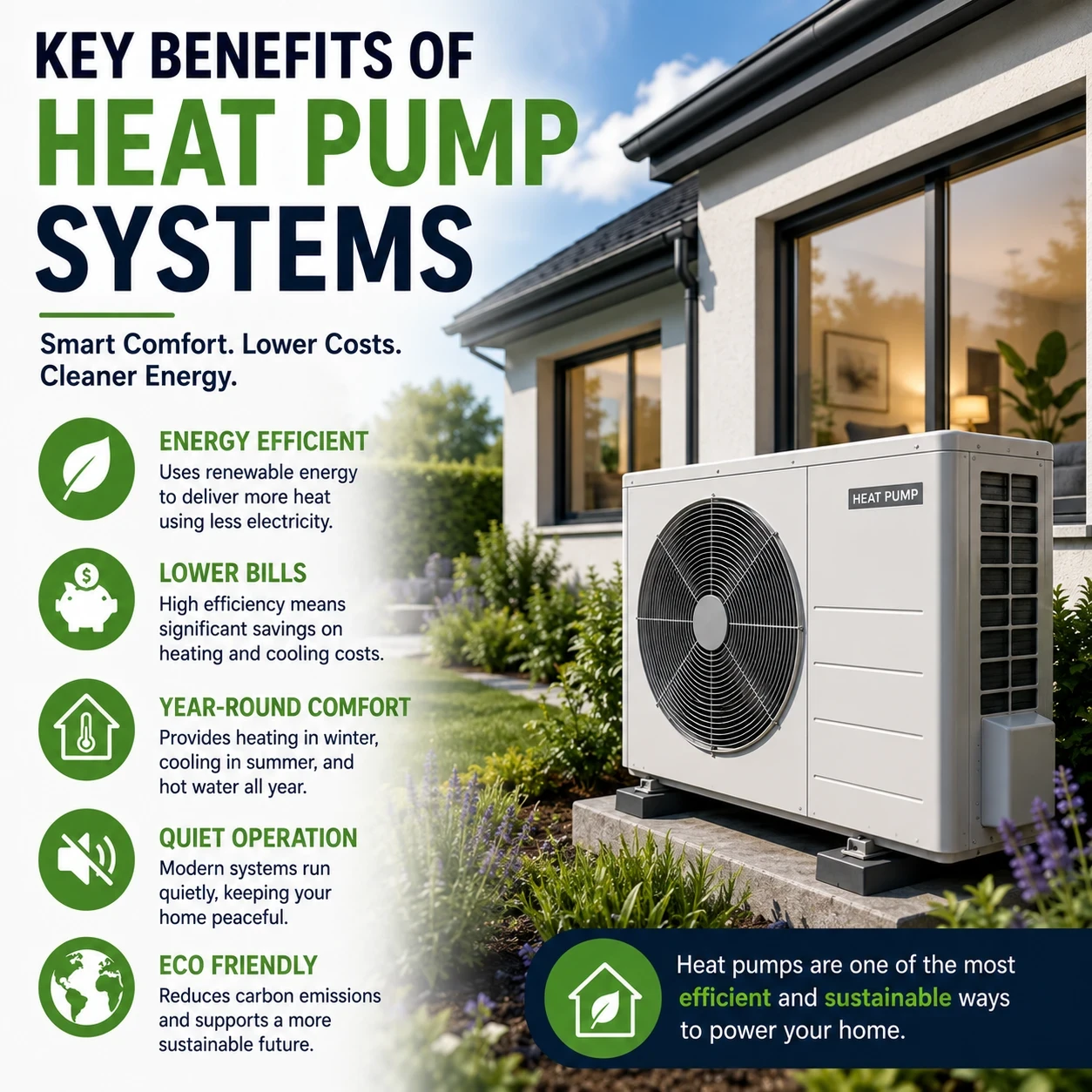
The best heat pump systems have rapidly grown in popularity because they offer homeowners significant long-term benefits:
- Lower energy consumption
- Reduced heating costs
- Lower carbon emissions
- Year-round heating and cooling
- Excellent compatibility with renewable energy
- Long operating life
- Minimal maintenance requirements
Governments worldwide are encouraging homeowners to install heat pumps as part of the transition towards cleaner, more sustainable energy.
Financial incentives and grants are making the best heat pump systems more affordable than ever before.
How Does a Heat Pump Work?
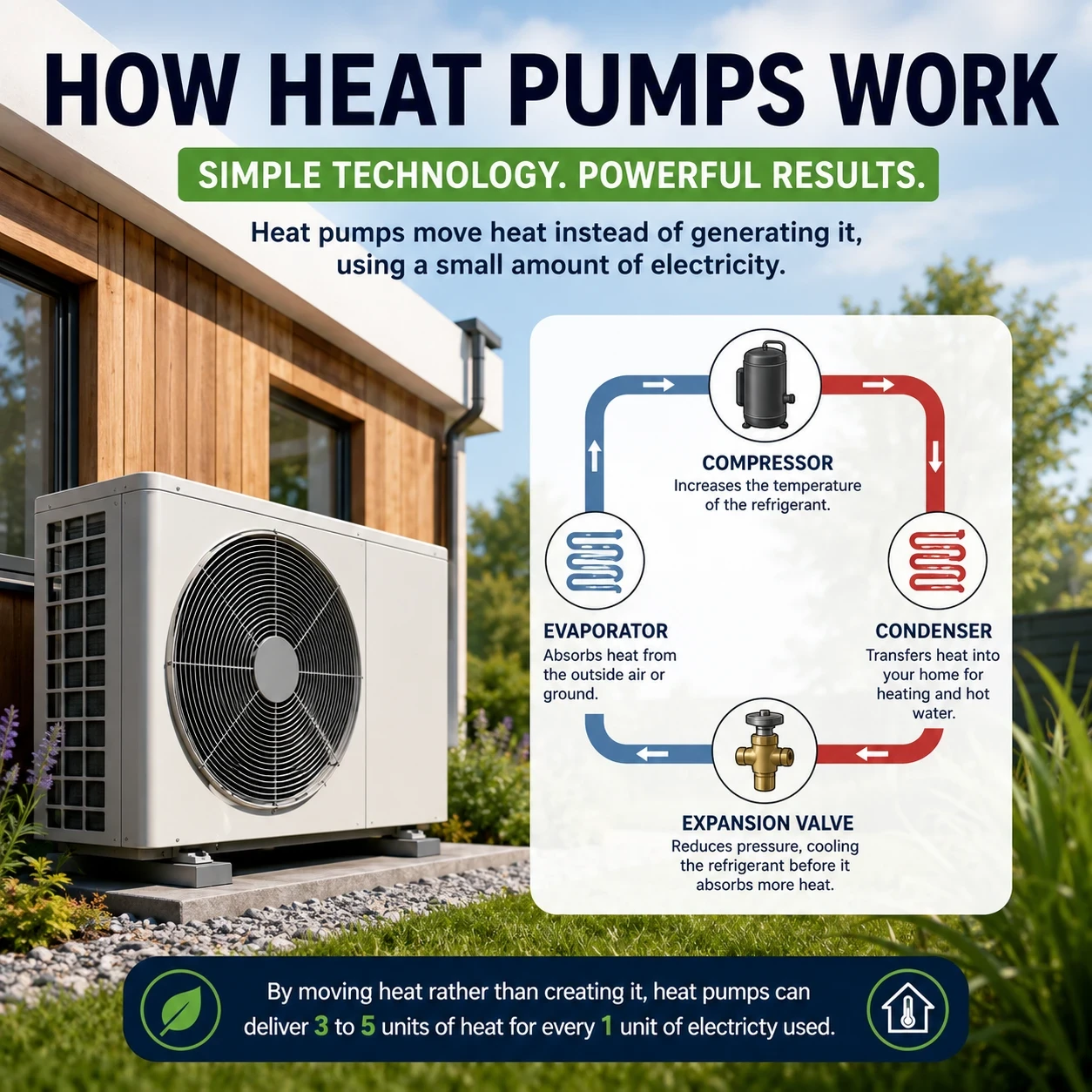
Although the technology sounds complex, the operating principle is surprisingly simple.
A refrigerant circulates through a sealed system, absorbing heat from the outside environment before compressing it to a much higher temperature. That heat is then transferred into your home’s heating system or hot water supply.
Because heat pumps move existing heat rather than creating it by burning fuel, they can typically produce three to five units of heat for every unit of electricity consumed.
This exceptional efficiency is one of the main reasons why the best heat pump systems continue to grow in popularity worldwide.
Main Types of Heat Pump Systems
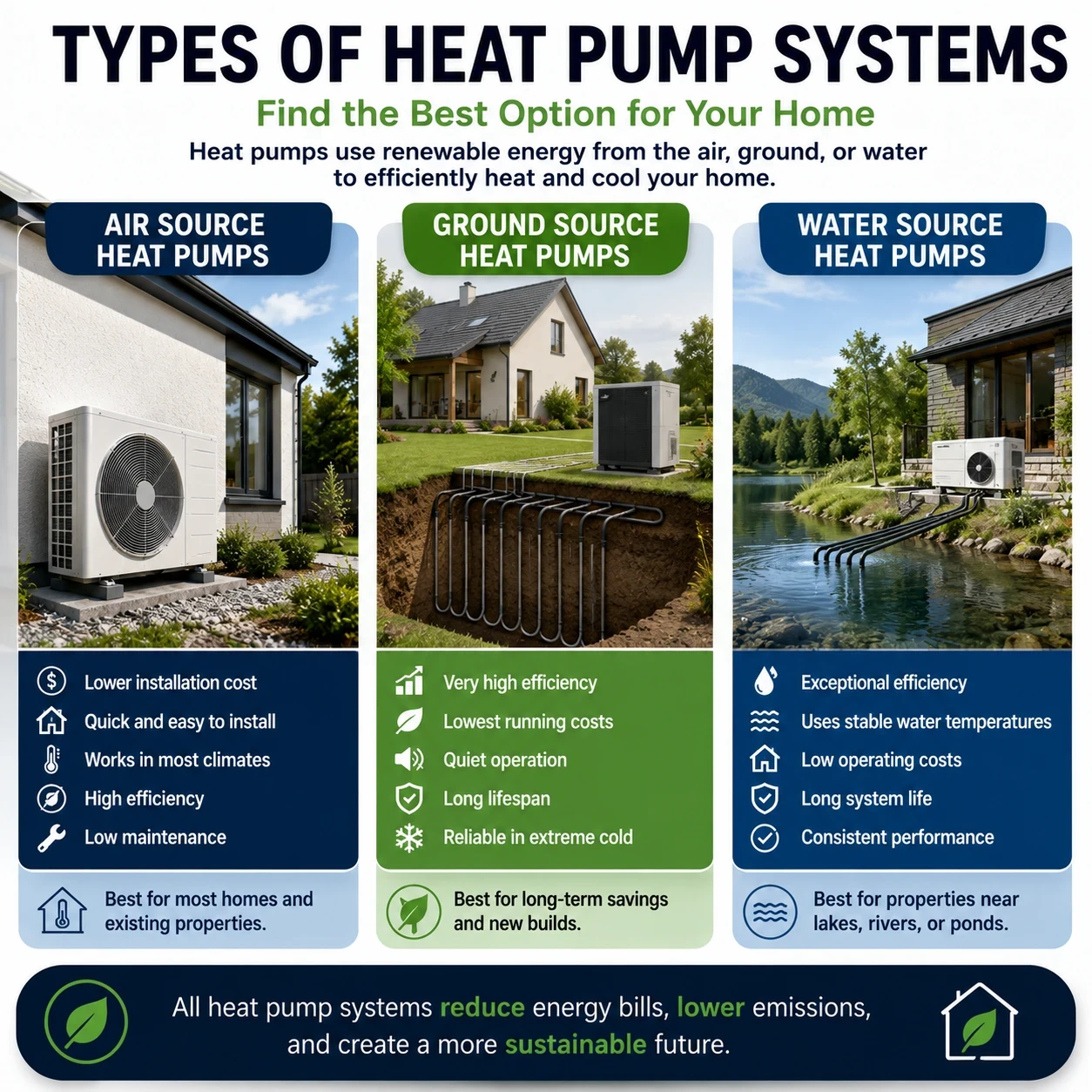
Air Source Heat Pumps
Air source heat pumps are the most popular option for residential homes. They extract heat from the outside air, even when temperatures fall below freezing.
Advantages include:
- Lower installation costs
- Suitable for most homes
- Quick installation
- Excellent efficiency
- Lower maintenance requirements
For many homeowners, air source units represent some of the best heat pump systems thanks to their excellent balance of affordability, efficiency, and ease of installation.
Ground Source Heat Pumps
Ground source heat pumps collect heat from underground using buried pipework. Because ground temperatures remain relatively stable throughout the year, these systems deliver exceptional efficiency in both winter and summer.
Benefits include:
- Very low running costs
- Outstanding long-term efficiency
- Quiet operation
- Long equipment lifespan
- Reliable performance during extremely cold weather
The main disadvantage is the higher installation cost together with the land required for trenches or boreholes. However, for suitable properties they remain among the best heat pump systems available.
Water Source Heat Pumps
Homes located beside lakes, rivers, or suitable water sources may benefit from water source heat pumps. These systems achieve exceptional efficiency but require appropriate site conditions, environmental assessments, and planning approval.
Air Source vs Ground Source Heat Pumps
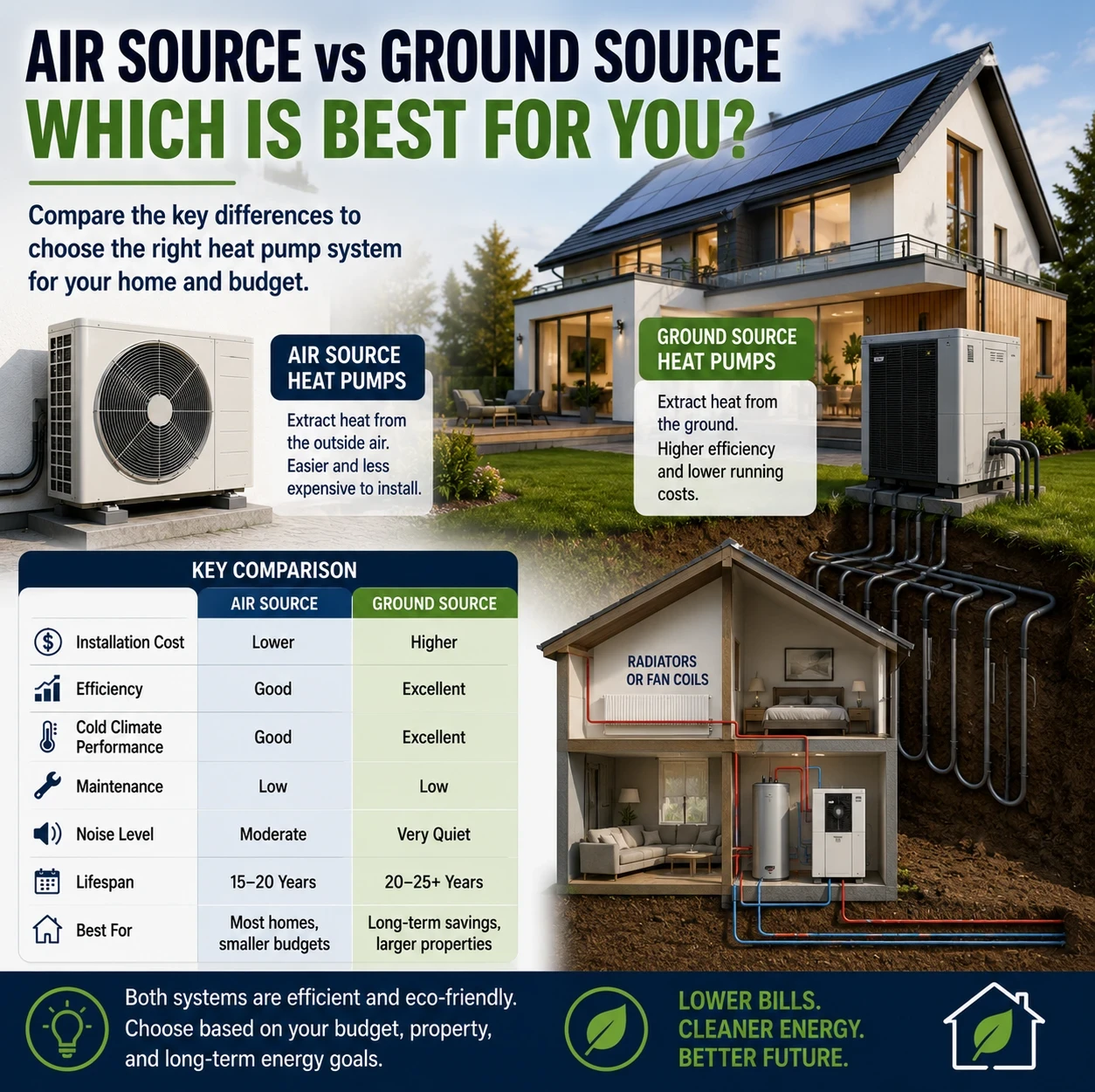
Choosing between air source and ground source systems depends on your budget, available land, and long-term energy goals.
- Air source heat pumps cost less to install and suit most homes.
- Ground source heat pumps have higher installation costs but often deliver greater efficiency over many years.
- Water source heat pumps provide excellent performance where suitable water sources exist.
When comparing the best heat pump systems, consider installation costs, expected energy savings, maintenance requirements, and the suitability of your property rather than focusing solely on the purchase price.
Why Heat Pumps Work So Well With Solar Panels

One of the biggest advantages of the best heat pump systems is their ability to work alongside solar energy.
Solar panels generate electricity during daylight hours, allowing your heat pump to operate using renewable energy instead of purchasing electricity from the grid. This combination significantly reduces household energy bills while lowering carbon emissions.
Together they create one of the most efficient home energy systems available today.
Learn more in our guide to Home Solar Systems.
Adding Home Battery Storage
Adding home battery storage allows excess solar electricity generated during the day to power your heat pump after sunset. This increases self-consumption, reduces reliance on the grid, and helps lower household energy bills throughout the year.
When combined with the best heat pump systems, battery storage creates a highly efficient renewable energy solution capable of providing heating, cooling, and hot water while making the most of every kilowatt-hour your solar panels produce.
Learn more in our guide to Home Battery Storage Systems.
Heat Pumps and Thermal Energy Storage
Heat pumps become even more efficient when paired with thermal energy storage systems. Instead of using heat immediately, surplus energy can be stored for later use, reducing peak electricity demand while improving overall heating efficiency.
Thermal energy storage helps heat pumps operate during off-peak electricity periods, allowing stored heat to be used when energy prices are higher. This improves comfort while reducing running costs.
Read our complete guide to Thermal Energy Storage Systems.
Choosing the Best Heat Pump System for Your Home
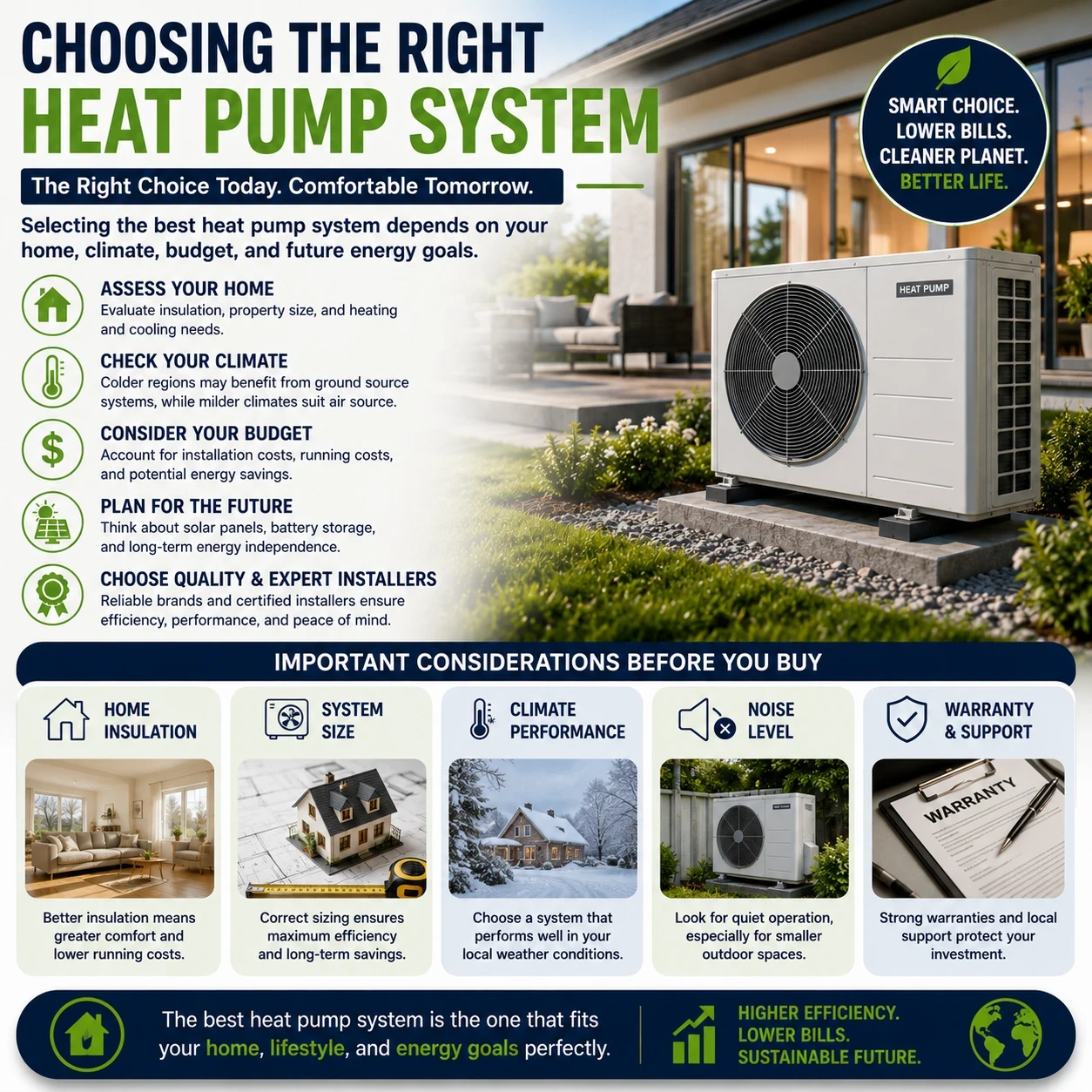
Choosing the best heat pump systems depends on several important factors, including your property’s size, insulation levels, local climate, existing heating system, and household energy usage.
A professional heat loss calculation helps determine the correct system size. Oversized and undersized units can both reduce efficiency, increase running costs, and shorten equipment life.
Many homeowners also choose to improve loft insulation, wall insulation, and window performance before installing a new heat pump to maximise energy savings.
▶ Watch the Video Guide
How to Choose the Best Heat Pump System for Your Home
Heat Pump Installation Considerations
Professional installation is essential for achieving the highest levels of efficiency. Outdoor units require unrestricted airflow, while indoor components should be positioned for easy servicing and minimal heat loss.
Air source heat pumps can often be installed within a few days. Ground source heat pumps require excavation or boreholes but may provide even greater long-term efficiency.
Choosing an experienced installer ensures your system is correctly designed, commissioned, and optimised for your home.
Running Costs and Energy Savings
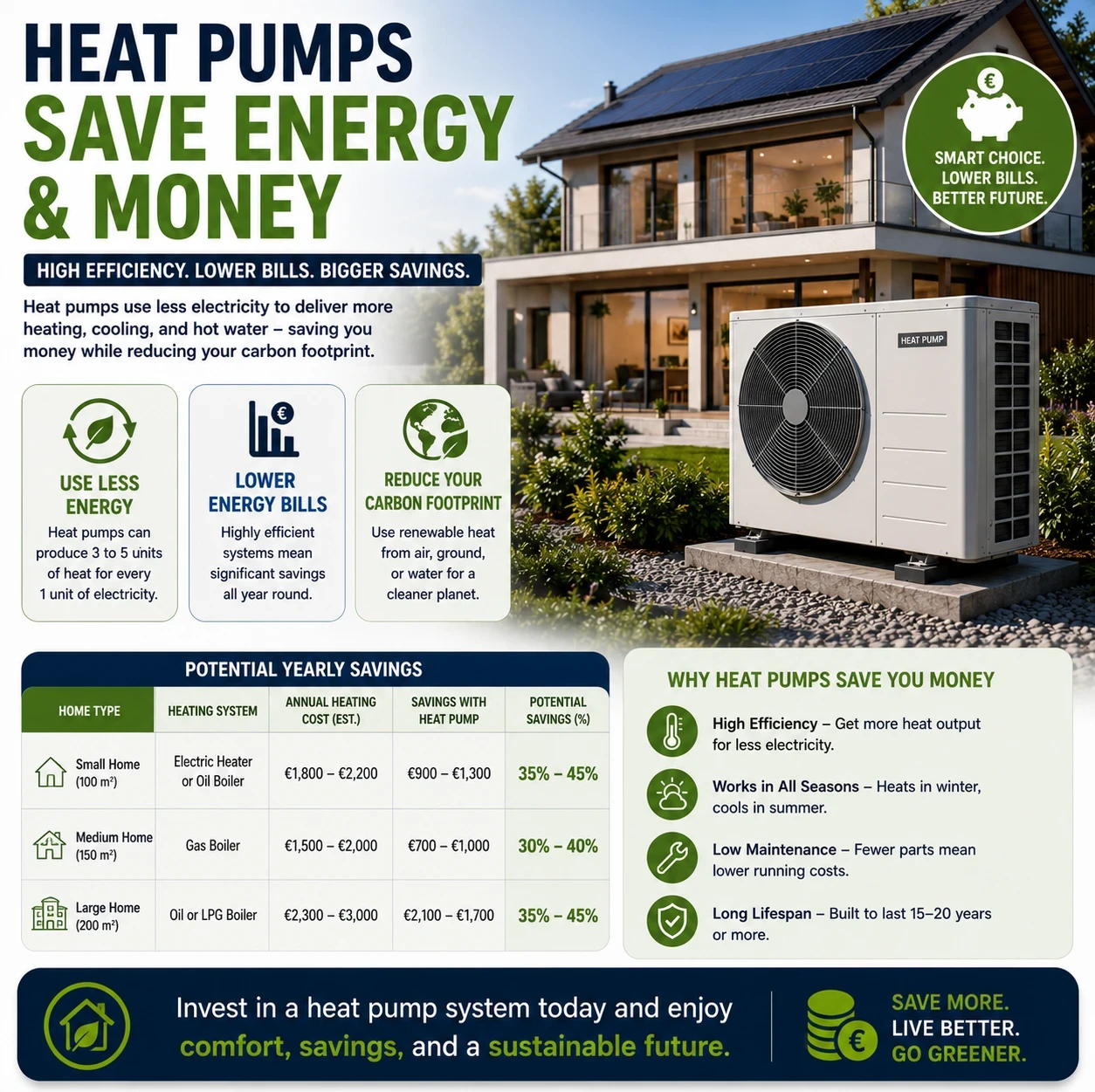
One of the biggest advantages of the best heat pump systems is their low running cost. Because they transfer heat instead of generating it through combustion, they typically use far less electricity than conventional electric heating systems.
When combined with solar panels and battery storage, many households can significantly reduce annual heating costs while lowering their environmental impact.
The exact savings depend on your local electricity prices, insulation levels, climate, and the efficiency of the installed system.
Maintaining Your Heat Pump
Heat pumps require relatively little maintenance, but regular servicing helps maintain peak performance and extends equipment life.
- Keep outdoor units free from leaves and debris.
- Clean or replace filters where required.
- Ensure good airflow around the outdoor unit.
- Arrange professional servicing as recommended by the manufacturer.
- Monitor system performance throughout the year.
Routine maintenance helps the best heat pump systems continue operating efficiently for many years.
Government Grants and Incentives
Many countries now provide grants, tax incentives, or financial assistance to encourage homeowners to install renewable heating technologies.
These schemes can substantially reduce the upfront cost of purchasing one of the best heat pump systems. Check the latest programmes available in your country before making a purchasing decision.
Common Mistakes When Buying a Heat Pump
- Choosing the wrong system size.
- Selecting the cheapest installer instead of the most experienced.
- Ignoring insulation improvements.
- Failing to compare long-term running costs.
- Not planning for future solar panel or battery storage installation.
A properly designed renewable energy system will usually deliver greater long-term savings than simply replacing an existing boiler without improving the rest of the home’s energy efficiency.
The Future of Heat Pump Technology
The best heat pump systems continue to improve every year. Manufacturers are introducing quieter compressors, environmentally friendly refrigerants, advanced inverter technology, artificial intelligence, and smarter energy management systems.
Future heat pumps will integrate even more closely with solar panels, battery storage, smart home controls, and dynamic electricity tariffs, helping homeowners reduce costs while improving comfort.

Frequently Asked Questions
Are heat pumps suitable for older homes?
Yes. Many older homes can successfully install heat pumps, particularly after improving insulation and reducing heat loss.
Do heat pumps work during freezing weather?
Yes. Modern air source heat pumps continue operating efficiently in sub-zero temperatures, while ground source systems maintain even more consistent performance.
How long do heat pumps last?
Most quality systems have an expected lifespan of 15 to 25 years when professionally installed and properly maintained.
Can heat pumps replace oil or gas boilers?
In many homes they can. The best solution depends on insulation, heating demand, radiator sizing, and the overall design of the heating system.
Conclusion
The best heat pump systems offer one of the most efficient, environmentally friendly, and cost-effective ways to heat and cool a modern home. Whether you choose an air source, ground source, or water source system, investing in the right solution can reduce energy bills, lower carbon emissions, and improve year-round comfort.
Combined with solar panels, home battery storage, and smart energy management, today’s heat pump systems form the foundation of an energy-efficient home prepared for the future.
Further Reading
🎥 Heat Pump & Thermal Energy Video Guides
For more information about heat pump technology and energy efficiency, visit the International Energy Agency (IEA).