Home Solar Systems
Home solar systems are becoming one of the smartest investments homeowners can make.
Rising electricity prices, improved solar technology, and greater awareness of renewable energy have encouraged thousands of families to generate their own electricity while reducing monthly energy bills.
Whether you are planning your first solar installation or simply researching your options, understanding how home solar systems work will help you make a confident decision.
Modern systems are more efficient than ever before. They can power everything from lighting and kitchen appliances to electric vehicle chargers and home battery storage systems.
Many homeowners also appreciate the environmental benefits of producing clean electricity while reducing reliance on the national grid.
If you are exploring renewable energy solutions, visit our Home Energy Systems homepage for more practical guides, comparisons, and expert advice.
What Are Home Solar Systems?
Home solar systems are designed to capture sunlight and convert it into usable electricity for your property. The heart of every system is the photovoltaic (PV) solar panel, which generates direct current (DC) electricity when exposed to sunlight.
An inverter converts this electricity into alternating current (AC), allowing it to power everyday household appliances.
Depending on the system you choose, excess electricity can either be exported to the grid or stored in a home battery for later use.
A typical residential solar system includes:
- Solar panels
- Solar inverter
- Roof mounting system
- Electrical safety equipment
- Monitoring software
- Optional battery storage
How Do Home Solar Systems Work?
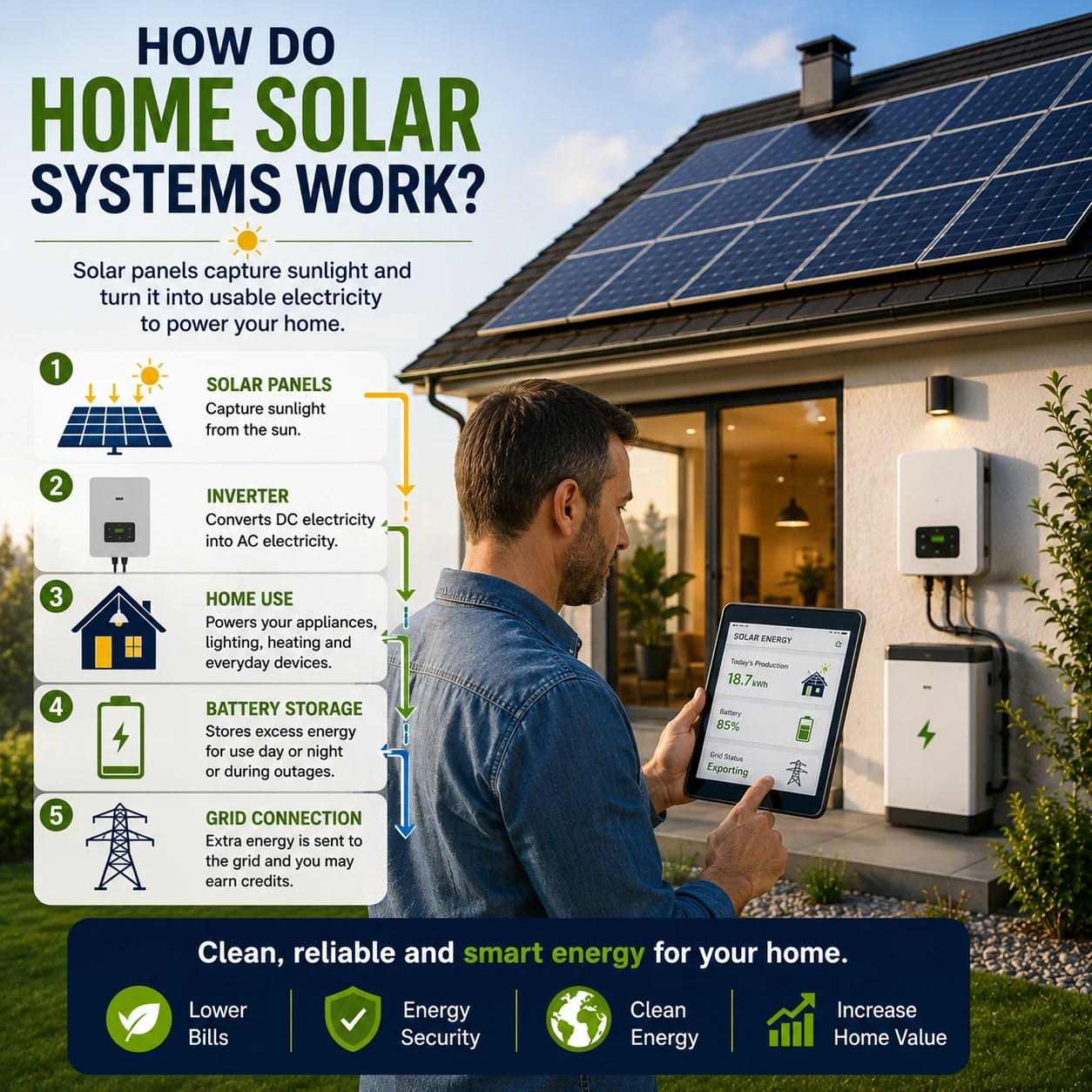
The process is surprisingly straightforward.
Sunlight reaches the solar panels, creating electricity inside photovoltaic cells. The inverter converts that electricity into household power.
Your home immediately uses the energy being generated, reducing the amount of electricity purchased from your supplier.
When production exceeds demand, surplus electricity may be stored in a battery or exported back to the electricity grid, depending on your installation and local regulations.
This allows homeowners to make better use of renewable energy throughout the day and, with battery storage, during the evening as well.
Why More Homeowners Are Choosing Home Solar Systems
Several factors continue to drive demand for home solar systems across many countries.
- Lower electricity bills
- Greater energy independence
- Reduced carbon emissions
- Protection against rising energy prices
- Potential increase in property value
- Reliable long-term performance
- Low maintenance requirements
Modern solar panels are built to last for decades, making them a long-term investment rather than a short-term expense.
Can Home Solar Systems Power an Entire House?
Yes, many home solar systems are capable of supplying most or all of a household’s electricity needs. The exact amount depends on several factors, including:
- Your daily electricity consumption
- The number of solar panels installed
- Roof orientation and available space
- Local climate and sunshine hours
- Whether battery storage is included
Homes with larger systems and battery storage often achieve a high level of energy independence throughout the year.
Different Types of Home Solar Systems
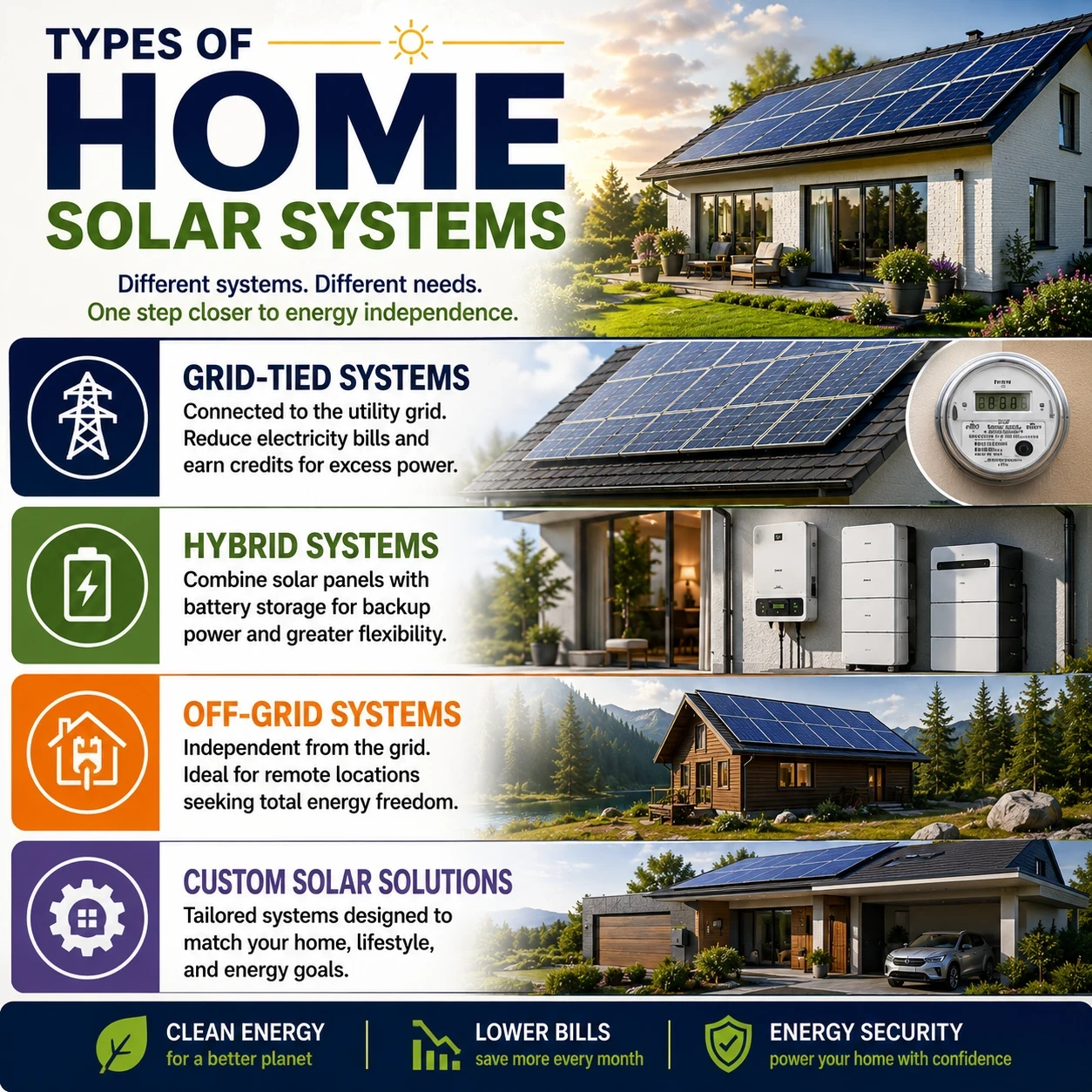
Grid-Tied Solar Systems
These are the most common installations. They remain connected to the electricity network, allowing homeowners to draw electricity when solar production is low while exporting excess electricity during sunny periods.
Hybrid Home Solar Systems
Hybrid systems combine solar panels with battery storage. This allows excess electricity generated during the day to be stored and used after sunset, reducing dependence on the electricity grid.
Off-Grid Solar Systems
Off-grid home solar systems operate independently without a grid connection. These systems require larger battery banks and are popular in remote areas where grid electricity is unavailable or unreliable.
What Size Home Solar System Do You Need?
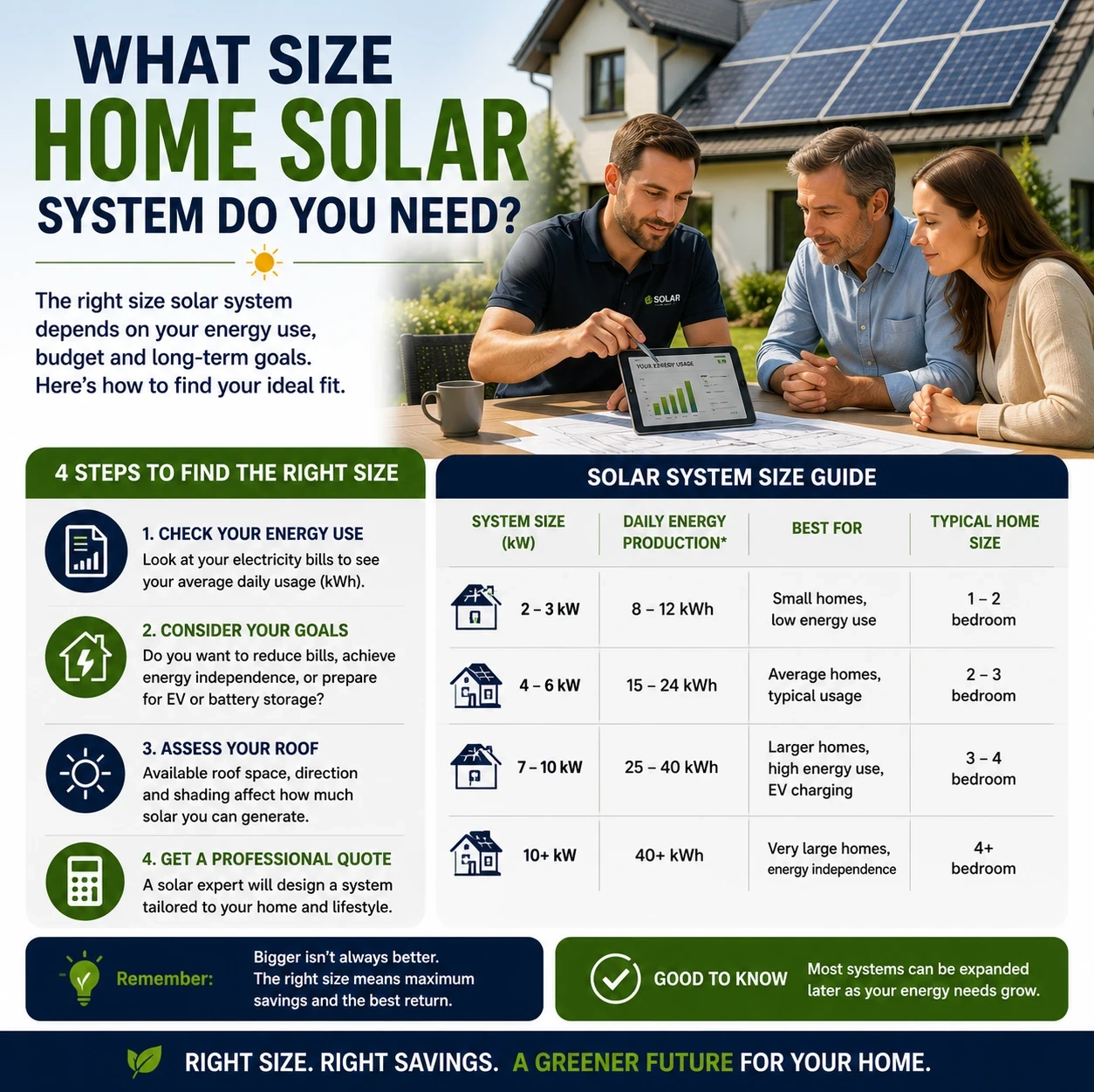
Choosing the correct size is one of the most important decisions when installing home solar systems. A system that is too small may not generate enough electricity to meet your household needs, while an oversized system could cost more than necessary.
Your ideal system size depends on:
- Your annual electricity usage
- The number of people living in your home
- Whether you work from home
- If you own or plan to buy an electric vehicle
- Whether you intend to install a home battery
- Your available roof space
- Your local climate and average sunshine hours
Reviewing previous electricity bills is often the best starting point when estimating the right system size.
Key Components of Home Solar Systems
Solar Panels
Solar panels capture sunlight and convert it into electricity. Modern monocrystalline panels are popular because they offer high efficiency, attractive appearance, and excellent long-term performance.
Solar Inverter
The inverter converts the direct current (DC) electricity generated by the panels into alternating current (AC) used throughout your home. It also monitors system performance and safety.
Home Battery Storage
Adding battery storage allows your home solar system to store unused electricity generated during the day. Instead of exporting all excess power, you can use stored energy during the evening, overnight, or during power outages if your system supports backup operation.
Monitoring System
Most modern home solar systems include mobile apps that let you monitor electricity production, household consumption, battery levels, and overall system performance in real time.
Benefits of Installing Home Solar Systems
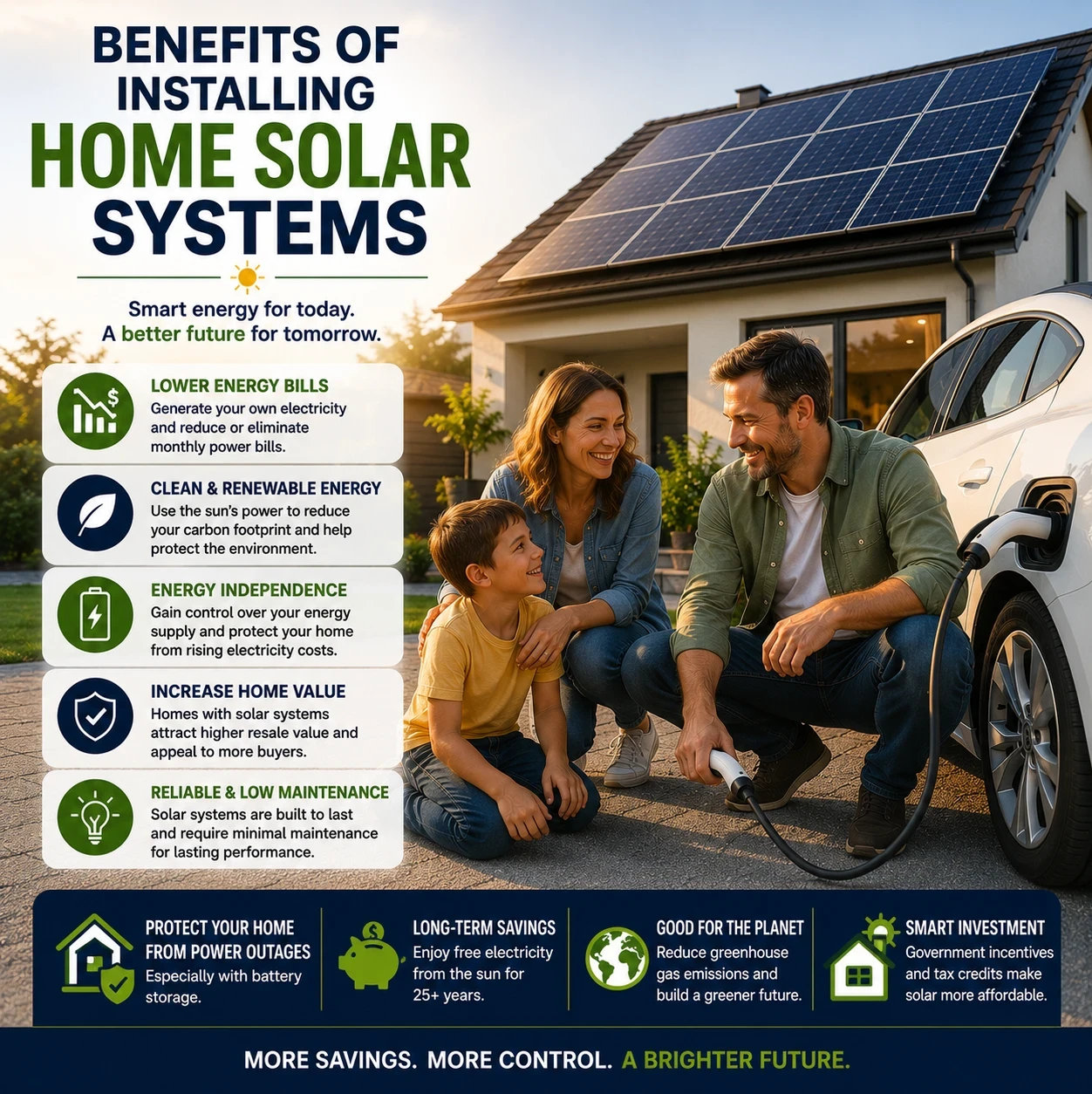
Homeowners choose solar power for many reasons beyond reducing electricity bills.
- Lower monthly energy costs
- Cleaner renewable electricity
- Reduced dependence on utility companies
- Potential protection against future energy price increases
- Quiet operation
- Minimal maintenance
- Long equipment lifespan
- Possible increase in property value
Many systems continue producing electricity efficiently for 25 years or longer with only routine maintenance.
Should You Add Battery Storage?
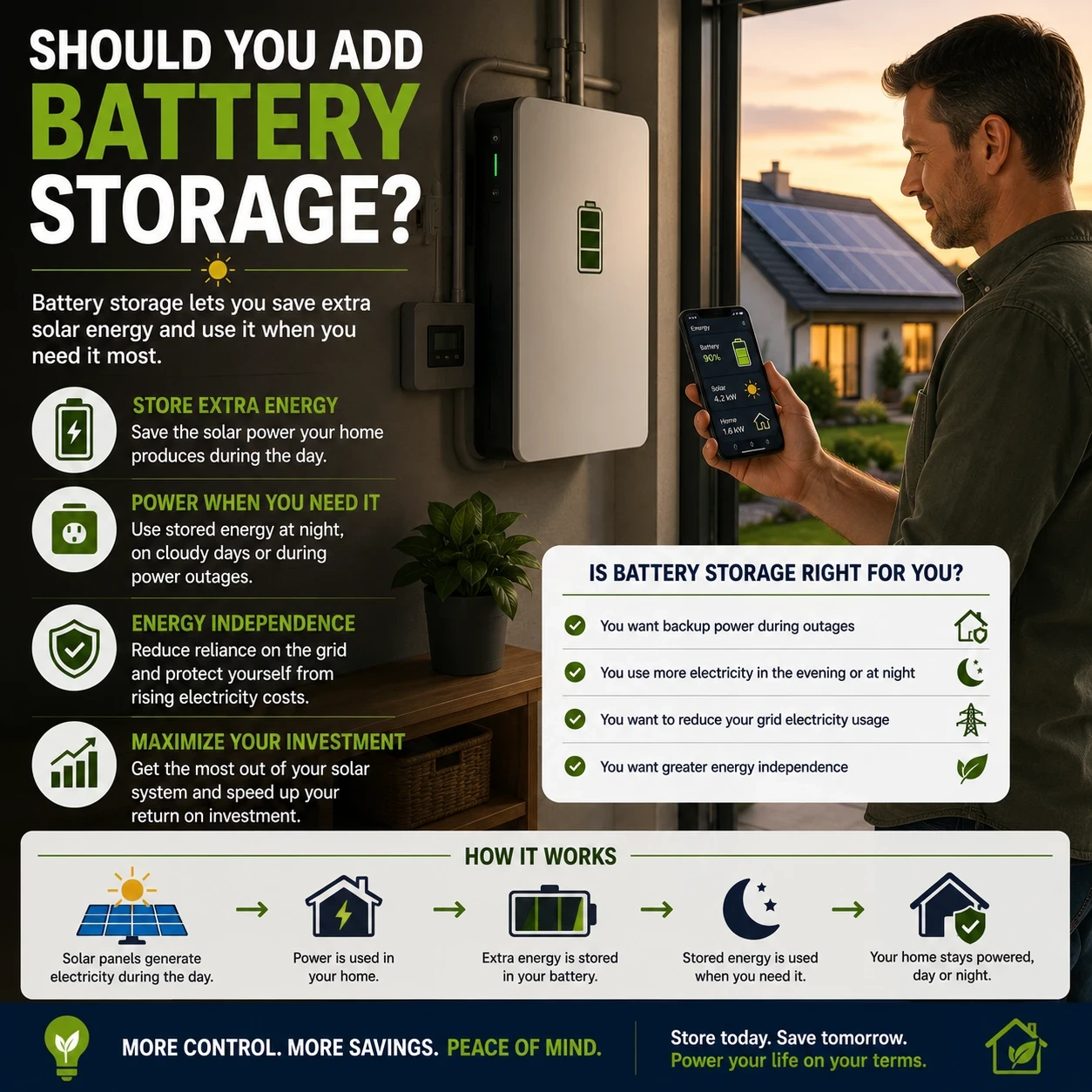
Battery storage has become increasingly popular because it allows homeowners to use more of the electricity they generate.
Without a battery, surplus daytime electricity is generally exported to the grid. With battery storage, that electricity can be saved for later, helping reduce electricity purchases during the evening when household demand is often highest.
Battery systems are particularly useful for families that use significant electricity after sunset or want additional backup power during outages.
How Much Do Home Solar Systems Cost?
The total cost depends on several factors, including:
- System size
- Panel efficiency
- Roof complexity
- Battery storage
- Installation costs
- Electrical upgrades if required
Although installation requires an upfront investment, many homeowners recover a significant portion of the cost over time through lower electricity bills and improved energy efficiency.
Choosing the Best Home Solar System
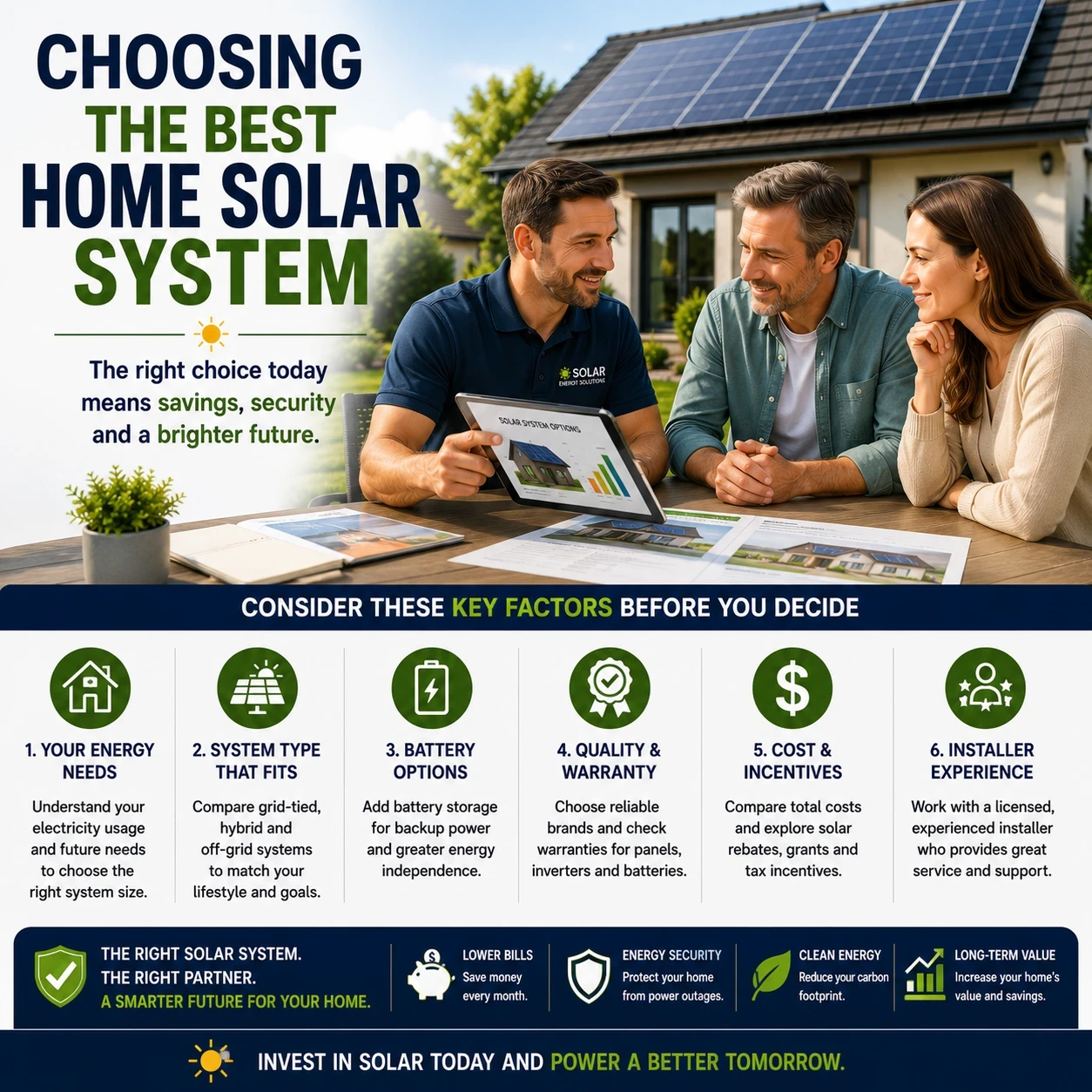
Not every home requires the same solution. Before making a decision, compare several quotations and consider more than just the purchase price.
Look for:
- High-quality solar panels
- Reliable inverter technology
- Strong product warranties
- Professional installation
- Battery compatibility
- Performance monitoring features
- Future system expansion options
Taking time to compare products and installers can help ensure your investment delivers reliable performance for many years.
Maintaining Home Solar Systems
One of the biggest advantages of home solar systems is that they require very little maintenance. Since solar panels have no moving parts, there is less wear and tear compared to many other household systems.
To keep your system performing at its best:
- Inspect panels occasionally for dirt, leaves, or debris.
- Trim nearby trees that may create shade.
- Monitor system performance using the manufacturer’s app.
- Arrange a professional inspection if you notice a significant drop in electricity production.
- Keep batteries and electrical equipment serviced according to the manufacturer’s recommendations.
Regular maintenance helps ensure your home solar system continues producing clean electricity efficiently for many years.
Common Mistakes to Avoid
Although home solar systems are an excellent investment, avoiding a few common mistakes can improve both performance and long-term value.
- Choosing the cheapest system instead of the best value.
- Ignoring roof orientation and potential shading.
- Installing a system that is too small for future electricity needs.
- Not considering battery storage if you use most electricity during the evening.
- Failing to compare warranties and installer experience.
Taking time to plan your installation carefully can maximise your return on investment and improve energy independence.
Frequently Asked Questions
Are home solar systems worth the investment?
For many homeowners, yes. Lower electricity bills, improved energy independence, and long equipment life make solar an attractive long-term investment.
Do home solar systems work on cloudy days?
Yes. Solar panels still generate electricity in cloudy conditions, although output is lower than during bright sunshine.
How long do solar panels last?
Most quality solar panels are designed to last 25 years or more, with many continuing to perform well beyond that period.
Can I add a battery later?
In many cases, yes. Many modern home solar systems can be upgraded with compatible battery storage at a later date.
Will a home solar system power my electric vehicle?
Yes. Many homeowners use electricity generated by their solar panels to charge electric vehicles, reducing fuel costs and making better use of renewable energy.
Conclusion
Home solar systems offer homeowners an effective way to reduce electricity costs, improve energy independence, and lower their environmental impact. Advances in solar panel efficiency, battery storage, and smart energy management have made these systems more practical and reliable than ever before.
Whether you are planning a small grid-connected installation or a larger system with battery storage and electric vehicle charging, investing in the right equipment today can provide benefits for decades to come.
To learn more about renewable energy technologies, battery storage, electric vehicle charging, and practical buying guides, visit our Home Energy Systems homepage, where you’ll find expert advice to help you choose the best energy solutions for your home.
Reference