Solar Energy Solutions: Choosing the Right Solution for Your Home
Solar energy solutions are no longer limited to simply putting solar panels on a roof. Homeowners can now combine solar generation with battery storage, electric vehicle charging, backup power, hot-water systems and smart energy management.
The important question is not simply whether solar works. It is which solar solution best matches what you want to achieve.
A household trying to reduce daytime electricity costs may need a very different system from a homeowner who wants power during outages. An EV owner has different requirements again, while apartments, remote properties and homes with limited roof space require their own approaches.
This guide looks at the main residential solar energy solutions available and helps you decide which direction deserves further investigation.
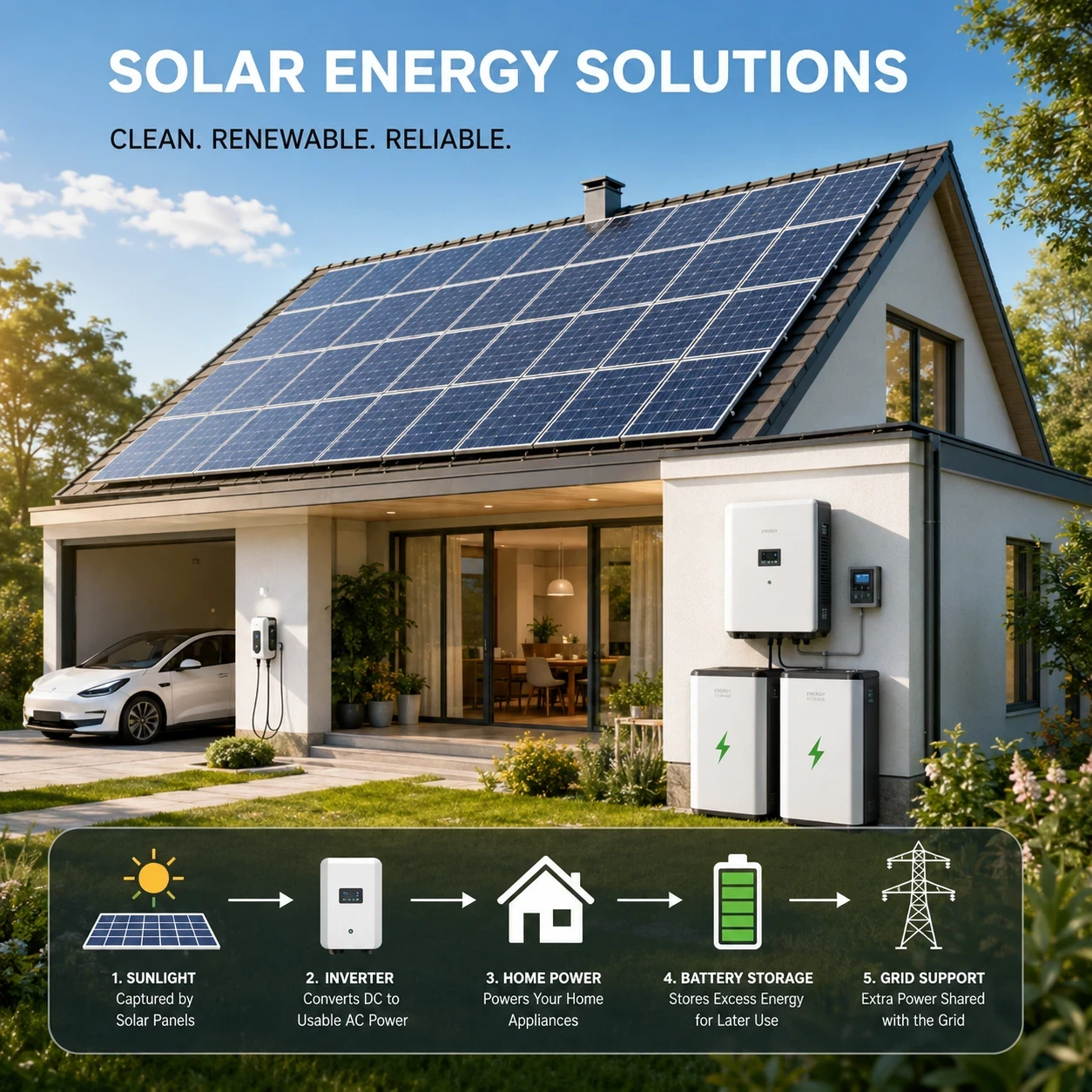
What Are Solar Energy Solutions?
Solar energy solutions are different ways of using energy from the sun to solve household energy requirements.
For some homes, the solution may be a straightforward grid-connected photovoltaic system. For others, the better approach could include battery storage, backup capability, solar-assisted EV charging or a system designed for an off-grid property.
Solar can also be used to produce heat rather than electricity, including through solar thermal systems for domestic hot water.
Rather than treating every property the same, it is better to begin with the problem you are trying to solve and then choose the technology that addresses it.
Which Solar Energy Solution Do You Need?
I Want to Reduce Electricity Bills
A grid-connected rooftop solar PV system can reduce the amount of electricity purchased from the grid by supplying household loads while the panels are generating.
I Use Most Electricity at Night
Solar panels combined with battery storage can move some surplus daytime generation into the evening, increasing solar self-consumption.
I Want Backup During Power Cuts
A solar-plus-battery system with compatible backup equipment can supply selected circuits or, in some installations, a larger proportion of the home during an outage.
I Own an Electric Vehicle
Solar PV combined with a suitable home EV charger can allow more vehicle charging to take place using electricity generated at home.
I Live in an Apartment
Where regulations and building conditions permit, balcony solar or shared-building solar may provide alternatives to a conventional rooftop installation.
I Have No Reliable Grid Connection
An off-grid system can combine solar generation, substantial battery storage and, where necessary, another backup energy source.
I Want Solar Hot Water
Solar thermal technology captures solar energy as heat rather than converting it into electricity and can contribute to domestic hot-water requirements.
I Want Better Control of My Energy
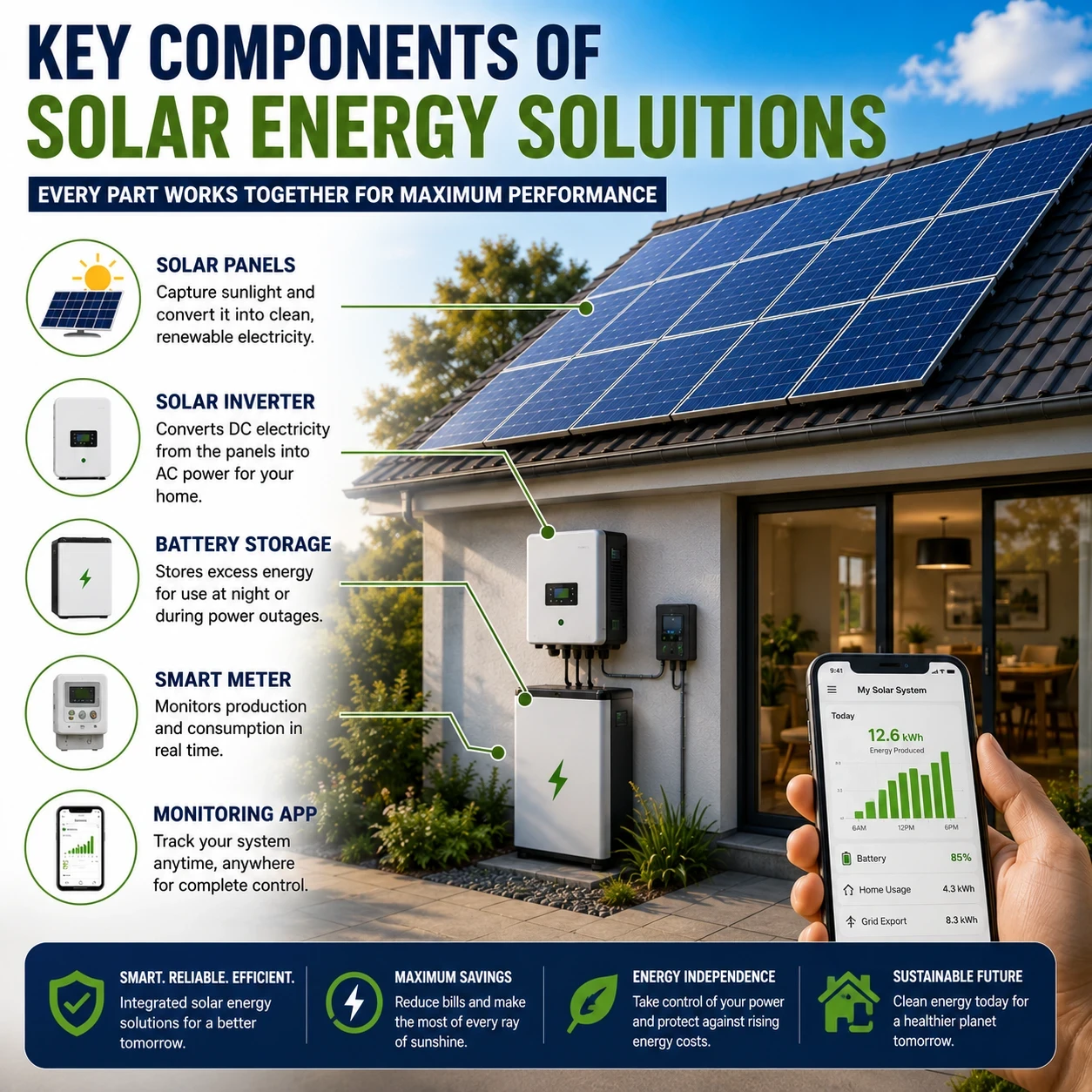
Smart monitoring and energy-management systems can coordinate solar generation, batteries, EV charging and household electricity consumption.
Solution 1: Rooftop Solar PV for Lower Electricity Bills
For many homeowners, the starting point is a grid-connected solar photovoltaic system.
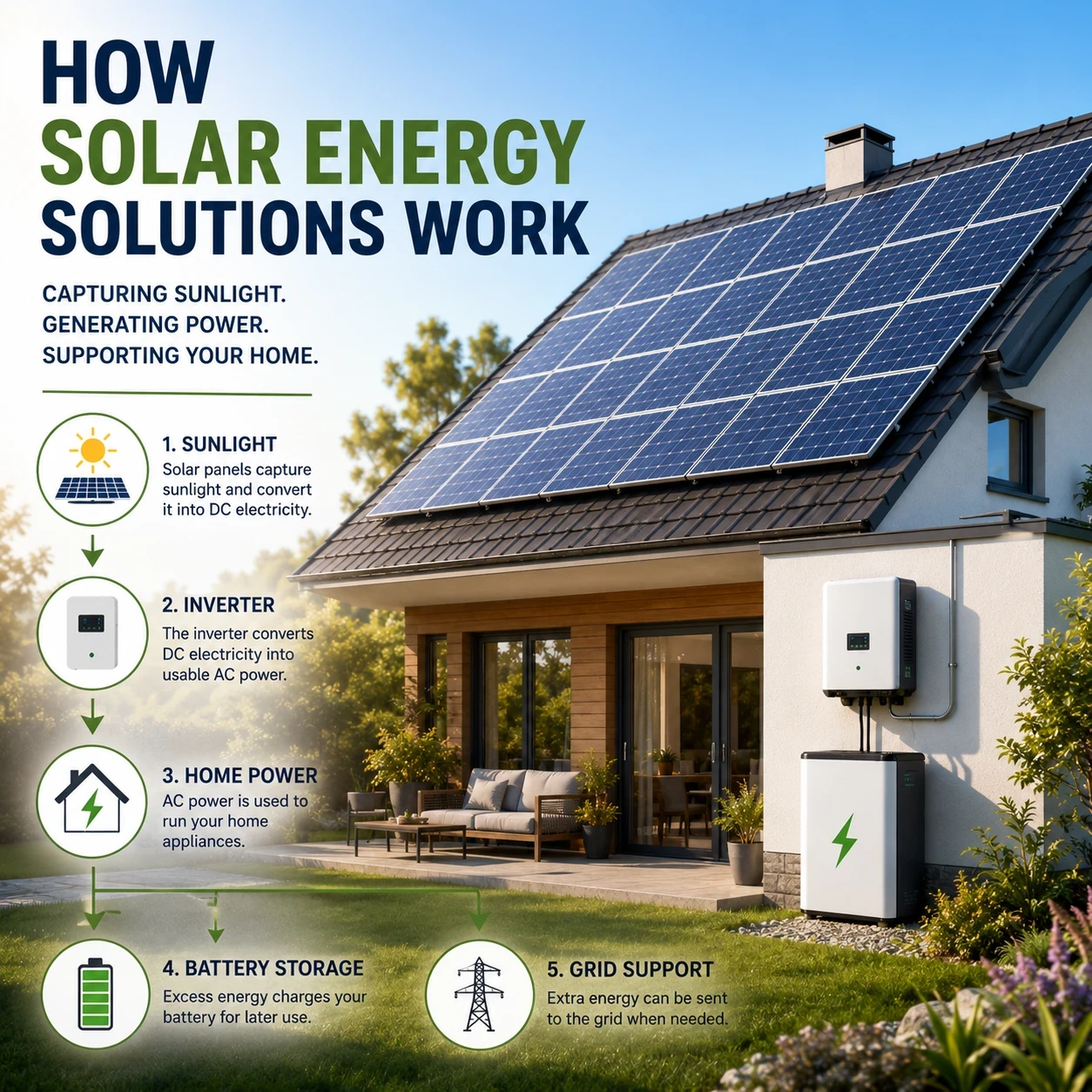
Solar panels generate electricity during daylight hours. When household appliances use that electricity directly, the home purchases less electricity from the grid.
The financial benefit depends on system cost, local solar conditions, electricity prices, export arrangements and how much solar electricity the household consumes itself.
Homes with significant daytime electricity use can often make particularly effective use of rooftop solar because more generation is consumed as it is produced.
For a deeper look at panel technology, efficiency and selection, see our Solar Panels guide .
Solution 2: Solar Plus Battery Storage
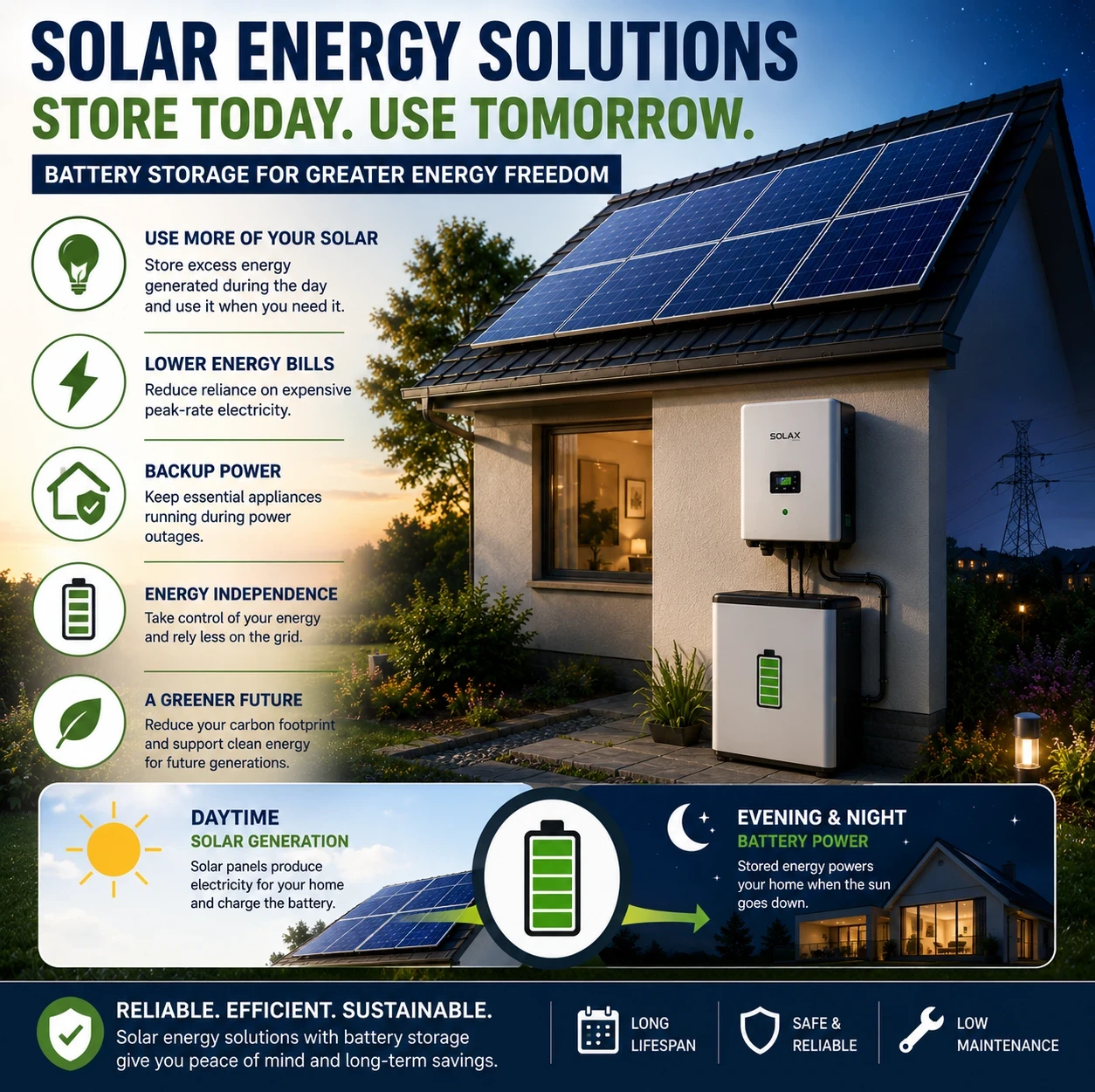
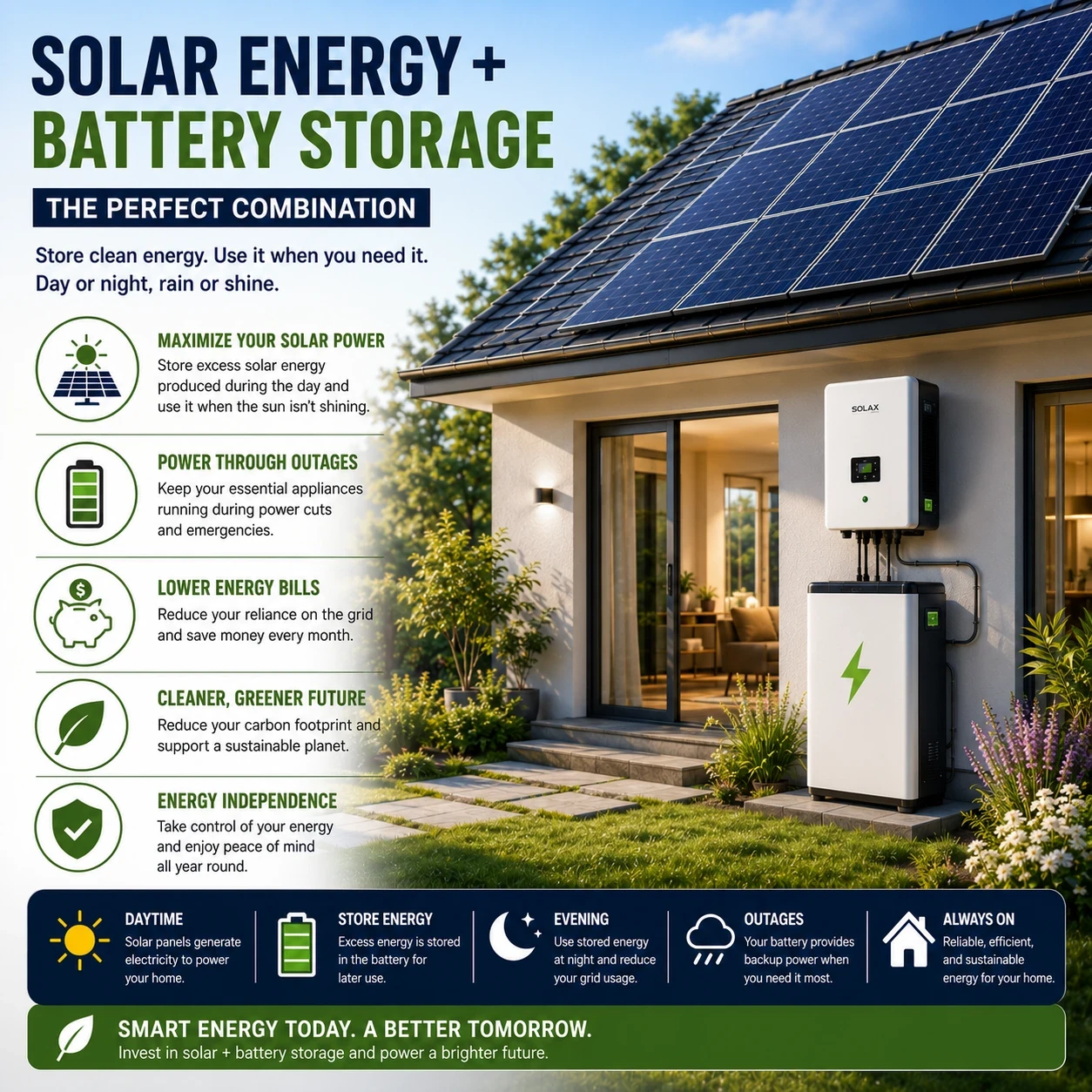
A battery addresses one of the basic limitations of solar PV: generation and household demand do not always occur at the same time.
A home may generate surplus electricity around the middle of the day but consume considerably more electricity during the evening.
Battery storage can capture some of that surplus and make it available later.
This can help homeowners:
- Increase solar self-consumption.
- Reduce evening grid electricity purchases.
- Manage time-of-use electricity tariffs where available.
- Store energy for later household use.
- Provide backup power when the system is specifically designed for it.
Battery economics vary considerably. The value of storage depends on battery cost, usable capacity, electricity tariffs, export payments and the household’s consumption pattern.
Our Home Battery Storage Systems: Complete 2026 Guide covers this subject in detail.
Solution 3: Solar and Battery Backup for Power Outages
Solar panels alone should not be assumed to keep a home powered during a grid outage.
Standard grid-connected systems are normally designed to stop supplying the grid when an outage occurs. This protects utility workers and electrical equipment.
For outage protection, the installation requires equipment specifically designed for backup operation. Depending on the system, this may supply essential circuits such as lighting, refrigeration, communications and selected sockets, or potentially a larger portion of the property.
Battery capacity, inverter output and the electrical loads being powered determine how long backup energy lasts.
Solution 4: Solar Energy for Electric Vehicle Charging
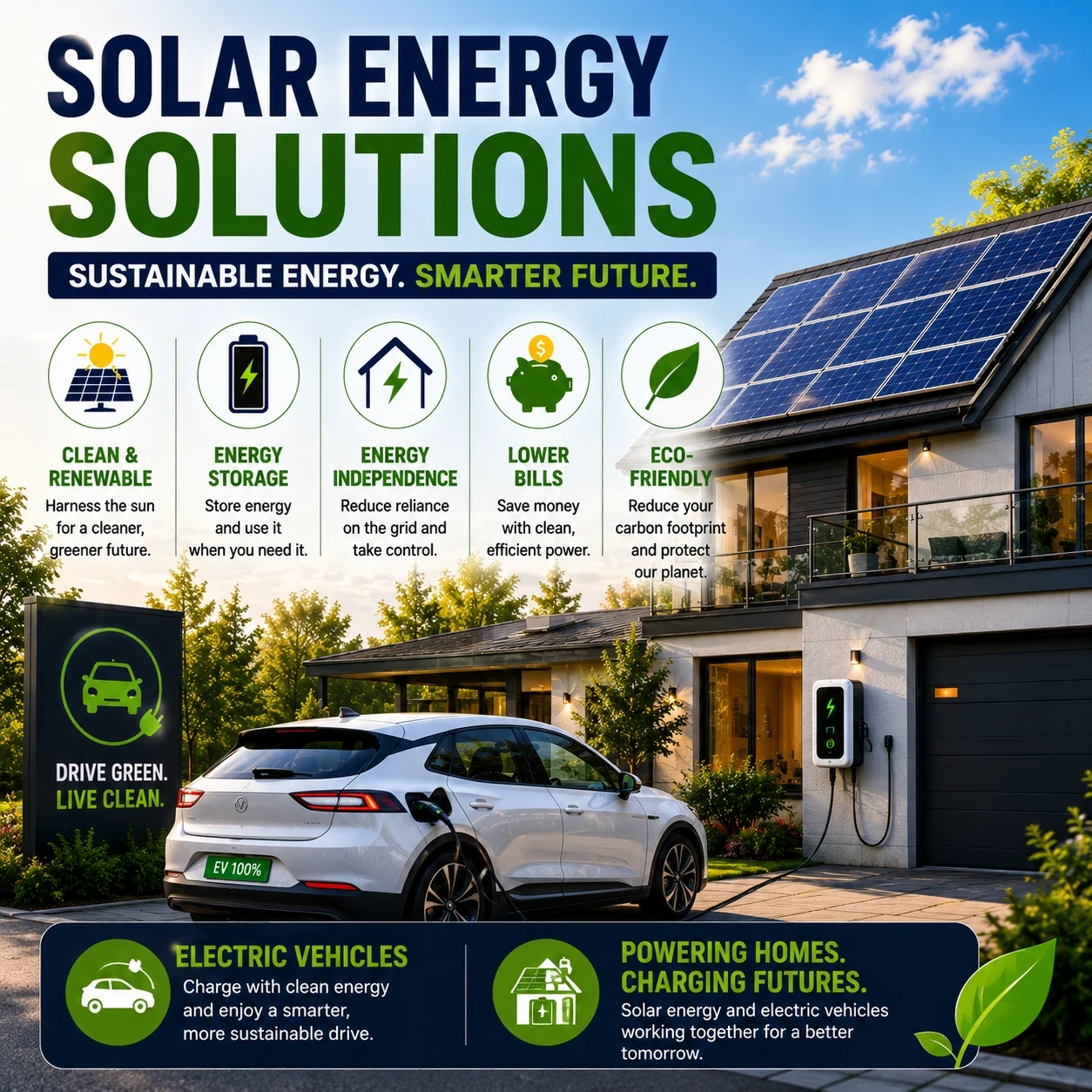
Electric vehicles can substantially increase household electricity consumption, making them a natural partner for home solar.
Charging during periods of strong solar production can increase the amount of electricity consumed directly from the PV system rather than exported to the grid.
Smart EV chargers can help coordinate charging with available solar generation. The actual amount of solar energy used by the vehicle depends on system size, charging power, driving patterns and when the vehicle is at home.
For more on residential EV charging, see Electric Vehicle Charging at Home .
Solution 5: Solar for Apartments and Homes With Limited Roof Space
Not every household has access to a large private roof. Apartments, rented properties and homes with unsuitable roofs require different approaches.
Possible solutions can include balcony-mounted solar systems, shared rooftop installations or community solar arrangements, depending on what is available and legally permitted in the location.
Balcony solar can be particularly interesting for households that want a smaller entry point into solar generation, although electrical connection requirements, landlord or management-company rules and local regulations must always be checked first.
Solution 6: Off-Grid Solar for Remote Properties
Off-grid solar is designed for properties that cannot or do not rely on a normal utility-grid connection.
These systems need considerably more careful planning than ordinary grid-connected solar because electricity must remain available when sunlight is limited.
An off-grid solution may require:
- A sufficiently large solar array.
- Substantial battery capacity.
- Careful control of household loads.
- An inverter designed for off-grid operation.
- Alternative backup generation where appropriate.
The system should be designed around both daily electricity demand and periods of low solar generation rather than simply around average annual production.
Solution 7: Solar Hot Water
Solar energy does not have to be converted into electricity. Solar thermal systems capture energy from sunlight and use it to heat water.
For households with significant hot-water demand, solar thermal can reduce the amount of energy required from conventional water-heating systems.
Solar PV and solar thermal are different technologies. PV produces electricity that can be used for many purposes, while solar thermal is designed specifically to capture heat.
Solution 8: Smart Solar Energy Management
As homes add solar panels, batteries, EV chargers and other electrical equipment, deciding when energy should be used becomes increasingly important.
Energy monitoring and smart controls can help homeowners see where electricity is going and coordinate flexible loads with periods of solar generation.
Depending on the equipment installed, smart energy management may help:
- Prioritise battery charging.
- Schedule EV charging.
- Shift flexible household loads.
- Monitor solar generation.
- Track grid imports and exports.
- Respond to time-of-use electricity tariffs.
For the technology behind smart inverters, AI energy management, next-generation solar cells, V2H and other developments, see our Solar Energy Technology guide.
How to Choose the Right Solar Energy Solution
Before requesting quotations, define what you actually want the system to achieve.
Planning a Solar Installation
Once you know which solution you need, the next stage is designing the installation around the property.
Important considerations include:
- Annual household electricity consumption.
- Daytime and evening electricity demand.
- Available roof or ground space.
- Roof direction and pitch.
- Shading from trees or buildings.
- Local solar conditions.
- Future EV or heat-pump demand.
- Battery-storage requirements.
- Backup-power requirements.
- Local planning, electrical and grid-connection rules.
Our Solar Panel Installation Guide 2026 takes you through the planning and installation process step by step.
Comparing Solar Panels and Inverters
Once the overall solution has been chosen, equipment quality becomes important.
Solar panels differ in power output, efficiency, physical dimensions, warranty terms and expected degradation. Inverters differ in system architecture, monitoring, battery compatibility, backup capabilities and supported power levels.
Avoid choosing an installation based solely on the headline panel wattage or the cheapest quotation. The complete system should be designed so that the major components work properly together.
For inverter fundamentals, see What Is a Solar Inverter and How Does It Work? .
What Do Solar Energy Solutions Cost?
There is no meaningful single global price for residential solar because installation costs vary widely between countries and individual properties.
The total cost can depend on:
- Solar array size.
- Panel and inverter selection.
- Roof complexity.
- Electrical work.
- Battery capacity.
- Backup equipment.
- Labour costs.
- Taxes.
- Available incentives.
A larger system is not automatically better value. The useful comparison is between system cost, expected generation, household consumption, equipment quality, warranty coverage and the amount of generated electricity you are likely to use.
Calculating the Potential Return
The return from solar varies according to the property and local electricity market.
Important factors include:
- Installation cost after any incentives.
- Expected annual solar generation.
- Electricity purchase price.
- Export payments where available.
- Solar self-consumption.
- Future electricity demand.
- Equipment maintenance and replacement costs.
Battery storage should be evaluated separately rather than assuming that adding a battery automatically produces a faster financial return. A battery may provide other benefits such as increased self-consumption, tariff management and backup capability.
Government Grants and Solar Incentives
Solar grants, tax incentives, export schemes and financing programmes differ substantially between countries and can change over time.
Before purchasing a system, check the current requirements with the relevant government or energy authority in your location.
Important questions include:
- Does the installation need an approved installer?
- Are particular equipment standards required?
- Must approval be obtained before work begins?
- Does battery storage qualify?
- Are there grid-export requirements?
- What documentation must be retained?
Common Solar Energy Solution Mistakes
- Buying equipment before deciding what problem the system needs to solve.
- Choosing solely on the cheapest quotation.
- Ignoring future EV or heat-pump electricity demand.
- Assuming a battery automatically provides outage backup.
- Oversizing storage without examining actual electricity consumption.
- Ignoring roof shading or roof condition.
- Failing to compare inverter and battery compatibility.
- Assuming one solar solution is suitable for every household.
- Not checking local grants, grid rules or installation requirements before purchasing.
Where Solar Energy Technology Fits In
The technologies behind residential solar continue to develop, but homeowners do not necessarily need the newest technology to build an effective system.
The more important question is whether the equipment is proven, compatible with the rest of the installation, supported by appropriate warranties and suitable for the household’s requirements.
Developments including higher-efficiency solar cells, smarter inverters, artificial intelligence, advanced battery chemistry, vehicle-to-home systems and