Updated for 2026
Solar Panel Installation Guide 2026: Step-by-Step Homeowner’s Guide
This Solar Panel Installation Guide 2026 explains how to plan a residential solar system, check whether your roof is suitable, work out how many panels you may need, understand mounting and inverter requirements, consider battery storage and choose a safe, qualified installer.
Installing solar panels is not simply a matter of filling a roof with as many modules as possible. A good system begins with your electricity use, available roof area, local sunshine, shading, future energy needs and the equipment that will connect everything safely to your home.
If you are still comparing panel technologies, start with our
Best Solar Panels 2026 guide.
For a broader introduction to photovoltaic systems, you can also read our
complete homeowner’s guide to solar panels.
What You Need Before Installing Solar Panels
The first stage of a successful solar installation happens before any equipment reaches the roof. Start by understanding how much electricity your household uses and when you use it.
Look at at least 12 months of electricity bills or smart-meter data if available. Annual consumption is useful, but the timing of your demand matters as well. A household that uses most electricity during the day may consume more solar generation directly, while a home with heavy evening use may benefit more from battery storage.
Review Your Electricity Use
Check annual kilowatt-hour consumption and identify high-demand appliances such as electric heating, heat pumps, air conditioning, pool pumps or electric vehicle charging.
Think About Future Demand
If you expect to add an EV, heat pump, home battery, extension or additional electrical appliances, include that likely demand in the system design.
Set Your Main Goal
Decide whether your priority is reducing electricity bills, increasing renewable self-consumption, adding backup power or lowering dependence on the grid.
Check Local Rules
Planning rules, electrical standards, export limits, incentives and utility requirements differ between countries, states and regions.
Is Your Roof Suitable for Solar?
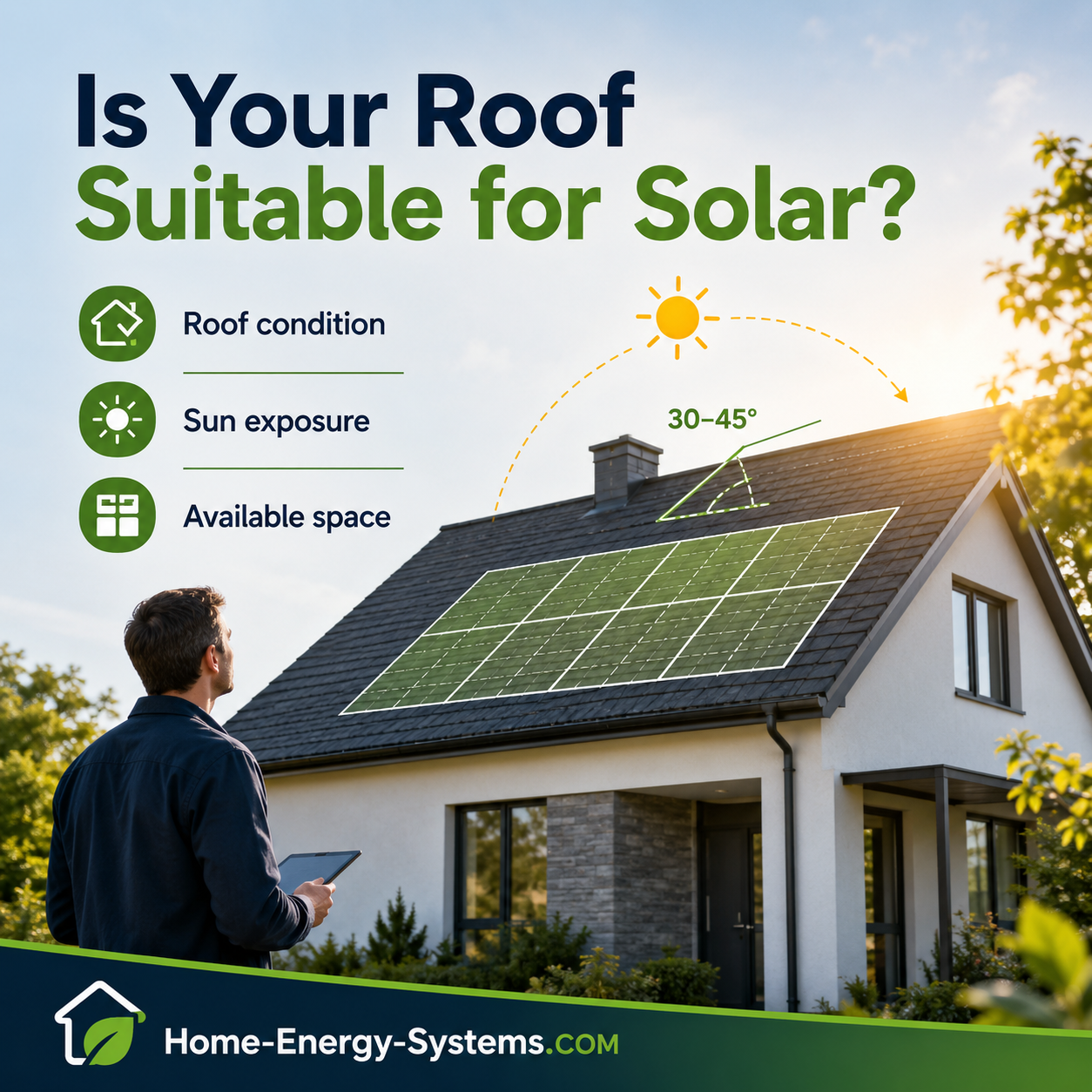
A solar array may remain on a roof for decades, so the condition of the roof matters. If the roof is approaching the end of its useful life, replacing or repairing it before installing solar can prevent the expense of removing and reinstalling the array later.
Roof Condition and Structure
A professional site survey should check the roof covering, rafters or trusses, mounting points and the additional loads created by the solar system. Snow and wind loads also matter in some regions.
Direction
In the Northern Hemisphere, south-facing roofs generally provide strong annual output, while north-facing roofs tend to be preferred in the Southern Hemisphere. East- and west-facing arrays can still perform very well and may better match morning or evening household demand.
Shading
Trees, chimneys, neighbouring buildings, roof vents and other obstructions can reduce output. Because shadows change throughout the day and across the seasons, a proper solar survey should examine more than the roof at one moment in time.
Roof Pitch
There is no single perfect roof angle for every location. Solar production depends on latitude, orientation, climate and the goals of the system. Installers can model different layouts before deciding on the final design.
How Many Solar Panels Do You Need?
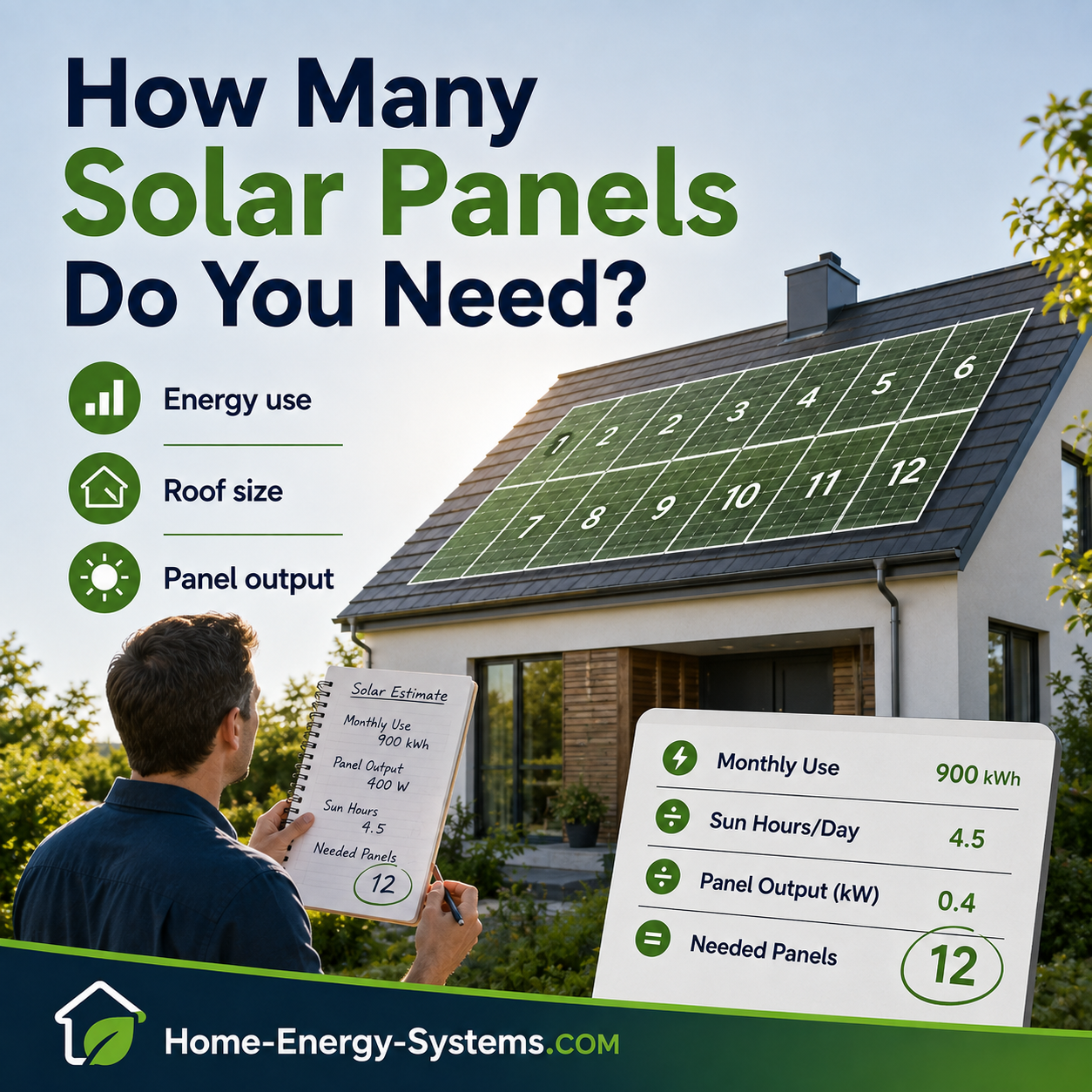
The right number of solar panels depends on your electricity use, panel wattage, available space, expected sunshine and the percentage of your annual demand you want the system to cover.
As a simple planning concept:
- Start with your annual electricity consumption in kWh.
- Estimate how much solar energy a system can produce in your location.
- Check how much usable roof space is available.
- Compare the output and dimensions of the panels being considered.
- Allow for shading, system losses and local grid-export restrictions.
- Include future demand from an EV, heat pump or battery strategy.
For a useful independent estimate, the
NREL PVWatts Calculator
can model the potential energy production of a grid-connected photovoltaic system using location and system information.
A system should be sized around your property and electricity profile rather than a generic “average home.” Oversizing can be wasteful if export payments are poor or local export limits apply, while undersizing may leave useful roof space unused and make future expansion more complicated.
Choosing the Right Solar Panels
The cheapest solar panel is not always the lowest-cost option over the life of the system. Compare performance, warranty, dimensions and long-term support as well as the purchase price.
| What to Compare | Why It Matters |
|---|---|
| Panel efficiency | Higher efficiency can produce more electricity from limited roof area. |
| Power rating | Higher-wattage panels may reduce the number of modules required for a target system size. |
| Product warranty | Covers manufacturing defects for the stated warranty period. |
| Performance warranty | Describes how much output the manufacturer guarantees after years of use. |
| Temperature performance | Panel output falls as cell temperature rises; the temperature coefficient helps compare this effect. |
| Physical size | Panel dimensions determine how effectively the available roof can be filled. |
| Installer and manufacturer support | Good after-sales support matters if a fault or warranty claim appears years later. |
For deeper comparisons of panel technologies, warranties and performance, see our
Best Solar Panels 2026.
Solar Panel Mounting and Positioning
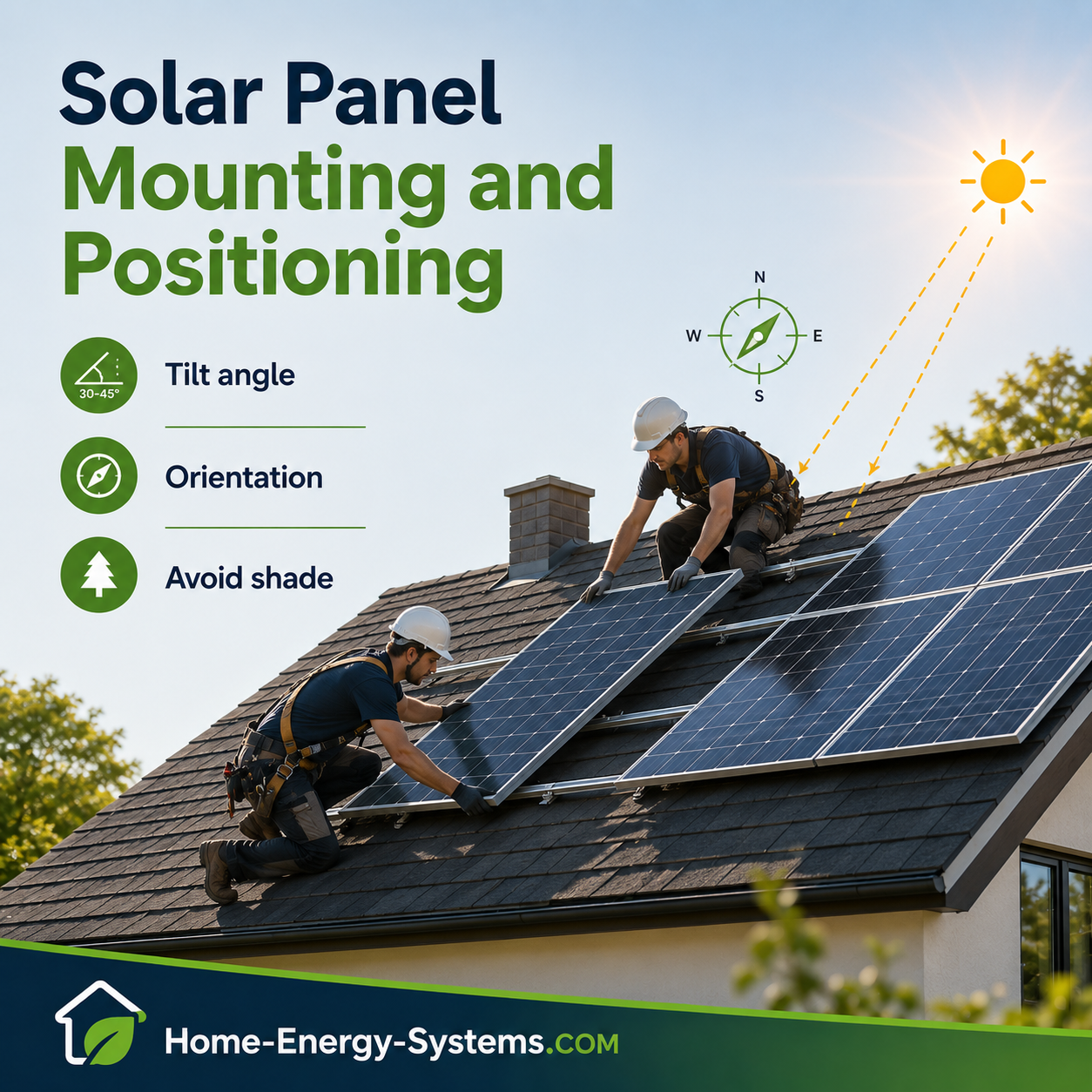
The mounting system has to hold the array securely for years while protecting the roof from water ingress and weather damage. The correct method depends on the roof material, roof structure and local wind or snow conditions.
A typical rooftop installation may use rails, roof hooks, brackets, clamps and flashings designed for that particular roof type. Mounting should also leave suitable ventilation behind the modules because excess heat can reduce panel performance.
Orientation and Layout
The best layout is not always the one with the greatest theoretical annual output. East-west arrays can spread generation across more of the day, while a south-facing array in the Northern Hemisphere may concentrate output around midday. Your installer should consider both generation and how your household actually uses electricity.
Keep Future Maintenance in Mind
Panels should not block access to important roof areas, drainage points, chimneys or equipment that may need maintenance. Local fire and building rules may also require clear roof pathways or setbacks.
How Solar Panels Are Wired
Solar panels produce direct-current electricity. Multiple panels are connected into electrical circuits and then linked to the inverter and protection equipment.
The exact series or parallel arrangement is part of the electrical design. It must remain within the voltage and current limits of the inverter, modules and other system components under local temperature conditions.
Connecting the Solar Inverter
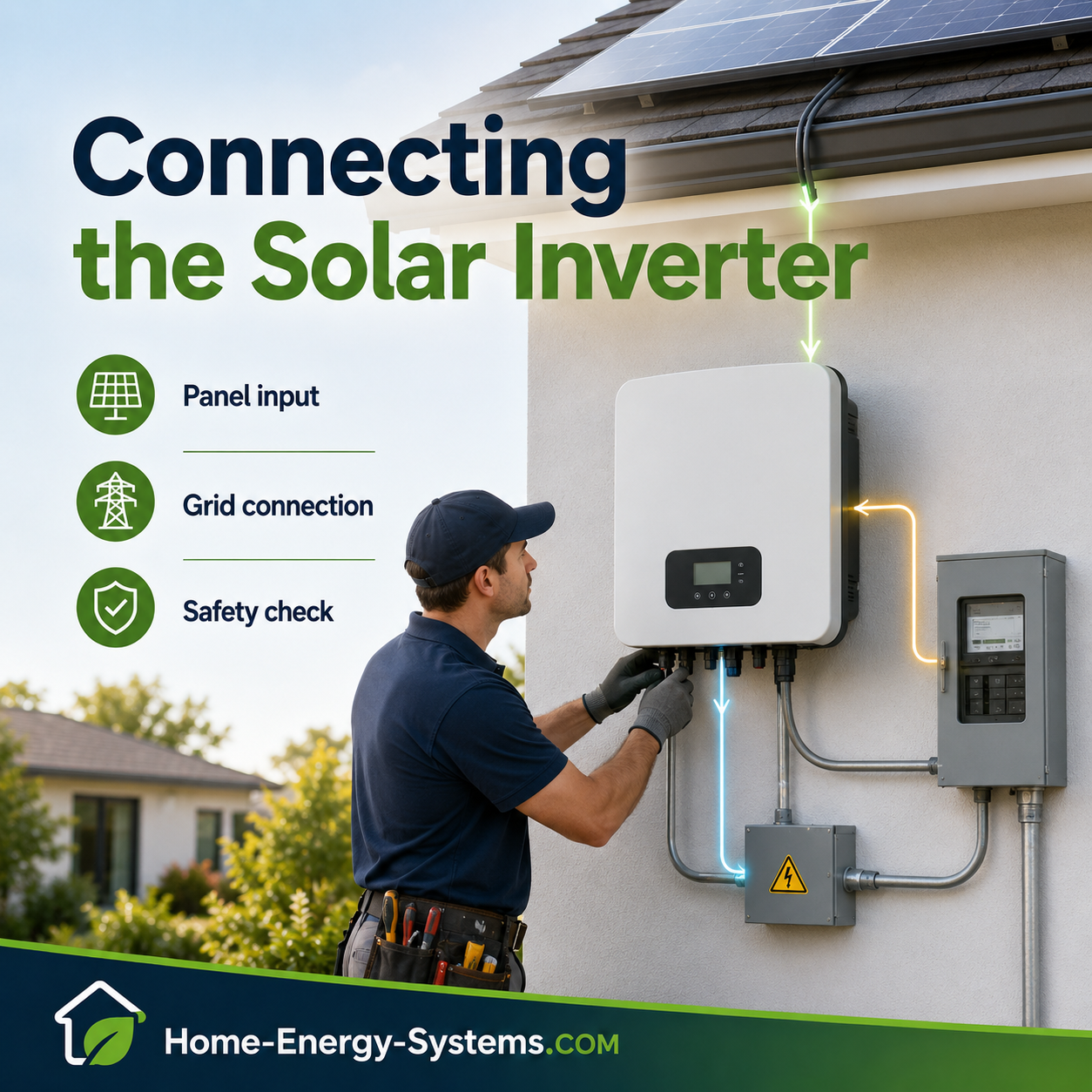
The solar inverter converts DC electricity from the panels into alternating-current power that can be used by your home and, where permitted, exported to the electricity grid.
Modern inverters can also monitor solar production, detect faults, communicate with battery storage and display system data through an app or web dashboard.
Inverter choice depends on system size, panel layout, shading, battery plans and the electrical supply. Common options include string inverters, microinverters and hybrid inverters.
Our
Top Rated Solar Inverters 2026 guide
explains the main inverter types and what to compare before buying.
Adding Battery Storage
A battery is optional. Solar panels can operate perfectly well without one, but storage can increase the amount of solar electricity you use inside the property instead of exporting it.
A battery may be useful when:
- Your solar panels produce more electricity during the day than the home uses.
- Your household consumes a large amount of electricity in the evening.
- Your electricity tariff changes by time of day.
- You want backup capability and the proposed system supports it.
- You want to coordinate solar generation with EV charging or other flexible loads.
Battery size should be based on real consumption data rather than simply choosing the biggest unit available. Read our
Home Battery Storage Systems 2026 guide
for capacity, backup and buying advice.
Professional Solar Installation vs DIY
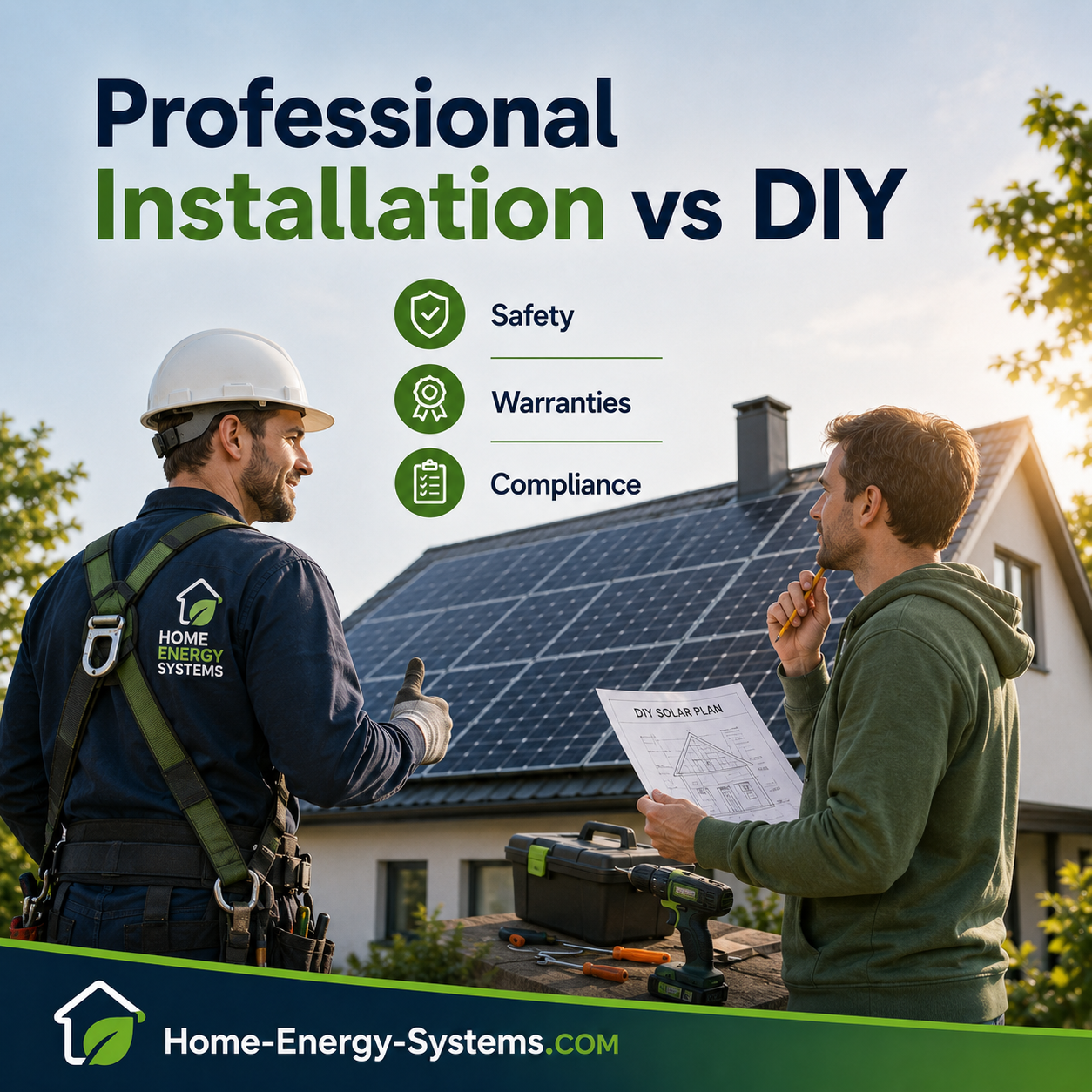
DIY solar can look attractive because it may reduce labour costs. However, rooftop solar combines working at height, weatherproof roof penetrations, high-voltage DC circuits and connection to a building’s electrical system.
| Professional Installation | DIY Installation |
|---|---|
| System design and equipment compatibility handled for you. | You are responsible for system design and compatibility. |
| Easier compliance with electrical and grid requirements. | Electrical work may legally require a qualified professional. |
| Experienced roof mounting and weather sealing. | Incorrect mounting can cause roof leaks or damage. |
| Usually simpler for inspections, warranties and utility approval. | Grid approval, insurance and warranties may have additional requirements. |
| Higher upfront labour cost. | Potentially lower upfront installation cost. |
For most grid-connected homeowners, professional installation is the safer and simpler route. Even where some mechanical work can legally be carried out by the homeowner, final electrical connection and approval may still need a qualified electrician or certified solar installer.
Solar Panel Installation Costs in 2026
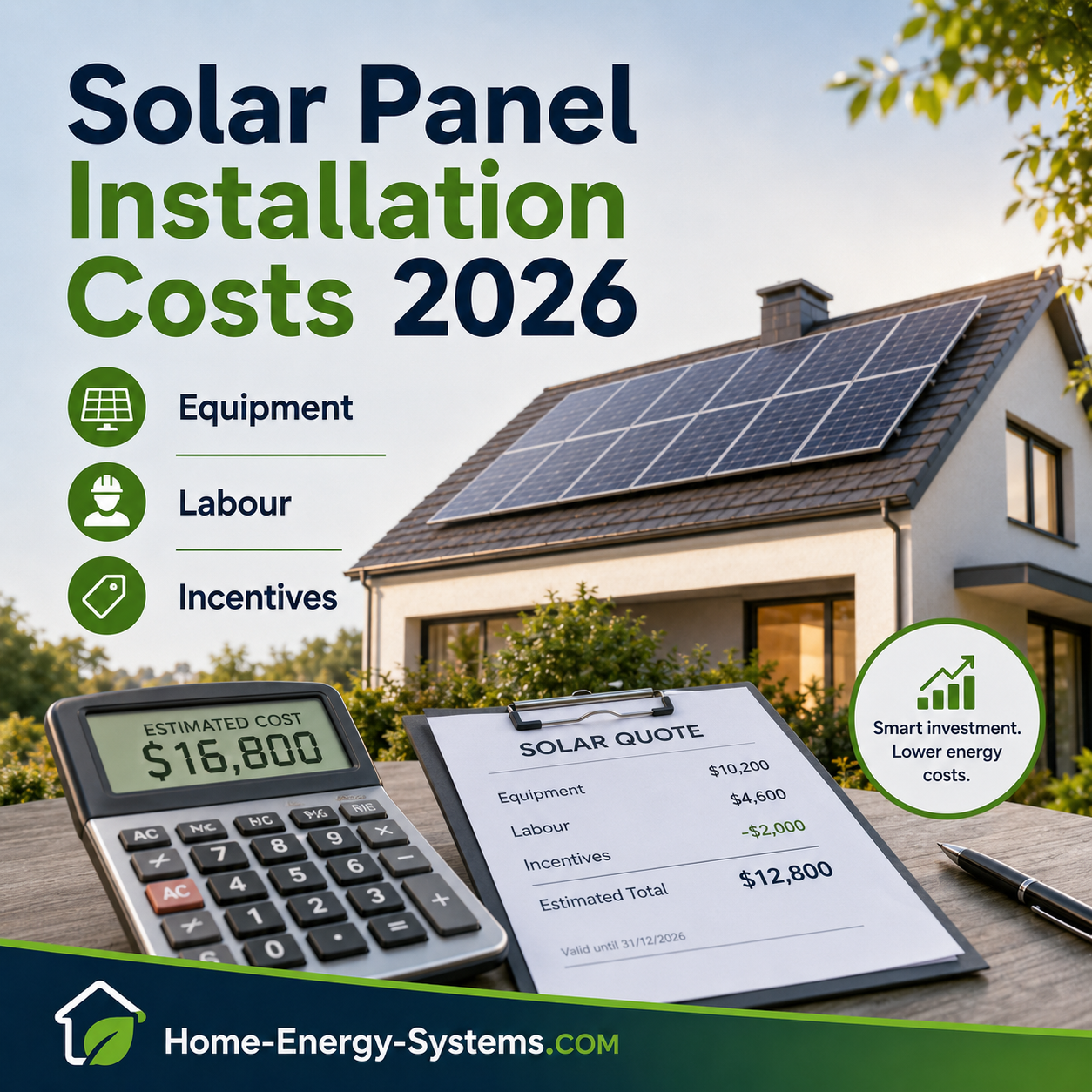
There is no meaningful single global price for solar panel installation in 2026. Labour rates, taxes, incentives, panel prices, electrical standards and grid-connection costs vary substantially between countries and even between neighbouring regions.
The final installed price is normally influenced by:
- Total solar system capacity.
- Panel brand, efficiency and warranty.
- String inverter, microinverter or hybrid inverter selection.
- Roof type, height, access and structural work.
- Scaffolding or specialist access equipment.
- Electrical upgrades.
- Monitoring and smart-energy controls.
- Optional battery storage.
- Permits, inspections and utility requirements.
- Local labour costs and available incentives.
Where to Buy Solar Equipment
If you are comparing solar panels, solar kits, batteries or backup equipment, these are some of the suppliers currently featured on Home-Energy-Systems.COM.
You can also compare suppliers by region on our
Where to Buy Solar Energy Products
page.
How Long Does Solar Panel Installation Take?
Once the system has been designed, equipment is available and all required approvals are in place, the physical installation of a straightforward residential rooftop system is often completed within a few days. Complex roofs, larger systems, battery installations or electrical upgrades can take longer.
The complete project timeline may include:
- Initial consultation and energy review.
- Site survey and roof inspection.
- System design.
- Planning or permitting where required.
- Utility or grid application.
- Equipment ordering.
- Roof and electrical installation.
- Inspection and commissioning.
- Permission to operate or final grid approval.
Permits, Grid Connection and Safety
Solar installation rules are local. Do not assume a system can simply be connected after the panels are mounted.
Depending on where you live, the project may require planning permission, a building permit, electrical inspection, installer certification, an export-limiting device, a new electricity meter or a formal utility interconnection agreement.
For U.S. homeowners, the U.S. Department of Energy provides a useful
Homeowner’s Guide to Going Solar.
Readers elsewhere should use the equivalent government, grid operator and electrical-safety resources for their own country or region.
Final Solar Installation Checklist
- Review at least 12 months of electricity consumption.
- Allow for future EV, heat-pump or household demand.
- Confirm roof condition and structural suitability.
- Assess shading throughout the year.
- Compare panel efficiency, size and warranties.
- Choose an inverter that matches the system and battery plans.
- Confirm whether battery storage makes financial or practical sense.
- Check permits, grid rules and export limits.
- Compare several detailed installer quotations.
- Check product and installation warranties.
- Confirm monitoring is included and working.
- Keep system manuals, certificates and commissioning documents.
If you are installing solar on an apartment or balcony rather than a conventional rooftop, see our separate guide to balcony solar panels. You can also watch our growing collection of short explainers on the
Home Energy Video Guides
page.
Solar Panel Installation Guide 2026 — Frequently Asked Questions
Can I install solar panels myself?
It depends on local law and the type of system. Some regions allow homeowners to complete certain mechanical work, but grid-connected electrical work, certification and utility connection may require licensed professionals. Rooftop and electrical safety should be treated seriously.
How many solar panels does a typical home need?
There is no universal number. It depends on household electricity consumption, local solar resource, panel wattage, roof space, shading and how much of the home’s electricity demand you want solar to cover.
Do solar panels need a south-facing roof?
No. South-facing roofs in the Northern Hemisphere often deliver strong annual generation, but east- and west-facing arrays can also perform well. The preferred direction is generally reversed in the Southern Hemisphere.
Do I need a battery with solar panels?
No. A grid-connected solar system can operate without a battery. Storage becomes more attractive when you want to use more of your solar energy later in the day, take advantage of time-of-use tariffs or add compatible backup power.
Will solar panels keep my home running during a power cut?
Not automatically. Many standard grid-connected inverters shut down during an outage for safety. Backup operation normally requires compatible equipment such as a battery, backup gateway or specially designed inverter and essential-load circuits.
Should I replace an old roof before installing solar?
If the roof is likely to need major work soon, dealing with it before installing the array can avoid paying to remove and reinstall the panels later. A roof inspection should form part of the planning process.
NREL’s PVWatts tool estimates potential photovoltaic electricity production for locations around the world. It is useful for early-stage planning, but an installer should still complete a site-specific survey and system design.
Final Thoughts on Solar Panel Installation in 2026
A successful solar installation begins with careful planning. The best system is not necessarily the one with the most panels or the largest battery. It is the system that matches your roof, electricity use, local solar resource, budget and future plans.
Use this Solar Panel Installation Guide 2026 as a starting point, then compare equipment carefully and obtain detailed quotations from experienced installers. Good design, quality components and professional installation can help a solar system deliver reliable renewable electricity for many years.
Next, compare the
Best Solar Panels 2026,
explore
Top Rated Solar Inverters,
or visit our
solar buying guide.