Garden Shed Solar Guide 2026
Best Solar Panel Kit for Garden Shed 2026
Looking for the best solar panel kit for garden shed use? From simple lighting and charging power tools to running security cameras or creating an off-grid workspace, the right shed solar system can provide useful electricity without running a permanent power cable from your house.
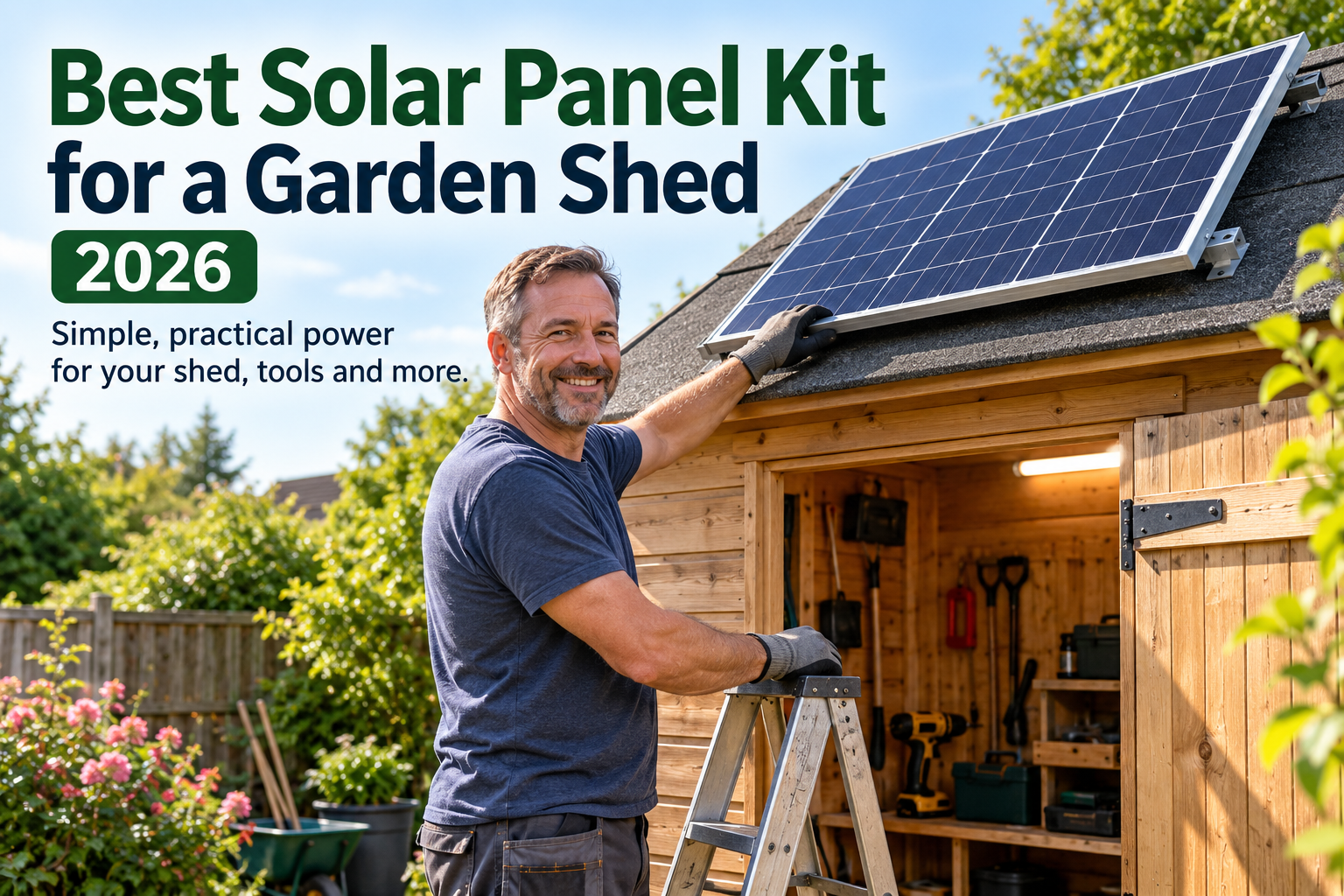
Choosing the best solar panel kit for a garden shed isn’t simply a matter of buying the kit with the biggest panel or battery. The most suitable system is the one that matches your actual electricity requirements.
A few LED lights require very little energy. Power tools, refrigerators, laptops, pumps and other larger appliances can change the calculation considerably.
In this guide, we’ll explain how to choose a garden shed solar kit, compare different panel sizes, look at battery storage, explain what shed solar can realistically power and cover the basics of installation.
Can You Put Solar Panels on a Garden Shed?
Yes. A garden shed can be a practical location for a small solar installation, particularly when its roof receives good direct sunlight during the middle of the day.
A standalone shed also gives you the option of creating a small off-grid system. Instead of connecting the shed directly to your home’s electricity supply, the solar panel generates electricity locally and a battery can store energy for later use.
A typical garden shed solar system may include:
- One or more solar panels.
- A solar charge controller.
- A battery or portable power station.
- An inverter when standard AC appliances are required.
- DC or LED lighting.
- Cables, connectors, fuses and suitable mounting hardware.
Some complete solar shed kits package most of these components together, while other systems can be assembled from individual components.
What Size Solar Panel Does a Shed Need?
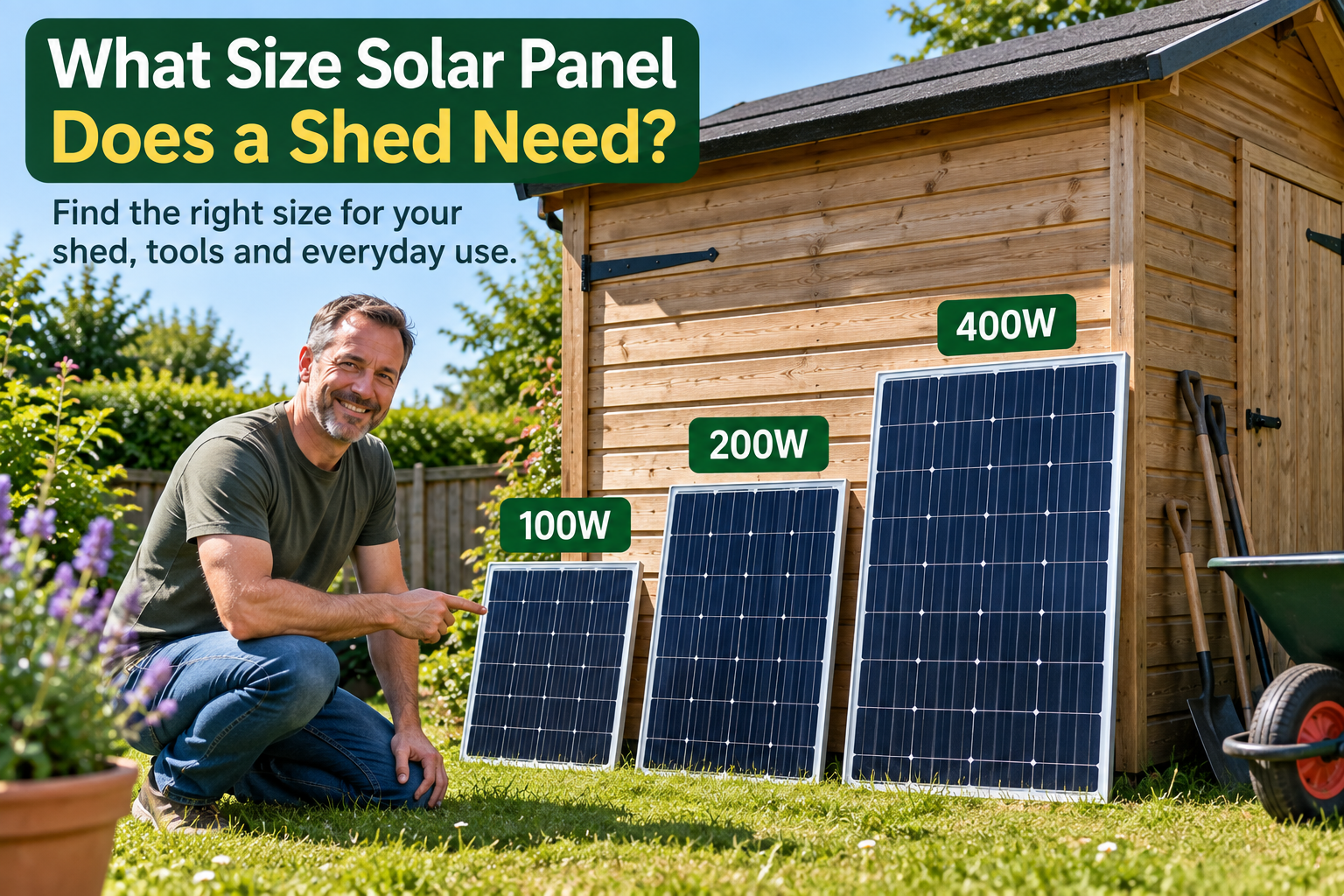
There is no single correct solar panel size for every shed. The right capacity depends primarily on the amount of electricity you expect to consume and the amount of usable sunlight available.
Before choosing a panel, write down everything you want to power and estimate how many hours each item will operate during a typical day.
50W–100W
Best suited to basic requirements such as LED lighting, phone charging, small security equipment and keeping small batteries topped up.
200W
A useful middle ground for lighting, charging phones and laptops, security equipment and occasional use of smaller electrical devices.
400W+
Better suited to workshops and garden offices where you want greater battery-charging capability and the option of powering larger loads.
100W vs 200W vs 400W Shed Solar Kits
| Size | Best For | Typical Uses | Battery |
|---|---|---|---|
| 100W | Small sheds | LED lights, phones, cameras, USB devices | Useful |
| 200W | General sheds | Lighting, laptops, charging batteries | Recommended |
| 400W | Workshops | Multiple devices and selected AC equipment | Recommended |
| 400W+ | Higher-use sheds | Larger loads and longer use | Normally essential |
100W Solar Kit
Best for: Small sheds
Typical uses: LED lights, phones, cameras and USB devices
Battery: Useful
200W Solar Kit
Best for: General garden sheds
Typical uses: Lighting, laptops and charging batteries
Battery: Recommended
400W Solar Kit
Best for: Workshops and more active sheds
Typical uses: Multiple devices and selected AC equipment
Battery: Recommended
400W+ Solar Kit
Best for: Higher-use sheds and garden workspaces
Typical uses: Larger loads and longer operating periods
Battery: Normally essential
These figures are guidelines rather than guarantees. Actual solar output varies according to location, season, panel orientation, shading, temperature and equipment specifications.
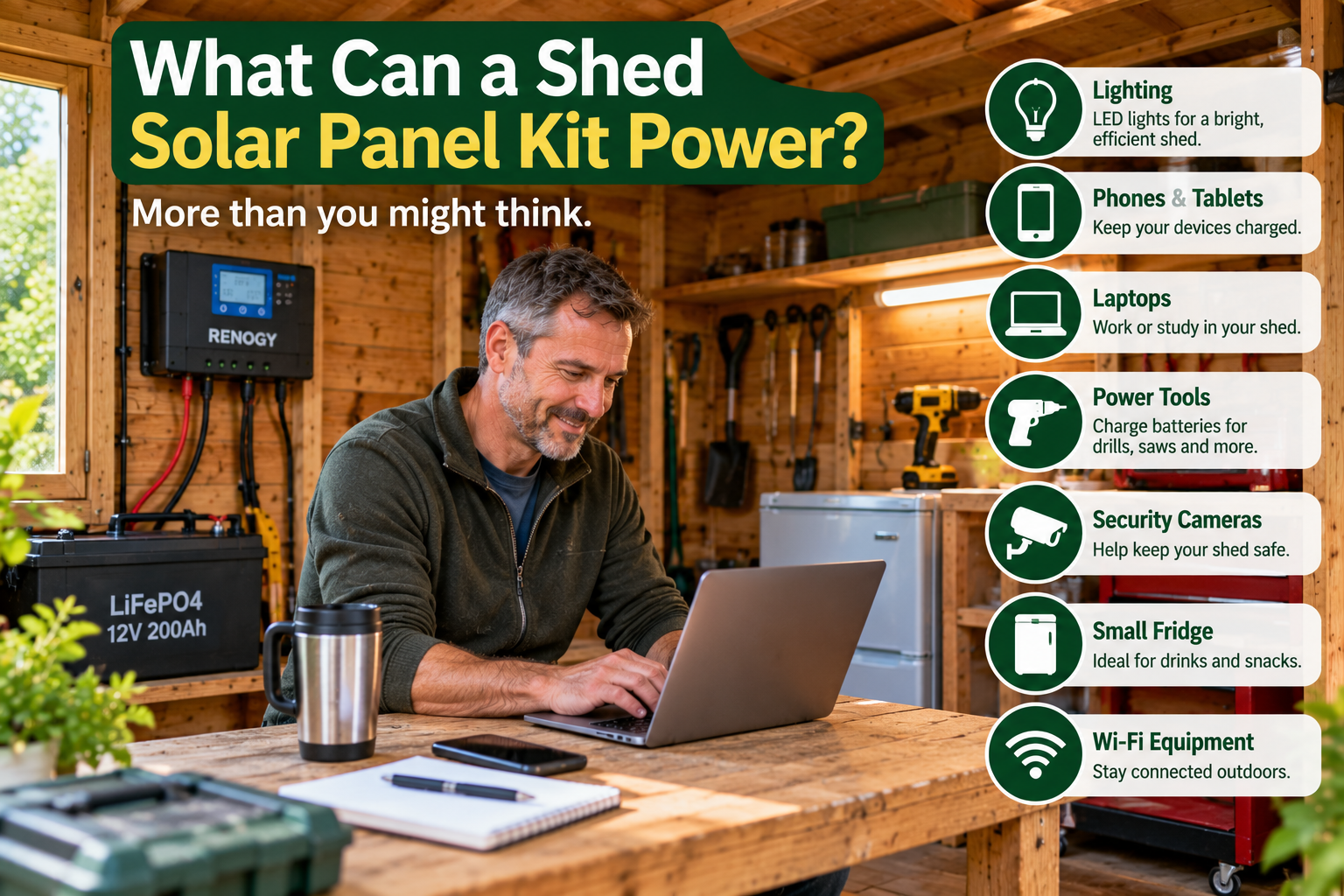
What Can a Shed Solar Panel Kit Power?
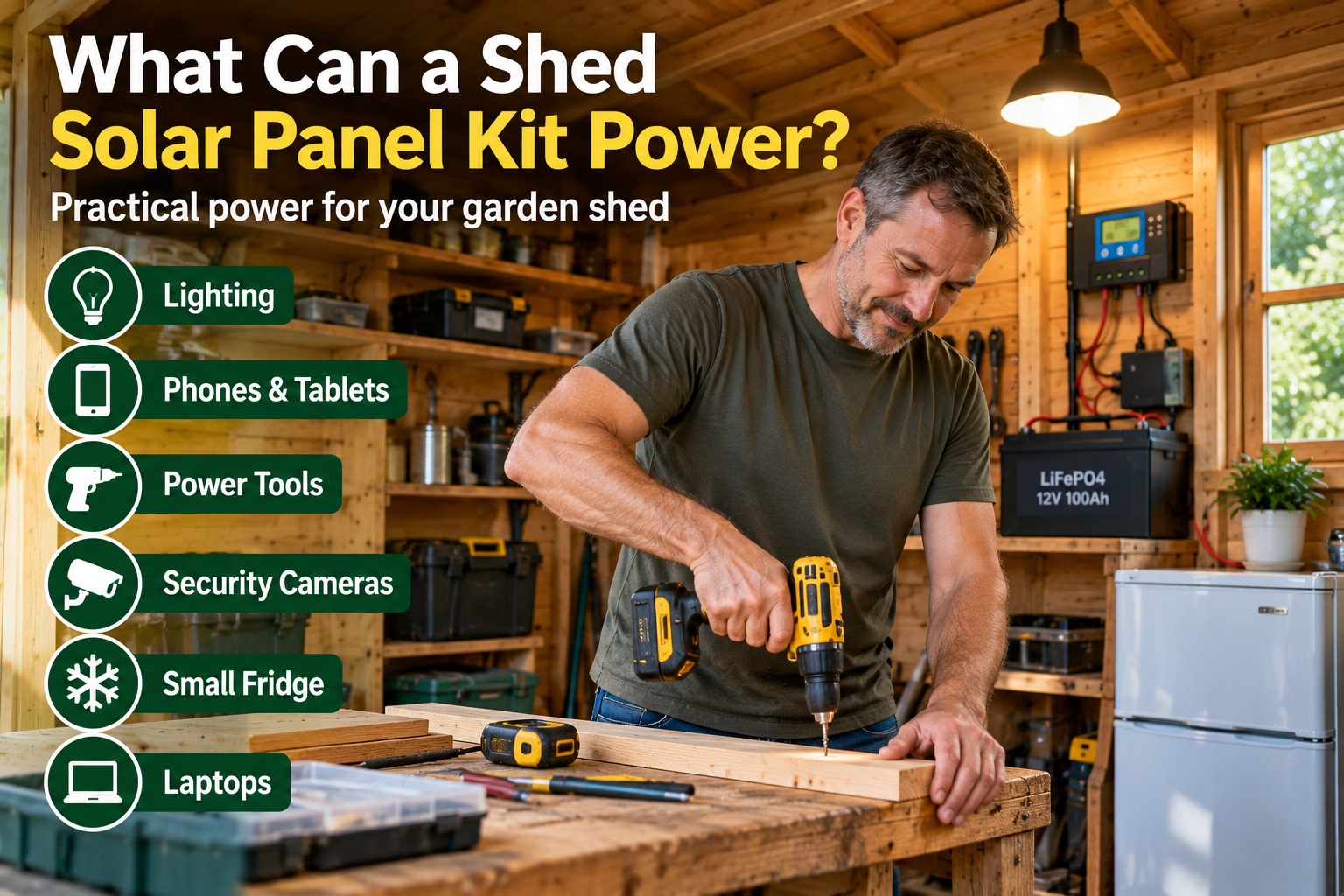
Instead of asking how large a solar panel you can fit on your shed roof, start by deciding what you actually need electricity for.
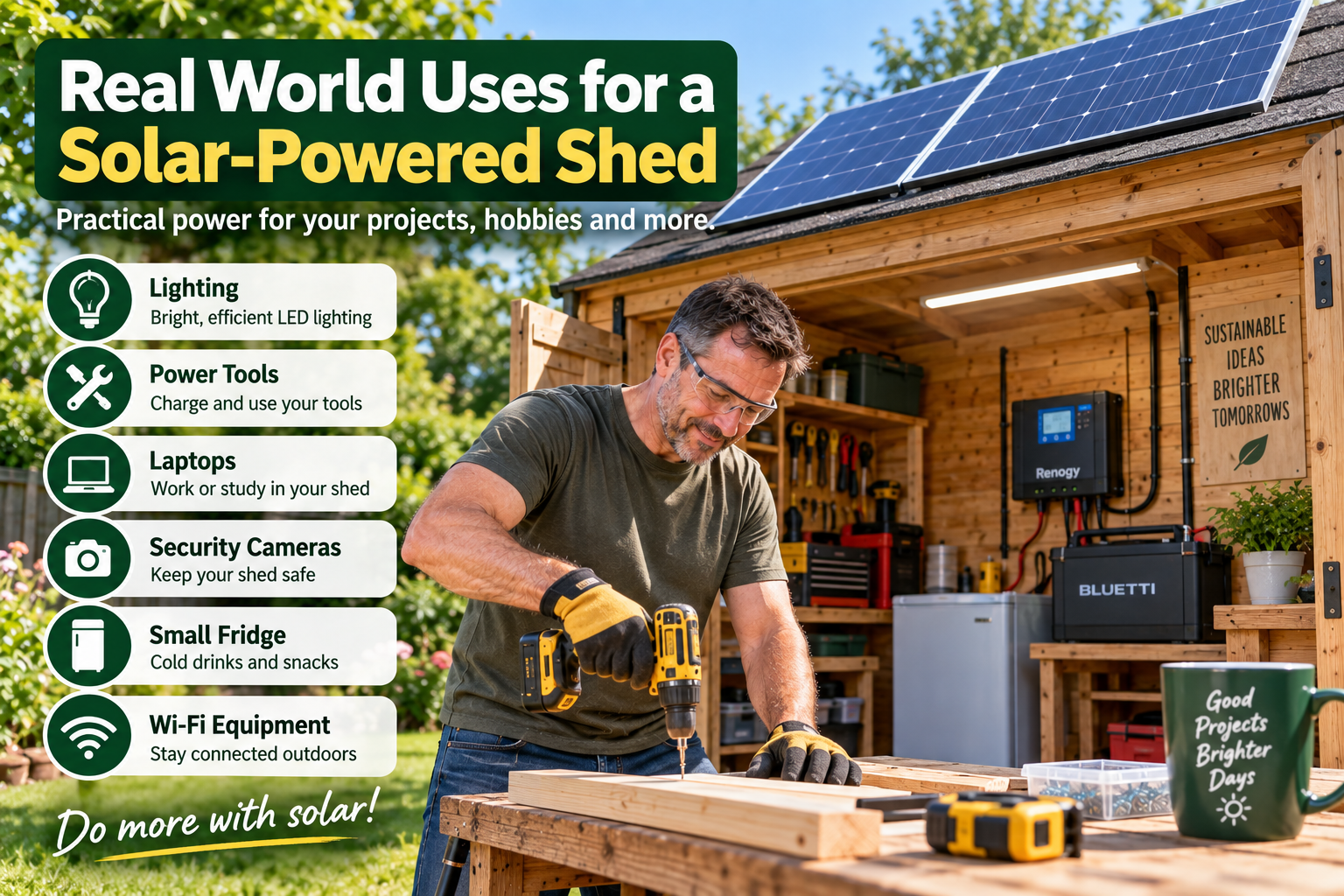
Lighting
LED lighting is particularly suitable for shed solar because modern LED bulbs consume relatively little electricity. A modest solar panel and battery can provide useful lighting without requiring a large system.
Phones, Tablets and USB Devices
Charging phones, tablets and other USB equipment places relatively little demand on a solar system, making these good applications for smaller garden shed kits.
Security Cameras and Wi-Fi Equipment
Solar can be useful for powering low-energy security and communications equipment in sheds located some distance from the house. Equipment operating 24 hours a day creates a continuous load, however, so battery capacity becomes important.
Charging Power-Tool Batteries
A larger system can recharge batteries for drills, strimmers and other cordless equipment. Check the wattage of the battery charger before deciding on inverter capacity.
Garden Office Equipment
If your shed is being converted into a garden office, electricity demand increases. A laptop, monitor, router and lighting can still be manageable, but the system should be designed around their combined daily energy consumption.
Higher-Power Equipment
Electric heaters, kettles, compressors and similar appliances can consume considerably more power. A small shed solar kit should not be expected to operate high-wattage equipment simply because it includes an AC outlet.
Solar Shed Lighting
If your only objective is to illuminate the shed, you may not need a conventional solar panel, battery and inverter system.
Dedicated solar shed lighting kits typically include a small external solar panel connected to an LED light and rechargeable battery.
They can be inexpensive and straightforward for sheds that are only used occasionally after dark.
However, if you think you may later want to charge tools, run security equipment or add other electrical devices, starting with a larger panel and battery system provides considerably more flexibility.
Battery Storage for a Solar-Powered Shed
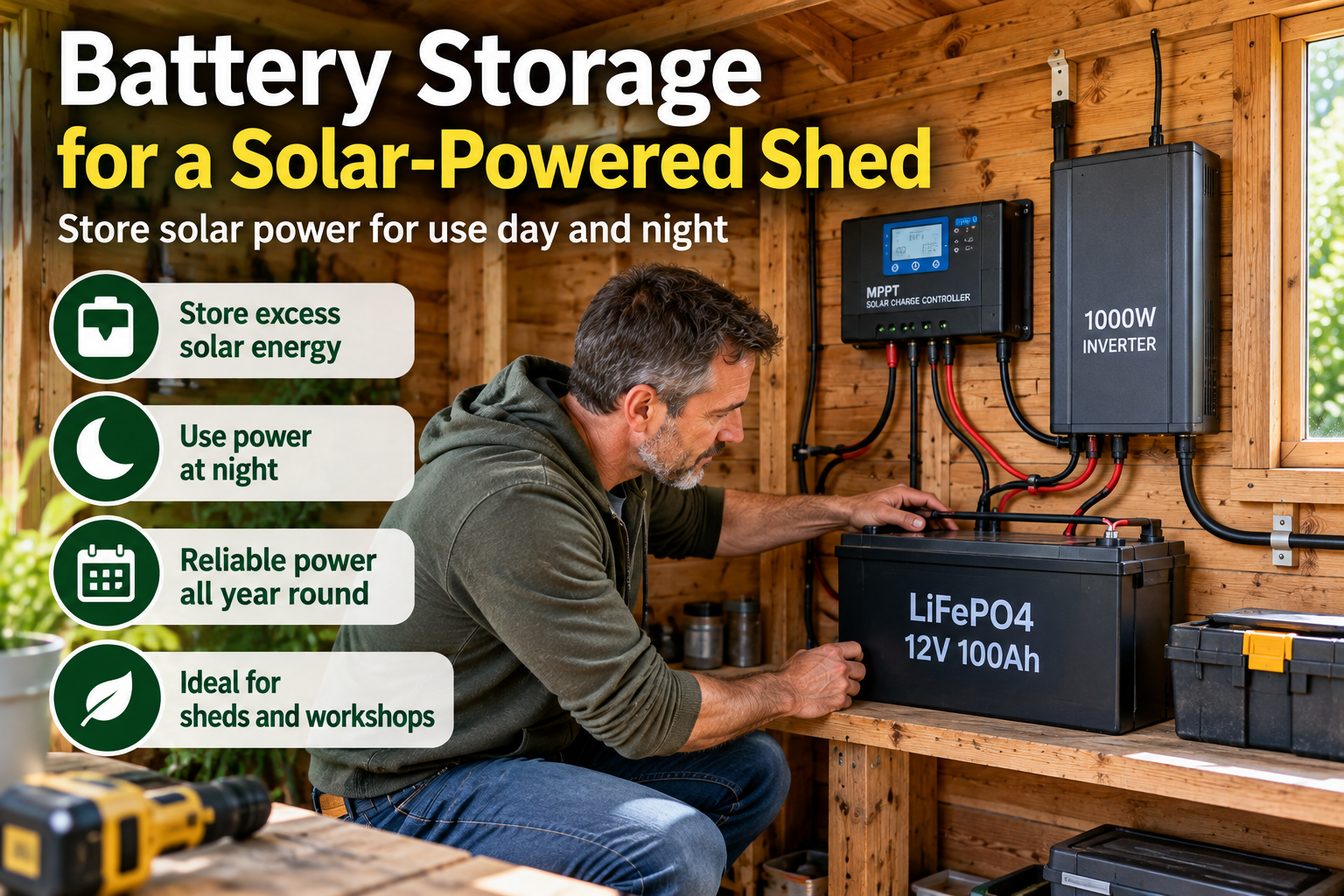
Solar panels only generate useful electricity when sufficient sunlight is available. Most shed owners also want electricity in the evening, which is why battery storage can become one of the most important parts of the system.
During daylight hours, the solar panel charges the battery. Stored electricity can then be used later when solar production drops.
Lithium batteries, particularly LiFePO4 batteries, are commonly used in small off-grid systems because they can offer good cycle life, useful depth of discharge and lower weight than many traditional lead-acid alternatives.
Another option is a portable power station. These combine the battery, charging electronics, inverter and multiple outlets into one device. For someone who doesn’t want to build a system from separate components, this can simplify a shed solar setup considerably.
For more information about storing solar electricity, read our guide to home battery storage systems.
Traditional Battery System or Portable Power Station?
Both approaches can work well, but they suit different requirements.
| Feature | Battery System | Power Station |
|---|---|---|
| Installation | More involved | Usually simpler |
| Expansion | Often flexible | Model dependent |
| Portability | Usually fixed | Portable |
| Inverter | May be separate | Usually built in |
| Best for | Permanent systems | Simple flexible use |
Traditional Battery System
Installation: More involved
Expansion: Often flexible
Portability: Usually fixed
Inverter: May be separate
Best for: Permanent shed solar systems
Portable Power Station
Installation: Usually simpler
Expansion: Depends on the model
Portability: Portable
Inverter: Usually built in
Best for: Simple and flexible shed power
If portability appeals to you, see our guide to the best portable power stations for 2026.
How to Install Solar Panels on a Garden Shed
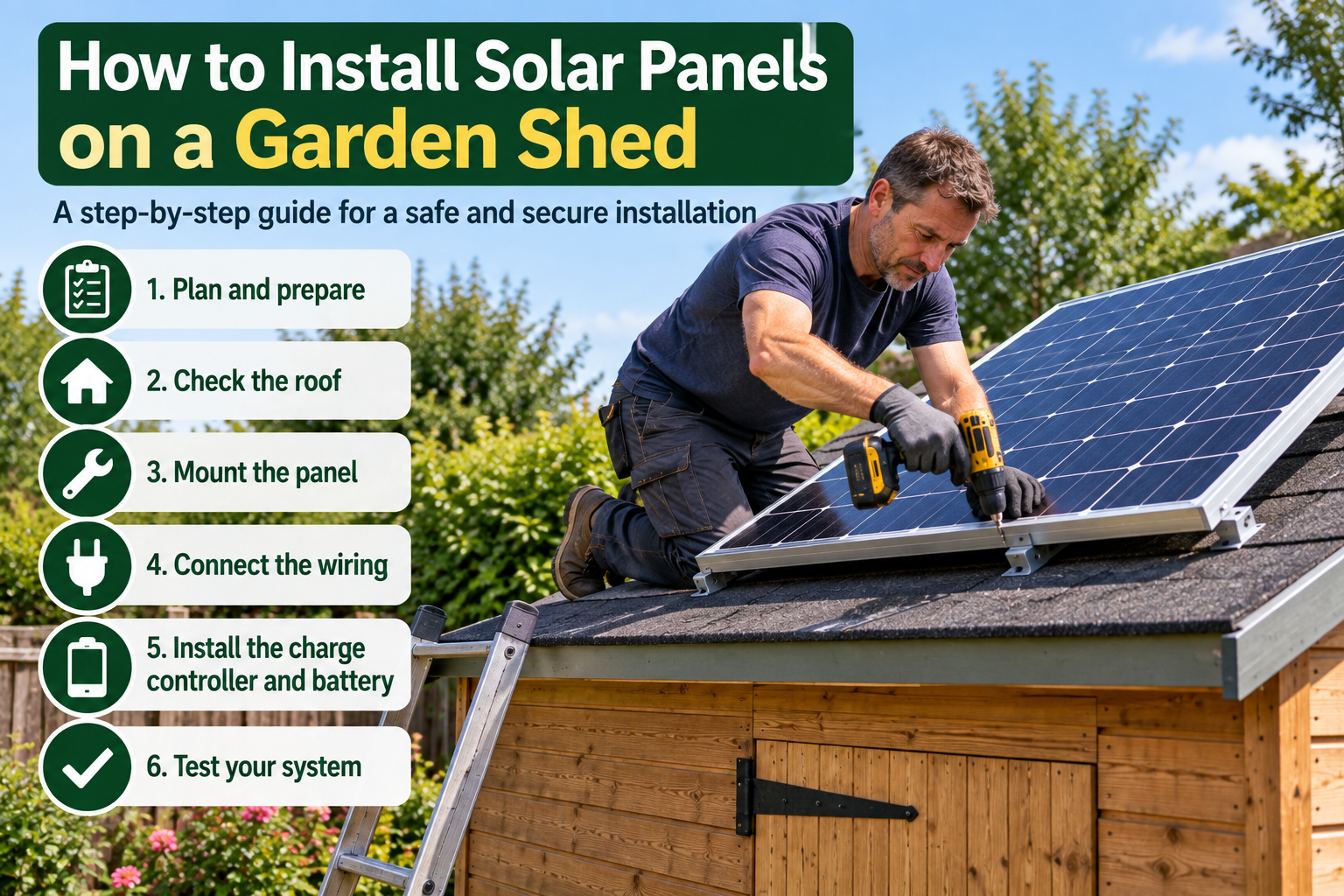
The exact installation process depends on the shed roof, solar panel, mounting system, battery and electrical equipment being used. However, the basic planning process is similar for many small off-grid systems.
1. Check the Shed Roof
Make sure the roof structure is sound and capable of supporting the solar panel and mounting equipment. An ageing felt roof or lightweight structure may require attention before panels are installed.
2. Find the Sunniest Position
Observe the shed throughout the day. Trees, fences, houses and other buildings can create significant shading. Even partial shading can reduce solar production, so panel position matters.
3. Mount the Solar Panel Securely
Use mounting hardware suitable for both the panel and roof construction. Panels must be secured appropriately for wind and weather conditions.
4. Connect the Charge Controller
In a conventional off-grid system, the solar panel connects through an appropriate solar charge controller before charging the battery.
5. Connect the Battery
Use correctly rated cables, connectors, fuses and protective equipment according to the manufacturers’ instructions.
6. Add an Inverter if Required
An inverter converts DC battery electricity into AC electricity for conventional appliances. Choose an inverter compatible with the battery system and capable of handling the required continuous load and startup surge.
Roof Position, Angle and Shading
A powerful solar panel in heavy shade can produce less useful energy than a smaller panel with good solar exposure.
For that reason, inspect the site before buying your garden shed solar kit.
Pay particular attention to:
- Tall trees.
- The main house.
- Neighbouring buildings.
- Fences and walls.
- Seasonal changes in the sun’s position.
- Leaves, dirt and debris accumulating on the panels.
The ideal orientation and tilt depend on where you live. In the Northern Hemisphere, a generally southerly-facing position often provides strong overall solar exposure, although local conditions can make another orientation more practical.
Off-Grid Shed Solar vs Connecting the Shed to Your House
Solar isn’t automatically the best answer for every garden shed.
If your shed is close to the house and you require substantial amounts of electricity every day, having a permanent electrical supply professionally installed may make more sense.
Solar becomes particularly attractive when the shed is farther from the house or when your electricity requirements are relatively modest.
A standalone system can also operate independently during a household power outage, provided its battery has sufficient stored energy.
For larger independent systems, our off-grid solar systems guide explains the principles in more detail.
How Much Does a Garden Shed Solar Kit Cost?
The cost varies considerably depending on solar panel capacity, battery size, inverter output and whether you purchase a complete kit or individual components.
A basic solar lighting kit can be inexpensive, while a larger installation with several hundred watts of solar generation, a lithium battery and a capable inverter can cost substantially more.
Instead of comparing systems purely on purchase price, check exactly what is included.
- Solar panel capacity.
- Battery capacity in watt-hours.
- Battery chemistry.
- Continuous inverter output.
- Solar input limit.
- Charge controller type.
- Included cables and connectors.
- Mounting hardware.
- Warranty.
- Possibility of future expansion.
Best Solar Panel Kit for Garden Shed: What to Look For
When comparing the best solar panel kit for garden shed use, concentrate on the complete system rather than one impressive specification.
Enough Solar Generation
The panels need to generate enough energy to replace what you consume. A very large battery isn’t particularly useful if the solar array takes too long to recharge it.
Enough Battery Capacity
Consider how long you want the shed to operate without strong sunlight. Battery capacity becomes increasingly important during winter and extended periods of poor weather.
Suitable Inverter Output
If you intend to use AC equipment, check both continuous inverter output and surge capability.
Room to Expand
Shed electricity requirements have a habit of growing. You may begin with lighting and eventually want cameras, power tools, computers or other equipment.
A system that allows additional solar panels or battery capacity can therefore be worth considering.
Where to Buy a Garden Shed Solar Kit
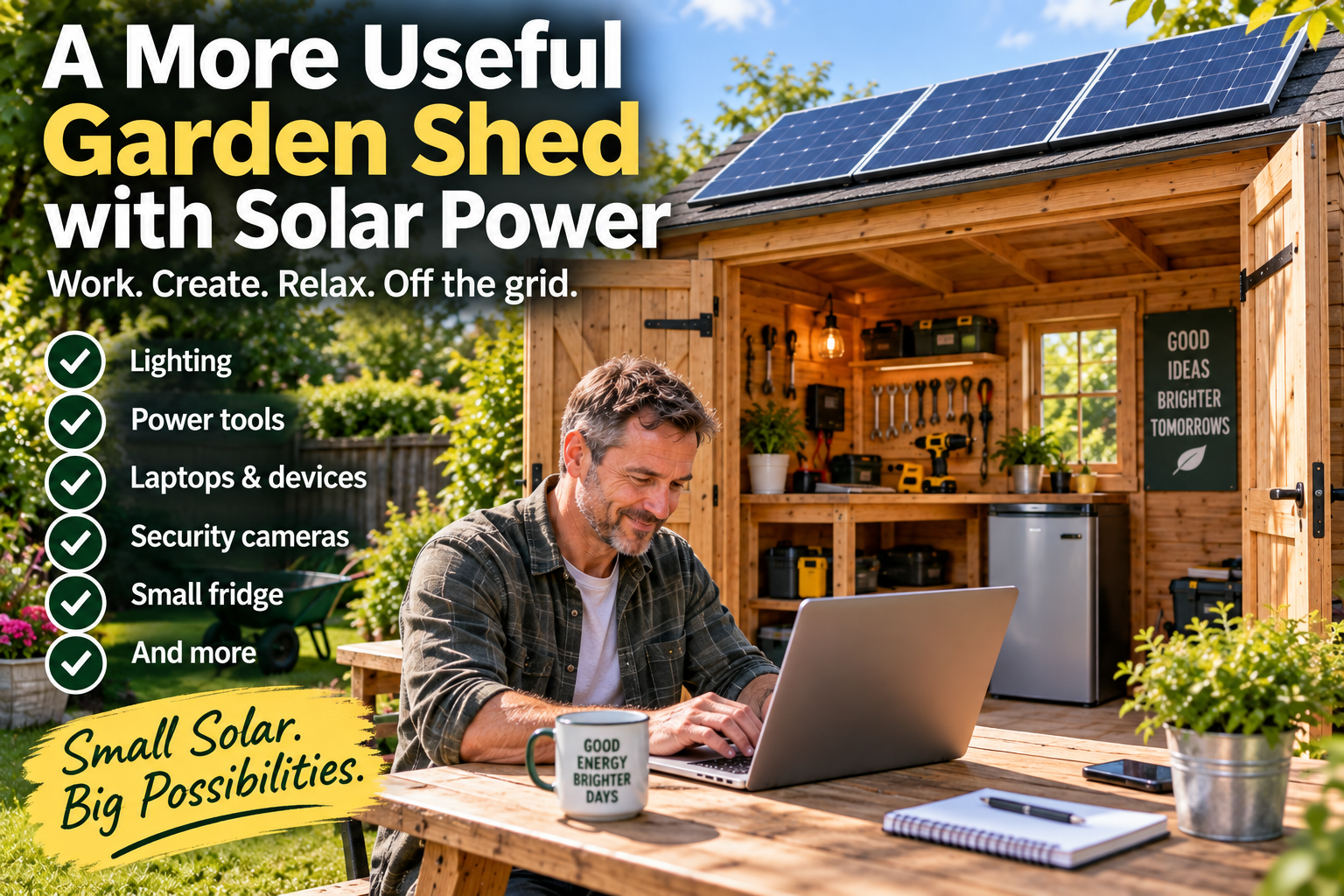
There are several ways to build a solar-powered shed. You can buy a dedicated kit, combine individual solar components or pair suitable solar panels with a portable power station.
At Home Energy Systems, we recommend comparing product specifications and suitability rather than choosing equipment purely because of the brand name.
BLUETTI
BLUETTI produces portable power stations and solar-compatible battery systems that can provide a convenient option for garden sheds, workshops and locations where a simple all-in-one power solution is preferred.
Depending on the model, compatible solar panels can recharge the power station during daylight hours, while the built-in battery and inverter provide electricity when required.
PECRON
PECRON offers portable power stations and solar charging equipment that can also suit off-grid sheds and garden workspaces. Portable systems have the additional advantage of being usable away from the shed when required.
Renogy
Renogy supplies solar panels, charge controllers, batteries and other off-grid components, making it relevant for people who prefer to build a more traditional permanent