Residential Wind Energy Guide 2026
Latest Home Wind Turbine Technology 2026: What’s New for Homeowners?
Smarter controls, quieter blades, improved generators and better integration with solar panels and battery storage are changing what residential wind systems can offer.
Latest home wind turbine technology is making residential wind systems smarter, quieter and easier to monitor. Modern turbines can use improved blade designs, direct-drive generators, digital controllers and remote monitoring to produce and manage electricity more effectively than many older systems.
However, technology cannot compensate for a poor wind resource. A modern turbine installed behind buildings or tall trees may still generate disappointing results, while a well-selected turbine on an exposed rural property could become a valuable part of a wider home energy system.
This guide examines the latest home wind turbine technology available in 2026, the developments that genuinely matter and the claims homeowners should approach cautiously before investing.
How Is Home Wind Turbine Technology Changing?
The basic purpose of a wind turbine has not changed. Moving air turns a rotor, and the rotor drives a generator that produces electricity. The greatest improvements are happening in the equipment that captures, converts, controls and monitors that electricity.
The latest home wind turbine technology generally focuses on six areas:
- Improved blade aerodynamics and reduced operating noise.
- Permanent-magnet and direct-drive generator designs.
- Smarter charge controllers and electronic braking.
- Remote monitoring through digital displays or connected applications.
- Better compatibility with solar panels and battery storage.
- Improved protection during excessively strong winds.
These developments can improve reliability and make a system more convenient to operate. They do not mean that every new turbine will produce large amounts of electricity in light or turbulent wind.
Smart Controls and Remote Monitoring

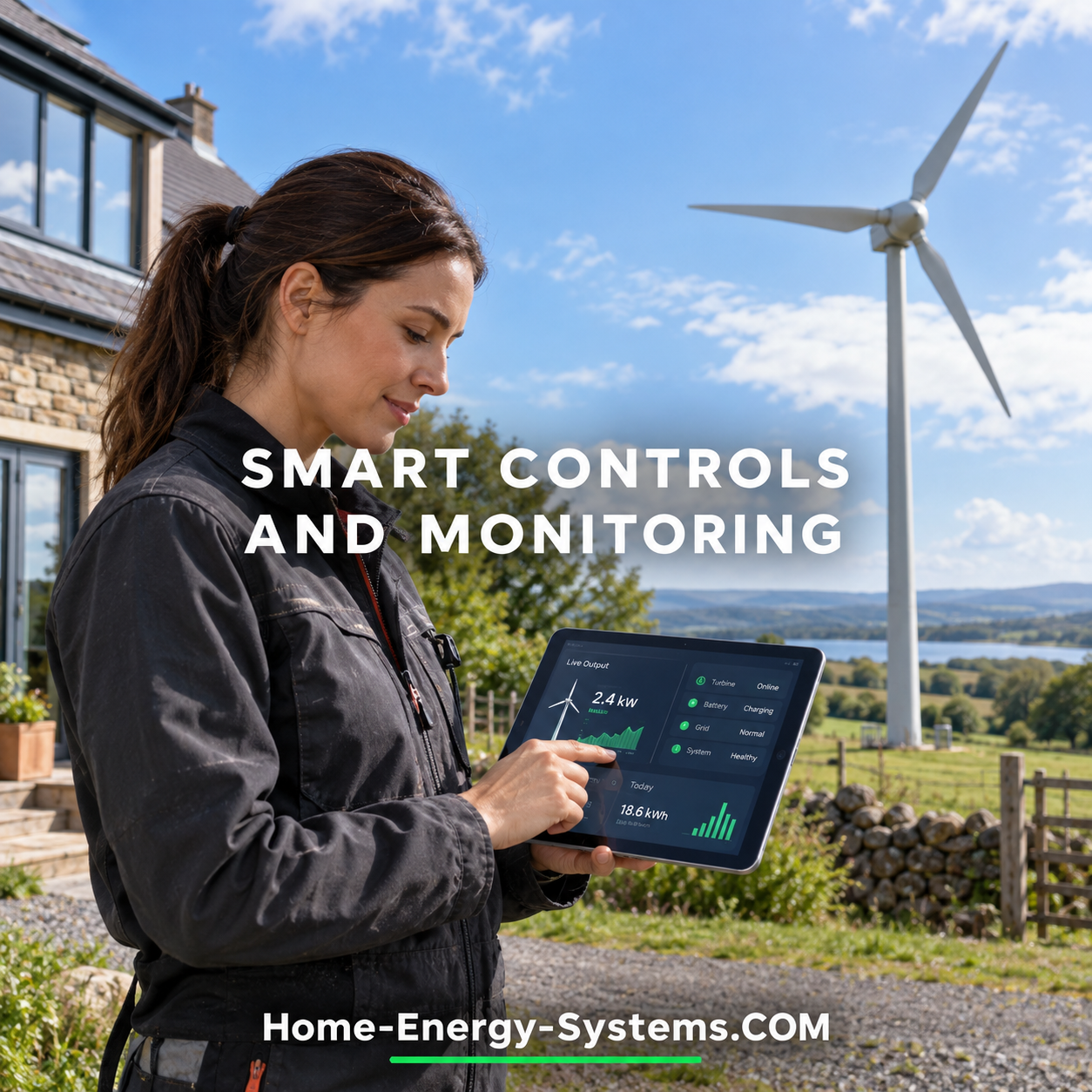
One of the most practical advances in home wind energy is the development of smarter control and monitoring equipment.
Older small wind systems often relied on basic controllers and simple meters. Newer systems may provide considerably more information, including:
- Current turbine output.
- Daily and accumulated electricity generation.
- Wind speed and rotor activity.
- Battery voltage and charging status.
- Controller temperature.
- System warnings and fault notifications.
- Braking or shutdown status.
This information can be shown on a local display or, where supported, through an online portal or mobile application. Remote monitoring is particularly useful when a turbine serves a farm building, cabin, workshop or other location that is not occupied continuously.
Why Better Monitoring Matters
A wind turbine operates in a demanding outdoor environment. Changes in output may indicate a problem with the blades, bearings, wiring, controller or battery system. Monitoring can make it easier to notice unusual performance before a minor issue develops into a more expensive repair.
Homeowners should still check exactly what a manufacturer means by “smart.” Some systems provide detailed historical information and alerts, while others offer little more than a basic Bluetooth display.
Quieter Blades and Direct-Drive Generators

Improved Blade Aerodynamics
Manufacturers continue to refine blade shape, blade twist and composite materials. The objective is to capture energy efficiently while limiting unnecessary vibration and aerodynamic noise.
A well-designed blade should start reliably in suitable wind, operate smoothly and withstand repeated exposure to changing weather. Blade balance is also important. An unbalanced rotor can create vibration, increase noise and place additional stress on bearings and the tower.
Claims such as “silent” should be treated carefully. Any moving turbine can create some sound, and the perceived noise will depend on wind speed, turbine design, distance and background conditions.
Permanent-Magnet Generators
Permanent-magnet generators are widely used in modern small turbines because they can offer a compact design and efficient conversion across a useful operating range. They do not require electrical power to create the generator’s magnetic field.
The quality of the magnets, windings, bearings, cooling and weather protection all influence long-term performance. A permanent-magnet label alone does not guarantee that a turbine is efficient or durable.
Direct Drive
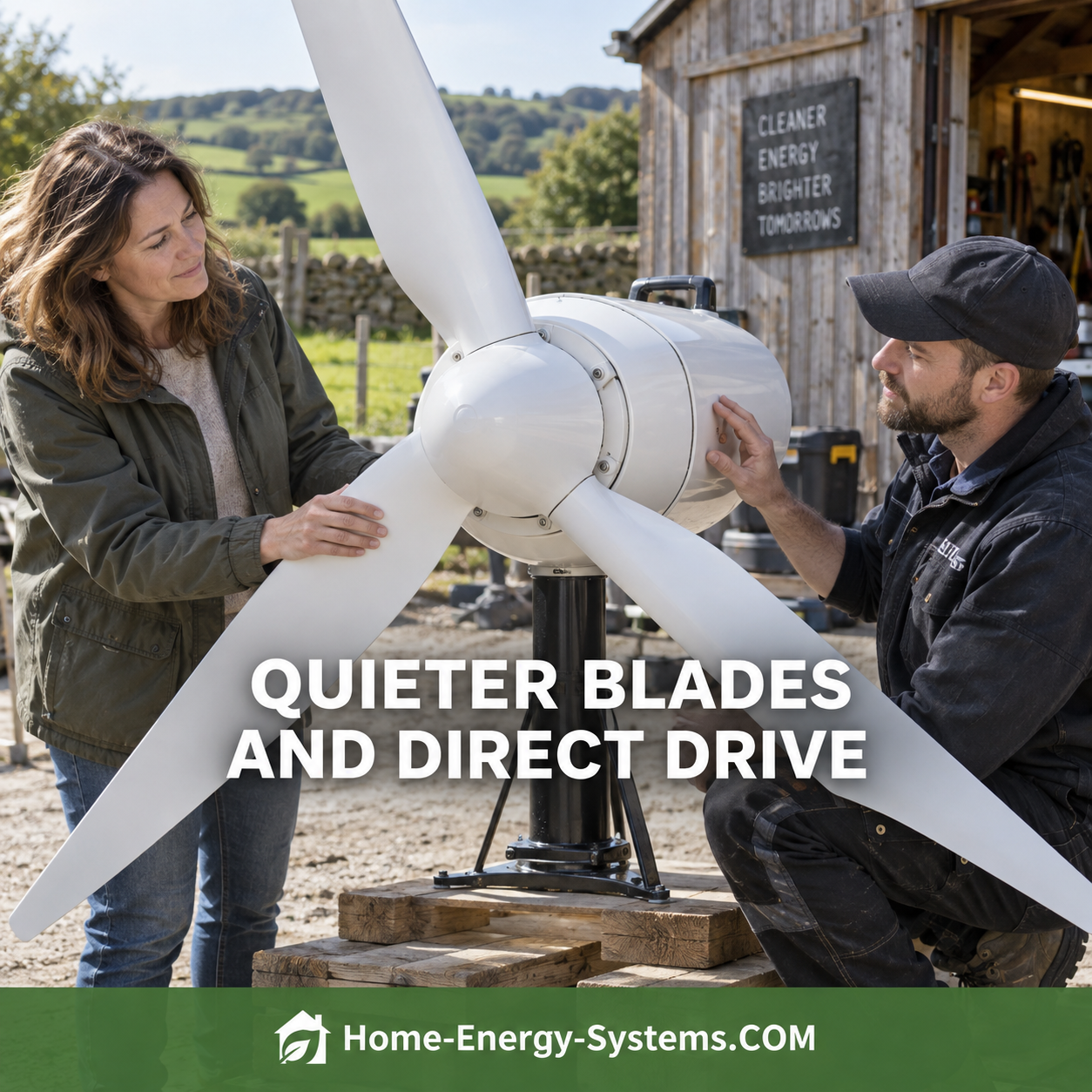
A direct-drive turbine connects the rotor to the generator without a conventional gearbox. Removing the gearbox reduces the number of moving components and may simplify maintenance.
- Fewer mechanical components.
- Reduced gearbox maintenance.
- Potentially quieter operation.
- Improved reliability when properly engineered.
The overall turbine must still be assessed as a complete product. Generator efficiency, bearings, blade design, tower quality and electronic controls remain important.
Are New Low-Wind Turbines Really Better?
Low-wind performance is one of the most heavily promoted areas of residential wind technology. Advertisements often highlight a very low cut-in wind speed, but cut-in speed only tells you when the turbine begins producing some electricity.
It does not tell you how much useful energy the turbine will generate.
A turbine might begin turning and producing a small electrical output in a gentle breeze, yet remain far below its rated power. Homeowners should ask for the complete power curve, which shows how output changes across different wind speeds.
Rotor diameter also matters because a larger swept area intercepts more moving air. Two turbines with the same advertised wattage can have very different rotor sizes, power curves and real-world energy production.
Wind, Solar and Battery Storage
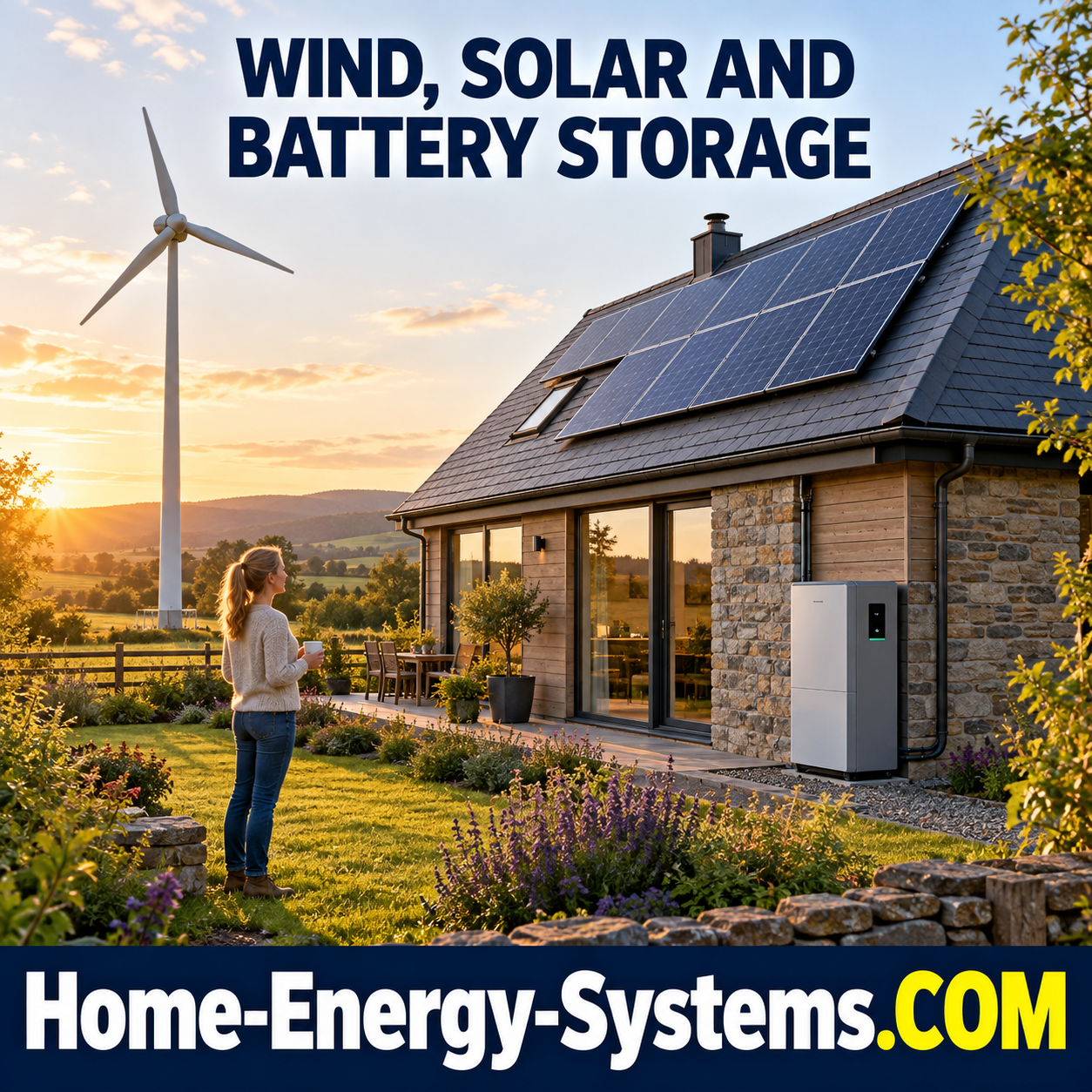
Some of the most useful latest home wind turbine technology is found in hybrid energy systems rather than in the turbine alone.
Wind and solar can complement one another because they depend on different resources. Solar panels produce electricity during daylight, while a wind turbine may continue generating during cloudy weather or after sunset when sufficient wind is available.
A compatible home battery storage system can store surplus electricity for later use. This can be particularly valuable for remote homes, rural buildings and off-grid energy systems.
What a Hybrid System Requires
- A wind turbine and compatible wind charge controller.
- Solar panels and a solar charge controller.
- Suitable battery storage.
- An inverter matched to the intended electrical loads.
- Electrical protection and isolation equipment.
- A diversion or dump load where required by the wind controller.
- Professional system design and installation.
Do not assume that a wind turbine can be connected directly to an existing solar controller or battery simply because the voltage appears similar. Wind charging behaves differently from solar charging, and the controller must safely manage turbine output and braking.
Vertical-Axis Turbines: Promise and Limitations
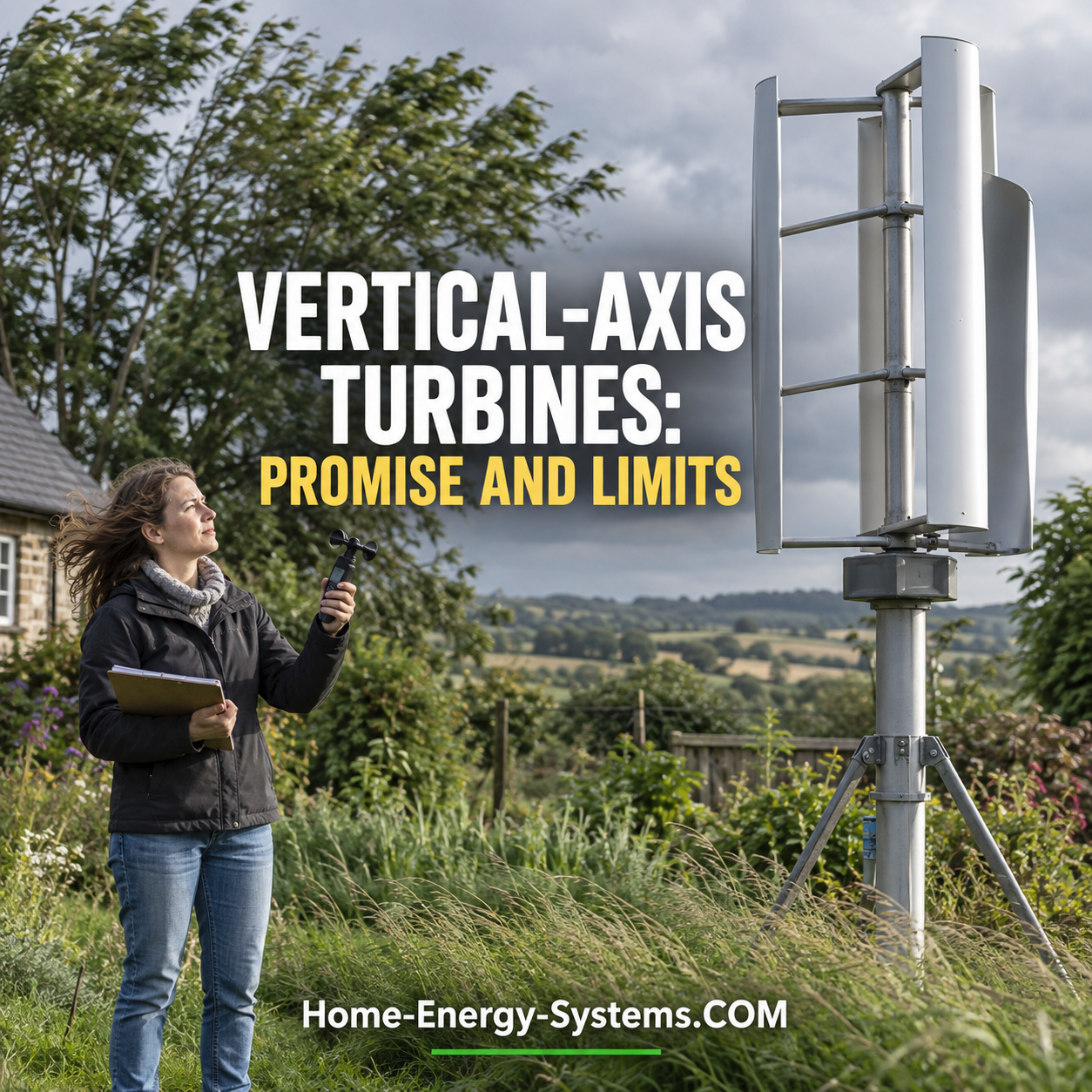
Vertical-axis wind turbines rotate around a vertical shaft. Some designs use curved or helical blades, while others use scooped shapes.
They attract interest because certain models can accept wind from different directions without turning the rotor into the wind. Their compact appearance also makes them appealing for residential and commercial buildings.
Potential advantages can include:
- Operation with wind arriving from different directions.
- Generator components that may be positioned closer to ground level.
- A compact visual profile for certain applications.
- Potential use in specialised sites where a horizontal-axis turbine is unsuitable.
However, a vertical-axis design does not remove the need for clean airflow. Buildings, roof edges and trees can create turbulence that reduces output and increases mechanical stress.
Homeowners should be particularly cautious about products claiming exceptional electricity production from a small rooftop unit. Request independently verified performance information, a power curve, acoustic data and realistic annual energy estimates.
The complete home wind turbine guide explains the main differences between horizontal-axis and vertical-axis turbines in more detail.
Improved Braking and Storm Protection
A home wind turbine must remain safe when wind conditions become too strong. Modern turbines may use a combination of mechanical design and electronic control to limit rotor speed.
- Electronic braking.
- Mechanical braking.
- Blade furling that turns the rotor partly away from the wind.
- Pitch control on more advanced systems.
- Controller shutdown procedures.
- Dump loads that safely absorb surplus electrical energy.
No turbine should be described as completely storm-proof. Homeowners should check the manufacturer’s maximum survival wind speed, approved tower requirements and shutdown instructions.
Lightning protection, earthing, foundations, cable protection and safe isolation are also part of the installation. These are not optional extras.
Technology Comparison
| Technology | Main Benefit | What to Check |
|---|---|---|
| Smart controller | Improved charging, protection and system information | Battery compatibility, braking method and maximum current |
| Remote monitoring | Performance data and fault notifications | Connection requirements, subscription costs and available data |
| Direct-drive generator | Fewer mechanical components | Generator efficiency, bearing quality and warranty |
| Improved blade design | Potentially smoother and quieter operation | Rotor diameter, materials, balancing and acoustic data |
| Hybrid wind and solar | Complementary renewable generation | Controllers, inverter, battery and system compatibility |
| Vertical-axis turbine | Accepts wind from different directions | Verified power curve, turbulence and annual production |
Measure the Wind Before You Buy
The most advanced turbine in the world cannot create electricity without sufficient wind. That is why a proper site assessment remains the most important stage of a residential wind project.
Wind should ideally be assessed at or close to the proposed turbine height. Ground-level observations and weather applications may not accurately represent the airflow available to the rotor.
- Average annual wind speed.
- Seasonal wind patterns.
- Wind direction.
- Surrounding trees and buildings.
- Terrain, hills and valleys.
- Proposed tower height.
- Turbulence at the installation position.
The U.S. Department of Energy Small Wind Guidebook provides independent information about site suitability, tower height, turbine sizing and estimating energy production.
Why Tower Height Matters
Wind is generally slower and more turbulent close to the ground. A taller tower can sometimes reach stronger and cleaner airflow above nearby obstacles.
This is one reason a freestanding tower may perform better than a turbine fixed close to a roof. Roofs and walls disturb airflow, while turbine vibration can also be transferred into the building.
Before installation, check local planning rules, tower restrictions, required clearances and grid-connection requirements. Regulations vary considerably between countries and local authorities.
Home Wind Technology Buying Checklist
- Has the wind resource been measured or professionally assessed?
- Can the supplier provide a complete power curve?
- What is the expected annual production in kilowatt-hours?
- At what wind speed is the rated output achieved?
- What is the rotor diameter and swept area?
- Which tower is approved for the turbine?
- How does the turbine protect itself in high winds?
- Does the controller support the intended battery chemistry?
- Can wind, solar and battery equipment work together safely?
- What monitoring information is available?
- Are replacement blades, bearings and controllers available?
- What maintenance and warranty support is provided?
- Does the installation comply with local planning and electrical rules?
Is the Latest Home Wind Turbine Technology Worth It?
The latest home wind turbine technology can be worth considering for an exposed rural property, farm, remote building or off-grid home with a strong wind resource.
Smarter controls, better monitoring and improved integration with battery storage can make modern systems easier to manage. Quieter blades and direct-drive designs may also improve the ownership experience.
However, a new turbine is not automatically a good investment simply because it includes a connected application or claims to start in light wind.
Most Promising Locations
Open rural properties, farms, elevated sites, exposed coastal areas and remote buildings with few nearby obstacles.
More Difficult Locations
Dense urban areas, sheltered gardens and properties surrounded by tall buildings, trees or highly turbulent airflow.
If the site has poor wind, money may be better invested in solar panels for the home, battery storage or improvements that reduce household electricity consumption.
If the property has excellent wind, compare suitable equipment in our Best Home Wind Turbines 2026 guide.
Frequently Asked Questions
What is the latest home wind turbine technology?
The most useful developments include smarter electronic controllers, remote monitoring, permanent-magnet generators, direct-drive systems, improved blade aerodynamics and better integration with solar panels and battery storage.
Can a modern wind turbine generate electricity in low wind?
Some turbines begin generating at relatively low wind speeds, but their output may initially be small. The complete power curve and estimated annual energy production are more useful than cut-in speed alone.
Are vertical-axis wind turbines better for homes?
They can suit certain applications, but they are not automatically better. Their real-world performance depends on rotor design, turbine size, verified output and the wind available at the installation position.
Can home wind turbines work with solar panels?
Yes. Wind and solar can provide complementary generation when compatible controllers, inverters, electrical protection and battery storage are used.
Do modern wind turbines require battery storage?
Not every system requires batteries. Grid-connected turbines may supply electricity to the home or export surplus electricity where permitted. Off-grid and backup-focused systems generally require suitable storage.
Are rooftop wind turbines worthwhile?
They can struggle with turbulent airflow created by the building and nearby obstacles. Structural loads, vibration, noise and planning requirements must also be considered. A properly positioned freestanding tower may offer cleaner airflow.
How do I compare home wind turbines?
Compare the power curve, expected annual generation, rotor diameter, rated wind speed, tower requirements, controller, braking system, warranty, certification and availability of replacement parts.
Is residential wind power suitable for every home?
No. Home wind energy is most promising where there is a strong, unobstructed wind resource and enough space for a suitable tower. Solar or energy-efficiency improvements may offer better value at sheltered properties.
Final Thoughts
The latest home wind turbine technology offers genuine improvements, especially in electronic controls, remote monitoring, quieter operation and hybrid renewable-energy systems.
But the most important part of a successful wind system is still the wind itself.
Measure or professionally assess the wind resource, compare realistic annual energy production and make sure the turbine, tower, controller, inverter and battery system are designed to work together.
Choose the technology that matches your property rather than the product with the most impressive advertisement.
Home-Energy-Systems.com provides independent educational information about residential energy technologies. Product specifications, performance, prices and availability can change. Always verify current manufacturer information and obtain appropriate planning, structural and electrical advice before installing a wind energy system.