Off-Grid Solar Systems
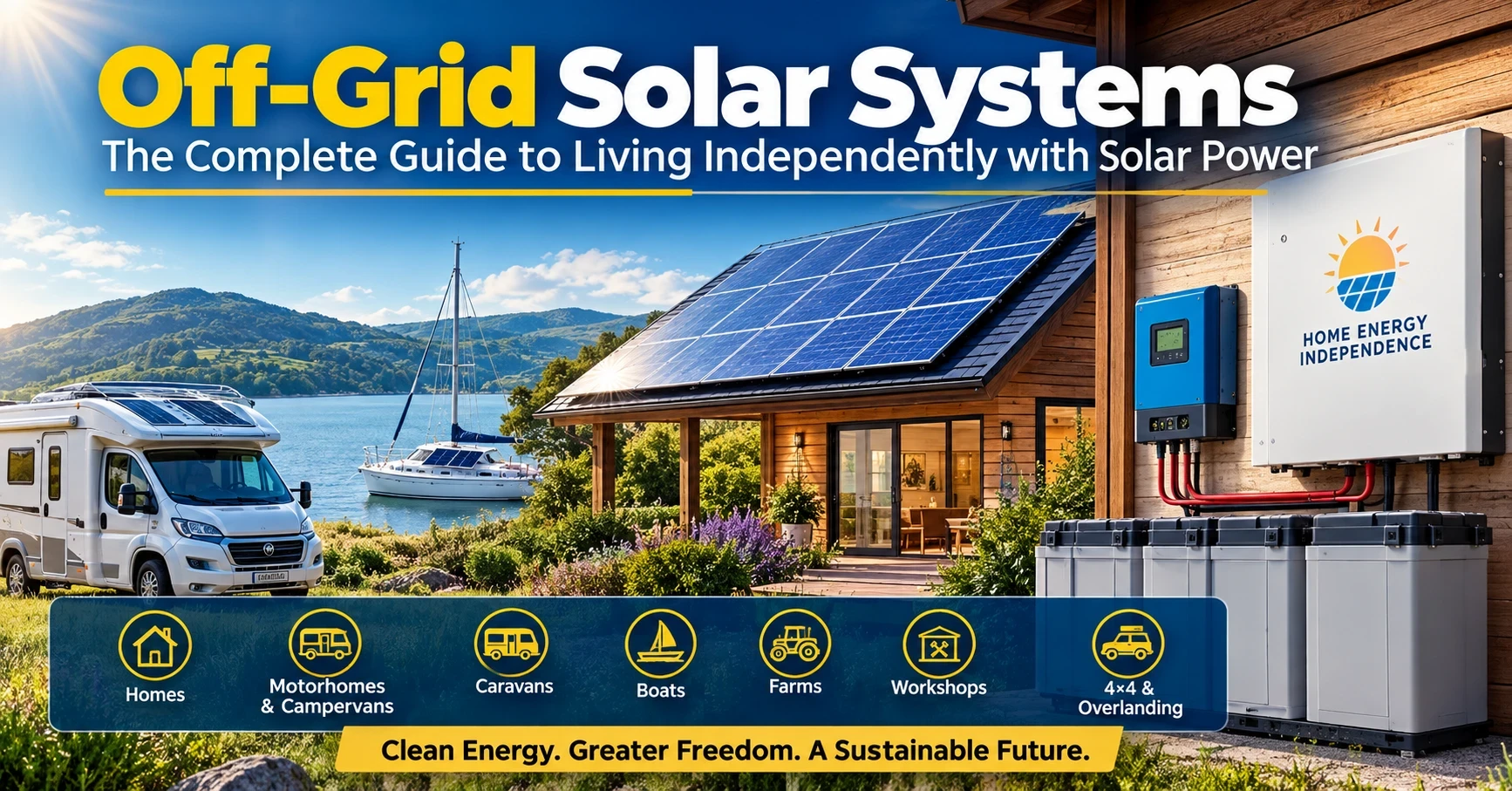
Off-grid solar systems are changing how homes, farms, remote buildings and vehicles generate electricity. Instead of depending on the public electricity network, an off-grid system produces power from sunlight and stores unused energy in batteries for later use.
This means electricity can be available in places where a grid connection is difficult, expensive or completely unavailable. Modern systems can power homes, cabins, farms, workshops, motorhomes, campervans, caravans, boats and expedition vehicles.
Advances in solar panels, lithium batteries, charge controllers and solar inverters have made independent power more practical than ever. However, choosing the correct equipment and system size is essential if you want reliable electricity throughout the year.
This guide explains how off-grid solar systems work, the components they require, how to calculate your energy needs and how to choose a suitable setup for your home, property or vehicle.
What Is an Off-Grid Solar System?
An off-grid solar system is an independent electricity system that operates without a connection to the public power network.
Solar panels generate electricity during daylight hours. Some of that electricity can be used immediately, while the remaining power is directed into a battery bank. The stored electricity can then be used at night, during cloudy weather or whenever solar production is lower than demand.
Unlike a standard grid-connected system, an off-grid installation cannot automatically draw electricity from the utility network when solar production falls. It must therefore be designed with enough solar generation and battery storage to meet the user’s needs.
Off-grid systems are commonly used for:
- Remote homes and rural properties.
- Holiday cabins and tiny homes.
- Farms and agricultural buildings.
- Garden offices, sheds and workshops.
- Motorhomes and campervans.
- Caravans and trailers.
- Boats and marine applications.
- Overlanding and expedition vehicles.
- Remote communications and security equipment.
- Water pumps and irrigation systems.
How Off-Grid Solar Systems Work
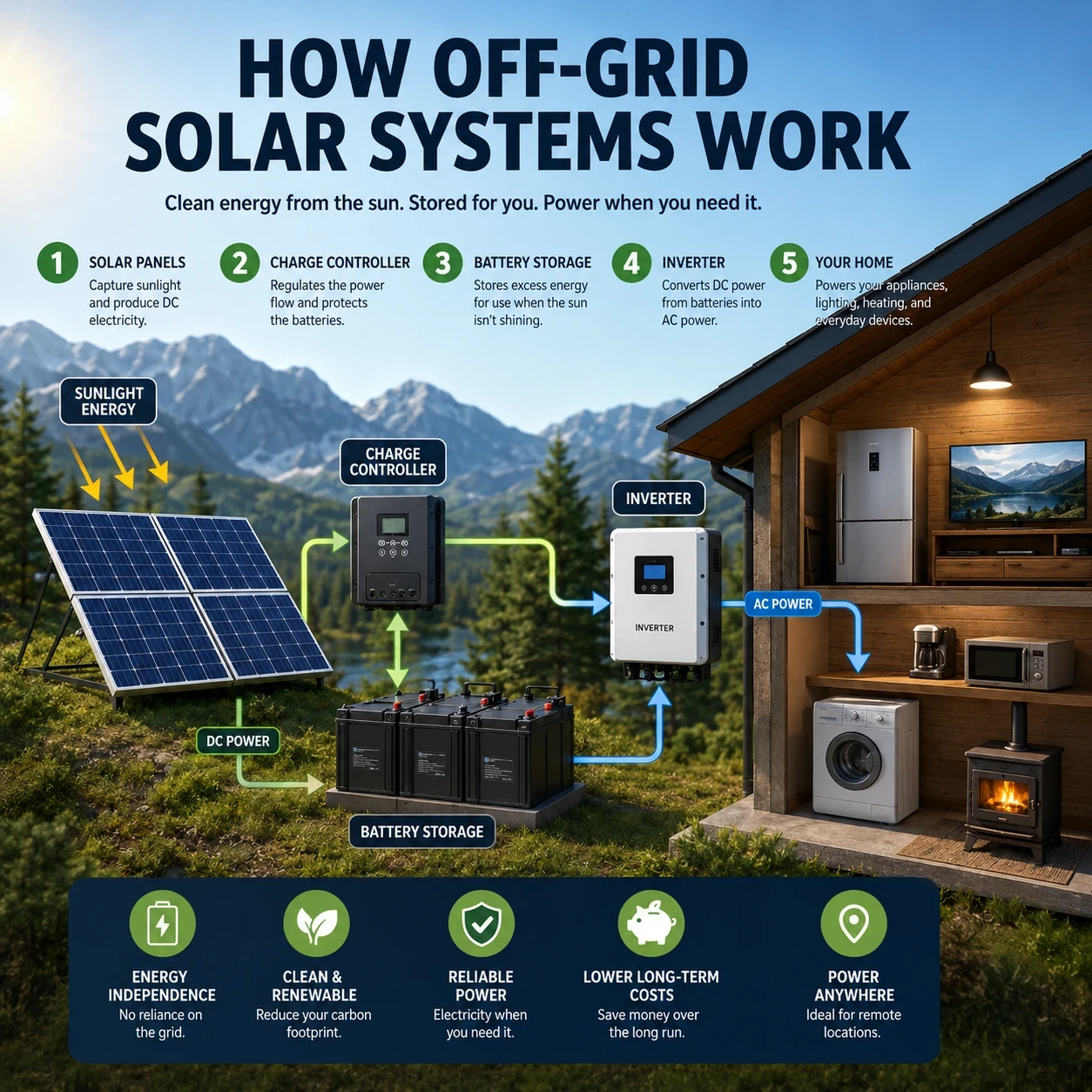
Although off-grid systems vary in size, they generally follow the same basic process.
- Solar panels capture sunlight and generate direct current electricity.
- A charge controller regulates the electricity travelling from the panels to the batteries.
- The battery bank stores surplus electricity for later use.
- A solar inverter converts stored direct current electricity into alternating current electricity.
- The converted electricity powers household appliances, tools, lighting and electronic devices.
During strong sunlight, the panels may generate enough electricity to power appliances and recharge the batteries at the same time. At night or during poor weather, the batteries supply the required electricity.
A properly designed monitoring system allows users to check solar production, battery levels and electricity consumption. This makes it easier to manage energy use and identify potential problems before they become serious.
Essential Components of an Off-Grid Solar System
An effective off-grid installation depends on several components working together. The quality and compatibility of these components can significantly affect performance, reliability and system lifespan.
Solar Panels
Solar panels are the main source of electricity. They convert sunlight into direct current power that can be used immediately or stored in batteries.
Monocrystalline solar panels are commonly chosen for off-grid installations because they provide good efficiency and power output while requiring less space than many older panel designs.
The number of panels required depends on:
- Your average daily electricity consumption.
- The amount of sunlight available in your location.
- Seasonal differences in daylight hours.
- The orientation and angle of the panels.
- Shading from trees, buildings or surrounding landscape.
- The amount of space available.
Solar Charge Controller
The charge controller manages the electricity flowing from the solar panels into the battery bank. It helps prevent overcharging, excessive discharge and damage caused by unsuitable voltage or current levels.
Most modern off-grid solar systems use an MPPT charge controller. MPPT stands for Maximum Power Point Tracking. This technology helps extract as much usable energy as possible from the solar panels, particularly when sunlight and temperature conditions change.
Battery Storage
Battery storage is essential because an off-grid system has no public electricity connection to fall back on.
The battery bank stores electricity generated during daylight hours and releases it when solar production cannot meet demand. This may be overnight, during cloudy weather or when several appliances are operating simultaneously.
Lithium iron phosphate batteries are increasingly popular for off-grid applications because they generally provide:
- Longer service life.
- Greater usable capacity.
- Faster charging.
- Lower maintenance requirements.
- Deeper discharge capability.
- Lower weight than many lead-acid alternatives.
Traditional lead-acid batteries may cost less initially, but they are usually heavier and offer less usable storage capacity. They may also require more frequent maintenance and replacement.
Solar Inverter
Solar panels and batteries normally operate using direct current electricity. Most household appliances use alternating current electricity.
The inverter converts electricity from the battery bank into the type of power required by appliances, lighting, televisions, computers, refrigerators, pumps and power tools.
The inverter must be large enough to handle normal electricity consumption and short periods of increased demand. Appliances such as pumps, refrigerators, kettles and power tools may require a surge of electricity when starting.
A pure sine wave inverter is generally recommended for homes and sensitive electronic equipment because it provides a smoother and more consistent electrical output.
Monitoring System
A monitoring system provides information about how much electricity the panels are producing, how much power is being consumed and how much energy remains in the batteries.
Many modern systems can be monitored using a smartphone app or online dashboard. This allows users to adjust their electricity consumption before battery levels become too low.
Backup Power
Some larger off-grid solar systems include a backup generator. A generator can provide additional electricity during extended periods of poor weather, unexpected equipment failure or unusually high energy consumption.
A backup generator should not replace correct solar and battery sizing. However, it can provide valuable protection for homes, farms and businesses that require uninterrupted electricity.
Off-Grid vs Grid-Tied vs Hybrid Solar Systems
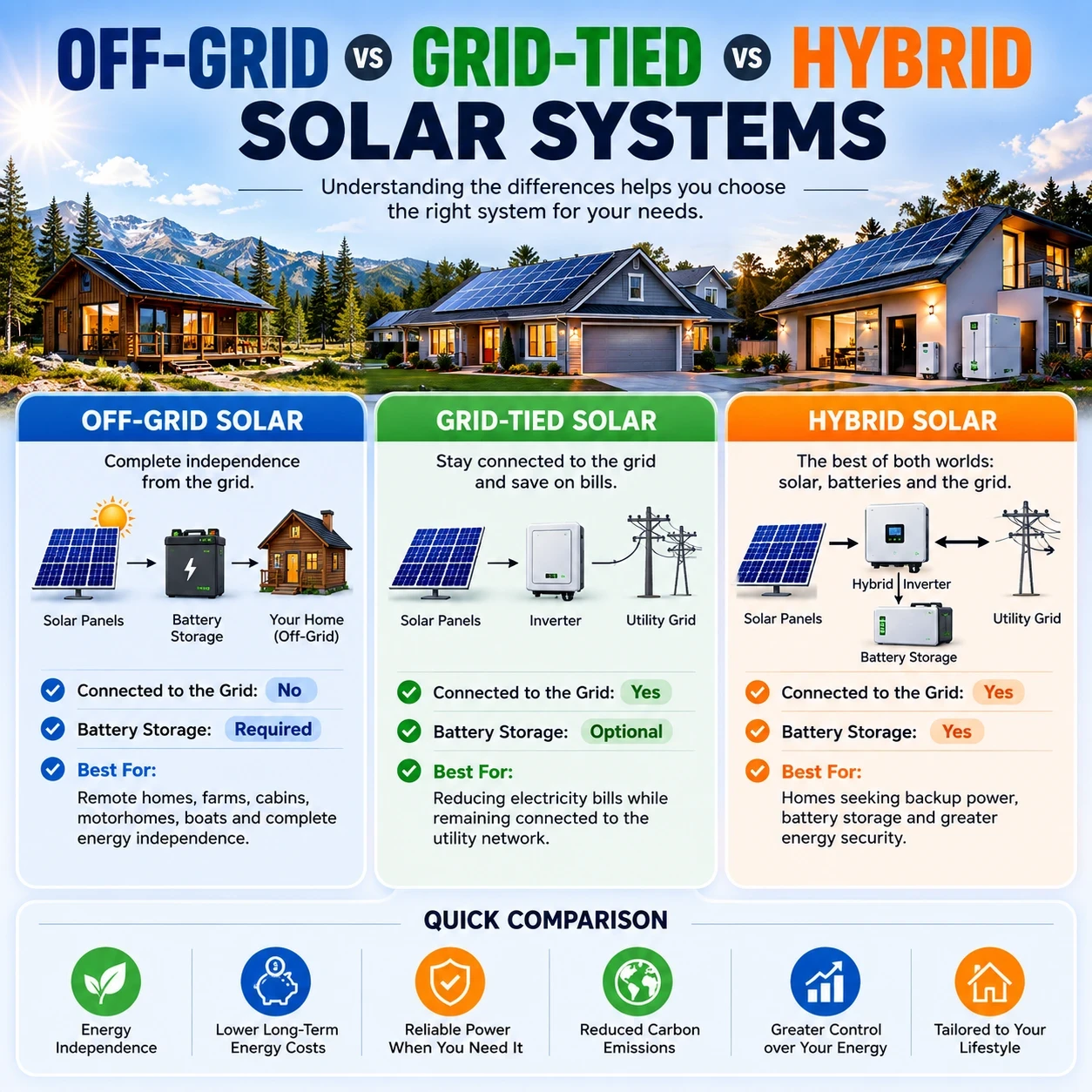
Understanding the differences between the three main types of solar systems can help you decide which option best suits your needs.
Off-Grid Solar Systems
Grid connection: No.
Battery storage: Required.
Best suited to: Remote homes, farms, cabins, workshops, boats, motorhomes and locations where a public electricity connection is unavailable or unwanted.
An off-grid system provides complete independence, but it must generate and store enough electricity to meet all expected demand.
Grid-Tied Solar Systems
Grid connection: Yes.
Battery storage: Optional.
Best suited to: Homes and businesses that want to reduce electricity bills while remaining connected to the public electricity network.
A grid-tied system can use electricity from the network whenever solar production is insufficient. However, many standard grid-tied systems automatically shut down during a power outage unless suitable backup equipment is installed.
Hybrid Solar Systems
Grid connection: Yes.
Battery storage: Usually included.
Best suited to: Homes that want lower electricity bills, battery backup and additional protection during power cuts.
A hybrid system combines solar panels, batteries and a grid connection. It offers greater flexibility but does not provide the same complete independence as a fully off-grid system.
Benefits of Off-Grid Solar Systems
Off-grid solar can provide several important benefits when the system is properly designed.
- Complete independence from the public electricity network.
- Reliable electricity in remote locations.
- Reduced dependence on diesel or petrol generators.
- Lower long-term energy costs.
- Quiet electricity generation.
- Reduced carbon emissions.
- Protection from rising utility prices.
- Expandable systems that can grow with your needs.
- Power for properties where a grid connection would be expensive.
- Greater freedom for travelling and remote living.
The greatest benefit is flexibility. Off-grid systems can be designed for anything from charging a phone in a campervan to powering a family home or agricultural building.
How to Size an Off-Grid Solar System
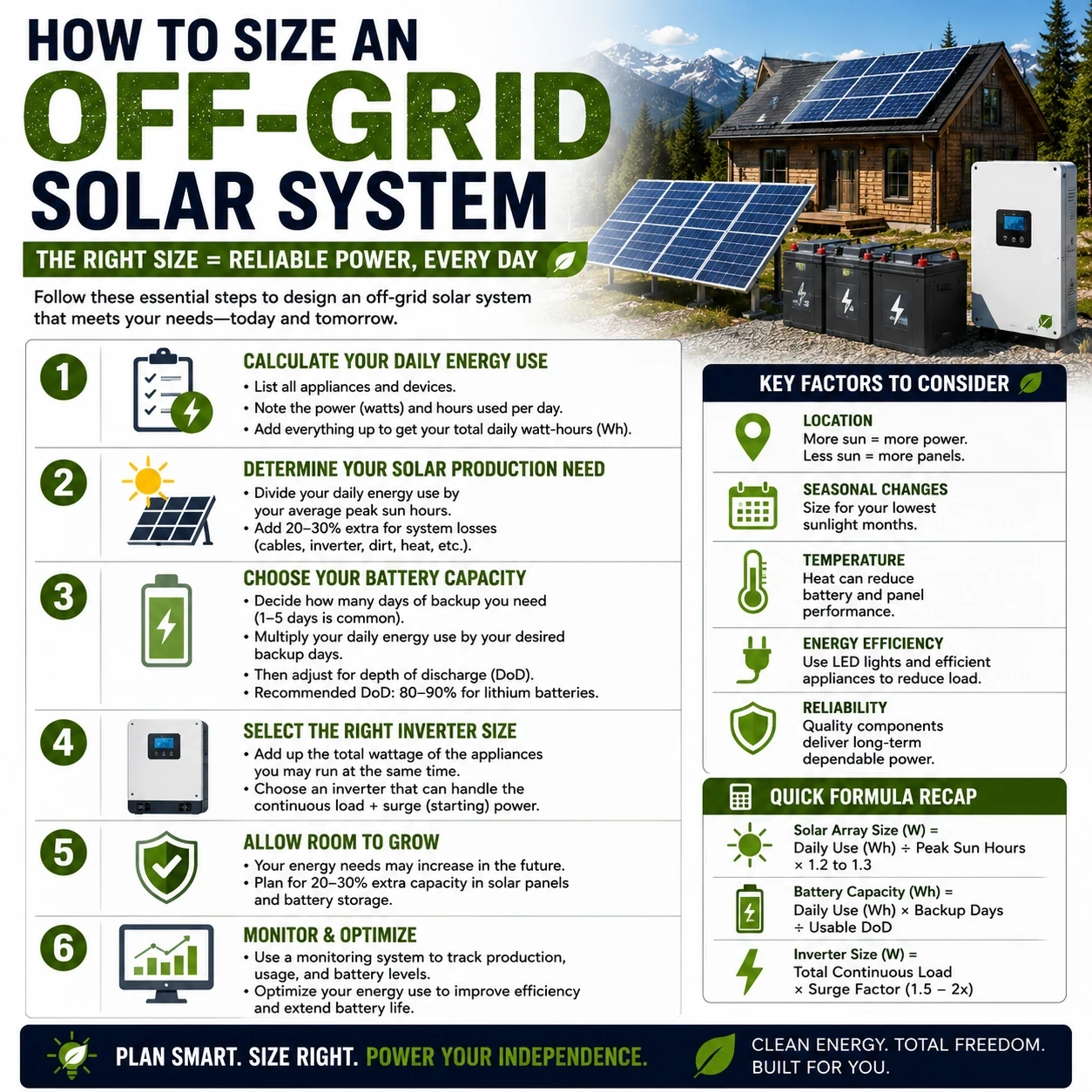
Correct system sizing is one of the most important parts of planning an off-grid installation. A system that is too small may regularly run out of electricity, while an oversized system may cost more than necessary.
Calculate Your Daily Electricity Consumption
Begin by listing every appliance and electrical device you expect to use. Record its power rating in watts and estimate how many hours it will operate each day.
For example, a 100-watt device operating for five hours would consume approximately 500 watt-hours of electricity.
Include items such as:
- Lighting.
- Refrigerators and freezers.
- Televisions and entertainment equipment.
- Computers and internet equipment.
- Water pumps.
- Power tools.
- Kitchen appliances.
- Heating and cooling equipment.
- Navigation and communication systems.
- Charging for phones, cameras and other devices.
Allow for System Losses
No solar system operates at perfect efficiency. Some electricity is lost through cables, batteries, inverters and charge controllers.
Your planned system should therefore include a reasonable safety margin rather than being sized only for the exact calculated consumption.
Consider Seasonal Solar Production
Solar panels normally produce less electricity during winter because daylight hours are shorter and the sun is lower in the sky.
An off-grid home that works comfortably during summer may struggle during winter if seasonal production was not considered during the design process.
Local weather, shading and panel orientation must all be taken into account.
Choose Sufficient Battery Capacity
Battery capacity should be large enough to cover overnight demand and periods when solar production is reduced.
Some systems are designed with enough storage for one day, while remote homes may require several days of backup capacity. The correct amount depends on electricity consumption, local weather and the availability of backup generation.
Choose the Correct Inverter
The inverter should be rated for both continuous electricity demand and short periods of peak demand.
Do not choose an inverter based only on average usage. Consider which appliances may operate at the same time and whether any equipment requires additional starting power.
Off-Grid Solar for Homes
A well-designed off-grid solar system can power many of the appliances used in a modern home. This may include lighting, refrigeration, televisions, computers, internet equipment, water pumps, kitchen appliances and low-energy heating or cooling systems.
Energy efficiency becomes particularly important in an off-grid home. Efficient appliances reduce the number of solar panels and batteries required, which can significantly lower installation costs.
Large electrical loads such as electric showers, resistance heating, tumble dryers and conventional electric water heaters can require substantial solar and battery capacity. Alternative heating and hot-water solutions may therefore be more practical.
Off-Grid Solar for Cabins and Holiday Homes
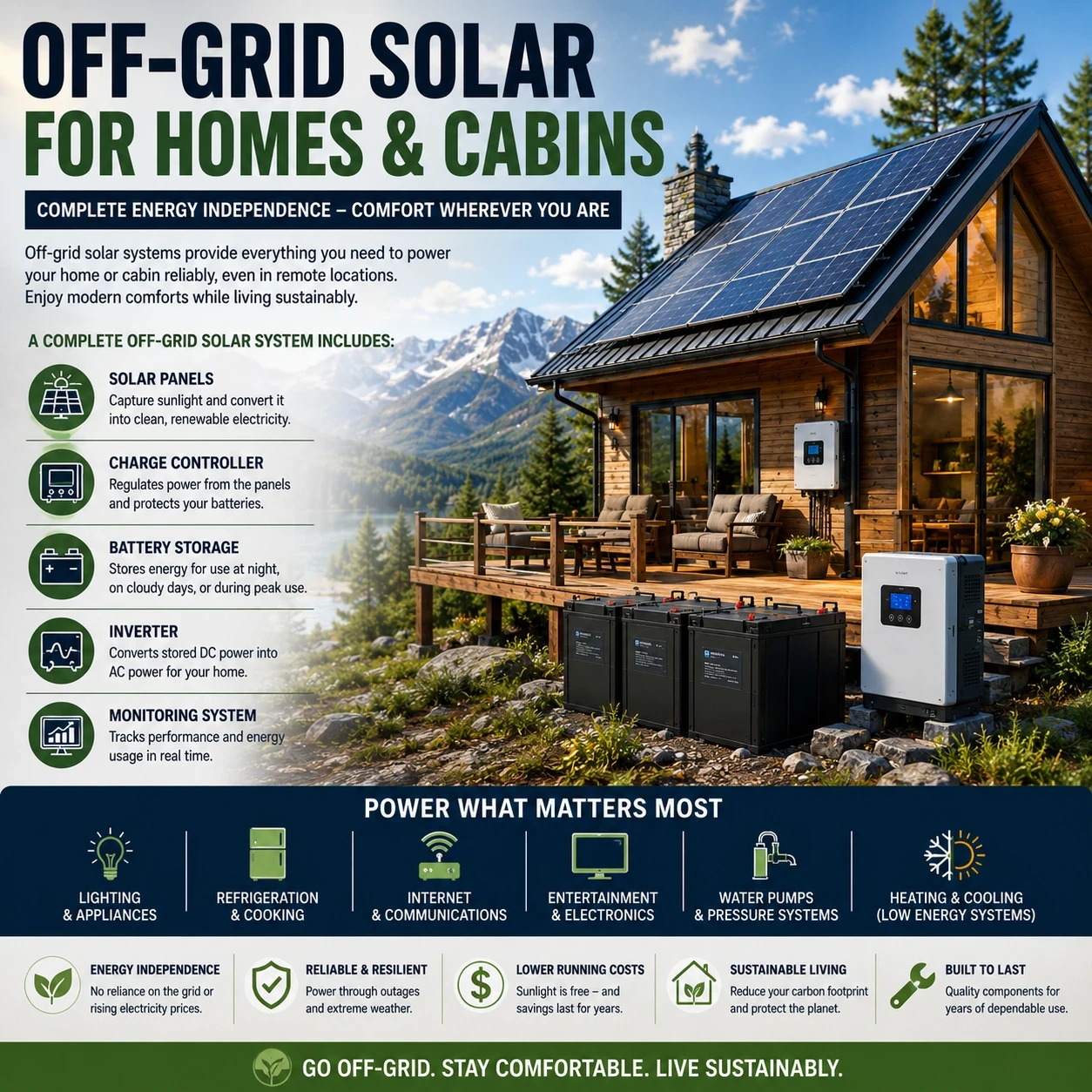
Remote cabins and holiday properties are ideal candidates for off-grid solar power. Extending the electricity network to an isolated building may cost considerably more than installing an independent solar system.
A modest cabin system can provide:
- Lighting.
- Refrigeration.
- Phone and laptop charging.
- Television and radio.
- Internet access.
- Water pumping.
- Security equipment.
Properties used only occasionally may require a smaller system than a full-time residence, although batteries should still be protected from extreme temperature and long periods without use.
Off-Grid Solar for Farms and Remote Buildings
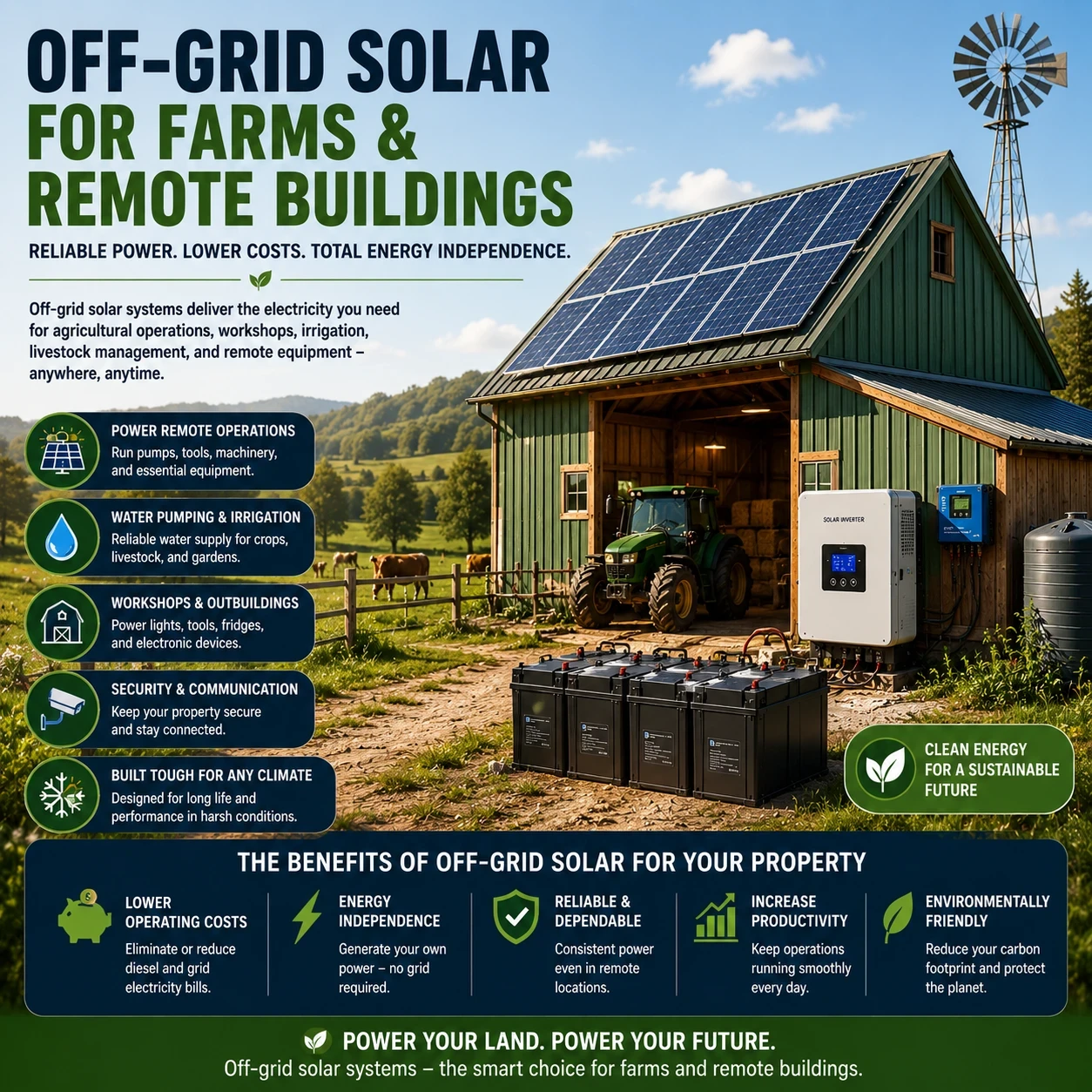
Farms often contain buildings and equipment located a considerable distance from the main electricity connection.
Off-grid solar systems can provide electricity for:
- Water pumps and irrigation.
- Electric fencing.
- Livestock buildings.
- Ventilation and monitoring equipment.
- Workshops and power tools.
- Security cameras and lighting.
- Remote gates and communication systems.
Solar power can reduce fuel consumption and avoid the cost of installing long electrical cables across agricultural land.
Professional system design is especially important when powering pumps, motors or agricultural machinery because these devices may have high starting requirements.
Off-Grid Solar for Garden Offices and Workshops
A small independent solar system can provide electricity to a garden office, shed or workshop without installing a permanent underground cable from the main property.
The system may power lighting, computers, internet equipment, battery chargers and smaller tools. Larger machinery may require a more powerful inverter and battery bank.
Before choosing this option, compare the cost of an off-grid system with the cost of installing a safe permanent electrical connection.
Off-Grid Solar for Motorhomes, Campervans and Caravans
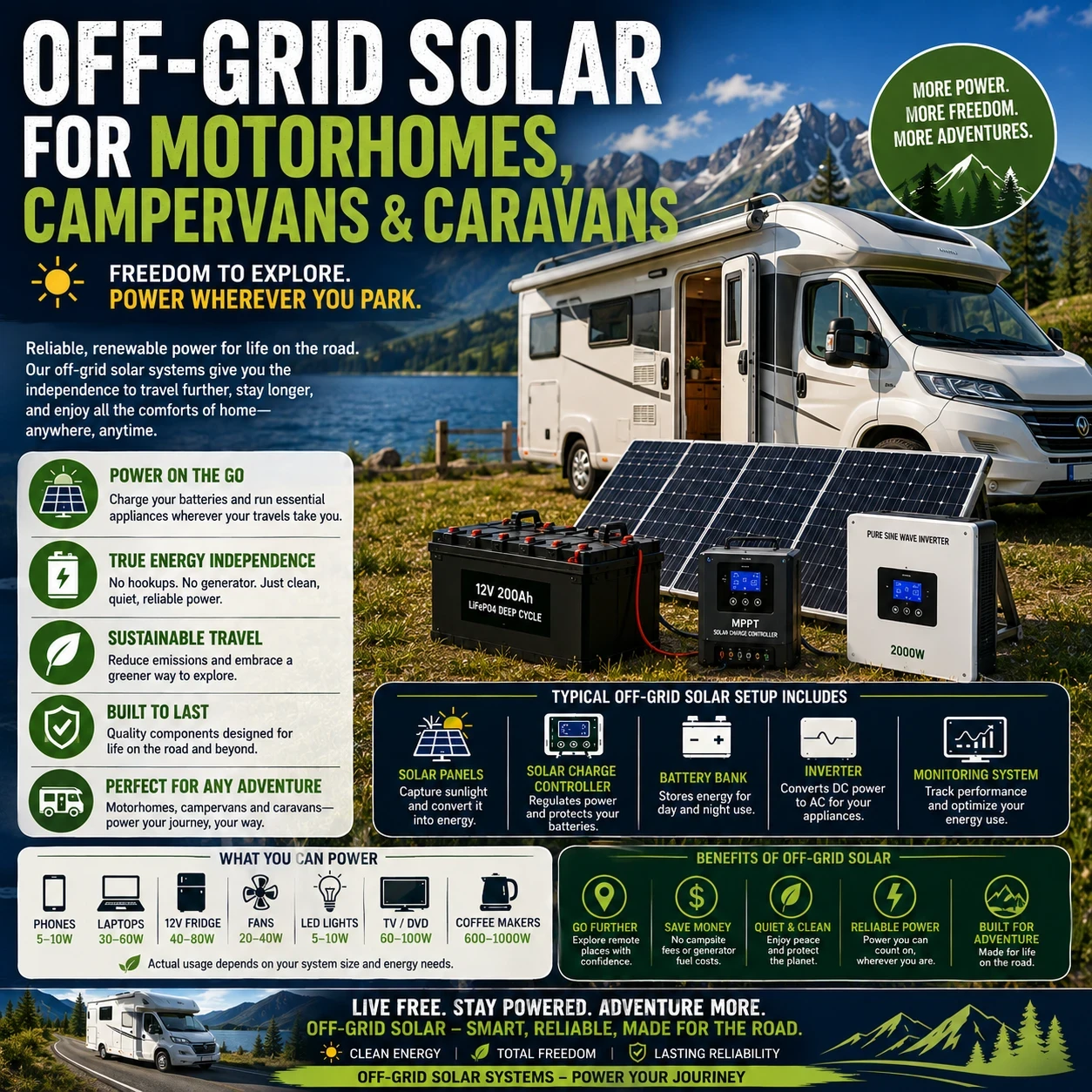
Solar panels can help motorhome, campervan and caravan owners travel for longer without depending on campsite hook-ups.
Roof-mounted or portable panels recharge the leisure battery during daylight hours. The stored power can then operate lighting, refrigeration, water pumps, fans, televisions, laptops and phone chargers.
A typical vehicle solar system may include:
- Roof-mounted or folding solar panels.
- An MPPT charge controller.
- A lithium or leisure battery.
- A suitable inverter.
- A battery monitoring display.
- Correctly rated cables, fuses and isolators.
High-consumption devices such as electric kettles, hairdryers and coffee machines can place heavy demands on a vehicle battery. Their use should be considered carefully when sizing the system.
Off-Grid Solar for Boats and Marine Applications
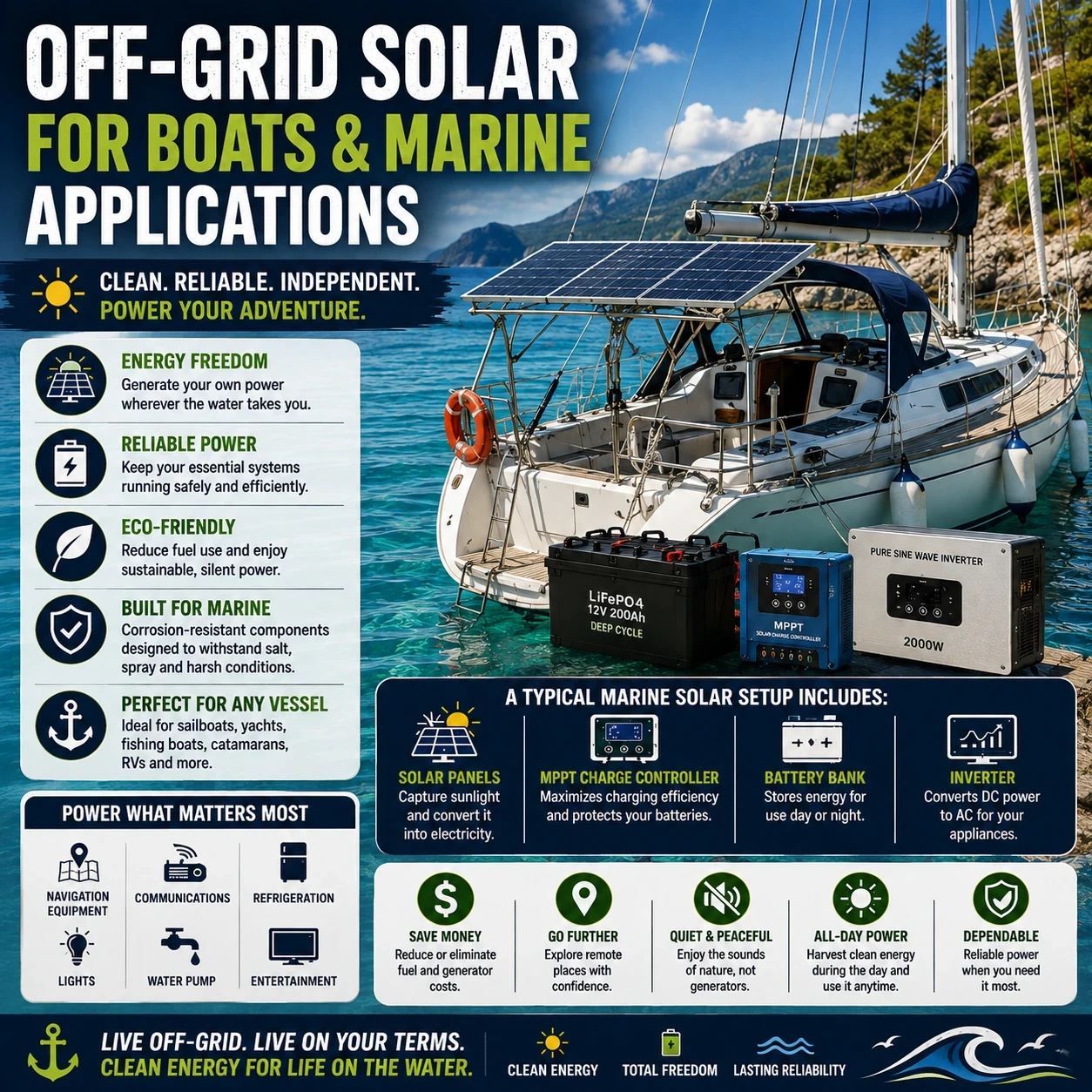
Marine solar systems can provide quiet, renewable electricity for sailing boats, yachts, canal boats, fishing vessels and other watercraft.
Solar power can support:
- Navigation equipment.
- Radios and communications.
- Refrigeration.
- Cabin lighting.
- Water pumps.
- Entertainment systems.
- Battery maintenance.
Marine equipment must be selected for the environment in which it will operate. Components may need protection from saltwater, moisture, vibration and corrosion.
Flexible panels can work well on curved surfaces, although rigid panels may provide greater durability and airflow when sufficient mounting space is available.
Off-Grid Solar for Overlanding and Expedition Vehicles
Overlanding and expedition vehicles often spend extended periods away from established campsites and electrical infrastructure.
Solar panels and battery storage can power refrigerators, communication equipment, cameras, laptops, lights, navigation systems and emergency equipment.
Portable folding panels are particularly useful because they can be positioned in direct sunlight while the vehicle remains parked in the shade.
Choosing the Right Off-Grid Solar System
Choosing the correct system begins with understanding exactly what you need to power.
Before purchasing equipment, consider:
- Your average daily electricity consumption.
- Your highest expected electricity demand.
- The amount of available sunlight.
- Winter weather and seasonal changes.
- Available panel mounting space.
- Required battery backup.
- Future expansion plans.
- Installation and maintenance requirements.
- The availability of professional support.
- Your overall budget.
Buying a complete kit can simplify the process because the main components are selected to work together. However, the kit must still be correctly sized for your intended use.
UK readers can explore professionally supplied off-grid equipment and complete kits through SunStore, a specialist supplier of off-grid solar systems for homes, farms, vehicles and remote applications.

Affiliate disclosure: Home Energy Systems may earn a commission if you purchase through selected links, at no additional cost to you.
Installation Considerations
Small systems for vehicles, boats and garden buildings may be suitable for experienced DIY installers. However, larger installations involve significant electrical currents and should normally be designed or checked by a qualified professional.
Important installation considerations include:
- Panel orientation and shading.
- Battery ventilation and temperature.
- Correct cable thickness.
- Appropriate fuses and circuit protection.
- Safe earthing and isolation.
- Weatherproof equipment enclosures.
- Access for maintenance.
- Compliance with local regulations.
Incorrectly sized cables or poorly protected connections can cause overheating, equipment damage and fire risk. Safety should never be compromised to reduce installation costs.
Maintaining an Off-Grid Solar System
Modern off-grid solar systems require relatively little maintenance, but regular checks can improve performance and extend equipment life.
- Keep panels clean and free from leaves and debris.
- Check mounting brackets and roof seals.
- Inspect cables and electrical connections.
- Monitor battery condition and charge levels.
- Keep ventilation openings clear.
- Trim trees that begin shading the panels.
- Review system performance for unexpected changes.
- Follow the manufacturers’ maintenance instructions.
How Much Do Off-Grid Solar Systems Cost?
The cost varies considerably depending on the application, battery capacity, panel size, inverter power, equipment quality and installation requirements.
A small system for basic lighting and charging may cost a few hundred pounds. A more capable campervan or boat system may cost several thousand pounds.
A complete off-grid home may require a much larger investment because it needs enough solar generation, storage and backup capacity to provide dependable year-round electricity.
When comparing prices, consider long-term value rather than simply choosing the cheapest equipment. Higher-quality batteries, inverters and charge controllers can provide better performance, stronger warranties and longer service life.
Common Mistakes to Avoid
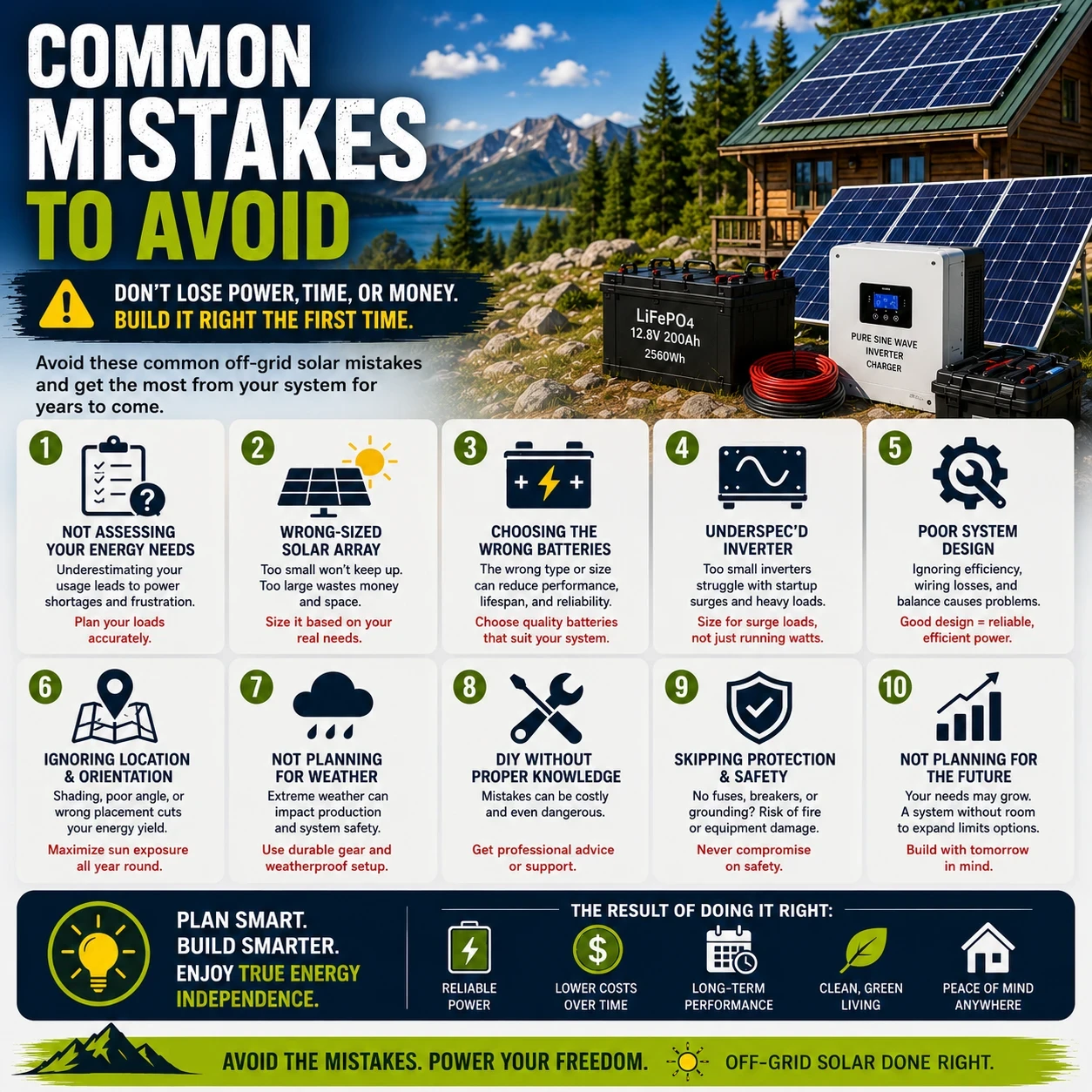
Underestimating Electricity Consumption
Many systems fail to meet expectations because the owner has not accurately calculated daily energy use.
Installing Too Few Solar Panels
A small solar array may struggle to recharge the batteries, especially during winter or cloudy weather.
Choosing Insufficient Battery Storage
A battery bank that is too small may discharge deeply every night, reducing reliability and potentially shortening battery life.
Choosing the Wrong Inverter
An undersized inverter may shut down when appliances start or when several devices are operating simultaneously.
Ignoring Shading
Even partial shading can reduce solar panel output. Panel position should be assessed throughout the day and across different seasons.
Buying Incompatible Components
Solar panels, controllers, batteries and inverters must be electrically compatible. Buying equipment individually without checking specifications can create serious problems.
Ignoring Safety Equipment
Fuses, breakers, isolators, correct cables and suitable enclosures are essential parts of an off-grid system.
Failing to Plan for Expansion
Your electricity requirements may increase over time. Choosing expandable equipment can make future upgrades easier and less expensive.
The Future of Off-Grid Solar Systems
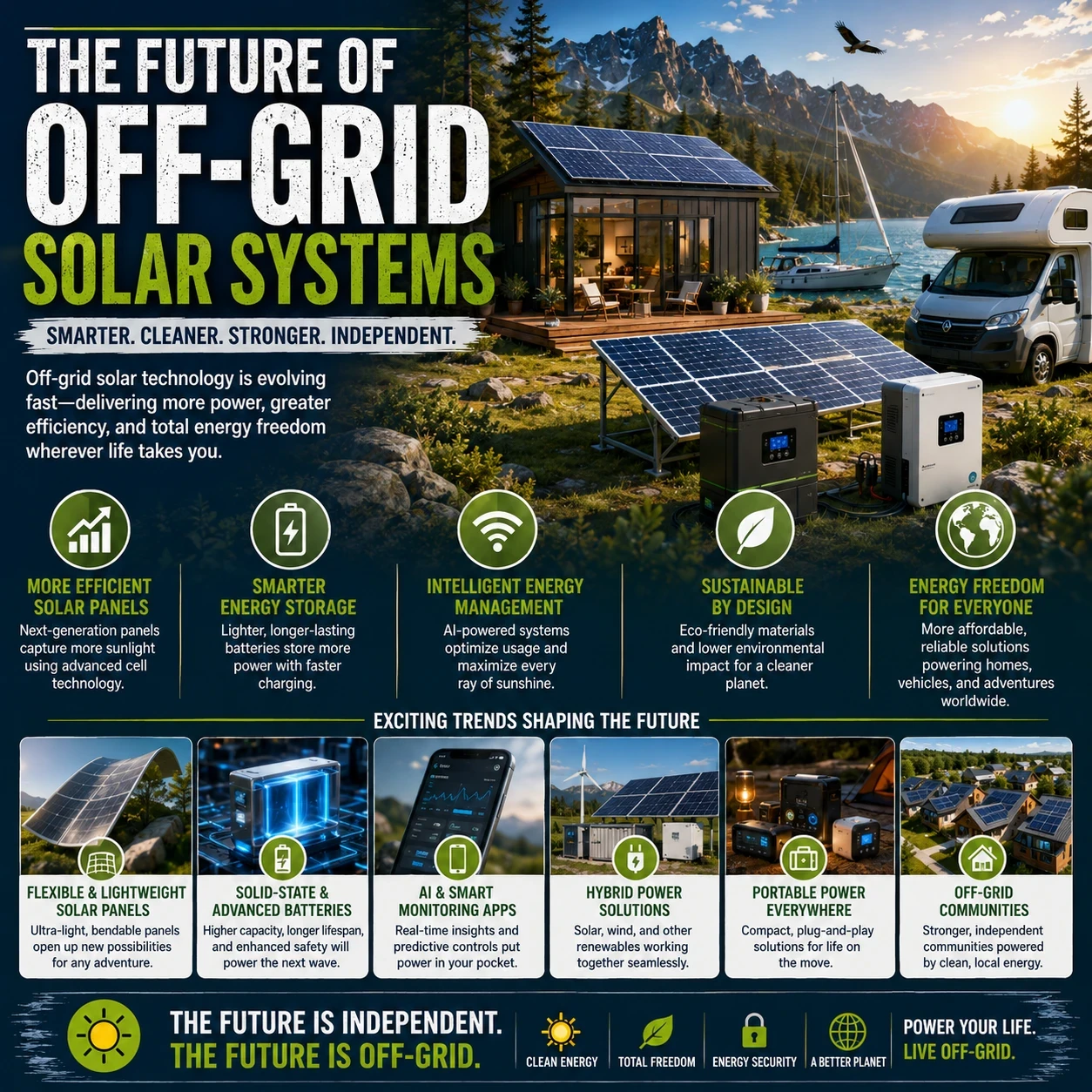
Off-grid solar technology is becoming more efficient, intelligent and accessible.
Future systems are likely to benefit from:
- Higher-efficiency solar panels.
- Lighter and longer-lasting batteries.
- Improved battery management systems.
- More accurate monitoring software.
- Artificial intelligence-based energy management.
- Compact portable power stations.
- Flexible and lightweight solar panels.
- Improved recycling of solar equipment and batteries.
- Hybrid systems combining solar, wind and backup generation.
These developments could make independent electricity practical for more homes, businesses, communities and travellers around the world.
Frequently Asked Questions
Can an off-grid solar system power an entire home?
Yes. A properly designed system can power an entire home, but the solar array, battery bank and inverter must be correctly sized for the household’s electricity requirements.
Do off-grid solar systems work during winter?
Yes, but solar production is often lower during winter. The system should be designed around expected winter conditions rather than summer output alone.
Is battery storage required?
Battery storage is normally essential because the system needs to supply electricity when the panels are not generating enough power.
Can I install an off-grid system myself?
Small low-voltage systems may be suitable for experienced installers. Larger residential, agricultural and marine systems should normally be designed or inspected by a qualified professional.
Can I expand the system later?
Many systems can be expanded, but the charge controller, inverter, battery arrangement and wiring must support the additional capacity.
Are lithium batteries worth the extra cost?
Lithium batteries generally offer greater usable capacity, longer life, lower weight and faster charging. Whether they are the best choice depends on your budget and intended application.
Do I still need a generator?
Not every system requires one. However, a backup generator can provide additional security during prolonged poor weather or unusually high electricity demand.
Final Recommendations
Off-grid solar systems can provide reliable, clean electricity almost anywhere. They are suitable for remote homes, farms, cabins, workshops, motorhomes, campervans, caravans, boats and expedition vehicles.
The key to a successful installation is careful planning. Calculate your daily electricity consumption, consider seasonal sunlight, allow sufficient battery capacity and choose equipment that can handle both normal and peak demand.
Avoid choosing a system based only on price. Quality panels, batteries, charge controllers, inverters and safety equipment can provide better long-term performance and greater peace of mind.
When correctly designed and installed, an off-grid solar system can deliver energy independence, lower operating costs and dependable electricity for many years.
Continue Your Home Energy Journey
- Solar Panels: The Complete Homeowner’s Guide
- Home Battery Storage Systems
- Top-Rated Solar Inverters
- Energy-Efficiency Home Upgrades
- Best Home Energy Systems 2026
