Energy Efficiency Home Upgrades
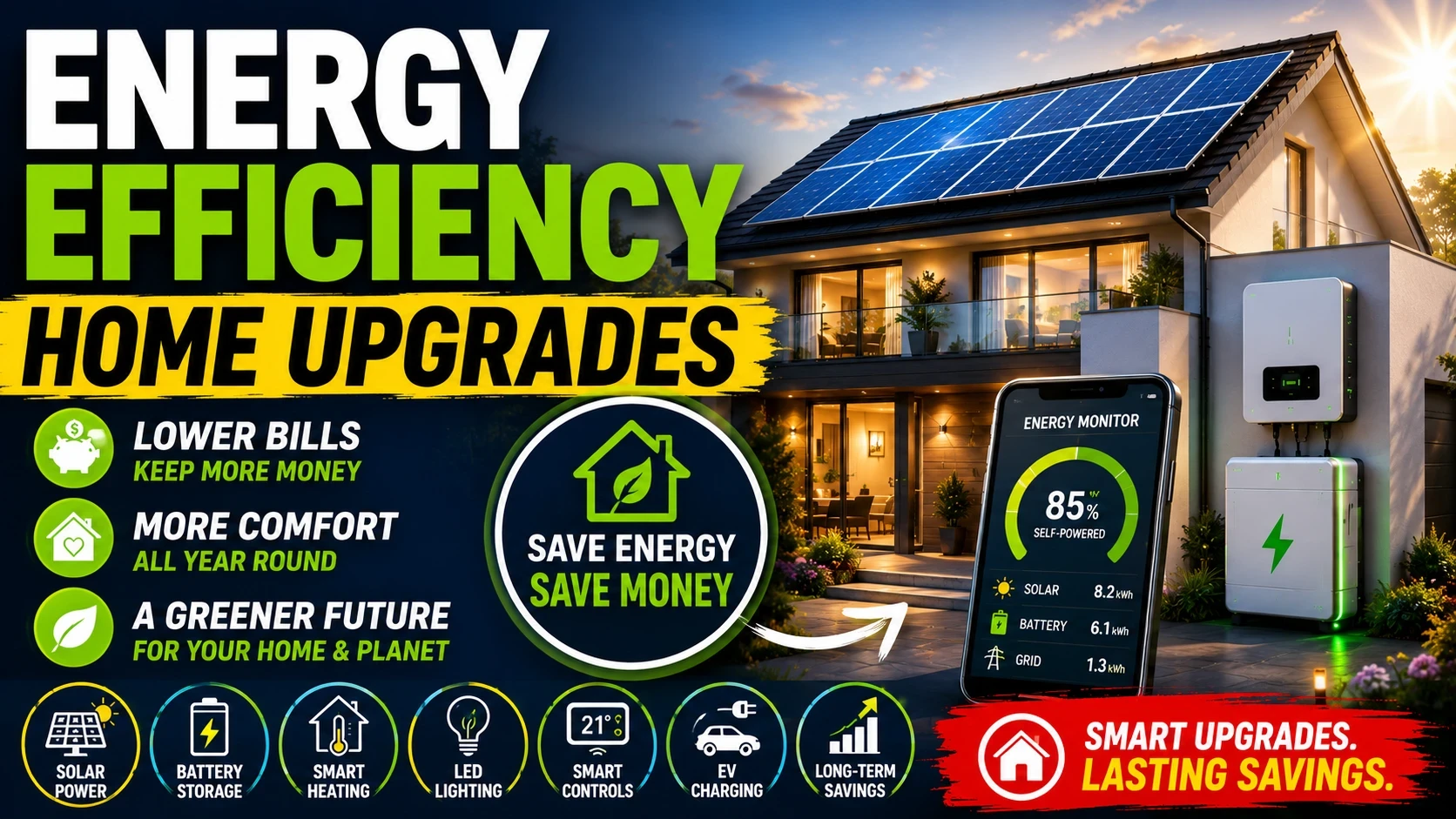
Energy efficiency home upgrades are one of the smartest investments homeowners can make to reduce energy bills, improve comfort, increase property value and lower their environmental impact. Whether you begin with better insulation, energy-efficient windows, LED lighting or renewable energy technology, every improvement helps create a home that is cheaper to run and more comfortable throughout the year.
Many homeowners immediately think about installing solar panels, but producing renewable electricity is only one part of an efficient home.
Before generating your own power, it makes sense to reduce the amount of energy your home wastes.
Better insulation, efficient heating, modern lighting and smart controls work together to maximise energy savings while making your home more comfortable in every season.
Once these improvements are in place, technologies such as solar panels, battery storage and smart energy management systems become even more effective because your home requires less electricity overall.
If you’re new to renewable energy, our guide to Home Energy Systems explains how every component works together to improve efficiency and reduce household energy costs.
Why Energy Efficiency Home Upgrades Save Money
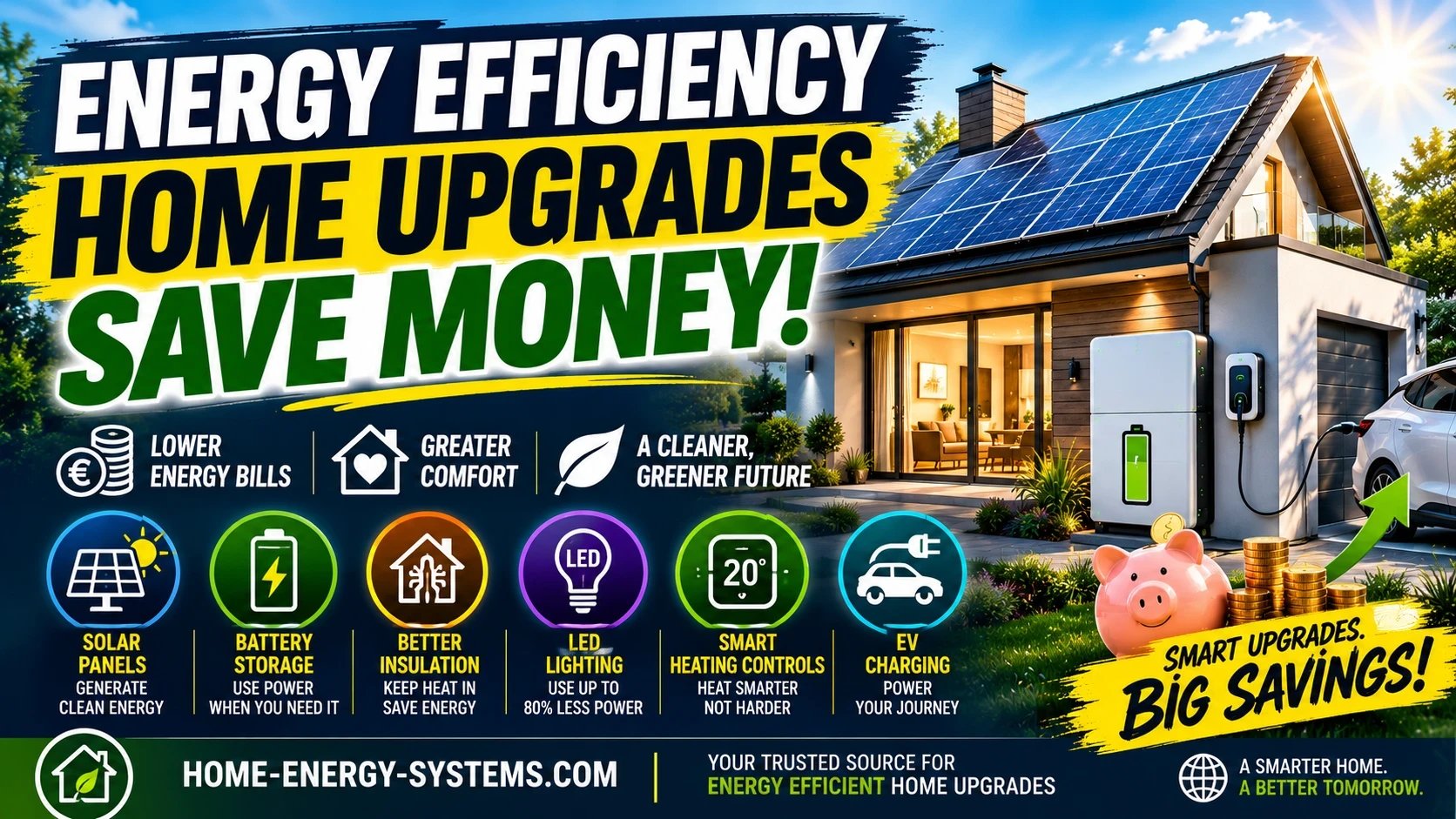
Rising energy prices have encouraged homeowners to look for practical ways to reduce household running costs. Fortunately, many energy efficiency home upgrades provide immediate savings while continuing to deliver long-term financial benefits.
The advantages include:
- Lower electricity and heating bills.
- Greater indoor comfort throughout the year.
- Reduced carbon emissions.
- Higher property value.
- Less wear on heating and cooling systems.
- Improved energy independence when combined with renewable technologies.
The best approach is to complete upgrades gradually, starting with the improvements that offer the greatest return on investment.
Start with a Home Energy Assessment
Before investing in energy efficiency home upgrades, it’s important to understand where your home is losing energy. A home energy assessment identifies the areas where improvements will have the biggest impact.
Common areas of energy loss include:
- Roof and loft insulation.
- External walls.
- Windows and doors.
- Floor insulation.
- Heating systems.
- Older household appliances.
- Draughts around doors, windows and pipework.
You can perform a basic inspection yourself by checking insulation levels, feeling for draughts and reviewing your electricity usage. Professional energy assessments provide more detailed information using specialist equipment such as thermal imaging cameras.
Understanding where energy is being wasted allows you to prioritise the upgrades that will deliver the greatest savings.
Improve Your Home’s Insulation
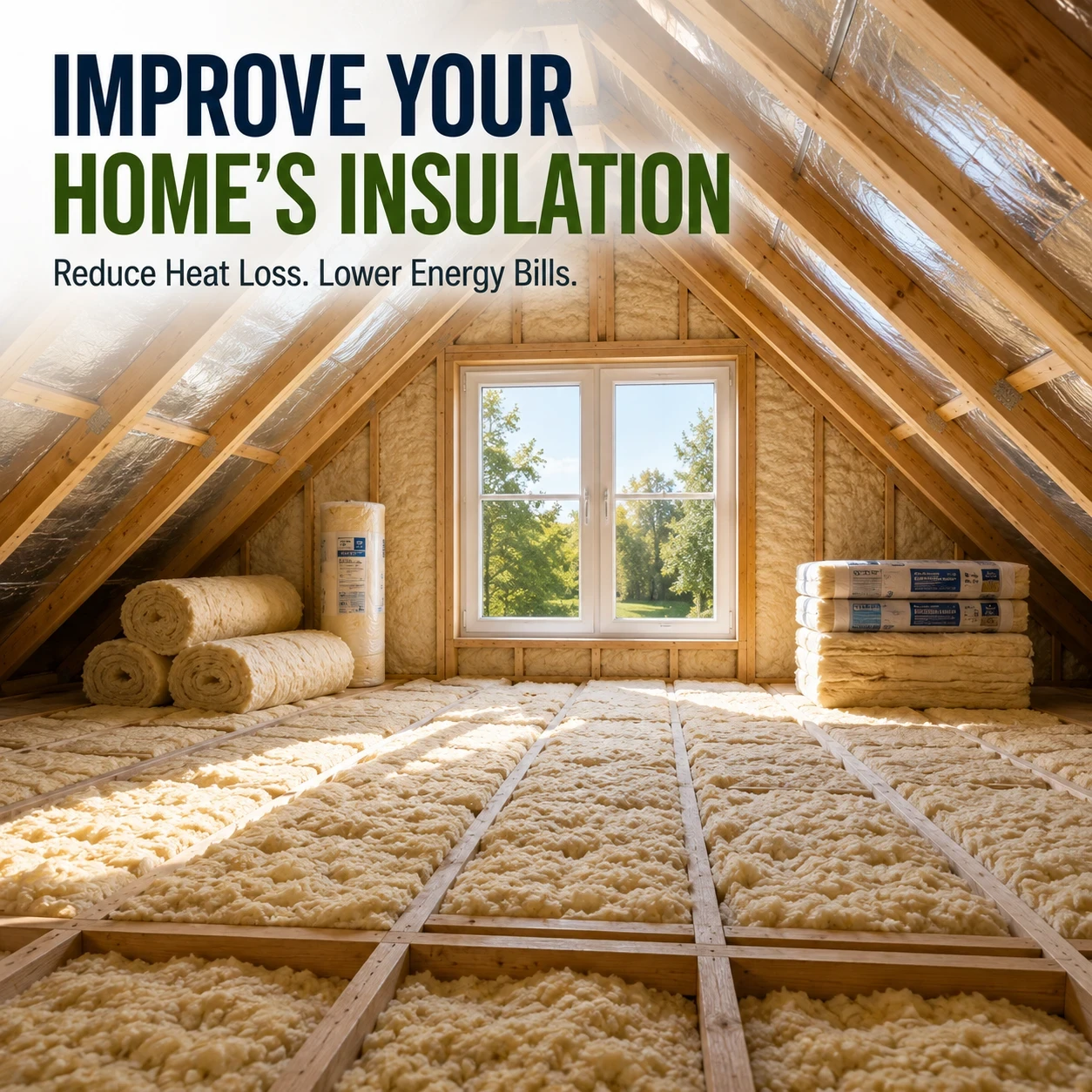
Improving insulation is one of the most effective energy efficiency home upgrades available. Without adequate insulation, valuable heat escapes during winter while unwanted heat enters your home during summer.
Loft and Roof Insulation
Because heat naturally rises, the roof is often responsible for significant heat loss. Adding modern loft insulation helps reduce heating costs while maintaining a comfortable indoor temperature throughout the year.
Wall Insulation
Depending on your home’s construction, cavity wall insulation or solid wall insulation can dramatically reduce heat loss while improving overall comfort.
Floor Insulation
Cold floors reduce comfort and increase heating costs. Proper floor insulation helps maintain consistent temperatures while reducing the workload on your heating system.
Among all energy efficiency home upgrades, insulation usually provides one of the fastest returns because the savings continue year after year.
Upgrade Windows and Doors
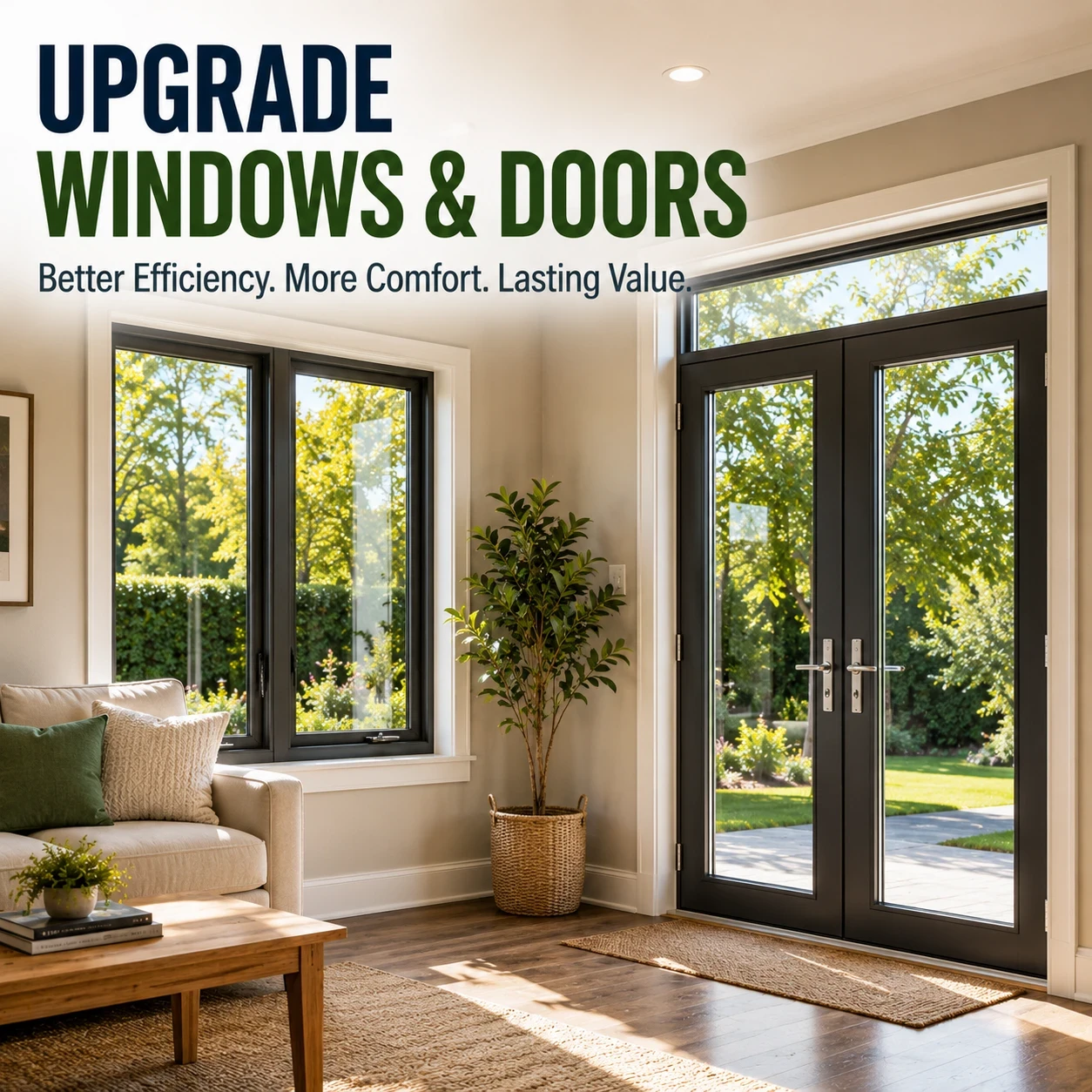
Older windows and doors are common sources of energy loss. Replacing single glazing with modern double or triple glazing helps improve insulation, reduce outside noise and eliminate draughts.
If replacing windows isn’t practical, several affordable improvements can still increase efficiency:
- Replace worn weather seals.
- Install quality draught excluders.
- Seal gaps around frames.
- Fit insulated curtains or thermal blinds.
These relatively inexpensive improvements reduce heat loss while making your home noticeably more comfortable.
Switch to LED Lighting
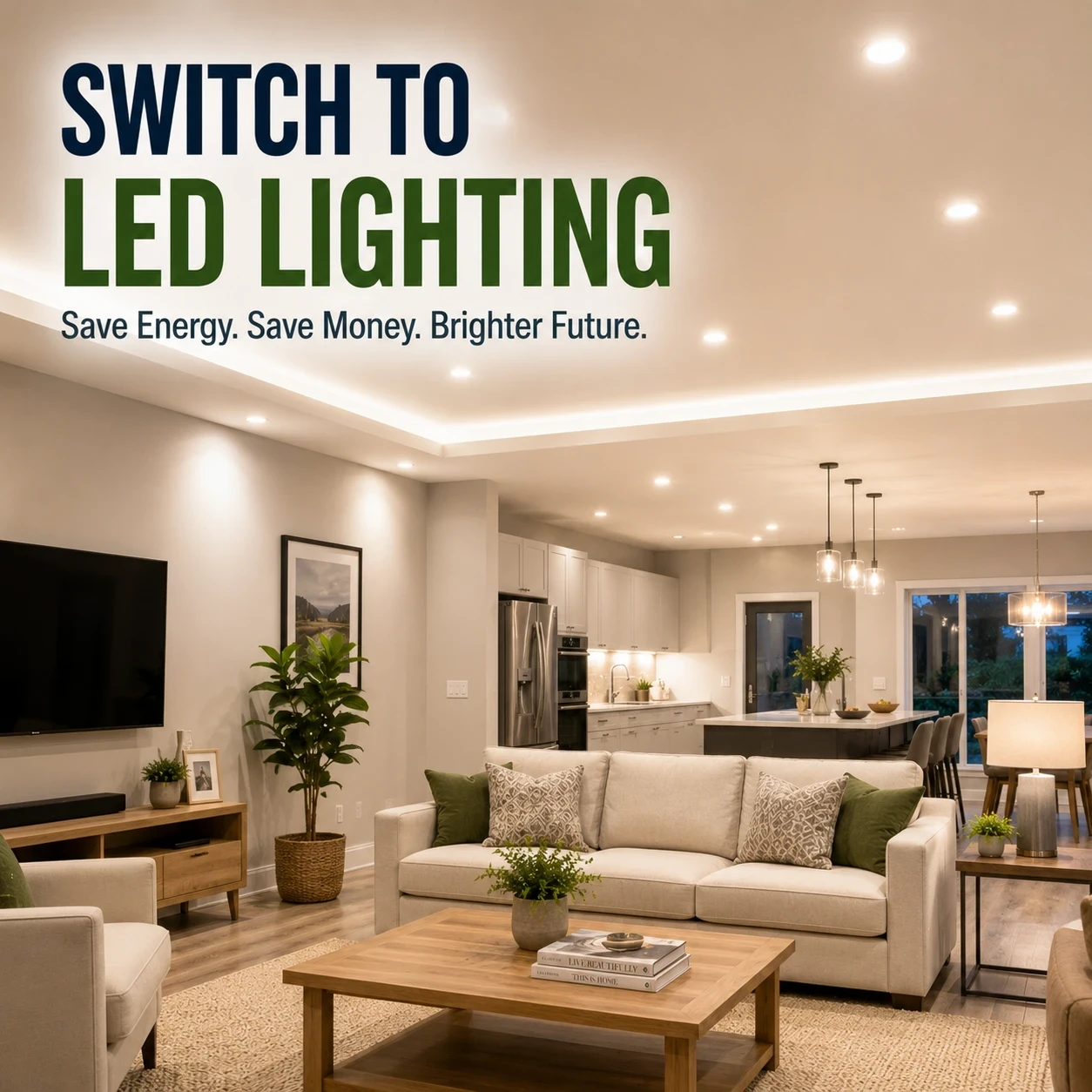
Replacing older bulbs with LED lighting is one of the simplest energy efficiency home upgrades homeowners can make. Installation takes only minutes, while the savings continue for many years.
LED lighting offers several advantages:
- Uses significantly less electricity.
- Produces less heat.
- Lasts much longer than traditional bulbs.
- Requires very little maintenance.
- Available in a wide range of brightness levels and colour temperatures.
Replacing every light bulb throughout your home may seem like a small change, but it can noticeably reduce annual electricity consumption.
Upgrade to Energy-Efficient Appliances
Many older appliances consume considerably more electricity than modern energy-efficient alternatives. When replacing household appliances, look beyond the purchase price and consider their long-term running costs.
Common upgrades include:
- Refrigerators.
- Freezers.
- Washing machines.
- Dishwashers.
- Tumble dryers.
- Air conditioning systems.
Modern appliances use improved motors, advanced insulation and intelligent control systems to reduce electricity consumption without sacrificing performance.
Combining efficient appliances with a home solar power system can reduce household electricity costs even further.
Install Smart Heating Controls
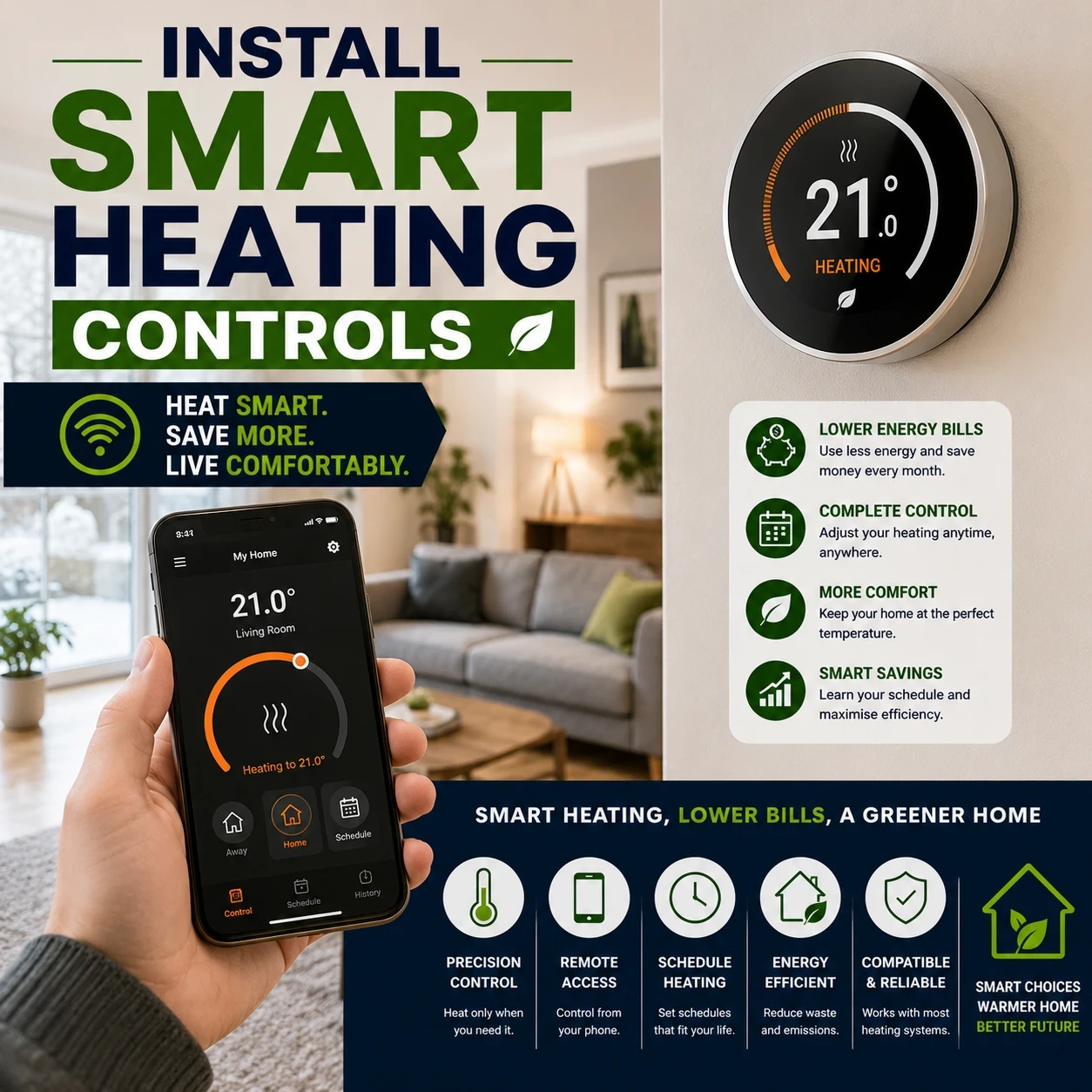
Heating represents one of the largest household energy expenses. Smart heating controls ensure your home is only heated when and where it is needed.
Popular upgrades include:
- Smart thermostats.
- Programmable heating schedules.
- Individual room temperature control.
- Remote smartphone control.
- Self-learning heating systems.
Rather than heating your entire home continuously, smart controls help target occupied rooms, reducing unnecessary energy consumption.
These systems become even more effective when integrated with home battery storage systems and modern solar inverters, allowing homeowners to make better use of self-generated electricity.
Continue to Part 2…
Consider Heat Pumps for Greater Efficiency
Modern heat pumps are becoming one of the most popular energy efficiency home upgrades because they provide highly efficient heating and cooling while using significantly less electricity than many traditional heating systems.
Instead of generating heat, a heat pump transfers heat from the outside air or the ground into your home. This makes the technology extremely efficient, particularly in well-insulated properties.
The two most common systems are:
- Air Source Heat Pumps – Suitable for most homes and relatively straightforward to install.
- Ground Source Heat Pumps – Higher installation costs but exceptional long-term efficiency where sufficient outdoor space is available.
When combined with good insulation and smart heating controls, heat pumps can significantly reduce household energy consumption.
Install Solar Panels and Battery Storage
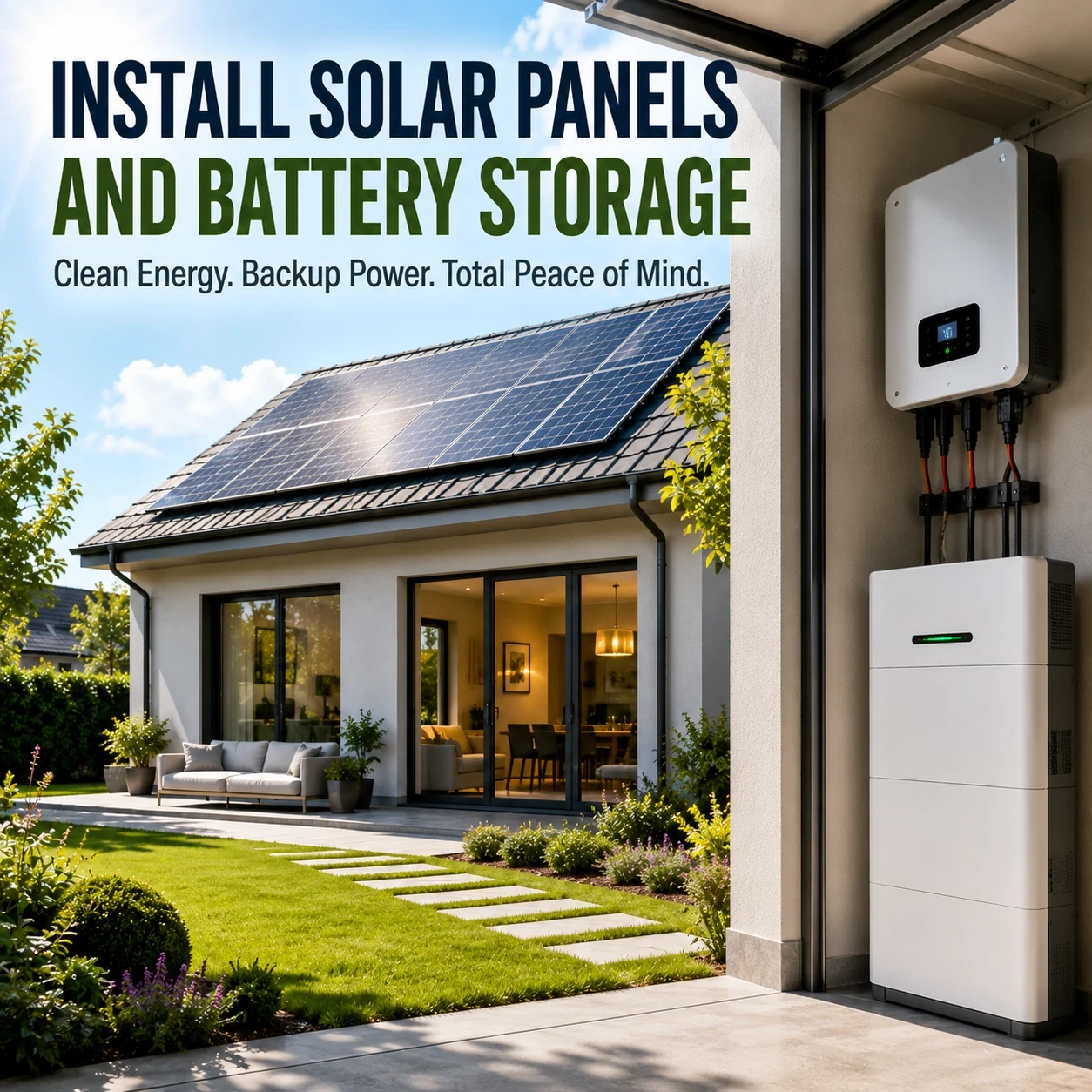
After completing the most important energy efficiency home upgrades, many homeowners choose to install solar panels and battery storage to maximise long-term savings and reduce reliance on the electricity grid.
Solar panels generate clean electricity during daylight hours, while battery storage systems save surplus energy for use during the evening or periods of high demand.
The benefits include:
- Lower electricity bills.
- Greater energy independence.
- Reduced reliance on the grid.
- Cleaner renewable energy.
- Potential backup power during outages with compatible systems.
- Lower household carbon emissions.
To learn more, read our guides to Solar Power Systems, Home Battery Storage Systems and What Is a Solar Inverter?.
Improve Hot Water Efficiency
Heating water accounts for a considerable proportion of household energy use. Improving the efficiency of your hot water system is another practical way to reduce energy bills.
- Insulate your hot water cylinder.
- Insulate exposed hot water pipes.
- Install water-efficient shower heads.
- Repair leaking taps.
- Lower water temperature where appropriate.
- Upgrade to an efficient hot water system when replacement becomes necessary.
Small improvements can produce noticeable savings throughout the year while reducing unnecessary energy consumption.
Use Smart Home Energy Management
Modern monitoring systems allow homeowners to track electricity usage in real time and measure the success of their energy efficiency home upgrades.
By understanding exactly when electricity is being used, homeowners can identify further opportunities to reduce energy consumption.
Popular smart technologies include:
- Smart electricity monitors.
- Smart plugs.
- Smart thermostats.
- Solar monitoring apps.
- Battery monitoring systems.
- Electric vehicle charging management.
These systems work especially well alongside solar panels and battery storage, helping maximise self-generated electricity while reducing grid usage.
Create a Long-Term Energy Upgrade Plan
The best energy efficiency home upgrades are completed as part of a long-term plan rather than attempting everything at once.
A sensible upgrade order is:
- Improve insulation.
- Seal draughts.
- Upgrade windows and doors.
- Switch to LED lighting.
- Replace older appliances.
- Install smart heating controls.
- Consider a heat pump.
- Install solar panels and battery storage.
Following this approach ensures every improvement builds upon the previous one while delivering the greatest long-term value.
Frequently Asked Questions
What are the best energy efficiency home upgrades?
For most homeowners, improving insulation, upgrading windows and doors, switching to LED lighting and installing smart heating controls provide the quickest return on investment.
Should I improve insulation before installing solar panels?
Yes. Reducing energy waste first usually allows a smaller and more efficient solar system to meet your home’s electricity needs.
Will energy efficiency home upgrades increase property value?
Many buyers value homes with lower running costs, modern heating systems and renewable energy technologies, making energy-efficient properties more attractive.
Can I complete upgrades over several years?
Absolutely. Many homeowners improve their properties gradually, starting with affordable improvements before investing in larger projects such as heat pumps, solar panels and battery storage.
Conclusion
Energy Efficiency Home Upgrades provide one of the most effective ways to reduce household energy bills while creating a more comfortable, environmentally friendly and future-ready home. Whether you begin with insulation, energy-efficient windows, LED lighting or renewable energy systems, every improvement contributes to lower running costs and greater energy independence.
By following a structured upgrade plan and investing in the improvements that deliver the greatest value, you can enjoy long-term savings while preparing your home for rising energy costs and future technologies.
Related Articles
- Home Energy Systems
- Home Solar Systems
- Solar Power Systems
- Home Battery Storage Systems
- What Is a Solar Inverter?
- Electric Vehicle Charging at Home