Solar Energy Technology
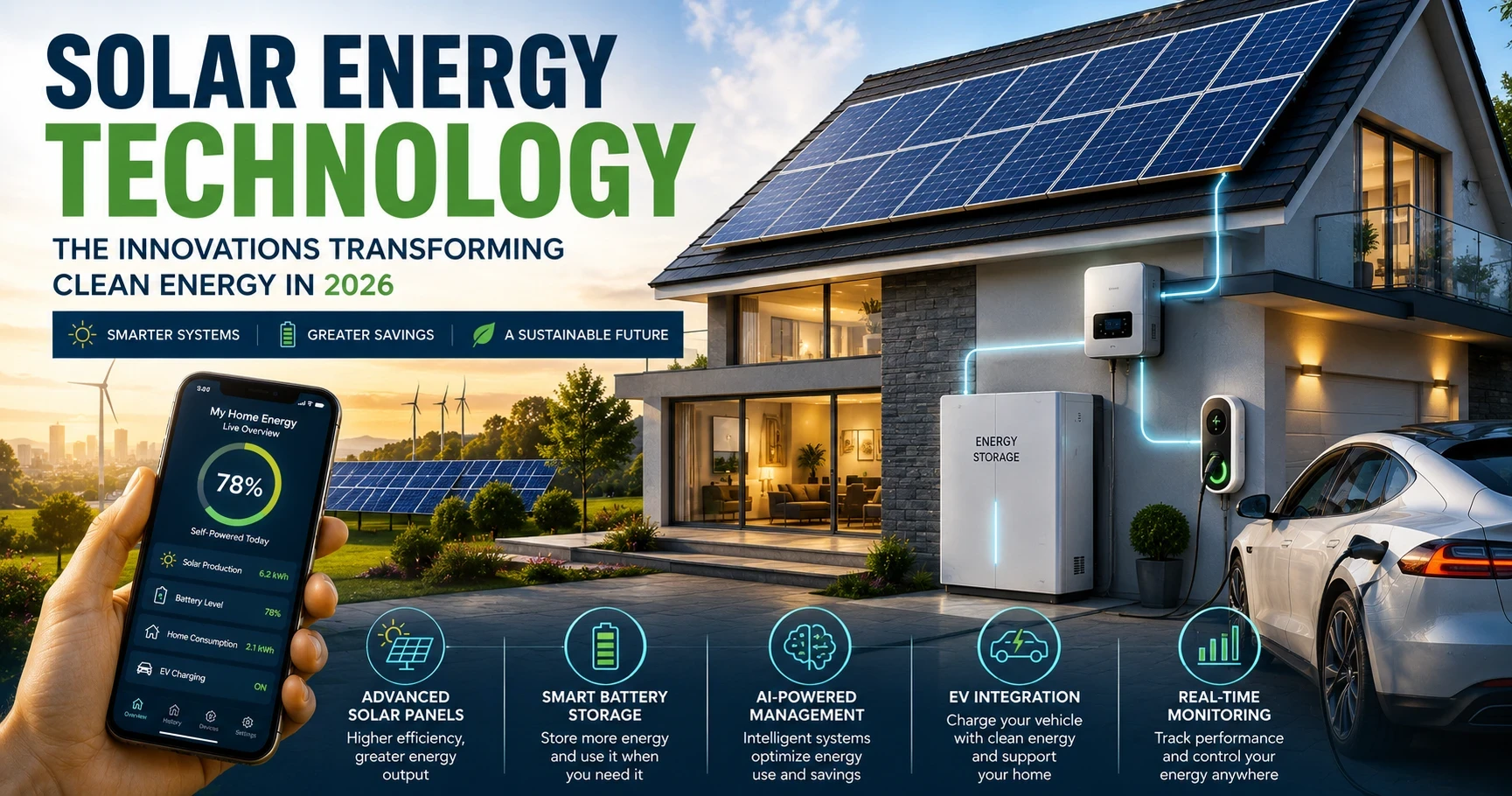
Solar energy technology is advancing faster than ever, transforming the way homeowners, businesses, farms, and industries generate, store, and manage electricity. Modern solar systems are no longer limited to rooftop panels.
Today’s technology combines high-efficiency solar panels, intelligent inverters, advanced battery storage, smart energy management software, and electric vehicle charging into one connected ecosystem that can significantly reduce electricity costs while improving energy independence.
Rapid improvements in efficiency, affordability, and digital technology are making solar power an increasingly attractive investment.
Artificial intelligence, cloud-based monitoring platforms, and predictive maintenance tools are helping owners maximise the performance of their systems while reducing maintenance costs.
At the same time, manufacturers continue developing new solar cells capable of producing more electricity from the same amount of sunlight.
Whether you’re considering solar power for your home, commercial premises, agricultural business, or industrial facility, understanding the latest solar energy technology can help you make better long-term decisions.
This guide explores the innovations shaping the industry in 2026 and explains why modern solar technology is becoming one of the most valuable investments available.
How Solar Energy Technology Has Evolved
The solar industry has changed dramatically over the past two decades. Early residential systems were relatively simple, consisting of solar panels connected to an inverter that supplied electricity directly to the home. While these installations reduced electricity bills, they lacked many of the intelligent features available today.
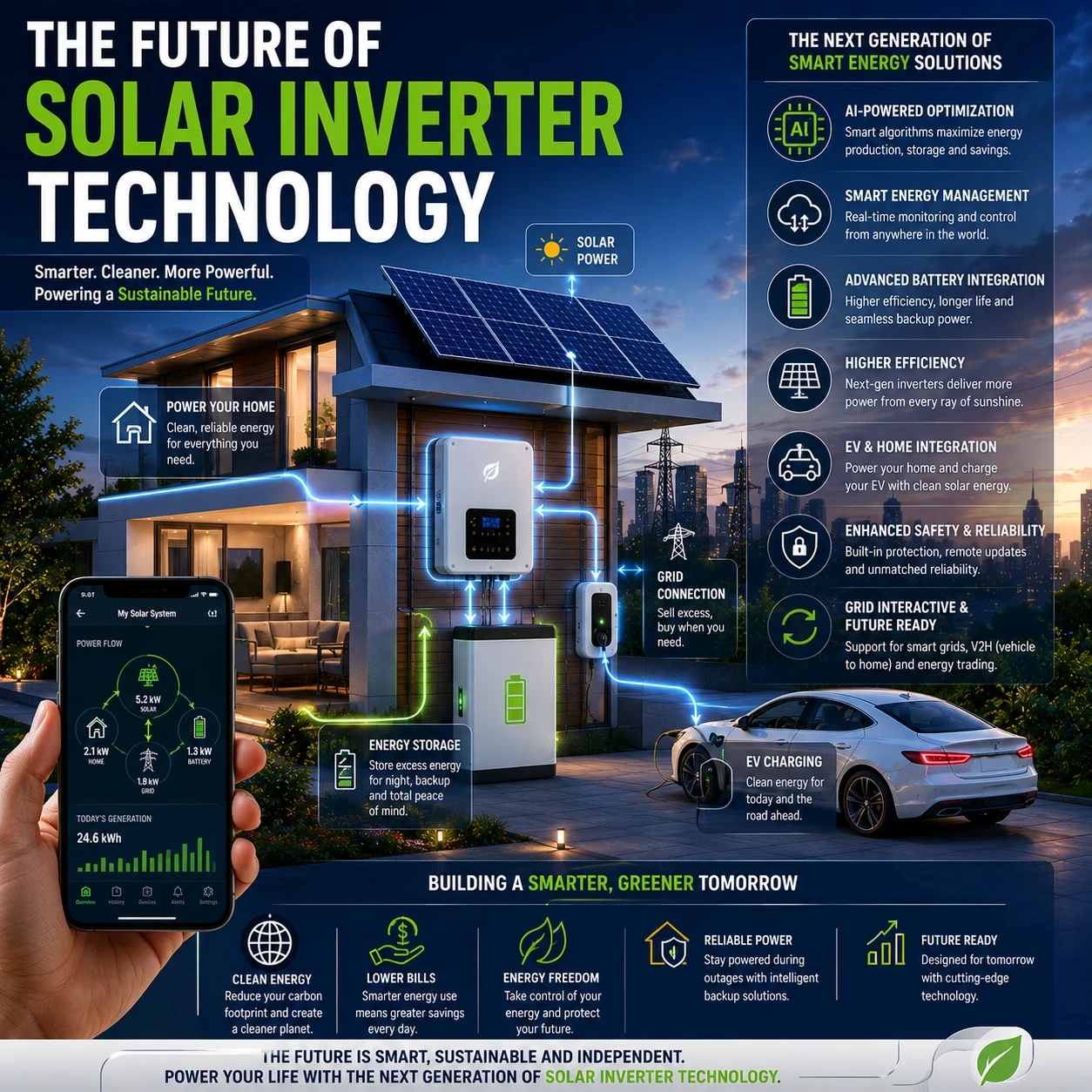
Modern solar energy technology integrates multiple components into one seamless system. Smart inverters communicate with battery storage, energy management software monitors household electricity consumption in real time, and mobile apps allow homeowners to view performance from virtually anywhere.
Today’s systems are designed not only to generate electricity but also to optimise when and how that electricity is used. Excess energy can be stored in batteries, used to charge an electric vehicle, or exported to the electricity grid depending on the owner’s preferences and local regulations.
This level of integration has transformed solar power from a simple electricity generator into a complete energy management solution.
AI Is Making Solar Systems Smarter
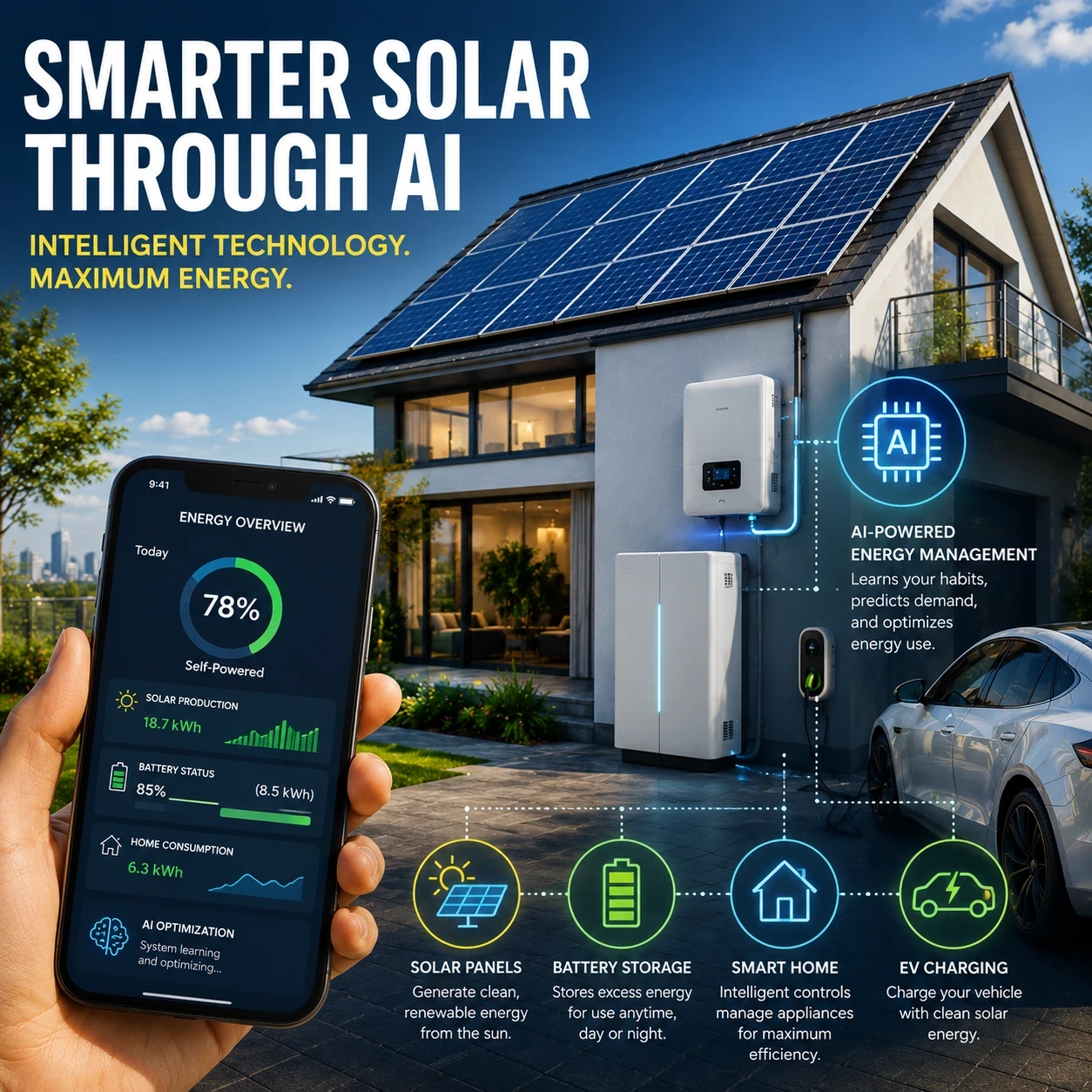
Artificial intelligence is becoming one of the biggest breakthroughs in solar energy technology. AI-powered software continuously analyses weather forecasts, historical electricity usage, battery charge levels, and household demand to maximise system efficiency.
Rather than simply reacting to electricity consumption, intelligent software can predict future demand and automatically adjust how energy is distributed throughout the day. This helps homeowners consume more of the electricity they generate while reducing reliance on the electricity grid.
AI also assists with predictive maintenance. Instead of waiting for equipment to fail, monitoring software can detect subtle changes in performance that may indicate developing problems. Installers can often identify faults before homeowners even notice reduced energy production.
These smart technologies help extend equipment lifespan while maintaining maximum system performance throughout the year.
Next-Generation Solar Panels
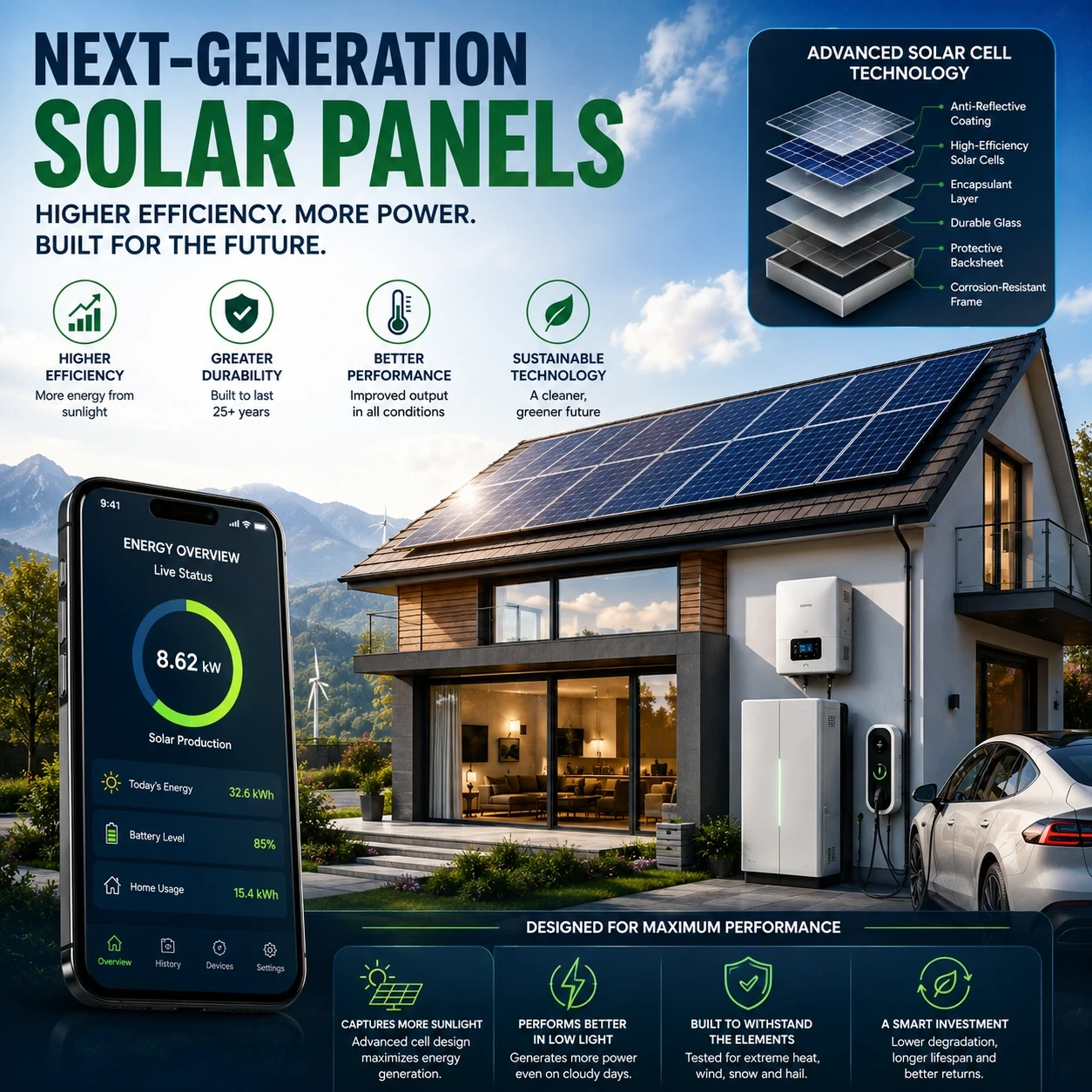
Although traditional monocrystalline solar panels remain the most popular choice, researchers continue developing new technologies capable of delivering even higher efficiencies.
One of the most promising developments involves perovskite solar cells.
These lightweight materials have demonstrated remarkable efficiency improvements during laboratory testing and may eventually complement conventional silicon panels through tandem cell technology.
Bifacial solar panels also continue gaining popularity. Unlike traditional panels that collect sunlight only from the front surface, bifacial panels generate electricity from both sides by capturing reflected sunlight from surrounding surfaces.
This can significantly increase overall energy production under suitable conditions.
Manufacturers are also improving durability, temperature performance, and degradation rates, allowing modern panels to continue producing high levels of electricity for decades.
As these technologies mature, property owners can expect higher energy production from smaller installation areas, making solar suitable for an even wider range of buildings.
Smart Solar Inverters
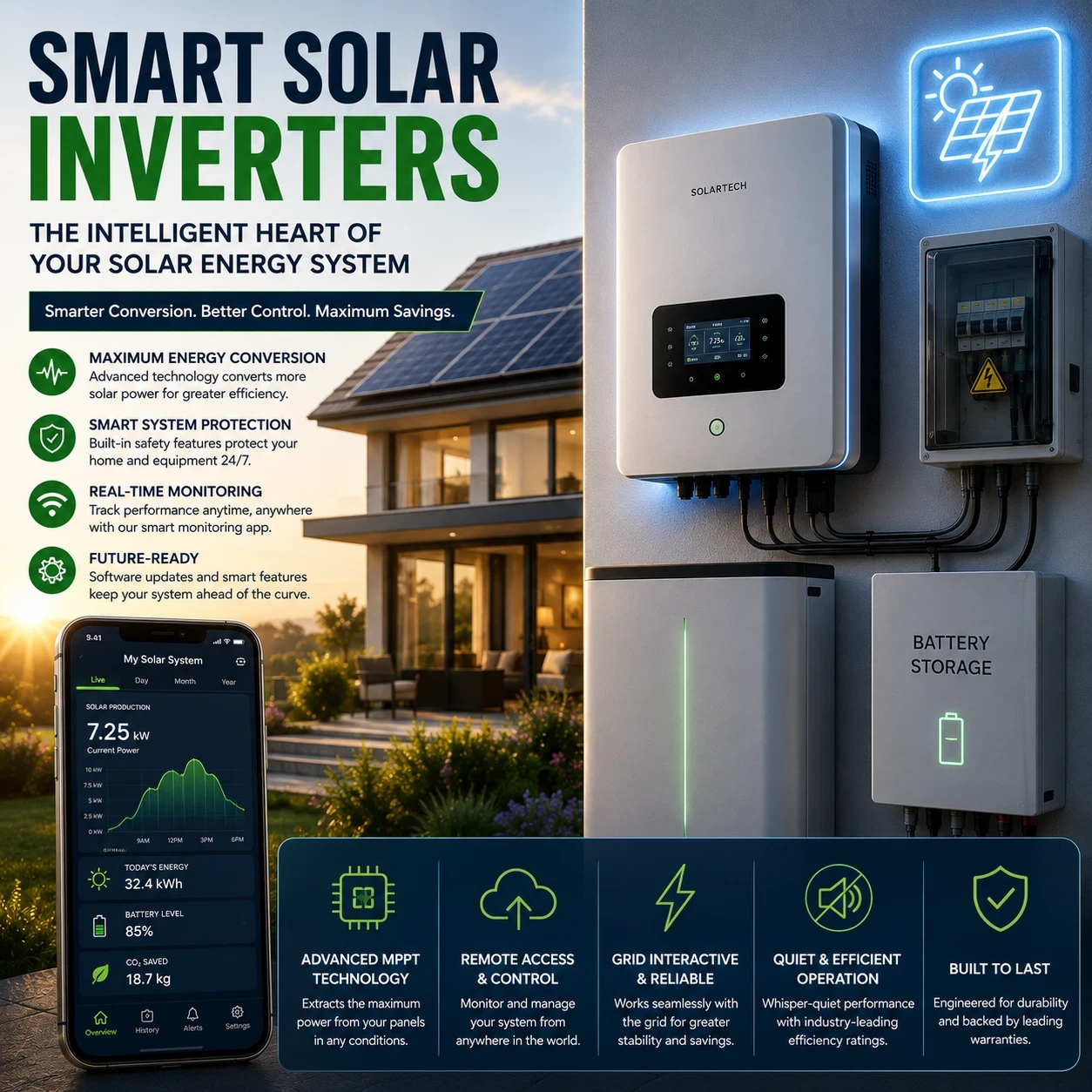
Modern solar inverters do far more than convert direct current (DC) electricity into alternating current (AC). They have evolved into intelligent control centres that manage the entire solar energy system.
Today’s smart inverters continuously monitor electricity production, battery charging, household demand, and grid conditions.
They automatically optimise power flow while protecting equipment from electrical faults and voltage fluctuations.
Many premium inverters include cloud connectivity, allowing installers and homeowners to monitor system performance remotely through smartphone apps or online dashboards.
Advanced diagnostics can quickly identify issues affecting energy production, reducing downtime and simplifying maintenance.
Some models even receive automatic firmware updates that introduce new features or improve efficiency over time.
As renewable electricity becomes increasingly important, smart inverters will continue playing a central role in balancing local energy demand with electricity generation while supporting a more stable electrical grid.
Home Battery Technology Continues to Improve
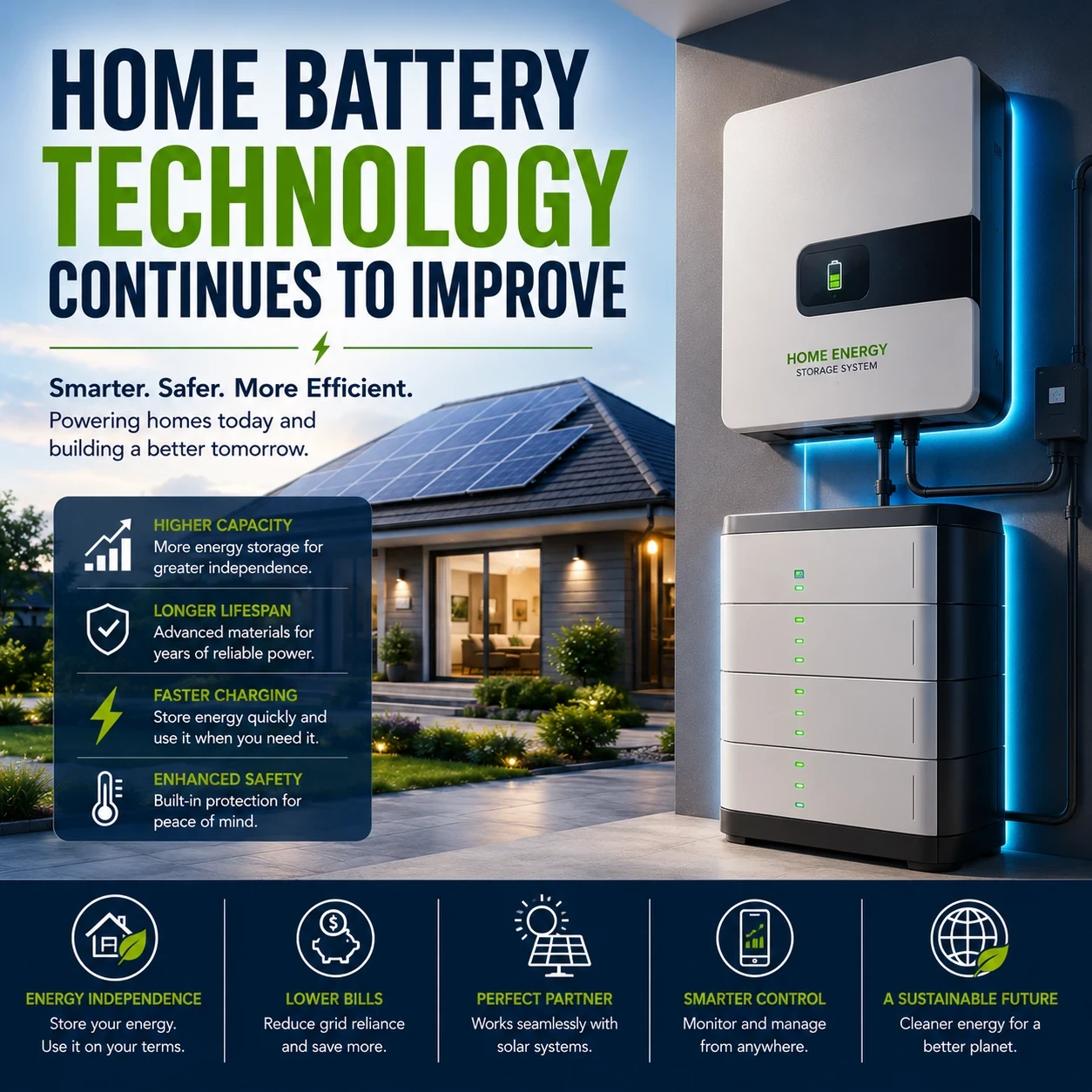
One of the most exciting developments in solar energy technology is the rapid improvement in home battery storage.
Modern battery systems are becoming more efficient, safer, and capable of storing greater amounts of electricity than ever before.
As electricity prices continue to fluctuate, battery storage allows homeowners to make better use of the solar energy they generate throughout the day.
Instead of exporting excess electricity immediately to the grid, surplus power can be stored and used during the evening, overnight, or during periods of high electricity demand.
This increases self-consumption and helps reduce reliance on energy suppliers.
Today’s lithium iron phosphate (LiFePO₄) batteries offer longer lifespans, faster charging, improved thermal stability, and lower maintenance requirements compared with earlier battery technologies.
Many premium systems are designed to operate reliably for well over a decade while maintaining a high percentage of their original storage capacity.
Battery manufacturers are also developing modular systems that allow homeowners to expand storage capacity as their energy needs grow. This flexibility makes future upgrades easier without replacing the entire installation.
Smart Homes and Energy Automation
Modern solar energy technology is increasingly connected to smart home systems that automatically manage electricity consumption throughout the property.
These intelligent platforms continuously monitor energy production, battery levels, household demand, weather forecasts, and electricity tariffs.
Using advanced automation, a Home Energy Management System (HEMS) can decide the best time to charge a battery, operate household appliances, heat water, or charge an electric vehicle. The result is improved energy efficiency and lower electricity costs without requiring constant user input.
Many systems allow homeowners to monitor and control their entire energy system from a smartphone or tablet.
Real-time dashboards display solar production, battery status, electricity usage, and historical performance, providing valuable insights into household energy consumption.
As artificial intelligence continues to evolve, these systems are expected to become even smarter by learning household routines and automatically adjusting energy usage to maximise savings.
Solar Technology for Farms and Businesses
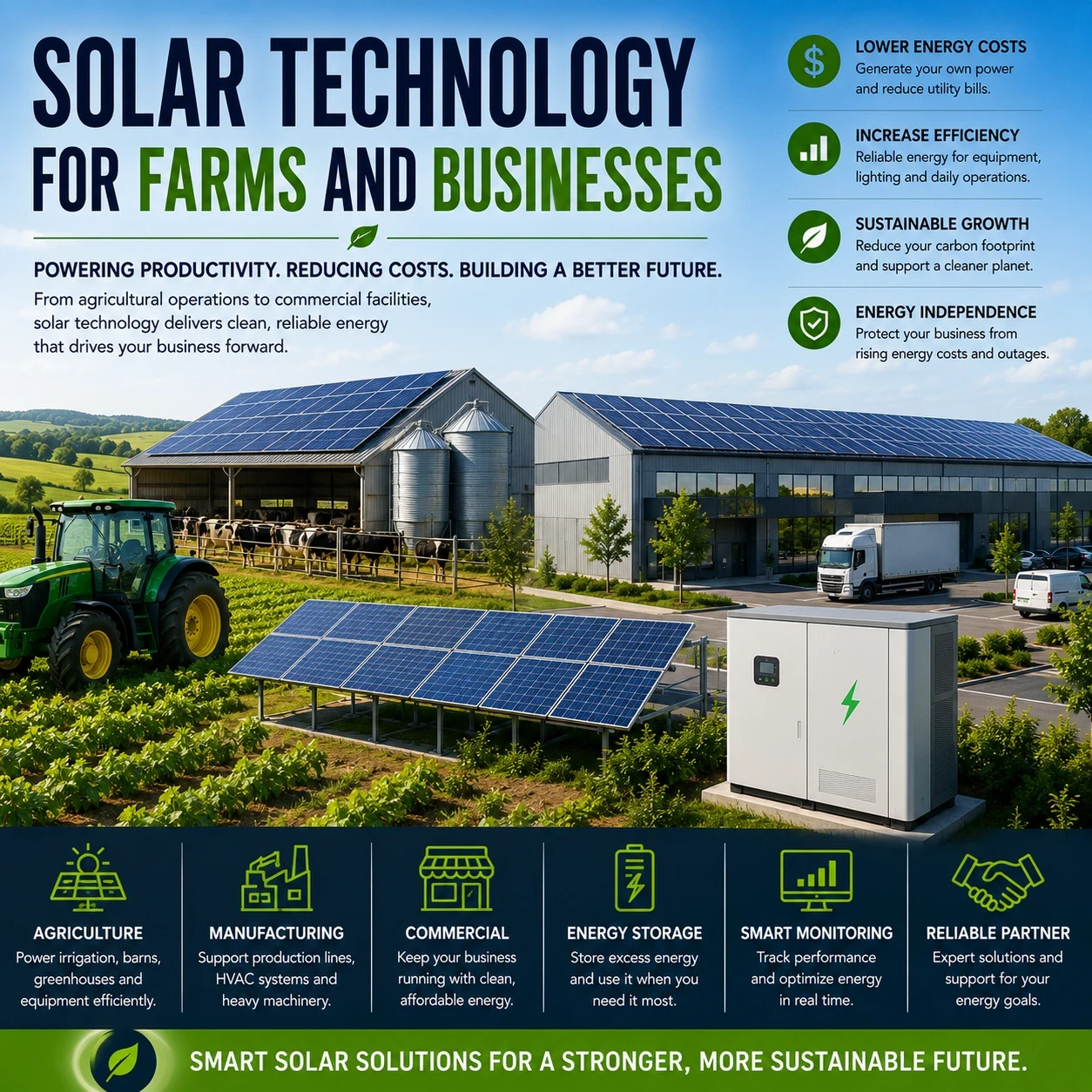
Although many people associate solar power with residential rooftops, solar energy technology is transforming farms, commercial buildings, and industrial facilities around the world.
Large warehouse roofs, agricultural buildings, factories, schools, offices, and retail premises often provide ideal locations for high-capacity solar installations. These systems can significantly reduce operating costs while improving long-term energy security.
Farmers are increasingly using solar power to operate irrigation systems, refrigeration equipment, grain dryers, dairy operations, and livestock facilities.
Businesses benefit by lowering electricity bills during peak operating hours when energy demand is highest.
Modern commercial solar systems often include battery storage, intelligent monitoring software, and advanced energy management tools that help organisations optimise electricity usage across multiple buildings.
For many businesses, investing in solar technology also demonstrates a commitment to sustainability, helping meet environmental targets while improving corporate reputation.
Electric Vehicles Become Part of the Energy System
Electric vehicles are no longer simply a form of transport—they are becoming an important part of modern solar energy technology.
Many homeowners now charge their vehicles using electricity generated by rooftop solar panels, dramatically reducing the cost of driving.
The next stage of development involves Vehicle-to-Home (V2H) and Vehicle-to-Grid (V2G) technology.
These systems allow compatible electric vehicles to store electricity and return it to the home or electricity grid when required.
During periods of high electricity prices, an electric vehicle could potentially supply power back to the property, reducing household energy costs.
When renewable electricity generation is abundant, the vehicle battery can recharge using clean solar energy.
Smart charging systems automatically determine the most cost-effective charging times by analysing electricity prices, solar production, battery levels, and driving schedules.
This intelligent integration creates a highly efficient energy ecosystem where solar panels, home batteries, EV chargers, and household appliances work together.
As electric vehicle ownership continues to grow, this integration will become one of the defining features of next-generation home energy systems.
Solar Panel Recycling Technology
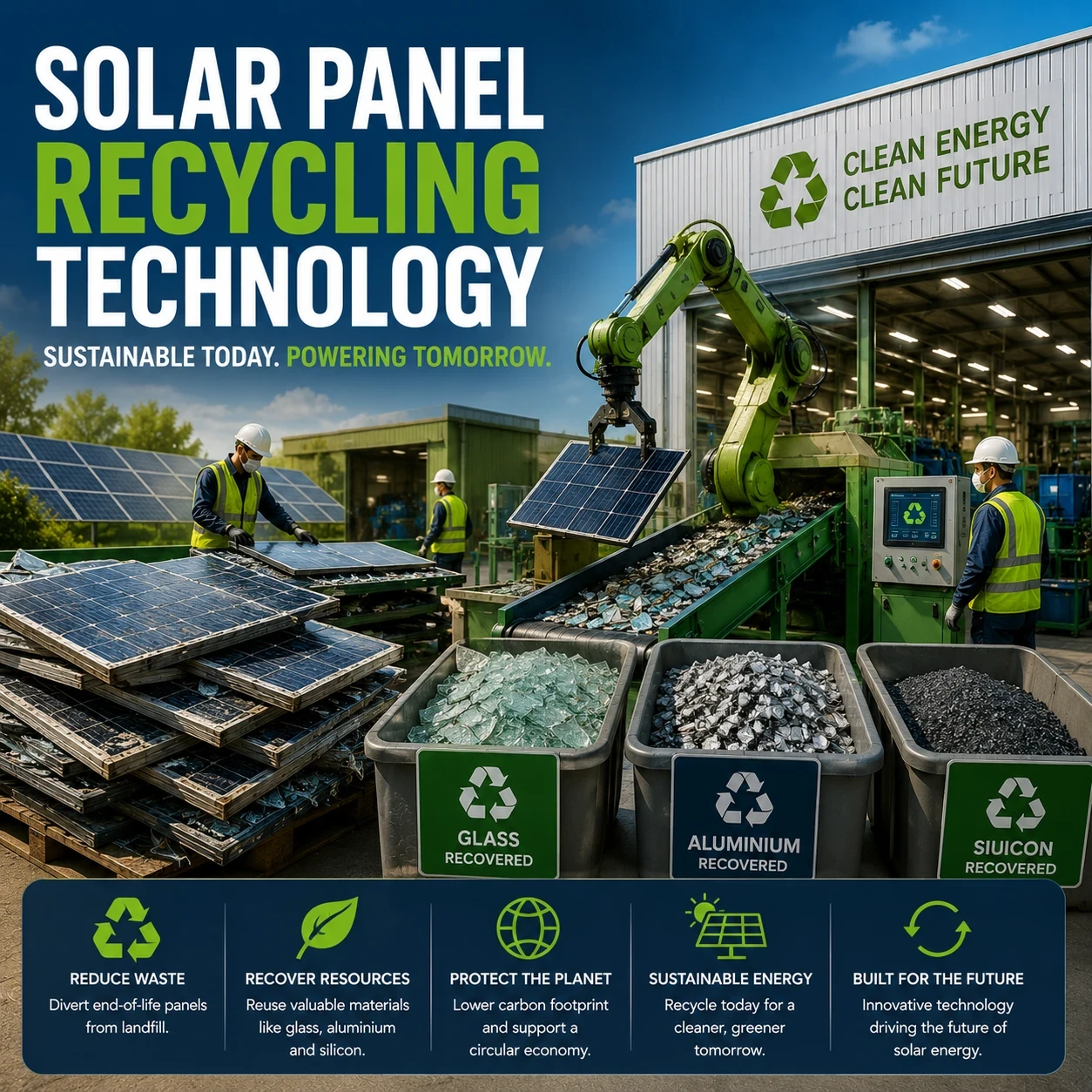
As the first generation of large-scale solar installations reaches the end of its operational life, solar energy technology is expanding beyond electricity generation to include sustainable recycling. Modern solar panels are designed to last 25 to 30 years or more, but eventually they will need to be replaced.
Fortunately, many of the materials used in today’s solar panels—including glass, aluminium, silicon, and copper—can be recovered and reused. Recycling technology continues to improve, reducing waste while lowering the environmental impact of manufacturing new panels.
Governments and manufacturers are investing heavily in recycling infrastructure to support the growing number of solar installations worldwide. This circular approach helps conserve valuable raw materials and makes solar power even more sustainable over the long term.
Emerging Solar Technologies to Watch
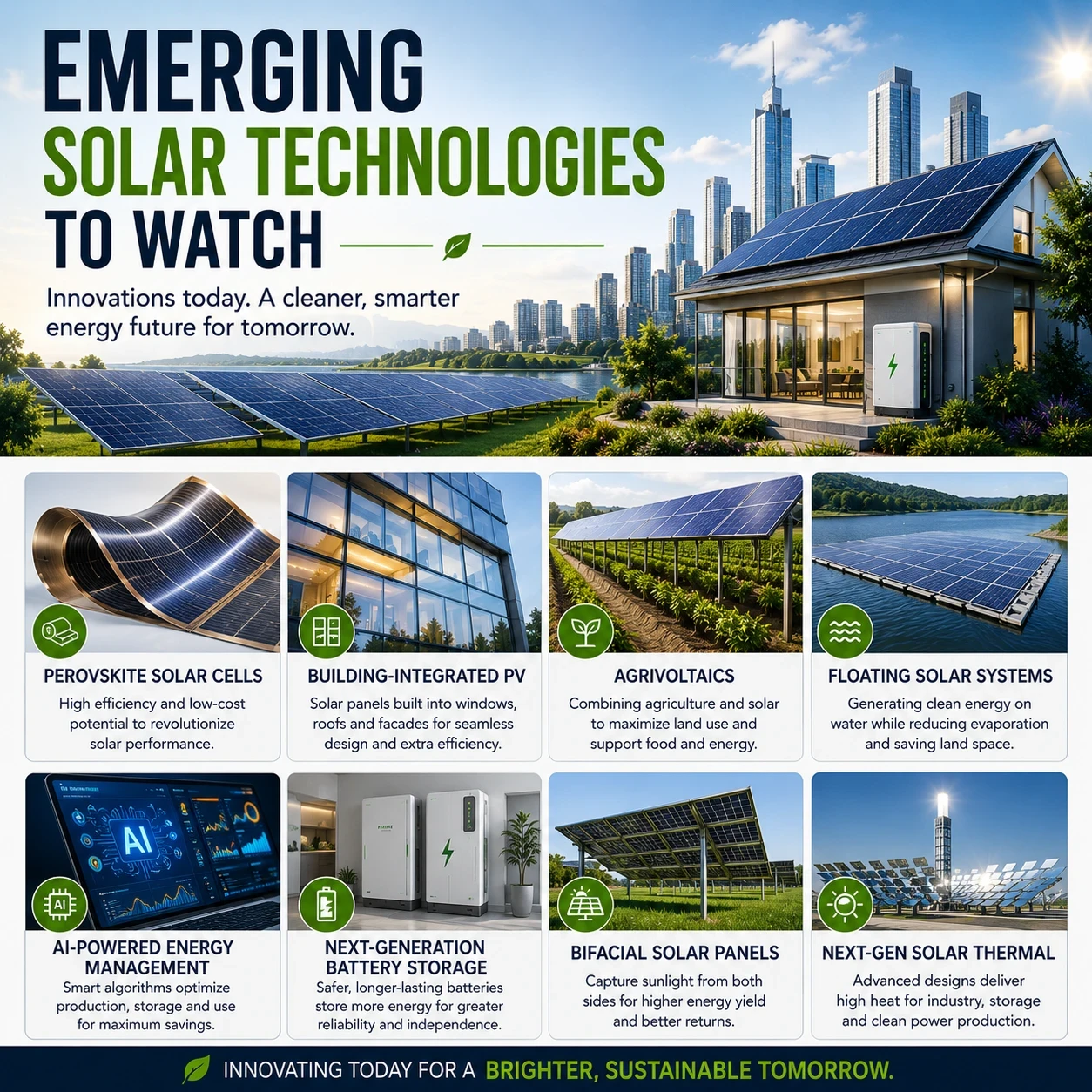
The pace of innovation within solar energy technology shows no signs of slowing. Researchers and manufacturers are developing exciting new products that could significantly improve efficiency, flexibility, and affordability over the next decade.
- Transparent solar glass that can generate electricity while functioning as windows.
- Flexible solar panels suitable for curved roofs, vehicles, boats, and portable applications.
- Solar roof tiles that blend seamlessly into residential properties while producing clean electricity.
- Floating solar farms installed on reservoirs and lakes, reducing land usage while benefiting from the cooling effect of water.
- Building-integrated photovoltaics (BIPV) that incorporate solar technology directly into walls, roofs, and building materials.
Many of these technologies are already being deployed commercially, while others continue to progress rapidly through research and development. Together they represent the next generation of renewable energy solutions.
Choosing Future-Proof Solar Energy Technology
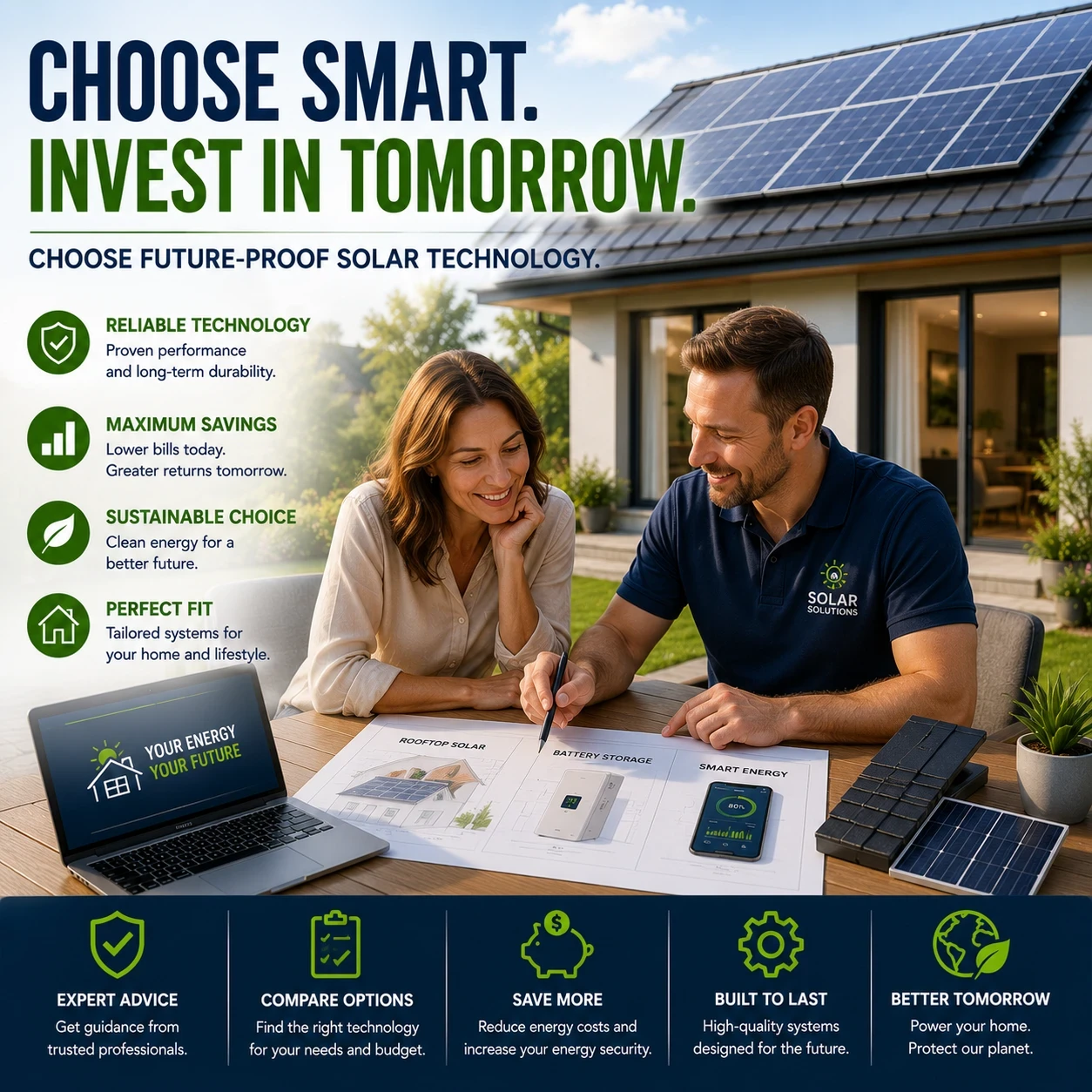
Investing in solar energy technology is a long-term decision, so it pays to choose equipment that can adapt as technology evolves. While the lowest-priced system may seem attractive initially, selecting high-quality components often delivers better performance, greater reliability, and lower maintenance costs over the lifetime of the installation.
When comparing systems, consider factors such as panel efficiency, inverter capabilities, battery compatibility, warranty length, software updates, and the ability to expand the system in the future. Choosing equipment from established manufacturers also improves the likelihood of ongoing technical support and spare parts availability.
Working with experienced installers is equally important. A professionally designed system ensures each component operates efficiently together, maximising energy production and protecting your investment for many years.

Frequently Asked Questions
What is solar energy technology?
Solar energy technology includes the equipment and software used to capture sunlight, generate electricity, store energy, monitor performance, and manage electricity consumption. This includes solar panels, inverters, battery storage, EV chargers, and smart energy management systems.
Is solar technology still improving?
Yes. Manufacturers continue developing higher-efficiency solar panels, longer-lasting batteries, smarter inverters, AI-powered monitoring systems, and improved recycling methods. New technologies are entering the market every year.
Can older solar systems be upgraded?
In many cases, yes. Existing systems can often be enhanced with battery storage, smart monitoring, upgraded inverters, or additional solar panels, depending on the original installation.
What is the biggest trend in solar energy technology?
One of the biggest trends is the integration of solar panels, battery storage, electric vehicle charging, and intelligent energy management into one connected system that automatically optimises electricity production and consumption.
Conclusion
Solar energy technology is transforming the way people generate, store, and use electricity. Continuous advances in solar panels, intelligent inverters, battery storage, artificial intelligence, smart home automation, and electric vehicle integration are making renewable energy more efficient, affordable, and accessible than ever before.
Whether you’re planning a new solar installation or upgrading an existing system, understanding the latest technology can help you make informed decisions that continue delivering benefits for decades. As innovation accelerates, today’s investments in modern solar energy technology have the potential to provide long-term savings, greater energy independence, and a cleaner future.
Related Articles
- Home Energy Systems
- Home Solar Systems: A Complete Guide to Generating Clean Energy
- Solar Panels
- What Is a Solar Inverter and How Does It Work?
- Home Battery Storage Systems: The Complete 2026 Guide
- Electric Vehicle Charging at Home