Energy Efficient Home Systems
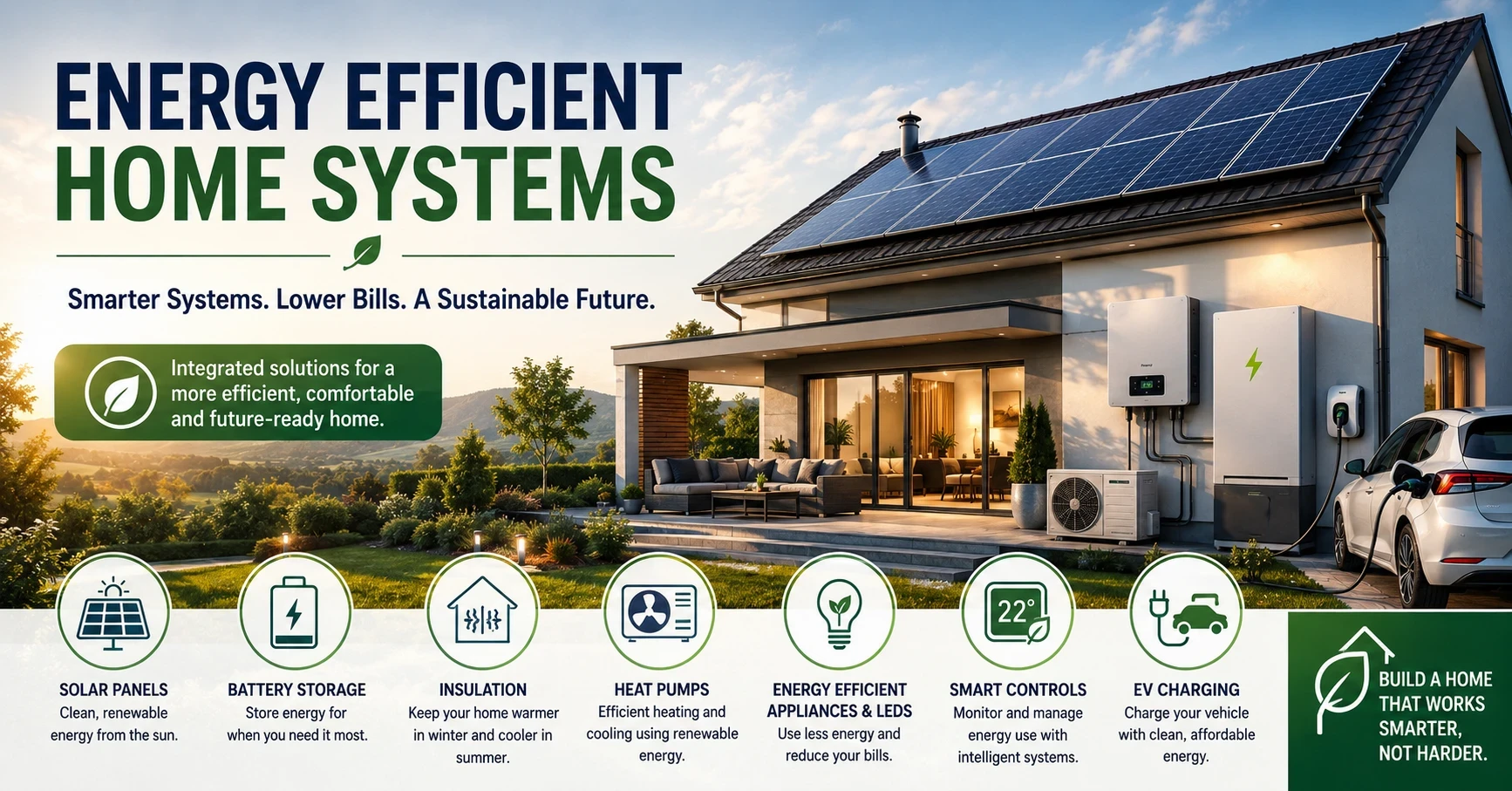
Energy efficient home systems can help homeowners reduce energy consumption, lower household running costs and make better use of renewable energy. Rather than relying on one individual technology, an efficient home combines insulation, heating, solar power, battery storage, smart controls and efficient appliances into one coordinated system.
The result can be a home that requires less energy in the first place and uses the energy it does need more intelligently. Whether you are upgrading an existing property or planning a new home, understanding how these technologies work together can help you decide where your money will have the greatest impact.
What Are Energy Efficient Home Systems?
Energy efficient home systems are technologies and improvements designed to reduce unnecessary energy consumption while maintaining or improving comfort. They can range from relatively simple upgrades such as insulation and LED lighting to complete renewable energy systems incorporating solar panels, battery storage and smart energy management.
The most effective approach is usually to consider the property as a complete energy system. Installing solar panels, for example, can reduce the amount of electricity purchased from the grid. However, combining solar with good insulation, efficient heating and battery storage can potentially deliver considerably greater benefits.
If you are beginning a wider home upgrade, our guide to energy efficiency home upgrades explains the main improvements worth considering.
Start by Reducing Energy Waste
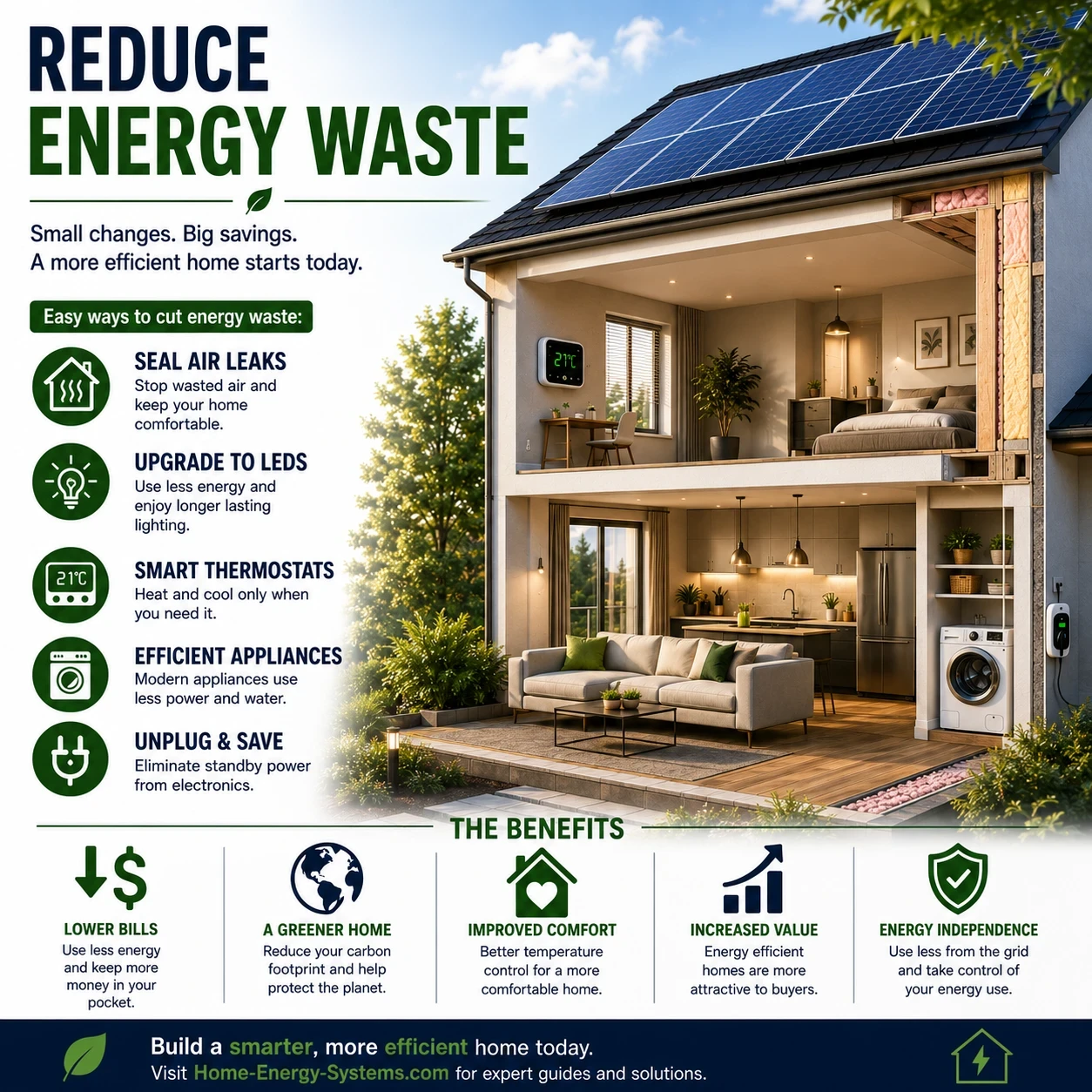
Before investing heavily in renewable energy technology, it makes sense to reduce the amount of energy your home wastes.
Heat can escape through roofs, walls, floors, windows and doors. Improving insulation and reducing uncontrolled draughts can lower the amount of energy required to maintain a comfortable indoor temperature.
Other relatively straightforward improvements can include LED lighting, efficient household appliances, heating controls, smart thermostats and improved hot-water management.
This approach is important because every unit of energy you avoid wasting is energy that does not need to be generated, stored or purchased.
Solar Panels and Home Energy Efficiency
Solar photovoltaic panels have become one of the most recognisable components of modern energy efficient home systems. They generate electricity from sunlight that can be used throughout the property.
During daylight hours, solar electricity can help power appliances, heating equipment, home offices and electric vehicle charging. Depending on the system and local regulations, surplus electricity may be stored in a battery or exported to the electricity grid.
Solar is particularly interesting when considered as part of a complete energy strategy rather than as a standalone installation. Our complete homeowner’s guide to solar panels looks at panel selection, installation and the factors that can influence system performance.
Home Battery Storage
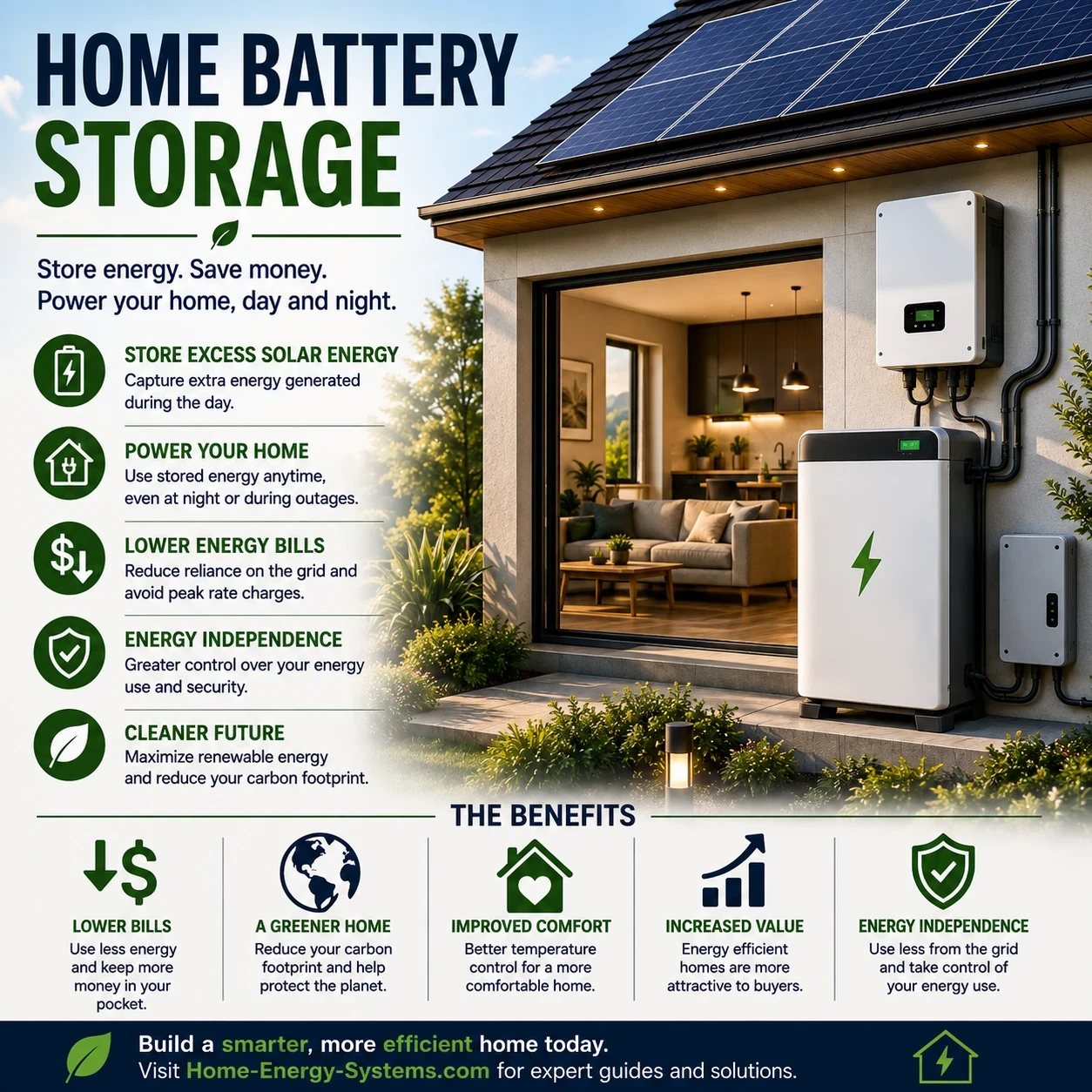
A home battery can increase the flexibility of a renewable energy system by storing electricity for later use.
For example, solar panels may generate their highest output around the middle of the day when household electricity demand is relatively low. A battery can store some of that surplus electricity so it can potentially be used during the evening when demand increases.
Modern battery systems may also offer monitoring and smart energy-management features that allow homeowners to see when electricity is being generated, stored and consumed.
Our guide to home battery storage systems explains battery capacity, system design and what to consider before buying.
Energy Efficient Heat Pumps
Heating is another major consideration when designing an energy efficient home. Heat pumps are increasingly being used as an alternative to conventional fossil-fuel heating systems.
Instead of creating heat through combustion, a heat pump transfers heat from the surrounding air, ground or another source into the building. Performance depends on factors including climate, system design, insulation, heat emitters and installation quality.
A well-designed heat pump can work particularly effectively in a properly insulated property. Combining a heat pump with solar generation may also allow some heating demand to be supplied using electricity generated at home.
Learn more in our guide to the best heat pump systems.
Smart Home Energy Management
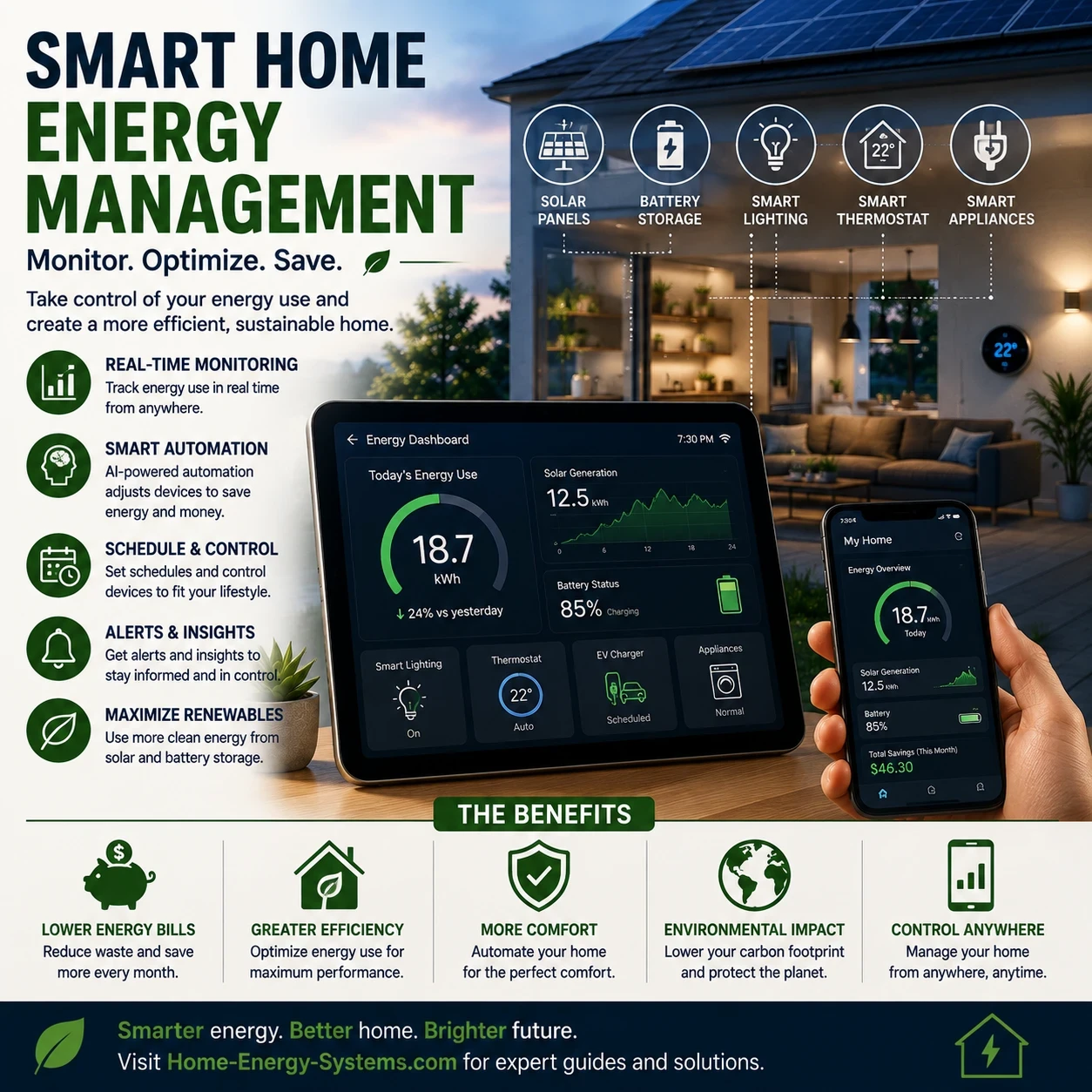
One of the biggest developments in home energy technology is the ability to connect different systems together.
Smart energy controls can monitor electricity generation and household consumption and potentially decide when electricity should be used, stored or drawn from the grid.
Imagine a home where solar panels generate electricity during the day, a battery stores surplus power, an electric vehicle charges when renewable electricity is available and heating is automatically adjusted according to household demand.
This type of integration is turning individual energy-saving products into complete smart home energy systems.
Which Energy Efficient Upgrades Should Come First?
There is no single system that will be right for every property. Climate, electricity prices, building design, available roof space, existing heating and household energy consumption can all influence the best approach.
For many homes, a sensible order is to identify where energy is being wasted first. Insulation, draught reduction and heating controls may improve the performance of everything installed afterwards.
Homeowners can then investigate technologies such as efficient heating, solar panels, battery storage and EV charging based on their individual circumstances and budget.
Benefits of an Energy Efficient Home
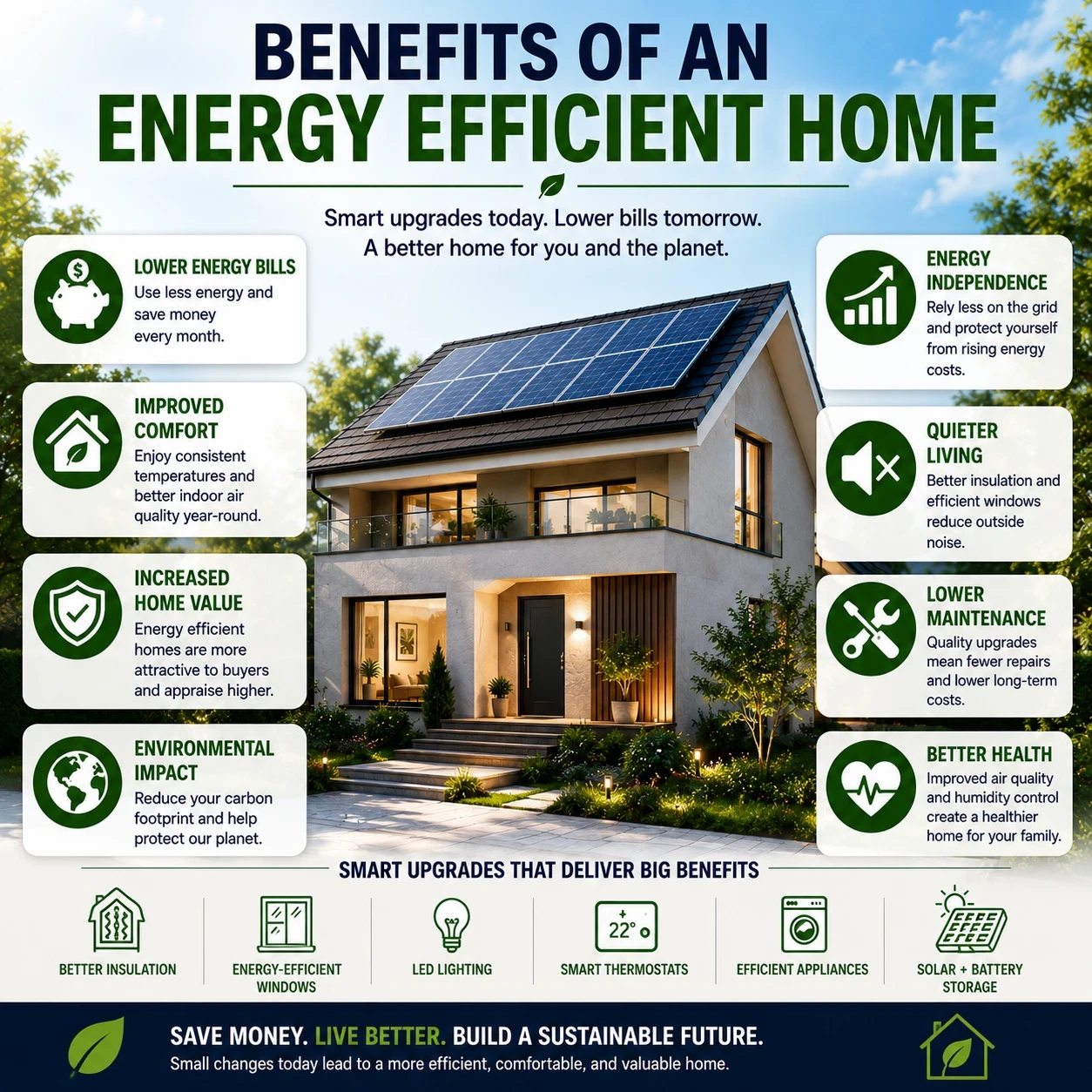
The most obvious objective is reducing energy consumption, but the potential benefits extend further.
A well-designed system can improve indoor comfort, reduce dependence on purchased electricity or fossil fuels, make better use of renewable energy and provide homeowners with greater visibility over how their property consumes power.
Energy efficiency is also becoming increasingly important internationally. The International Energy Agency reports that buildings account for around 30% of global energy demand and identifies building retrofits, improved efficiency and heat-pump deployment among important measures for improving building energy performance.
For additional independent information, visit the International Energy Agency – Energy Efficiency in Buildings.
Building Your Home Energy System Step by Step
You do not necessarily need to transform your entire home at once. An energy efficient home can be developed gradually.
You might begin by improving insulation and reducing energy waste, followed later by solar panels, efficient heating or battery storage. As technologies are added, smart monitoring can help bring them together into a more coordinated system.
The important point is to think beyond individual products. The best energy efficient home systems are designed around how the entire property produces, stores and consumes energy.
Final Thoughts
Creating a more energy efficient home is not simply about installing the latest technology. It is about reducing unnecessary demand and then supplying the remaining energy as efficiently as practical.
Insulation, solar panels, home battery storage, heat pumps and intelligent energy controls can each play a role. When carefully combined, they can create a home that is more comfortable, more efficient and better prepared for a future increasingly built around electricity and renewable energy.
Continue exploring Home Energy Systems for independent guides covering solar power, battery storage, heat pumps, EV charging and the technologies shaping the future of home energy.
