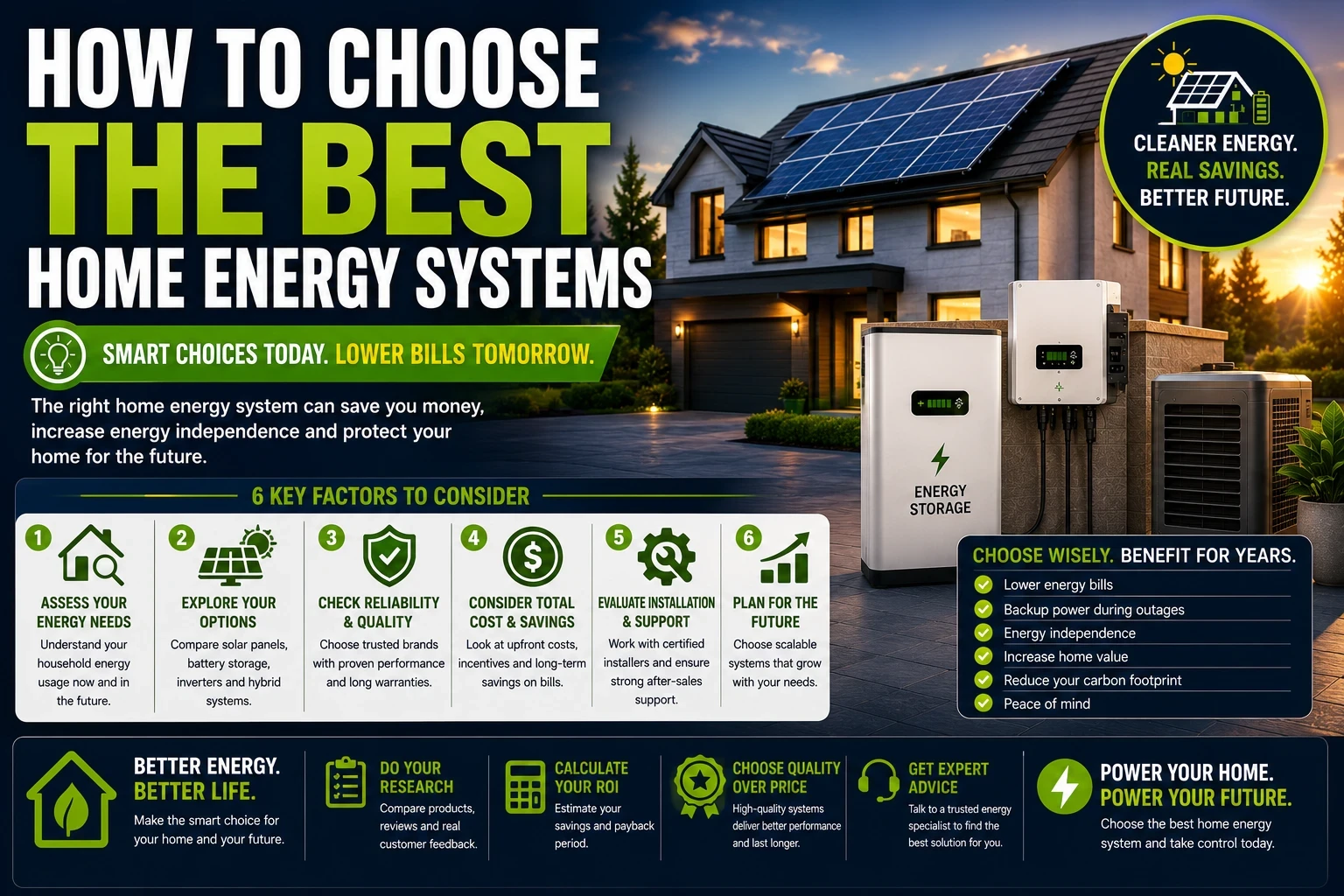
Choosing the best home energy system in 2026 is less about buying the biggest system and more about matching the technology to your home, electricity usage, budget and need for backup power.
For some households, a simple grid-connected solar installation may provide the best value. Others may benefit from solar panels combined with battery storage, while homes that experience regular power outages may place greater importance on backup capability.
This guide compares the main home energy system options, explains where each performs best and highlights the factors worth checking before you invest.
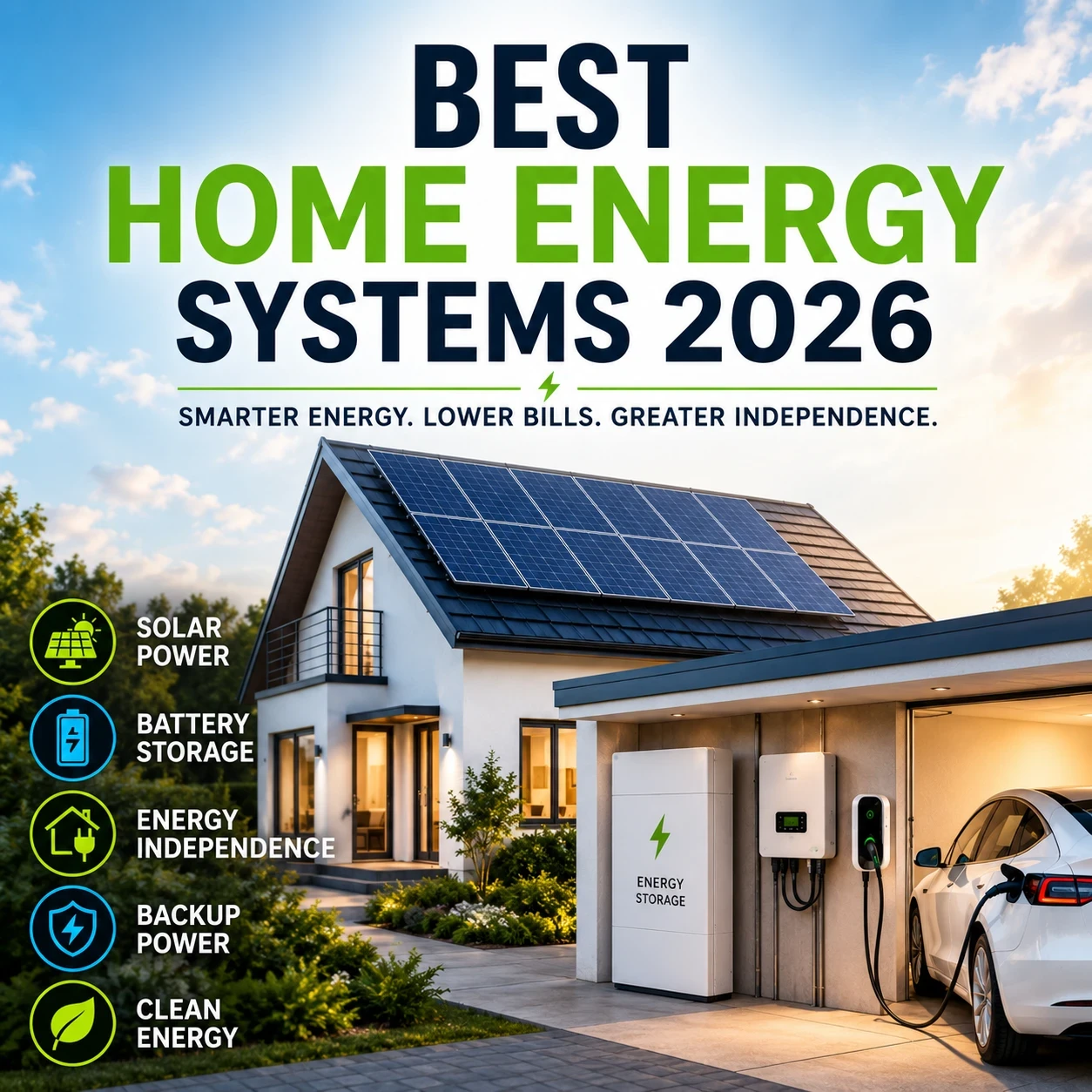
Best Home Energy Systems 2026: Quick Picks
Why Home Energy Systems Are Becoming More Important
Homes are becoming increasingly dependent on electricity. Electric vehicles, heat pumps, induction cooking, home offices and other electrical equipment can all increase household demand.
At the same time, improvements in solar panels, lithium iron phosphate batteries, hybrid inverters and energy-management software have made it possible to generate, store and control more electricity at home.
A modern system can therefore perform several jobs at once: reduce electricity purchased from the grid, store excess solar generation, provide backup power and help homeowners understand where their energy is being used.
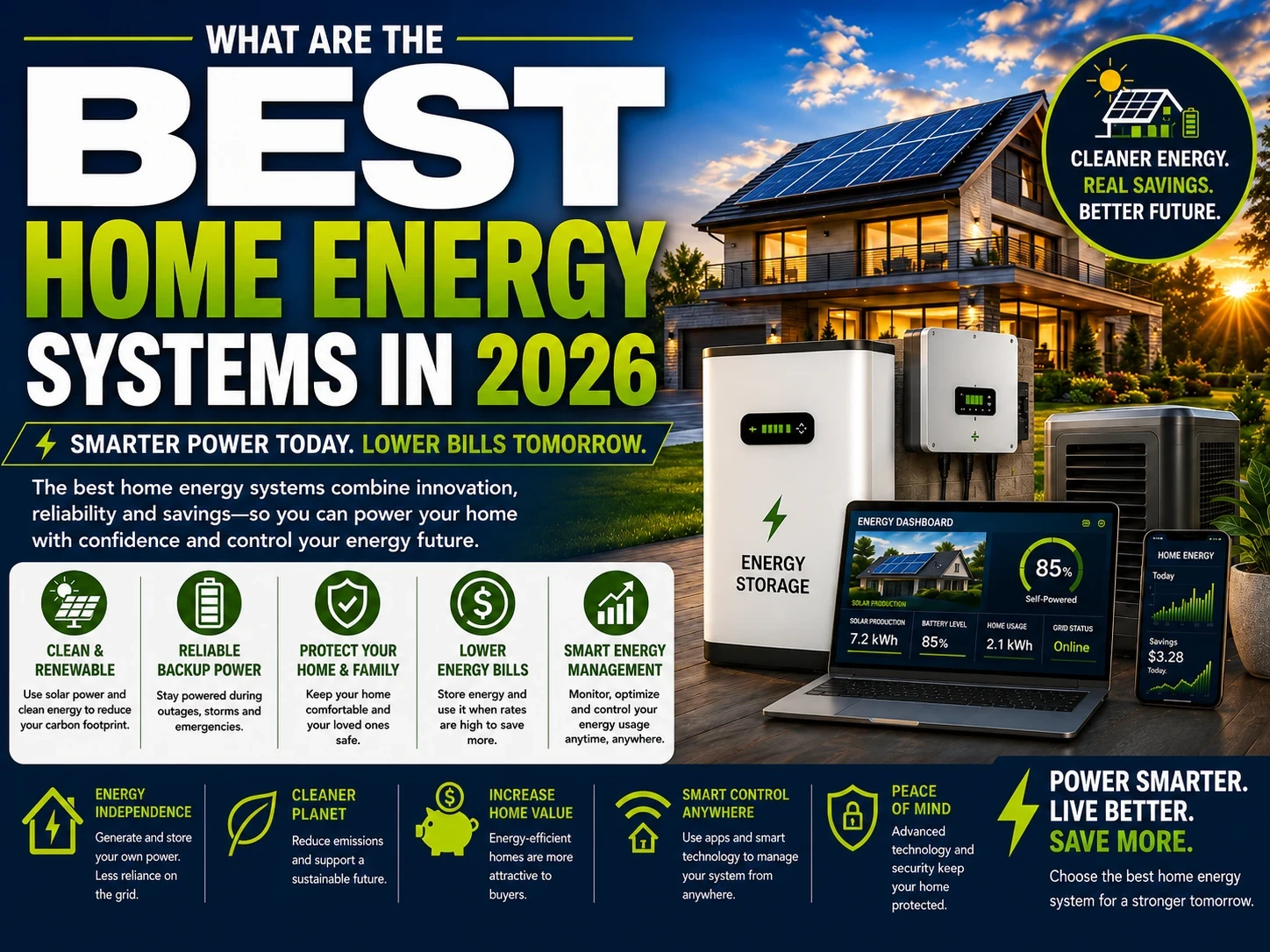
What Makes a Good Home Energy System?
The strongest system is the one that suits the property rather than simply the one with the largest specifications.
Efficient Solar Generation
Solar panels remain the starting point for many residential energy systems. Higher-efficiency panels can be particularly useful where roof space is limited because they generate more power from a smaller area.
Panel quality, warranty terms, degradation rate, local climate and installer quality should all be considered alongside headline efficiency figures.
Correctly Sized Battery Storage
Battery storage allows electricity generated during the day to be used later, particularly during the evening or during a power outage when the system has been designed for backup operation.
Lithium iron phosphate, commonly called LiFePO₄ or LFP, has become widely used in modern home batteries because of its cycle life, thermal stability and suitability for repeated charging.
The right battery size depends on your household consumption, solar generation, electricity tariffs and how much backup power you actually need.
A Suitable Inverter
The inverter manages the conversion of electricity between the solar panels, batteries, household appliances and electricity grid.
A hybrid inverter can simplify systems that combine solar and battery storage, but compatibility between the inverter, battery and other components is important.
Smart Energy Management
Modern monitoring systems can show:
- Solar electricity production.
- Battery charge level.
- Household electricity consumption.
- Electricity imported from the grid.
- Electricity exported to the grid.
- Daily, monthly and yearly energy use.
This information can help homeowners shift electricity use to periods when solar power is available or when grid electricity is cheaper.
Compare the Main Home Energy Systems
Grid-Tied Solar
Best for: Reducing electricity bills at the lowest practical system cost.
Main advantage: Simpler and generally cheaper than a battery system.
Consider: Standard grid-tied solar normally shuts down during a power cut unless suitable backup equipment is installed.
Solar + Battery Storage
Best for: Homes wanting to use more of their own solar electricity.
Main advantage: Stores daytime solar energy for evening use.
Consider: Battery capacity and usable output should match actual household demand.
Hybrid Home Energy System
Best for: Homeowners wanting solar, batteries and grid electricity working together.
Main advantage: Flexible energy management and easier future expansion when correctly designed.
Consider: Equipment compatibility and professional system design are important.
Off-Grid Solar System
Best for: Remote properties without a reliable grid connection.
Main advantage: Full independence from the electricity network.
Consider: Requires careful sizing, larger battery reserves and often secondary backup generation.
Home Backup Power System
Best for: Homes where outage protection is the priority.
Main advantage: Keeps selected household loads operating when grid electricity fails.
Consider: Decide whether you want essential-circuit backup or whole-home backup before sizing the system.
Solar Without a Battery
Best for: Homes with strong daytime electricity consumption.
Main advantage: Lower equipment cost while still reducing grid electricity use.
Consider: Excess daytime generation may provide less value where export payments are low.
Which Setup Is Best for Your Home?
If Your Priority Is Lower Electricity Bills
A grid-tied solar system may provide the simplest starting point. Homes that use significant electricity during daylight hours can consume more solar power directly without paying for battery storage.
If Your Priority Is Greater Energy Independence
Solar panels combined with battery storage allow more generated electricity to remain within the home instead of being exported and later bought back from the grid.
Read our complete Home Battery Storage Systems guide for more detail.
If Your Priority Is Backup Power
Choose equipment specifically designed to operate during a grid outage. Owning solar panels or batteries does not automatically mean a home will remain powered when the grid fails.
The inverter, battery, changeover equipment and electrical circuits must all be configured for backup operation.
If You Live Off Grid
An off-grid installation needs enough solar generation and battery capacity to cope with periods of poor weather as well as normal daily electricity use.
Our Off-Grid Solar Systems guide explains this type of setup in more detail.
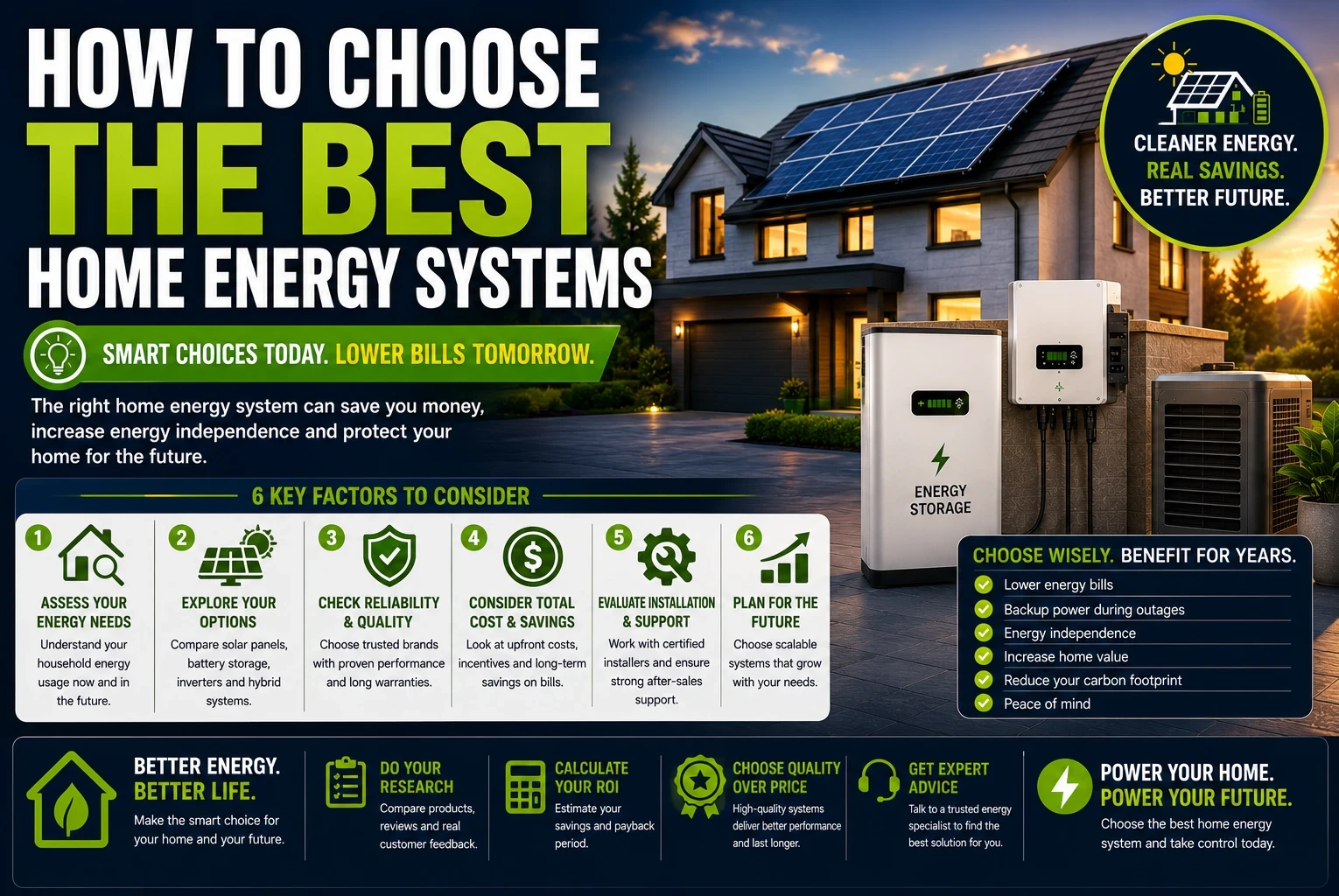
How to Choose the Right Home Energy System
Start With Your Electricity Usage
Review at least twelve months of electricity bills where possible. Look at both total annual consumption and seasonal changes.
A household using most electricity during the evening may need a different system from a household with high daytime consumption.
Plan for Future Electricity Demand
Consider whether you expect to add an electric vehicle, heat pump, electric water heating, air conditioning or other large electrical loads.
A system that can be expanded later may be more useful than one designed only around today’s demand.
Check Roof Space, Orientation and Shading
Available roof area, orientation, pitch and shading all affect solar production. South-facing roofs are often advantageous in the Northern Hemisphere, although east- and west-facing arrays can also perform effectively depending on household electricity patterns.
Decide What Must Run During an Outage
Whole-home backup requires considerably more battery capacity and inverter power than keeping only essential loads running.
Typical essential loads might include refrigeration, lighting, internet equipment, heating controls and selected sockets.
Check Expandability
Ask whether additional solar panels, battery modules or backup circuits can be added later. Expansion can be much easier when it is considered during the initial design.
Home Energy System Costs in 2026
There is no single meaningful worldwide price for a complete home energy system because installation costs vary significantly by country, system size, labour costs, equipment choice and electrical work required.
In general:
- Grid-tied solar usually has the lowest upfront cost.
- Adding battery storage increases the initial investment.
- Hybrid installations cost more but provide greater flexibility.
- Whole-home backup requires higher battery and inverter capacity.
- Off-grid installations normally require the largest solar and storage systems.
Compare quotations using more than the purchase price. Consider equipment warranties, installer support, monitoring, expected service life and whether the system can be expanded later.
Common Home Energy System Buying Mistakes
- Buying solely on price.
- Installing more battery capacity than the household can realistically use.
- Installing too little battery capacity for the intended backup loads.
- Assuming every solar system works during a blackout.
- Ignoring future EV or heat-pump electricity demand.
- Combining components that are not fully compatible.
- Choosing equipment without checking warranty and support arrangements.
- Failing to compare several installation quotations.
- Ignoring roof shading or poor solar orientation.
- Designing an off-grid system without sufficient reserve capacity.
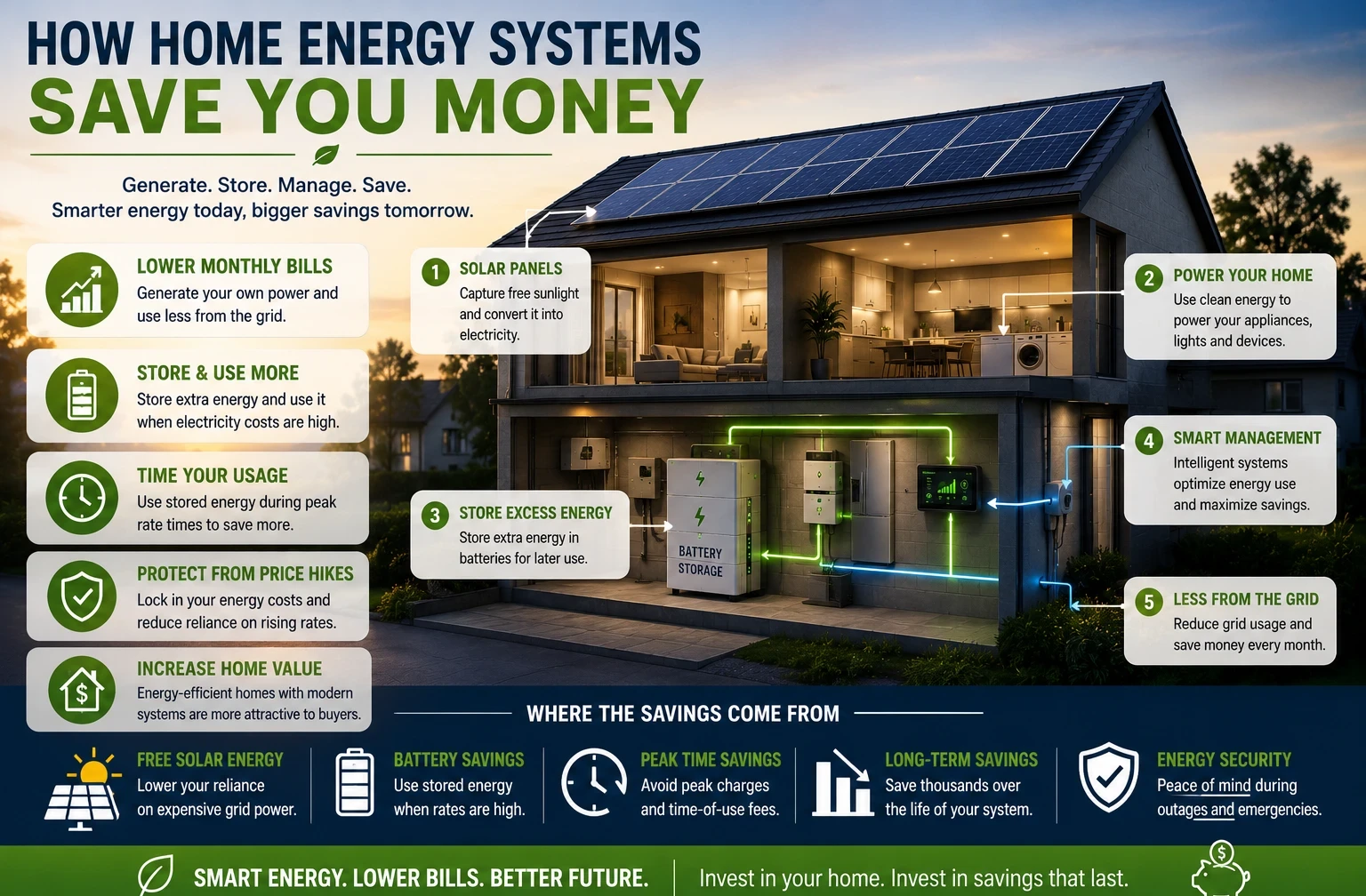
Solar Panels, Batteries and Backup Power: How They Work Together
A well-designed home energy system can combine several technologies without every household needing every component.
Solar panels generate electricity. An inverter converts and manages that electricity. Battery storage keeps electricity available for later use. Backup equipment determines whether selected circuits can continue operating when grid power fails.
Smart controls can coordinate these components, prioritising solar electricity, charging batteries and managing grid imports according to the system configuration.
Frequently Asked Questions
What is the best home energy system for most households?
A grid-connected hybrid system combining solar panels with the option of battery storage provides a flexible solution for many homes. However, the most suitable configuration depends on electricity use, roof conditions, local electricity prices and whether backup power is required.
Is battery storage necessary?
No. Solar panels can reduce electricity bills without batteries. Battery storage becomes more useful where evening electricity consumption is high, electricity tariffs vary significantly or backup power is important.
Can I add a battery later?
Often yes. Many homes begin with solar and add storage later. Choosing a system designed for future expansion can make this easier.
Do solar panels work during cloudy weather?
Yes. Solar panels continue generating electricity in cloudy conditions, although output is lower than during strong sunlight.
Can solar power charge an electric vehicle?
Yes. Home solar electricity can be used to charge an EV, particularly when charging occurs during periods of strong solar production or when a suitable energy-management system is installed.
Can batteries power an entire home?
They can, but whole-home backup requires sufficient battery capacity and inverter output. Many installations instead prioritise essential circuits to extend available runtime.
How long do home energy systems last?
Different components have different service lives. Solar panels commonly carry long performance warranties, while inverters and batteries may require replacement earlier. Always check the warranty and expected operating life of the specific equipment being considered.
Final Thoughts
The best home energy system in 2026 is the one designed around the household rather than around a marketing specification.
A simple grid-tied solar installation may be ideal for reducing electricity costs. Solar plus battery storage can increase self-consumption and resilience. Hybrid systems provide flexibility, while properly designed off-grid systems can provide complete independence in suitable locations.
Before buying, understand your annual electricity consumption, decide whether backup power matters, consider future loads such as EV charging or heat pumps and compare several professionally prepared system designs.
A well-planned system can then be expanded as your energy requirements change instead of needing to be replaced completely.
Further Reading
- U.S. Department of Energy — homeowner information about residential solar energy.
- International Energy Agency — renewable energy and electricity market research.
Return to the Home Energy Systems homepage .