Best Bladeless Wind Turbine for Home Use in 2026
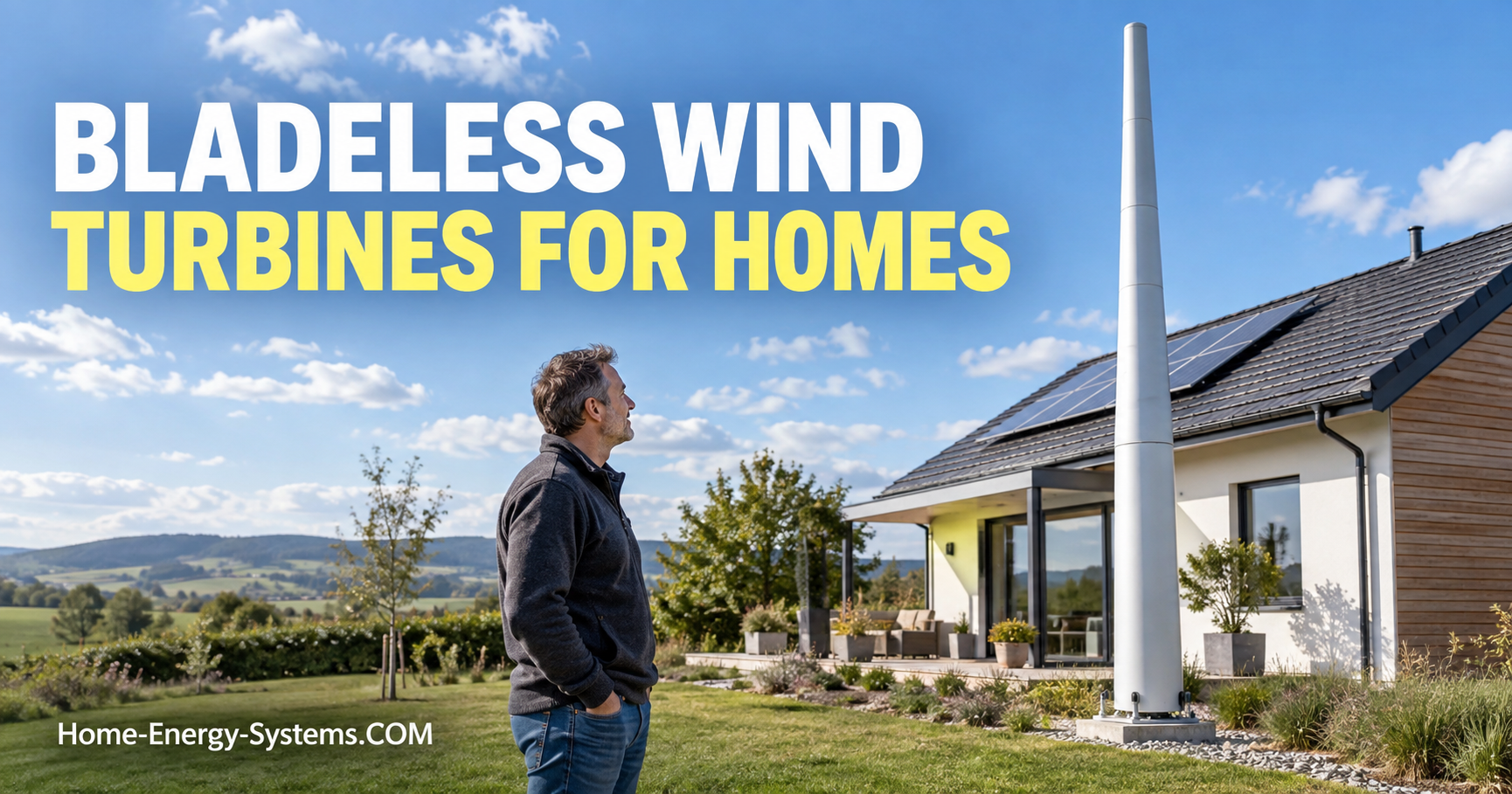
Is there a best bladeless wind turbine for home use in 2026? The honest answer is that bladeless wind technology is promising, but the residential market is still developing. Most homeowners cannot yet choose from a large range of independently tested, widely available bladeless turbines in the way they can compare solar panels or conventional small wind turbines.
A bladeless wind turbine uses the movement of a flexible mast rather than rotating blades. This may offer quieter operation, fewer exposed moving parts and a smaller visual footprint. However, a compact unit normally produces much less electricity than a properly sited conventional turbine, and many widely shared designs remain prototypes or limited-release products. That means choosing the best bladeless wind turbine for home installation requires careful checks rather than relying on promotional claims.
This guide explains how bladeless wind turbines work, whether one could power a home, the likely benefits and limitations, what affects cost and how to choose the best bladeless wind turbine for home use if a verified product is available in your area.
Quick answer: A bladeless turbine may eventually become a useful supplementary generator for a windy property, but it should not currently be treated as a guaranteed whole-home power system. Check verified output data, local availability, warranties and site wind measurements before paying a deposit.
What Is a Bladeless Wind Turbine?
A bladeless wind turbine is a wind-energy device that does not use the familiar rotor and three rotating blades. The best-known concept uses a tall, narrow mast that moves from side to side when wind passes around it. This motion is controlled and converted into electrical energy inside the lower part of the system.
The word “bladeless” can describe several technologies, so buyers must look beyond the label. Some designs use an oscillating mast, while others hide smaller turbines inside housings or use different airflow systems. They do not all work in the same way and should not be assumed to offer the same output.
This article mainly covers oscillating-mast systems because they are the design most people mean when searching for a bladeless wind turbine for a home.
How Do Bladeless Wind Turbines Work?
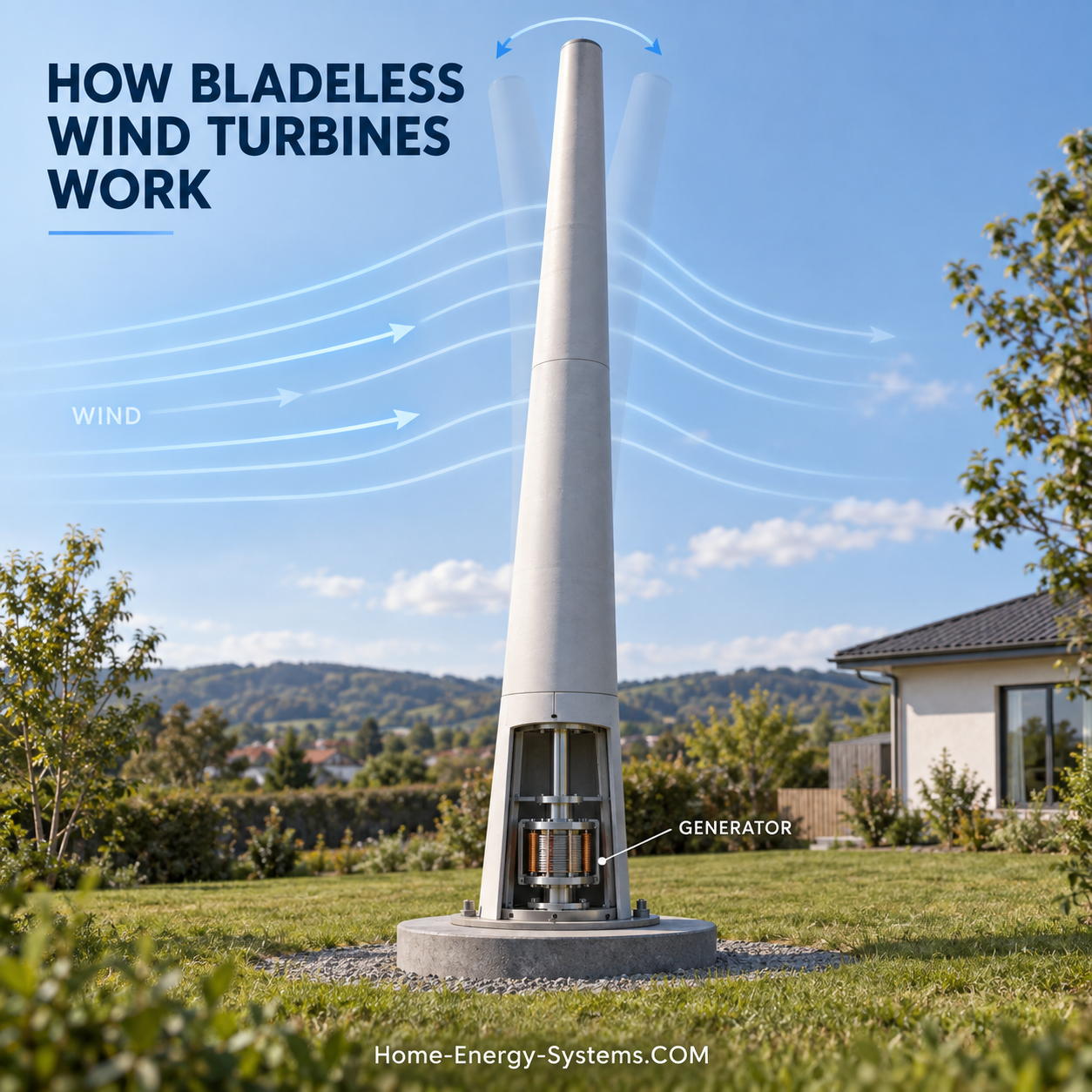
When wind flows around a tall cylindrical or tapered structure, it can create alternating swirling air patterns. These are known as vortices. Under controlled conditions, the changing forces make the mast oscillate from side to side.
The turbine is designed so that the mast responds within a particular wind-speed range. A generator or alternator near the base then converts the mechanical movement into electricity. Power electronics condition the output before it can charge a battery or supply an appropriate electrical system.
No spinning rotor
The visible part moves through a small controlled arc instead of completing full rotations.
Energy conversion
The motion drives an internal generating system, often using electromagnetic components.
Wind-dependent output
Power changes sharply with wind conditions. A rated figure is not the same as continuous output.
Electrical controls
A controller, inverter and possibly a battery may be required, depending on the intended use.
The principle is real, but engineering performance matters more than appearance. Mast height, materials, tuning, generator efficiency, wind speed and turbulence all affect how much usable energy reaches the home.
Can a Bladeless Turbine Power a Home?
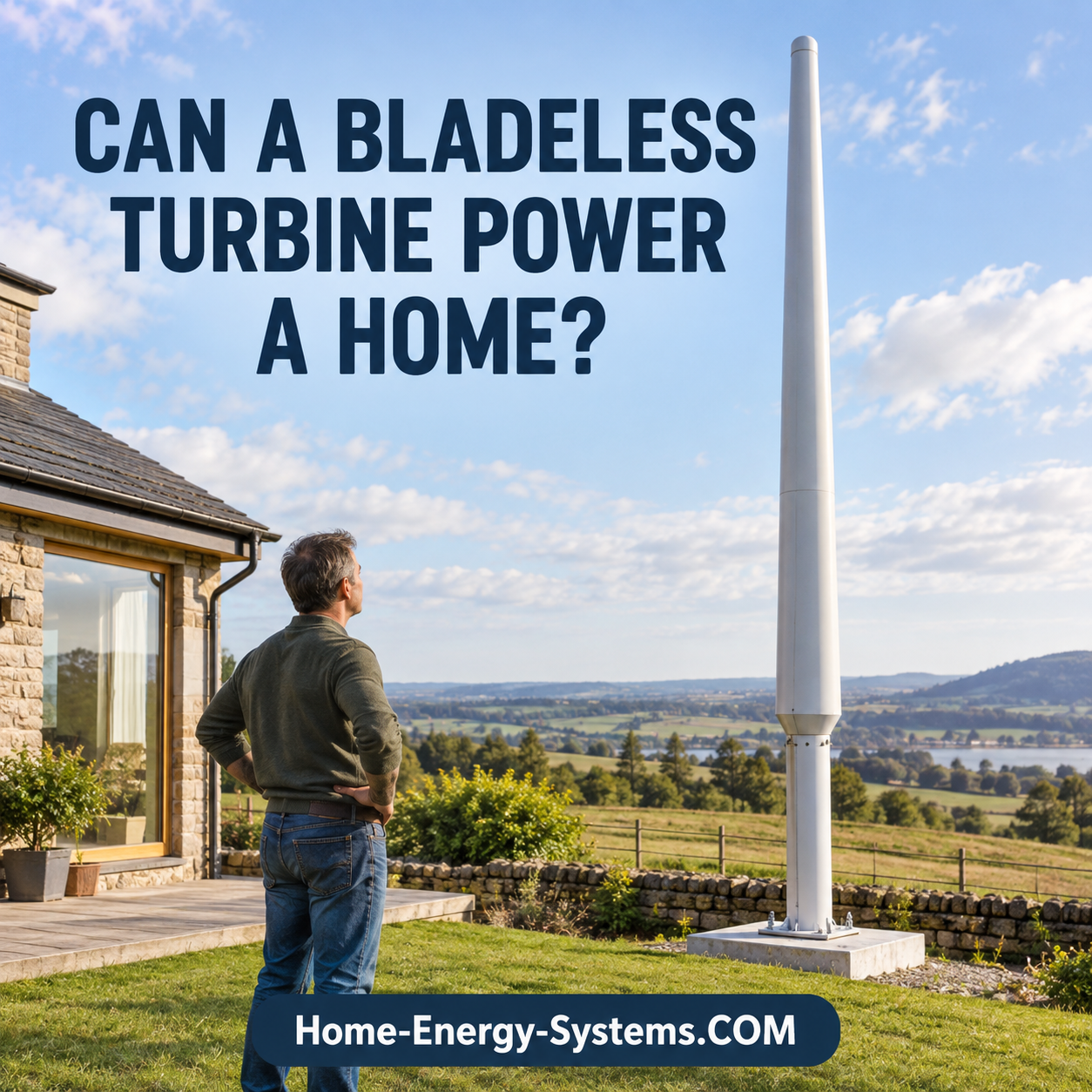
A single compact bladeless turbine is unlikely to power an average home by itself. Household consumption continues day and night, while wind output rises, falls and sometimes stops completely. The turbine’s rated wattage also represents performance under specified test conditions rather than the energy it will deliver continuously.
For example, a household may use several thousand kilowatt-hours of electricity over a year. To make a meaningful contribution, a wind system needs both adequate generating capacity and a strong annual capacity factor. A small device in turbulent garden-level wind may produce only a fraction of its advertised maximum.
A bladeless turbine could be more realistic in one of these roles:
- Supplementing solar panels during windy weather or overnight.
- Charging a correctly matched battery for modest loads.
- Powering sensors, lighting, communications equipment or other small applications.
- Contributing to a hybrid off-grid system rather than acting as its only generator.
- Supporting education, demonstration or monitored trial projects.
Do not judge a turbine by rated power alone. Ask for estimated annual energy production in kilowatt-hours at your site’s average wind speed. That figure is far more useful than a headline watt rating.
If reliable household backup is the priority, compare the proposal with our guide to the best home backup power systems. A wind generator without suitable battery storage and backup-capable controls will not automatically keep a home running during a power cut.
Potential Benefits of Bladeless Wind Power
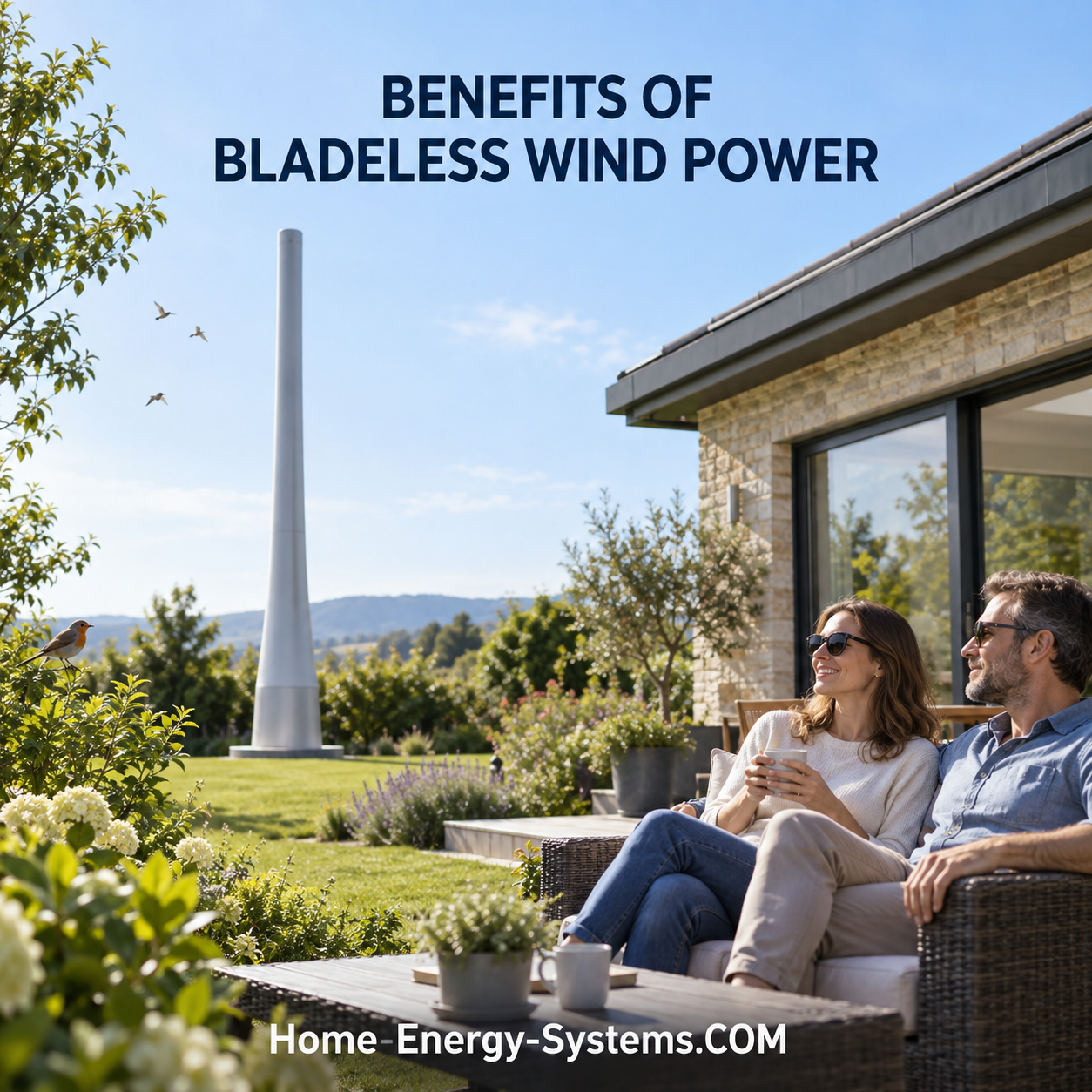
Fewer exposed moving parts
Without a rotor, gearbox and large external blades, an oscillating design may have fewer components exposed to weather and rotational wear. This could simplify certain maintenance tasks, although internal parts, anchors and electrical equipment still require inspection.
Potentially quieter operation
Bladeless concepts aim to avoid the aerodynamic and mechanical noise associated with spinning blades. Actual sound levels should still be confirmed from independent test data, particularly where the turbine would be close to neighbours.
Smaller visual and safety footprint
A narrow mast may be less visually dominant than a rotor with a wide swept area. The absence of spinning blades may also reduce some blade-related hazards. It does not remove the need for structural engineering, safe foundations, electrical protection or suitable clearances.
Possible complement to solar
Wind can sometimes be strongest when solar generation is low, including at night and during unsettled weather. A properly designed hybrid system could combine wind, solar and home battery storage. The two technologies must be sized from real site data rather than assumed to balance one another.
Limitations You Need to Know
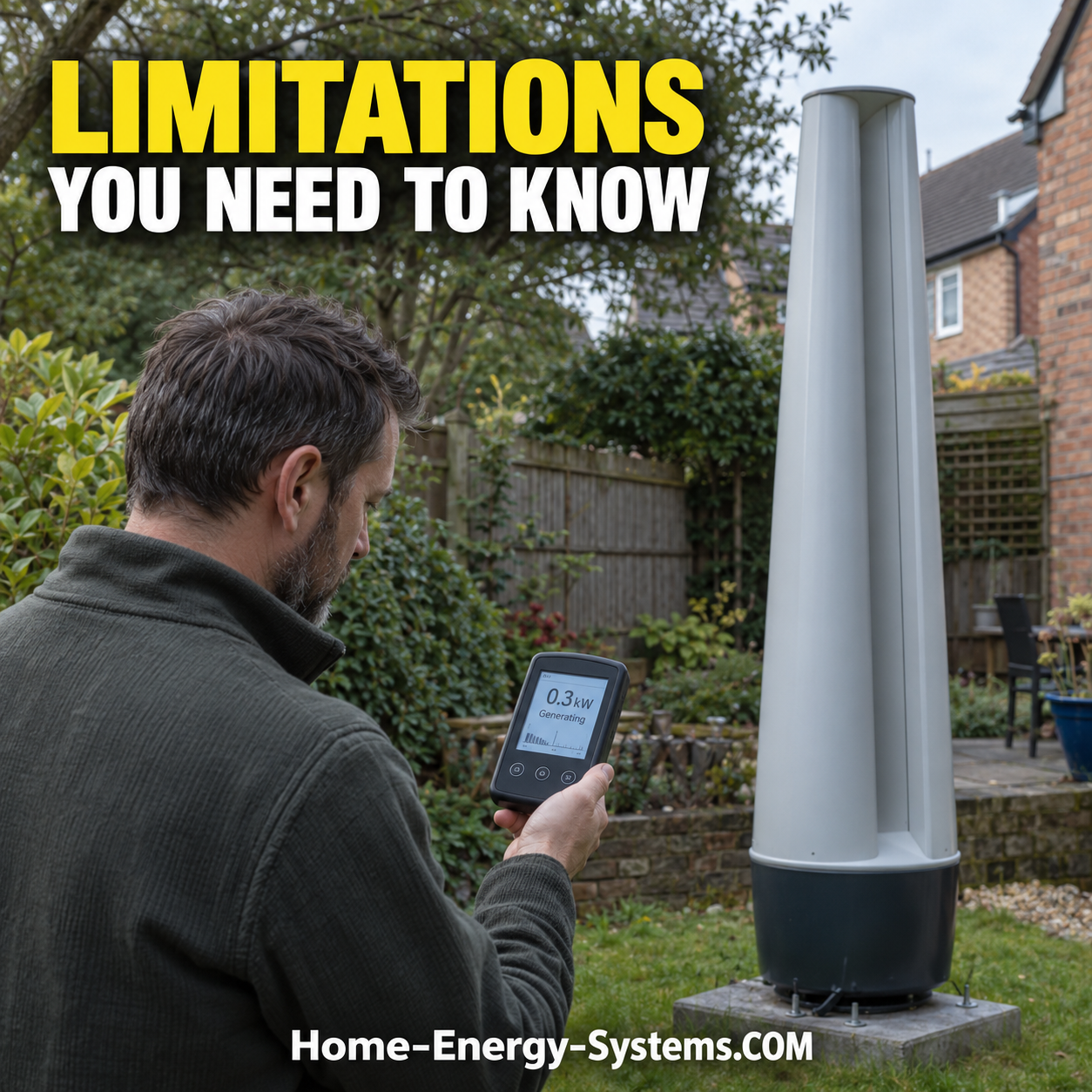
The biggest limitation is market maturity. Bladeless turbines receive considerable online attention, but public interest does not mean that full-size residential products are widely stocked, certified, installed and independently verified.
Limited product choice
Homeowners may find concept announcements, investment material, prototypes or products intended for specialist applications. Before buying, confirm that the exact model is currently available in your country and that the seller can provide installation, parts and warranty support.
Lower energy capture at small scale
A compact device intercepts a limited amount of moving air. Conventional turbines use a rotor’s swept area to capture wind energy, while an oscillating mast uses a different and generally smaller working area. A quiet, compact unit may therefore trade maximum output for simplicity and reduced visual impact.
Weak wind at roof or garden level
Buildings, trees, walls and uneven ground disturb airflow. This turbulence can reduce energy production and increase structural loading. Placing a turbine on a low roof does not guarantee useful wind simply because the roof feels exposed.
Lack of long-term field evidence
Buyers should look for independent performance curves, noise measurements, structural certification and documented operation over several years. Manufacturer simulations and short demonstrations cannot show lifetime reliability on their own.
Planning and grid requirements
Permission rules vary by country and local authority. Height, distance from boundaries, noise, visual impact and protected locations may all matter. Grid-connected systems also require compatible certified electrical equipment and approval under the rules that apply locally.
Wind Speed and Location Matter
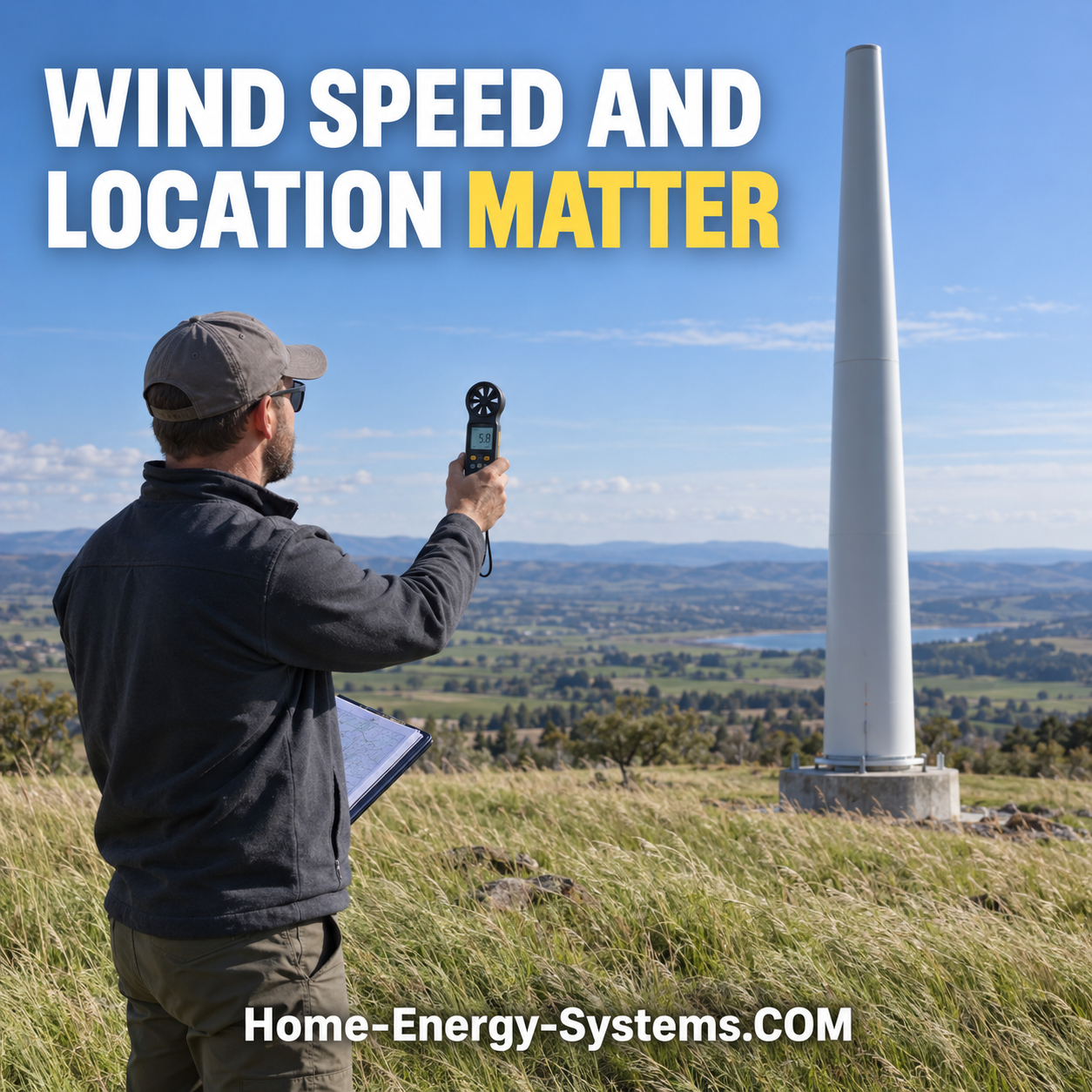
The quality of the wind resource usually matters more than the turbine’s styling. Wind contains much more energy as its speed rises, so a modest difference in average wind speed can create a large difference in annual generation.
The best sites are generally open, elevated and clear of nearby obstacles. Sheltered suburban gardens are often poor locations because surrounding buildings and trees create slow, turbulent airflow.
Before choosing a system:
- Review a reputable regional wind map as an initial screening tool.
- Identify buildings, trees, slopes and other turbulence sources.
- Measure wind at the proposed turbine height, ideally over an extended period.
- Ask the supplier to calculate annual output using the measured wind distribution.
- Check whether the supporting structure can withstand expected operating and extreme loads.
The U.S. Department of Energy’s small-wind planning guidance explains the importance of wind resource, local rules, economics and site suitability. Although regulations differ worldwide, the same basic site-assessment principles remain useful.
Practical rule: If a conventional small turbine would struggle because the site is sheltered and turbulent, a bladeless turbine should not automatically be expected to solve the problem.
Bladeless Wind Turbine Costs
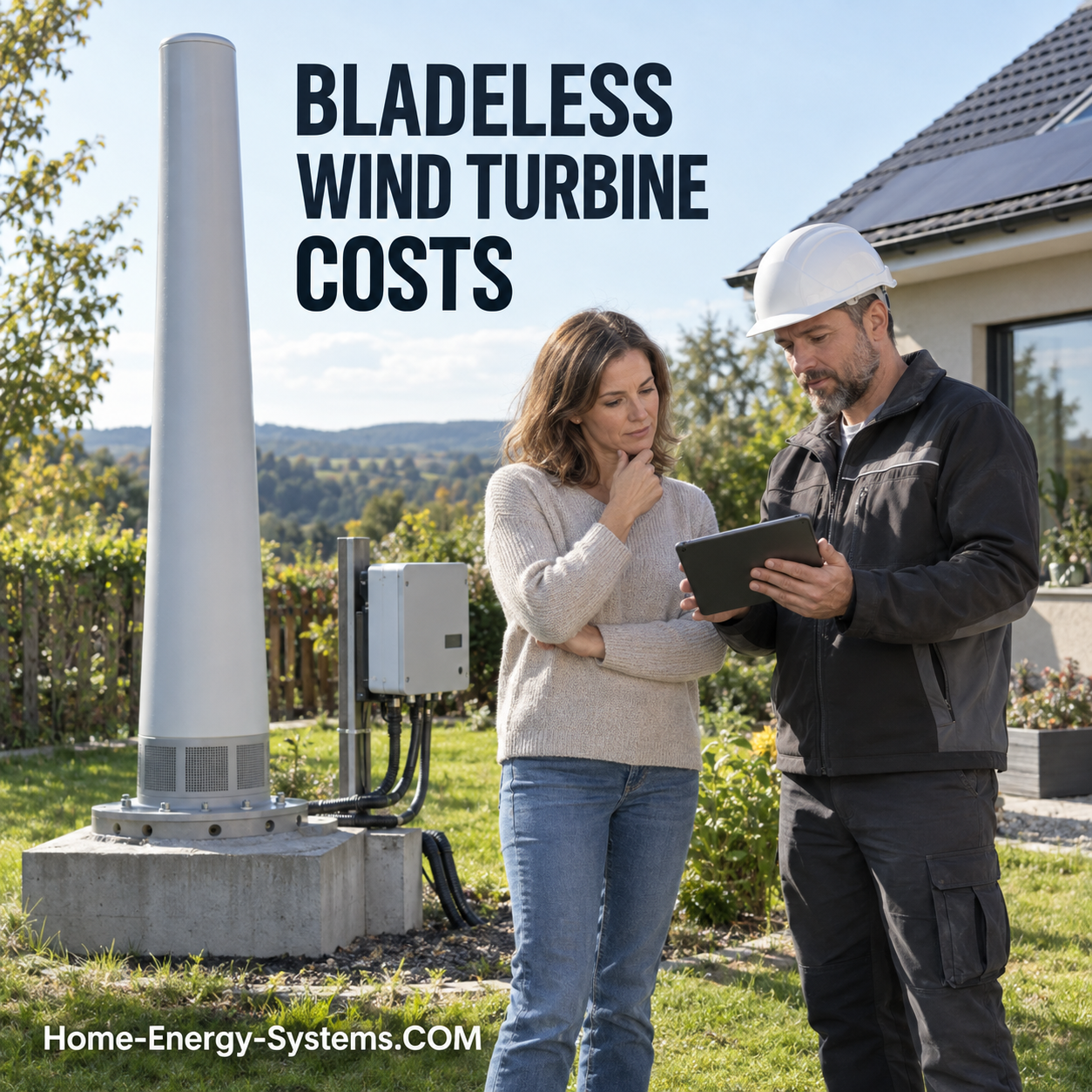
There is no dependable single average price for a residential bladeless wind turbine because models, availability and installation requirements vary widely. A product’s advertised price may cover only the generating device and exclude the components needed for a working home-energy system.
A complete quotation may need to include:
- The turbine and its controller.
- A mast, base, structural supports and concrete foundation.
- An inverter or battery-charging equipment.
- Cabling, isolation switches, surge protection and earthing.
- Battery storage where energy must be saved for later.
- Planning applications, surveys and professional design.
- Delivery, lifting equipment and qualified installation.
- Monitoring, inspections, servicing and eventual component replacement.
Calculate value from expected lifetime energy, not purchase price alone. Divide the full installed and maintenance cost by a conservative estimate of lifetime kilowatt-hours. The best bladeless wind turbine for home use must provide credible long-term value, not merely an attractive purchase price. Compare that result with solar, energy-efficiency improvements and a proven home wind turbine system.
Questions to ask before paying
- Is this exact model in commercial production?
- What certified rated-power and power-curve documents are available?
- What annual output is predicted at my measured wind speed?
- Does the quotation include every electrical and structural component?
- Who installs, commissions and services the system locally?
- What does the warranty cover, and who honours it if the distributor closes?
- Are replacement parts available in my country?
- Has the system received the approvals required for grid connection?
Buyer warning: Do not pay for a future delivery based only on a concept video or crowdfunding claim. Confirm the legal seller, delivery terms, cancellation rights, certification and an operational installation you can verify.
Bladeless vs Small Wind Turbines
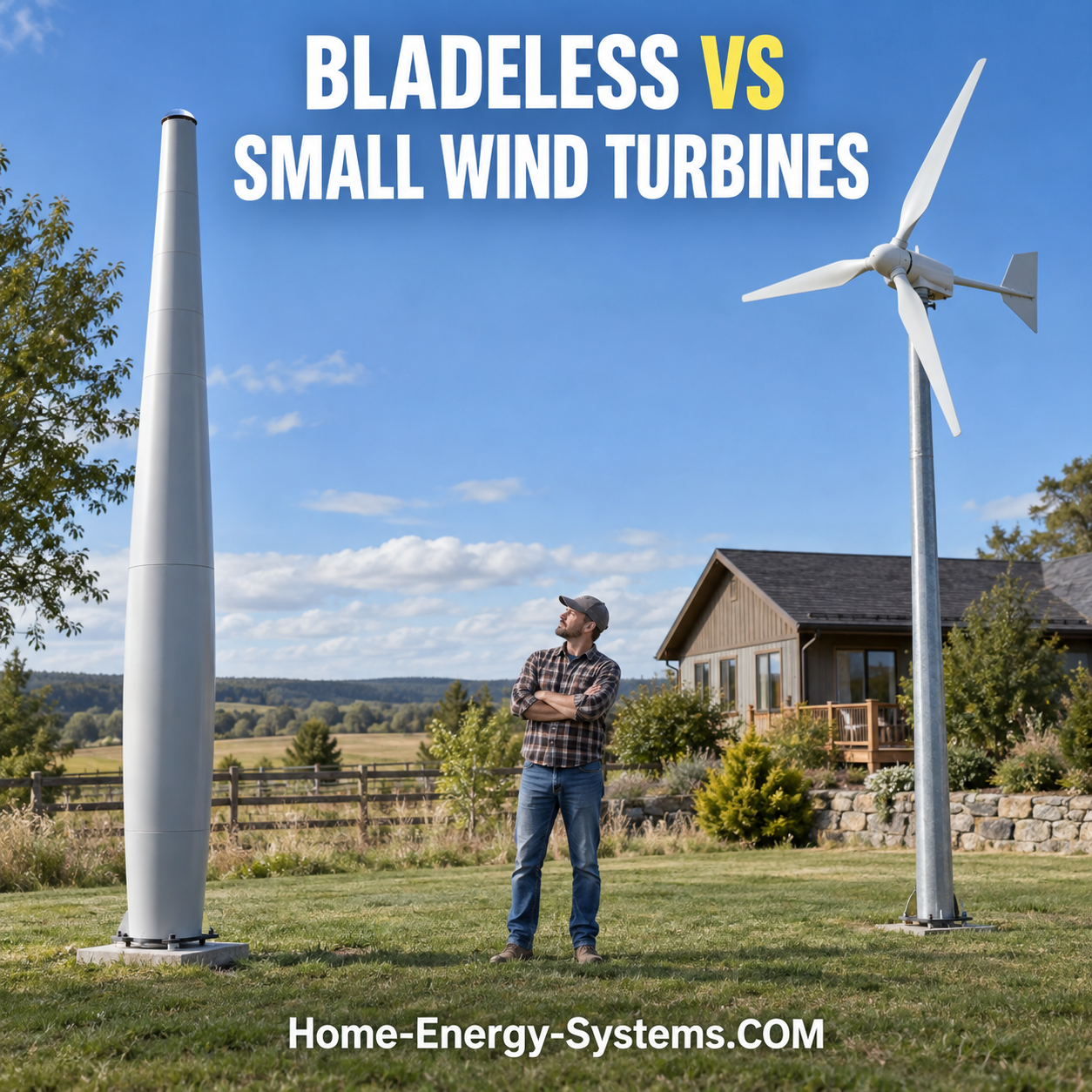
Bladeless turbine
- No visible rotating blades.
- Potentially quieter and visually simpler.
- Smaller working area on compact models.
- Limited residential product availability.
- Less long-term independent field evidence.
Conventional small turbine
- Uses a rotor and aerodynamic blades.
- More established product and installer market.
- Greater potential output from a suitable rotor.
- Requires adequate clearance and careful siting.
- May create more visible movement and noise.
A conventional small wind turbine is usually the more mature option when the main objective is measurable electricity generation. A bladeless system may appeal where appearance, moving-blade concerns or experimental technology are more important, provided its verified energy output still justifies the cost.
A home solar-panel system will often be easier to predict and install, especially in built-up areas. Wind may still have an advantage on exposed rural or coastal sites where winter and overnight generation complement solar production.
Is a Bladeless Turbine Worth It?
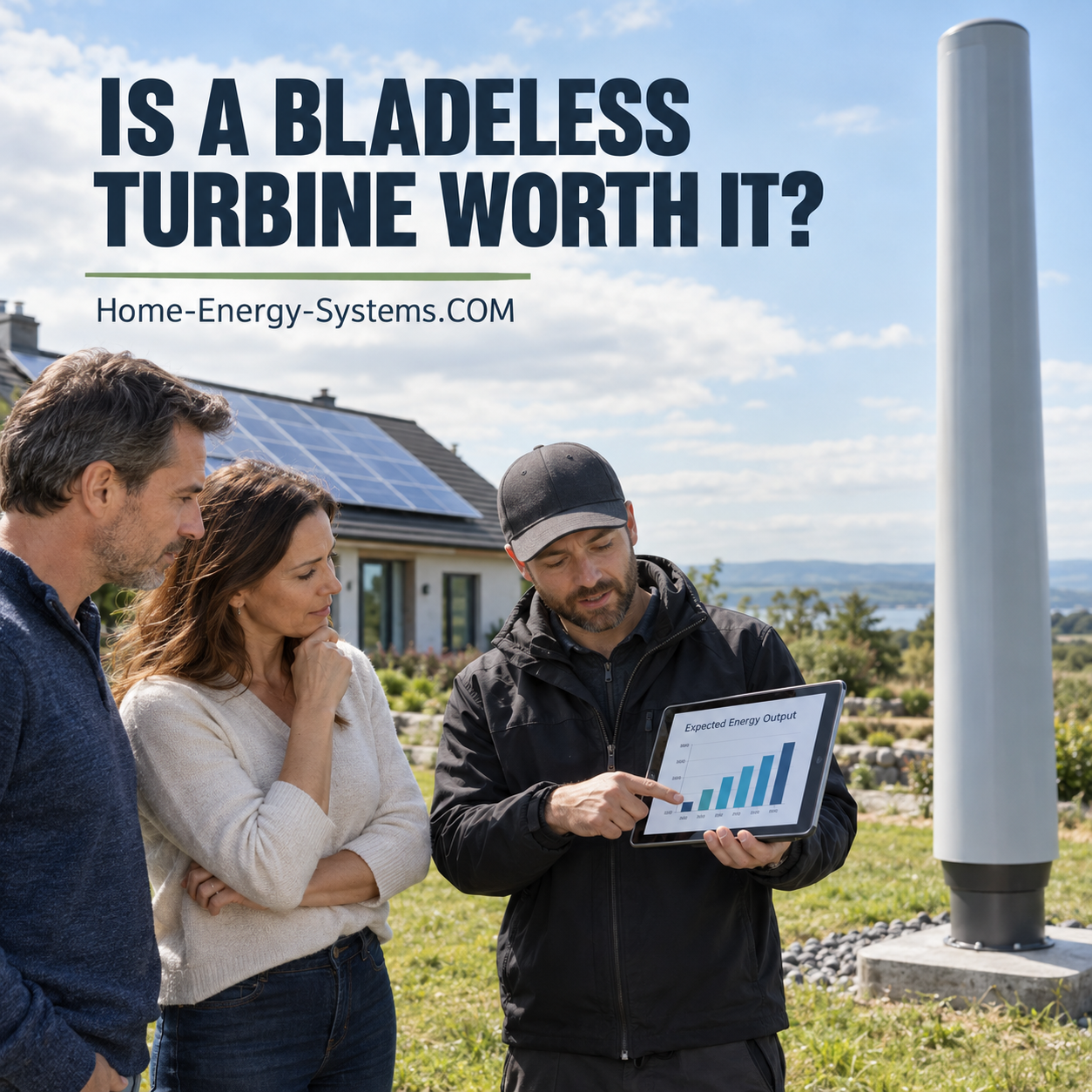
A bladeless turbine may be worth considering if you have a genuinely windy site, understand that the technology is emerging and can verify the performance and support for a real product. It may also suit a demonstration project or a hybrid system where modest wind generation has a clearly defined purpose.
It is probably not the best choice if you need guaranteed whole-home output, live in a sheltered neighbourhood, cannot obtain independently supported performance data or are being asked to fund an unproven product without firm delivery protection.
Our 2026 verdict
There is not yet one universally proven best bladeless wind turbine for home use that we can recommend for most households. The technology deserves attention, but buyers should treat it as an emerging option and demand the same evidence they would expect from an established solar or conventional wind system.
How to Choose the Best Bladeless Wind Turbine for Home Use
If a commercially available model becomes an option in your area, compare it using these criteria. The best bladeless wind turbine for home use should satisfy every essential safety, performance and support requirement rather than simply having the most impressive advertised rating.
- Verified annual output: Based on your site’s wind-speed distribution, not a generic maximum rating.
- Independent certification: Structural, electrical, acoustic and performance documentation relevant to your country.
- Complete system compatibility: Controller, inverter, batteries and grid equipment must work together.
- Installation support: Use professionals who understand wind loading, foundations and electrical protection.
- Warranty strength: Check duration, exclusions, labour cover and the company responsible.
- Realistic payback: Compare lifetime cost and energy with solar panels, efficiency measures and conventional wind.
- Local service: Confirm access to parts and technicians before purchase.
Frequently Asked Questions
Do bladeless wind turbines really work?
Yes, controlled oscillation can be converted into electricity. However, a working principle does not guarantee that every advertised product is commercially mature or economical. Verify the exact model’s independent performance data.
Can a bladeless wind turbine run an entire house?
A compact residential model is unlikely to run an average home by itself. It may contribute to a hybrid system, charge batteries or power smaller loads when installed at a suitable windy site.
Are bladeless turbines better than ordinary wind turbines?
They may offer advantages in appearance, noise and exposed moving parts. Conventional turbines currently have a more established market and may capture more energy at an appropriate site. “Better” depends on verified output, location, cost and purpose.
Can I put a bladeless turbine on my roof?
Only if the manufacturer permits that installation and a qualified structural assessment confirms it is safe. Roof-level turbulence, vibration, wind loading, noise transmission and planning rules must all be considered.
Do bladeless turbines work in low wind?
Some designs may begin moving at relatively low wind speeds, but starting to move is not the same as producing useful energy. Ask for the full power curve and annual output estimate at your measured site conditions.
Are bladeless wind turbines safe for birds?
The absence of rotating blades removes one obvious interaction risk, but environmental effects still depend on design and location. Claims about wildlife safety should be supported by appropriate testing rather than assumed.
Where can I buy a bladeless wind turbine?
Availability remains limited and varies by country. Buy only through a traceable manufacturer or authorised supplier that can document commercial availability, certification, delivery, warranty and local installation support.
Compare Your Home-Energy Options
Explore independent guides covering solar panels, battery storage, conventional wind turbines and home backup power.
Visit Home-Energy-Systems.com