Best Portable Power Station for a Campervan 2026: What Size Do You Need?
Choosing the best portable power station for a campervan comes down to three questions: what appliances will you run, how long will you stay off-grid, and how will you recharge? A compact unit may be plenty for a weekend, but a fridge and regular laptop use can quickly change the calculation.
This practical 2026 guide compares useful battery sizes, realistic running times, charging methods and power stations suitable for campervans, motorhomes and van life.
1. What Size Portable Power Station Do You Need for a Campervan?
Battery capacity is measured in watt-hours (Wh). A 1,000Wh battery theoretically stores enough energy for a 100W load for 10 hours, but conversion losses, idle consumption and battery reserves reduce actual runtime.
| Capacity | Typical use | Best fit |
|---|---|---|
| 250–500Wh | Phones, lights, occasional laptop | Day trips and light weekends |
| 700–1,200Wh | Efficient fridge, lights, devices | Typical weekend touring |
| 1,500–2,500Wh | More daily energy and extra reserve | Longer off-grid trips |
| 3,000Wh+ | High demand or multi-day reserve | Larger vans; weight and space permitting |
For example, a fridge using 300Wh/day, lights using 40Wh/day, a laptop using 120Wh/day and phones using 30Wh/day add up to 490Wh/day. With charging losses and a reserve, a 1,000Wh battery may cover roughly a day and a half, not several days without recharging.
2. Best Portable Power Stations for Campervans in 2026
These models illustrate three useful capacity levels. Specifications are based on published product information; check regional socket types, model versions, availability and current prices before buying.
| Model | Capacity | Rated AC output | Suitable for |
|---|---|---|---|
| BLUETTI Elite 100 V2 | 1,024Wh | 1,800W | Most small-to-medium campervan setups |
| Jackery Explorer 1000 v2 | 1,070Wh | 1,500W | Portable weekend touring |
| BLUETTI Elite 200 V2 | 2,073.6Wh | 2,600W | Higher-demand off-grid trips |
Best all-round 1kWh option: BLUETTI Elite 100 V2
Good balance of capacity, inverter output and solar input. Particularly worth considering if you recharge from portable or roof-mounted panels.
Check BLUETTI UKCheck BLUETTI USFor longer stays: BLUETTI Elite 200 V2
More than twice the stored energy of many smaller units, although extra weight, size and cost make it less attractive for very compact vans.
Browse BLUETTI UKBrowse BLUETTI USAffiliate disclosure: Some retailer links above are affiliate links. We may earn a commission if you buy, at no extra cost to you. Recommendations should be based on suitability rather than commission.
3. How Long Will a Portable Power Station Run a Campervan Fridge?
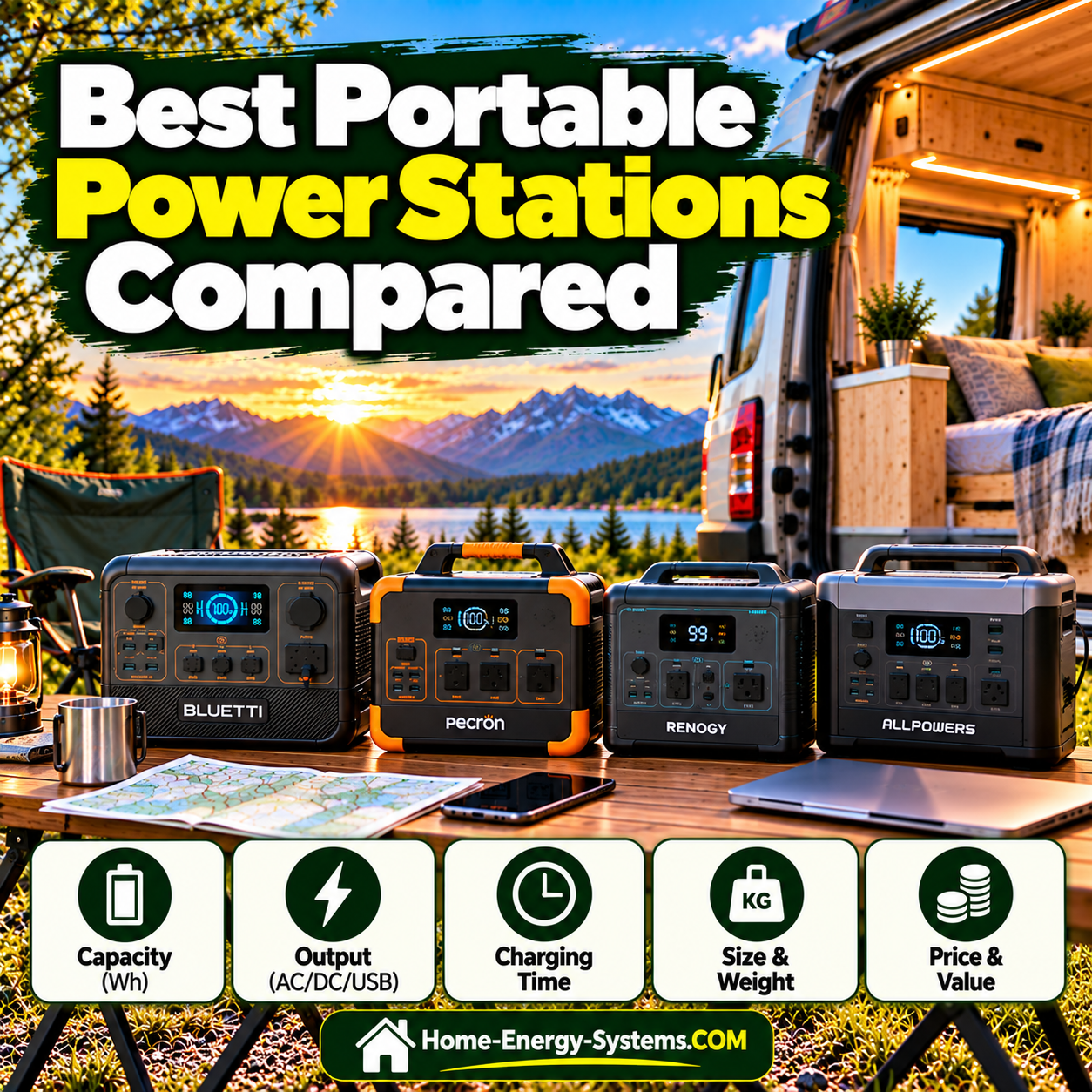
Fridge runtime depends on its average energy use, not simply its maximum wattage. A compressor fridge switches on and off, so a label showing 45W does not mean it consumes 45W continuously.
A 12V compressor fridge connected to a compatible regulated DC output can sometimes avoid AC inverter losses. Check the fridge’s voltage, starting current, plug and the power station’s DC output limits.
4. Calculate Your Campervan’s Daily Electricity Use
| Appliance | Example daily use | Energy |
|---|---|---|
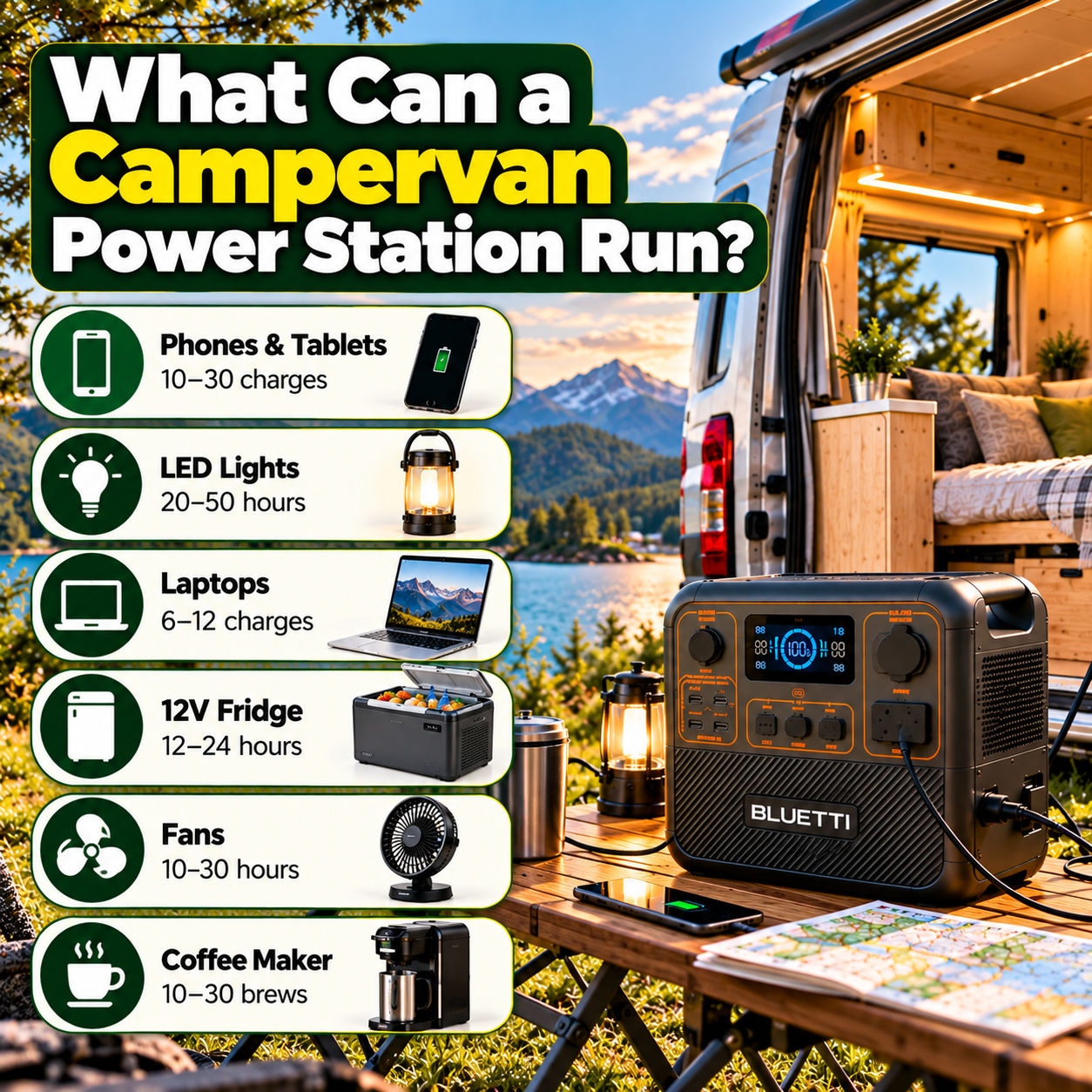
| 12V compressor fridge | Average 15W × 24h | 360Wh |
| LED lights | 10W × 4h | 40Wh |
| Laptop | 60W × 2h | 120Wh |
| Phone charging | Two charges | 30Wh |
| Water pump and small devices | Intermittent | 40Wh |
| Total | Illustrative only | 590Wh/day |
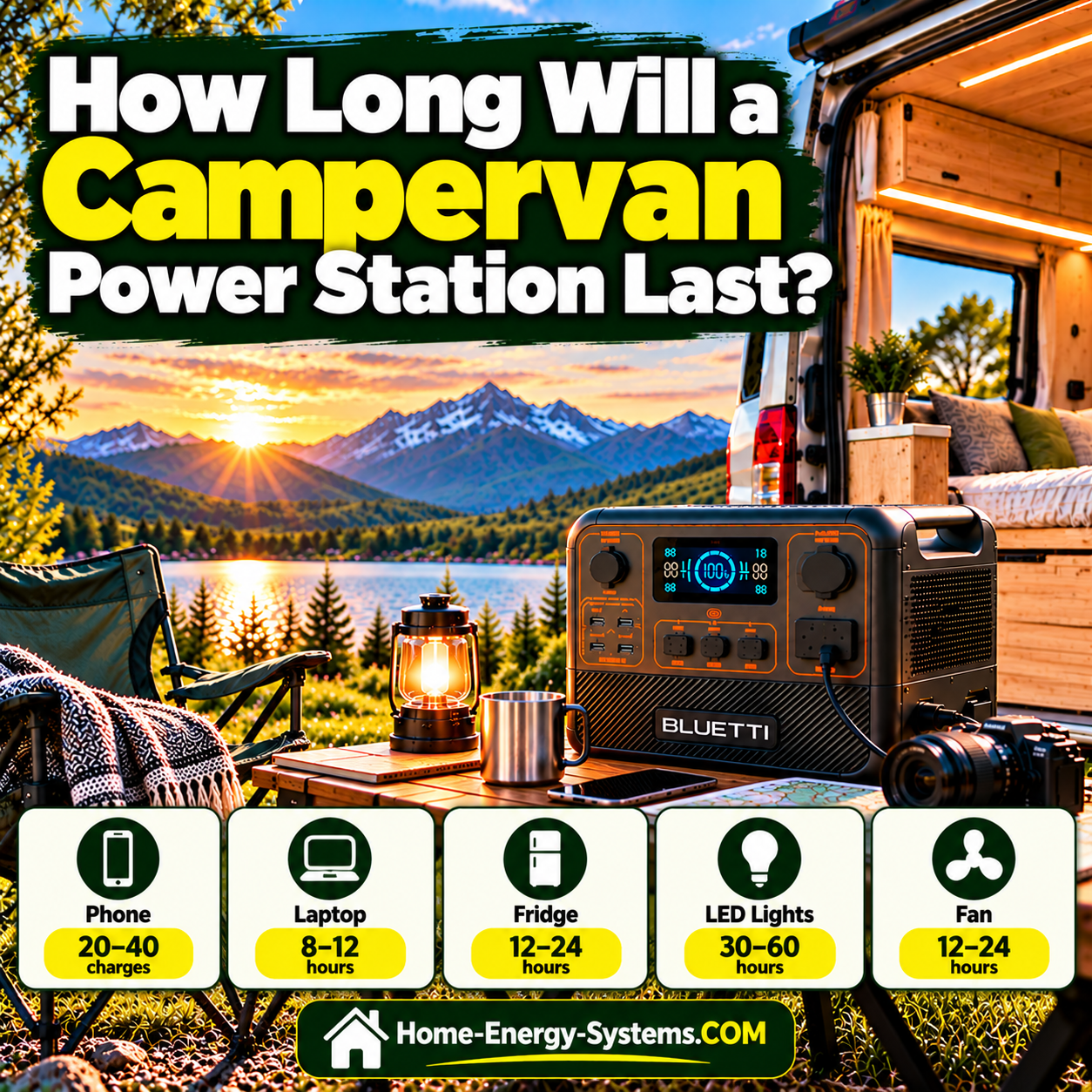
At 590Wh per day, a 1,024Wh station with 85% usable energy provides roughly 1.5 days before recharging, assuming no other loads. For a two-day stay without recharging, aim for more capacity or reduce consumption. Always measure your own fridge’s consumption where possible.
5. Can You Charge a Campervan Power Station with Solar Panels?
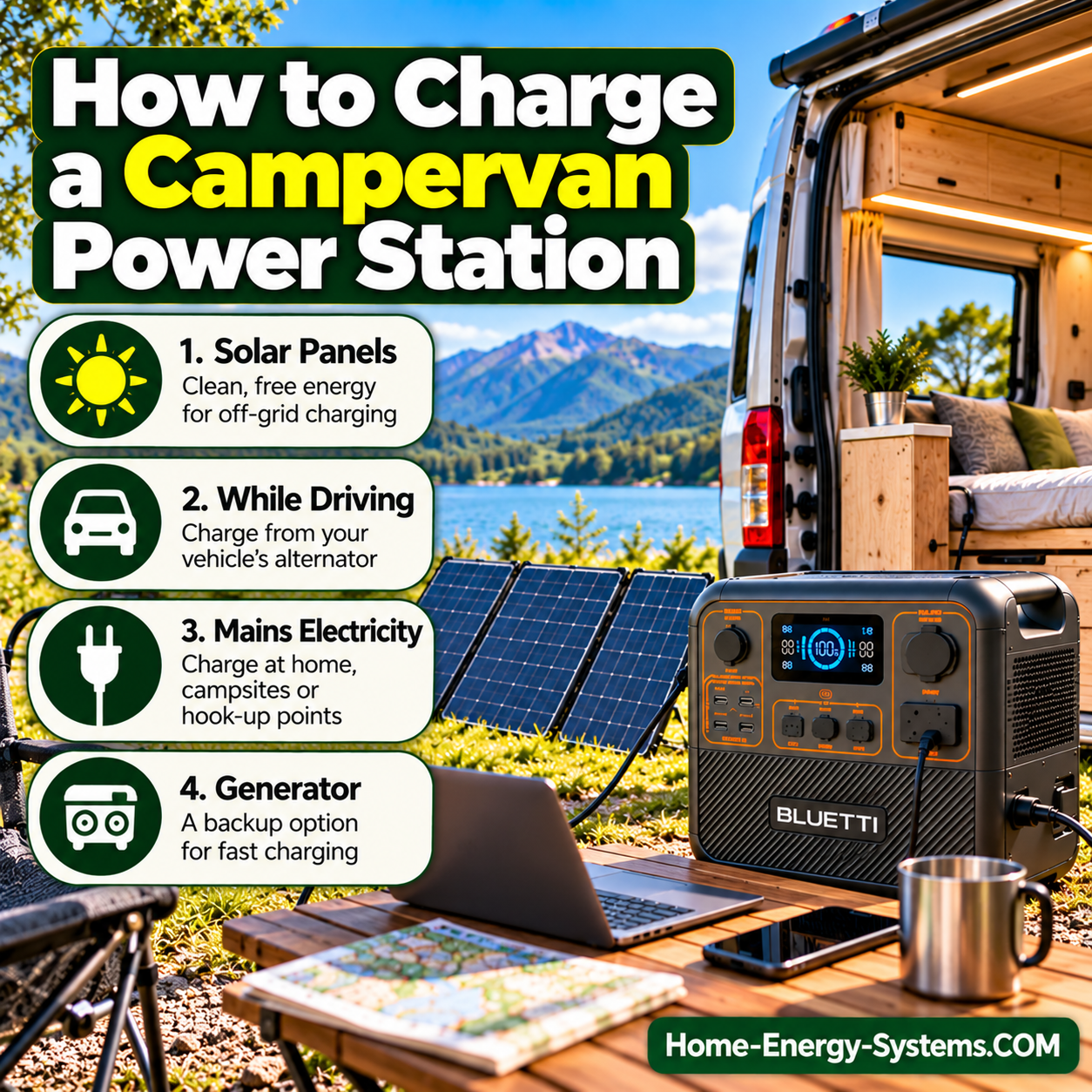
Yes. Many modern stations accept solar charging through a dedicated input. The important checks are solar input voltage range, maximum current, maximum wattage and compatible connectors. Do not assume any panel can connect directly.
A 200W solar array producing an average 100W for four useful hours would generate about 400Wh before charging losses. Actual harvest changes with weather, shade, season, orientation and roof space. Solar helps extend stays, but a cloudy day can leave a significant shortfall.
6. Can You Charge a Portable Power Station While Driving?
Often, yes. Many units support charging from a vehicle’s 12V accessory socket, but this can be relatively slow. Some manufacturers offer dedicated alternator chargers for faster charging while the engine runs.
Check whether the station can safely power your appliances while charging, and whether your chosen charging input works with your particular vehicle.
7. Portable Power Station vs Campervan Leisure Battery: Which Is Better?
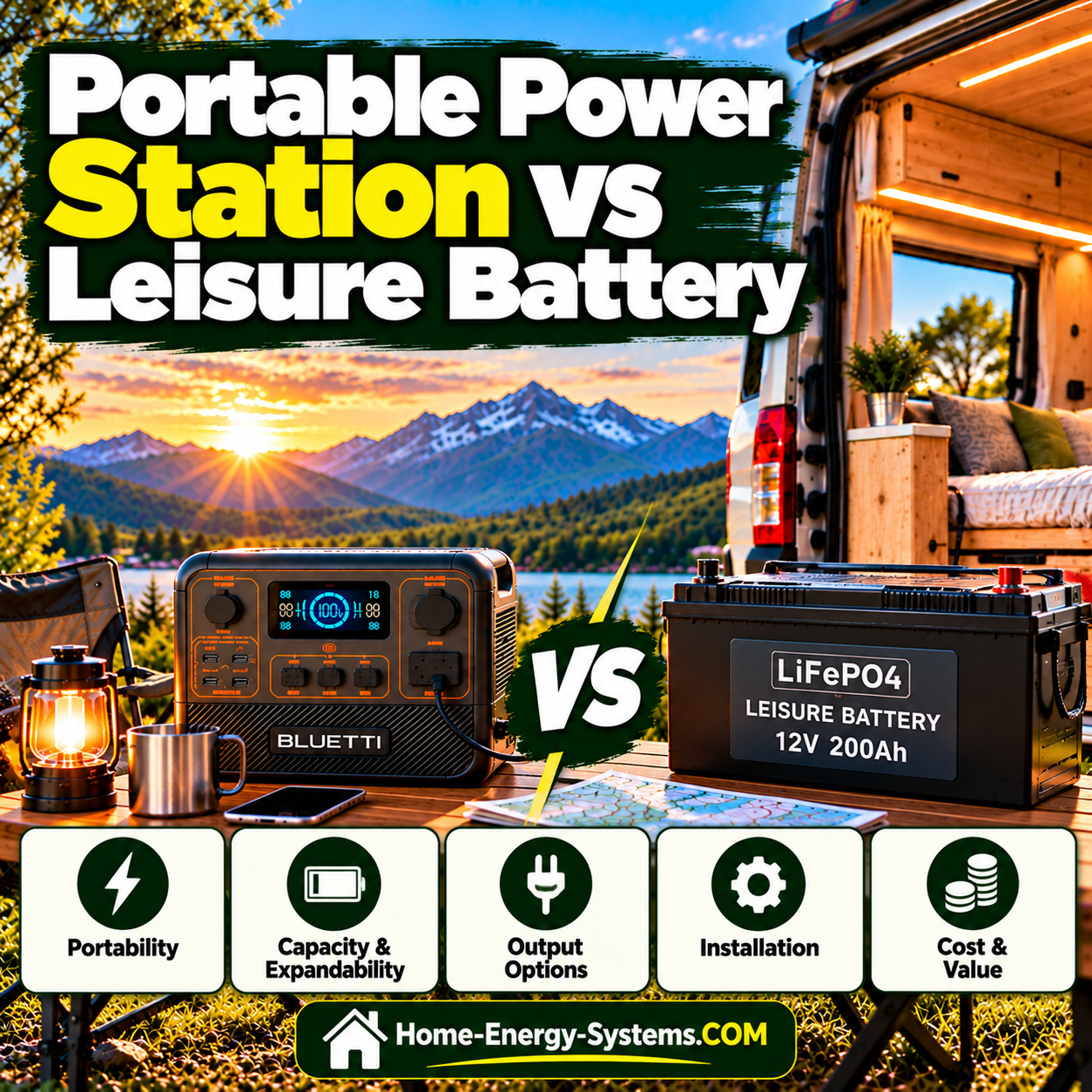
A portable power station combines battery storage, charging electronics, outlets and usually an inverter in one movable unit. A dedicated leisure battery system can be more flexible for permanent campervan wiring, but needs correctly selected components and installation.
| Factor | Portable station | Leisure battery setup |
|---|---|---|
| Installation | Simple for plug-in devices | Usually requires wiring |
| Portability | Can move between van and home | Normally fixed |
| Expansion | Model-dependent | Often more configurable |
| Permanent 12V circuits | May be restrictive | Usually better suited |
| Upfront complexity | Lower | Higher |
For occasional campervan trips, a portable station can be excellent. For full-time van life with permanent lighting, water pumps, heating controls and multiple charging sources, a well-designed fixed leisure battery system may make more sense.
8. What to Check Before Buying a Campervan Power Station
- Battery capacity: Match watt-hours to actual daily consumption.
- Continuous AC output: Check the running wattage of your appliances, not only advertised peak output.
- Battery chemistry: LiFePO4 is a popular choice for long cycle life.
- Charging methods: Confirm mains, solar and vehicle compatibility.
- Socket types: Buy the correct regional model for UK, EU, US, Australia or New Zealand.
- Space and ventilation: Keep vents clear and follow the operating-temperature guidance.
- Noise: Cooling fans may matter when the station is close to where you sleep.
- Weight: Consider how often you’ll move the unit.
Frequently Asked Questions
What is the best portable power station for a campervan?
For many users, a roughly 1,000Wh LiFePO4 station is a practical middle ground. The BLUETTI Elite 100 V2 is one model worth comparing, but the best choice depends on your appliances and charging options.
Is a 500Wh power station enough for a campervan?
It may be enough for lights, phones and occasional laptop charging. A fridge running day and night can exhaust that capacity quickly unless you recharge regularly.
Will a 1,000Wh power station run a campervan fridge overnight?
Often yes for an efficient compressor fridge, but calculate using measured daily energy consumption and the station’s usable capacity. Hot weather can increase fridge demand.
Can I use a portable power station instead of a leisure battery?
Yes for many plug-in loads. A permanent leisure battery installation may be better for integrated 12V circuits and full-time van living.
Can I recharge a campervan power station while driving?
Many support 12V car charging; some support dedicated alternator chargers. Confirm compatibility and use correctly protected wiring.
How much solar power do I need for a campervan?
Start with daily watt-hour consumption and realistic local solar production. Panel size alone cannot guarantee sufficient energy in poor weather.
Final Verdict: Which Campervan Power Station Should You Choose?
The best portable power station for a campervan is the one that covers your actual daily energy use and can be recharged reliably. For light weekend trips, 500Wh may be enough. For a fridge, laptop and regular off-grid use, begin your comparison around 1,000Wh. For longer stays, consider 2,000Wh or a properly designed leisure battery system.
For related advice, explore our Home Energy Systems guides on solar power, battery storage and off-grid electricity. Always compare specifications and total running costs before purchasing.
Editorial note: Runtime examples are estimates, not hands-on test results. Product specifications and availability can change. This article contains affiliate links.