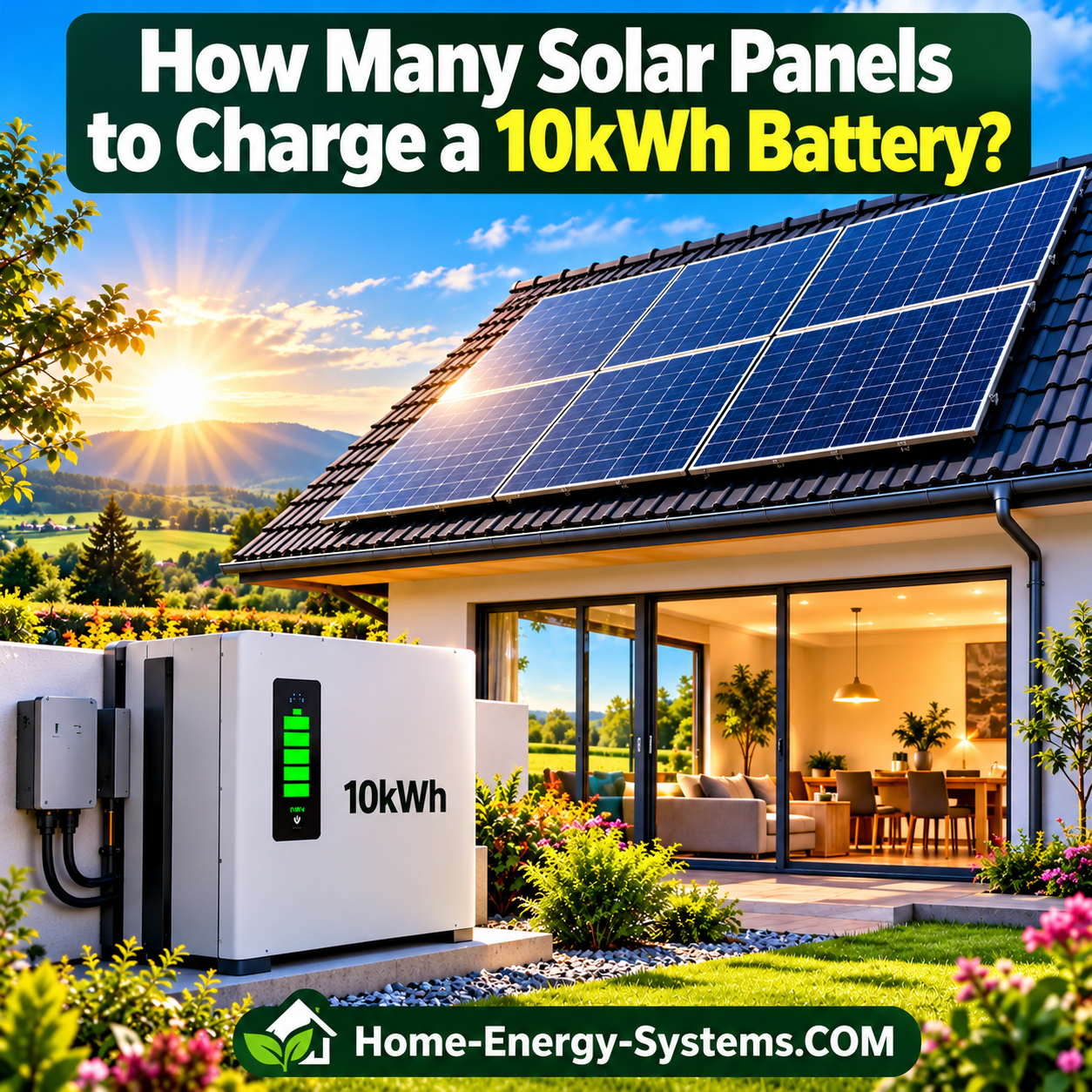
How Many Solar Panels Do You Need to Charge a 10kWh Battery?
If you are planning a home solar and battery system, one of the first questions is how many solar panels you need to charge a 10kWh battery. The answer depends on the panel wattage, local sunshine, charging losses and how much electricity your home uses while the battery charges.
How Many Solar Panels Are Needed to Charge a 10kWh Battery?

For a practical starting estimate, eight 400W panels, seven 450W panels, or six 500W panels could replenish about 10kWh in a day with four peak-sun-hours and an assumed 80% overall yield. That is a roughly 3–3.2kWp array. It is not a promise that your battery will fill every day, especially in winter.
Check the battery’s usable capacity, its state of charge, the maximum charging power allowed by its battery management system, and the amount of solar energy you want to reserve for household appliances.
How Long Does It Take to Charge a 10kWh Battery With Solar Panels?
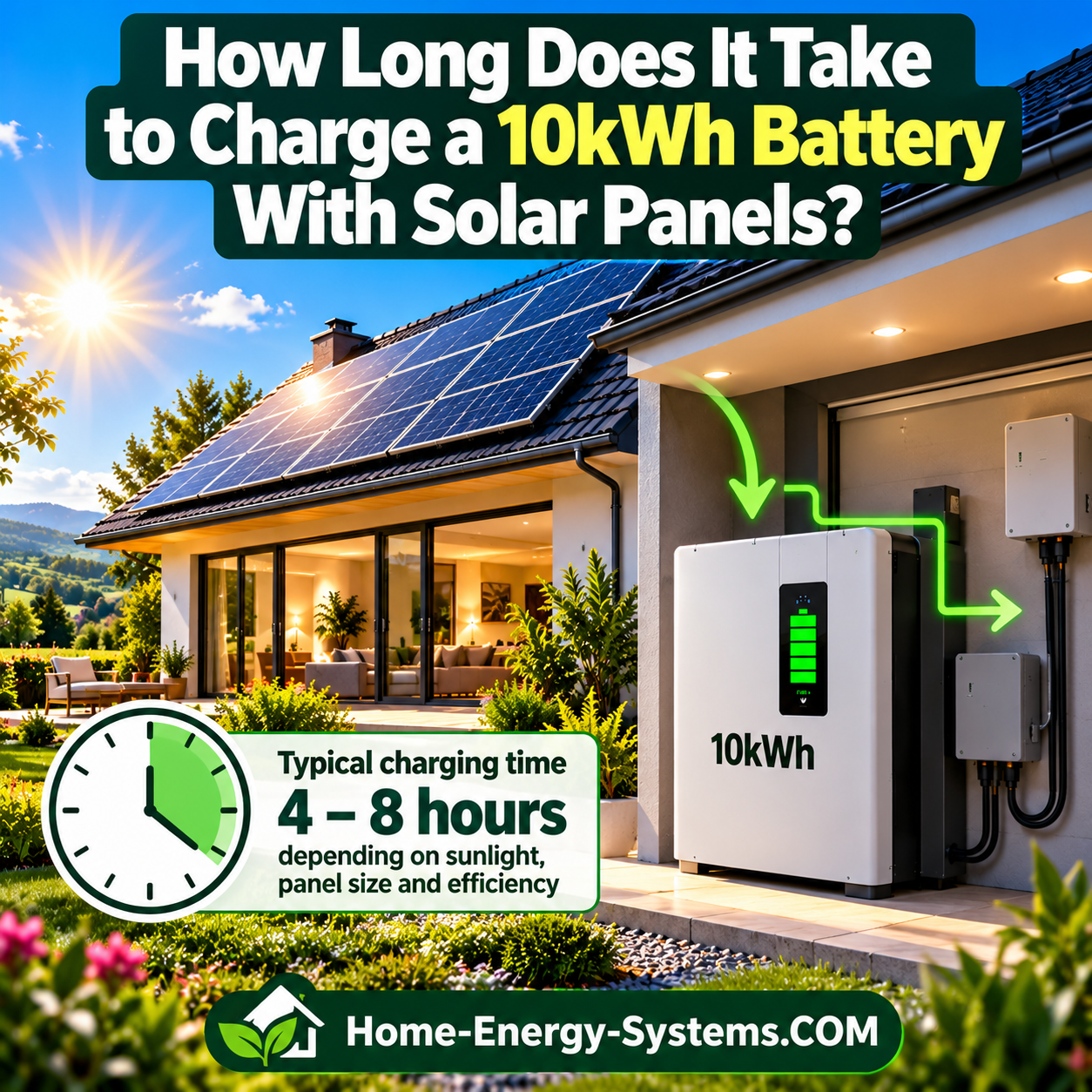
Charging time is determined by the surplus power reaching the battery, not the panel nameplate alone. If the battery needs 10kWh and the system delivers a steady 2kW of charging power, the ideal charging time is about five hours. At 3kW, it is about three hours and twenty minutes. Real solar output changes throughout the day, so these are illustrative charging-power examples rather than clock-time predictions.
| Average net charging power | Time for 10kWh | What it means |
|---|---|---|
| 1kW | 10 hours | Slow charging; may span multiple days |
| 2kW | 5 hours | Moderate net solar surplus |
| 3kW | 3 hours 20 minutes | Strong sustained surplus |
| 4kW | 2 hours 30 minutes | Only if battery/inverter charge limits permit |
A system’s peak-sun-hours represent the day’s solar energy equivalent, not necessarily that many continuous hours at full output. The battery may also taper its charging rate as it approaches full charge.
400W vs 450W vs 500W Solar Panels: Which Do You Need?
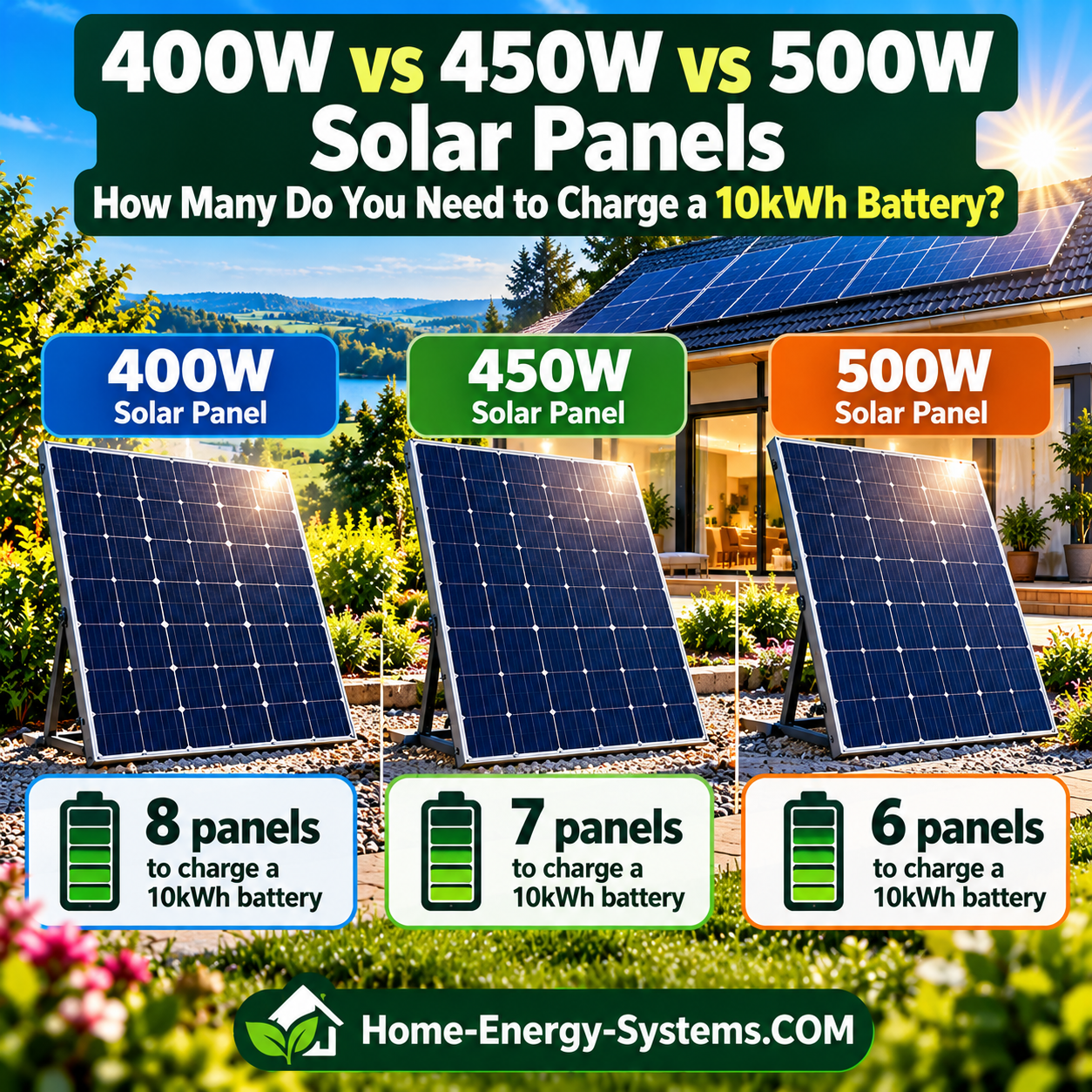
Higher-wattage panels generally reduce the number of modules needed for the same rated array size, although physical dimensions, roof space, shading and electrical compatibility still matter.
| Panel rating | Panels | Array size | Illustrative daily yield* |
|---|---|---|---|
| 400W | 8 | 3.2kWp | 10.24kWh |
| 450W | 7 | 3.15kWp | 10.08kWh |
| 500W | 6 | 3.0kWp | 9.6kWh |
*Using four peak-sun-hours and an 80% energy-yield factor. The 500W example falls just short of 10kWh on these assumptions; seven 500W panels would provide more margin. These figures are illustrative and do not account for daytime household demand.
Compare total installed cost, available roof area, product warranties and inverter voltage/current limits rather than choosing on wattage alone.
Can Solar Panels Fully Charge a 10kWh Battery in Winter?
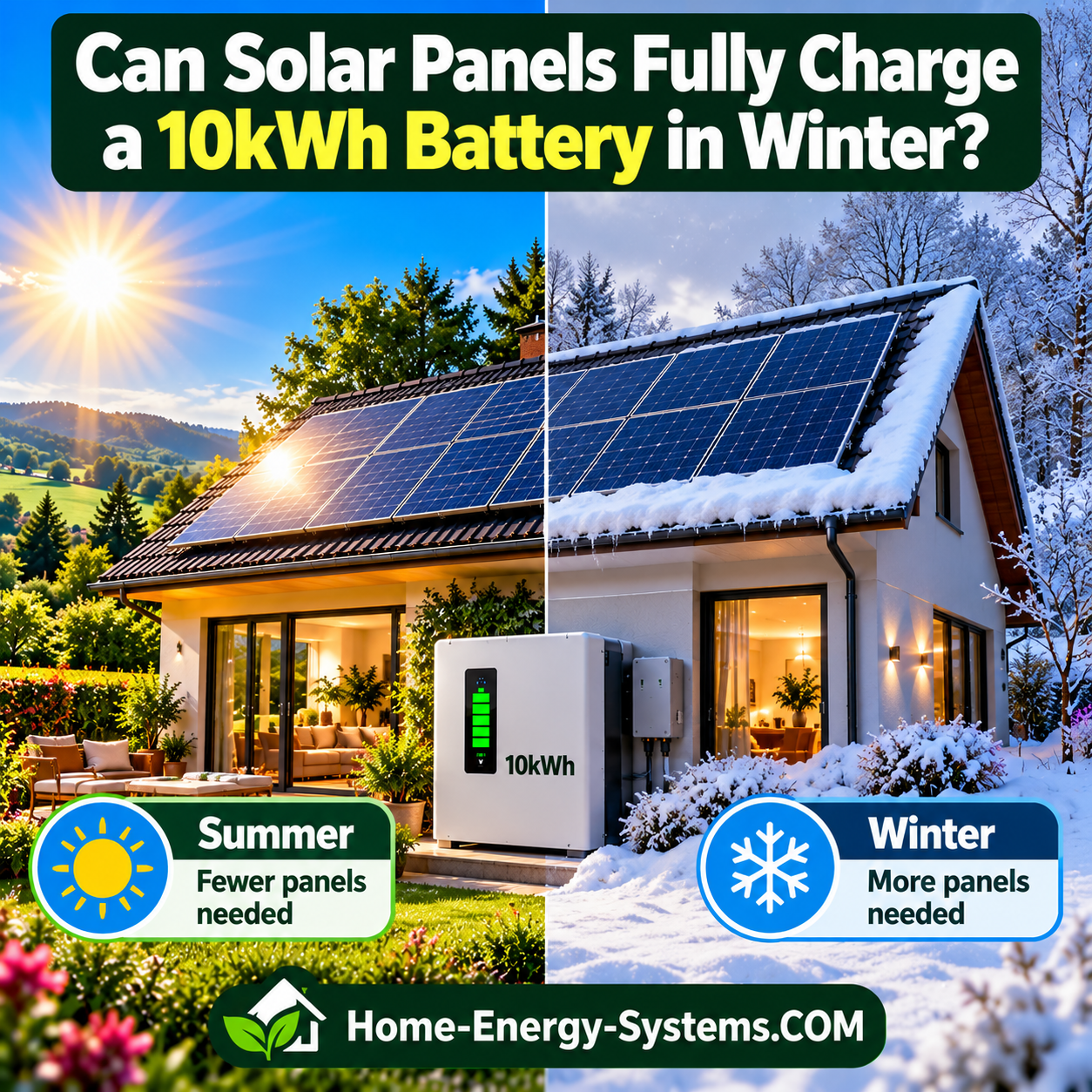
Yes, on some clear winter days—but it is much less dependable in places with short, cloudy winters. A system that comfortably refills a battery during summer may only replace a fraction of its energy during December or January.
For example, a 3.2kWp array with one peak-sun-hour and 80% yield produces only about 2.56kWh for the day, before allowing for any competing home consumption. With four peak-sun-hours under the same assumption, it produces around 10.24kWh. The gap explains why a single fixed panel count cannot cover every location and season.
For location-based estimates, consult the European Commission PVGIS calculator or the NREL PVWatts calculator. These tools help model solar production using location, tilt and system assumptions.
How Much Solar Energy Is Lost During Battery Charging?
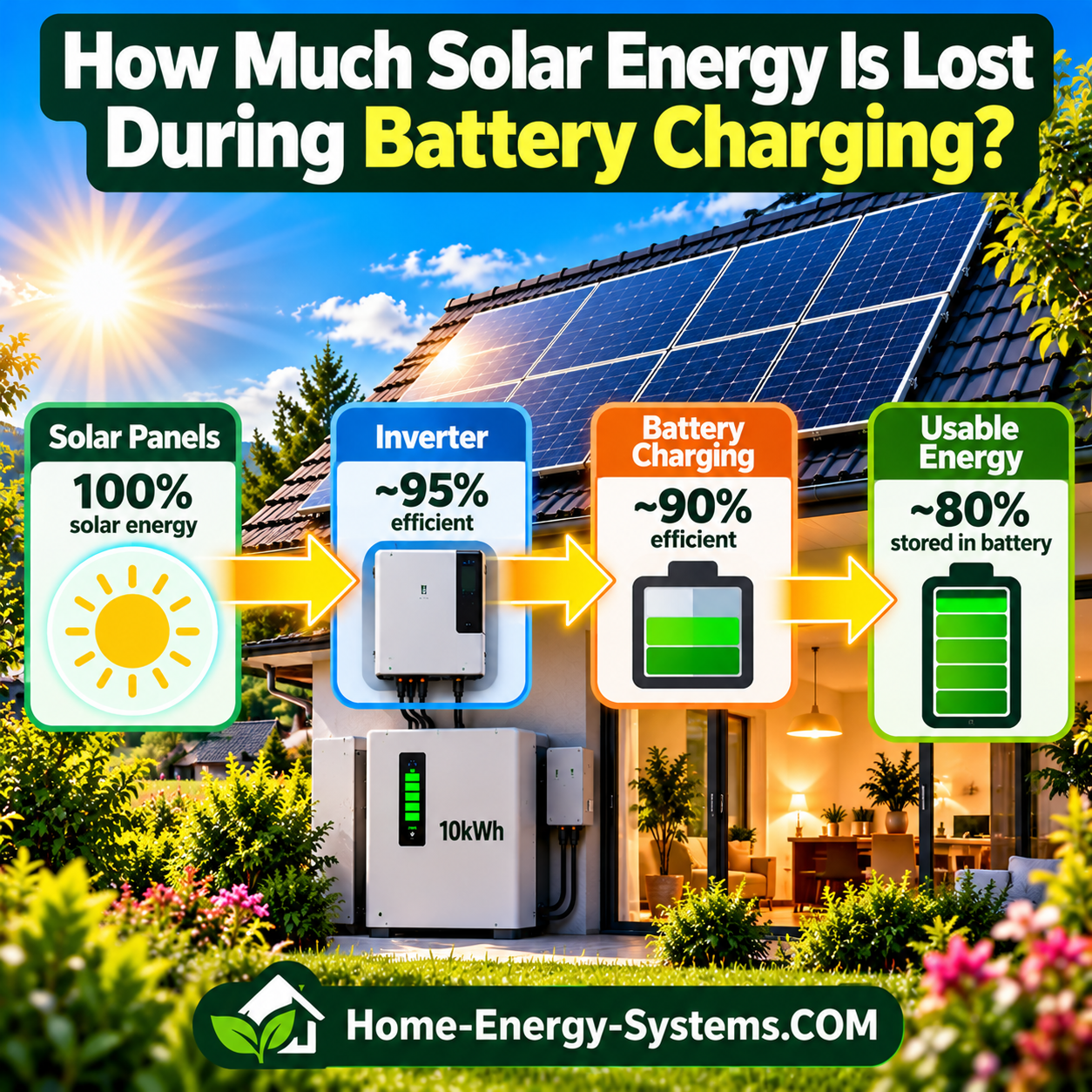
Solar panels, wiring, power electronics and batteries all have losses. The exact amount depends on the system architecture: some DC-coupled batteries avoid a conversion step that AC-coupled systems require.
For simple preliminary sizing, our example uses an 80% overall energy-yield factor between rated panel output multiplied by peak-sun-hours and energy credited to the battery. This is a planning assumption—not a universal battery charging efficiency rating.
Actual performance depends on temperature, shading, soiling, cable losses, MPPT operation, inverter efficiency and battery charging behaviour. Ask your installer for a design estimate for the complete system rather than simply multiplying individual component efficiencies.
Can You Power Your Home While Charging a 10kWh Battery?
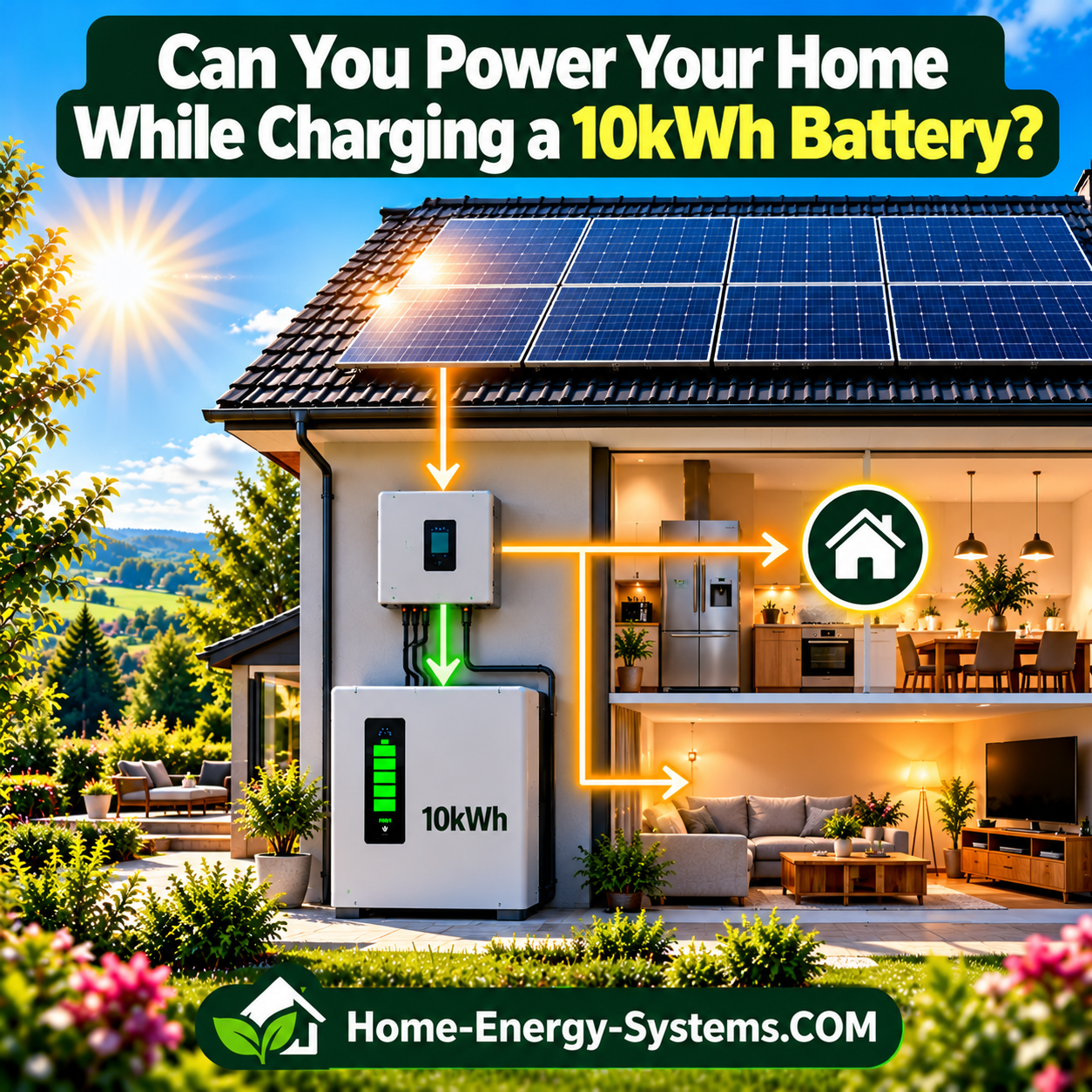
Yes. Many modern hybrid solar systems can power appliances and charge a battery at the same time. But the battery only receives the solar electricity left after the home’s immediate needs are met, depending on the system settings.
Imagine your panels generate 3kW at a particular moment while your home uses 1kW. Roughly 2kW remains available for battery charging, before conversion losses and any equipment limits. If the home starts using 2.5kW, only around 0.5kW remains.
This is why homeowners should size solar generation for both their daytime electricity needs and the energy they want to store for evening use. Smart scheduling can help shift washing machines, water heating and other flexible loads to periods of strong solar production.
Related reading: our home battery storage guide and solar panel installation guide.
What Size Inverter and Solar System Do You Need?
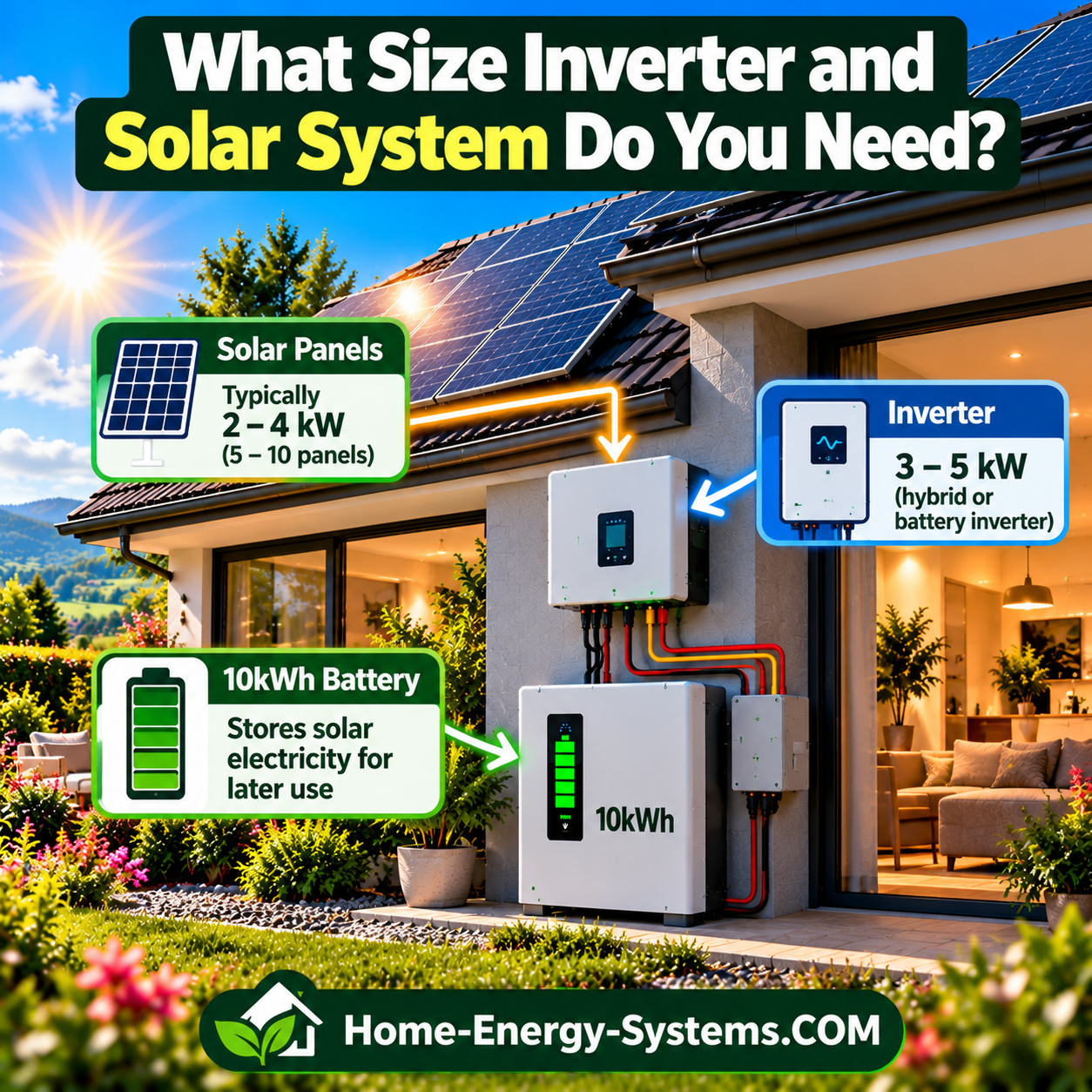
The inverter is not chosen from battery capacity alone. A 10kWh battery describes energy storage, whereas a 3kW or 5kW inverter describes the power it can deliver at once.
A 3–5kW hybrid inverter may suit some households, but the correct rating depends on simultaneous appliance loads, motor starting surges, backup requirements, grid rules, battery charge/discharge limits and the panel array’s electrical characteristics. Larger homes, EV charging and heat pumps can change the design substantially.
For equipment research, browse A1 SolarStore for solar components in the US, or explore Growatt energy equipment where available. Confirm local product availability, certification and compatibility before purchase.
Is a 10kWh Solar Battery Worth It for Your Home?
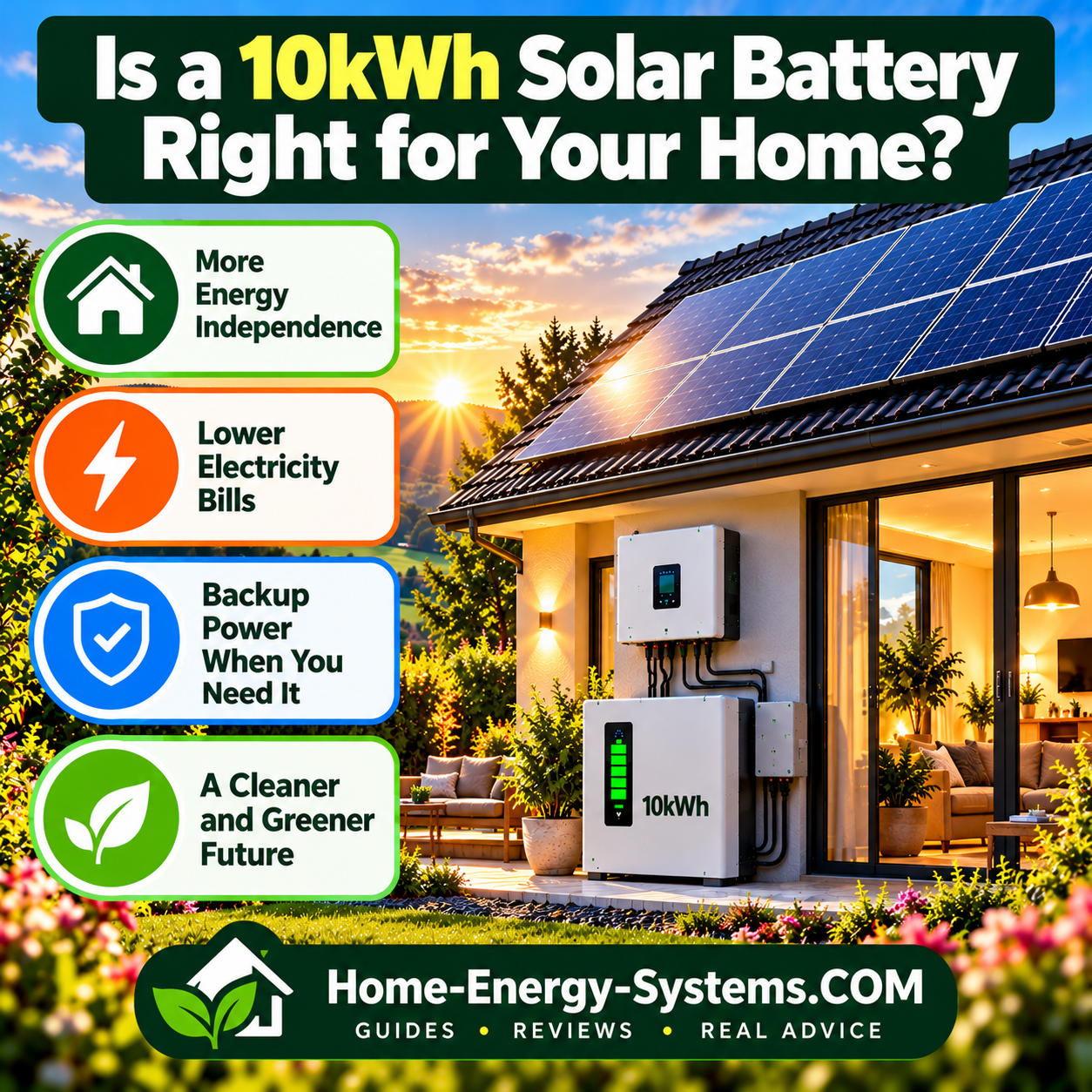
A 10kWh battery can make sense if you regularly have excess daytime solar energy, use substantial electricity in the evening, face expensive peak tariffs, or value backup power. But the financial result depends on the battery price, usable capacity, cycle life, tariffs, export payments and installation costs.
Start by checking how many kWh you actually use after sunset. If you normally use only 3kWh overnight, a 10kWh battery may be larger than you need. If your evening demand is 10–15kWh, the same battery may cover only part of it.
For additional buying options, see our international solar and backup power suppliers. Our guides are independent; supplier links may earn us a commission at no extra cost to you.
Frequently Asked Questions
Will six 500W panels charge a 10kWh battery?
Possibly on an especially sunny day, but under our four peak-sun-hour and 80% yield example they produce around 9.6kWh, just below a full 10kWh replenishment. Seven provide a little more margin.
How many 400W panels do I need for a 10kWh battery?
Eight 400W panels provide 3.2kWp. At four peak-sun-hours and 80% overall yield, the illustrative output is 10.24kWh before daytime household demand.
Can I charge a 10kWh battery from solar in one day?
Yes, when the solar array produces enough surplus energy and the battery and inverter allow the necessary charging rate. Cloud, shade and household loads may prevent a full recharge.
Does a 10kWh battery always store 10kWh of usable electricity?
Not necessarily. Check whether the manufacturer quotes nominal or usable capacity, and consider operating reserve and depth-of-discharge settings.
Do I need more panels if my home uses electricity during the day?
Usually yes, if your goal is to fully recharge the battery on the same day. Household loads take part of the solar generation before the remainder reaches the battery.
Can I use the same number of panels in every country?
No. Solar yield changes by location, season, roof orientation and shading. Use monthly estimates for your location rather than a universal panel count.
Plan Your Solar and Battery System With Confidence
Compare solar panels, battery capacity, inverter compatibility and your actual electricity needs before committing to an installation. Explore more independent guides and suppliers at Home Energy Systems.