Renewable Energy | Battery Storage | October 2026
Why Is Ireland Wasting Wind and Solar Electricity? Battery Storage Explained
Ireland is generating more renewable electricity, yet a surprising amount of available wind and solar power is going unused. Figures reported in October 2026 show that more than 13% of available wind and solar electricity was not used during the first nine months of the year. Why is this happening, and could battery storage help?
Renewable energy curtailment occurs when wind or solar generation must be reduced because the electricity system cannot safely accommodate all available power. Grid congestion, operating limits and limited flexibility all play a role. Batteries can store some surplus energy for later, but they must be combined with grid upgrades and improved system management.
On 21 October 2026, RTÉ News reported that unused renewable electricity during the first nine months of 2026 was equivalent to enough electricity to power approximately 496,000 Irish homes.
This is a missed opportunity at a time when countries are investing in cleaner electricity and reducing dependence on fossil fuels. But the solution is more complicated than simply buying more batteries.
The household comparison is an energy equivalent, not a claim that these homes could have been continuously powered. Source: RTÉ News, 21 October 2026.
1. What Is Renewable Energy Curtailment?
Renewable energy curtailment occurs when electricity output from wind or solar generation must be reduced even though the natural resource is available. Wind and solar production vary with the weather, while electricity consumption follows a different pattern.
Grid operators must maintain safe operating conditions at every moment. When too much electricity is available in the wrong place, or system operating limits are reached, some renewable generators may be asked to reduce output.
- Constraints: Local network limitations restrict electricity transmission.
- Curtailment: Wider power-system operating requirements limit renewable generation.
- Dispatch-down: The broader reduction in renewable generation arising from constraints and curtailment.
These distinctions matter because different causes require different solutions. A battery may help in one location but cannot necessarily fix a transmission bottleneck elsewhere.
2. Why Is Ireland Losing Renewable Electricity?
Grid congestion
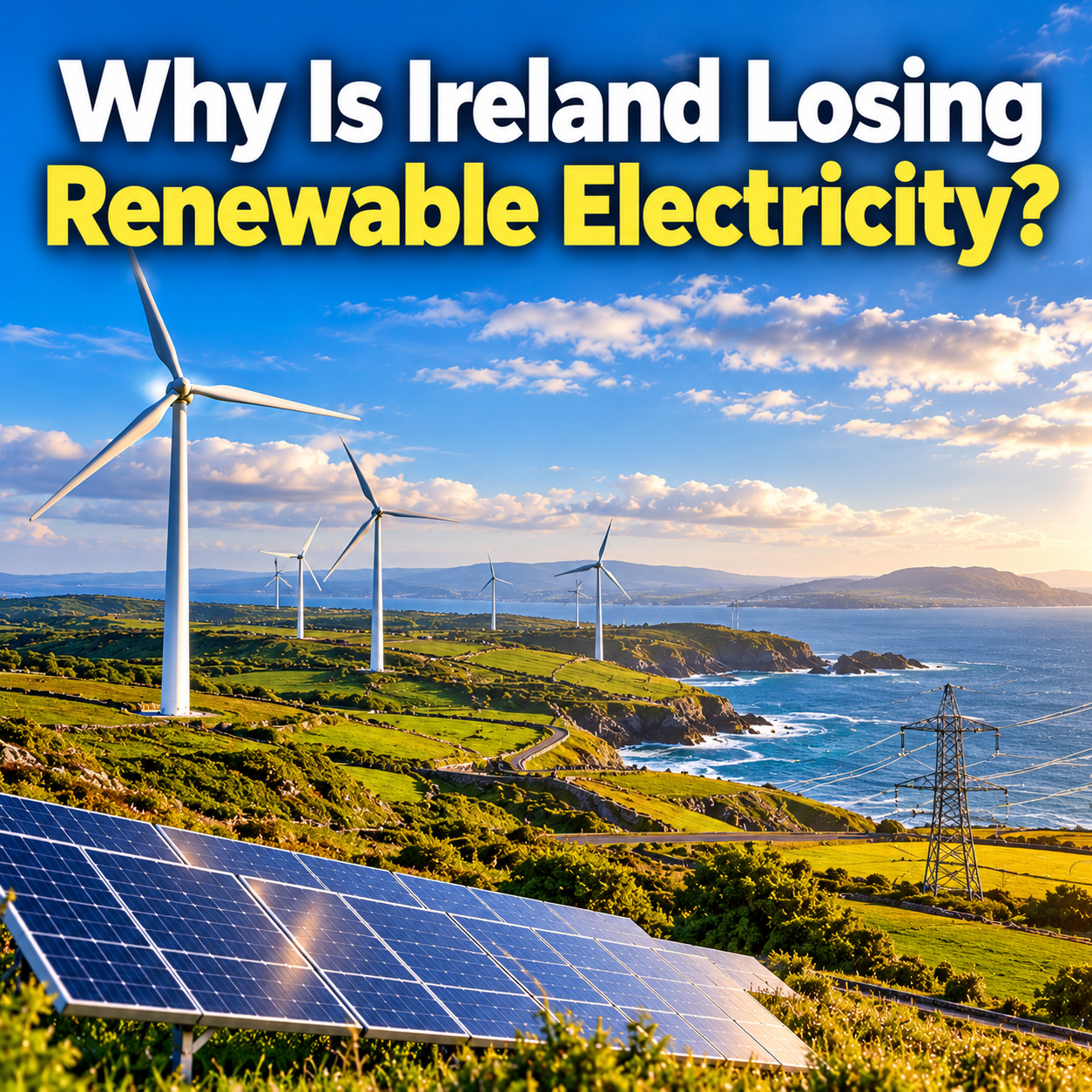
Many wind farms are in rural and coastal areas, while large electricity users may be located far away. Transmission lines have capacity limits. If electricity cannot be transported to where it is needed, generators may have to reduce production.
Power-system stability
Electricity networks must maintain stable frequency, voltage and other operating conditions. Conventional power stations historically provided many stabilising services. Advanced inverters, batteries and other technologies can increasingly provide some of these services.
Limited flexibility
Strong winds overnight or abundant solar power during a low-demand afternoon can create excess generation. Flexible demand, interconnectors and energy storage can help match production with consumption.
Not all unused renewable electricity is caused by a lack of battery storage. Grid constraints and wider system operating requirements also contribute. Storage is an important part of the solution, not a complete substitute for network investment.
3. How Can Battery Storage Reduce Wasted Renewable Energy?
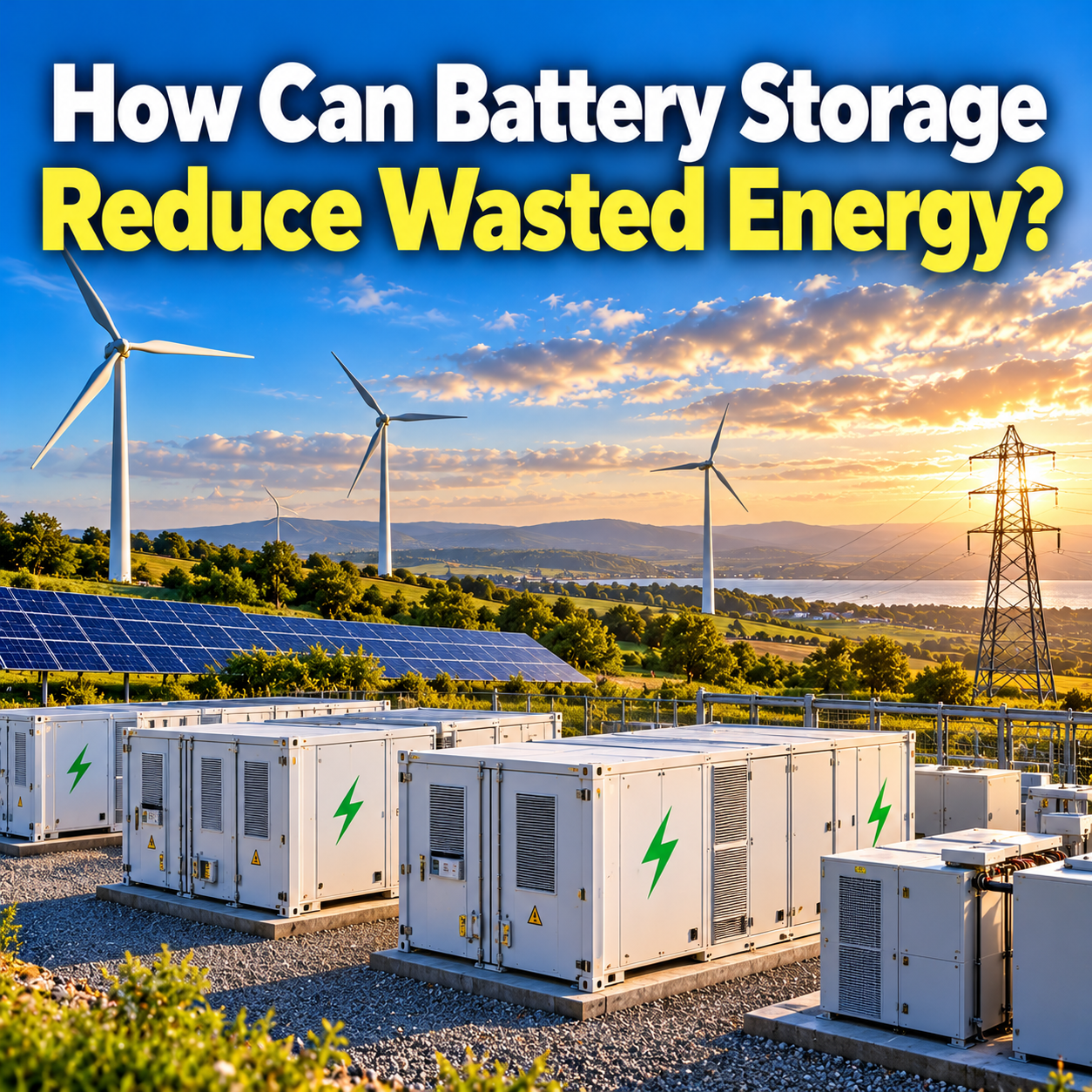
Battery energy storage systems, or BESS, store electricity for later use. If a wind farm generates more power than the grid can accommodate, a suitably connected battery may absorb some of that electricity rather than allowing it to be dispatched down.
Later, when demand increases or renewable output falls, the battery can discharge electricity. Batteries can also respond rapidly to frequency changes and provide other grid services.
How much energy can a large battery store?
A battery rated at 100 megawatts (MW) with 400 megawatt-hours (MWh) of usable capacity could theoretically deliver 100 MW for four hours, before operational limitations. The power rating determines how quickly energy can be delivered; the energy capacity determines how much is available.
Batteries do not create energy, and charging and discharging involve losses. Their effectiveness also depends on location, grid connections and operating rules.
For a deeper explanation, read our Wind Farm Battery Storage Guide.
4. What Types of Energy Storage Could Help?
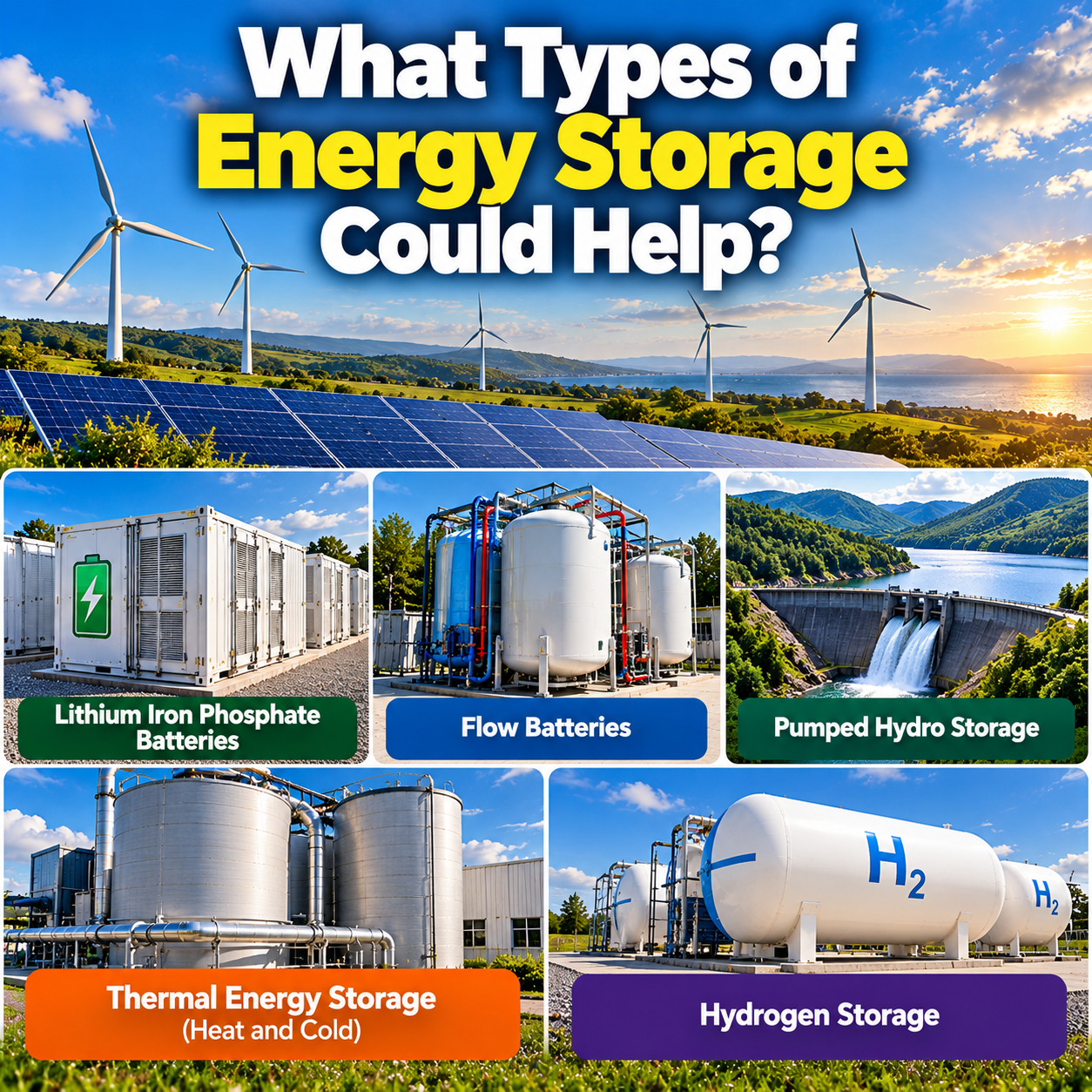
| Technology | Strength | Consideration |
|---|---|---|
| Lithium iron phosphate batteries | Fast response and established commercial deployment | Economics depend on duration and cycling requirements |
| Flow batteries | Potential for longer-duration applications | Project-specific cost and space requirements |
| Pumped hydro | Large energy capacity and long operating life | Suitable geography and infrastructure required |
| Thermal energy storage | Shifts heating and cooling demand | Usually stores heat or cold rather than electricity for export |
| Hydrogen | Potential for long-term energy storage | Conversion losses, infrastructure and costs |
Short-duration batteries are useful for rapid balancing and moving electricity between hours. Extended periods of low renewable output may require additional technologies, interconnection and flexible generation or demand.
5. Why Can’t Ireland Simply Install More Batteries?
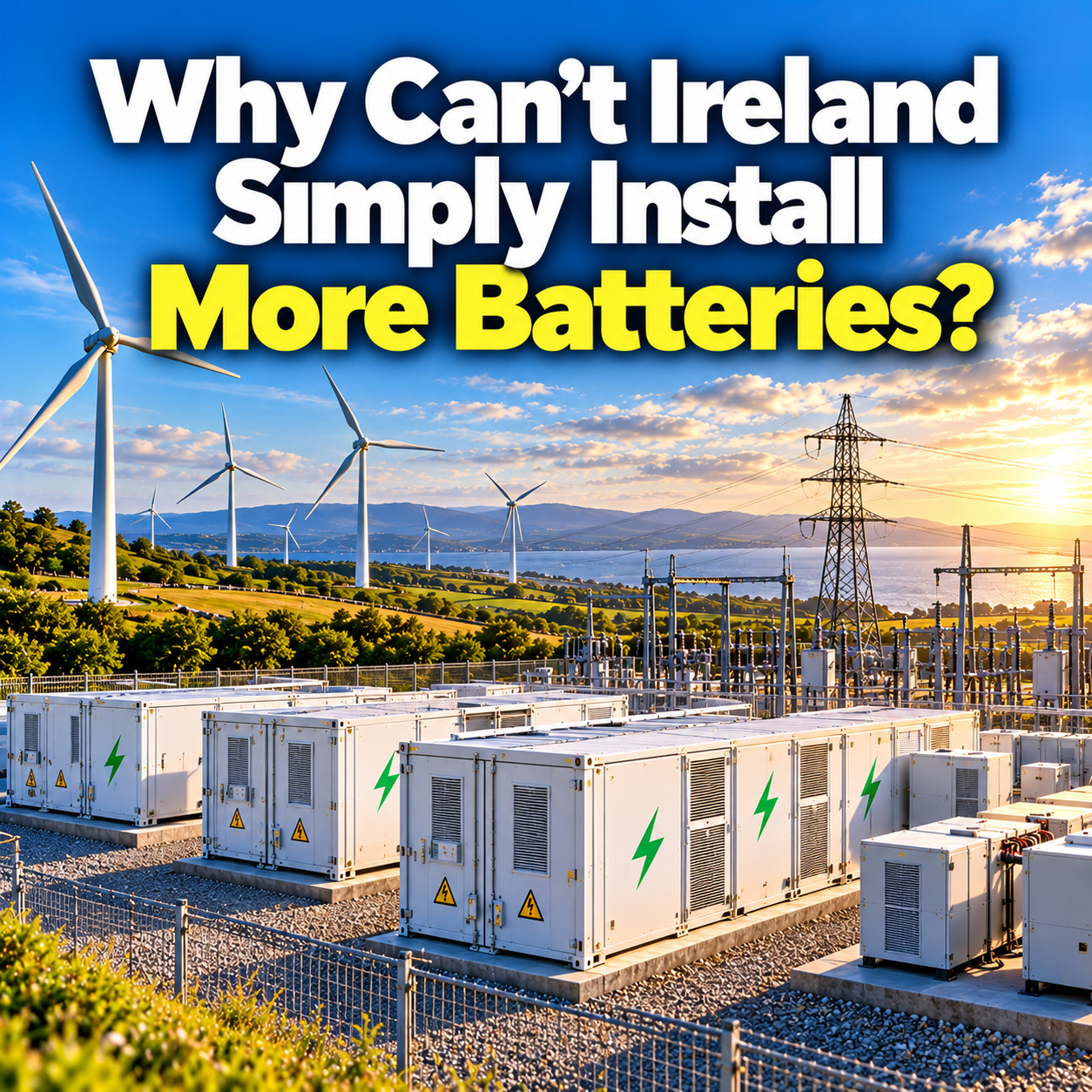
Large battery installations require appropriate sites, planning permission, safety systems, grid connections and investment. A battery installed in the wrong location may do little to relieve a particular network constraint.
Grid operators and regulators must also establish arrangements that reward useful services such as balancing, congestion relief and flexible electricity supply. Network upgrades, improved system controls and market reforms must develop alongside storage.
For this reason, renewable energy curtailment cannot be solved through battery capacity alone.
6. Is Renewable Energy Curtailment Only an Irish Problem?
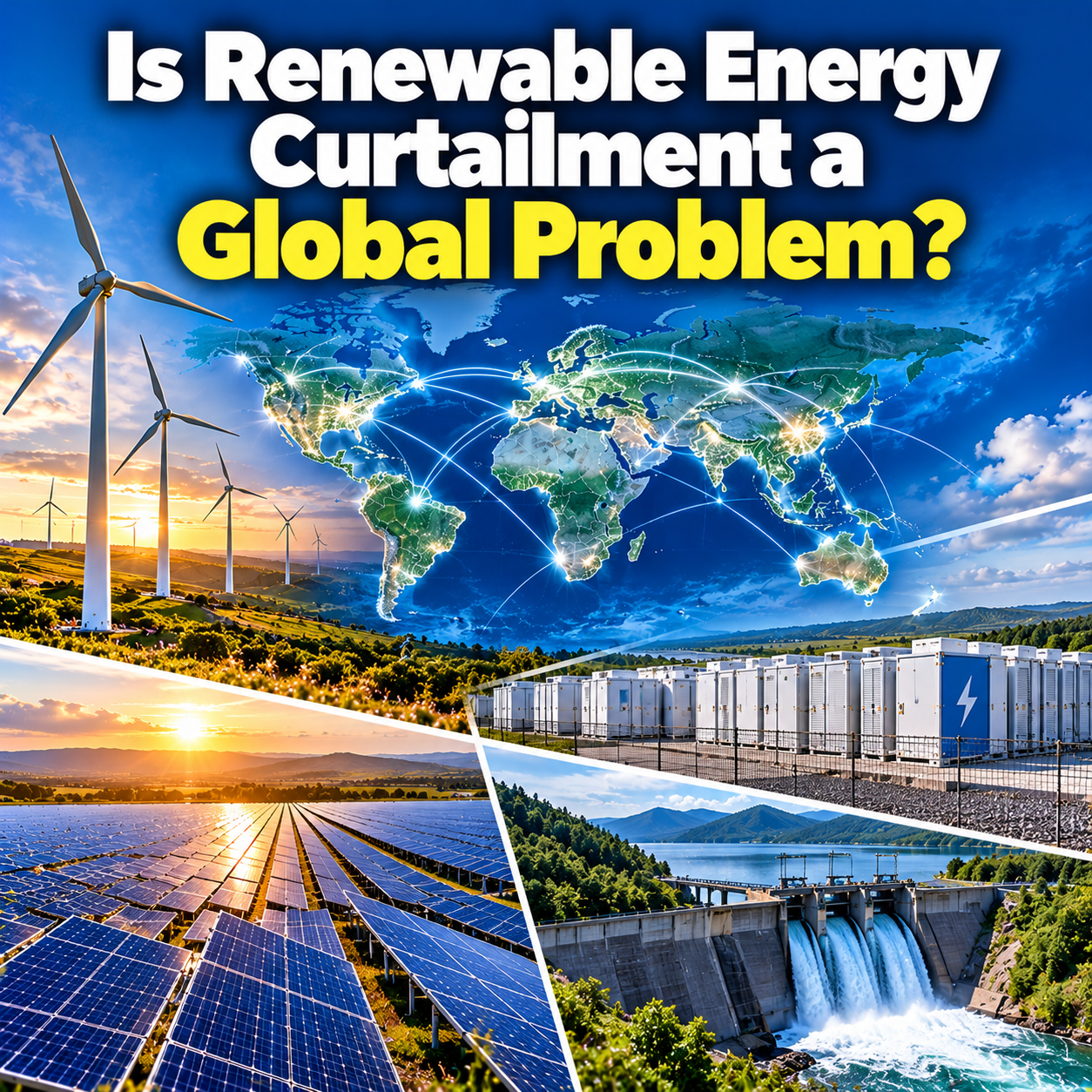
No. Electricity systems in the United Kingdom, Europe, Australia and the United States face their own challenges as renewable generation expands.
- United Kingdom: Transmission bottlenecks can restrict wind power moving between regions.
- Germany: Renewable growth increases the need for network flexibility and storage.
- Australia: High rooftop solar output makes daytime demand shifting and storage important.
- United States: Some renewable-rich regions experience congestion and low or negative wholesale prices.
- Ireland: Network constraints and operating requirements contribute to renewable dispatch-down.
The common lesson is that installing renewable generation does not guarantee every available unit of electricity can be used.
7. Can Home Battery Storage Make a Difference?
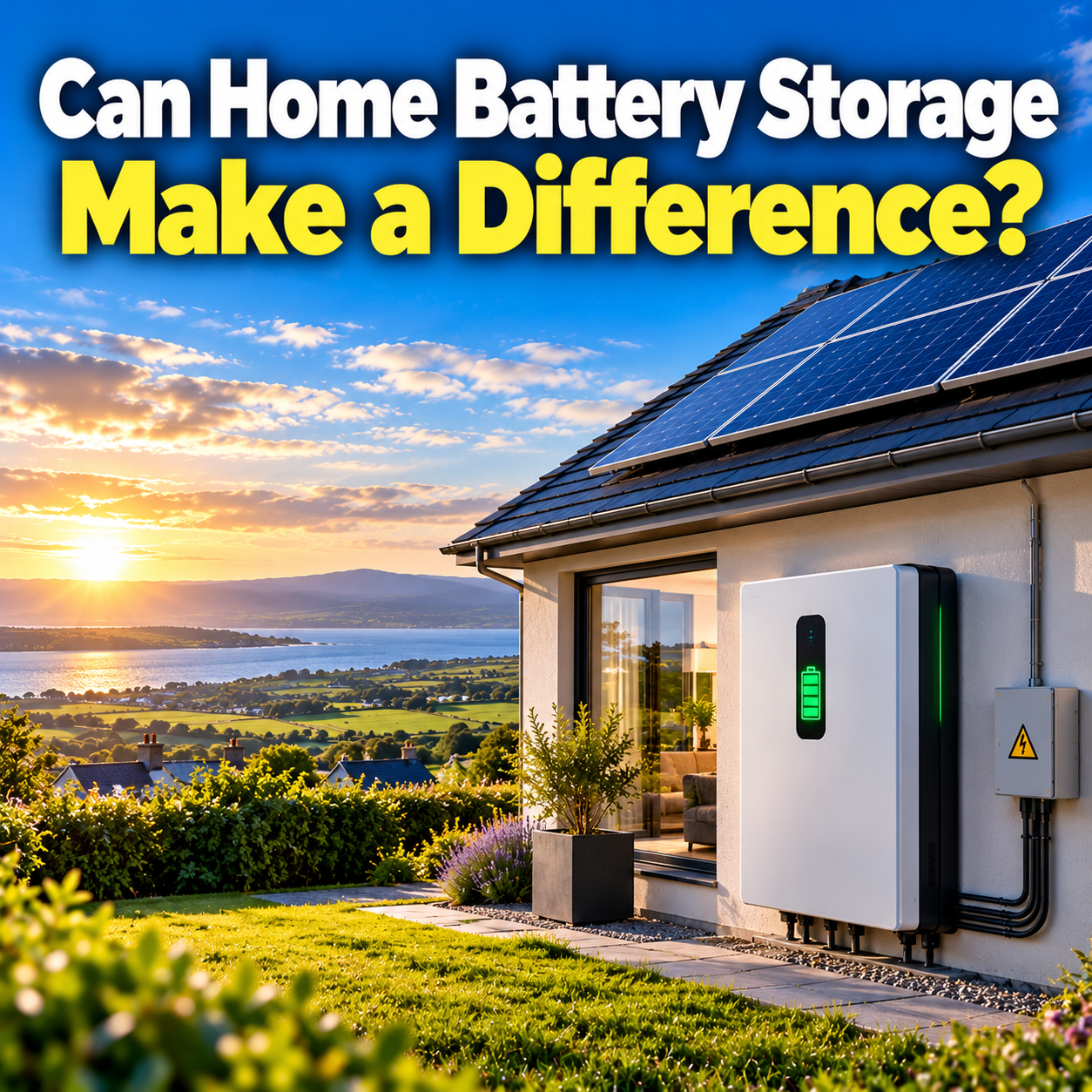
Domestic batteries cannot replace utility-scale storage, but they can help households use more of their own solar electricity. A home with rooftop panels may charge a battery during the day and use that energy in the evening.
With suitable tariffs and controls, some households may also benefit from charging during lower-cost periods. Where aggregation programmes are available, domestic batteries may provide flexibility to the wider grid.
Before buying, consider usable battery capacity, maximum power output, installation cost, warranty, efficiency, import and export tariffs, and whether backup power is included.
Buying a battery does not automatically reduce national renewable curtailment. The system must operate at useful times and within suitable network arrangements.
Our Home Battery Storage Systems Guide
Home Battery Storage: Useful Suppliers and Resources
Grid-scale batteries and residential battery systems serve different purposes. However, if this story has encouraged you to investigate solar power or backup storage for your own property, the following suppliers offer a starting point.
Affiliate disclosure: Some links below are affiliate links. If you make a qualifying purchase, Home-Energy-Systems.com may earn a commission at no additional cost to you. We recommend comparing product specifications, installation requirements and local availability before buying.
BLUETTI — Expandable Home Backup and Portable Energy Storage
BLUETTI offers portable power stations and expandable backup products that may suit household emergency power or selected off-grid applications. These are not substitutes for grid-scale storage, and not every model is suitable for permanent home integration.
Growatt — Solar Inverters and Residential Energy Systems
Growatt is associated with solar inverter and battery storage technologies. Check the exact model, battery compatibility, grid connection rules and availability with a qualified installer before selecting equipment.
A1 SolarStore — Solar Equipment for US Readers
A1 SolarStore is a resource for comparing solar equipment in the United States. For a complete system, check inverter and battery compatibility, warranties and local electrical requirements.
Buying tip: Compare total installed cost, usable capacity in kWh, continuous output in kW, compatibility, warranty terms and local after-sales support. A portable power station and a permanently installed grid-connected battery are different purchases.
8. What Is the Future of Renewable Electricity Storage?
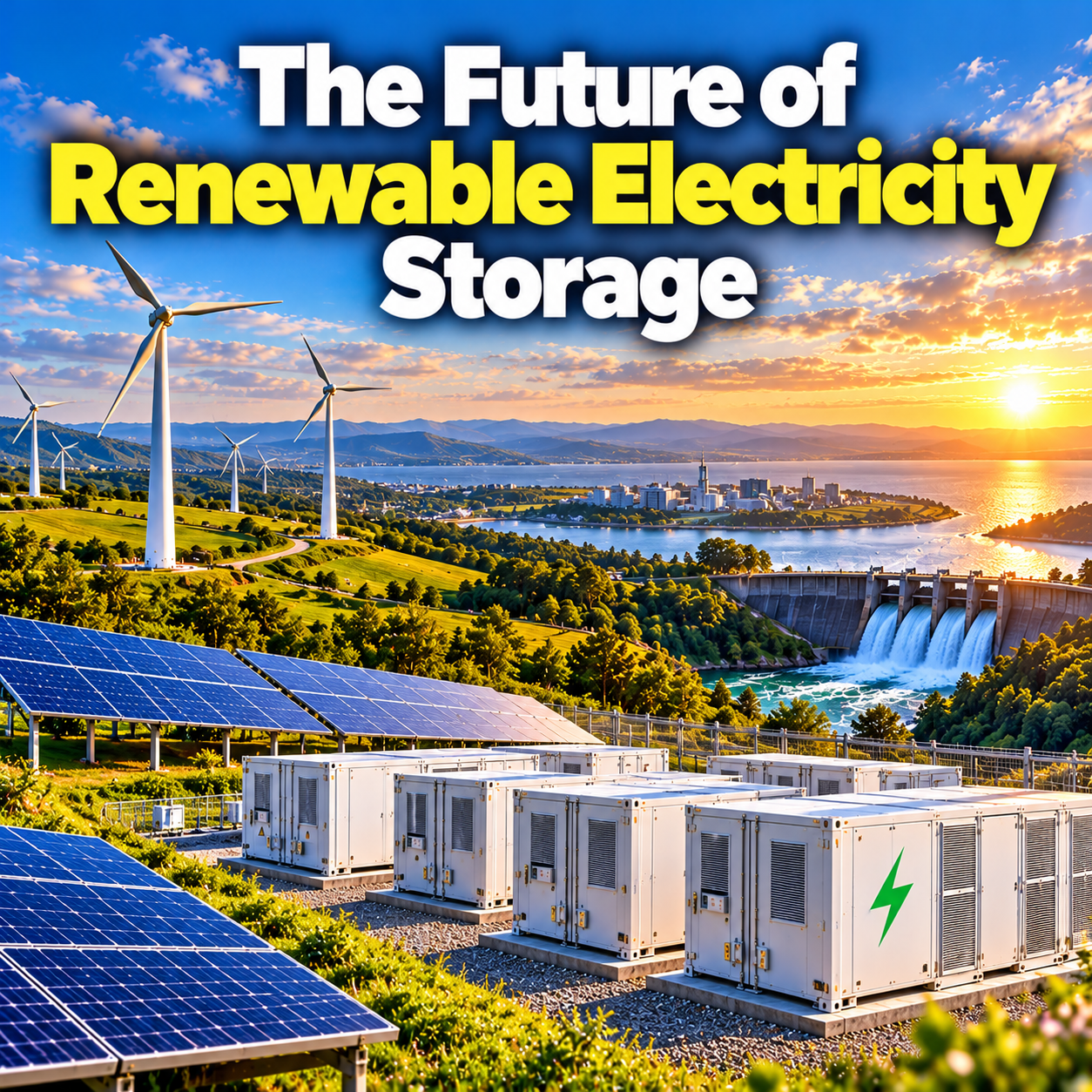
Ireland’s experience illustrates a challenge that becomes more important as wind and solar capacity expands. Generating clean electricity is essential, but electricity must also be available where and when it is needed.
- Grid-scale batteries: Store some renewable electricity that would otherwise be reduced, where technically and commercially suitable.
- Stronger transmission networks: Move electricity between generation regions and demand centres.
- Interconnectors: Exchange electricity with neighbouring power systems when capacity is available.
- Demand response: Shift some consumption to periods of greater renewable generation.
- Advanced grid technology: Improve stability and support higher renewable penetration.
- Long-duration storage: Help manage longer mismatches between electricity production and demand.
More than 13% of available Irish wind and solar electricity went unused during the first nine months of 2026. Better battery storage could recover some of this energy, but stronger grids, flexible demand and modern operating systems are equally important. The goal is not just producing more renewable electricity — it is using more of what is already available.
Frequently Asked Questions
Why is renewable electricity being wasted in Ireland?
Some available wind and solar generation cannot be accepted because of network congestion, system operating limits and limited flexibility. Generators may therefore be instructed to reduce output.
How much renewable electricity went unused in Ireland in 2026?
RTÉ reported that more than 13% of available wind and solar electricity went unused in the first nine months of 2026, equivalent to enough electricity for approximately 496,000 homes.
Can batteries prevent renewable energy curtailment?
Batteries can reduce some losses by charging when renewable generation is abundant and discharging later. They cannot eliminate every network constraint or system stability requirement.
What is the difference between curtailment and constraints?
Constraints generally refer to local network limitations. Curtailment generally refers to wider system operating limits. Both can lead to renewable generation being dispatched down.
Can I buy a home battery to help?
A home battery can help you store solar electricity and shift consumption, but it does not directly replace grid-scale storage. Its wider benefits depend on when and how it operates.
Will more battery storage reduce electricity bills?
Storage may help reduce certain electricity system costs, but household savings are not guaranteed. Tariffs, installation costs, market arrangements and other factors affect the outcome.
Final Thoughts
Ireland’s renewable electricity losses reveal a wider challenge for the energy transition. Wind turbines and solar panels can generate abundant clean electricity, but grids need the infrastructure and flexibility to use it.
Battery storage will play an important role, alongside stronger transmission networks, modern controls and better coordination between electricity supply and demand.
Explore More Renewable Energy Guides
At Home-Energy-Systems.com, we explain solar power, battery storage, wind energy and practical ways to make homes and businesses more energy efficient.
Visit our Home Energy Systems guides for independent information and practical advice.
Editorial note: October 2026. This article provides general educational information. Electricity market rules and technical requirements vary by country.