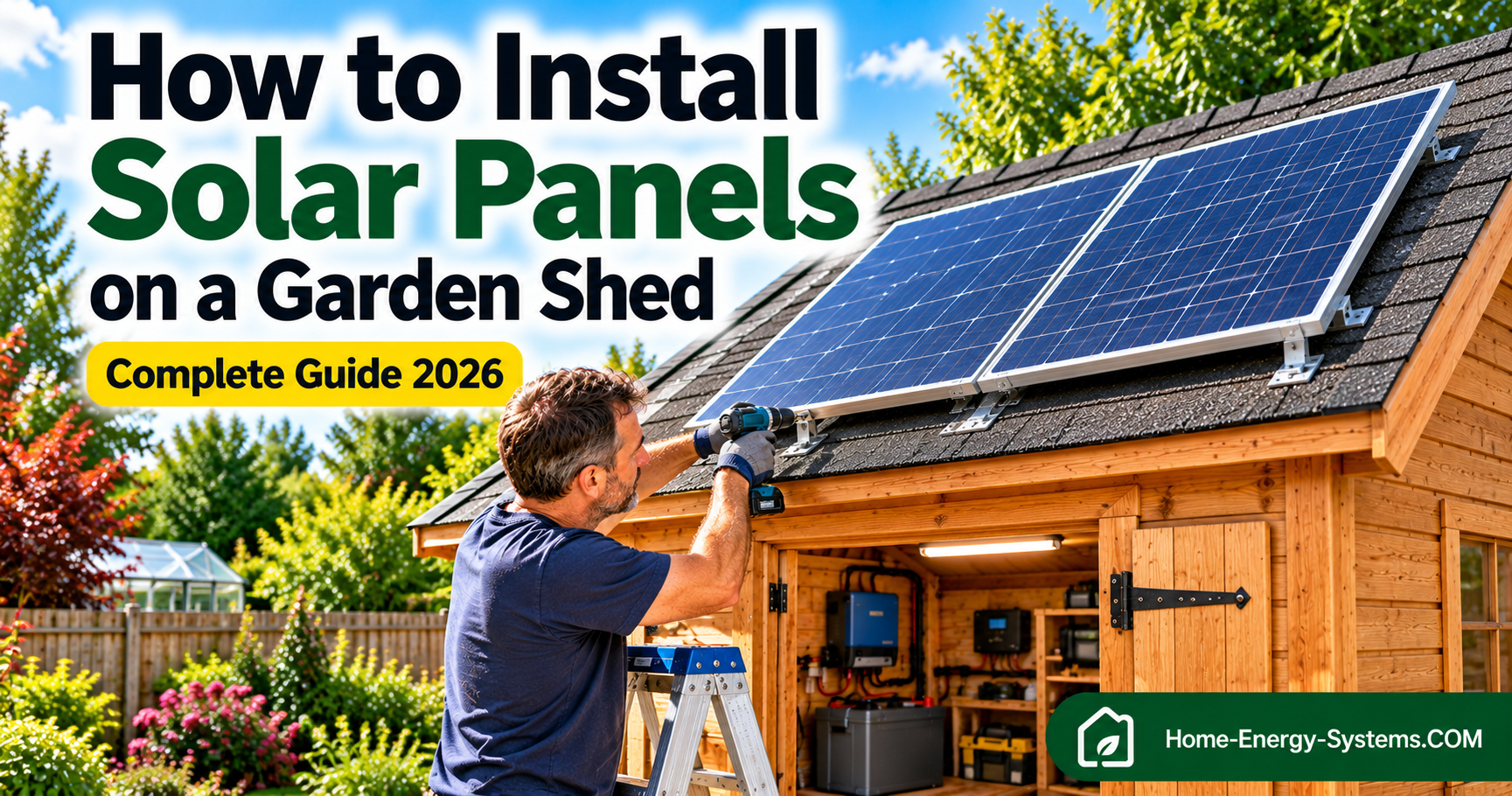
How to Install Solar Panels on a Garden Shed: 2026 Guide
Want reliable lighting, tool charging or off-grid electricity in your shed? Learn how to plan a safe solar installation, choose the right equipment and avoid expensive mistakes.
Learning how to install solar panels on a garden shed starts with one important decision: do you want a simple solar lighting kit, a portable power station with a panel, or a permanently installed off-grid electrical system? Each option has different costs, complexity and safety requirements.
This installation guide concentrates on practical planning and the correct order of decisions. If you are still comparing equipment, start with our best solar panel kit for garden shed guide.
1. Check Whether Your Shed Is Suitable for Solar Panels
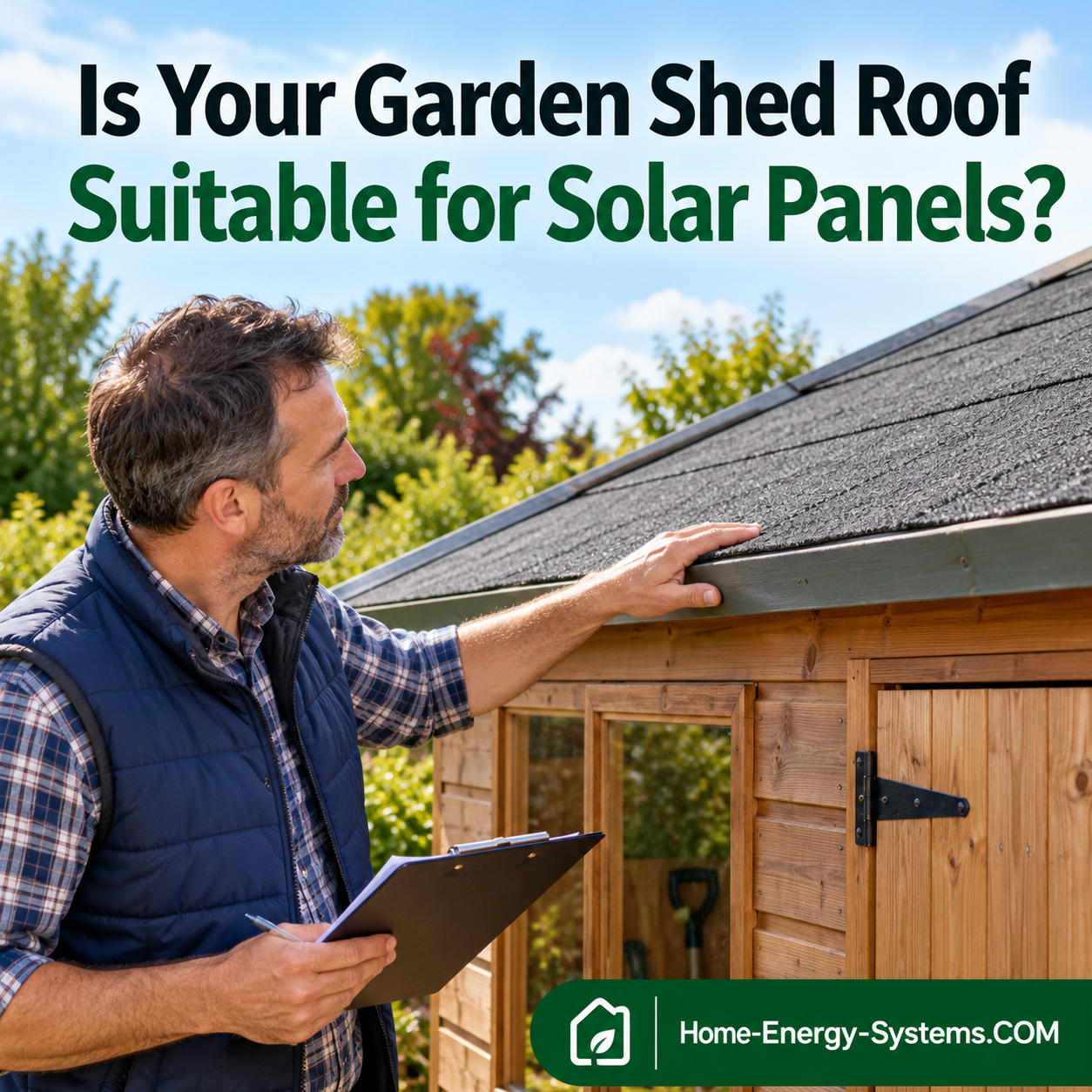
Inspect the roof before purchasing anything. Lightweight timber sheds, old felt coverings and ageing roof battens may not support a solar array safely, especially in high winds or heavy snow. A panel’s weight is only part of the loading calculation: mounting hardware, uplift forces and the condition of the structure matter too.
- Check for rot, sagging, loose roof sheets and leaks.
- Confirm that the roof structure and mounting points can withstand the expected loads.
- Look for shade from fences, trees, chimneys and nearby buildings.
- Check local planning, building and electrical requirements before proceeding.
- Consider a ground-mounted panel if the shed roof is unsuitable.
2. Calculate How Much Electricity the Shed Needs
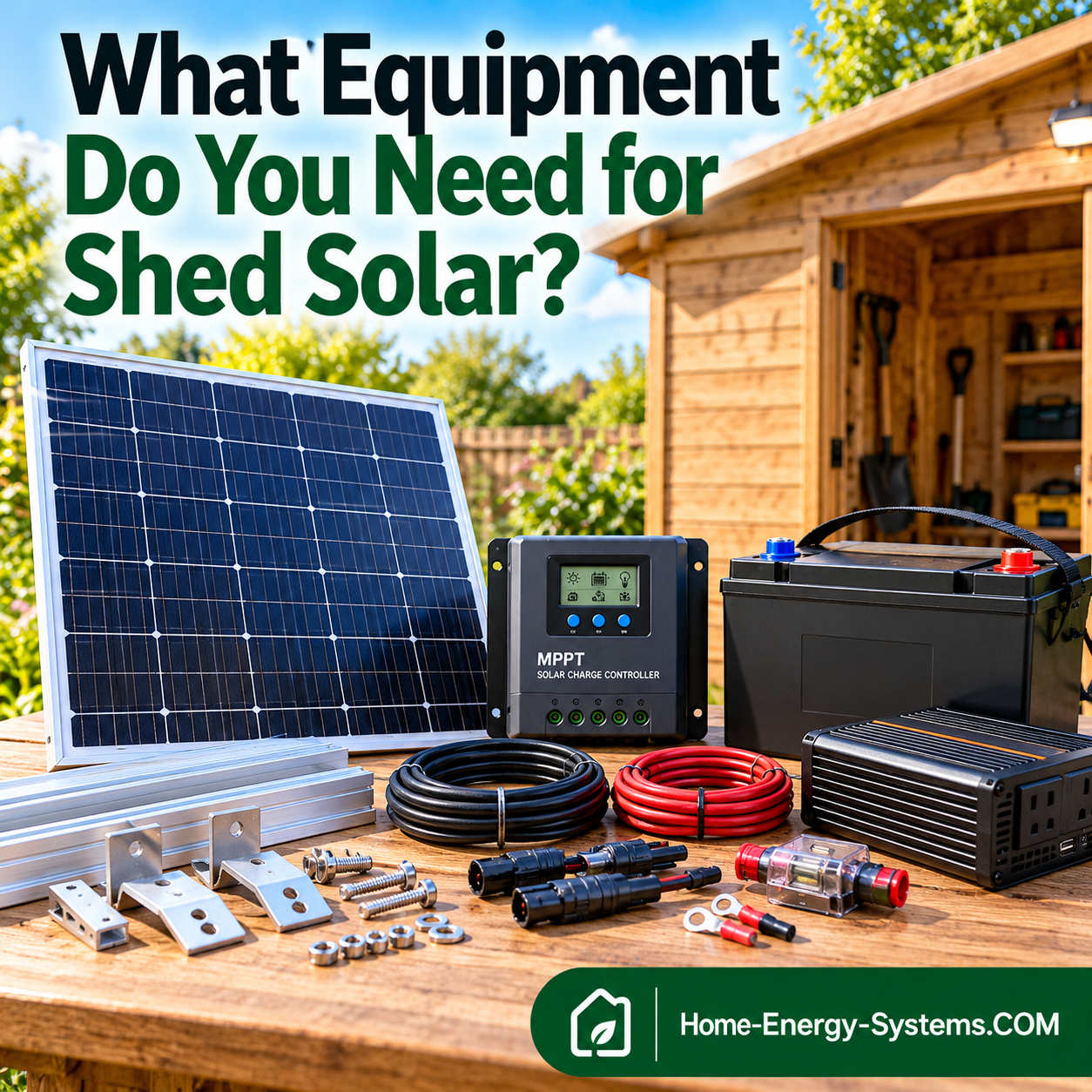
Write down the power rating of each device in watts (W) and the number of hours you expect to use it. Multiply watts by hours to estimate energy in watt-hours (Wh).
| Appliance | Power | Daily use | Energy |
|---|---|---|---|
| Two LED lights | 16W total | 3 hours | 48Wh |
| Laptop | 50W average | 2 hours | 100Wh |
| Tool battery charger | 80W average | 1 hour | 80Wh |
| Total | — | — | 228Wh |
This example is illustrative, not a promise of what every shed will consume. Actual charger input and laptop demand can vary. Allow extra energy for inverter and charging losses, and add a margin for future devices.
3. Choose a 100W, 200W, 400W or 800W Solar Array
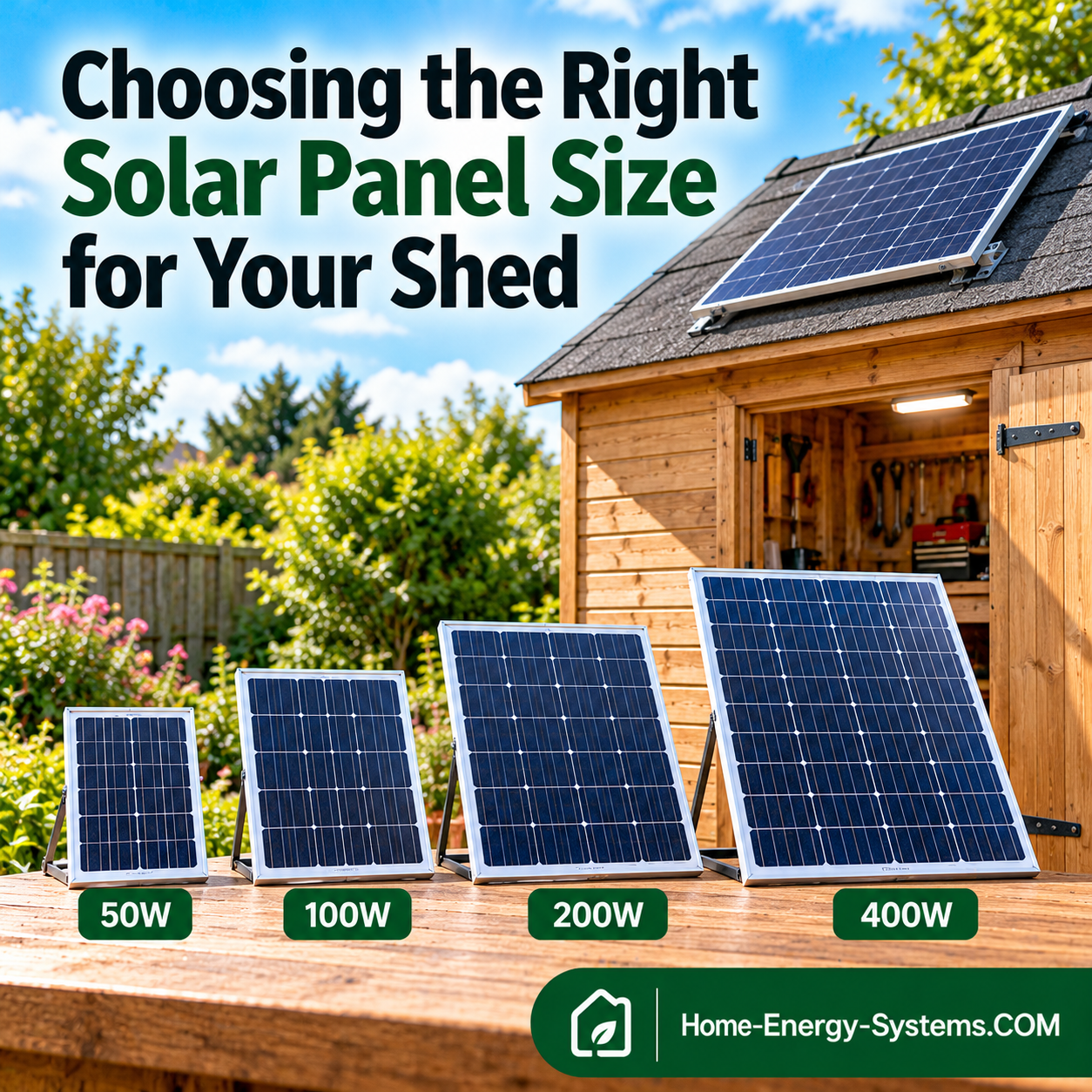
As an illustration, a 200W panel receiving three equivalent peak-sun hours and delivering 75% of its nominal theoretical yield would produce approximately 450Wh in that day (200 × 3 × 0.75). That is an example calculation, not a local production forecast. Winter production can be substantially lower, especially in northern climates.
Check the solar input voltage, current and wattage limits of the controller or portable power station. A larger panel is not automatically compatible with every battery unit.
4. Decide Between a Portable Power Station and a Fixed Battery System
A portable power station can simplify installation because its battery, charge management and inverter are generally integrated. You still need a compatible solar panel and safe placement, but you avoid designing a complete battery circuit from individual parts.
A fixed off-grid system offers more flexibility for expansion, permanent DC lighting and specialised loads. It also requires more careful design of cable sizes, overcurrent protection, isolation, battery ventilation or temperature limits and electrical connections.
For a broader comparison, see our portable power station guide and home battery storage guide.
5. Choose the Right Mounting Position and Hardware
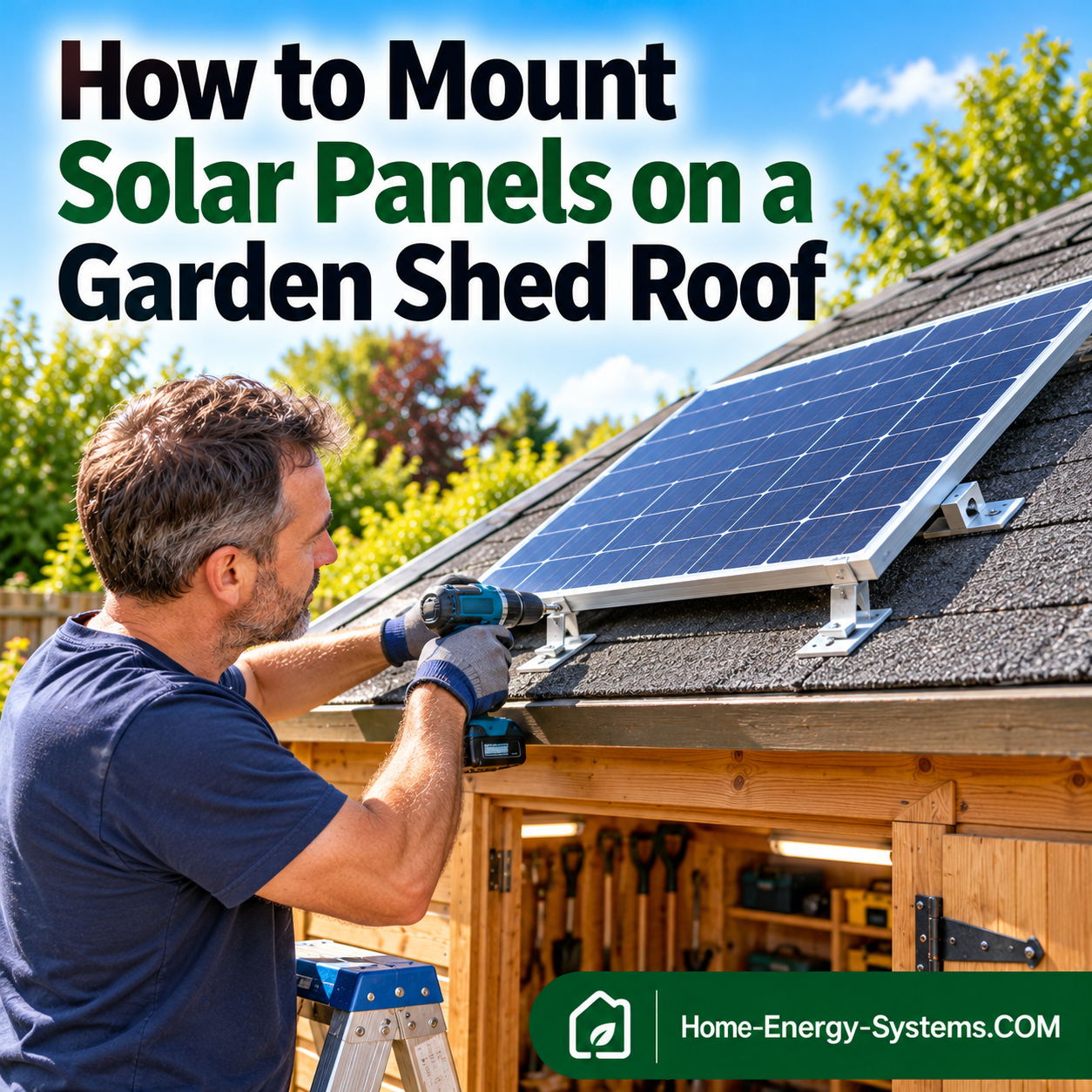
Position panels where they receive the most useful sunlight throughout the year. In the Northern Hemisphere, a broadly south-facing orientation is often effective, but the best position depends on local shading and when the electricity is needed. In the Southern Hemisphere, a broadly north-facing orientation is often preferred.
Use mounting components specified for your panel and roof construction. Fixings must connect to suitable structural members, not merely thin roofing material. Waterproof roof penetrations correctly and preserve any required airflow beneath the panel.
6. Plan the Electrical Connections Safely
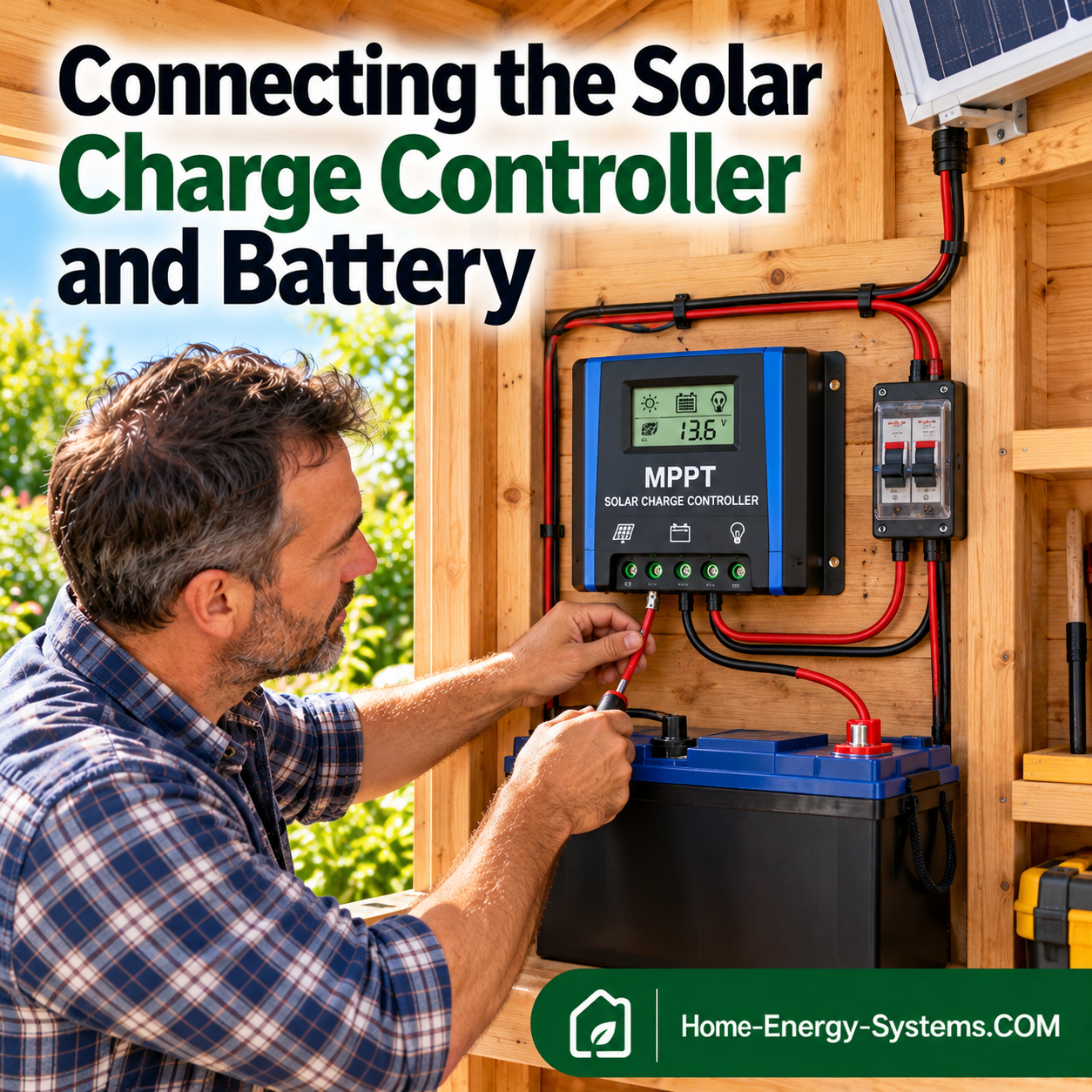
A typical fixed off-grid layout is solar panel → charge controller → battery → suitable DC loads or inverter → AC appliances. This is a conceptual overview, not a wiring diagram or instruction to connect components in that order. Actual connection and disconnection sequences vary by equipment, and some controllers require the battery to be connected before the solar input.
Before wiring, confirm compatibility across all components, including solar open-circuit voltage in cold weather, charge-controller ratings, battery chemistry, inverter surge demand, conductor sizes and protective devices. Use correctly rated fuses or breakers, isolators, weather-resistant enclosures and strain relief where appropriate.
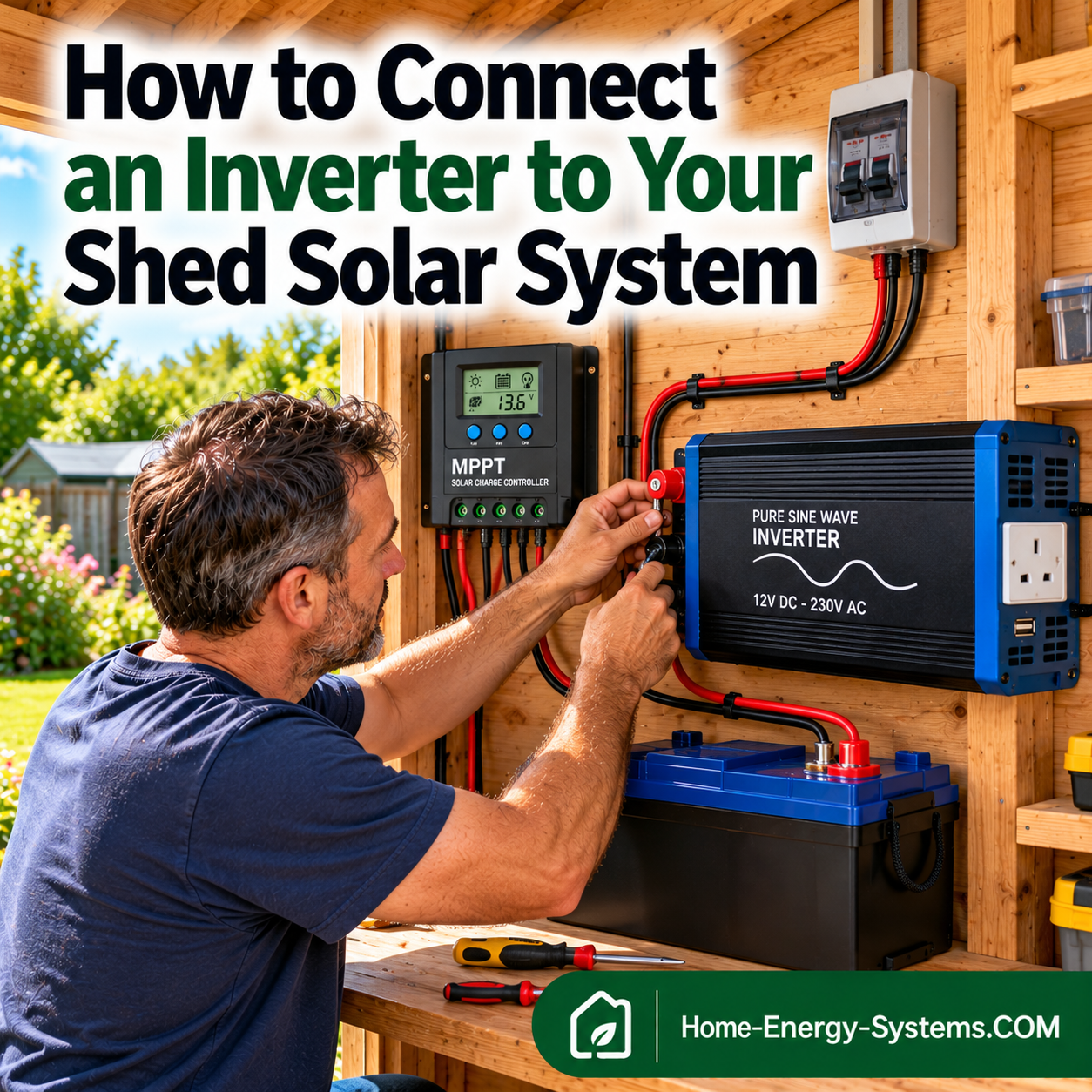
Connecting an Inverter to Your Shed Solar System
An inverter must match the battery voltage, deliver enough continuous and startup power for the intended appliances, and be protected with correctly rated DC cables and overcurrent devices. Follow the inverter and battery manufacturers’ instructions; permanent AC circuits should be installed and tested by a qualified electrician.
7. Commission the System and Check Its Performance
Once the equipment has been installed according to the manufacturers’ instructions, verify that all enclosures are secure, cables are protected from abrasion and moisture, and protective devices are correctly specified. A qualified installer should carry out any required electrical testing before energising a fixed system.
Monitor charging performance on a clear day and compare it with realistic expectations. Confirm that the battery charges normally, that equipment stays within its temperature limits and that the inverter can operate the intended appliances without overloads.
Keep the manuals, component ratings and a record of the installation. Inspect the system periodically for loose mounts, damaged cables, corrosion and water ingress.
8. Common Garden Shed Solar Installation Mistakes
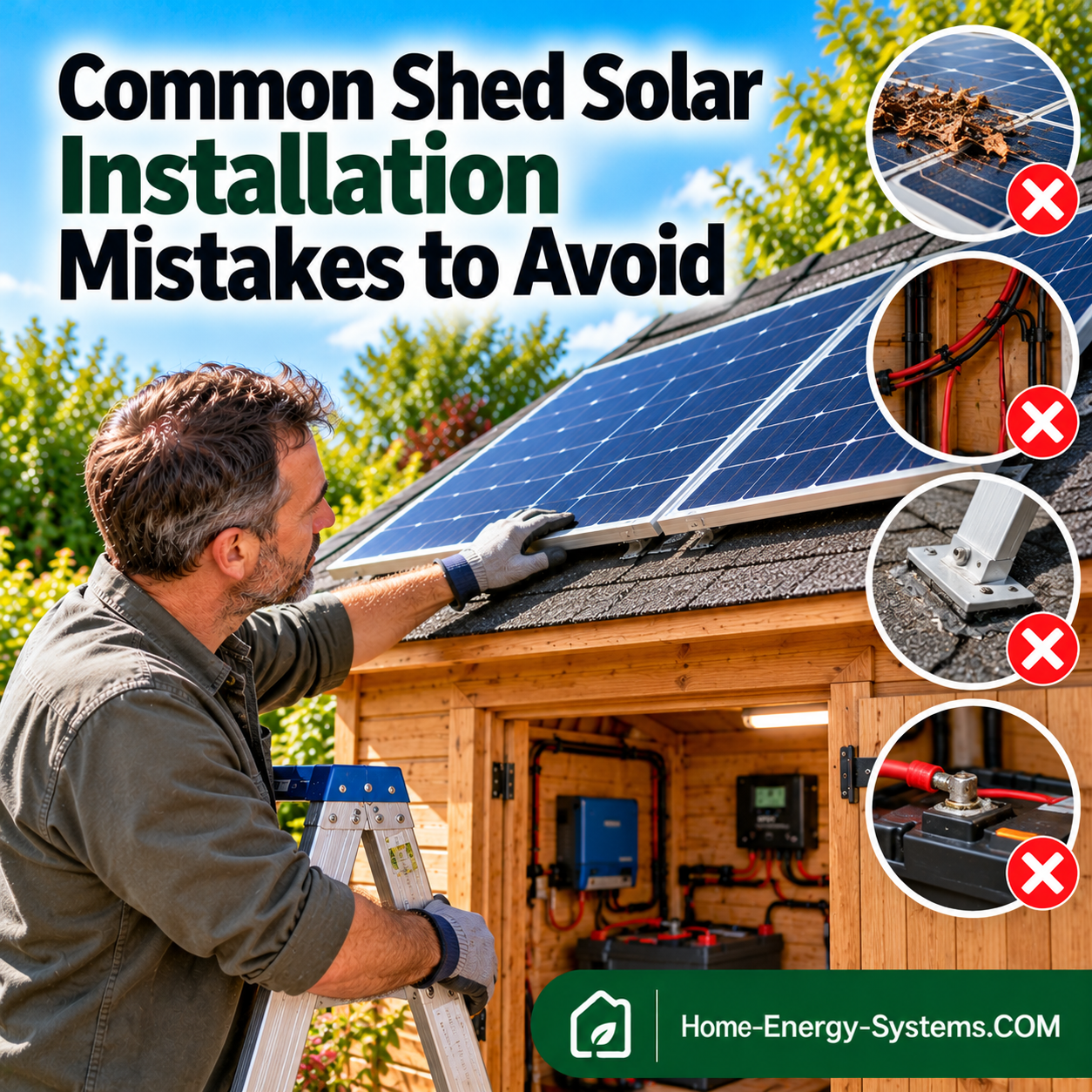
- Buying panels before measuring loads: The array may be too small or unnecessarily expensive.
- Ignoring winter sunlight: A summer-only estimate may leave the battery depleted in darker months.
- Underestimating battery capacity: Lights and security cameras may need power overnight.
- Using an unsuitable roof: Wind loads and poor fixings can make an otherwise good panel installation unsafe.
- Overlooking inverter surge demand: Motors and some chargers can require more power at startup.
- Skipping electrical protection: Incorrect fusing and cables increase fire risk.
- Leaving equipment exposed: Water, condensation and extreme temperatures can shorten its life.
How Much Does It Cost to Install Solar Panels on a Garden Shed?
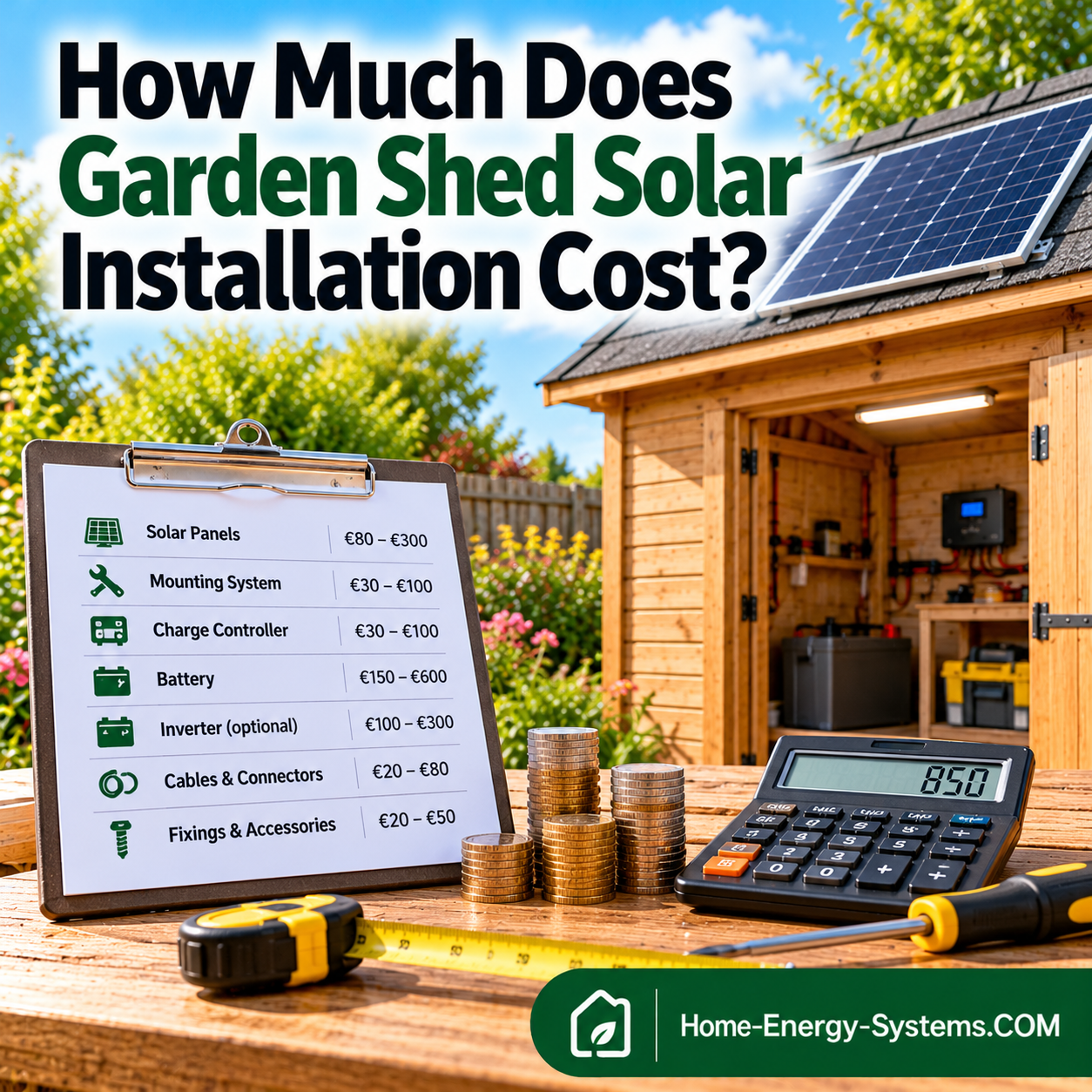
Costs vary by country, supplier, battery size, roof condition and installation method. A simple standalone solar light can be inexpensive, whereas a full shed power system with solar panels, battery, inverter, mounts and professional electrical work can cost many hundreds or several thousand in local currency. Because equipment prices change, compare current complete-system quotes rather than relying on a single advertised panel price.
Include panels, mounting, charge controller, battery, inverter if needed, protection devices, wiring, weatherproofing and any professional installation charges. Remember that a portable power station may already contain some components that a fixed system requires separately.
Where to Buy Shed Solar Equipment
Renogy — solar panels and off-grid components
Useful when planning a conventional fixed shed installation with panels, charge controllers and battery storage. Check regional availability and component compatibility before ordering.
BLUETTI — portable solar power
For a simpler setup, compare power stations with compatible solar inputs. Explore BLUETTI UK or BLUETTI US.
PECRON — portable power stations
Another option for removable shed power and occasional off-grid use. Compare battery capacity, solar input limits and warranty for your region.
A1 SolarStore — US solar equipment
For readers in the United States comparing panels and other solar equipment, browse A1 SolarStore.
Frequently Asked Questions
Can I install solar panels on a garden shed myself?
Some simple manufacturer-designed portable systems are suitable for competent DIY setup. Roof-mounted panels and permanent wiring introduce structural and electrical risks. Follow local regulations and obtain professional assistance where needed.
Is a 100W solar panel enough for a shed?
It may be sufficient for occasional LED lighting and small charging loads, depending on sunlight and battery capacity. It is unlikely to reliably power large tools or heating appliances.
Do shed solar panels need a battery?
Not always. However, a battery is usually useful if you want electricity after sunset, on cloudy days or during periods when demand exceeds solar production.
Can solar panels power a garden shed in winter?
Yes, but output can be much lower than in summer. Size the system using realistic winter sunlight assumptions if year-round reliability is important.
Do I need an inverter?
You need an appropriate inverter for standard AC appliances unless you use a compatible portable power station with an inverter already built in. Suitable DC lighting and devices may operate without one.
Can I connect the shed solar system to my house?
Do not connect an off-grid inverter directly to household sockets or wiring. Grid-connected or permanently interconnected systems require compliant equipment, approvals where applicable and qualified electrical installation.
What is the best roof angle for shed solar panels?
There is no universal angle. Latitude, season, shading, roof pitch and intended use all affect the optimum tilt. A safe, unshaded mounting location is often more important than chasing a perfect angle.
How long will a solar-powered shed battery last?
Runtime depends on usable battery watt-hours and total load. For example, 500Wh of usable stored energy could theoretically power a 50W load for 10 hours before additional conversion losses; real runtime may be shorter.
Build the Right Solar-Powered Shed
Start with your daily electricity needs, choose compatible components and make safety the priority. Compare suitable kits before you buy.
Compare Garden Shed Solar KitsAffiliate disclosure: Some supplier links in this guide are affiliate links. We may earn a commission from qualifying purchases at no additional cost to you. Recommendations should be based on equipment suitability, not commission rates. This article is general information and does not replace professional structural or electrical advice.