Solar energy guides • Updated October 2026
How Long Does It Take for Solar Panels to Pay for Themselves? (2026 Guide)
Solar panels promise lower electricity bills, but the question that really matters is simple: how long does it take for solar panels to pay for themselves? The answer depends on what you pay for installation, how much solar electricity you use, and what your electricity supplier charges.
Affiliate disclosure: This website may earn a commission if you buy through selected links, at no additional cost to you. Our estimates and guidance are independent of those commissions.
1. How Long Does It Take for Solar Panels to Pay for Themselves?
The solar panel payback period is the number of years it takes for cumulative savings and export income to equal the net amount spent on the installation. It is often called the break-even point.
For a basic estimate, divide the installation price after confirmed grants or incentives by the annual financial benefit. For example, a €7,000 installation saving €900 a year has a simple payback of 7.8 years (€7,000 ÷ €900). That assumes savings remain constant and ignores financing, repairs and equipment replacement.
After break-even, the system can continue saving money for many years. Panels commonly have performance warranties around 25 years or longer, but that does not mean every component will last that long without maintenance.
2. What Is the Average Solar Panel Payback Period in 2026?
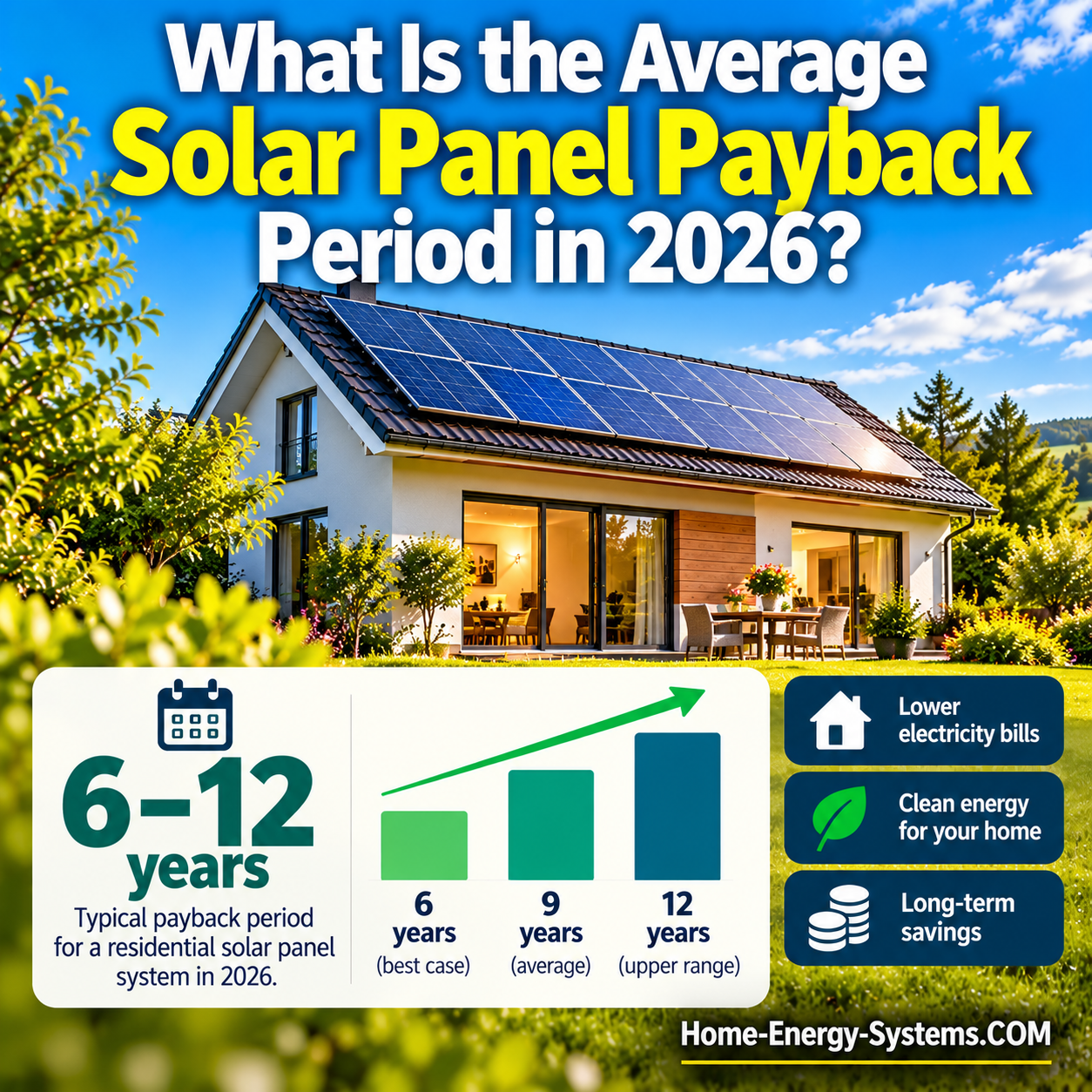
There is no single trustworthy worldwide average. Solar installation prices, sunshine hours, government incentives and household electricity rates vary substantially. A 6–12 year range can be a helpful starting point for comparing quotes, but individual outcomes can fall outside it.
| Net installation cost | Annual benefit | Simple payback |
|---|---|---|
| €5,000 | €1,000 | 5.0 years |
| €7,000 | €900 | 7.8 years |
| €9,000 | €750 | 12.0 years |
| €11,000 | €600 | 18.3 years |
These are mathematical scenarios, not market averages or installer quotes. A well-sized system can be a better investment than a larger one if much of the additional generation would be exported at a low rate.
3. How Much Does a Home Solar Panel System Cost?
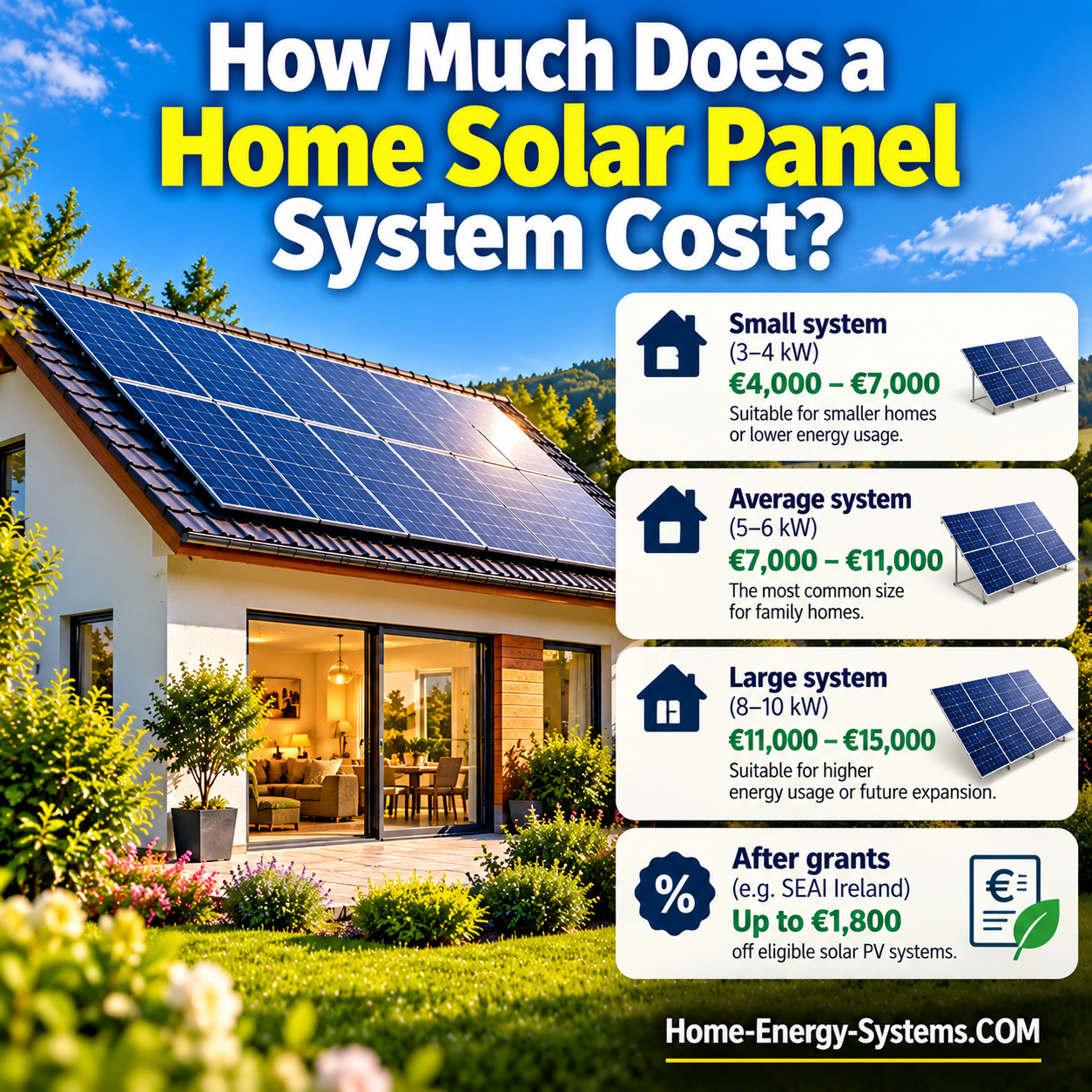
The upfront cost includes panels, mounting hardware, an inverter, electrical protection, labour, scaffolding where required, and grid-connection or inspection work. Battery storage, roof repairs and difficult cable routes can add significantly to the price.
For an illustrative euro-denominated budget, a 3–4 kW system might be quoted around €4,000–€7,000, a 5–6 kW system around €7,000–€11,000, and an 8–10 kW system around €11,000–€15,000 before any applicable support. These are broad example budgets, not verified 2026 prices for every country, and they may exclude batteries or unusual installation work.
Always compare at least two or three detailed quotes with the same equipment capacity, warranty terms and installation scope. If you live in Ireland, check the current SEAI solar electricity grant rules before deducting any grant from your quote. Eligibility and payment limits can change.
4. How Much Money Can Solar Panels Save Each Year?
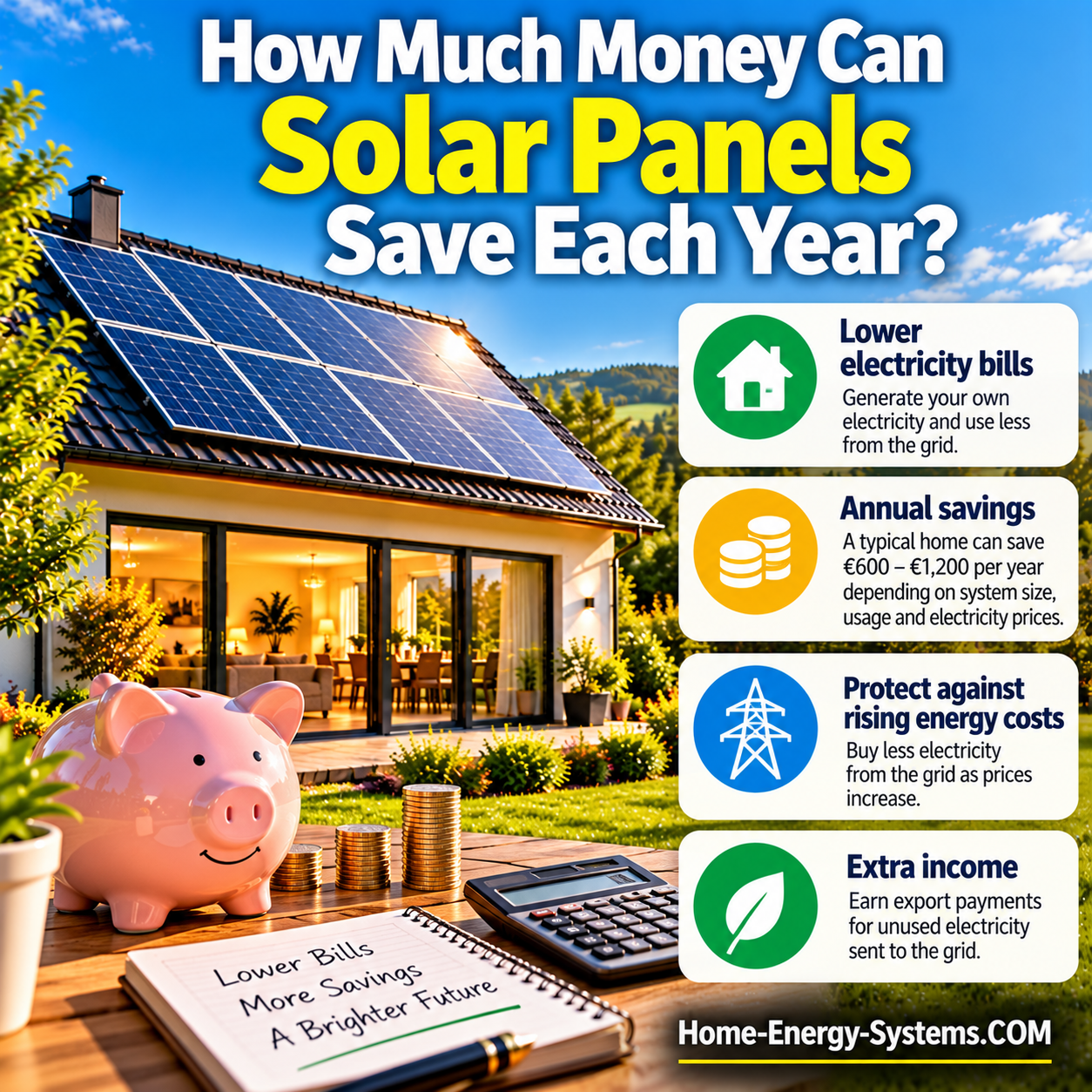
Solar electricity saves the most money when it replaces power you would otherwise buy from the grid. You may also earn export payments for unused electricity, depending on your location and electricity supplier.
Imagine a home producing 4,500 kWh of solar electricity annually. It uses 2,250 kWh directly and exports the other 2,250 kWh. At an assumed retail electricity rate of €0.30/kWh and export payment of €0.15/kWh, its estimated annual benefit is:
| Source of benefit | Calculation | Annual amount |
|---|---|---|
| Self-used solar electricity | 2,250 × €0.30 | €675 |
| Exported solar electricity | 2,250 × €0.15 | €337.50 |
| Total | Illustrative | €1,012.50 |
This example assumes all generated energy is either used or exported and excludes standing charges, taxes, system losses beyond the generation estimate, and possible tariff restrictions. Your actual savings will depend on your usage profile and contract.
Solar panel payback calculator
Enter your own figures to estimate the simple break-even period. Use the net installed cost after confirmed grants and the combined annual value of electricity saved plus export payments.
This simple calculator does not include loan interest, annual maintenance, panel degradation, future tariff changes or inverter replacement.
5. Solar Panel Payback Period by Country
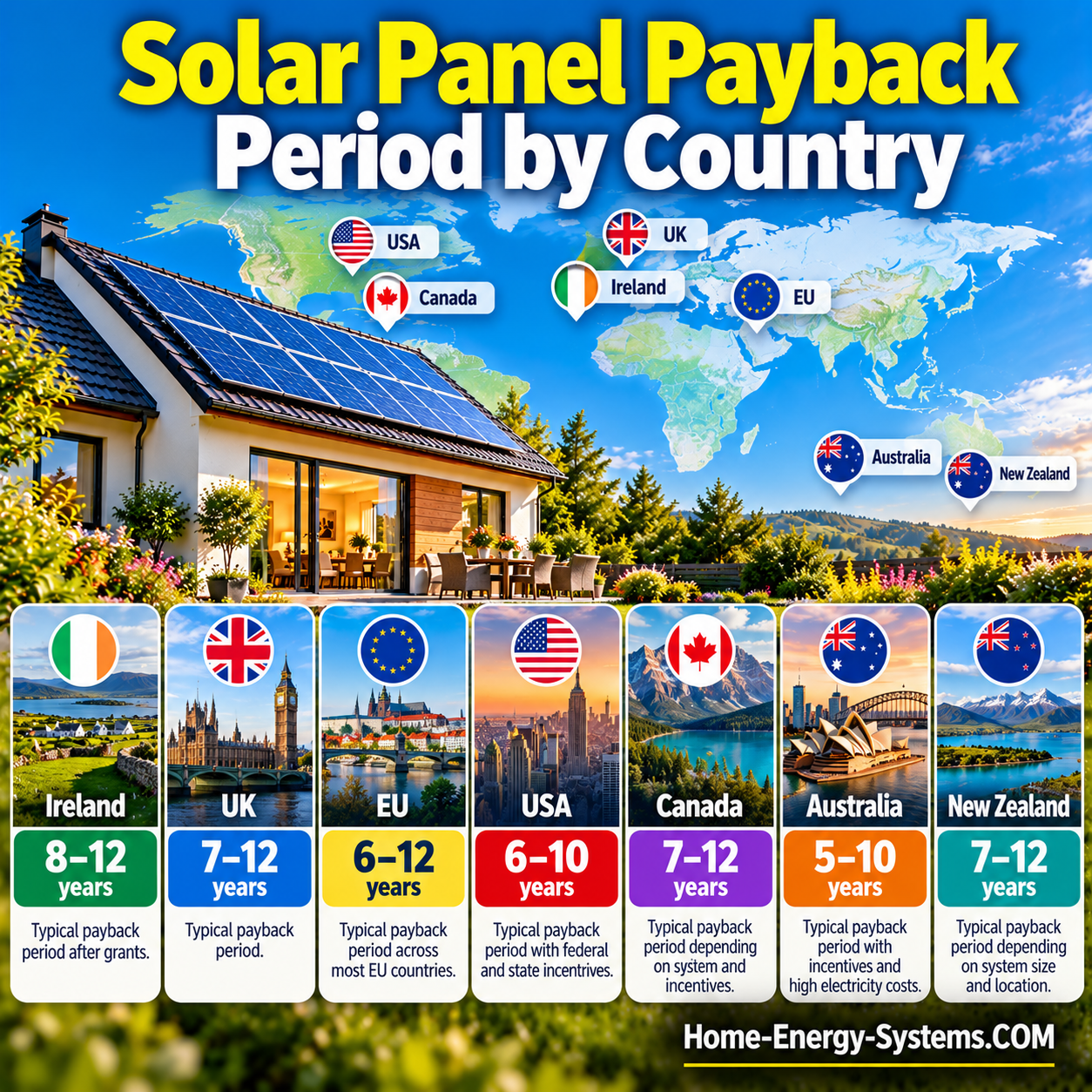
International comparisons are useful, but country-wide payback ranges can be misleading. A household in sunny southern Spain has different conditions from one in northern Scotland, while electricity rates and installation costs vary even within the same region.
| Region | What matters most | What to check |
|---|---|---|
| Ireland | Electricity prices, export payments, roof orientation | SEAI eligibility and supplier export rate |
| United Kingdom | Self-consumption, installation price, export tariffs | Smart Export Guarantee offers and local quotes |
| European Union | Country-specific tariffs, incentives and sunlight | National and local schemes |
| United States | State policies, utility rules, local labour costs | Current federal/state eligibility and net billing |
| Canada | Provincial programmes, seasonal generation, utility tariffs | Provincial and municipal incentives |
| Australia | Strong solar generation, feed-in rates, daytime use | State rebates and retailer export offers |
| New Zealand | Installed price, roof production, buy-back rate | Retailer buy-back arrangements |
The country figures printed on the accompanying illustration should be treated as illustrative ranges only, not independently verified 2026 national averages. Use your local currency, real electricity tariff and installer quote to calculate a defensible result.
6. Do Solar Panels Pay for Themselves Faster Without a Battery?
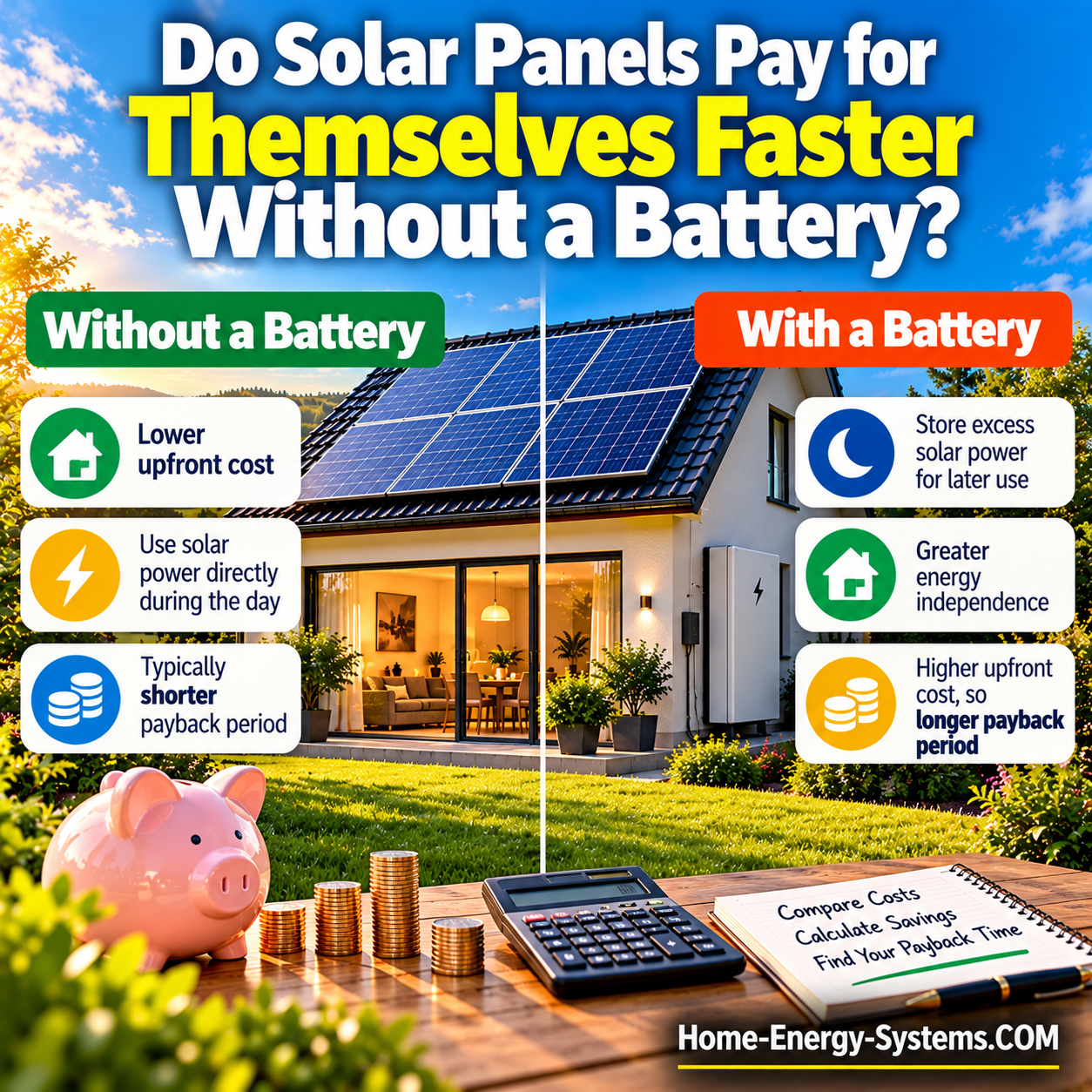
Often, yes. A solar-only system usually costs less upfront, which can make its financial break-even point easier to reach. Adding a battery allows more daytime solar electricity to be stored for evening use, but the extra savings must justify the battery purchase and installation costs.
Solar without a battery
Lower installation cost, simpler equipment and potentially shorter payback. Best suited to homes that use a substantial share of their electricity during daylight hours or receive good export payments.
Solar with a battery
Higher upfront cost, potentially greater self-consumption and more flexibility with time-of-use tariffs. Backup capability depends on the inverter and system design; a standard battery does not automatically power your home during an outage.
For example, if a battery adds €4,000 to the installation and increases annual savings by €300, its incremental simple payback is about 13.3 years. That is separate from the payback of the panels themselves. Battery degradation and replacement risk may make the financial case less attractive, although resilience and convenience have value too.
Explore our home battery storage systems guide for the technology and sizing considerations.
7. What Factors Affect Your Solar Panel Payback Time?
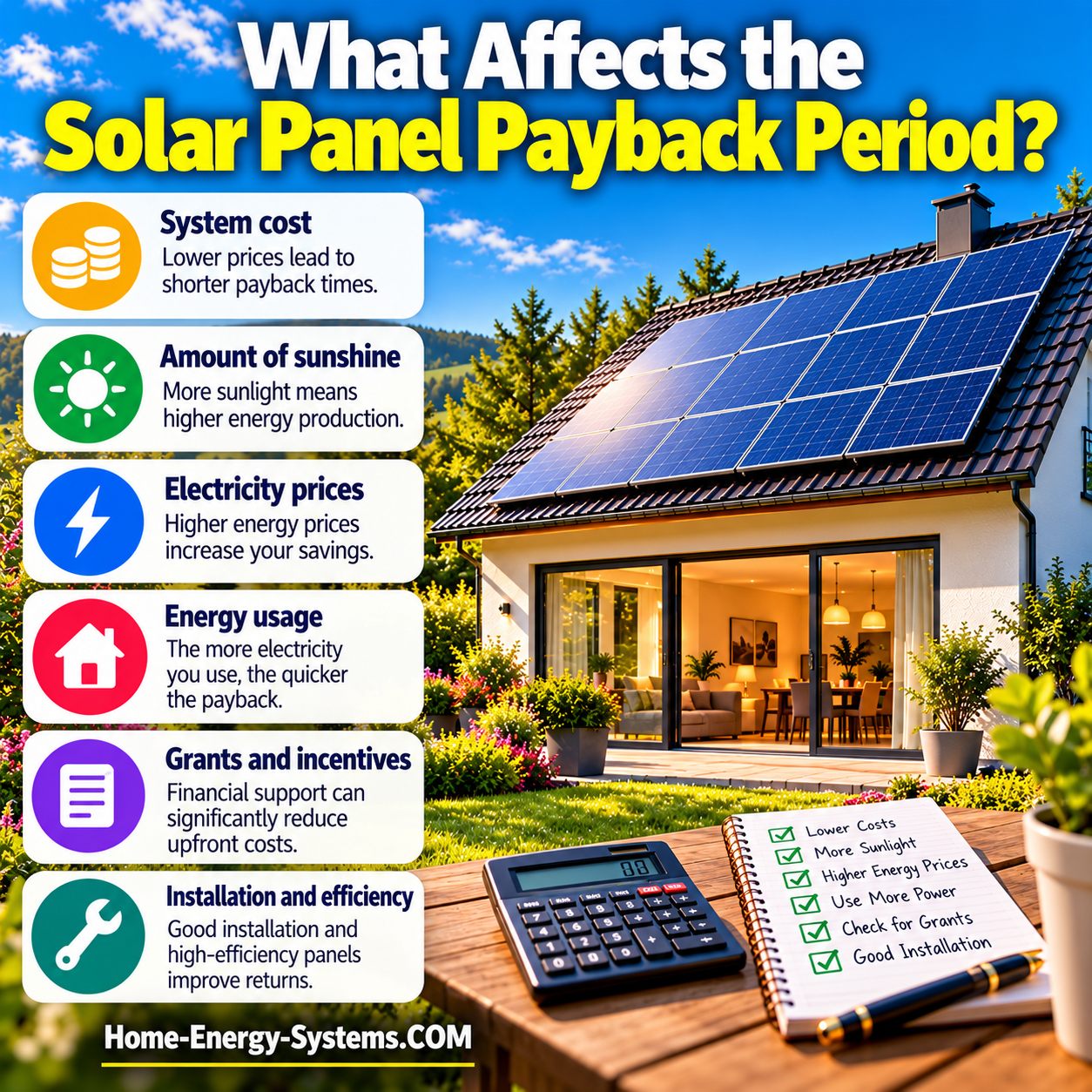
Installation price and grants
A lower net installation price generally shortens payback, provided system performance is comparable. Confirm grant eligibility before using incentives in your calculations.
Sunshine, shading and roof direction
A south-facing roof may be productive in the Northern Hemisphere, but east–west arrangements can be attractive for morning and evening consumption. In the Southern Hemisphere, north-facing roofs often receive more annual sun. Trees, chimneys and neighbouring buildings can reduce output.
Electricity prices and export payments
Self-used solar is usually valued at the electricity you avoid buying. Exported electricity may be worth less, and both prices can change over time.
How much electricity you use during the day
Running washing machines, dishwashers, water heating or EV charging during sunny hours can improve self-consumption when practical. Smart controls can help shift suitable loads automatically.
Maintenance and equipment life
Panels slowly lose output as they age. Inverters may require replacement before the panels reach the end of their useful life. Include realistic maintenance and replacement allowances in a detailed lifetime calculation.
Financing
If you borrow to pay for solar, interest and fees increase the total cost. Compare the projected bill savings with the actual loan payments, not just the equipment price.
8. Are Solar Panels Worth the Investment in 2026?
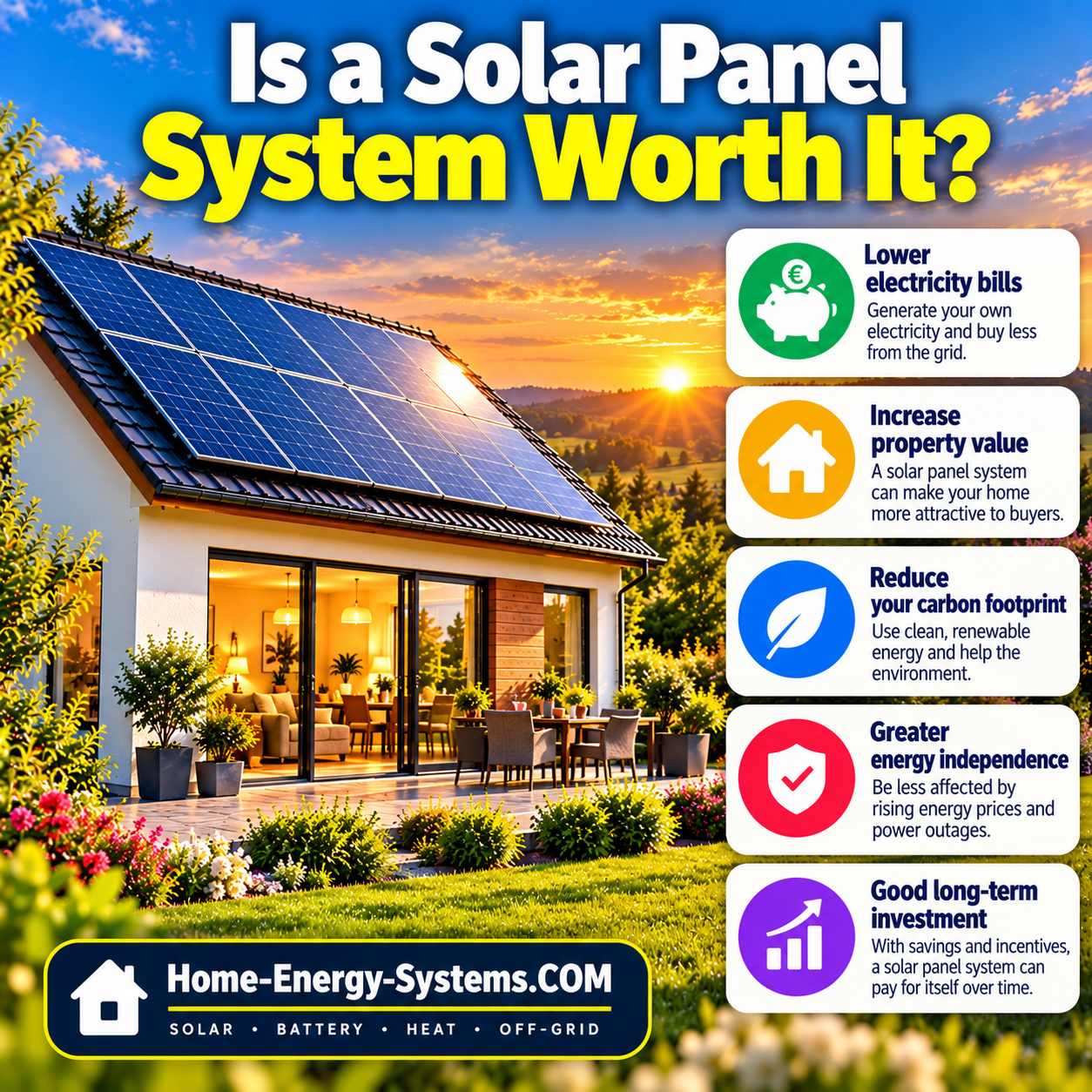
Solar panels can be a worthwhile long-term investment if you have a suitable roof, expect to remain in the property long enough, and can obtain an installation quote that makes sense against your electricity usage. They may also reduce your household’s reliance on grid electricity and associated emissions.
However, no installer can guarantee a particular financial return. Property value increases are not assured, and outage protection requires the correct backup-capable equipment. The strongest purchasing decision starts with a realistic generation estimate and a clear calculation of what you will use, export and pay.
Where to Buy Solar Panels and Home Energy Equipment
Ready to compare equipment and suppliers? Visit our Where to Buy guide for solar panels, battery storage and home energy products across different regions. Availability, installation requirements and delivery vary by country.
For US solar equipment, you can also explore A1 SolarStore (affiliate link). Compare warranty terms, shipping and professional installation costs before ordering.
Frequently Asked Questions
Can solar panels pay for themselves in five years?
Yes, in favourable circumstances, but a five-year payback should not be assumed. It requires a strong combination of low net installation cost and high annual financial benefit.
How long do solar panels last after they pay for themselves?
Many panels remain productive for 25–30 years or longer, although output gradually declines and other components may need replacing. Check the product and performance warranties on your actual system.
Do solar panels save money in winter?
Yes, solar panels can generate electricity in winter daylight, but production is usually lower because days are shorter and the sun is lower in the sky. Snow cover, shading and weather can also affect output.
Does a battery make solar panels more profitable?
Not necessarily. A battery can increase self-consumption and provide other benefits, but it also increases costs. Compare the battery’s additional annual savings with its incremental purchase and installation price.
Is it better to export solar power or use it at home?
It depends on the prices you pay and receive. When retail electricity costs more than your export rate, using solar directly at home generally provides greater value per kilowatt-hour.
What is the easiest way to calculate solar payback?
Divide the installed cost after confirmed grants by expected annual savings plus export income. For a more accurate lifetime model, include maintenance, inverter replacement, financing, degradation and changing electricity prices.
Helpful Resources
For independent local information, consult the Sustainable Energy Authority of Ireland (SEAI), the Energy Saving Trust in the UK, or the relevant government and utility resources where you live. Check publication dates and programme eligibility because incentives and export rules change.
For more practical guidance, read our solar panel installation guide and guide to solar panels without a battery.
Make Your Solar Investment Count
Compare detailed installer quotes, estimate how much solar electricity your household will use, and run the figures through the calculator above before buying. Explore more independent solar, battery and backup power advice at Home Energy Systems.