Best Solar Water Pumps for Farms 2026: Irrigation, Wells & Livestock
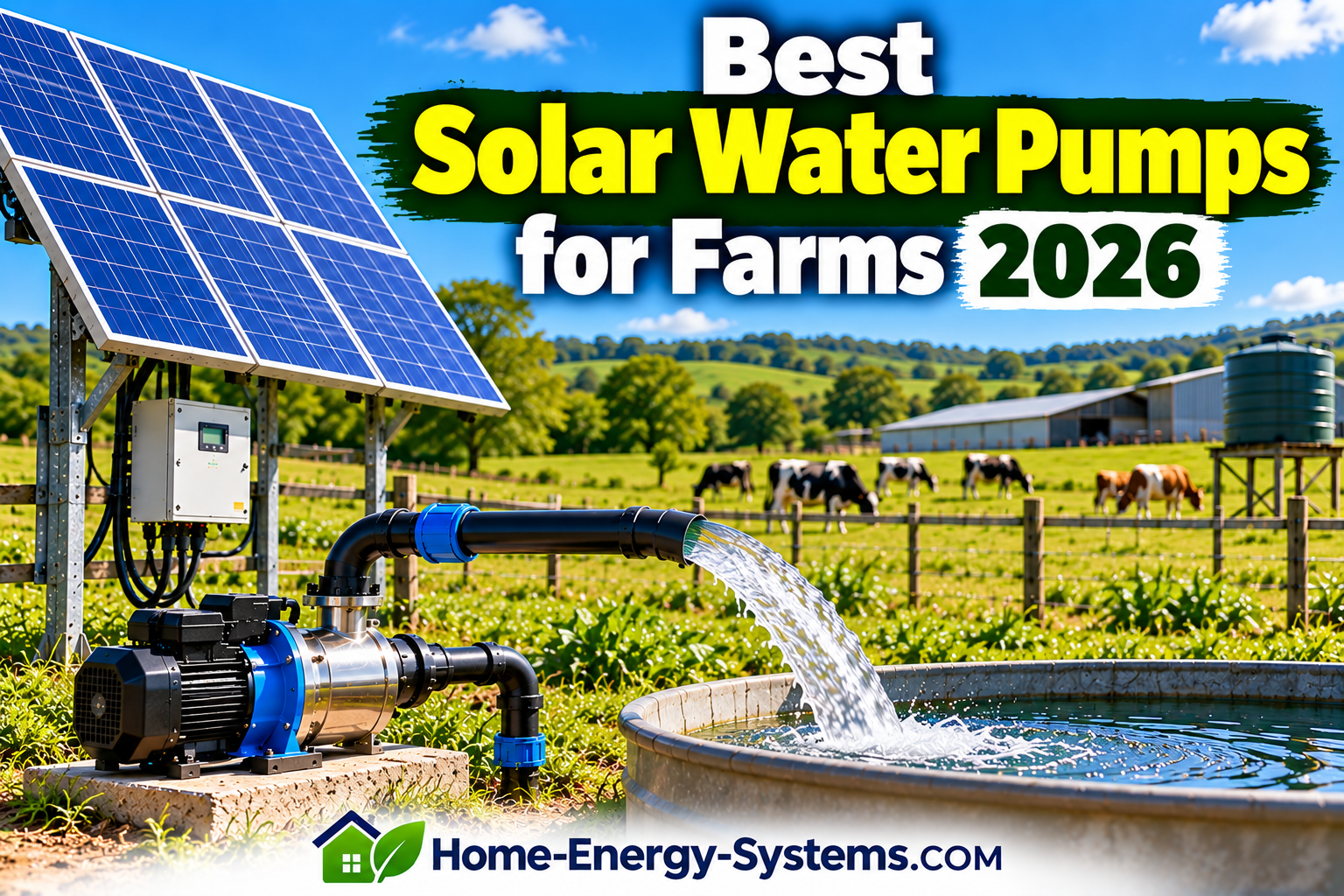
Solar water pumps for farms can move water for irrigation, livestock, wells and storage tanks without relying on mains electricity or continually buying fuel for a conventional pump.
For farms with a reliable water source and good access to sunlight, a properly sized solar pumping system can be particularly useful in remote fields, grazing areas and locations where extending an electrical supply would be expensive.
But choosing a solar farm pump is not simply a matter of buying the largest pump or solar panel you can afford. The right system depends on how much water you need, where the water comes from, how high it must be lifted and how quickly it needs to be delivered.
How Solar Water Pumps Work on Farms
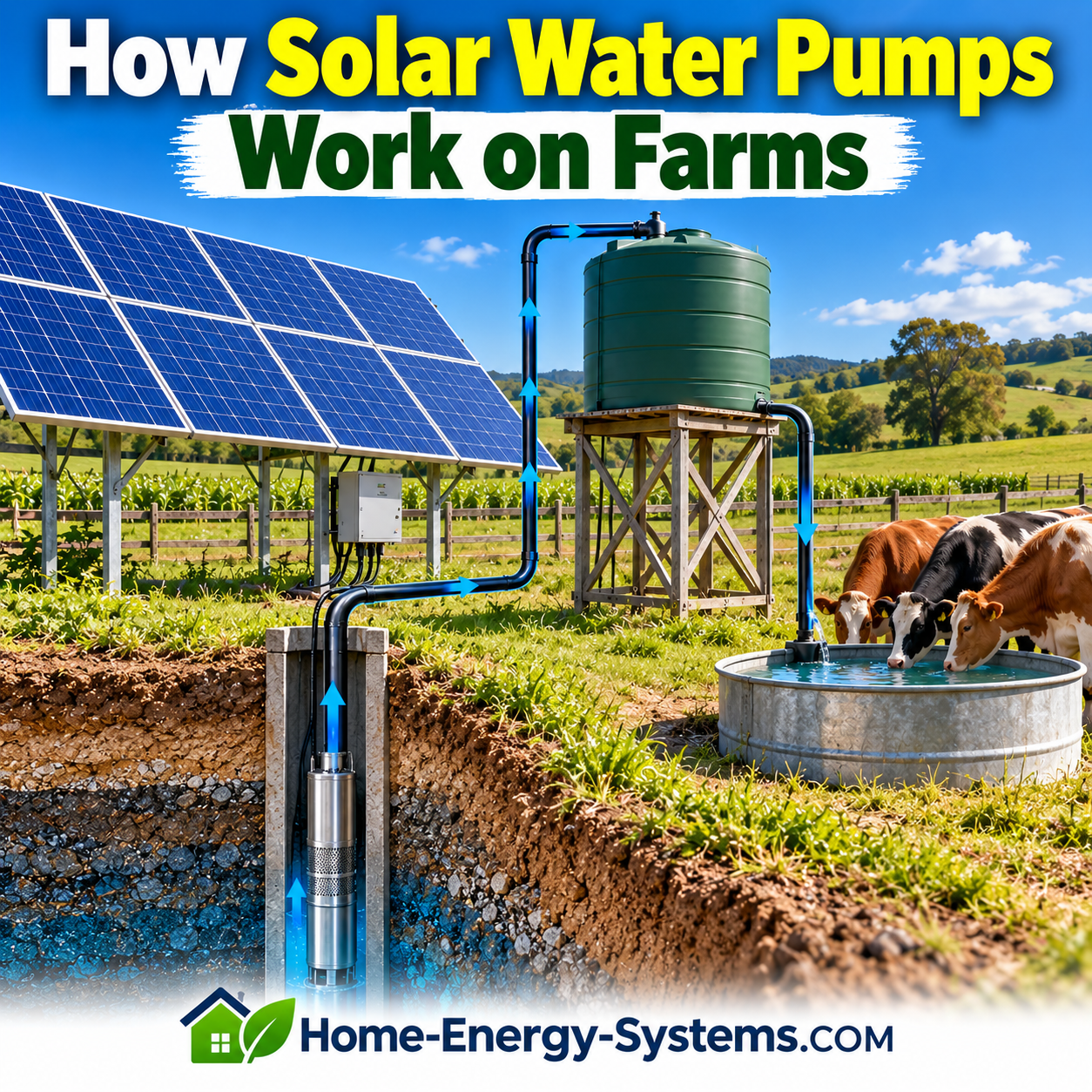
A solar water pumping system uses photovoltaic panels to produce electricity from sunlight. That electricity powers a pump that moves water from a source such as a well, borehole, river, pond or storage reservoir to wherever the farm needs it.
A typical system can include:
- Solar PV panels
- A DC or solar-compatible water pump
- A pump controller
- Intake pipe or borehole pipework
- Filters where required
- Delivery pipework
- A water tank or reservoir
- Float switches or water-level sensors
- Drip irrigation, sprinklers or livestock troughs
When sunlight reaches the panels, electricity is supplied through the controller to the pump. The controller helps manage the changing power available as solar conditions vary during the day.
Instead of storing solar electricity in a battery, many farm systems pump water while the sun is available and store that water in a tank. The stored water can then be used later in the evening or overnight.
Surface Pumps vs Submersible Pumps
| Type | Often Suitable For | Main Consideration |
|---|---|---|
| Surface solar pump | Ponds, rivers, tanks and shallow wells | Suction depth is limited |
| Submersible solar pump | Boreholes and deeper wells | Must match well depth and required head |
| High-head pump | Steep farms or elevated tanks | Higher lift can reduce available flow |
Solar Irrigation Pump Systems
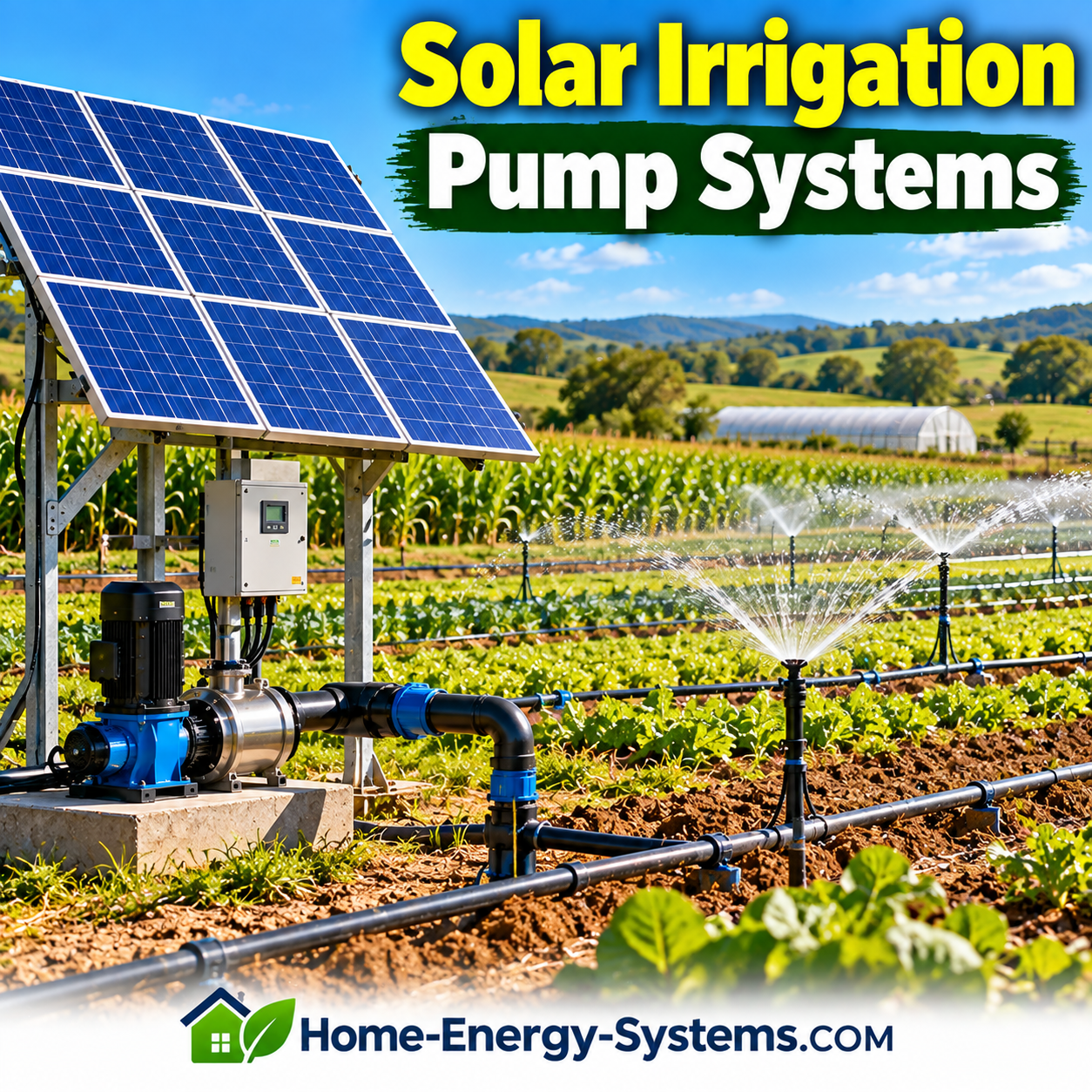
Solar irrigation is one of the most practical applications for farm water pumps because irrigation demand often occurs during the same sunny periods when solar generation is strongest.
A solar irrigation pump system can supply water to drip irrigation, low-pressure sprinklers, hoses or a storage reservoir. The exact arrangement depends on the crop, field size, water source and pressure required by the irrigation equipment.
Solar irrigation can be particularly attractive where a farmer currently relies on a petrol or diesel pump. Once installed, solar panels do not require fuel every time the field needs water.
Direct Solar Irrigation
The pump operates primarily when sufficient sunlight is available. This can be a relatively simple arrangement where irrigation timing is flexible.
Solar Pump + Water Tank
The pump fills a tank during daylight. Water can then be distributed later using gravity or a separate pressure system.
Drip Irrigation
Drip systems can work particularly well with solar pumping because they deliver water close to plant roots and can reduce unnecessary water use. However, pressure requirements, filters and emitter specifications still need to match the pump.
Sprinkler Irrigation
Sprinklers generally require sufficient pressure as well as flow. A pump that moves a large volume of water at almost zero head may perform poorly once it is connected to pressurised sprinklers.
This is why the pump’s performance curve is more useful than its headline maximum flow rate.
Solar Water Pumps for Livestock
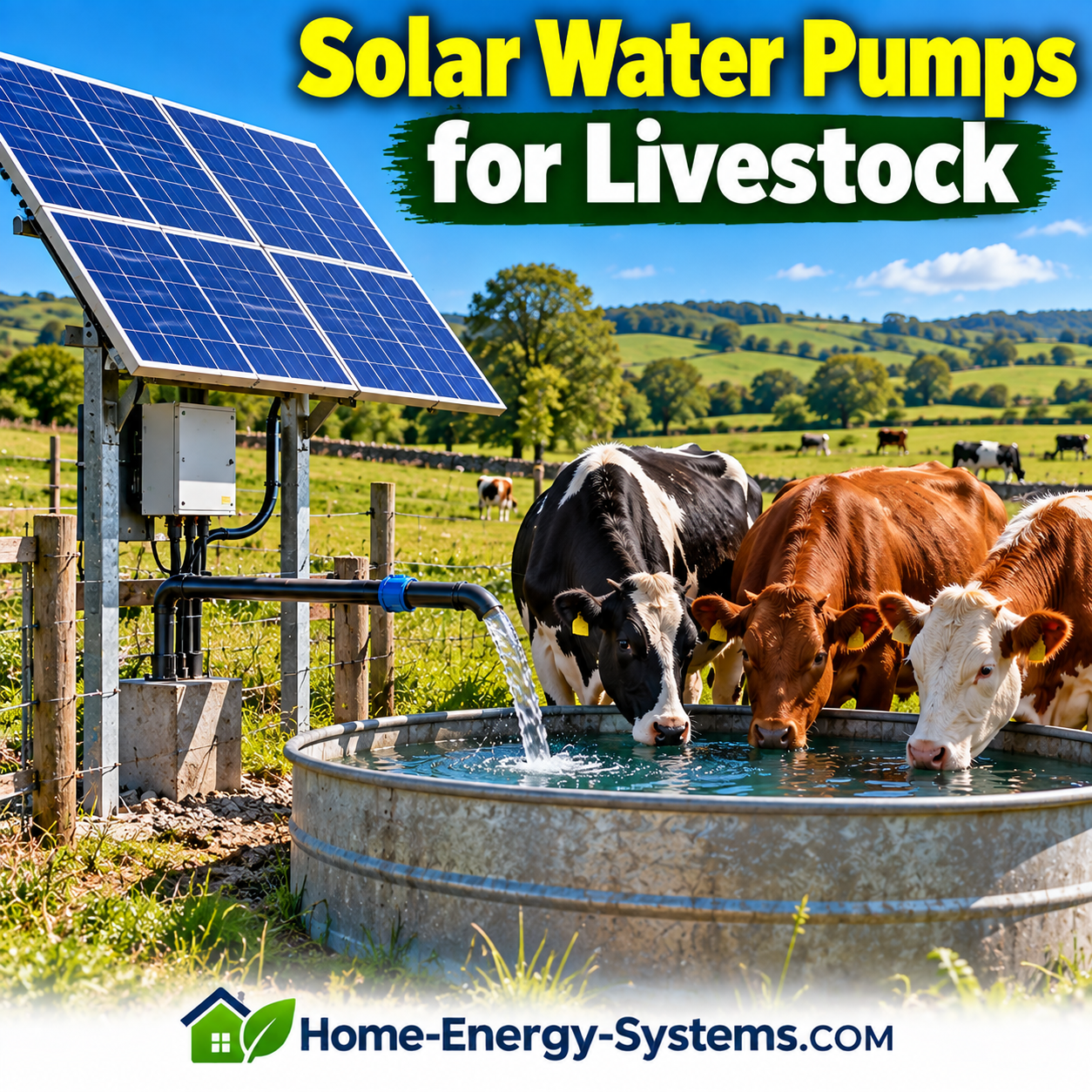
Solar livestock water pumps can provide drinking water in fields that are far from farm buildings or an electricity connection.
A typical livestock system pumps water from a well, pond or other suitable source into a storage tank or drinking trough. A float switch can stop the pump when the tank is full and restart the system as the water level falls.
This can be useful for cattle, sheep, horses and other livestock, particularly where animals are rotated between grazing areas.
How Much Water Does Livestock Need?
There is no single daily figure that applies to every animal. Water consumption changes with species, animal size, temperature, diet, milk production and moisture content in feed.
For that reason, size the system around the farm’s realistic peak daily requirement rather than an average figure taken from a different farm or climate.
- Estimate the number and type of animals using the trough.
- Determine expected peak daily water consumption.
- Add a sensible reserve for hot weather and unexpected demand.
- Calculate how quickly the trough or storage tank must refill.
- Make sure the pump can deliver that volume at the required lift.
Solar Well Pumps for Farms
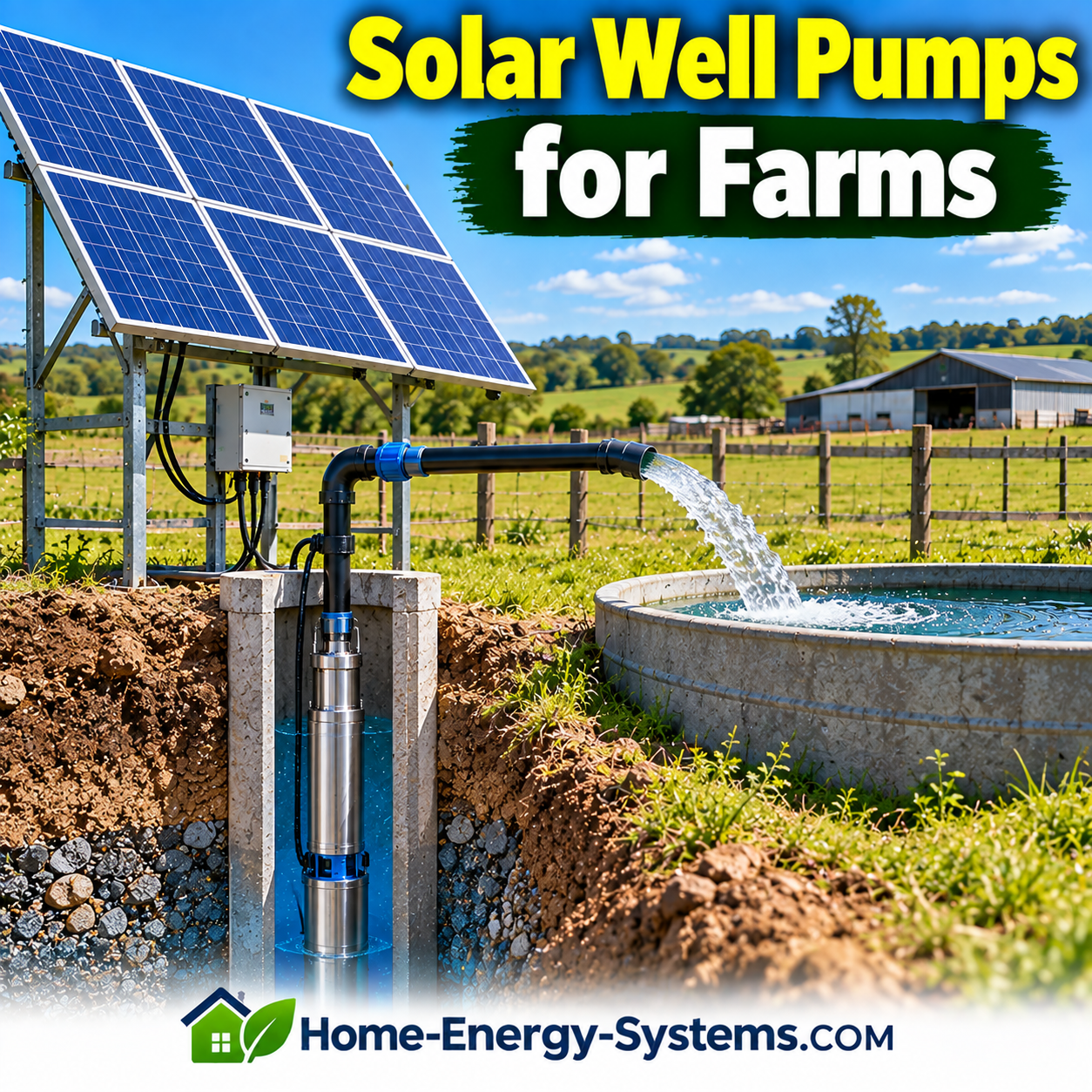
Solar well pumps for farms are useful where water must be lifted from a borehole or deeper well. These installations normally use a submersible pump positioned below the water level.
The depth of the well alone does not determine the required pump. You also need to consider the pumping water level, elevation difference, pipe losses and the pressure required at the destination.
Static Water Level and Pumping Water Level
The static water level is the level of water in the well when the pump is not operating. Once pumping begins, the water level can fall. This lower level is known as the pumping or dynamic water level.
The pump must be designed around real operating conditions rather than simply the total drilled depth of the borehole.
Total Dynamic Head
Total dynamic head, often shortened to TDH, describes the total resistance the pump must overcome.
- Vertical lift from the water level
- Elevation to the storage tank or outlet
- Friction losses through pipes and fittings
- Required outlet pressure
This is one of the most important principles when comparing farm water pumps. Two pumps advertised with similar maximum flow rates can perform very differently once they have to lift water uphill.
How Much Does a Solar Water Pump Cost?
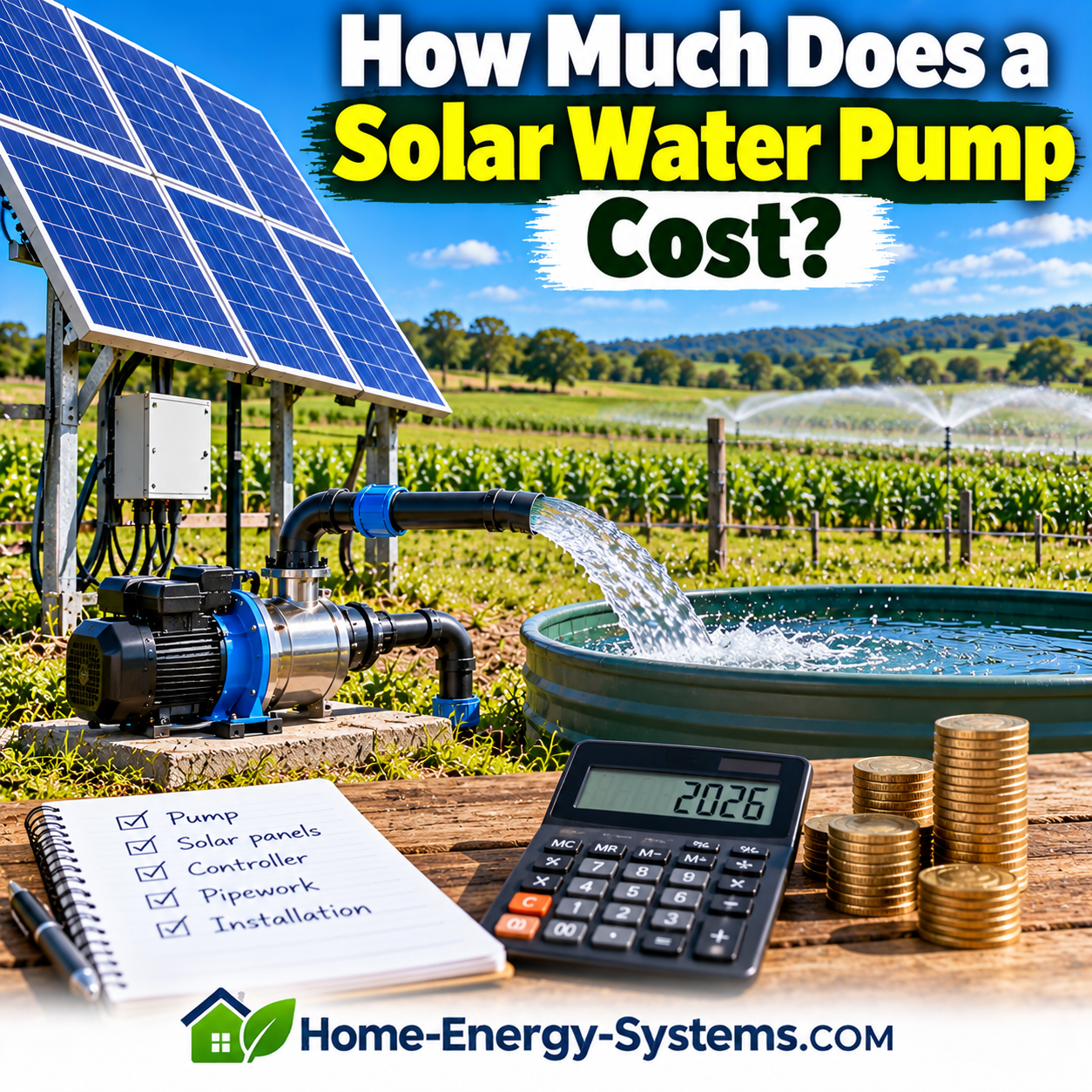
Solar water pump cost varies considerably because a small surface irrigation pump and a deep-borehole pumping system are very different installations.
The pump itself is only one part of the budget. Solar panels, controllers, pipework, mounting equipment, water storage, sensors and installation can all affect the final cost.
| Cost Factor | Why It Matters | Possible Effect |
|---|---|---|
| Pump type | Surface or submersible | Changes equipment and installation cost |
| Required head | Higher lift requires more pumping capability | Can increase pump and solar requirements |
| Daily water volume | Determines required flow and operating time | Larger demand usually increases system size |
| Solar array | Must provide suitable power for the pump | More panel capacity increases initial cost |
| Water storage | Can reduce dependence on batteries | Adds tank and plumbing cost |
| Pipe run | Long or narrow pipe creates friction losses | May require larger pipe or pump capacity |
A Real 2026 Price Example
As a current market example rather than a recommendation, Futurepump lists its smaller SE1 solar pump from approximately £490 and its SF2 from approximately £615 in its UK-facing online store at the time this guide was updated in September 2026. Prices vary according to panel configuration, and shipping and import costs can apply.
The SF2 is designed for relatively shallow water sources and is specified for up to approximately 3,600 litres per hour, with a maximum suction depth of 7 metres and maximum total head of 15 metres. Futurepump also offers a higher-head SF2H configuration for applications requiring substantially greater lift, although flow is lower.
Solar pumping can also remove recurring fuel costs associated with petrol or diesel pumps. However, the payback period will depend on how frequently the pump operates, current fuel or electricity costs and the total installed price.
How to Size a Solar Water Pump for Your Farm
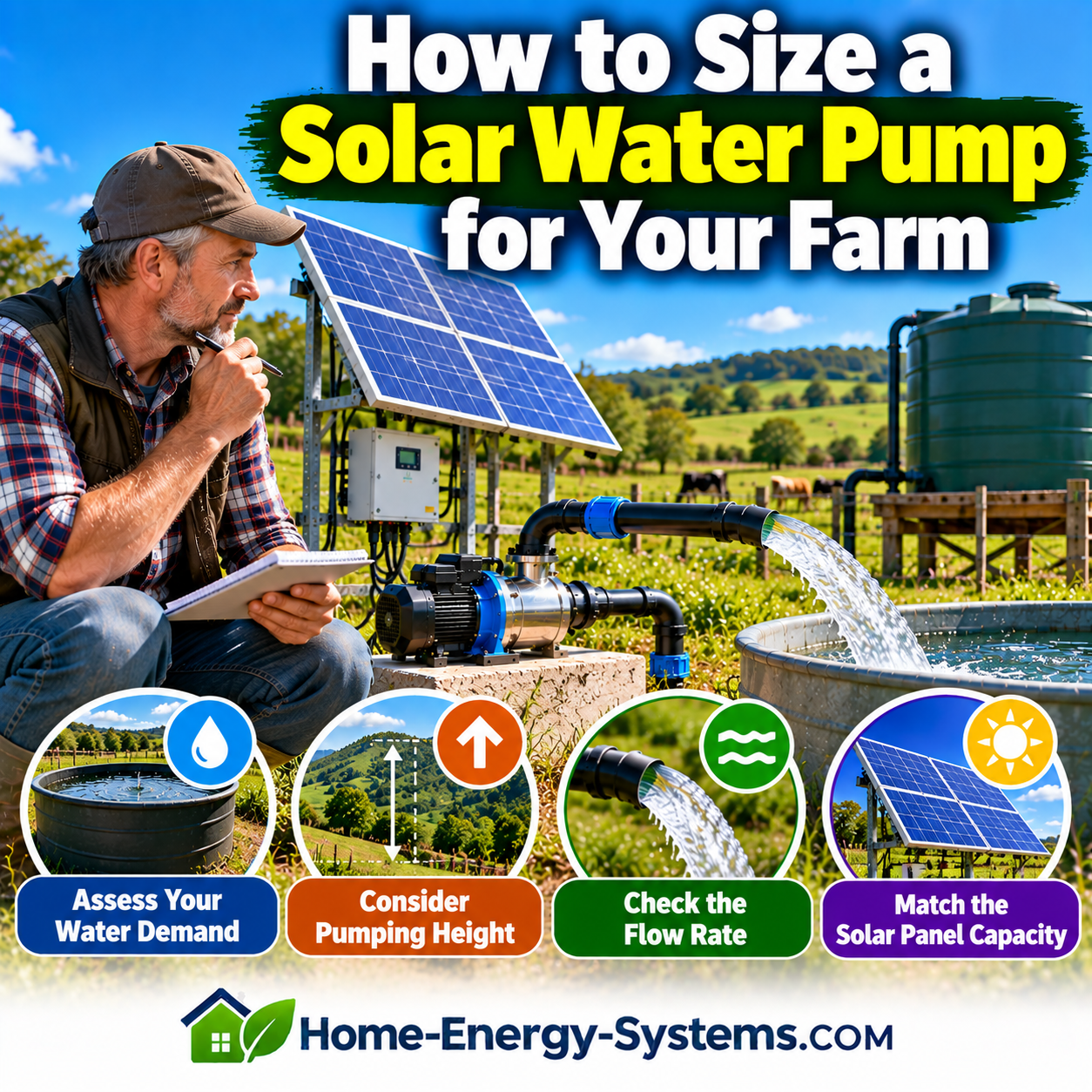
Correct sizing is arguably more important than the brand name printed on the pump. A well-designed system starts with the farm’s water requirement and works backwards.
Calculate Daily Water Demand
Estimate how many litres of water the farm needs during a demanding day. For irrigation, this depends on crop area, irrigation method, soil, climate and crop requirements. For livestock, calculate the peak requirement of the animals being supplied.
If the system serves both livestock and irrigation, include both demands.
Measure the Vertical Lift
Determine the vertical distance between the pumping water level and the point where the water will be delivered.
If water is being pumped into an elevated storage tank, the top operating level of the tank must be considered.
Allow for Pipe Losses
Water loses pressure as it moves through pipes, valves, bends and filters. Long pipe runs and undersized pipes can create substantial friction losses.
Increasing the pipe diameter can sometimes reduce pumping losses significantly.
Determine the Required Flow Rate
Suppose a farm needs 12,000 litres of water per day and you plan around six useful solar pumping hours.
The pump would therefore need to deliver around 2,000 litres per hour at the required total head, not merely under ideal zero-head test conditions.
Match the Solar Array to the Pump
The panels must be electrically compatible with the pump and controller. Voltage, current and maximum permitted solar input matter as well as total wattage.
Adding more panel capacity can sometimes improve performance in weaker sunlight, but exceeding the manufacturer’s electrical limits can damage equipment or shorten its life.
Do Solar Water Pumps Need Battery Storage?
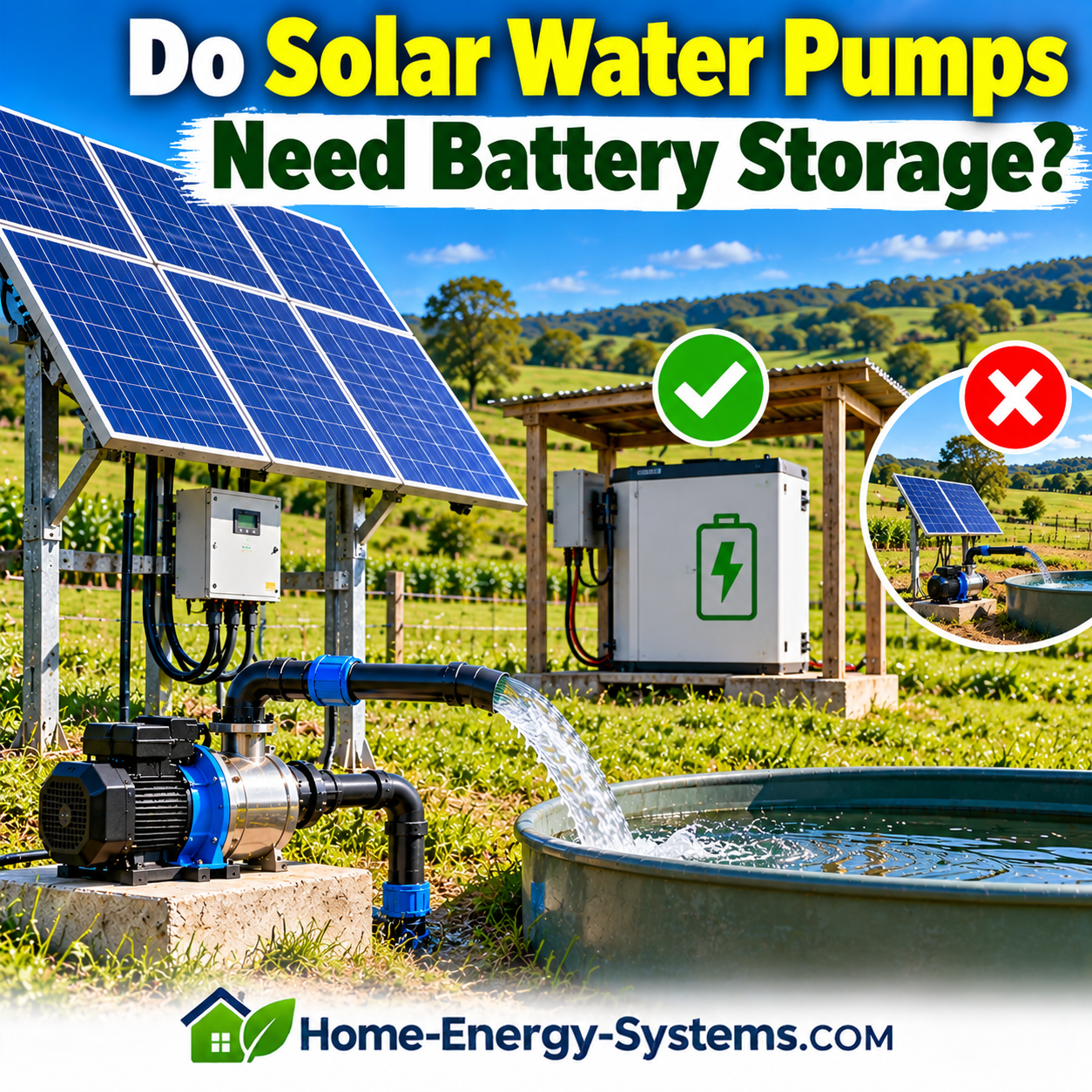
No. Many solar water pumps for farms can operate without batteries.
In a direct solar system, the panels supply the pump during daylight. When solar production increases, pumping performance can increase; when sunlight weakens, output may fall.
Instead of storing electricity, the farm can store water.
A sufficiently large tank can be filled during daylight and provide water when the pump is not operating. For livestock watering and many irrigation systems, this can be a straightforward solution.
Water Storage
- Simple concept
- No battery cycling
- Can provide gravity-fed water
- Potentially lower electrical complexity
- Useful reserve during poor weather
Battery Storage
- Useful where pumping is essential at night
- Adds purchase cost
- Requires compatible charging equipment
- Batteries eventually degrade
- Adds another component to maintain
When Might a Battery Make Sense?
Battery storage can be useful when water must be pumped on demand regardless of sunlight, where there is insufficient room for adequate water storage or where the same solar system powers other electrical equipment.
But batteries should not automatically be added to every solar pumping installation. If daytime pumping and water storage meet the requirement, the simpler system may be preferable.
For more information about electrical storage technology, see our Home Battery Storage Systems guide.
Choosing the Best Solar Water Pump for Your Farm
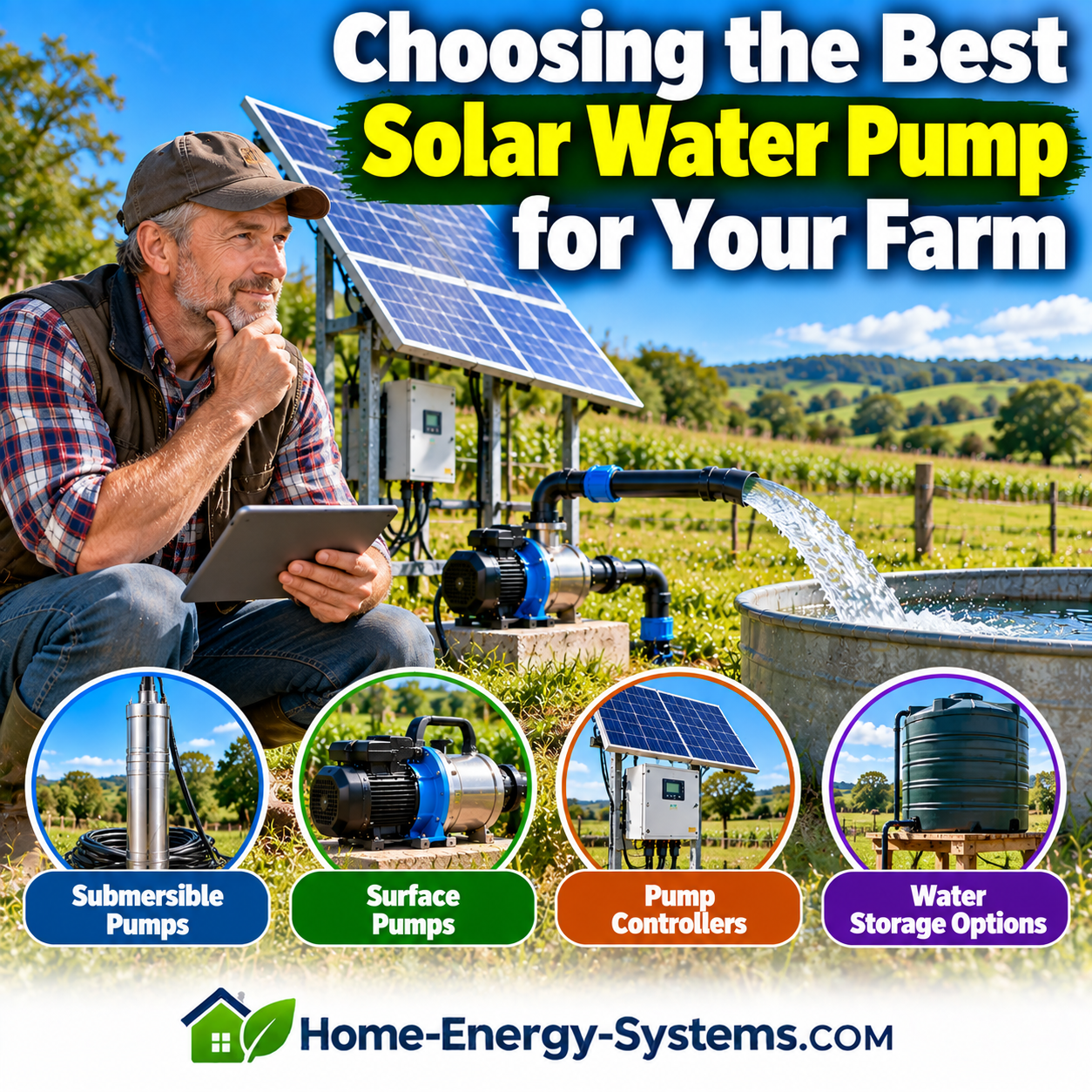
The best solar farm pumps are not necessarily those with the highest advertised wattage or maximum flow. The best choice is the system that matches the water source, required daily volume, pumping head and irrigation or livestock requirements of the individual farm.
Choose a Surface Pump When
- The water source is relatively shallow.
- Water comes from a pond, river, reservoir or accessible tank.
- The pump can be safely positioned close to the water source.
- The manufacturer’s suction-depth limit is suitable.
Choose a Submersible Pump When
- Water comes from a borehole or deeper well.
- The pumping water level is beyond the practical suction limit of a surface pump.
- The pump is designed for the borehole diameter and depth.
Check These Specifications Before Buying
| Specification | What to Check | Why |
|---|---|---|
| Flow rate | Flow at your actual head | Maximum flow can be misleading |
| Total head | Vertical lift + losses + pressure | Determines whether water reaches its destination |
| Suction depth | Surface pumps only | Physical suction limits matter |
| Solar input | Voltage, current and wattage | Panels must be compatible |
| Pump type | Surface or submersible | Must suit the water source |
| Controller | Protection and operating features | Helps manage changing solar power |
| Dry-run protection | Check manufacturer specification | Can protect some pumps when water runs low |
| Parts support | Spares, warranty and servicing | Important for long-term farm use |
Don’t Forget Water Storage
A well-sized tank can transform the way a solar pumping system operates. Instead of demanding maximum pumping performance at exactly the moment water is required, the system can steadily collect water throughout the sunny part of the day.
This can provide a buffer between variable solar generation and variable farm water demand.
Think About Maintenance Before You Buy
Farm equipment operates in difficult conditions. Dust, mud, grit, vegetation, weather and animals can all affect an installation.
- Availability of replacement parts
- Warranty length and conditions
- Whether the pump can be serviced locally
- Filter and intake maintenance
- Controller weather protection
- Solar panel mounting security
- Pipe and cable protection
Advantages and Disadvantages of Solar Farm Pumps
Advantages
- No fuel required for direct solar operation
- Useful in remote locations
- Can reduce dependence on grid electricity
- Well suited to daytime irrigation
- Can work with water storage instead of batteries
- Relatively low operating energy cost
- Scalable for different farm applications
Limitations
- Output depends on available solar energy
- Incorrect sizing can seriously reduce performance
- Deep wells require specialised pumps
- Initial equipment cost can be significant
- Large water demand may require substantial solar capacity
- Storage tanks and pipework add cost
- Seasonal solar conditions must be considered
Are Solar Water Pumps Worth It for Farms?
Solar water pumps can make practical sense where water needs to be moved regularly and the alternative is extending grid electricity, operating a fuel-powered pump or manually moving water.
They can be particularly useful for:
- Remote livestock fields
- Small and medium irrigation systems
- Market gardens
- Orchards
- Polytunnels and horticulture
- Farm ponds and reservoirs
- Boreholes and wells
- Off-grid farms
However, solar pumping is not automatically the cheapest solution for every farm. Farms with very high pumping demand, extremely deep water sources or limited sunlight should compare the complete solar installation with grid and conventional pumping alternatives.
The key is to compare lifetime running costs rather than only the initial purchase price.
Planning Solar Power for a Farm?
Solar water pumping can form part of a wider farm energy system including solar panels, battery storage, backup power and off-grid electricity.
Explore Solar Energy SuppliersFrequently Asked Questions About Solar Water Pumps for Farms
Can solar panels run a farm water pump?
Yes. A correctly designed solar PV array can power a compatible farm water pump through a suitable controller. The panels, controller and pump must be electrically matched, and the system must be sized for the required flow and pumping head.
Can a solar water pump work on cloudy days?
Yes, but output can fall when solar irradiance decreases. Providing adequate water storage can help maintain a reliable water supply during variable weather.
Do solar water pumps work at night?
Direct solar pumps normally stop when there is insufficient sunlight. Farms that need water overnight can store water in a tank during the day or use a suitably designed battery system where necessary.
What size solar pump do I need for my farm?
Start by calculating daily water demand, required flow rate and total dynamic head. Then choose a pump that can deliver the required flow at that head. Do not size the system using the pump’s maximum advertised flow alone.
Are solar pumps suitable for livestock?
Yes. Solar livestock water pumps can supply troughs and storage tanks in remote grazing areas. The system should be sized around peak animal water demand and should include enough storage to provide a reserve when solar conditions are poor.
Can a solar pump draw water from a deep well?
Yes, provided a suitable submersible solar well pump is used. Deep-well systems must be designed around the pumping water level, required flow, total dynamic head, borehole dimensions and available solar resource.
Is a battery necessary for solar irrigation?
No. Many solar irrigation pump systems operate directly from solar panels during daylight. A water tank can store pumped water for later use and may remove the need to store electricity in batteries.
How long do solar water pumps last?
Service life varies by pump design, operating conditions, water quality, installation and maintenance. Compare warranty coverage, spare-parts availability and the manufacturer’s maintenance requirements before buying.
Final Thoughts
Solar water pumps for farms can provide a practical way to move water for irrigation, livestock and wells without depending on a nearby electricity connection or continually purchasing fuel.
The technology is particularly useful when daytime solar generation can be matched with water storage. Instead of trying to store every unit of solar electricity in a battery, the farm can pump water while the sun is available and store the resource it actually needs.
But good system design matters. Calculate daily water demand, measure the lift, allow for pipe losses and determine the required flow before choosing the pump or solar array.
For farmers investigating renewable energy more broadly, solar water pumping can sit alongside farm solar PV, battery storage and backup power as part of a more resilient farm energy system.
FAO — Solar-Powered Irrigation Systems
FAO Solar-Powered Irrigation Resource
Futurepump — Solar irrigation pump technical information
Futurepump Technical Resources
Last updated: September 2026. Product specifications and prices can change. Always confirm current specifications, installation requirements and suitability with the manufacturer or a qualified irrigation professional before purchasing equipment.