Best Solar Panels for Farms 2026: Costs, Systems & What Farmers Need to Know
The best solar panels for farms can turn unused roof space or suitable farmland into a source of electricity that helps reduce dependence on the grid. Farms can be particularly well suited to solar because many have large roofs, open land and substantial daytime electricity demand.
From dairy farms running milking and cooling equipment to poultry units, irrigation pumps, workshops and livestock buildings, agricultural electricity consumption can be significant. A properly sized system can generate electricity close to where it is actually needed.
But there is no single system that is right for every agricultural business. The best solution depends on electricity consumption, available roof or ground space, when electricity is used, local solar conditions, grid connection, available grants and whether battery storage is worthwhile.
This guide explains the main agricultural PV options for 2026, including panel types, system sizing, installation costs, batteries, agrivoltaics, irrigation and grants.
Why Agricultural Properties Are Well Suited to PV
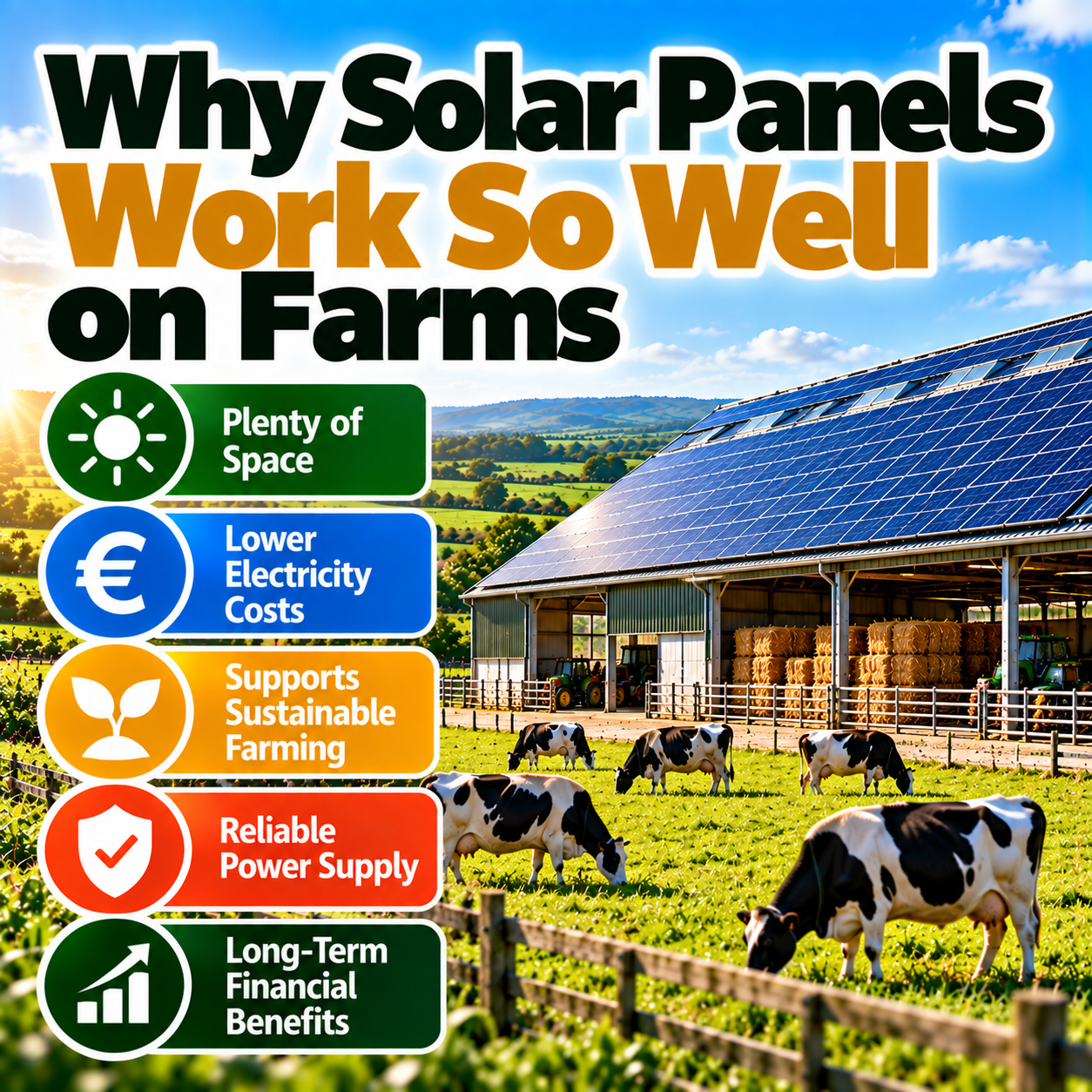
Farms often have several characteristics that make solar PV particularly attractive. Large sheds and agricultural buildings can provide substantial roof area, while open land can create opportunities for ground-mounted systems.
More importantly, many agricultural businesses consume electricity during daylight hours, when photovoltaic panels are producing power.
Potential agricultural loads include:
- Milking equipment
- Milk cooling
- Water heating
- Ventilation
- Refrigeration
- Water pumps
- Irrigation
- Lighting
- Workshop equipment
- Feed and handling systems
Using electricity directly where it is generated can be particularly valuable because every kilowatt-hour consumed on site is electricity that does not have to be purchased from the grid.
For independent agricultural guidance, farmers can also read the Teagasc guide to solar energy for dairy farms.
Choosing the Best Solar Panels for Farms
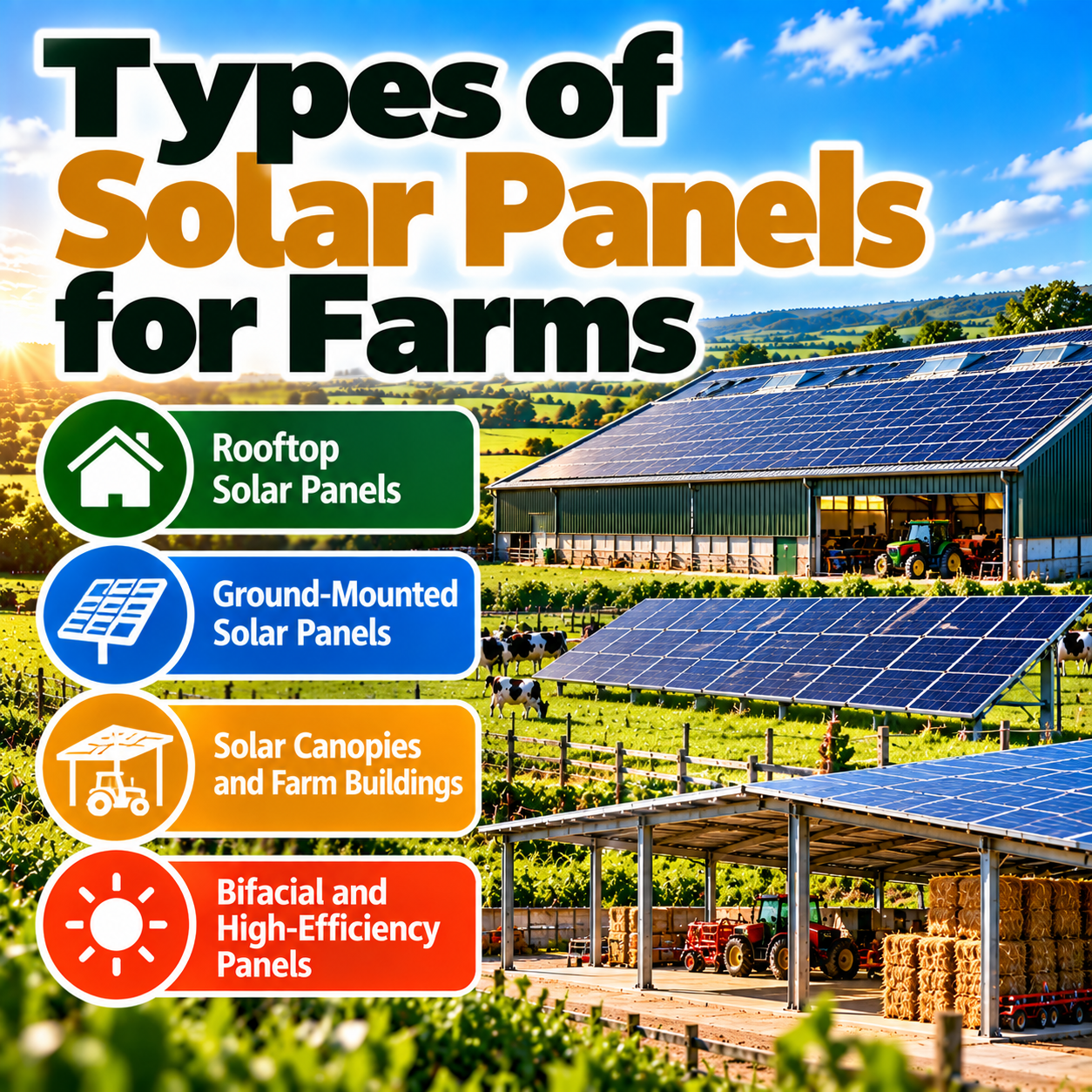
Choosing the best solar panels for farms starts with understanding the available technology and installation options.
Monocrystalline Panels
Monocrystalline panels are widely used because they combine high efficiency with relatively compact dimensions. This can be especially important when the available barn or shed roof is limited.
Higher efficiency means more generating capacity can normally be installed within the same roof area.
Bifacial Technology
Bifacial panels can generate electricity from light reaching both the front and rear surfaces of the module.
They can be particularly interesting for suitable ground-mounted and elevated installations where reflected light can reach the back of the panel.
Thin-Film Technology
Thin-film modules can be lighter and more flexible than conventional crystalline panels, although considerably more area may be required to achieve the same generating capacity.
The right choice depends on the roof structure, available area, installation design and project economics.
Calculating the Right System Size
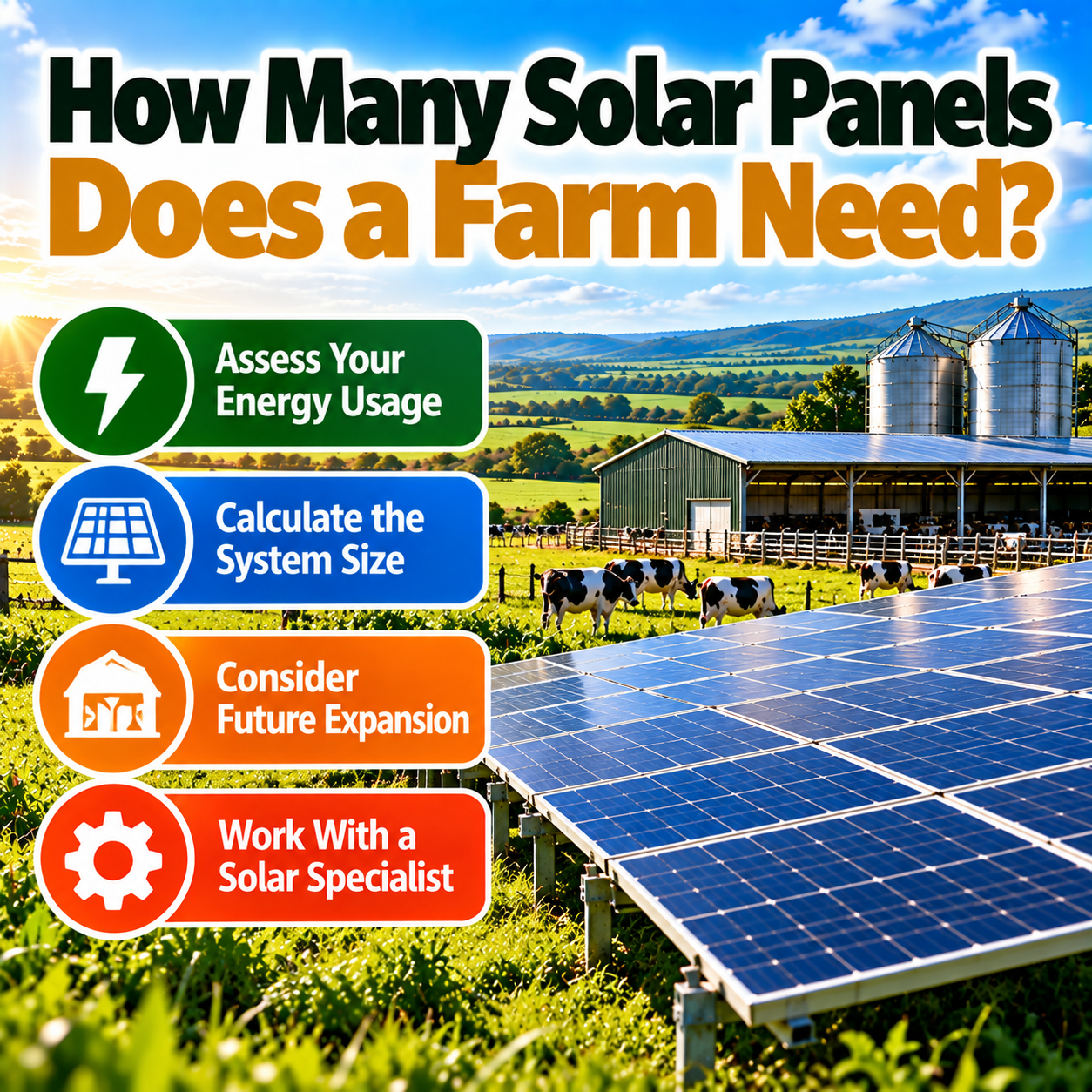
The number of panels required should be based primarily on electricity consumption rather than simply filling every available roof.
When comparing the best solar panels for farms, system size is just as important as panel efficiency. An oversized installation may export more electricity than expected, while an undersized system may leave valuable roof space and daytime demand unused.
Start with at least 12 months of electricity bills or, ideally, detailed half-hourly or smart-meter consumption data. This shows not only how much electricity the business uses but when it is being consumed.
For example, suppose a proposed panel is rated at 450 watts. A 50 kWp array would require approximately 111 panels:
50,000 watts ÷ 450 watts = approximately 111 panels.
That does not mean a 50 kWp system is appropriate for a particular property. Actual sizing should consider:
- Annual electricity consumption
- Daytime electricity demand
- Seasonal changes in activity
- Roof orientation and pitch
- Shading
- Local solar resource
- Available grid connection
- Export arrangements
- Future electricity requirements
- Battery storage plans
If you want a broader explanation of the installation process, see our Solar Panel Installation Guide 2026.
Farm Solar Panel Costs in 2026
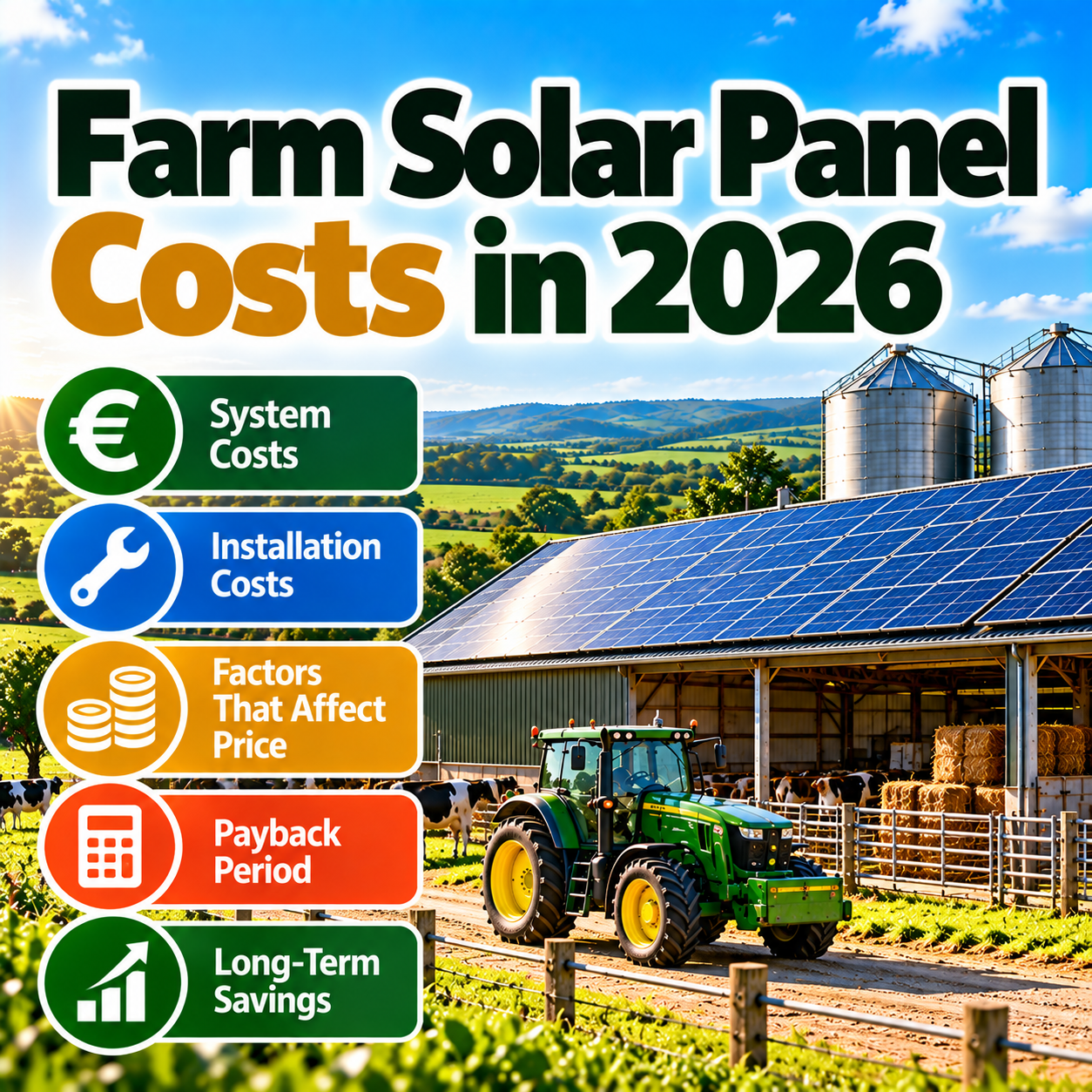
There is no reliable single price for an agricultural solar installation because projects can range from relatively small rooftop arrays to substantial commercial systems.
The cost of the best solar panels for farms depends on much more than the price of the individual modules. Mounting, electrical equipment, labour, grid requirements and the condition of the building can all influence the finished project cost.
The final cost can be affected by:
- Total system capacity
- Panel specification
- Inverter type and size
- Roof condition
- Mounting system
- Groundworks
- Cable runs
- Electrical upgrades
- Grid connection requirements
- Battery storage
- Monitoring equipment
- Planning and engineering requirements
For that reason, comparing only the total quotation can be misleading. Farmers should compare the expected annual generation, equipment specification, warranties and projected self-consumption as well as the installation price.
Rooftop or Ground-Mounted?
| Feature | Roof-Mounted | Ground-Mounted |
|---|---|---|
| Land required | Very little additional land | Requires suitable ground area |
| Existing structure | Roof must be suitable | Independent support structure |
| Orientation | Limited by building | Can usually be optimised |
| Access | Can be harder to access | Generally easier |
| System size | Limited by roof area | Can offer greater expansion potential |
Agricultural roofs are often an obvious place to begin because they use an existing structure and do not take productive land out of normal use.
However, the roof must be structurally suitable and capable of supporting the proposed installation. Older agricultural roofs may require inspection or remedial work before panels are installed.
Ground-mounted systems offer much more freedom over orientation, tilt and array size, but land use, planning, fencing, foundations and cable routes must be considered.
Using the Same Land for Energy and Agriculture
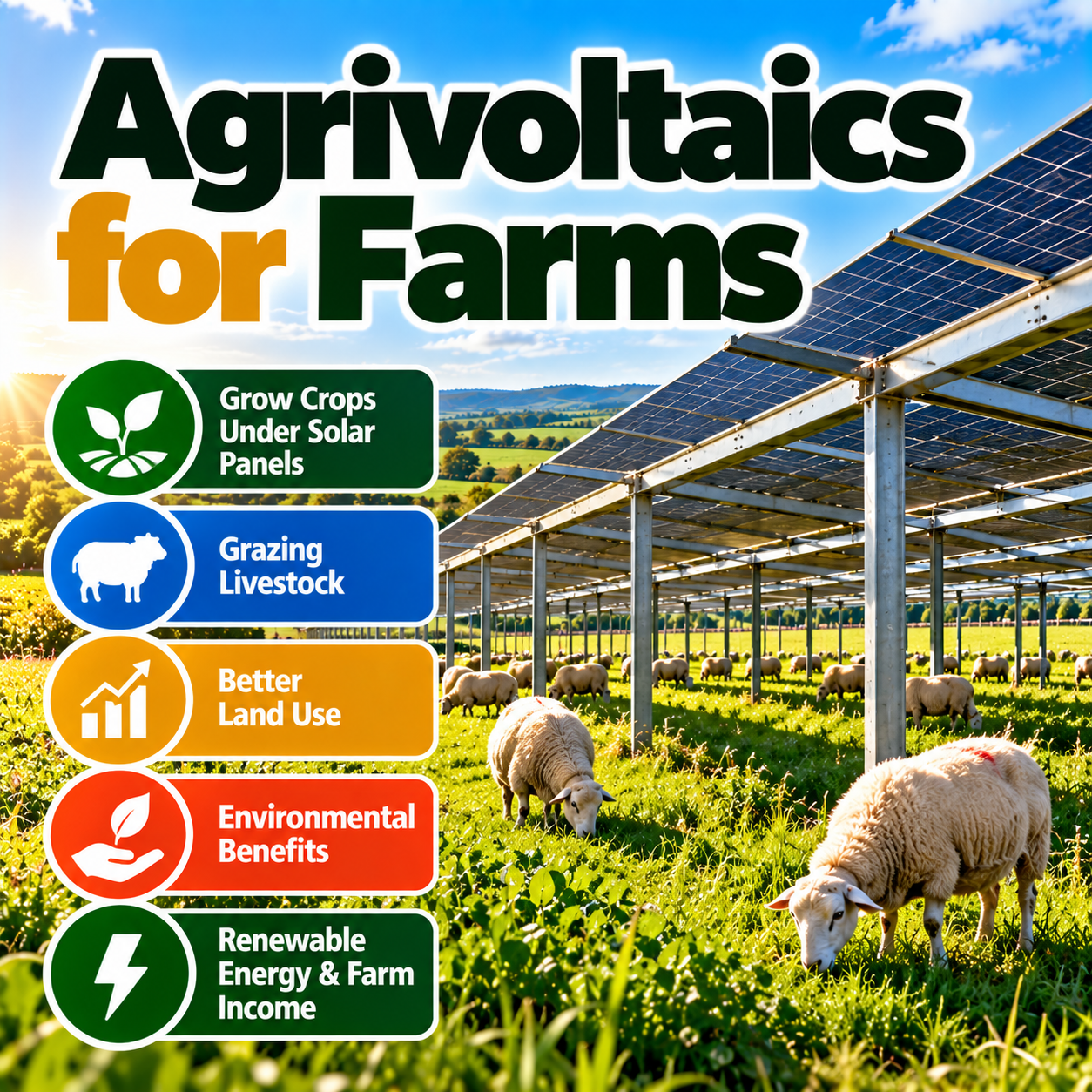
Agrivoltaics combines electricity generation and agricultural activity on the same land.
Instead of treating a field as either agricultural land or an energy site, an agrivoltaic installation is designed so that agricultural activity can continue around or underneath the panels.
- Sheep grazing beneath arrays
- Crops grown between or beneath elevated panels
- Pollinator habitats
- Horticultural production combined with renewable electricity generation
This approach can improve the productive use of suitable land, but it is not appropriate for every agricultural business. Machinery clearance, crop requirements, livestock, panel height, soil conditions and economics all affect whether the design makes sense.
Is Battery Storage Necessary?
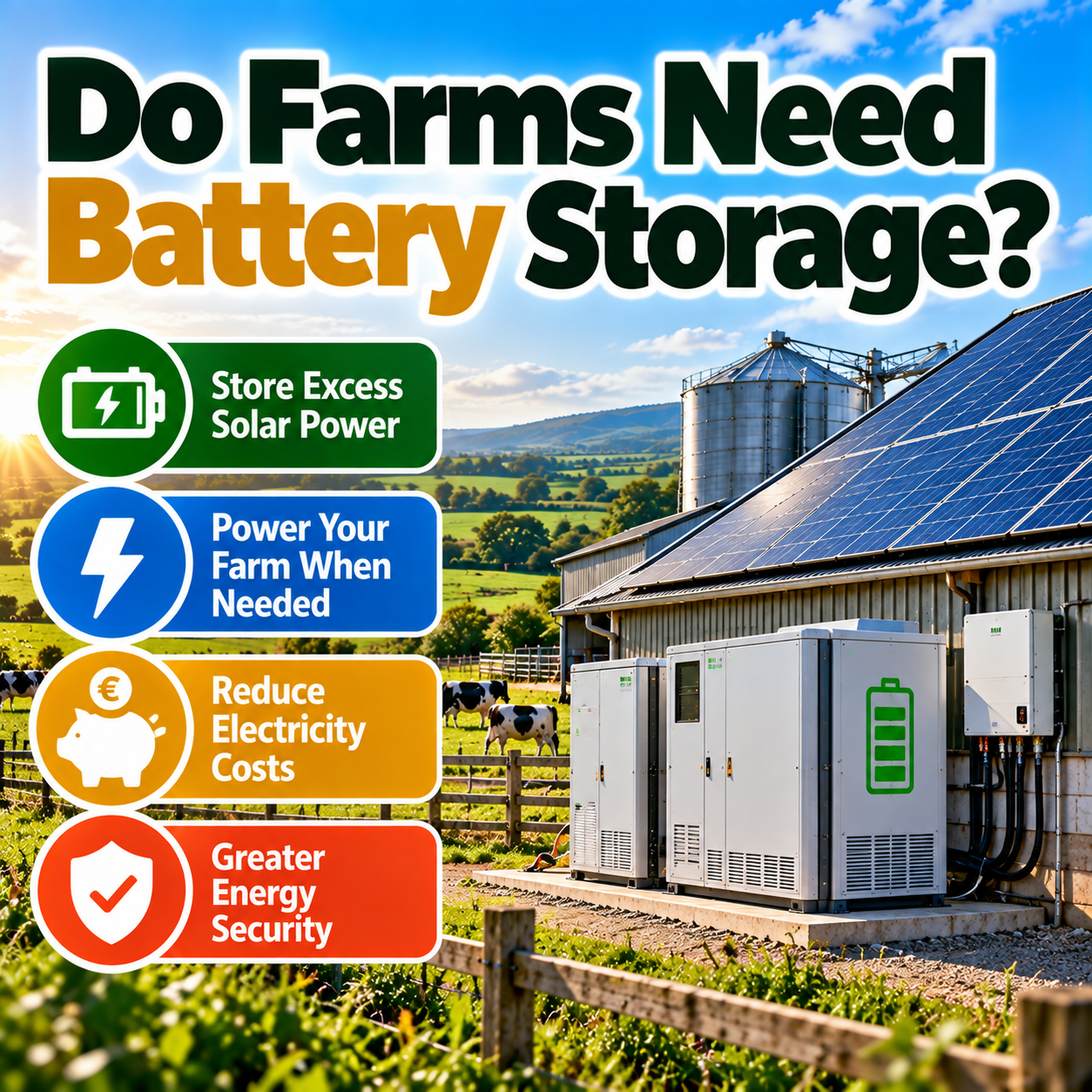
No. An agricultural PV system does not automatically need a battery.
Where substantial electricity is consumed while the panels are generating, much of that electricity may be used directly without being stored first.
Battery storage becomes more interesting when electricity production and demand occur at different times.
A battery can potentially:
- Store surplus daytime electricity
- Supply energy later in the day
- Increase self-consumption
- Support peak-demand management in suitable systems
- Provide backup electricity where the system has been specifically designed for backup operation
However, adding a battery increases the initial investment. Its financial value should therefore be modelled separately rather than assuming every installation needs storage.
For more information about capacity, battery chemistry and backup operation, read our Home Battery Storage Systems guide.
Powering Irrigation and Water Pumps
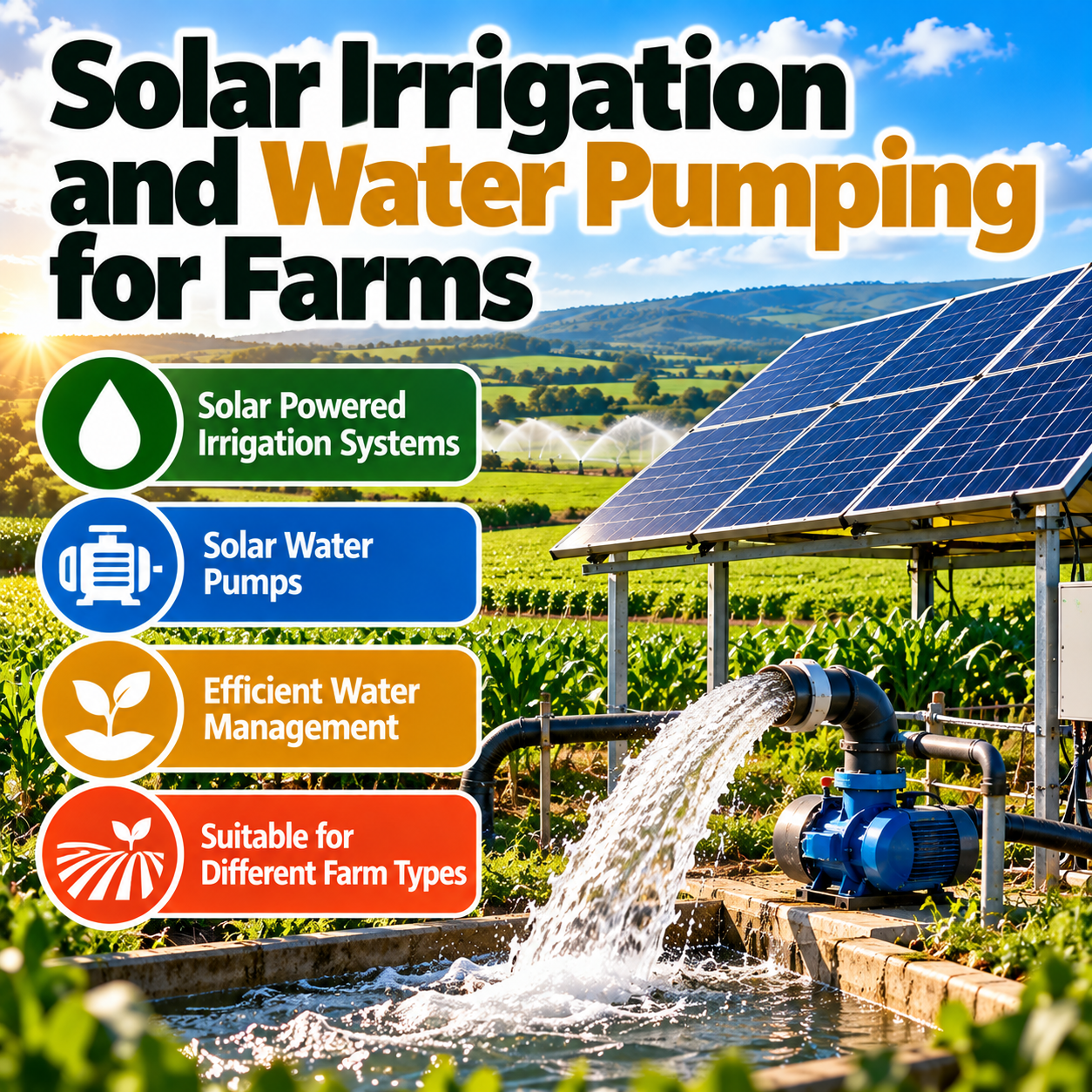
Water pumping can be an excellent application for agricultural PV because pumping demand can coincide with periods of strong sunshine.
Solar-powered pumping systems can be used for applications such as:
- Crop irrigation
- Livestock watering
- Moving water between storage tanks
- Remote water supplies
- Off-grid agricultural applications
A system may operate directly from photovoltaic generation, use a controller with water storage, incorporate battery storage or combine renewable generation with another electricity source.
Correct pump sizing is essential. Required flow rate, pumping height, pipe losses, daily water requirement and available energy all need to be considered.
Solar Panels for Dairy Farms
Dairy farms are particularly interesting candidates for renewable electricity because they can have substantial and predictable electrical loads.
Milking equipment, milk cooling, water heating and other systems can consume significant amounts of electricity.
The strongest financial case generally occurs when a high proportion of generated electricity can be consumed directly on site.
That makes the daily load profile extremely important. Two dairy farms with similar annual electricity consumption can require different systems if they use electricity at different times.
Poultry and Livestock Buildings
Poultry and livestock buildings can also have significant electricity requirements from ventilation, feeding systems, lighting, heating controls, pumps and other equipment.
Large agricultural roofs can provide substantial installation space, but the building should be surveyed before installation.
Dust, moisture, ventilation conditions and the electrical environment also need to be considered when positioning inverters and other equipment.
Funding and Incentives
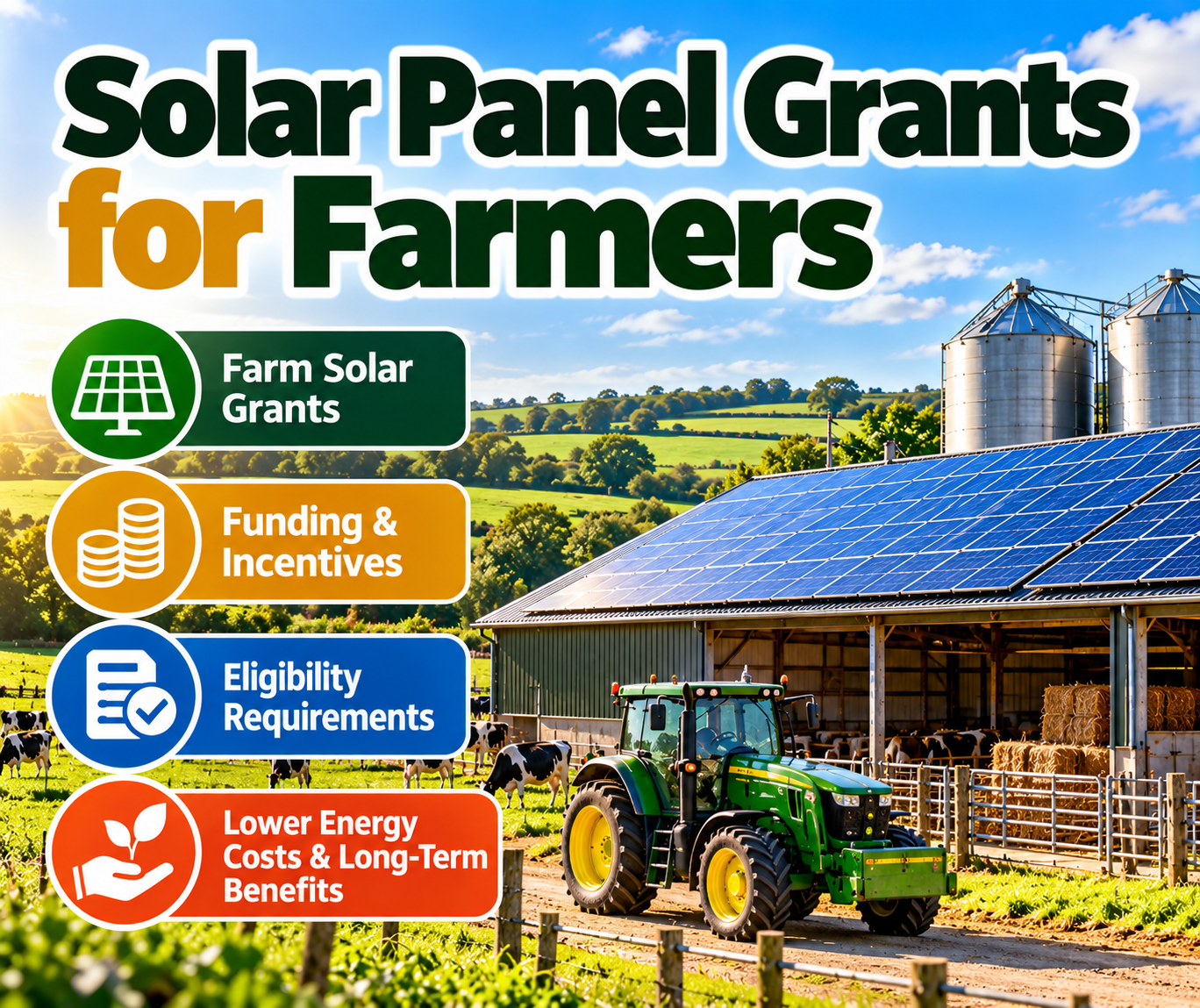
Renewable-energy grants and incentives can substantially affect the economics of a project, but schemes vary by country and can change over time.
Farmers should check the current rules before ordering equipment or beginning installation because some schemes require approval before work starts.
For independent guidance, farmers can check current support and technical information directly from the Sustainable Energy Authority of Ireland (SEAI) and read agricultural energy guidance from Teagasc.
Current Support in Ireland
Irish farmers may also encounter agricultural support schemes with their own conditions, investment ceilings and eligible technologies. Funding routes should be compared carefully because eligibility and the ability to combine supports can depend on the project.
Planning the Installation
A successful project should begin with energy data rather than equipment.
- Review electricity consumption. Gather at least a full year of bills and, where possible, detailed interval data.
- Identify daytime loads. Establish how much electricity is consumed while the panels would be generating.
- Survey roofs and land. Check structural condition, orientation, shading and available area.
- Consider future demand. Allow for planned equipment, electrification, EVs or expansion.
- Model the system. Compare predicted generation against the actual consumption profile.
- Assess battery storage separately. Determine whether storing surplus energy provides sufficient benefit.
- Check grid requirements. Larger systems may require additional connection studies or approvals.
- Check grants before starting. Do not assume funding can be claimed retrospectively.
- Compare detailed quotations. Look beyond headline price and compare equipment, warranties and projected output.
What Matters When Comparing Equipment?
Photovoltaic modules are expected to remain in service for decades, so purchase price should not be the only consideration.
- Panel efficiency: especially important where roof area is limited.
- Power rating: the rated output of each module.
- Product warranty: protection against manufacturing defects.
- Performance warranty: expected output retention over time.
- Temperature performance: modules lose some output as cell temperature rises.
- Mechanical loading: important where wind and snow loads are significant.
- Manufacturer support: a long warranty is only useful if it can realistically be honoured.
- Installer experience: agricultural installations present different challenges from standard residential rooftops.
If you are still comparing equipment before speaking to installers, our Solar Panel Installation Guide 2026 explains the major components of a complete PV installation.
Making the Investment Stack Up
The best solar panels for farms can make strong practical and financial sense where there is suitable installation space and significant electricity consumption during generating hours.
The key is matching the array to actual electricity demand rather than simply installing the largest system that will fit.
A well-designed project should consider:
- Actual electricity consumption
- Generation profile
- Self-consumption
- Export value
- Installation cost
- Available grants
- Maintenance
- Equipment lifespan
- Future electricity demand
Battery storage can improve the usefulness of surplus generation in some situations, but it should not automatically be included if most production can already be consumed during the day.
Frequently Asked Questions
Which panel technology is most suitable for agricultural use?
High-efficiency monocrystalline panels are a strong option for many agricultural properties, particularly where roof space is limited. Bifacial and ground-mounted systems can also be attractive where the site allows them. The right choice depends on energy use, available space and project design.
How is the correct system size calculated?
There is no standard number of panels. System size should be calculated from electricity consumption, daytime demand, panel wattage, available space, local solar resource and export arrangements.
Can PV provide all of an agricultural property’s electricity?
A sufficiently large array can generate a substantial proportion of annual electricity, but output varies throughout the day and year. Grid electricity, batteries or another energy source may still be required when generation is insufficient.
Is a battery essential?
No. Properties with substantial daytime electricity demand may consume generated electricity directly. Storage becomes more useful when significant surplus electricity would otherwise be exported and energy is required later.
Can livestock graze underneath an array?
Yes, in appropriately designed agrivoltaic installations. Sheep grazing is one example, but panel height, electrical safety, fencing, animal welfare and maintenance access all need to be considered.
What financial support is available?
Grant availability depends on the country and current government programmes. In Ireland, farms are currently included among the sectors eligible for SEAI’s Non-Domestic Microgen Grant. Always check current scheme conditions before starting work.
Final Thoughts
The best solar panels for farms are not necessarily the panels with the highest wattage or the highest price. The best system is one designed around actual electricity demand, available space and long-term plans.
Large roofs, open land and significant daytime electricity consumption can give agricultural businesses advantages that many residential properties simply do not have.
Start with energy data, assess the available roof or land, compare several properly specified quotations and investigate grants before committing to the project.
Continue Your Renewable Energy Research
Planning a complete installation? Read our Solar Panel Installation Guide 2026 or learn more about Home Battery Storage Systems.