How Long Will a 5kWh Battery Power a House?
Realistic running times, appliance examples, overnight use and a straightforward battery backup calculator.
How long will a 5kWh battery power a house? It depends mainly on how much electricity the home uses while the battery is supplying it. A household drawing an average of 500 watts might get around eight hours from a 5kWh battery under our conservative example. At 1,000 watts, expect about four hours instead.
A small battery can be very useful for keeping essential appliances working, but a whole house with electric heating, cooking or vehicle charging can drain it quickly. This guide shows how to calculate a more realistic answer before you buy.
Quick Answer
Using a conservative estimate of 4.1kWh delivered to appliances from a nominal 5kWh system, expect about 20.5 hours at 200W, 8.2 hours at 500W or 4.1 hours at 1,000W of continuous average demand.
Actual usable energy varies with battery specifications, reserve settings, inverter losses, temperature and battery age. Backup operation also requires an inverter and installation designed to supply power during an outage.
1. What Does a 5kWh Home Battery Actually Mean?
A 5 kilowatt-hour (kWh) battery nominally stores 5,000 watt-hours of electrical energy. That is different from 5 kilowatts (kW), which describes a rate of power delivery. A battery rated at 5kWh might be paired with a 3kW or 5kW inverter; the inverter’s continuous and surge ratings determine which appliances can operate simultaneously.
Think of capacity as the size of a fuel tank and power as the rate at which you use the fuel. Running a 100W load for ten hours consumes 1kWh. Running a 2,000W heater for one hour consumes 2kWh.
Not all of the nominal 5kWh reaches your sockets. Manufacturers may specify a usable capacity below nominal capacity, and conversion from battery DC to household AC uses some energy. Some systems also reserve a percentage of charge for battery protection or emergency backup.
2. What Appliances Can a 5kWh Battery Run?
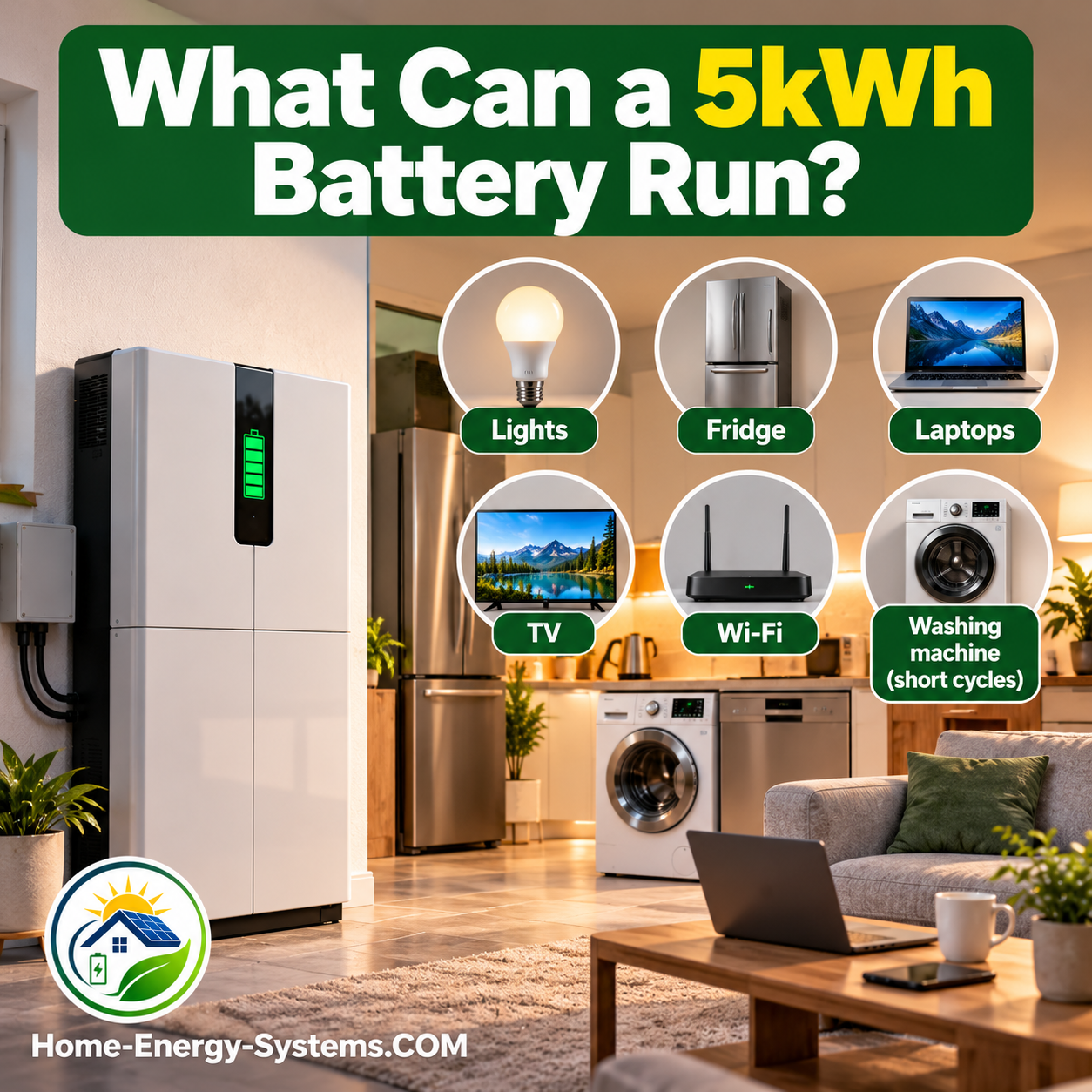
A 5kWh battery can typically support several modest loads at once if the inverter is adequately sized. The crucial figure is the combined average power, not just how many devices are plugged in.
- LED lights: A handful may use only 30–80W together.
- Wi-Fi router: Often around 8–20W, depending on equipment.
- Modern fridge/freezer: Power cycles on and off, so daily energy use matters more than the running wattage printed on the label.
- Television and laptop: Often manageable for several hours.
- Washing machine: Heating water can create a substantial short-term load, even if the rest of the cycle is light.
- Electric heating, kettles and ovens: High demand can shorten runtime dramatically or exceed the inverter output.
For example, a fridge averaging 50W over time, a 15W router, 45W of lighting and a 90W television add up to roughly 200W. With 4.1kWh delivered, that is around 20.5 hours if those averages remain representative.
3. 5kWh Battery Backup Time Calculator
The basic calculation is straightforward:
Battery runtime formula
Hours = usable energy delivered (Wh) ÷ average demand (W)
Example: 4,100Wh ÷ 500W = 8.2 hours.
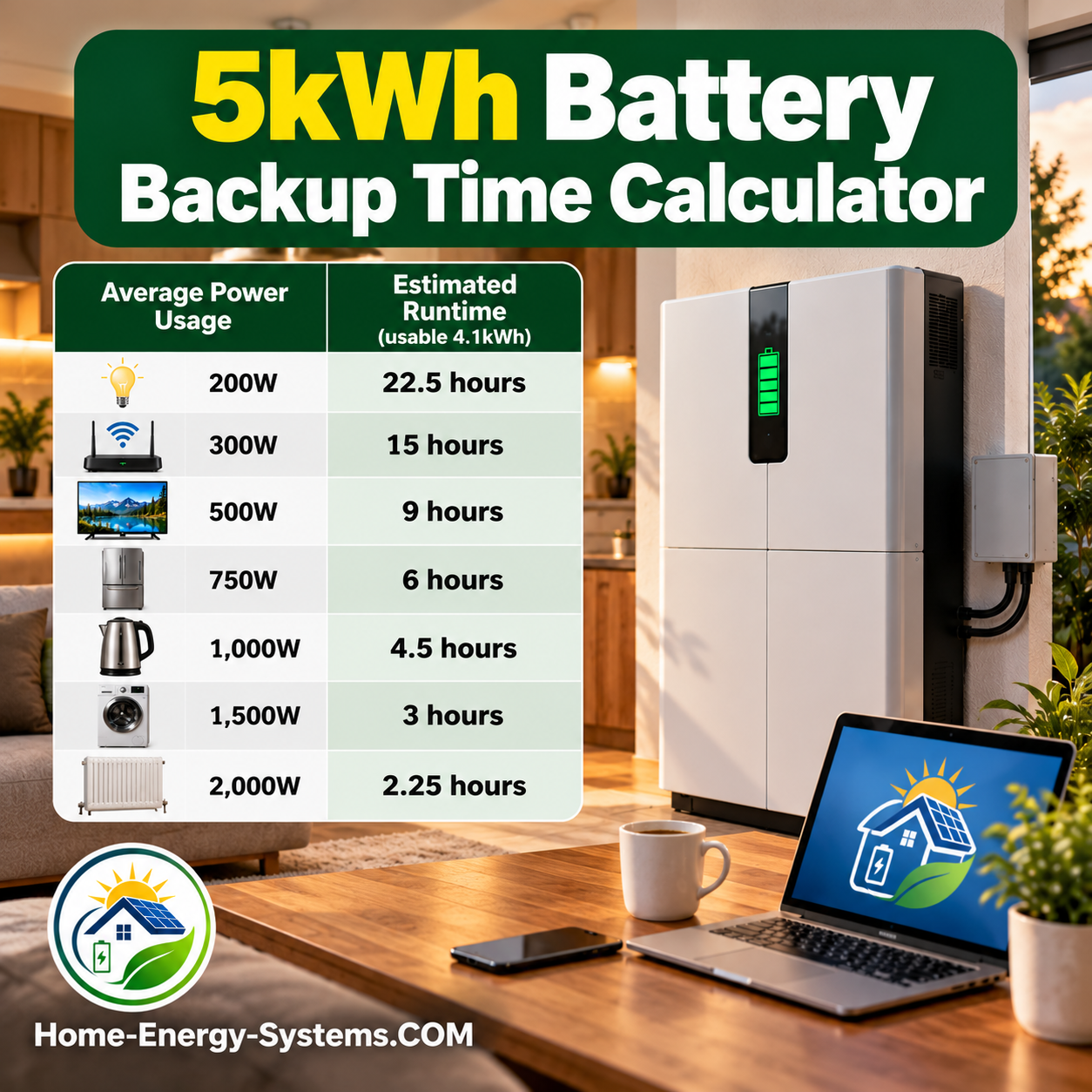
For consistency, the following table assumes a nominal 5kWh battery delivering approximately 4.1kWh of usable AC energy. This is an illustrative conservative allowance, not a specification for every battery.
| Average household demand | Estimated battery runtime |
|---|---|
| 200W | 20.5 hours |
| 300W | 13.7 hours |
| 500W | 8.2 hours |
| 750W | 5.5 hours |
| 1,000W | 4.1 hours |
| 1,500W | 2.7 hours |
| 2,000W | 2.1 hours |
To estimate your own demand, add up the energy consumption of the appliances you plan to use. For devices that cycle on and off, use measured average consumption over several hours instead of simply adding nameplate wattages.
Note about the illustration above: The image was created with earlier, more optimistic figures. The table here is the corrected reference for our 4.1kWh example.
For an independent explanation of appliance energy use, see the US Department of Energy’s appliance energy guide.
4. How Long Will a 5kWh Battery Last Overnight?
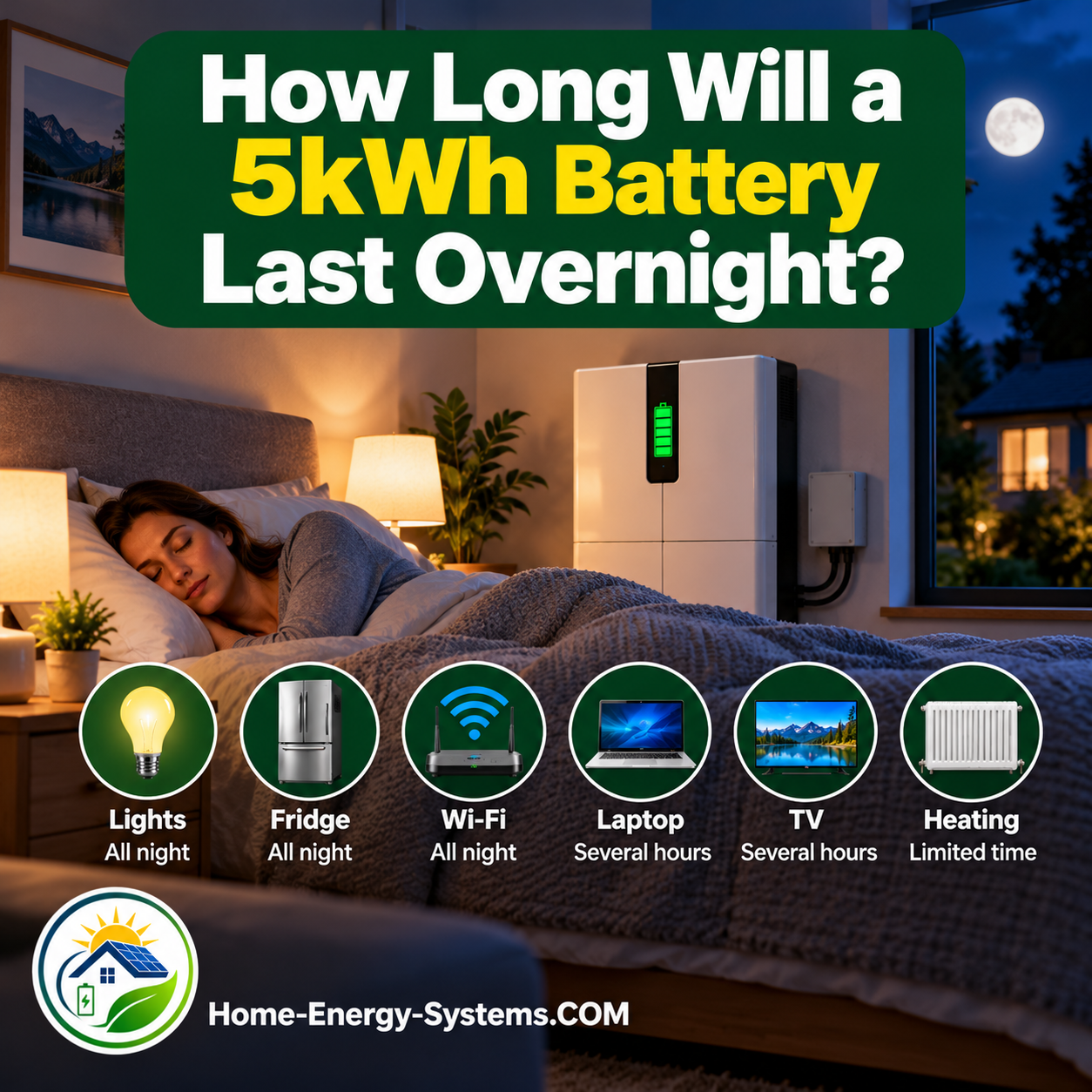
Suppose you want battery power from 10 p.m. to 7 a.m.—nine hours. With 4.1kWh available, your average overnight demand would need to stay at or below roughly 455W to cover the full period.
A modest overnight load might include a fridge/freezer, router, security equipment, standby appliances and occasional lights. Many households could keep those essentials running overnight. But an immersion heater, electric space heater or tumble dryer could use much of the available energy in a short time.
How to check your overnight demand
- Look at your smart meter or energy monitoring app for electricity used overnight.
- Exclude periods when an EV, electric heating or other large appliance was running if you plan to avoid those loads on battery power.
- Compare the overnight total in kWh with the battery’s actual usable capacity.
- Allow a safety margin for colder nights and unexpected appliance use.
If you use 6kWh overnight, a 5kWh nominal battery alone will not cover that demand, even when fully charged.
5. Can a 5kWh Battery Power a House During an Outage?
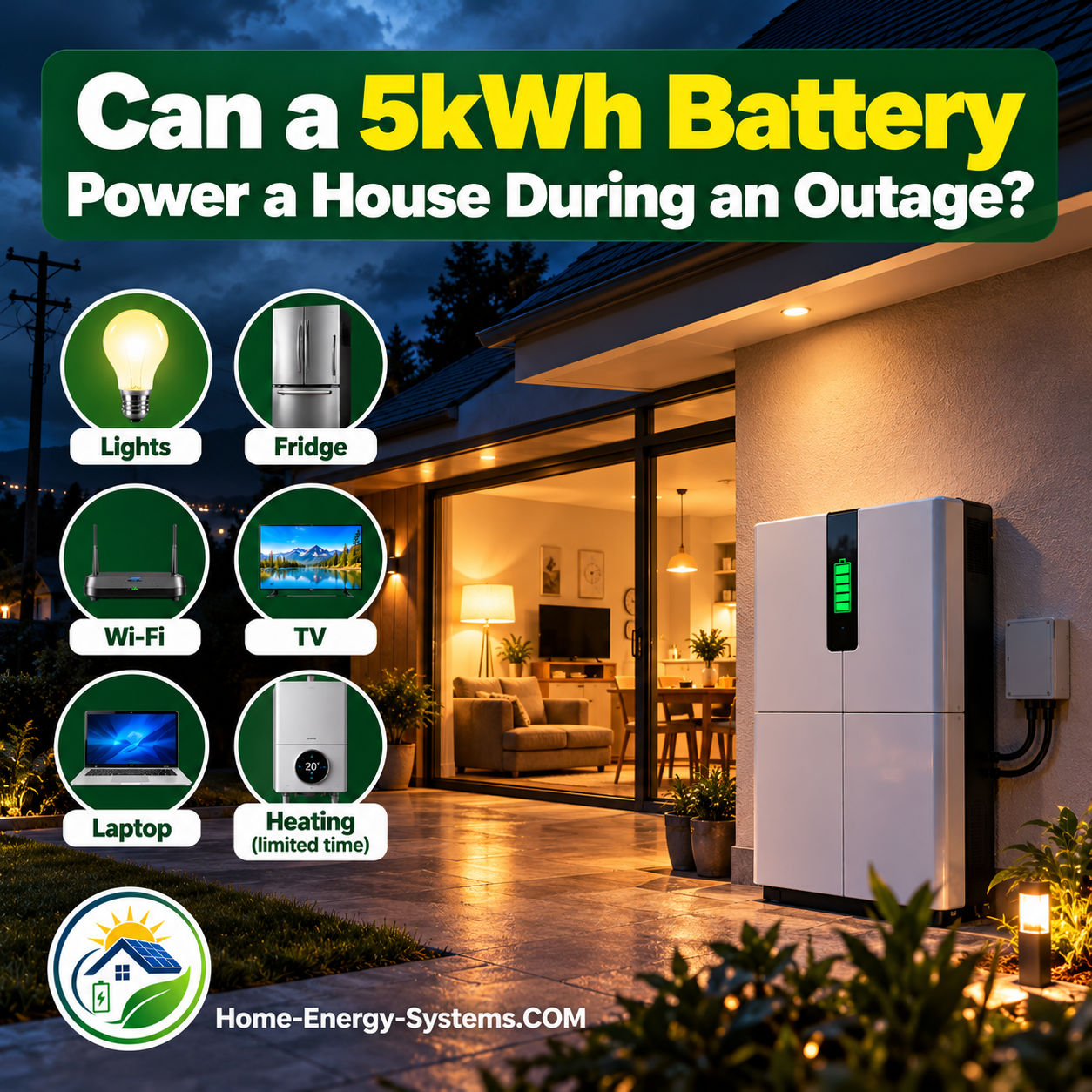
Yes, a 5kWh battery can power selected household circuits during a grid outage—but only if the system has suitable backup capability. Some grid-tied battery systems shut down when the mains fails unless they have an approved emergency power supply (EPS), backup gateway or islanding arrangement.
A practical essential-loads setup might keep refrigeration, internet, selected lighting and charging sockets available. A whole-home backup design must account for the inverter’s output rating and any large starting loads.
Do not assume that solar panels will keep charging the battery during a blackout. That depends on the inverter, system wiring and backup configuration. Have backup circuits and changeover arrangements installed by a qualified electrician in accordance with local rules.
6. Can Solar Panels Recharge a 5kWh Battery?
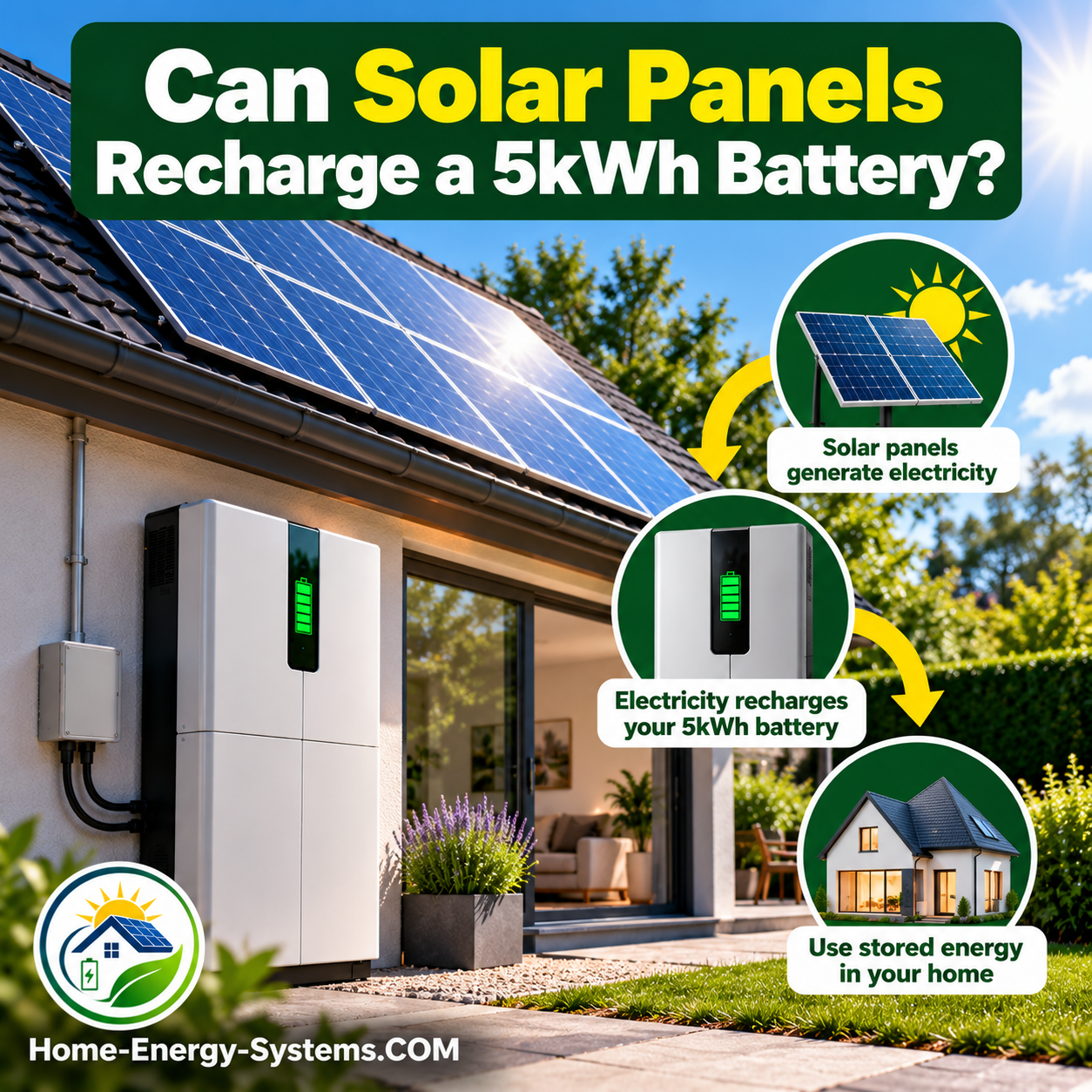
Yes. A compatible solar-and-battery system can store surplus solar electricity during the day and supply it later. The recharge time depends on solar production, household demand, battery charging limits and conversion losses.
For example, if your panels are generating 2kW and the house is consuming 500W, around 1.5kW may be available for battery charging before losses and system limits. Replenishing roughly 4kWh could then take about three hours in favourable conditions, but cloud, shading and changing household loads can extend that substantially.
Solar generation varies by season and location. A cloudy winter day may not produce enough surplus to refill the battery, while a sunny summer day could do so much more easily. A battery can also be charged from the grid if its inverter and tariff setup support that feature.
Learn more in our home battery storage systems guide.
7. Is a 5kWh or 10kWh Home Battery Better?
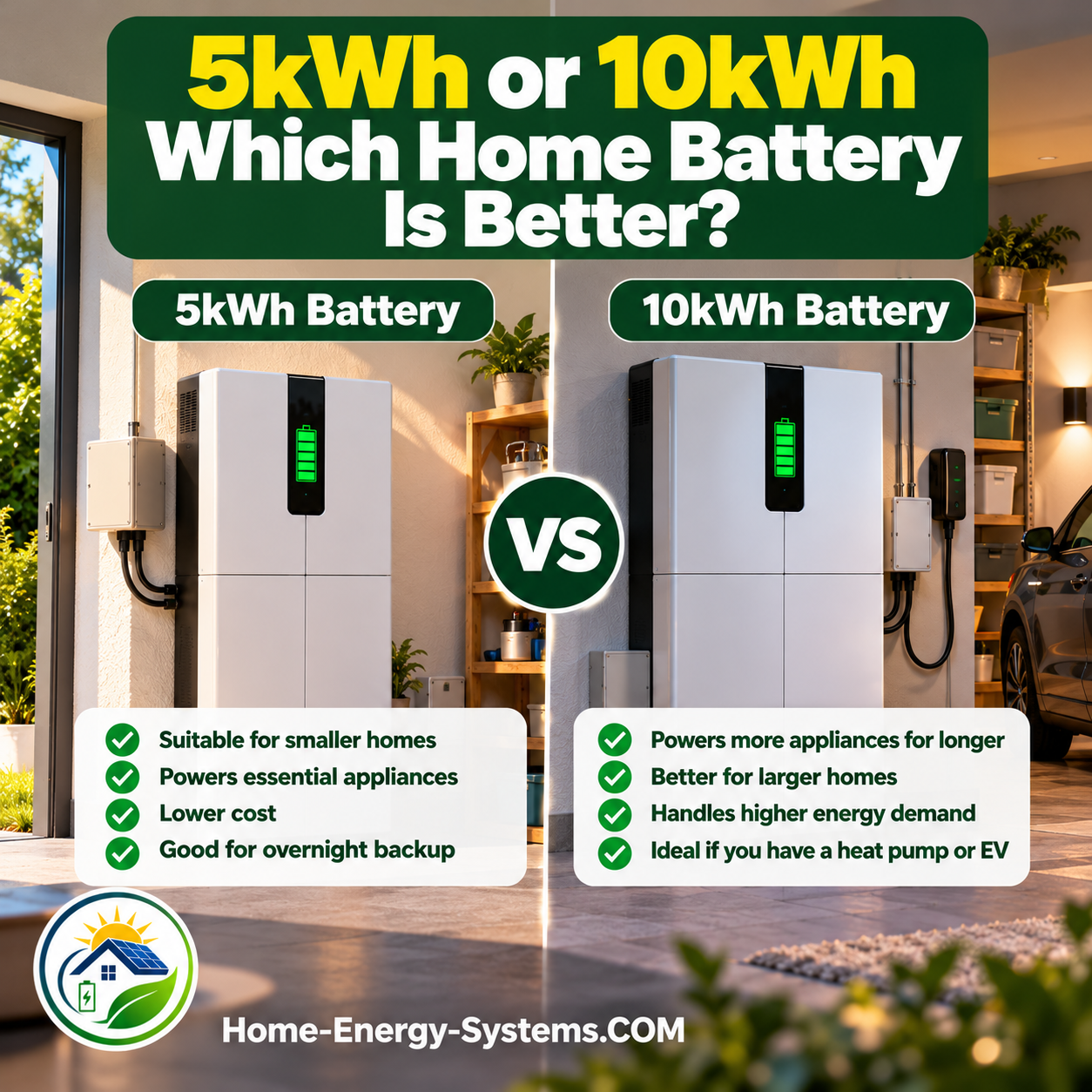
A 10kWh battery nominally stores twice as much energy as a 5kWh battery. That does not automatically make it twice as valuable: purchase cost, inverter compatibility, charging opportunities and how much stored energy you actually use all matter.
| Consideration | 5kWh battery | 10kWh battery |
|---|---|---|
| Stored energy | 5kWh nominal | 10kWh nominal |
| Best fit | Lower overnight use and essential loads | Higher daily use or longer backup |
| Space and cost | Usually less of both | Usually more of both |
| Output power | Depends on inverter and battery | Also depends on inverter and battery |
For a deeper look at the larger option, see how long a 10kWh battery will power a house. Compare the two using your actual overnight kWh consumption rather than floor area alone.
8. Is a 5kWh Home Battery Worth Buying in 2026?
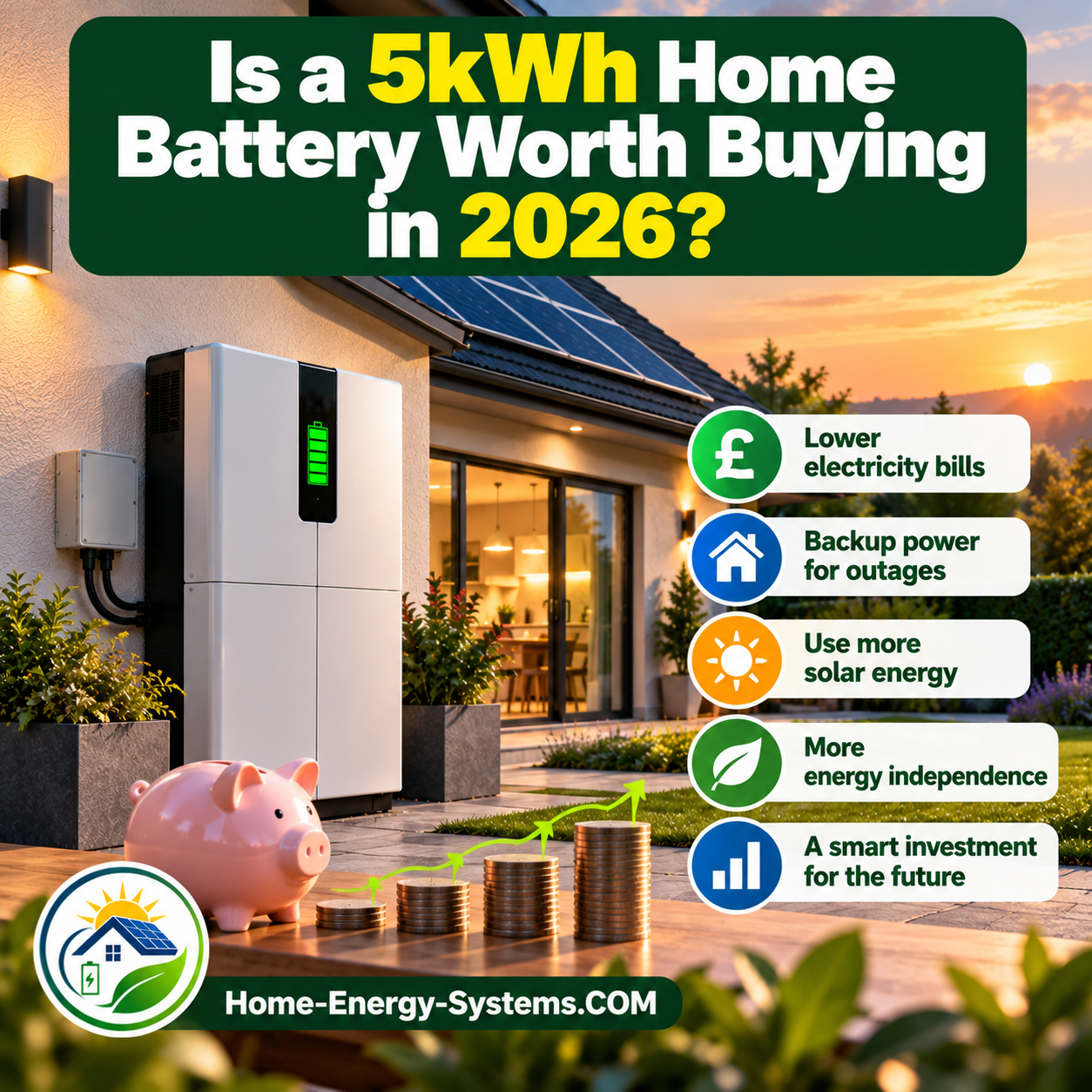
A 5kWh home battery can make sense if you regularly have spare solar electricity to store, pay much more for electricity at peak times, or value keeping essential circuits powered during outages. However, it is not guaranteed to pay for itself quickly.
For example, shifting 4kWh of electricity per day from a cheaper tariff to an expensive period would shift roughly 1,460kWh a year if achieved every day. Multiply the actual net saving per shifted kWh by that amount, then account for battery losses, degradation, standing charges that do not change, and the installed cost.
Where export payments are generous, storing surplus solar may save less than expected because exported electricity already has value. Tariffs, tax rules and export arrangements differ across Ireland, the UK, Europe, North America, Australia and New Zealand.
Questions to ask before buying
- What is the manufacturer’s usable capacity and warranty?
- How much electricity do you actually use after sunset?
- Can the inverter charge from solar and/or cheap overnight grid electricity?
- Does it support the backup circuits you want?
- What is the total installed cost, including electrician, gateway and accessories?
BLUETTI UK
Browse portable and home energy products. Confirm whether a model is intended for fixed home installation and approved locally.
Explore BLUETTI UKBLUETTI US
Compare capacity, continuous output, recharge options and warranty before choosing a system.
Explore BLUETTI USThese supplier links are for further research, not a claim that a particular listed product is a compatible 5kWh grid-connected home battery.
Frequently Asked Questions
How long can a 5kWh battery run a fridge?
It depends on the fridge’s measured daily energy consumption and what else the battery supplies. A fridge averaging 50W over time would theoretically consume 1.2kWh in 24 hours, but compressor startup and other loads must be considered.
Can a 5kWh battery run a house for 24 hours?
Only if average electricity demand is low enough. With 4.1kWh delivered, the average load would need to be about 171W or less over 24 hours.
Will a 5kWh battery run a heat pump?
Possibly for a limited period if the inverter can handle the heat pump’s electrical demand and startup characteristics. Heating energy use varies greatly, so check actual consumption rather than assuming a full night of operation.
Does a 5kWh battery work without solar panels?
Yes, some compatible systems can charge from grid electricity and discharge later. Check your inverter, electricity tariff and local installation rules.
How much of a 5kWh battery is actually usable?
There is no universal figure. Consult the manufacturer’s usable-capacity rating, reserve settings and inverter efficiency. This guide uses 4.1kWh delivered to appliances as a conservative example.
Does a home battery automatically work during a power cut?
No. Backup requires suitable inverter hardware, safe isolation from the grid and properly configured circuits.
Final Thoughts: How Long Will a 5kWh Battery Power a House?
For a household that prioritises essential appliances, a 5kWh battery can provide useful evening or emergency power. In our 4.1kWh delivered-energy example, a 500W average load lasts around eight hours; a 1,000W load lasts about four.
The best decision starts with measured household energy use, realistic expectations and a properly specified inverter. Compare backup capability and usable capacity—not just the headline battery size.
Plan Your Home Battery System
Explore our battery storage guides and compare how 5kWh and 10kWh systems fit different household needs.
Editorial note: Runtime examples are illustrative estimates, not guaranteed product performance. Verify all specifications and local electrical requirements with the manufacturer and a qualified installer.