2026 BOATING POWER BUYING GUIDE
Best Portable Power Stations for Boating 2026
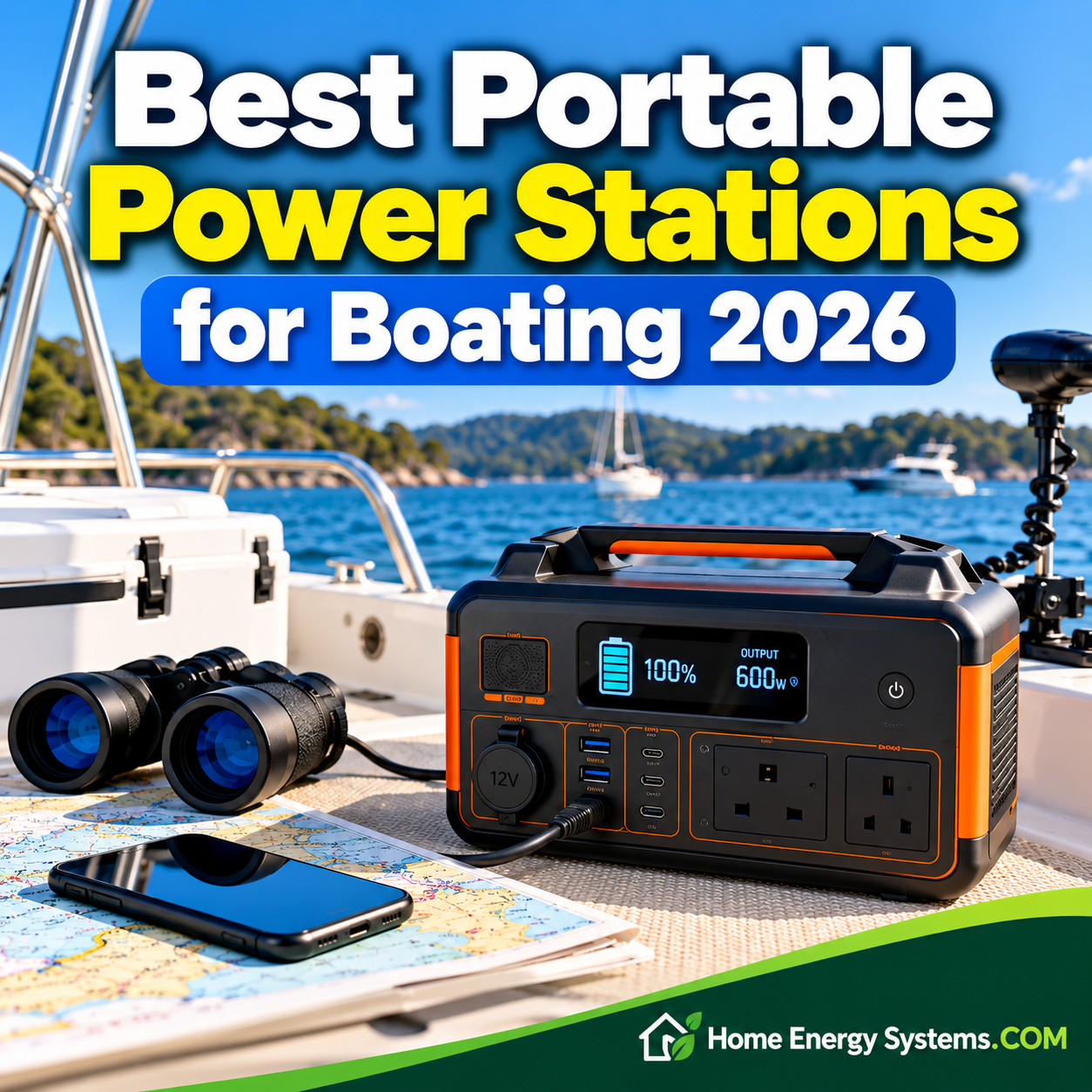
The best portable power stations for boating provide convenient electricity for fishing trips, weekend cruises and time aboard a yacht. They can charge phones, run a small cooler, power a laptop and keep cabin accessories working without running an engine just to charge devices.
But boats introduce special considerations: salt spray, damp storage spaces, limited room and electrical safety. This guide explains how to choose the right size, what to power and when a dedicated marine system is the better choice.
1. Why Use a Portable Power Station on a Boat?
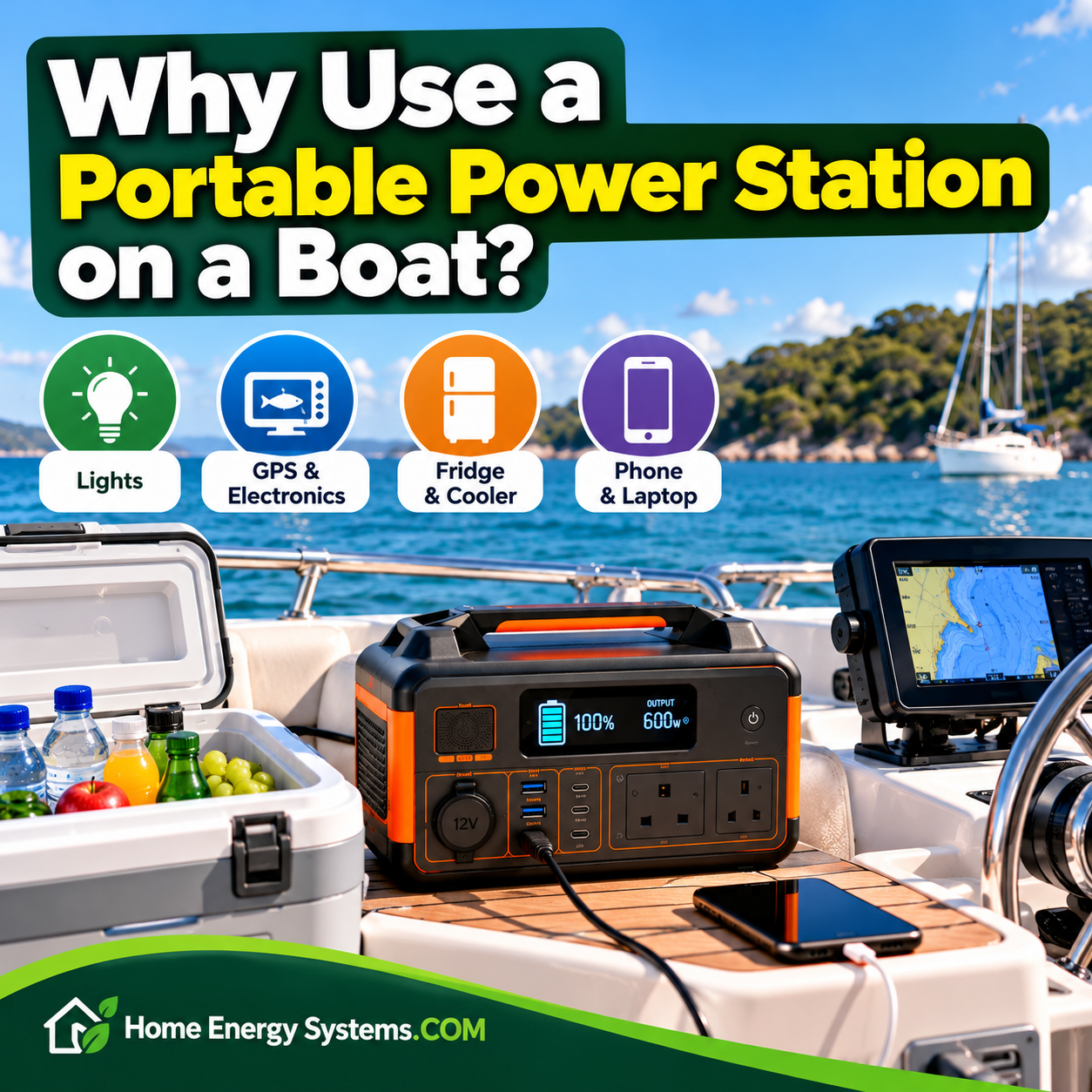
A portable power station combines a rechargeable battery, inverter and several outlets in one unit. Unlike a petrol generator, it produces no exhaust while operating and is quiet enough for small cabins. It is useful for recreational accessories, cameras, USB navigation backups, laptops and some compact fridges.
Its greatest advantage is flexibility: you can recharge it ashore, carry it aboard and take it home again. The drawback is that most consumer units are designed for dry environments, not open decks or exposed marine installations.
Do not use one as a casual replacement for a boat’s essential bilge pumping, navigation, emergency communications or engine-starting electrical systems.
2. Best Portable Power Stations for Boating: Models to Compare
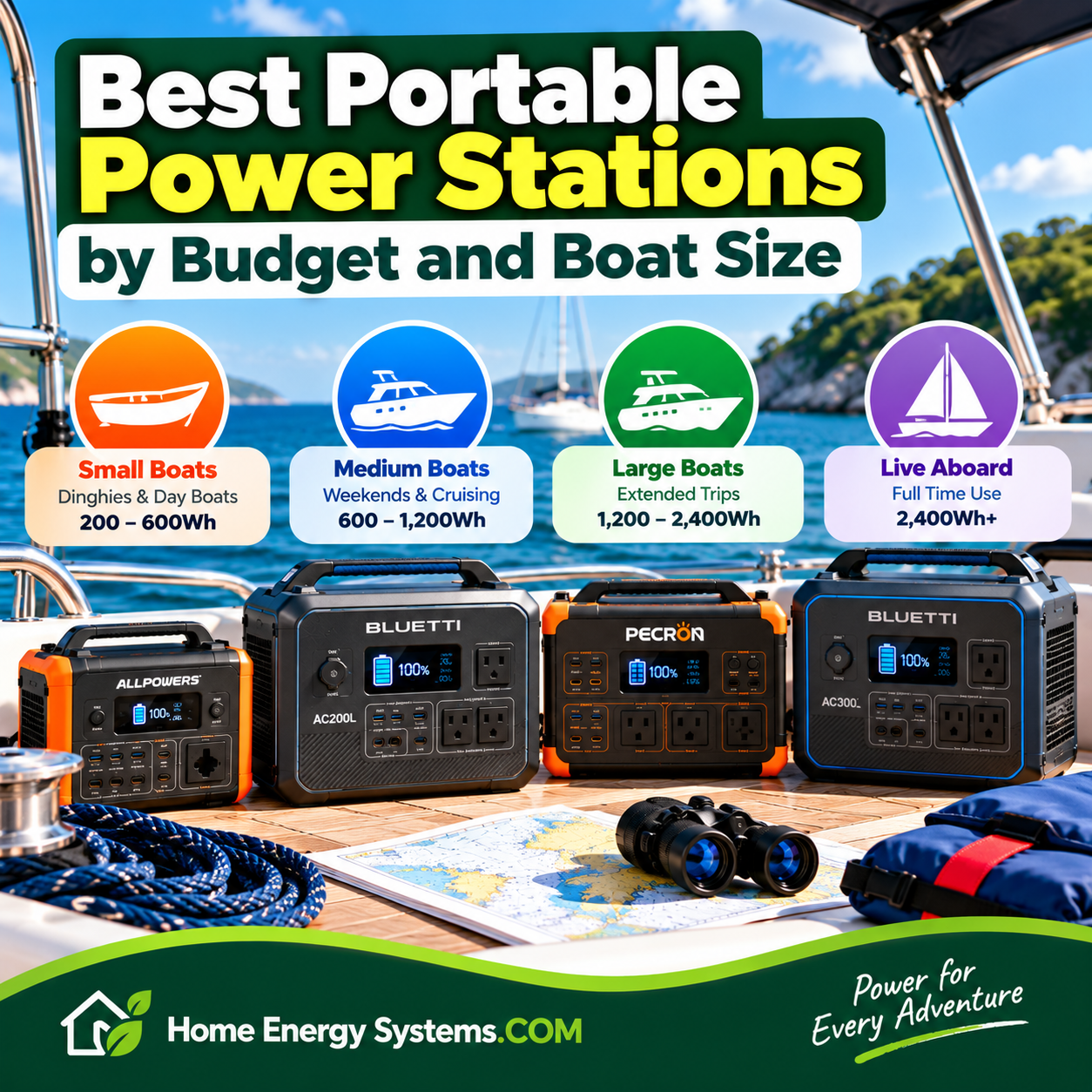
Our shortlist of the best portable power stations for boating contains practical comparison candidates, not claims of hands-on marine testing. Their published specifications make them useful reference points for buyers.
| Model | Capacity | Rated AC output | Best suited to |
|---|---|---|---|
| BLUETTI AC70 | 768Wh | 1,000W | Weekend electronics, laptops and a small cooler |
| PECRON E1000LFP | 1,024Wh | 1,800W | Longer trips and higher-power accessories |
| Smaller 250–500Wh LiFePO4 unit | Varies | Varies | Day trips, phones, lights and cameras |
| Larger 2,000Wh-class unit | Varies | Varies | Extended leisure loads where space and weight permit |
BLUETTI AC70: a manageable mid-size option
With a 768Wh LiFePO4 battery, 1,000W rated inverter, up to 500W solar input and a weight of about 10.2kg, the AC70 offers a balance of portability and useful output. Its 12V car socket is rated at 10A, so check the requirements of any DC appliance before connecting it. See the manufacturer’s AC70 specifications.
Shop BLUETTI in your region:
PECRON E1000LFP: extra battery capacity
The E1000LFP lists 1,024Wh of LiFePO4 storage and a rated 1,800W pure sine wave inverter, with up to 600W solar input. At around 13.5kg, it is heavier than the AC70 but offers more stored energy. Check that the specific regional model has the right AC voltage and outlets for your equipment. See the manufacturer’s specifications.
Explore PECRON optionsBuying note: Neither product should be assumed marine-rated. Check moisture protection, placement, warranty restrictions, availability and current regional pricing before purchasing.
3. Best Portable Power Stations for Boating: How Much Capacity Do You Need?
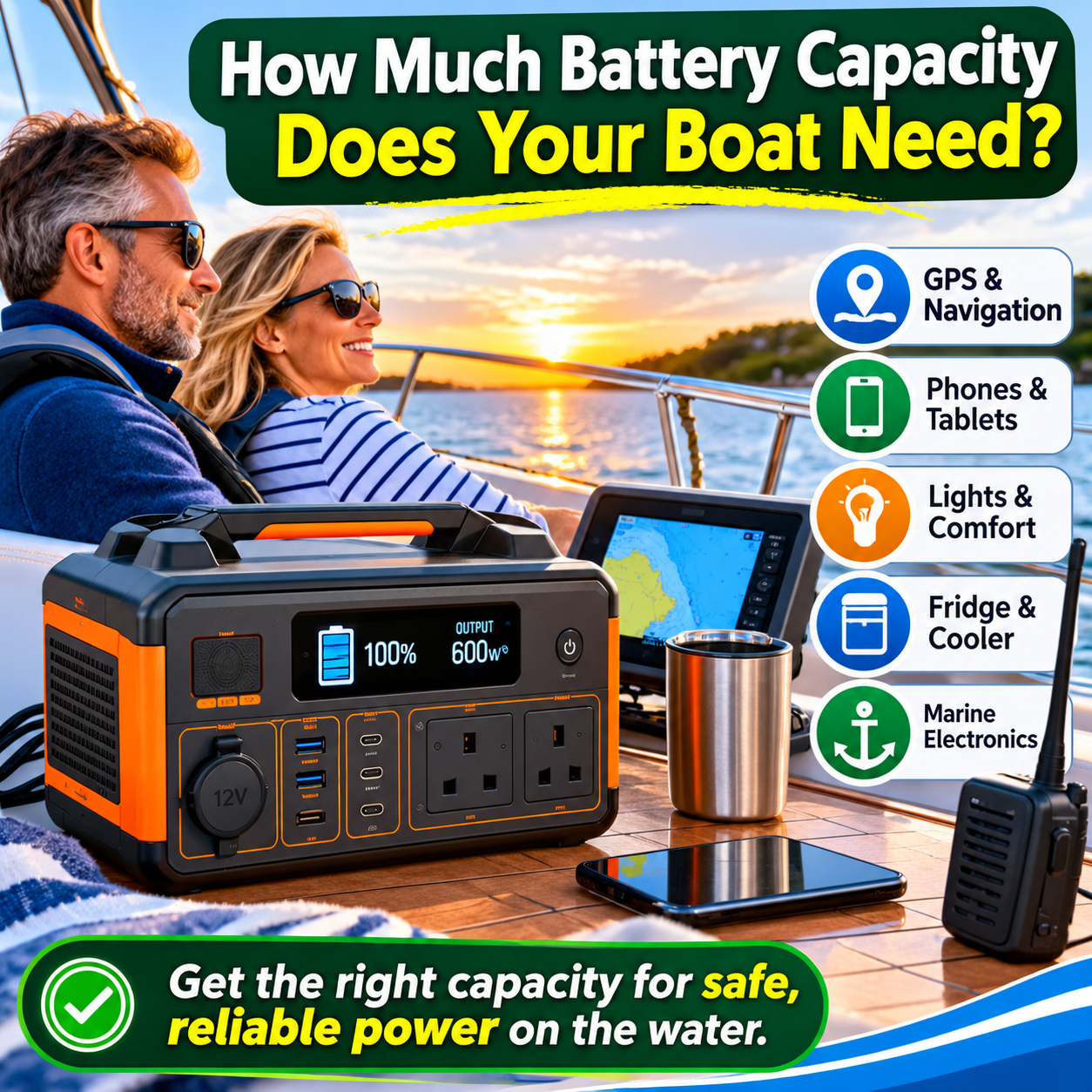
Battery capacity is measured in watt-hours (Wh). Multiply an appliance’s average wattage by its operating hours to estimate its energy use. For example, a 40W average load running for six hours uses 240Wh.
| Typical leisure load | Example energy use |
|---|---|
| LED lighting, 10W for 5 hours | 50Wh |
| Laptop, 50W for 3 hours | 150Wh |
| Cooler averaging 30W for 8 hours | 240Wh |
| Phones and accessories | 40Wh |
| Total example | 480Wh |
Allow for inverter losses, idle consumption and a reserve. If your planned loads need 480Wh, a 700–800Wh station may be more comfortable than a 500Wh unit. Actual fridge consumption varies greatly with weather, thermostat settings and how often the lid opens.
4. LiFePO4 Batteries: Why They Make Sense for Portable Power
LiFePO4 (lithium iron phosphate) batteries are popular in newer power stations because they generally offer long cycle life and good thermal stability compared with some other lithium-ion chemistries. They are not risk-free, however: the electronics, wiring, charging controls and physical protection still matter.
Look for a battery management system, published operating temperature limits, a suitable warranty and clear instructions for storage and charging. Never charge a unit outside its permitted temperature range.
5. How to Charge a Portable Power Station While Boating
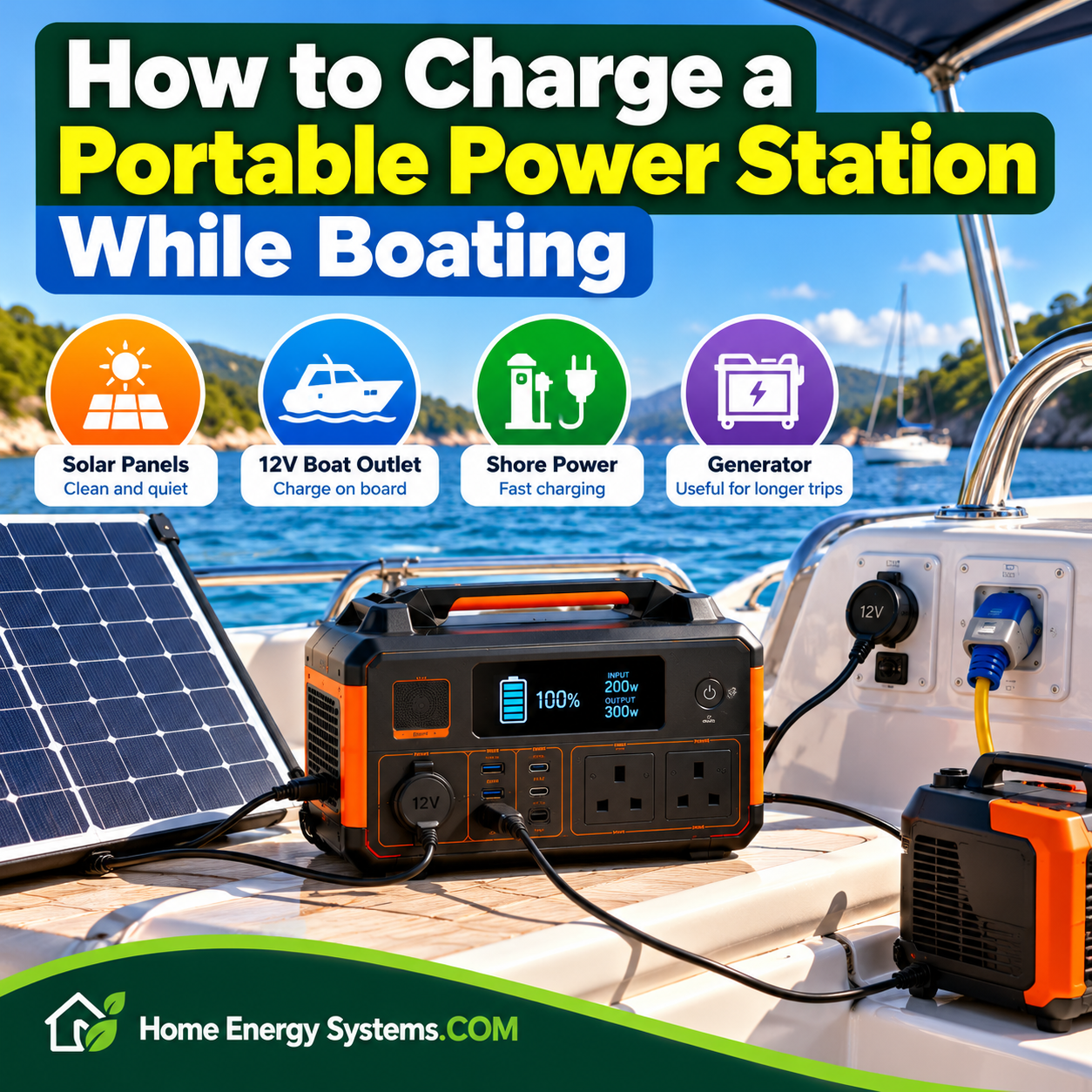
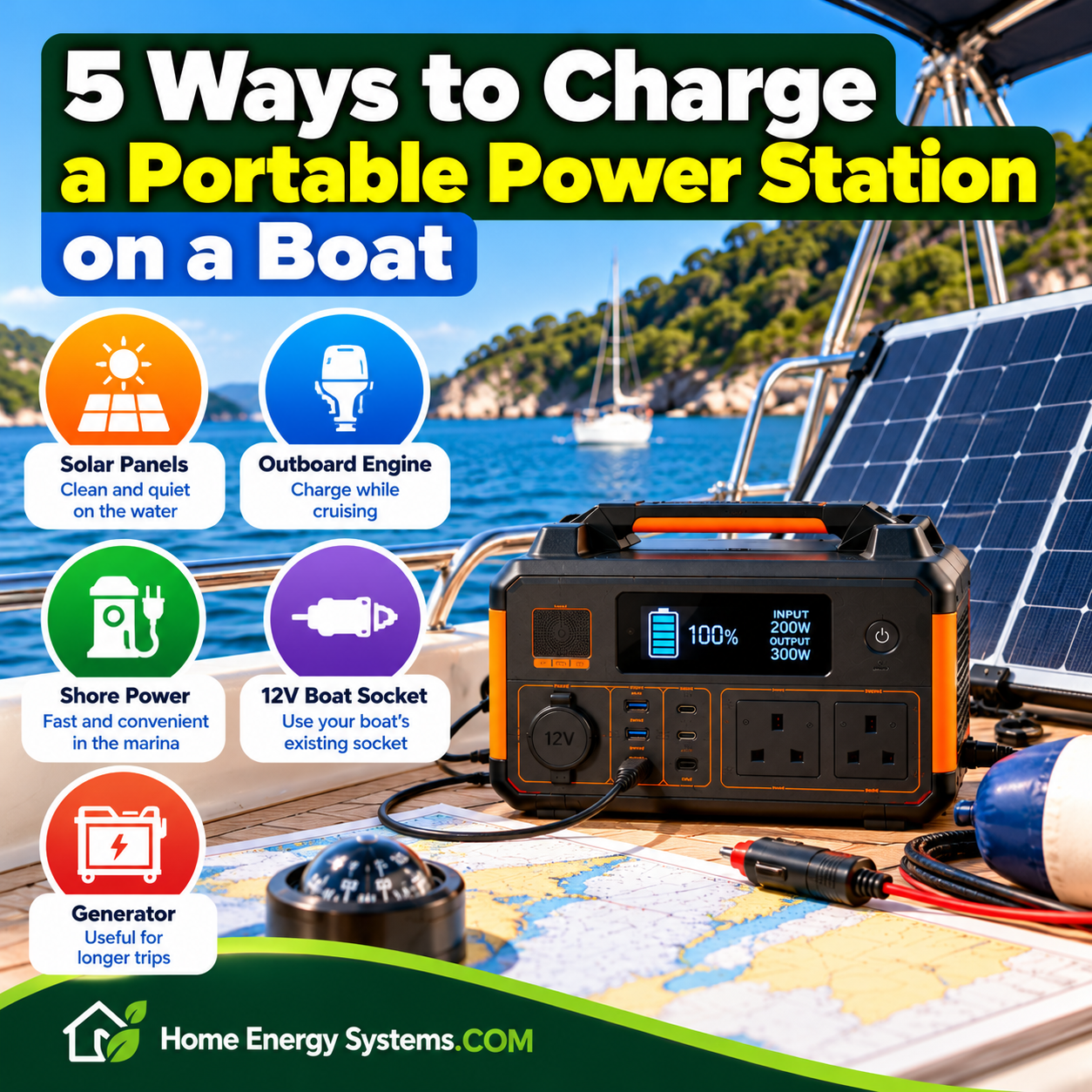
Shore charging: Fully charge before departure using a correctly protected outlet and the manufacturer’s supplied equipment. This is often the simplest option.
Solar charging: Compatible portable panels can top up the battery in good sunlight. Keep connectors and the power station dry, secure panels against wind, and verify the unit’s solar input voltage and current limits.
12V charging: Some stations accept a car-style 12V input. Charging may be slow, and connecting to a boat’s battery without proper electrical design could discharge the starting battery. Ask a qualified marine electrician before integrating with vessel wiring or alternator systems.
For broader off-grid comparisons, see our Home Energy Systems guides and supplier information.
6. What Can a Portable Power Station Run on a Boat?
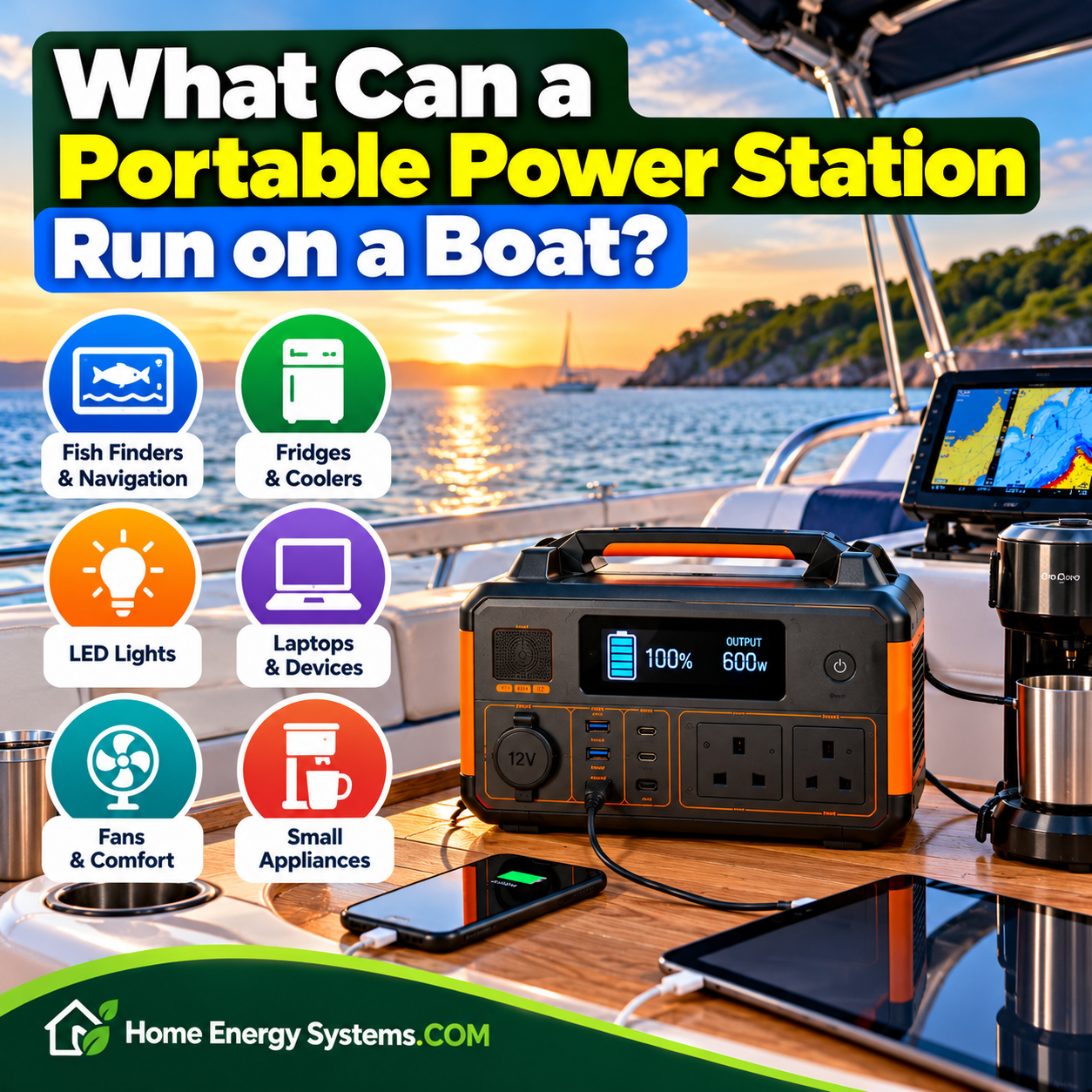
A rough runtime estimate is battery Wh × 0.85 ÷ appliance watts when using AC power. This assumes 85% usable efficiency and excludes some idle losses. Direct DC output can behave differently.
| Constant load | 768Wh example | 1,024Wh example |
|---|---|---|
| 20W | ~32.6 hours | ~43.5 hours |
| 50W | ~13.1 hours | ~17.4 hours |
| 100W | ~6.5 hours | ~8.7 hours |
| 300W | ~2.2 hours | ~2.9 hours |
These are illustrative calculations, not tested runtimes. A compressor cooler cycles on and off; its average draw is more useful than its peak wattage. Motors and pumps may need a much higher startup surge than their running power suggests.
For critical bilge pumps, navigation lights and communications, use an appropriately designed, independent marine electrical system rather than relying on a consumer portable unit.
7. Portable Power Station Safety Around Water and Fuel
Keep the unit dry, secured against rolling or falling, and away from direct sun, spray and excessive heat. Do not block its cooling vents or put it in an airtight box. Avoid improvised mains wiring and never backfeed the boat’s AC circuits through a household-style plug.
If you want permanent AC distribution, engine charging, emergency backup or connection to shore-power systems, consult a competent marine electrician. Follow the vessel’s applicable electrical standards and the manufacturer’s instructions.
8. How to Choose the Best Portable Power Stations for Boating
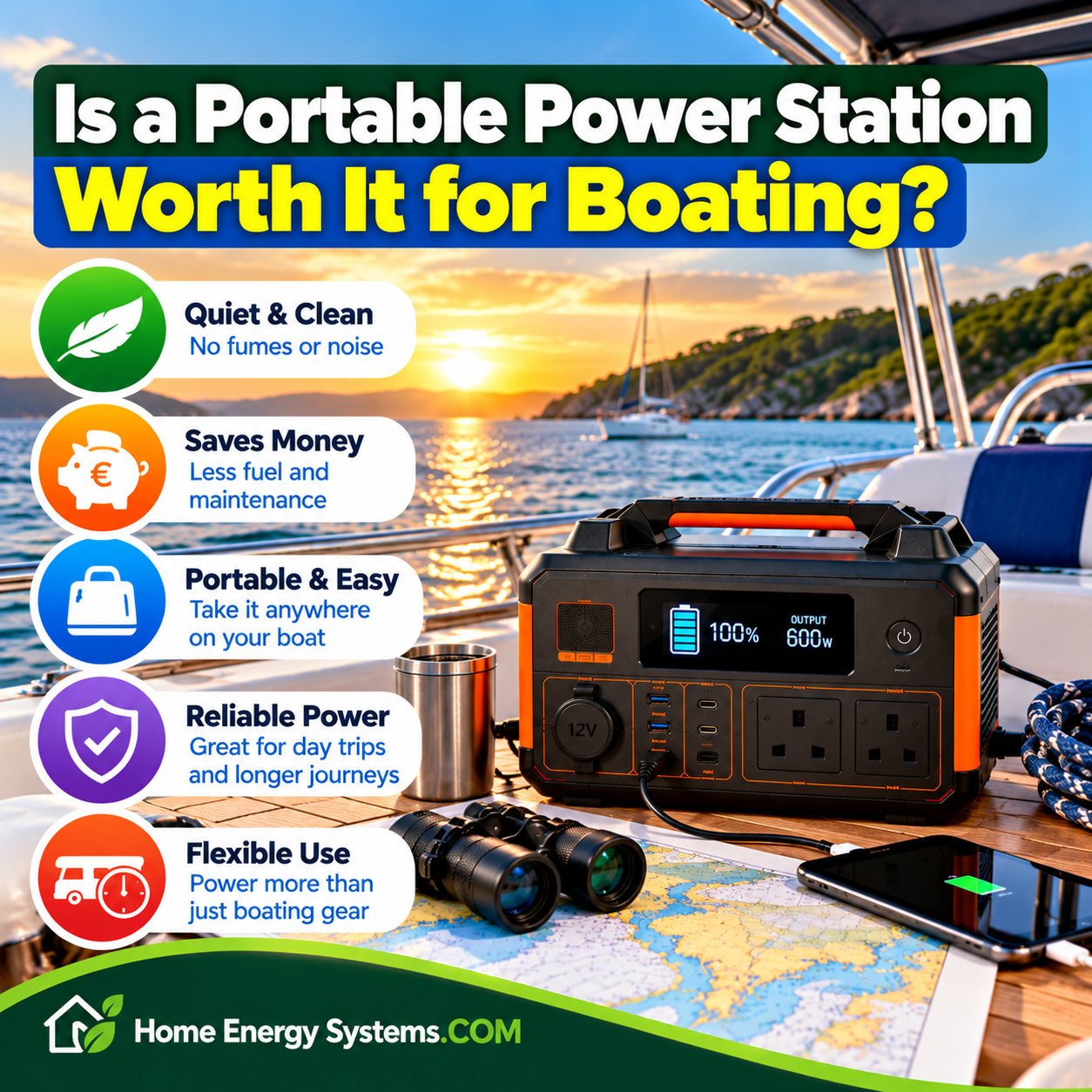
When comparing the best portable power stations for boating, start with your list of appliances and estimate daily watt-hours. Then check the station’s continuous AC rating, startup surge capability, USB and DC outputs, weight, physical size and available charging methods.
For a small fishing boat, a compact unit may be enough for phones and camera batteries. For a cruiser with a laptop, LED lights and a portable cooler, a 700–1,200Wh model may be a more practical fit. Extended trips require a fuller energy budget and may justify a properly installed marine house-battery system.
Remember that mains voltage and socket type differ between the US, Canada, UK, Europe, Australia and New Zealand. Buy the version intended for your region and verify that it suits the equipment aboard.
Frequently Asked Questions
Are portable power stations safe to use on boats?
They can be suitable for noncritical recreational loads if kept dry, secured and used according to the manufacturer’s instructions. Do not assume marine approval, waterproofing or ignition protection.
Can a 1,000Wh power station run a boat fridge?
Often it can run a small compatible cooler for a period, but runtime depends on the fridge’s average consumption, temperature, inverter losses and other connected loads. Calculate watt-hours rather than relying on a single runtime claim.
Can I recharge one from solar panels aboard?
Yes, where the station supports solar input and the panel voltage and current meet its requirements. Secure panels and keep electrical connections protected from moisture.
Can a portable power station run a trolling motor?
Do not assume so. Many trolling motors require a dedicated battery, substantial DC current and suitable marine wiring. Follow the motor manufacturer’s requirements.
What size power station is best for a weekend boat trip?
For typical leisure electronics, 700–1,200Wh is a useful starting range, but a load calculation is the best way to size it.