
Underfloor heating for heat pumps is one of the most effective ways to combine low-temperature heating with comfortable, even warmth throughout a home. Instead of concentrating heat through relatively small radiators, the floor itself becomes a large heat emitter.
That large surface area can allow a heat pump to supply useful space heating at a lower water temperature. Because heat pumps generally perform better when they do not have to produce very hot water, a well-designed water-based floor heating system can be an excellent partner for an air source or ground source heat pump.

Why Low-Temperature Heating Works So Well
A heat pump does not need underfloor heating to work. Correctly sized low-temperature radiators can also perform very well. However, a heated floor has one major advantage: surface area.
A radiator transfers heat from a comparatively small area. Floor heating can use most of the available floor area of a room. Therefore, it can often deliver the required amount of heat while using cooler water.
This matters because reducing the temperature a heat pump has to produce can improve its efficiency. Our guide to the future of heat pump technology in 2026 explains in more detail how modern heat pumps, variable-speed compressors and smart controls are improving home-heating efficiency.
The goal is not simply to install a heat pump and some pipes in the floor. The whole heating system should be designed so the home remains comfortable at the lowest practical flow temperature.
How Underfloor Heating Works With a Heat Pump
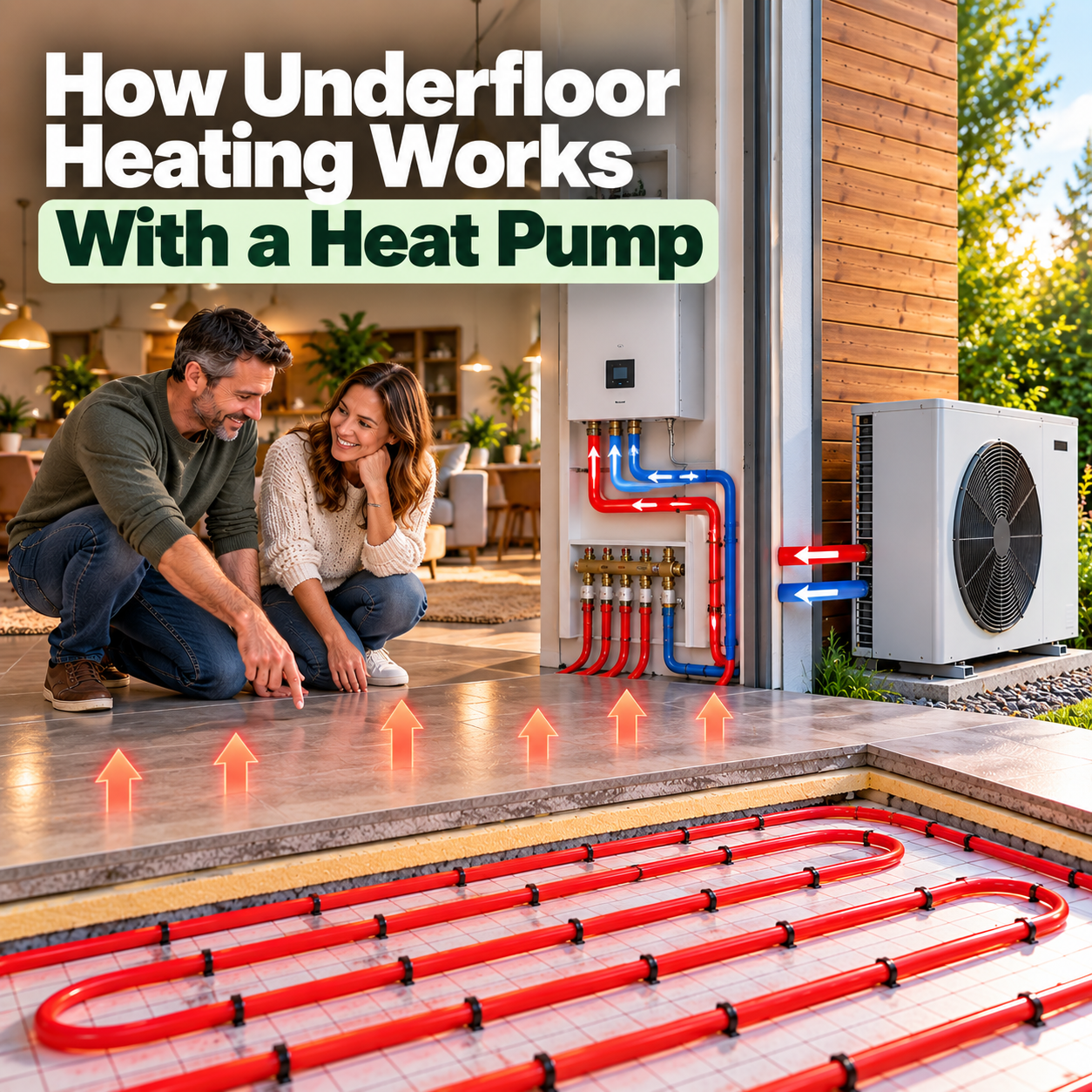
With a water-based system, the heat pump heats water and sends it through a network of pipes installed beneath the finished floor. These pipes are normally divided into separate circuits connected to a manifold.
As warm water travels through the pipes, heat moves through the floor structure and into the room above. Because the entire floor becomes a large heat emitter, the system does not need the same concentrated high-temperature output associated with many traditional radiator systems.
The process can be simplified into four stages:
- The heat pump collects energy from the outside air, ground or another suitable heat source.
- The system raises that energy to a useful heating temperature.
- Warm water circulates through the manifold and floor pipe loops.
- The floor gradually releases heat into the room.
This produces a different type of heating from the rapid hot-and-cold cycles many homeowners associate with conventional boilers. Heat pumps generally perform best when allowed to maintain a steady indoor temperature rather than repeatedly heating a cold building from scratch.
Water vs Electric Underfloor Heating
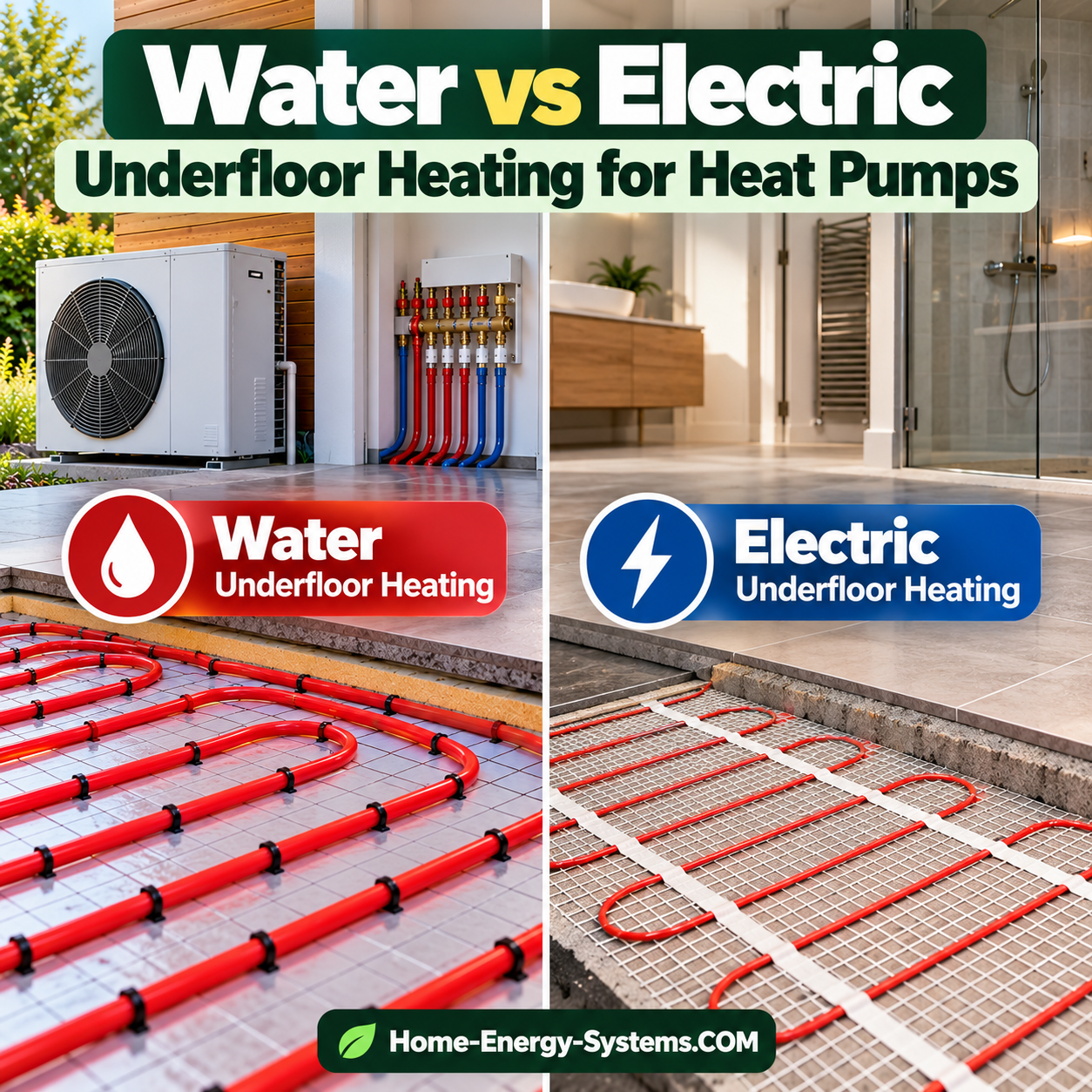
| Feature | Water UFH | Electric UFH |
|---|---|---|
| Heat source | Warm water from a heat pump or boiler | Electric cables or mats |
| Heat-pump integration | Excellent | Not normally supplied by the heat pump |
| Installation | More involved | Usually simpler |
| Whole-home use | Well suited | Often less attractive for large areas |
| Typical application | New builds, renovations and whole floors | Bathrooms and smaller areas |
Water-Based Heating
For homeowners specifically planning underfloor heating for heat pumps, a water-based or wet system is normally the system being discussed. The heat pump heats the circulating water, and the floor acts as the heat emitter.
It can involve more installation work than an electric mat system, particularly in an existing property. However, it is generally the more natural solution when the objective is to heat large areas using an air-to-water or ground source heat pump.
Electric Heating Mats
Electric underfloor heating uses resistance cables or heating mats beneath the floor. It can be quick and relatively straightforward to install, particularly in a bathroom or small renovation project.
However, an electric mat does not use the heat pump’s water circuit. Electricity is converted directly into heat at the floor. Consequently, it should be considered separately when comparing the efficiency and running costs of a heat-pump-powered wet system.
Heat Pump Flow Temperatures Explained
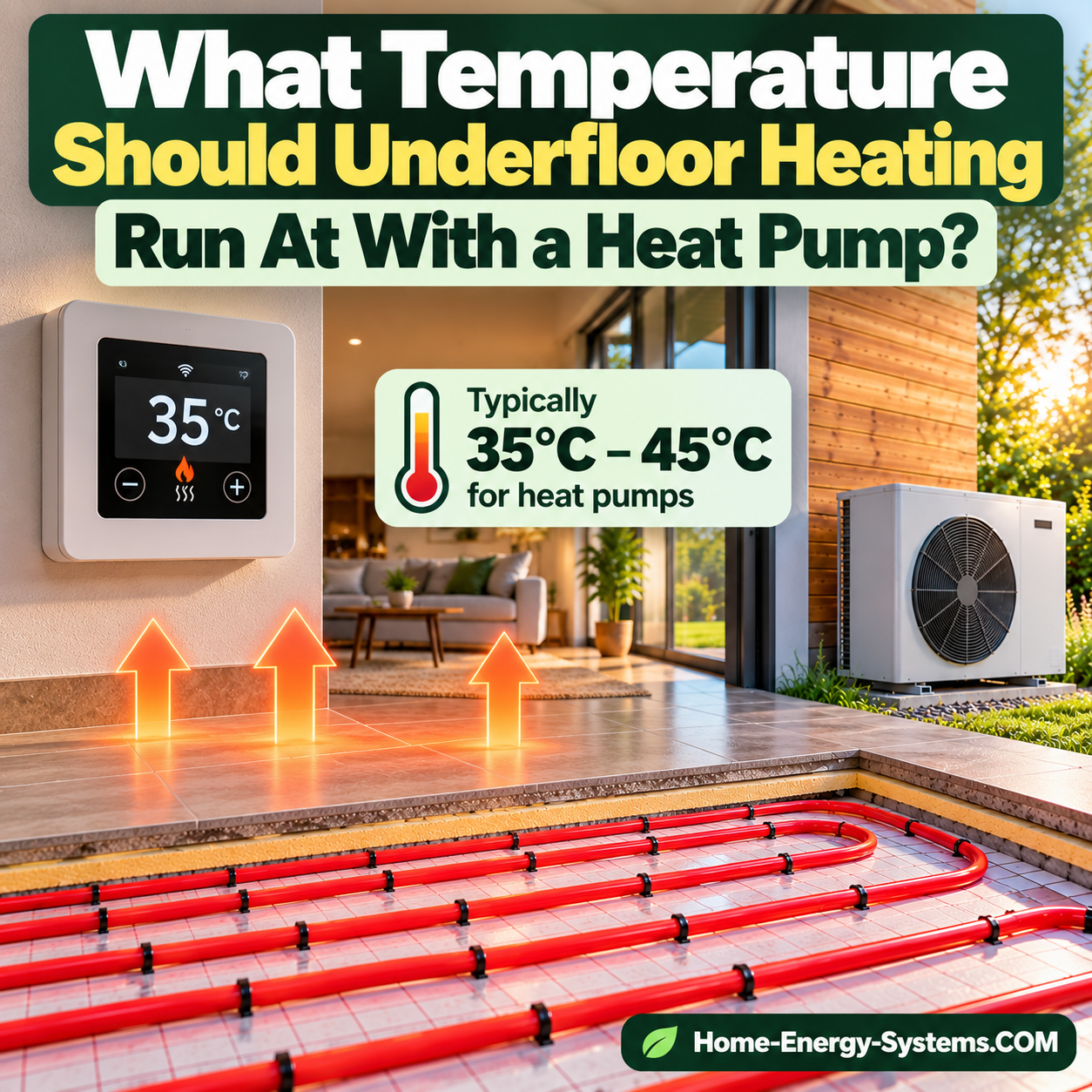
There is no single correct temperature for every home. A properly designed system should use the lowest flow temperature that can still meet the heating demand of the property in cold weather.
Low-temperature heat-pump systems are commonly designed around temperatures substantially below those historically used by traditional boilers. Underfloor heating is particularly useful because its large surface area can make these lower temperatures practical.
The Sustainable Energy Authority of Ireland explains how heat pumps work and why the efficiency of the overall heating system depends on good system design.
Underfloor Heating and Heat Pump Efficiency

Potentially, underfloor heating can help a heat pump operate efficiently. The important factor is not the floor itself but the lower water temperature that a large heat-emitting surface can make possible.
A heat pump has to work harder as the difference increases between the temperature of its heat source and the temperature it must deliver to the heating system. Therefore, designing the emitters to provide enough heat at lower water temperatures can improve overall system performance.
For another independent explanation, the Energy Saving Trust guide to underfloor heating covers wet and electric systems, floor coverings and the relationship between low-temperature heating and heat pumps.
A large floor area is one reason these systems are frequently paired with heat pumps. Nevertheless, good low-temperature radiators can also work successfully. Underfloor heating should not be treated as an absolute requirement for installing a heat pump.
Best Flooring for Underfloor Heating

The finished floor is an important part of the heating system because heat has to travel through it before reaching the room.
Tile and Stone
Tile and stone are excellent heat conductors and are among the strongest choices for underfloor heating. They transfer heat effectively and can also provide useful thermal mass.
Engineered Wood
Many engineered wood products can be used successfully with underfloor heating. Always check the flooring manufacturer’s temperature and installation requirements.
Laminate
Compatible laminate can work well, provided the combined thermal resistance of the flooring and underlay remains suitable for the heating design.
Carpet
Carpet can be used in some systems, but thick carpet and underlay can restrict heat transfer. Check the maximum tog value specified by the heating and flooring manufacturers.
Insulation Makes a Big Difference
Installing high-quality underfloor heating while allowing significant heat to escape downwards is poor system design. Insulation beneath the heating system helps direct useful heat toward the occupied room instead of into the ground or an unheated space below.
Insulation elsewhere in the property matters too. Heat pumps work best when the building’s heat demand is reasonably controlled. Improving insulation and reducing unwanted air leakage can lower the required heating output and make low-temperature heating easier to achieve.
Why Pipe Spacing Matters
The distance between underfloor heating pipes affects the amount of heat that can be transferred into the floor.
Closer pipe spacing can help a system provide the required heat output using a lower water temperature. This can be particularly useful when designing around a heat pump.
This is one reason the floor circuit should ideally be designed for low-temperature operation from the beginning rather than simply connecting a new heat pump to an old system without checking its design.
Smart Underfloor Heating Controls
Zoning allows different parts of the home to have separate temperature control. A manifold can serve several loops, while thermostats and actuators control individual rooms or groups of rooms.
However, heat pumps generally prefer long, steady operating periods. Excessive on/off cycling or repeatedly shutting down large sections of the heating system can work against that principle.
A good smart underfloor heating control strategy should therefore balance comfort, zoning and heat-pump efficiency rather than treating every room like a traditional boiler-heated zone.
Underfloor Heating vs Radiators
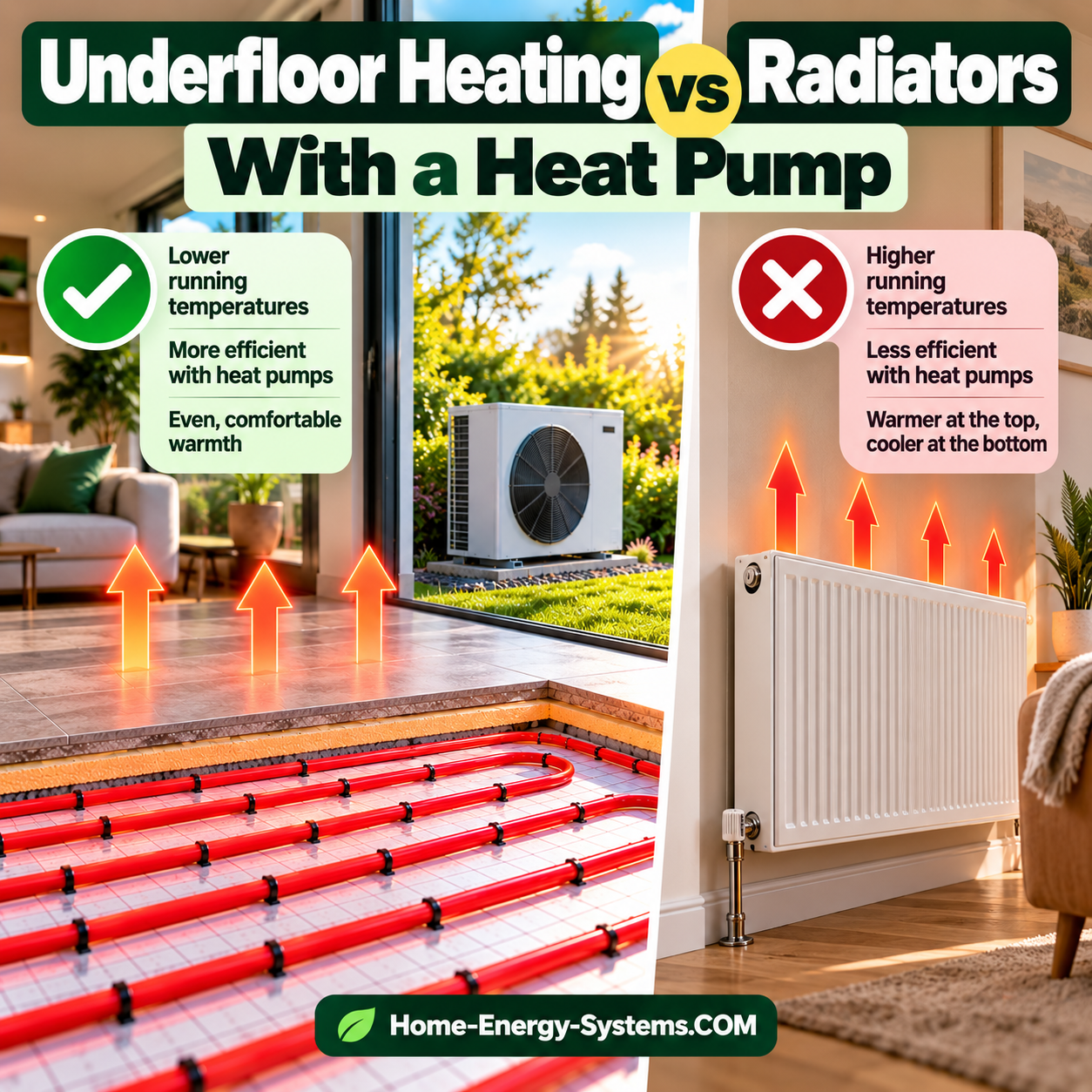
| Feature | Underfloor Heating | Radiators |
|---|---|---|
| Emitter area | Very large | Smaller |
| Low-temperature potential | Excellent | Good when correctly sized |
| Comfort | Very even | More localised |
| Retrofit disruption | Can be substantial | Usually lower |
| Response | Can be slow with high thermal mass | Often faster |
Underfloor heating is not automatically better in every property. In a new build or major renovation, it can be an excellent choice because the floor construction can be designed around the heating system.
In an existing house with suitable radiators, replacing floors simply to install underfloor heating may make little economic sense. Larger or low-temperature radiators may provide a much easier route to an efficient heat-pump installation.
What Does Installation Cost?
There is no useful single price for every project. Installation cost depends on the size of the property, whether the system is wet or electric, the existing floor construction, insulation requirements, number of heating zones and whether the work forms part of a new build or renovation.
Water-based systems generally involve more work to install than electric mats. However, if floors are already being replaced during a major renovation, much of the disruption may already be unavoidable.
Rather than comparing quotes only by price per square metre, ask whether the contractor has completed a room-by-room heat-loss calculation and designed the pipe layout around the intended heat-pump flow temperature.
Retrofitting an Existing Home
Underfloor heating can be added to an existing property, but the practicality varies enormously.
Traditional systems can require floors to be lifted and additional floor depth to accommodate insulation, pipework and screed. This can affect doors, stairs, skirting boards and adjoining floor levels.
Low-profile retrofit systems are available and can reduce the additional floor height. Even so, a retrofit needs careful planning.
For many existing homes, a sensible compromise is water-based underfloor heating downstairs during renovation combined with correctly sized low-temperature radiators upstairs.
Air Source and Ground Source Heat Pumps
Both air source and ground source heat pumps can supply a water-based underfloor heating system.
Air source heat pumps extract energy from the outside air and are the most common residential option in many markets. Ground source systems collect heat through buried ground loops or boreholes and require suitable outdoor space or drilling.
From the perspective of the floor, the important issue is still system design: the emitters must deliver the required room heat output at a suitable water temperature.
Why New Builds Have an Advantage
A new build provides an opportunity to design the insulation, floor construction, pipe spacing, heating zones and heat pump as one integrated system.
This can avoid many of the compromises associated with retrofitting. It can also allow designers to target lower flow temperatures from the outset.
If you are building a highly insulated home and already intend to use a heat pump, water-based underfloor heating deserves serious consideration.
Common Design and Installation Mistakes
- Skipping the heat-loss calculation. The system must be sized for the actual building.
- Using excessive flow temperatures. Higher is not automatically better and may reduce heat-pump efficiency.
- Poor insulation below the floor. Heat should be directed into the room rather than lost downwards.
- Ignoring floor coverings. Thick or highly insulating coverings can reduce heat output.
- Incorrect pipe spacing. Pipe layout directly affects output and required water temperature.
- Oversimplifying controls. Heat pumps usually perform better with steady operation than aggressive stop-start control.
- Assuming underfloor heating is mandatory. Correctly designed low-temperature radiators can also work very well.
- Choosing equipment before designing the system. The heat pump, emitters and building heat loss should be considered together.
Is Underfloor Heating Worth It?

For a new build or substantial renovation, underfloor heating for heat pumps can be one of the strongest heating combinations available. It provides comfortable, evenly distributed heat and can help the heat pump operate at relatively low water temperatures.
For an existing property, however, the answer is less automatic. If installing underfloor heating requires major structural work, correctly sized low-temperature radiators may achieve excellent heat-pump performance for considerably less disruption.
The best solution is therefore not simply “underfloor heating versus radiators.” It is the system that meets the home’s calculated heat demand while allowing the heat pump to operate efficiently.
Frequently Asked Questions
Is underfloor heating good for heat pumps?
Yes. Water-based underfloor heating is particularly well suited because its large surface area can deliver useful heat at relatively low water temperatures.
Do I need underfloor heating?
No. Heat pumps can also work successfully with correctly sized radiators. A heated floor is an option rather than a requirement.
What temperature should the system run at?
The correct flow temperature depends on the home’s heat loss, pipe spacing, floor construction and floor covering. A properly designed system should use the lowest temperature that still heats the home adequately.
Is water or electric underfloor heating better?
Water-based heating is normally the relevant choice for integration with an air-to-water or ground source heat pump. Electric mats use electricity directly.
Can you use carpet over a heated floor?
Yes, in some installations. However, the combined carpet and underlay must have a suitable thermal resistance or tog rating so they do not excessively restrict heat transfer.
Can it be installed in an older house?
Yes, but it may involve significant floor work. Low-profile retrofit systems can help, while some properties may be better suited to low-temperature radiators.
Can lower flow temperatures reduce running costs?
They can improve heat-pump efficiency. Actual running costs still depend on the property, weather, electricity tariff, controls and system design.
Can I use floor heating downstairs and radiators upstairs?
Yes. Mixed systems can be a practical solution, provided both emitter types are correctly designed to work with the heat pump.
Planning Your Underfloor Heating System?
Start with the building rather than the equipment. Check insulation, calculate room-by-room heat loss, choose suitable floor coverings and have the heating emitters designed around a low flow temperature.
That approach gives both the underfloor heating and the heat pump the best chance of delivering efficient, comfortable heating for years to come.