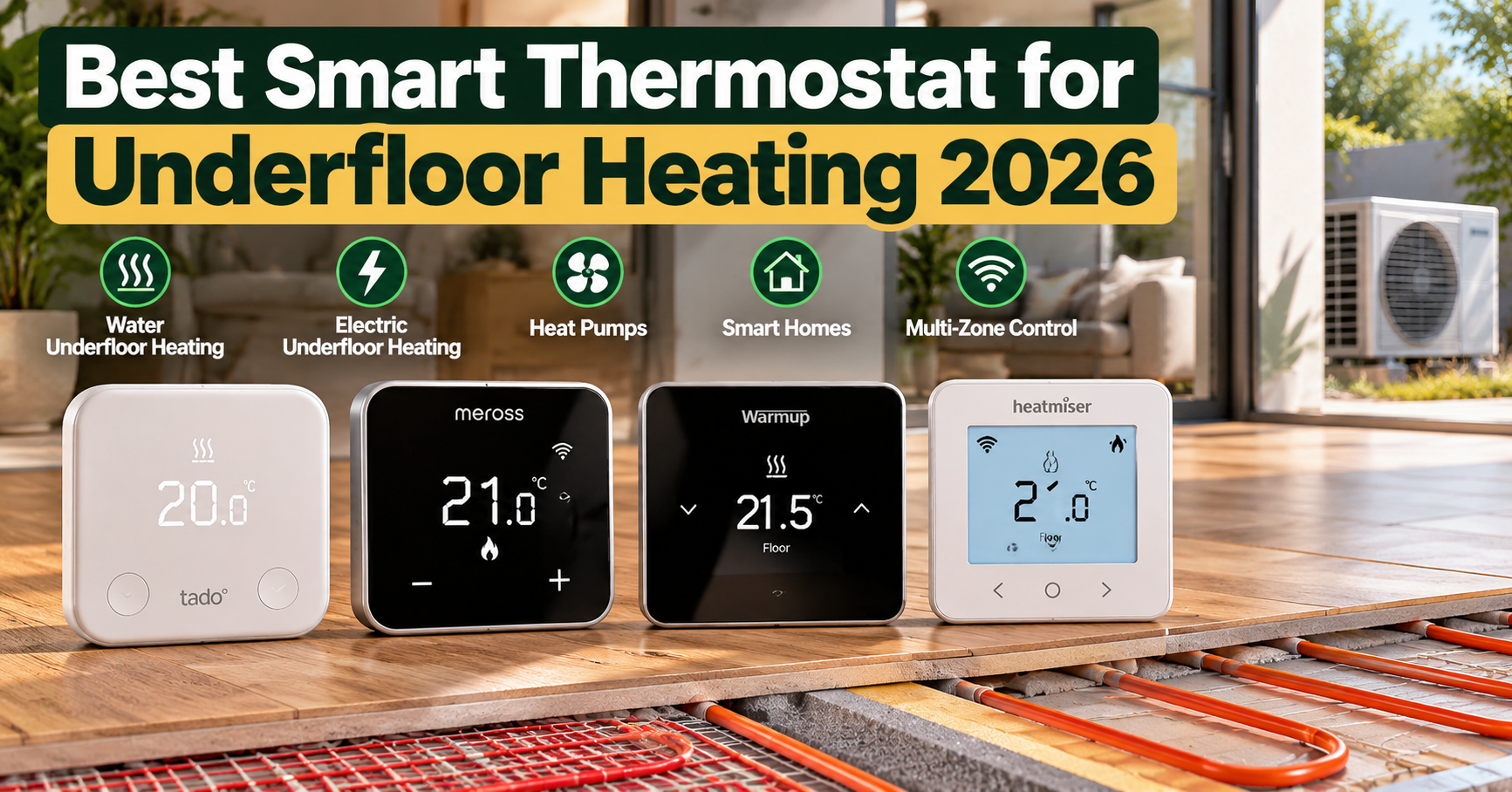
Choosing the best smart thermostat for underfloor heating is not simply a matter of buying the smartest-looking thermostat on the wall. Water-based and electric underfloor heating systems have different control requirements, and adding a heat pump or multiple heating zones makes compatibility even more important.
In this 2026 guide, we compare some of the most useful smart-control options for underfloor heating, including tado°, Meross, Warmup and Heatmiser. We also explain what to check before buying so you can choose a thermostat that actually works with your heating system and in your region.
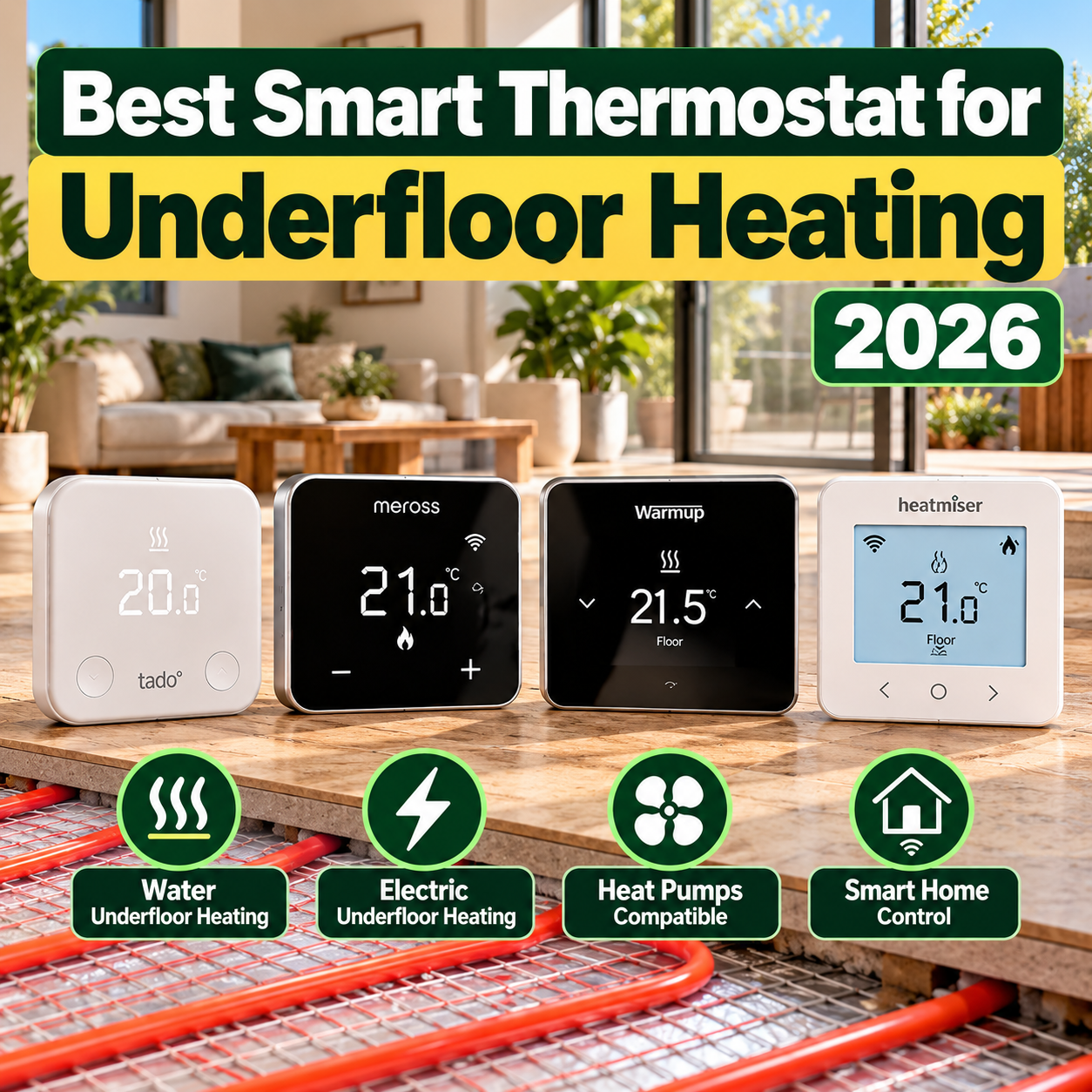
Best Smart Thermostat for Underfloor Heating: 2026 Comparison
The right thermostat depends first on whether your underfloor heating is hydronic or electric. After that, consider zoning, floor sensors, electrical ratings, heat-pump integration and the smart-home platform you want to use.
| Smart control | Best suited to | Key advantage |
|---|---|---|
| tado° Smart Thermostat X | Compatible water-based UFH | Smart zoning and heat-pump ecosystem |
| Meross MTS200 range | Model-dependent water or electric UFH | Affordable app-based smart control |
| Warmup smart controls | Dedicated UFH installations | Purpose-built floor-heating control |
| Heatmiser Neo | Multi-zone water or electric systems, depending on model | Strong zoning ecosystem |
Water vs Electric Underfloor Heating Controls
Water Underfloor Heating
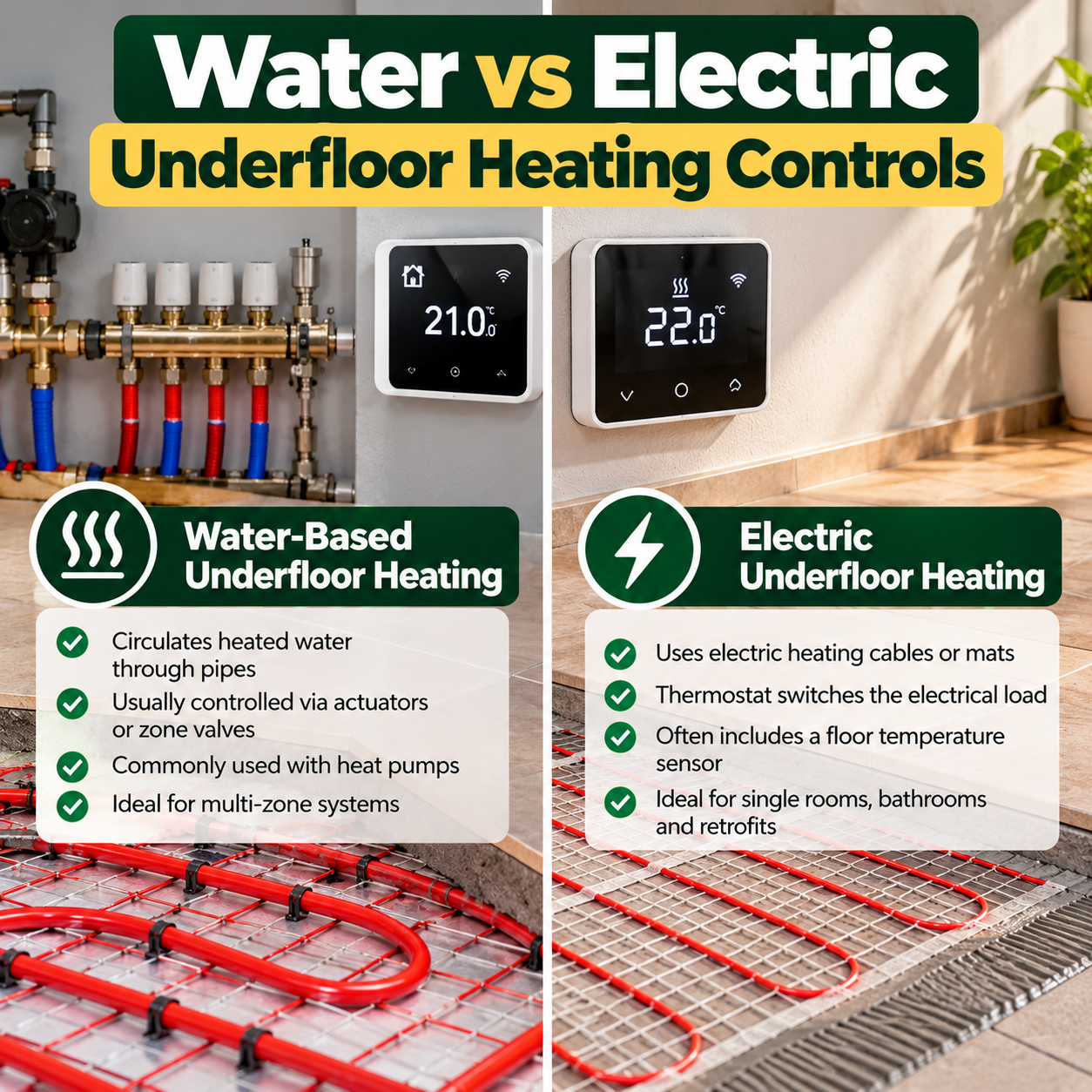
Hydronic underfloor heating circulates heated water through pipes beneath the floor. Individual rooms or zones are commonly controlled through thermostats linked to actuators or zone valves on the heating manifold.
This type of system can work particularly well with low-temperature heat sources such as heat pumps.
Electric Underfloor Heating
Electric systems use heating cables or mats installed beneath the floor finish. Their thermostat normally switches an electrical load directly or through suitable switching equipment and commonly uses a floor-temperature sensor.
That means electrical rating and sensor compatibility are critical when choosing a replacement smart thermostat.
A smart thermostat designed for a boiler or hydronic heating circuit should therefore never automatically be assumed suitable for electric floor heating.
tado° Smart Thermostat X for Water Underfloor Heating
Best for Smart Hydronic Heating Integration
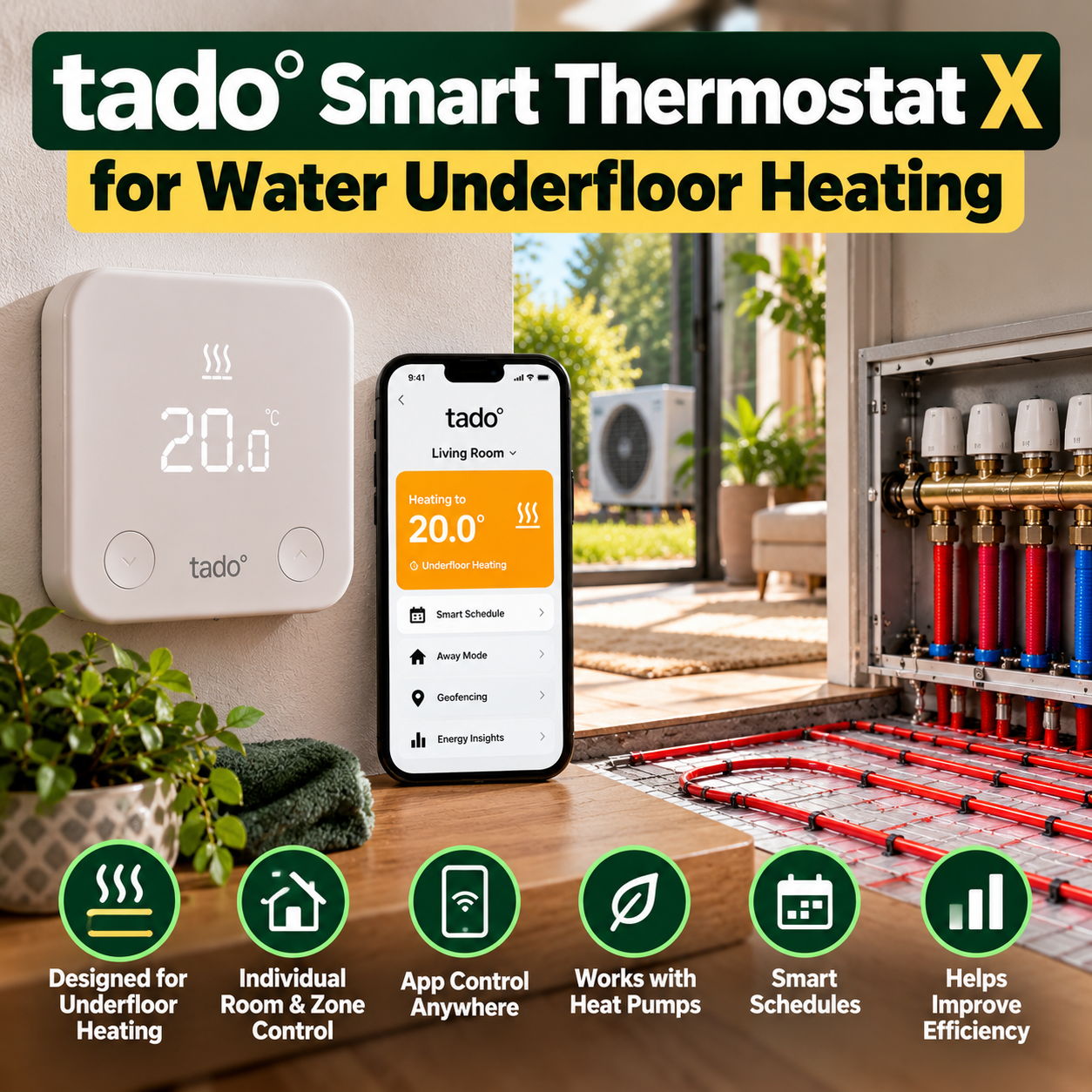
The tado° Smart Thermostat X is particularly interesting for compatible water-based underfloor heating systems. tado° provides an Underfloor Heating Control Mode, allowing the thermostat to be configured around the slower heating behaviour of floor-based systems.
In a multi-zone hydronic installation, individual thermostats can be used to control different rooms or heating zones, depending on how the manifold and actuators have been configured.
For homes combining underfloor heating with a compatible heat pump, the wider tado° ecosystem can also become attractive because supported installations may integrate with tado° heat-pump controls.
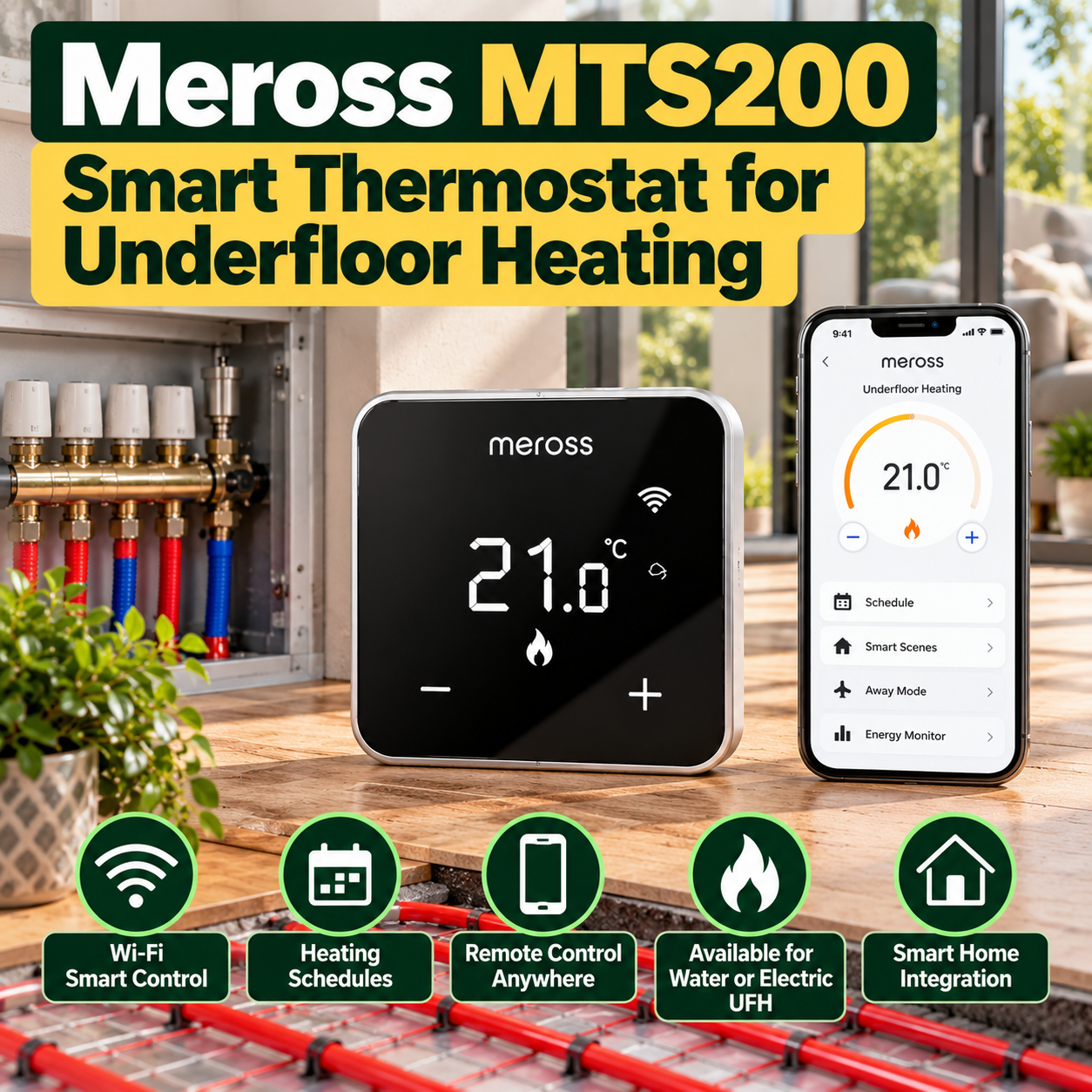
Meross MTS200: Smart Value for Compatible Systems
A Strong Value-Focused Smart Option
The Meross MTS200 family is worth considering for homeowners looking for app-based heating control without moving into the most expensive end of the smart-thermostat market.
The important detail is that MTS200 versions differ. Meross offers products intended for different heating configurations, including versions associated with electric floor heating and versions designed for compatible boiler or water-heating control.
Features can include Wi-Fi control, schedules, remote temperature adjustment and integration with supported smart-home platforms.
Warmup Smart Thermostats for Underfloor Heating
Purpose-Built Underfloor Heating Control
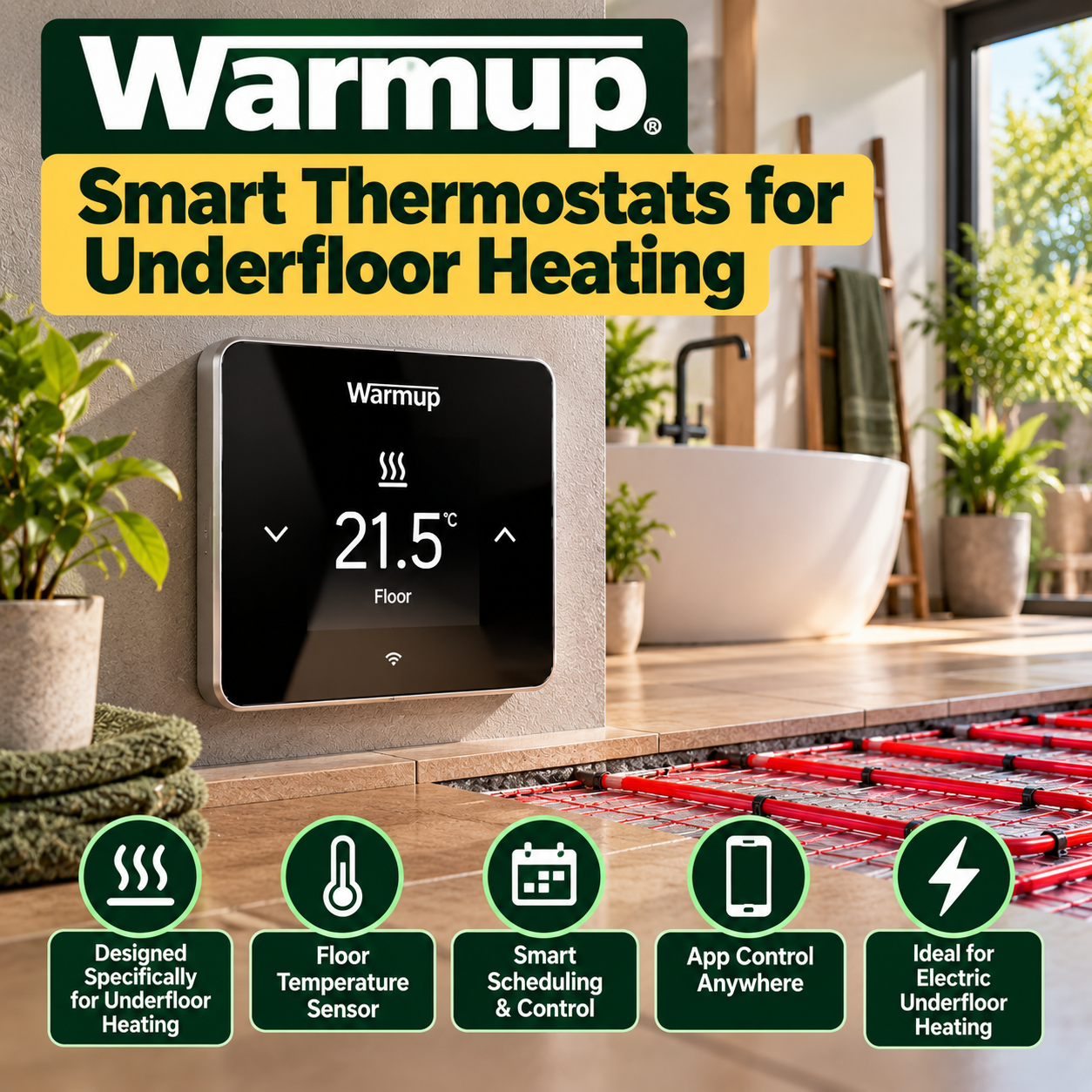
Warmup is different from many general smart-home thermostat brands because underfloor heating is at the heart of its product range.
Its smart thermostats, including the 6iE family in applicable markets, are designed specifically around floor-heating control. Depending on the installation and product version, Warmup controls can be used with electric or water-based underfloor heating.
Features such as floor-temperature sensing, scheduling, app control and intelligent heating routines make dedicated UFH controls particularly useful where protecting the floor finish and managing floor temperature are priorities.
Warmup is therefore one of the brands we would investigate early when designing a complete underfloor heating system rather than simply replacing an existing wall thermostat.
Heatmiser Neo Smart Underfloor Heating Controls
Strong Choice for Multi-Zone Heating
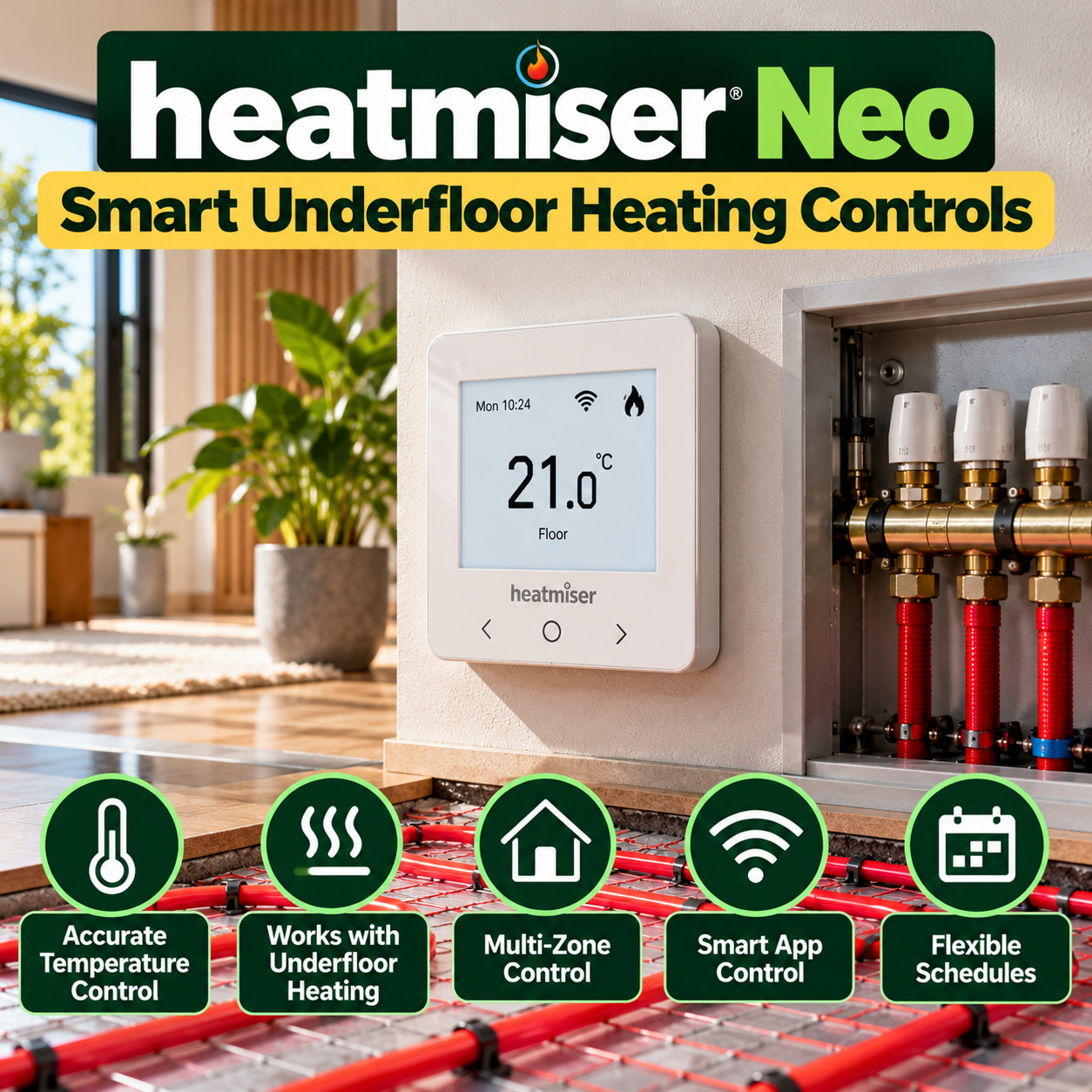
Heatmiser’s Neo ecosystem is another strong option where the objective is to control several heating zones independently.
Different Heatmiser thermostat models are available for different heating applications. For example, electric floor-heating installations require a thermostat designed for the electrical load and appropriate temperature sensing, while water-based systems may use thermostats as part of a zoned manifold-control arrangement.
The Neo ecosystem can bring individual room control, scheduling and app-based management together in larger installations.
This can make Heatmiser especially interesting for renovations and new-build projects where several underfloor heating zones are being planned from the outset.
Best Smart Thermostat for Underfloor Heating With a Heat Pump
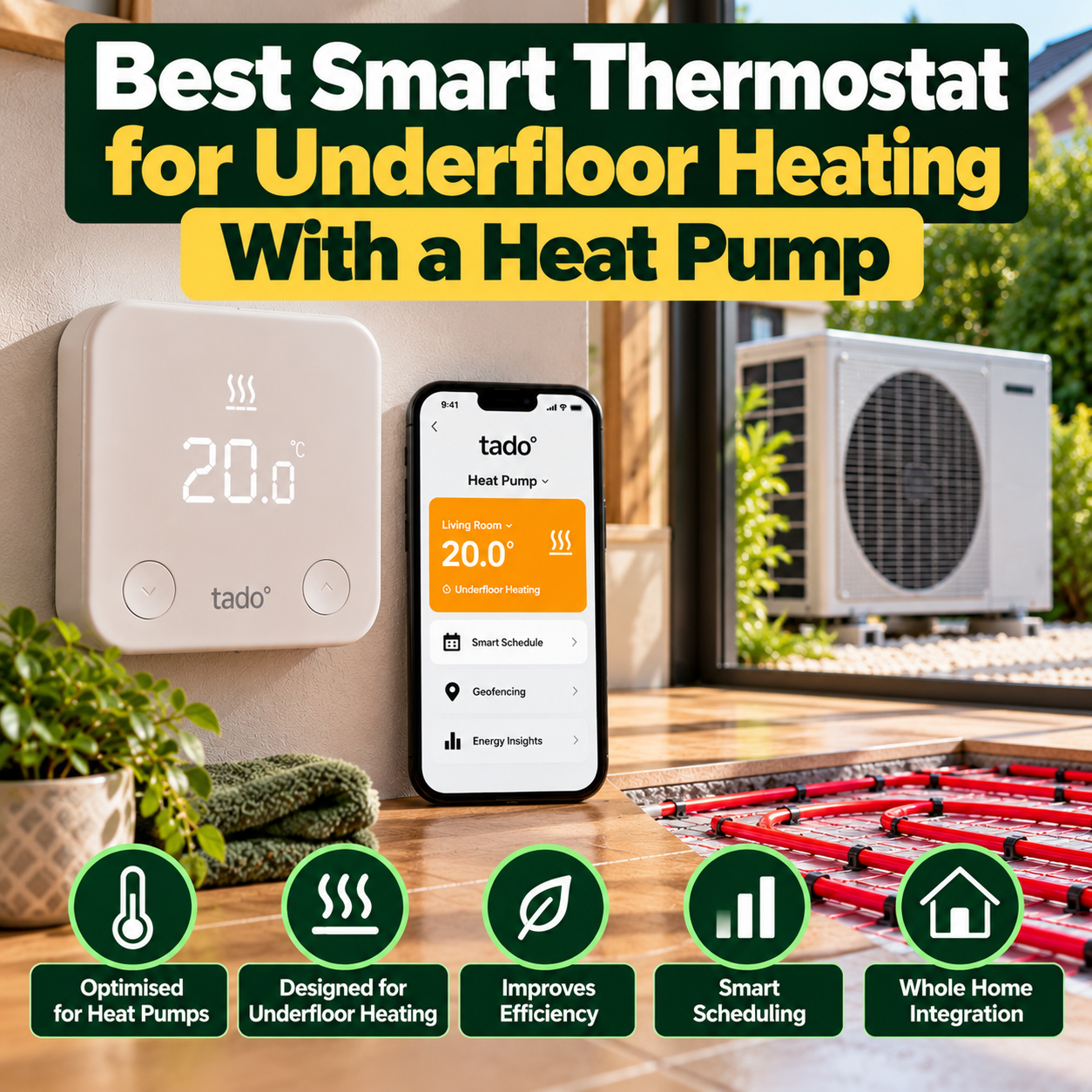
Underfloor heating and heat pumps can make an excellent combination because a correctly designed hydronic floor system can deliver useful heat using relatively low water temperatures.
But the thermostat should complement the way a heat pump operates. Heat pumps generally perform best with steady operation rather than aggressive temperature swings that repeatedly force the system to recover from a large setback.
A good smart-control strategy may therefore use gentle scheduling, sensible zoning and weather-aware control rather than simply switching the heat pump on and off like a traditional high-temperature boiler.
For a deeper explanation of system design, see our Underfloor Heating for Heat Pumps 2026 guide. You can also learn more about the technology in our Heat Pump Technology 2026 guide.
Why Smart Multi-Zone Underfloor Heating Control Matters
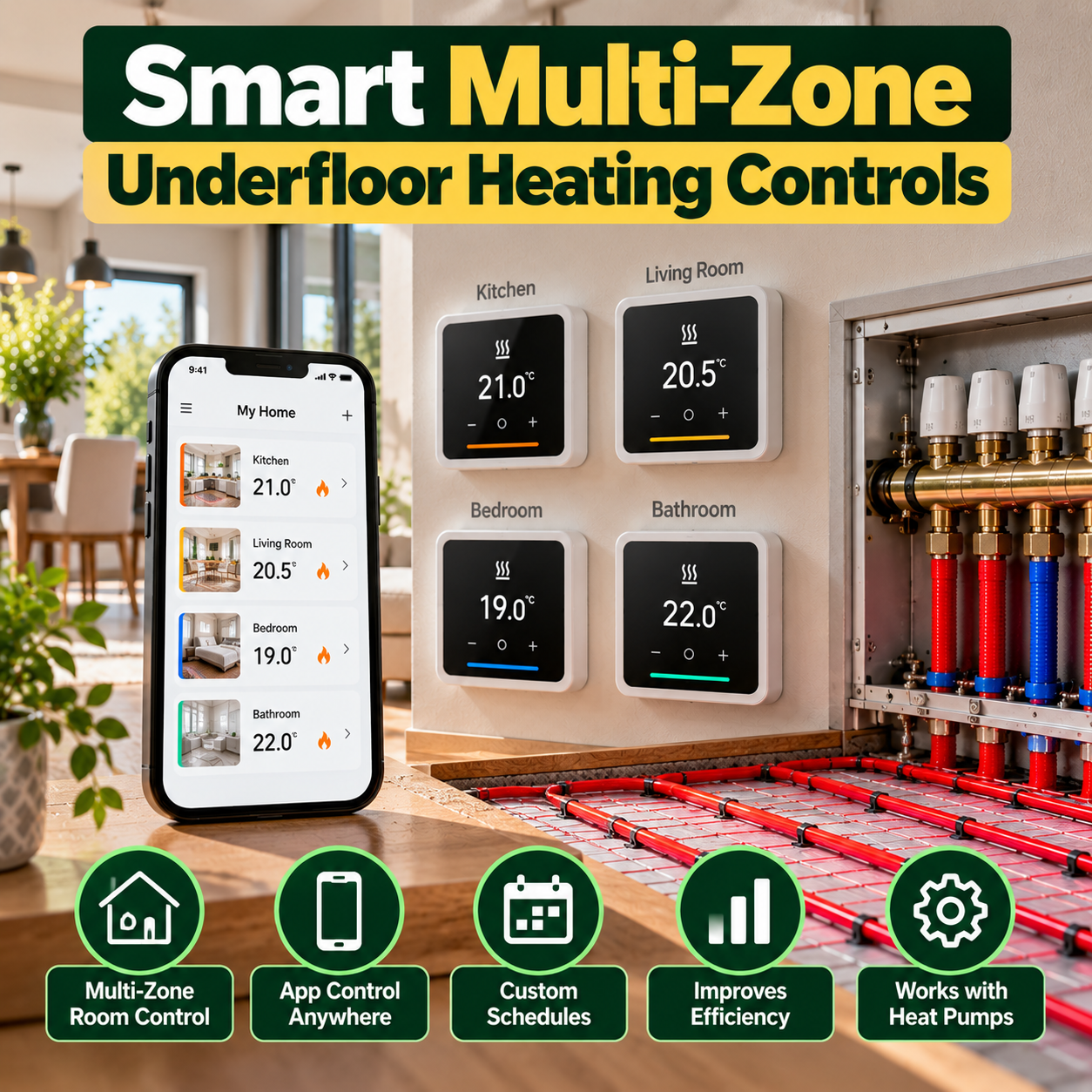
One of the biggest advantages of smart underfloor heating controls is the ability to divide a home into individual heating zones.
A bathroom may need warmth early in the morning, while bedrooms can often operate at a lower temperature. A kitchen may receive significant heat from cooking and appliances, while a living room is used mainly in the evening.
Instead of treating the entire property as one heating zone, a properly designed system can respond more closely to how each room is actually used.
Room-by-Room Temperatures
Separate thermostats allow different target temperatures to be selected for different areas of the home.
Individual Schedules
Smart controls can reduce unnecessary heating by matching each zone’s schedule to occupancy and normal room use.
Zoning does not automatically guarantee lower energy consumption. Poorly designed zoning can cause its own problems, particularly with heat pumps, so the hydraulic design and minimum system flow requirements still matter.
Smart Thermostat Features Worth Paying For
Smart thermostats now come with long feature lists, but only a handful of functions make a meaningful difference to most underfloor heating installations.
Floor Temperature Sensor
Especially important for many electric systems and floor finishes where maximum floor temperature needs to be controlled.
Multi-Zone Control
Useful for larger homes where rooms have different heat-loss characteristics and occupancy patterns.
Smart Scheduling
Allows heating periods to reflect when individual rooms are actually used.
Remote App Control
Useful for changing temperatures, schedules and operating modes without being physically beside the thermostat.
Heat-Pump Compatibility
Particularly valuable when the smart-control ecosystem can complement rather than interfere with the heat pump’s own controls.
Smart-Home Integration
May allow heating to work alongside compatible voice assistants, automation platforms and other connected devices.
Wired or Wireless Smart Thermostat?
The word wireless can be misleading. A thermostat may communicate wirelessly with an app or hub while still requiring mains power or wired connections to the heating system.
This matters particularly when retrofitting an older thermostat. Before buying, check what wires are already available behind the existing controller, whether a neutral conductor is required and how the thermostat communicates with the heating equipment.
For electric underfloor heating, also confirm the switching capacity. A thermostat controlling a significant electrical heating load has different requirements from a low-current thermostat sending a control signal to a boiler or actuator.
A Global Website Needs Regional Recommendations
There is no genuinely universal smart thermostat recommendation because electrical standards, heating equipment, wiring methods and product availability vary around the world.
| Region | What to check | Typical priority |
|---|---|---|
| UK & Ireland | 230V supply, wiring centres, floor sensors and heat-pump/boiler compatibility | Hydronic zoning and electric UFH controls |
| Continental Europe | Country-specific product versions, voltage and heating interfaces | Hydronic systems and smart zoning |
| USA & Canada | Supply voltage, electrical codes, line-voltage requirements and local certification | Correctly rated electric or hydronic controls |
| Australia & New Zealand | Local approvals, voltage and product availability | System-specific smart controls |
| Other Markets | Voltage, certification, wiring and manufacturer support | Choose by local compatibility first |
What to Check Before Buying a Smart UFH Thermostat
Before ordering any thermostat, identify exactly what type of underfloor heating you have and how it is currently controlled.
1. Heating Type
Is the system water-based or electric? This is the first compatibility check.
2. Voltage and Load
For electric UFH, confirm supply voltage, thermostat switching capacity and total connected heating load.
3. Floor Sensor
Check whether the existing system uses a floor probe and whether the new thermostat supports the sensor type.
4. Number of Zones
Determine whether you need one thermostat or a coordinated multi-zone system.
5. Heat Source
For hydronic UFH, establish whether the system uses a boiler, heat pump or another heat source.
6. Regional Compatibility
Confirm that the exact thermostat model is intended and approved for installation in your country.
Our 2026 Verdict
The best smart thermostat for underfloor heating is ultimately the one that matches the heating system rather than the one with the longest list of smart features.
For compatible water-based systems, tado° Smart Thermostat X is particularly interesting where smart zoning and heat-pump integration are priorities. Warmup deserves serious consideration when you want controls designed specifically around underfloor heating, while Heatmiser Neo is attractive for sophisticated multi-zone installations.
Meross is particularly interesting at the value end of the market, but buyers should pay close attention to the exact MTS200 model because water and electric heating applications require different versions and installation arrangements.
We would not choose any of these products solely because it has an affiliate programme. Compatibility, electrical safety, regional availability and suitability for the heating system come first.
Frequently Asked Questions
What is the best smart thermostat for underfloor heating?
There is no single best model for every installation. tado° can be a strong option for compatible hydronic systems, while dedicated controls from brands such as Warmup and Heatmiser can be particularly suitable for underfloor heating. Meross also offers useful smart options, depending on the exact model and heating type.
Can any smart thermostat control underfloor heating?
No. The thermostat must be compatible with the type of underfloor heating, electrical supply, switching load, wiring arrangement and any required floor-temperature sensor.
Do I need a special thermostat for electric underfloor heating?
Usually, yes. Electric UFH thermostats need to be appropriately rated for the electrical heating load and many systems use a floor-temperature sensor. A general boiler thermostat should not automatically be substituted.
Can smart thermostats control water underfloor heating?
Yes. Compatible thermostats can control individual hydronic heating zones through suitable wiring centres, actuators, valves or other system controls.
What smart thermostat is best for underfloor heating with a heat pump?
The best choice depends on the heat pump and heating-control architecture. Look for controls that support steady low-temperature operation and work correctly with the heat pump’s own control strategy rather than causing excessive cycling.
Do I need a thermostat in every room?
Not necessarily. It depends on how the underfloor heating loops and zones have been designed. In a multi-zone system, separate room thermostats can provide more precise control.
Can I use a European smart thermostat in the USA or Canada?
Not automatically. Voltage, electrical standards, wiring arrangements, certification and heating interfaces differ. Always use a model approved and designed for the local installation.
Planning a Smarter Heating System?
If you’re combining underfloor heating with a heat pump, start with the complete system rather than the thermostat alone.
Read: Underfloor Heating for Heat Pumps 2026 →