Home Solar Systems: Complete 2026 Homeowner’s Guide
Home solar systems allow homeowners to generate electricity from sunlight, reduce the amount of electricity purchased from the grid and build a more flexible home energy system.
Modern solar technology has improved considerably, with higher-efficiency panels, sophisticated inverters, battery storage and smart monitoring giving homeowners more control over how electricity is generated and used.
Whether you are planning your first solar installation or simply researching your options, understanding how the complete system works is important before choosing panels, an inverter, battery storage or an installer.
A properly designed system can contribute electricity for lighting, appliances, heating equipment and electric vehicle charging, depending on its size and household demand.
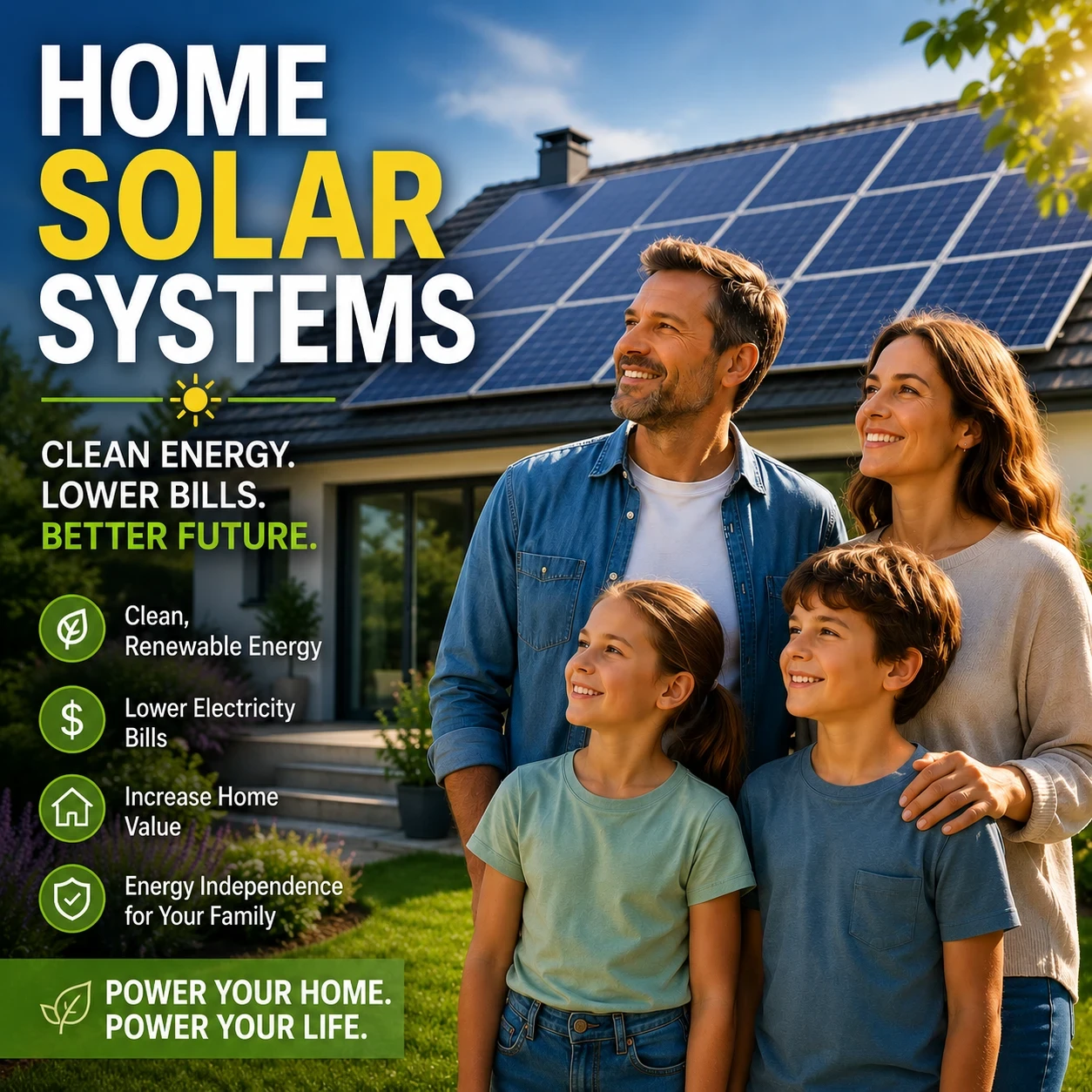
What Are Home Solar Systems?
A home solar system captures sunlight and converts it into usable electricity for a residential property. Solar photovoltaic panels generate direct-current, or DC, electricity when exposed to sunlight.
A solar inverter then converts the DC electricity into alternating-current, or AC, electricity that can be used by household appliances and electrical equipment.
Depending on the design of the system and local regulations, surplus electricity may be exported to the grid, stored in a home battery or directed to flexible loads such as an electric vehicle charger.
A typical residential solar system can include:
- Solar photovoltaic panels.
- A solar inverter.
- Roof or ground mounting equipment.
- Electrical protection equipment.
- System monitoring.
- Optional home battery storage.
- Optional backup-power equipment.
For more detail on the panels themselves, see our Solar Panels homeowner’s guide .
How Do Home Solar Systems Work?
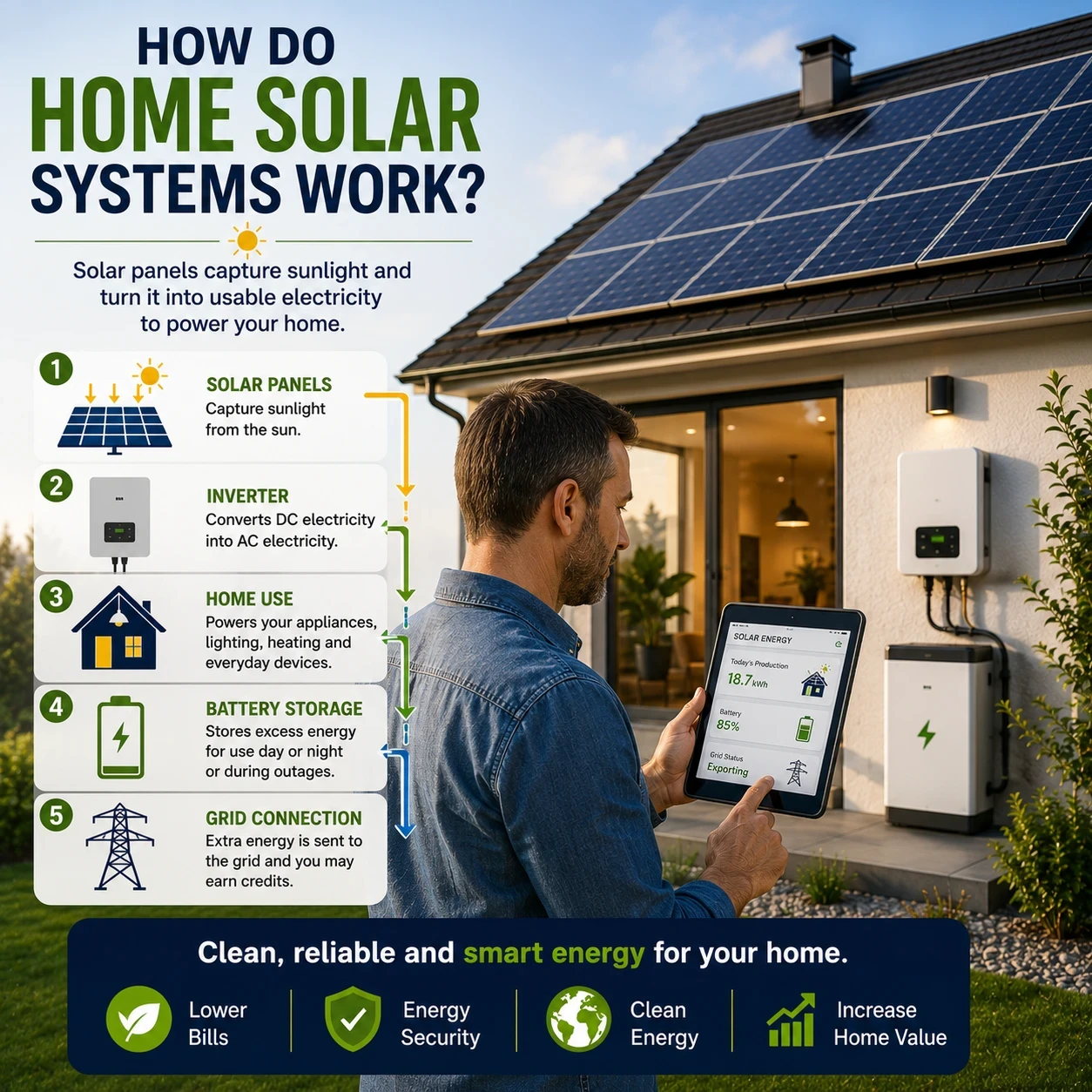
When sunlight reaches the photovoltaic cells inside a solar panel, the cells generate DC electricity. That electricity travels to the inverter, which converts it into AC electricity suitable for use within the home.
The household can use solar electricity as it is being generated, reducing the amount of electricity that needs to be purchased from the grid.
When production exceeds household demand, surplus electricity may be stored in a compatible battery, used for EV charging or exported to the electricity grid where this is permitted.
When solar production is insufficient, a grid-connected home can normally draw additional electricity from the grid. A battery-equipped system may also supply stored energy, depending on the system configuration and battery state of charge.
Why Are Homeowners Choosing Home Solar Systems?
The reasons for installing residential solar vary by household and country, but common motivations include reducing grid electricity purchases and generating more renewable electricity at home.
Potential benefits include:
- Lower electricity purchases from the grid.
- Greater control over household energy use.
- Renewable electricity generation.
- Long equipment life.
- Relatively low routine maintenance.
- Compatibility with battery storage.
- Potential integration with electric vehicle charging.
The financial outcome varies according to installation cost, electricity tariffs, local solar conditions, self-consumption, export payments, incentives and the amount of electricity the household uses.
Can a Home Solar System Power an Entire House?
A sufficiently sized solar system can generate a substantial proportion of a household’s annual electricity requirements, but this does not mean the home will operate entirely from solar electricity at every moment.
Actual solar contribution depends on factors including:
- Annual and daily electricity consumption.
- Solar system capacity.
- Available roof space.
- Roof direction and pitch.
- Shading.
- Local solar conditions.
- Seasonal changes in production.
- Whether battery storage is installed.
Solar generation changes throughout the day and across the seasons. Grid-connected households can normally use grid electricity when solar production is insufficient.
Battery storage can increase solar self-consumption by moving some daytime surplus electricity into the evening, but battery capacity and household demand still determine how long stored energy will last.
Different Types of Home Solar Systems
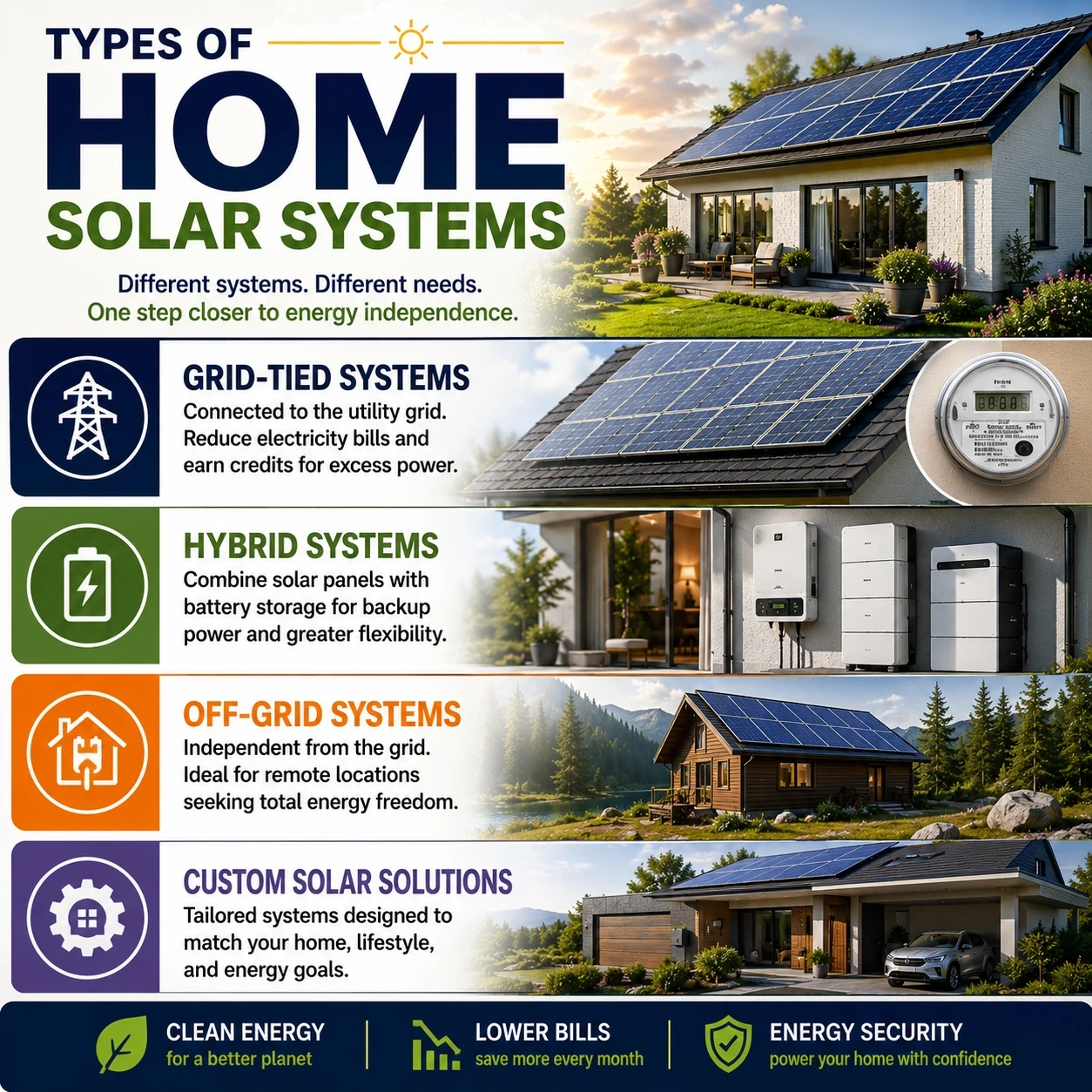
Grid-Tied Solar
A grid-connected system allows the home to use solar electricity when available and draw electricity from the grid when required. Surplus generation may be exported where local rules allow.
Hybrid Solar
A hybrid system combines solar generation with battery storage. Surplus solar electricity can be stored for later use, increasing the amount of generated electricity used within the home.
Off-Grid Solar
An off-grid system operates without a normal utility-grid connection and therefore requires sufficient generation, storage and system design to meet electricity demand independently.
Grid-Tied Solar Systems
Grid-tied systems are widely used because the electricity network remains available when solar production is lower than household demand.
If the system produces surplus electricity, that energy may be exported to the grid. Whether the homeowner receives payment for exported electricity depends on the rules and tariffs available in the particular country or region.
Hybrid Home Solar Systems
Hybrid home solar systems combine solar panels with battery storage and compatible power electronics.
The battery can store some of the electricity that would otherwise be exported, allowing it to be used later when solar generation falls.
A hybrid system does not automatically provide electricity during a power outage. Backup operation requires equipment designed to isolate the property safely from the grid and supply designated circuits or the home according to the system’s capabilities.
Off-Grid Solar Systems
Off-grid solar systems are designed for properties that operate independently of the electricity network. Because the grid cannot provide backup when solar generation is low, these systems require careful load calculations and sufficient energy storage.
Some installations also include an alternative generation source for periods of prolonged low solar production.
What Size Home Solar System Do You Need?
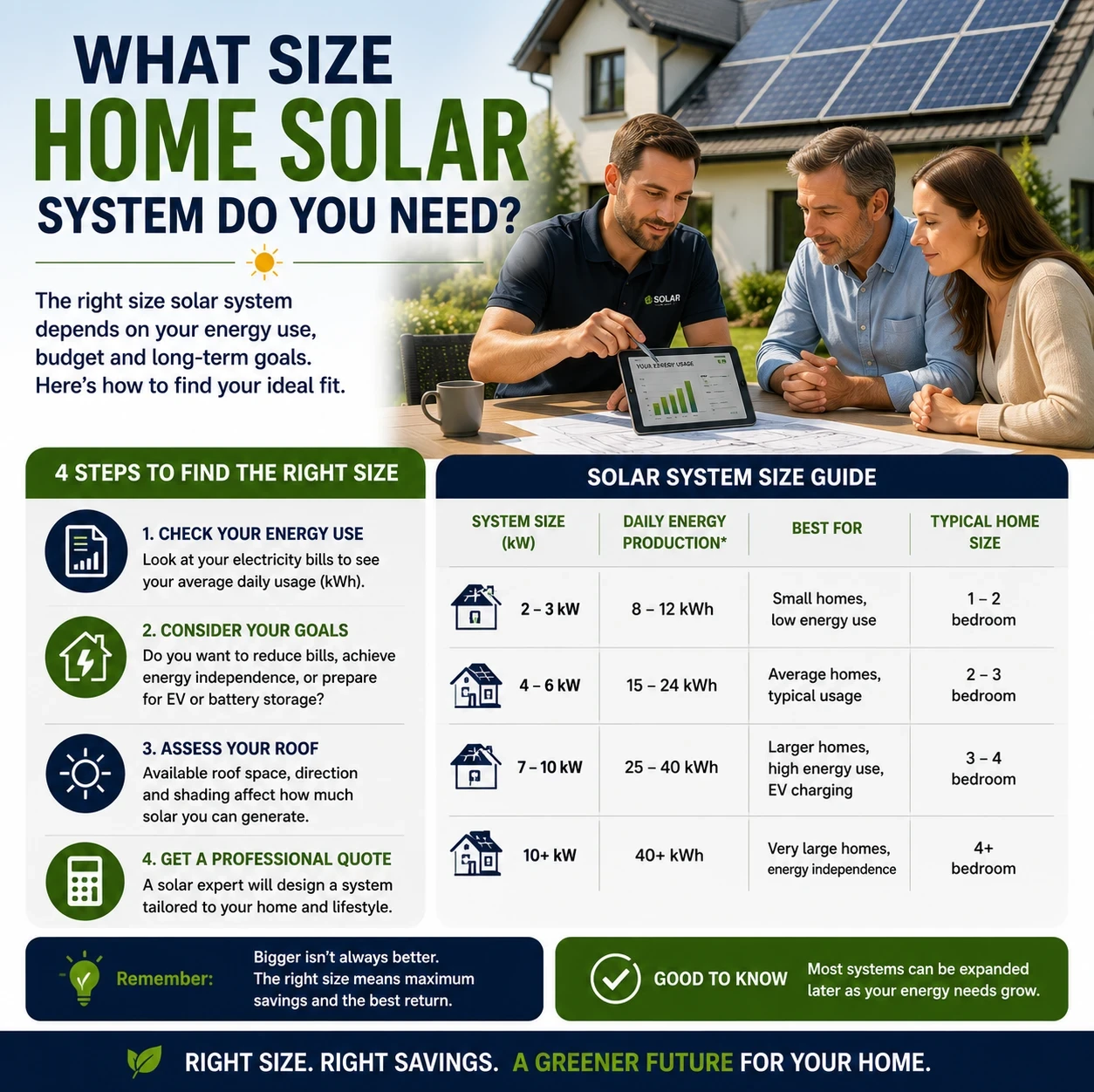
Choosing the correct system size is one of the most important parts of solar planning. A system should be designed around the property, available solar resource and household electricity requirements rather than using a single standard size for every home.
Important factors include:
- Annual electricity consumption.
- Daytime versus evening electricity use.
- Available roof area.
- Roof orientation and shading.
- Panel wattage and efficiency.
- Local solar conditions.
- Future electric vehicle charging.
- Future heat-pump use.
- Battery-storage plans.
- Local grid-export limits.
Reviewing at least a full year of electricity consumption is a useful starting point because it helps reveal both total energy demand and seasonal changes.
Key Components of Home Solar Systems
Solar Panels
Solar panels generate electricity from sunlight. Modern residential installations predominantly use high-efficiency crystalline silicon panels, with monocrystalline technology common in today’s market.
If you are comparing current products, see our Best Solar Panels 2026 guide.
Solar Inverter
The inverter converts DC electricity generated by the solar panels into AC electricity used within the home. Modern inverters can also provide system monitoring, safety functions and, depending on the model, battery integration.
Learn more in our Top Rated Solar Inverters 2026 guide.
Home Battery Storage
Battery storage allows some surplus electricity generated during the day to be stored for later use. This can increase solar self-consumption and reduce grid electricity purchases during periods when solar generation is low.
Backup power during an outage depends on the battery, inverter and electrical installation being specifically configured for backup operation.
Our Home Battery Storage Systems 2026 guide explains battery capacity, system design and storage options in more detail.
Monitoring System
Many current solar systems provide online or app-based monitoring. Depending on the equipment installed, homeowners may be able to view solar production, household consumption, battery state of charge and grid imports or exports.
Monitoring is useful because an unexpected change in production can help identify a potential system problem.
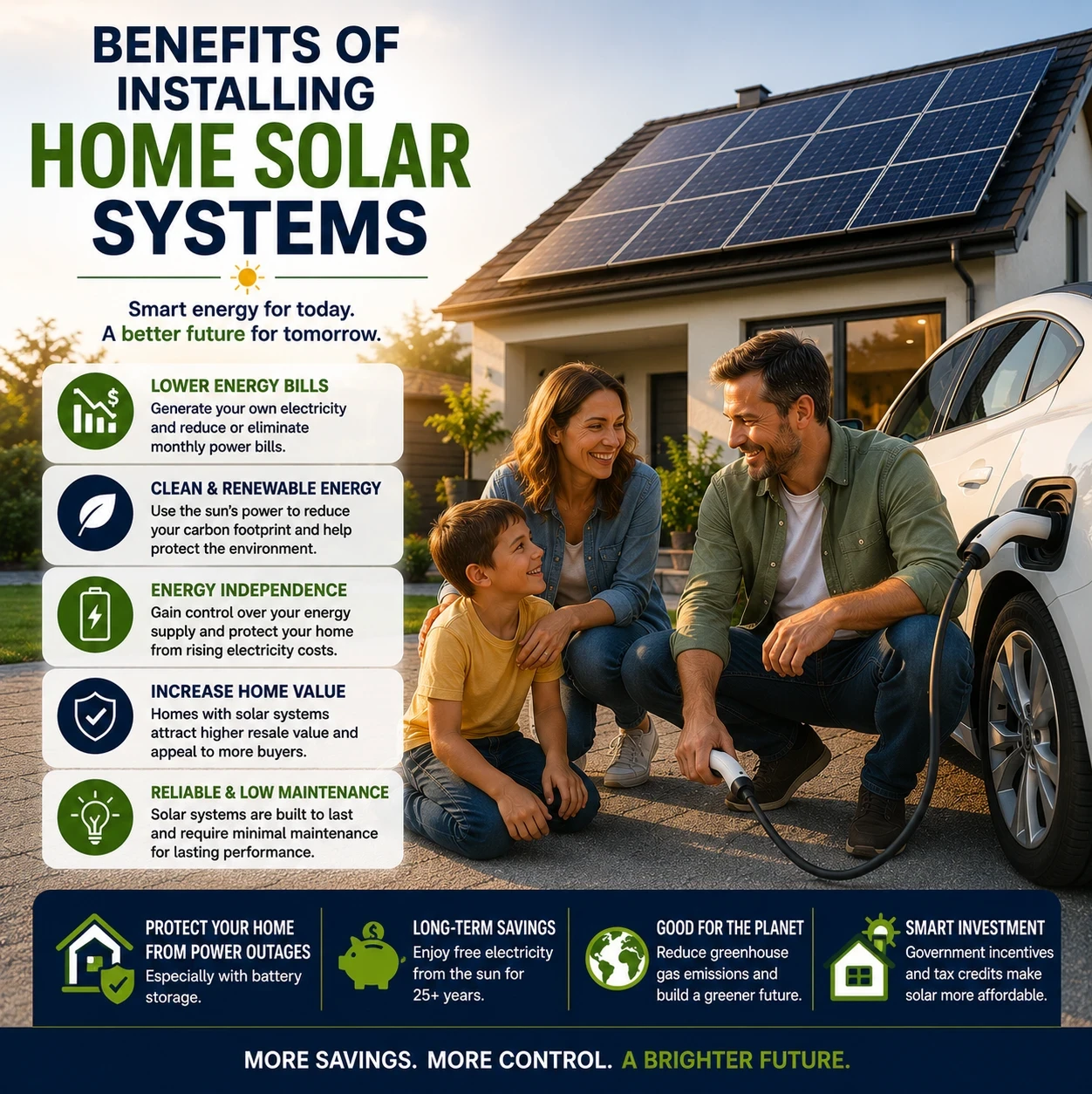
Benefits of Installing Home Solar Systems
A properly designed home solar system can provide benefits beyond simply generating electricity.
- Reduced electricity purchases from the grid.
- Renewable electricity generation at home.
- Quiet operation.
- Relatively low routine maintenance.
- Long panel operating life.
- Potential integration with battery storage.
- Potential integration with EV charging.
- Greater visibility and control through energy monitoring.
Solar panels are commonly supplied with long performance warranties, although the warranty terms and expected degradation rate vary between manufacturers and products.
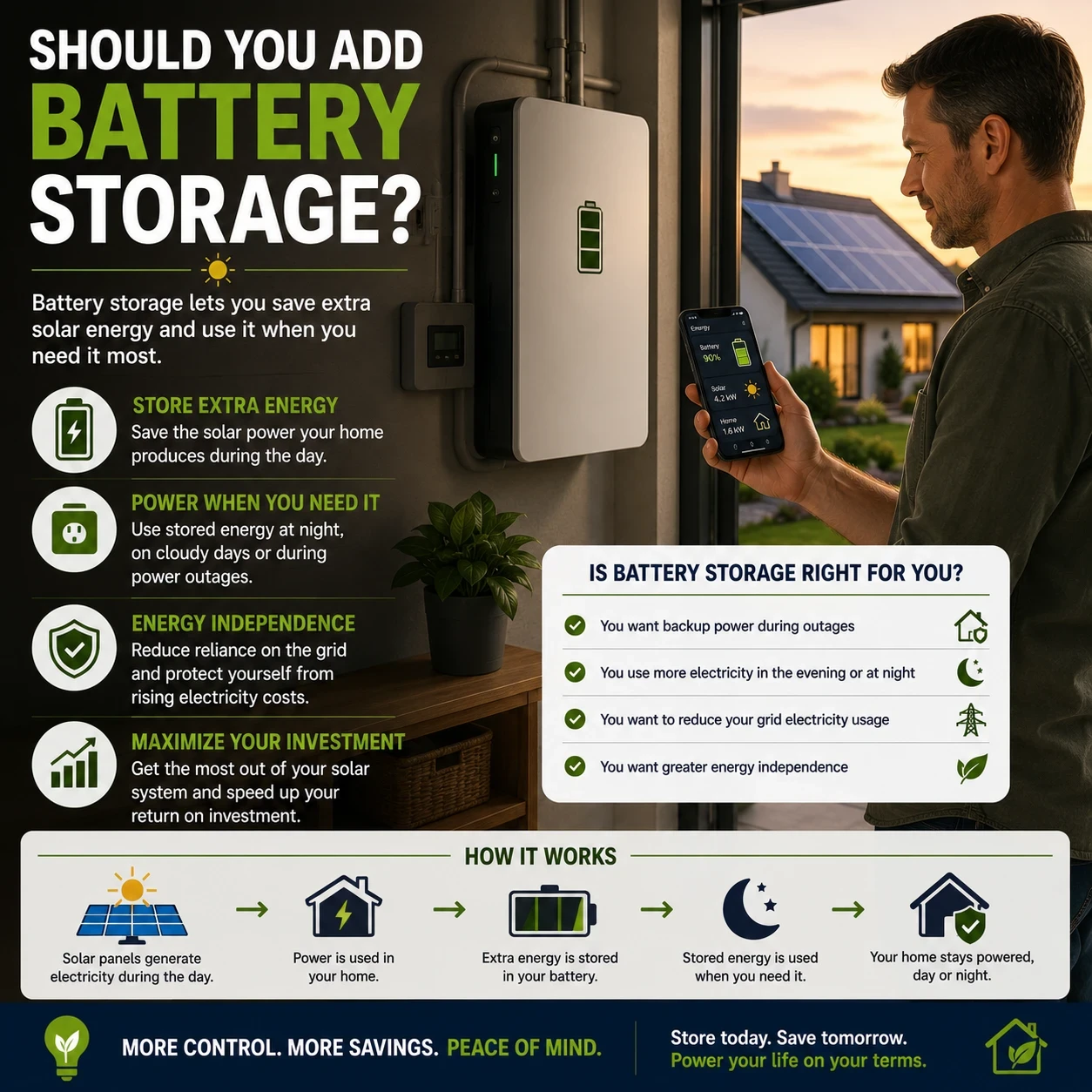
Should You Add Battery Storage?
A battery can make sense when a household produces surplus solar electricity during the day but uses substantial electricity later when solar production has fallen.
Instead of immediately exporting all surplus generation, some of it can be stored and used later.
Whether a battery is financially worthwhile depends on factors including battery price, electricity tariffs, export payments, usable capacity, expected cycle life and the household’s consumption pattern.
For more on combining solar and storage, see Solar Energy Storage Solutions 2026 .
How Much Do Home Solar Systems Cost?
There is no single global price for a home solar system. Costs vary considerably between countries, installers and individual properties.
The final price can be influenced by:
- System capacity.
- Solar panel make and model.
- Inverter type.
- Roof complexity.
- Mounting requirements.
- Electrical upgrades.
- Battery storage.
- Labour costs.
- Taxes and local incentives.
When comparing quotations, it is useful to consider the expected annual generation, equipment warranties, installation workmanship and after-sales support rather than comparing only the initial price.
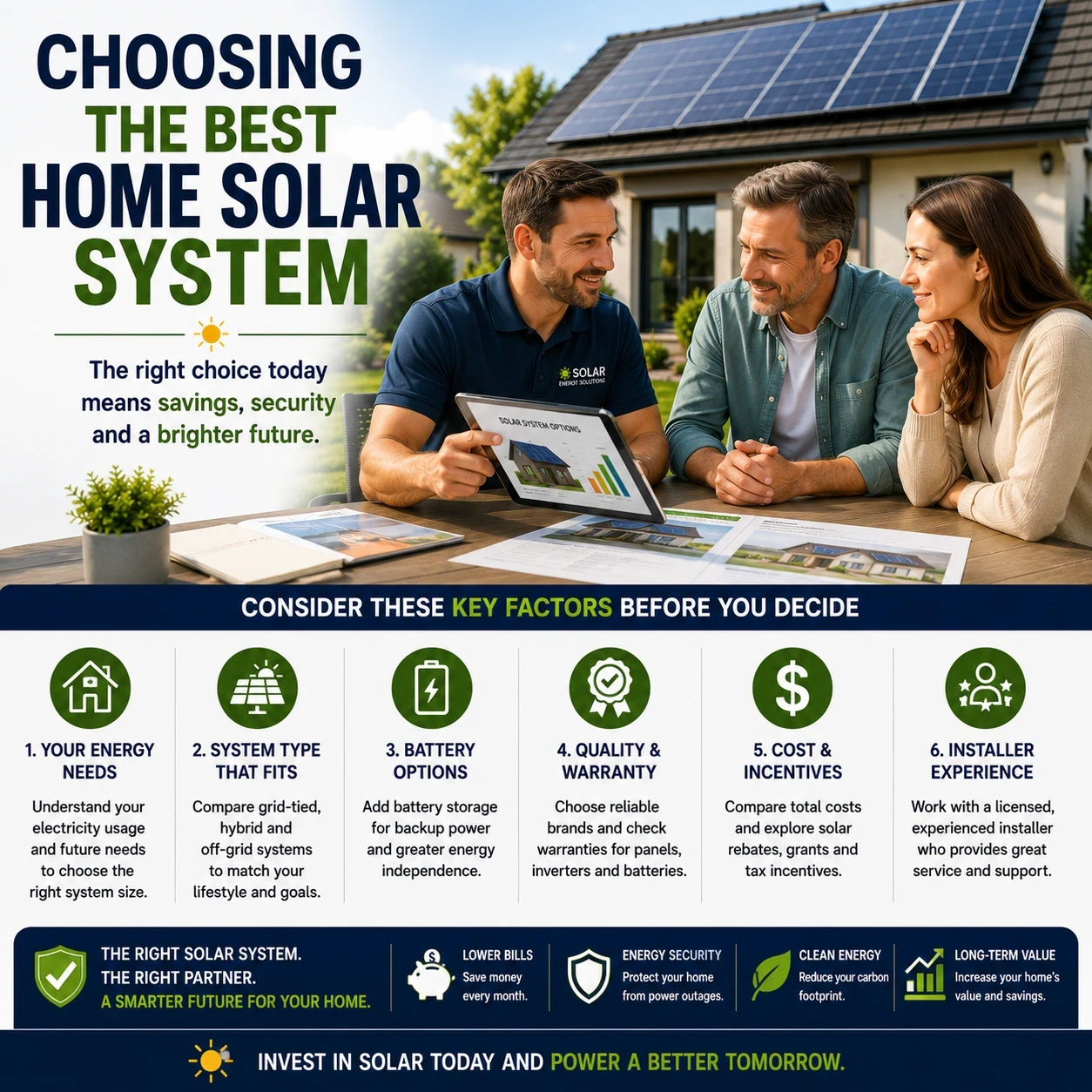
Choosing the Best Home Solar System
The best configuration depends on the individual home. A system that performs well for one household may be unnecessarily large, too small or poorly matched to another.
Before committing to an installation, compare:
- Proposed solar panel models.
- Inverter make and model.
- Expected annual generation.
- System size.
- Product warranties.
- Installer workmanship warranty.
- Battery compatibility.
- Monitoring features.
- Potential future expansion.
- After-sales support.
The Solar Panel Installation Guide 2026 provides a complete checklist of the issues worth reviewing before accepting a quotation.
Maintaining Home Solar Systems
Solar photovoltaic systems generally require relatively little routine maintenance because the panels themselves have no moving parts.
Homeowners can:
- Monitor electricity generation for unexpected changes.
- Visually inspect the panels from a safe location.
- Watch for new shading from growing trees or vegetation.
- Check for obvious damage or heavy debris.
- Follow inverter and battery manufacturer maintenance guidance.
- Arrange professional inspection if system performance changes unexpectedly.
Homeowners should avoid unnecessary roof access. If cleaning, inspection or repair requires working at height or around electrical equipment, use an appropriately qualified professional.
Common Home Solar System Mistakes to Avoid
Careful planning can prevent many of the problems homeowners encounter after installation.
- Choosing solely on the lowest quotation.
- Ignoring roof condition or shading.
- Accepting unrealistic generation estimates.
- Installing a system without considering future electricity demand.
- Ignoring battery compatibility when storage may be added later.
- Failing to identify the exact panel and inverter models being quoted.
- Not comparing equipment and workmanship warranties.
- Assuming every battery system automatically provides outage backup.
- Failing to monitor system performance after installation.
Frequently Asked Questions About Home Solar Systems
Are home solar systems worth the investment?
They can be worthwhile for many households, but the result depends on installation cost, electricity consumption, available sunlight, roof suitability, electricity tariffs, export payments and available incentives.
Do home solar systems work on cloudy days?
Yes. Solar panels can generate electricity from daylight under cloudy conditions, although output is generally lower than during strong direct sunlight.
How long do solar panels last?
Many modern solar panels carry performance warranties of around 25 years or longer. Panels can continue generating electricity after this period, although output normally declines gradually over time.
Can I add a battery later?
Often, yes. However, the equipment and cost required depend on the original solar system and inverter. If future battery storage is likely, discussing compatibility when the solar system is first designed can make a later upgrade easier.
Can home solar charge an electric vehicle?
Yes. Solar generation can contribute to home EV charging. Smart chargers can sometimes adjust vehicle charging to make greater use of surplus solar electricity.
Will solar keep my house running during a power cut?
Not necessarily. Standard grid-connected solar systems normally require compatible backup equipment and appropriate electrical isolation before they can supply the home during a grid outage.
Conclusion
Home solar systems give homeowners the opportunity to generate renewable electricity and reduce their reliance on electricity purchased from the grid.
The strongest systems are designed as a whole. Solar panels, inverter capacity, roof conditions, household demand, battery storage and future requirements such as EV charging should all be considered together.
If you are seriously considering solar, the next step is our Solar Panel Installation Guide 2026 . It explains how to assess your property, estimate system size, select equipment and prepare for installation.
Continue Your Research
External Resource
For independent information about solar photovoltaic technology and its role in global electricity generation, visit the International Energy Agency Solar PV resource .