Thermal Energy Storage Systems
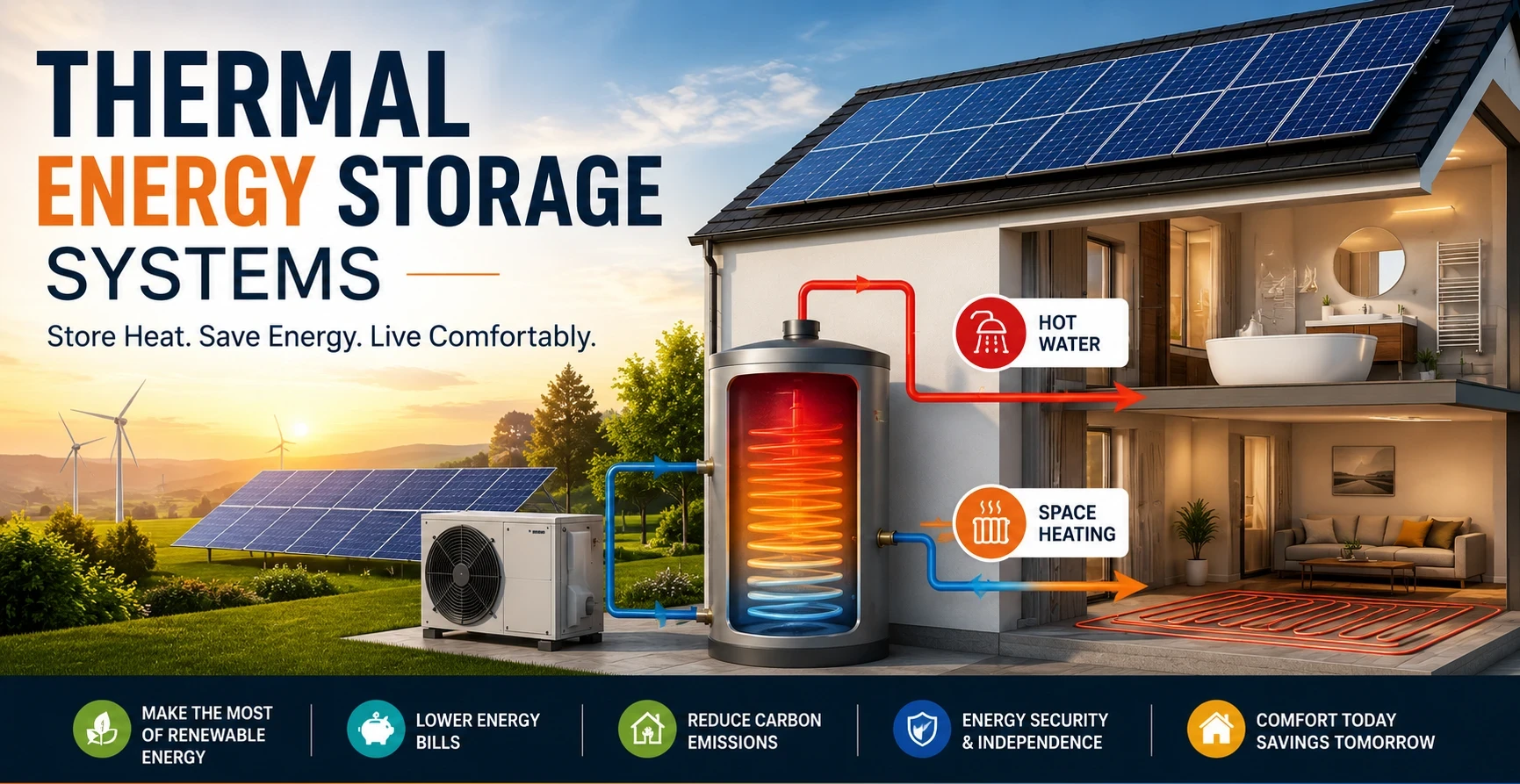
Thermal energy storage systems are changing the way homes and businesses manage heating and cooling.
Instead of wasting surplus energy, these systems capture heat and store it until it is needed, helping to lower energy bills, improve efficiency, and make better use of renewable energy.
As solar panels and heat pumps become more common, thermal energy storage is playing an increasingly important role in creating reliable and sustainable home energy systems.
Unlike electrical batteries, which store electricity, thermal energy storage systems store heat.
This heat can be produced during periods of low electricity prices or when renewable energy generation is at its highest.
The stored energy can then be used later for space heating, domestic hot water, or cooling, reducing dependence on the electricity grid during peak demand.
If you’re new to renewable energy, our guide to Home Energy Systems explains how different technologies work together to improve energy efficiency while reducing long-term running costs.
What Are Thermal Energy Storage Systems?
Thermal energy storage systems are designed to capture heat and retain it for later use.
Instead of generating heat every time it is required, energy is stored inside a specially designed medium and released only when needed.
This simple principle improves efficiency and reduces wasted energy.
Heat can be collected from a wide range of energy sources including solar thermal collectors, solar photovoltaic systems connected to heat pumps, air source heat pumps, ground source heat pumps, off-peak electricity tariffs, industrial waste heat, and district heating networks.
By storing energy rather than allowing it to go unused, homeowners can reduce electricity consumption while increasing the amount of renewable energy used within the home.
How Thermal Energy Storage Systems Work
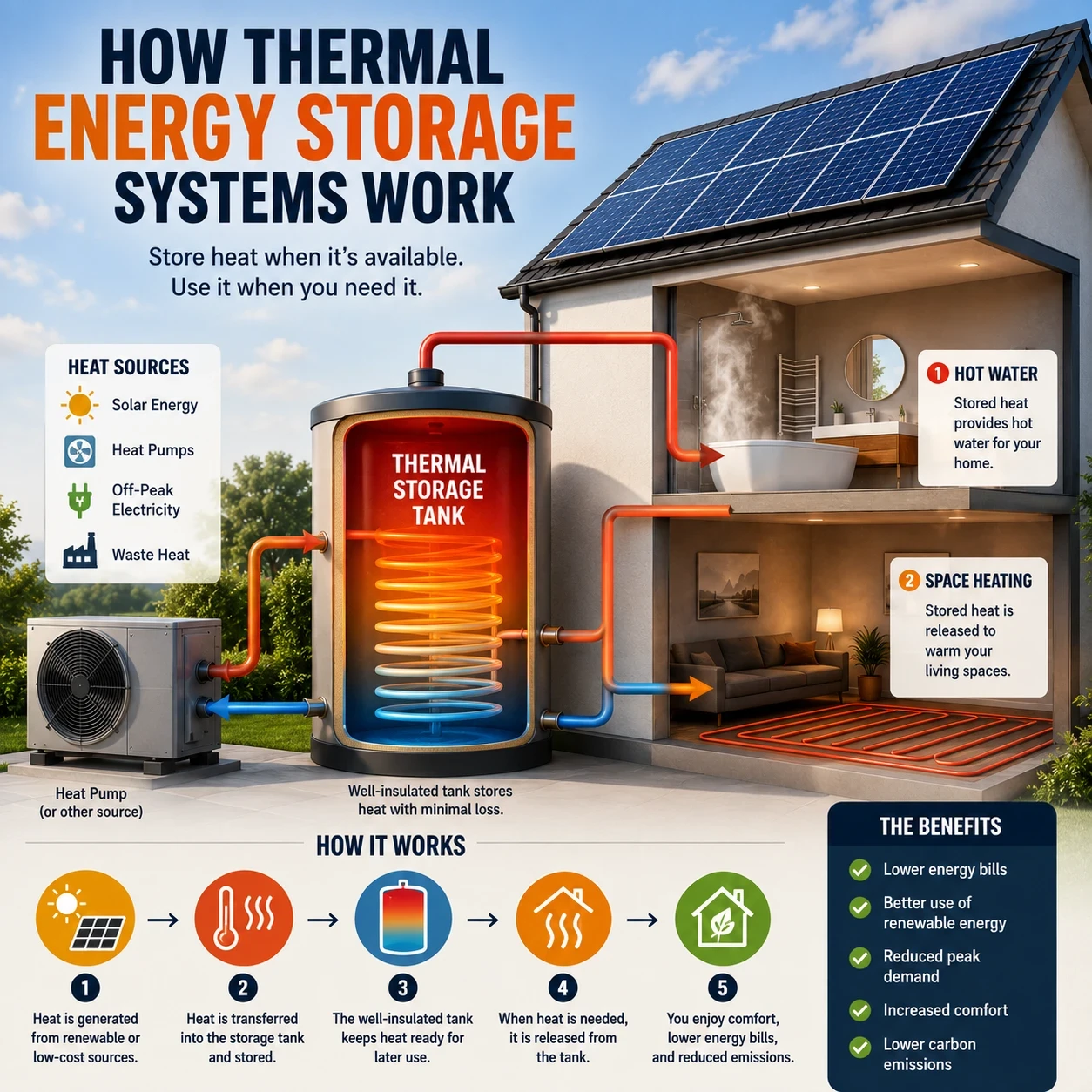
Every thermal energy storage system consists of three basic elements: a heat source, a storage medium, and a distribution system.
Heat is transferred into the storage material whenever energy is available. Modern insulation keeps heat loss to a minimum, allowing the stored energy to remain available for many hours or even days.
When heating or hot water is required, the stored thermal energy is released into the home’s heating system. This reduces the need for additional electricity or fuel, making the overall system more efficient.
Common storage materials include water, concrete, stone, ceramic materials, molten salt, and advanced phase change materials.
Water remains the most widely used storage medium in residential systems because it is inexpensive, safe, and highly effective.
Types of Thermal Energy Storage Systems
Sensible Heat Storage
Sensible heat storage is the most common type used in homes.
Heat raises the temperature of a material without changing its physical state.
Domestic hot water cylinders are one of the simplest examples of sensible heat storage and have been used successfully for decades.
Latent Heat Storage
Latent heat storage uses phase change materials that absorb and release large amounts of heat while changing between solid and liquid states.
These systems can store more energy in a smaller space than conventional water tanks, making them ideal where installation space is limited.
Thermochemical Storage
Thermochemical storage uses reversible chemical reactions to store thermal energy.
Although this technology is currently found mainly in commercial and research applications, it is expected to play an important role in future residential renewable energy systems because of its high energy storage capacity.
Key Benefits of Thermal Energy Storage Systems
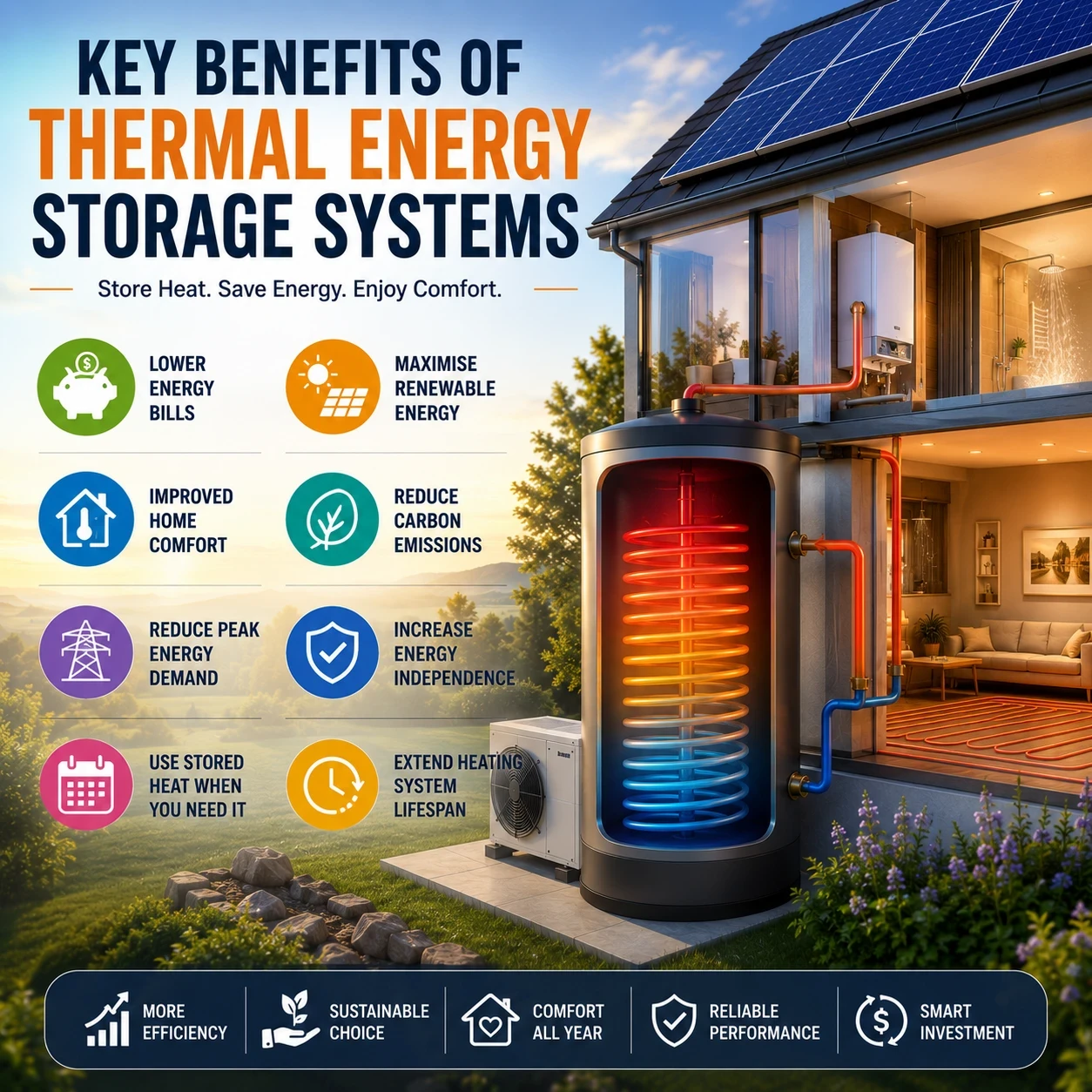
Installing thermal energy storage systems offers many practical advantages for homeowners. These systems can reduce heating costs, improve renewable energy efficiency, increase energy independence, lower carbon emissions, reduce peak electricity demand, improve heat pump performance, and make better use of surplus solar energy.
These benefits become even greater when thermal storage is combined with Solar Panel Systems or Home Battery Storage Systems, allowing households to store both heat and electricity for use whenever it is needed.
Thermal Energy Storage and Renewable Energy
One of the biggest advantages of thermal energy storage systems is their ability to work alongside renewable energy technologies. Solar panels often generate more electricity during sunny periods than a home can use immediately.
Instead of exporting all of this surplus energy to the grid, homeowners can use it to heat water or a thermal storage tank for use later in the day.
This stored heat can provide domestic hot water, underfloor heating, or space heating after sunset, reducing the need to purchase electricity during expensive peak-rate periods.
As a result, more of the renewable energy produced on-site is used within the home.
Our guide to Home Solar Systems explains how thermal storage complements modern solar installations and helps maximise energy independence.
Thermal Energy Storage and Heat Pumps
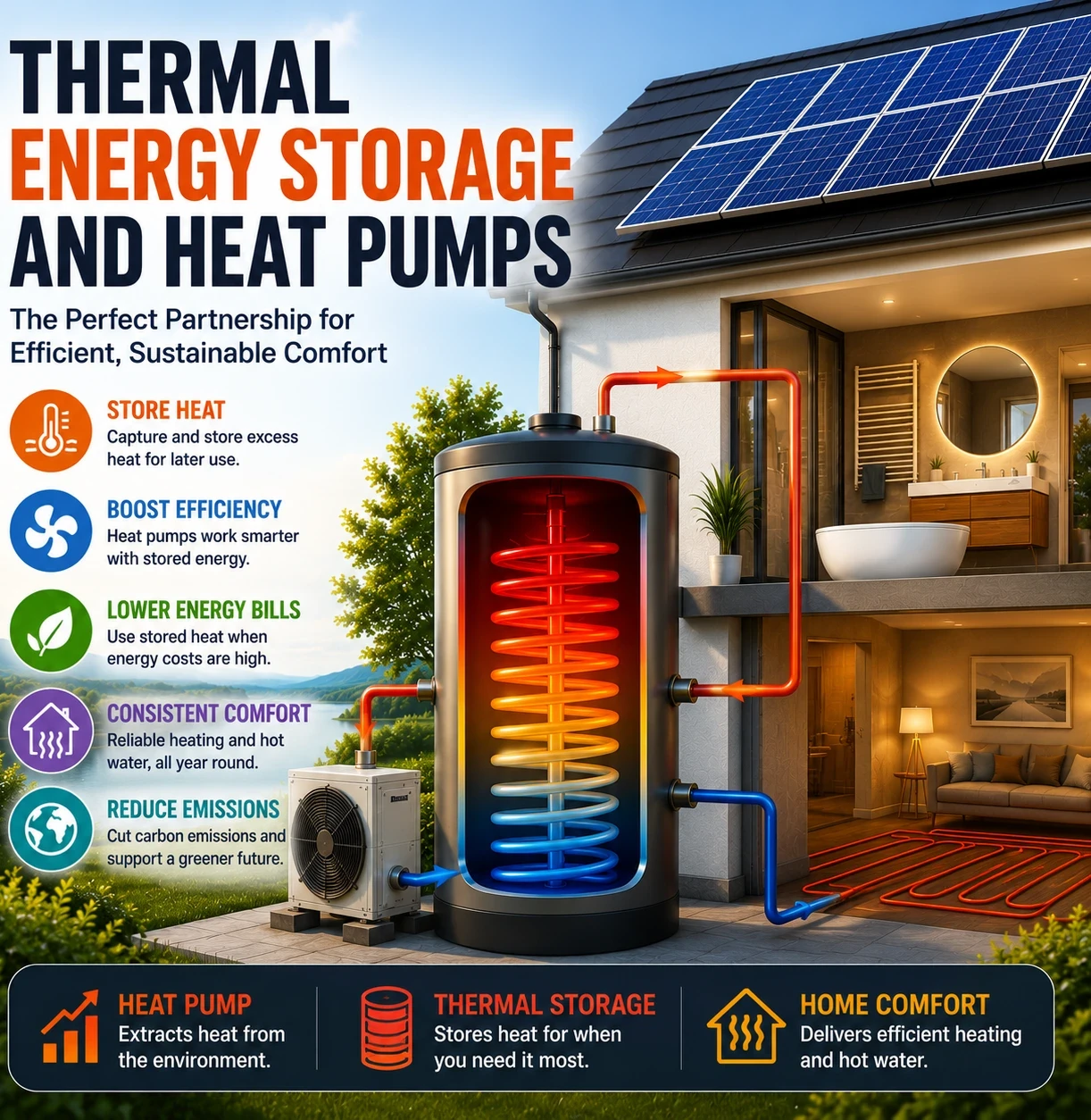
Heat pumps are among the most energy-efficient heating systems available, and their performance improves when paired with thermal energy storage.
Rather than switching on and off throughout the day, a heat pump can operate during periods of lower electricity prices while storing heat for later use.
This approach reduces running costs, improves seasonal efficiency, extends the lifespan of the equipment, and provides a more consistent indoor temperature.
Many modern renewable heating installations now include thermal storage as part of the overall system design.
Residential and Commercial Applications
Although thermal energy storage systems are becoming increasingly popular in homes, they are also widely used in commercial buildings and industrial facilities where heating and cooling demand is high.
Common applications include detached homes, apartment buildings, hotels, hospitals, schools, office developments, factories, agricultural buildings, and district heating schemes.
Large thermal storage installations can even help electricity providers balance renewable energy production by storing surplus energy for later use.
Is a Thermal Energy Storage System Right for Your Home?
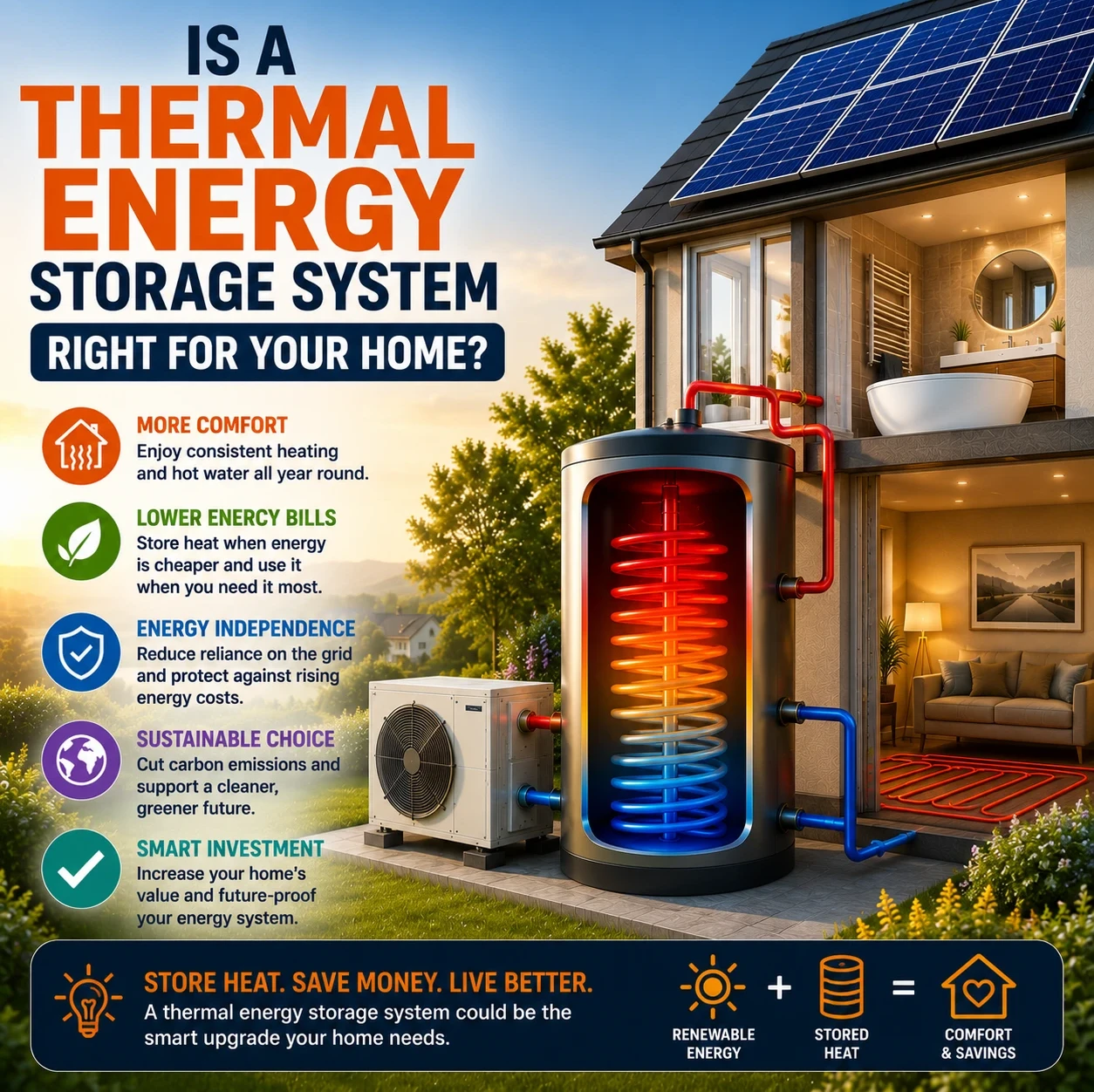
If your property already has solar panels, a heat pump, or high hot water demand, a thermal energy storage system could provide significant long-term savings.
It can also improve comfort by ensuring a reliable supply of heating and hot water throughout the day.
When planning a renewable energy installation, it is also worth understanding the role of a Solar Inverter, as it helps manage electricity produced by your solar panels while working alongside battery and thermal storage technologies.
Choosing the correct storage capacity depends on your household’s energy usage, heating requirements, available space, and future plans.
Seeking professional advice before installation will help ensure the system is correctly sized for your property.
Frequently Asked Questions
Do thermal energy storage systems store electricity?
No. They store heat or cooling energy rather than electrical energy.
Can thermal energy storage systems work without solar panels?
Yes. They can store heat produced by heat pumps, conventional boilers, biomass systems, or electricity purchased during off-peak tariff periods.
How long can thermal energy be stored?
The storage period depends on the insulation and design of the system. Many domestic installations retain useful heat for several hours or even days, while larger commercial systems can store energy for much longer.
Are thermal energy storage systems environmentally friendly?
Yes. They improve the use of renewable energy, reduce wasted heat, lower greenhouse gas emissions, and help reduce demand on the electricity grid.
Conclusion
Thermal energy storage systems are becoming an increasingly valuable part of modern renewable energy installations.
By storing heat until it is needed, they reduce energy waste, improve heating efficiency, lower electricity bills, and maximise the benefits of solar panels and heat pumps.
As renewable technologies continue to develop, thermal energy storage will play an even greater role in creating energy-efficient, low-carbon homes.
Whether you are upgrading an existing heating system or planning a new renewable energy installation, thermal storage is a smart investment that can deliver long-term financial and environmental benefits.
Further Reading
For more information about thermal energy storage technologies, visit the International Energy Agency – Thermal Energy Storage.
